
- Buy Crypto
- Markets
 Futures
- Spot
- Copy Trade
- Earn
- More
Ethereum Faces Potential Price Pressure Amid Declining Demand and Bearish Divergence Signals
By: en coinotag|2025/05/08 03:30:02
0
Share
Ethereum is showing signs of bearish divergence, with demand weakening even as prices briefly rose to $1,832. Amid shrinking gas usage and a notable exit by a major whale, concerns about Ethereum’s sustained growth are mounting. A COINOTAG report indicates a significant drop in daily active addresses (DAA), plunging to -50%, highlighting weak user growth. Ethereum’s price rebounds to $1,832, but falling gas usage and user activity raise concerns about its future strength. Is Ethereum losing steam? After hovering near 20 billion in gas usage since early February, Ethereum now faces a sharp drop back to **11.68 billion**. This **decline** indicates a slowdown in on-chain activity, raising alarms about reduced demand across **DeFi**, **NFT**, and other decentralized applications (dApps). Historically, a decrease in gas usage correlates with stagnation or bearish trends, especially in the absence of new user growth, weakening **bullish** arguments for ETH’s current price levels. Source: Santiment Additional data reveals a **7.99%** decline in mid-tier holders over the past month, contrasted by a **1.33%** increase in retail wallets and a **2.26%** rise in whale holdings. This trend suggests medium-sized investors are reducing their exposure amid uncertain conditions, while retail optimism remains relatively strong. However, the growing number of retail wallets alone may not provide the momentum needed for a sustained price rally, especially when weighed against profit-taking activities like those observed with the whale’s recent Kraken deposit. Set up for a deeper correction? Transaction activity has illustrated a stark decline across high-value brackets, with transfers above **$10 million** down **83%** and those between **$1 million** and **$10 million** decreasing by nearly **70%**. This downturn hints at waning institutional interest or a more cautious posture from large investors. Typically, significant transaction counts are associated with market-moving activity; thus, their decrease could signal reduced volatility in the near term alongside diminished upward momentum for ETH. Source: IntoTheBlock Ethereums price, at press time, hovers just above critical long liquidation clusters at **$1,815**. A drop below this level could incite cascading liquidations, thereby amplifying downside risks. Yet, short positions remain clustered above **$1,850**, creating potential for a short squeeze should buyers gain traction. This ongoing struggle between leveraged longs and shorts sets the stage for an imminent volatile breakout or breakdown in future sessions. User activity fades The bearish divergence highlighted by Santiment’s price-to-DAA metric shows a profound decline of nearly **-50%**, indicating a drop in user growth in relation to recent price trends. This significant divergence suggests that ETH’s price surges are not being supported by new address activity—often signaling a bearish market condition. Historical patterns suggest that such disconnects are precursors to sell-offs, especially when combined with fundamental weaknesses such as diminished gas usage. Source: Santiment Ultimately, despite the temporary price surge, Ethereum’s fundamentals are increasingly concerning. Diminishing gas usage, declining high-value transactions, and user activity showing a stark bearish divergence contribute to a precarious outlook. The interplay of liquidation clusters and shifts in investor demographics further applies pressure on an already delicate situation. Unless new demand emerges, Ethereum may struggle to maintain the $1,832 threshold amidst growing bearish indicators.
You may also like

Particle Founder: The entrepreneurial insights I have gained the most from in the past year
Stop lean startup, stop lightning entrepreneurship, and think carefully about what your product aspirations are.

Huang Renxun's latest podcast transcript: The future of Nvidia, the development of embodied intelligence and agents, the explosion of inference demand, and the public relations crisis of artificial intelligence
The competition in the future is not just about whose model is larger or whose computing power is stronger, but also about who understands the industry better, who can embed AI more deeply into real processes, and who can organize these capabilities into a runnable and scalable system.

OKX Ventures Research Report: AI Agent Economic Infrastructure Research Report (Part 1)
The existing infrastructure is hostile to the Agent economy. Agents can think and act independently at the "capability level," but at the "economic level," they are still locked into infrastructure designed for humans.

The migration of settlement rights: B18 and the institutional starting point of on-chain banks
In the traditional system, banks decide the settlement; in the on-chain system, code begins to take over this responsibility.

From Tencent and Circle: Looking at the Simple and Difficult Questions of Investment
The AI narrative continues to ferment, but the recent performance of related stocks varies, with some in the midst of summer and others as if in winter.

The second half of stablecoins no longer belongs to the crypto circle
What Coinbase doesn't want, Mastercard is eager to buy.

Cursor "Shell" Kimi Controversy Reversed: From Copyright Infringement Allegations to Authorized Collaboration, China's Open Source Model Once Again Becomes a Global AI Foundation
Cursor was accused of being based on Kimi K2.5, which sparked controversy, and was later confirmed to be compliant through Fireworks AI due diligence.

The Real Reason Tokens Don't Sell: 90% of Crypto Projects Overlook Investor Relations
Provide an Investor Relations Best Practices Guide for Crypto Projects.

Is the income of pump.fun real, earning a million dollars a day despite the market downturn?
If it can really earn this much, what is the reason for the low price of $PUMP?

The real reason why tokens are not selling: 90% of crypto projects neglect investor relations
Investor Relations Practice Guide for Cryptocurrency Projects.

Who is the true winner of the "Tokenization" narrative?
Virtually everyone benefits, but the reason for the benefit, the timing, and the underlying logic are completely different.

Moss: The Era of AI-Traded by Anyone | Project Introduction
AI Trading Agent is rapidly growing its infrastructure.

Chip Smuggling Case Exposes Regulatory Loophole | Rewire News Evening Update
AI chips have become a strategic asset more sensitive than missiles

How a Structured AI Crypto Trading Bot Won at the WEEX Hackathon
Ritmex demonstrates how disciplined risk control and structured signals can make an AI crypto trading bot more stable and reliable on WEEX, highlighting the importance of combining execution discipline with scalable AI trading systems.

Old Indicator Fails, Three Major New Signals Emerge: BTC True Bottom May Still Be Below $60K
When the grocery shopping auntie on the subway, or Tony the hairdresser, start asking you about BTC, crypto, and cryptocurrency investments, selling immediately will be the only best option.

Meeting OpenClaw Founder at a Hackathon: What Else Can Lobsters Do?
Imperial College London MetaGame: AI Agent × Web3 Landing Three Major Directions.
Huang Renxun's Latest Podcast Transcript: NVIDIA's Future, Embodied Intelligence and Agent Development, Soaring Demand for Inferencing, and AI's PR Crisis
The future of competition is not only about whose model is bigger, whose computing power is stronger, but also about who understands the industry better, who can more deeply integrate AI into real processes, and who can organize these capabilities into a set of executable, scalable systems
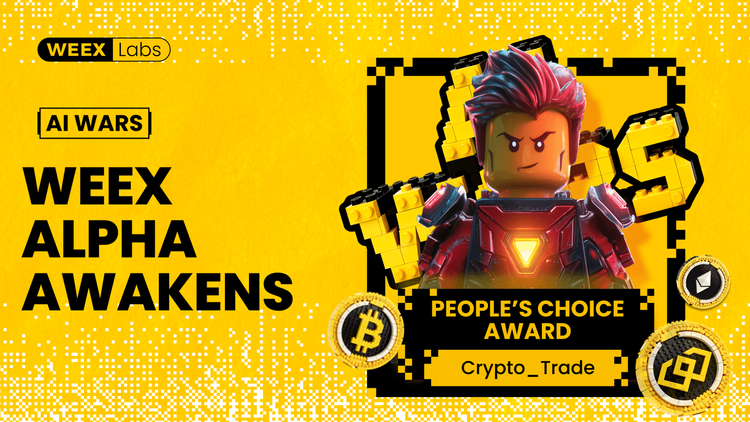
How a Structured AI Crypto Trading Bot Won at the WEEX Hackathon
Crypto_Trade shows how structured inputs and controlled adaptability can build a more stable and reliable AI crypto trading bot within the WEEX AI Trading Hackathon, highlighting a practical path toward scalable AI trading systems.
Particle Founder: The entrepreneurial insights I have gained the most from in the past year
Stop lean startup, stop lightning entrepreneurship, and think carefully about what your product aspirations are.
Huang Renxun's latest podcast transcript: The future of Nvidia, the development of embodied intelligence and agents, the explosion of inference demand, and the public relations crisis of artificial intelligence
The competition in the future is not just about whose model is larger or whose computing power is stronger, but also about who understands the industry better, who can embed AI more deeply into real processes, and who can organize these capabilities into a runnable and scalable system.
OKX Ventures Research Report: AI Agent Economic Infrastructure Research Report (Part 1)
The existing infrastructure is hostile to the Agent economy. Agents can think and act independently at the "capability level," but at the "economic level," they are still locked into infrastructure designed for humans.
The migration of settlement rights: B18 and the institutional starting point of on-chain banks
In the traditional system, banks decide the settlement; in the on-chain system, code begins to take over this responsibility.
From Tencent and Circle: Looking at the Simple and Difficult Questions of Investment
The AI narrative continues to ferment, but the recent performance of related stocks varies, with some in the midst of summer and others as if in winter.
The second half of stablecoins no longer belongs to the crypto circle
What Coinbase doesn't want, Mastercard is eager to buy.


 App
App