
 Buy Crypto
- Markets
 Futures
- Spot
- Copy Trade
- Earn
- More
Is USDT's cross-chain version, USDT0, reliable?

Original Author: 0xTodd, Partner at Nothing Research
Wasn't Uni supposed to restart liquidity mining on 4.15? This time it involves 12 pools, many of which are related to $USDT0. So, I'll take this opportunity to talk about USDT0.
Firstly, What is USDT0?
In simple terms, USDT0 is the cross-chain version of USDT. The parent asset USDT exists on ETH and, through Layer0, can cross-chain to other chains, becoming USDT0.
Supporters of USDT0 can also cross among themselves, for example, ETH-Arb-Unichain-BearChain-megaETH, and so on.
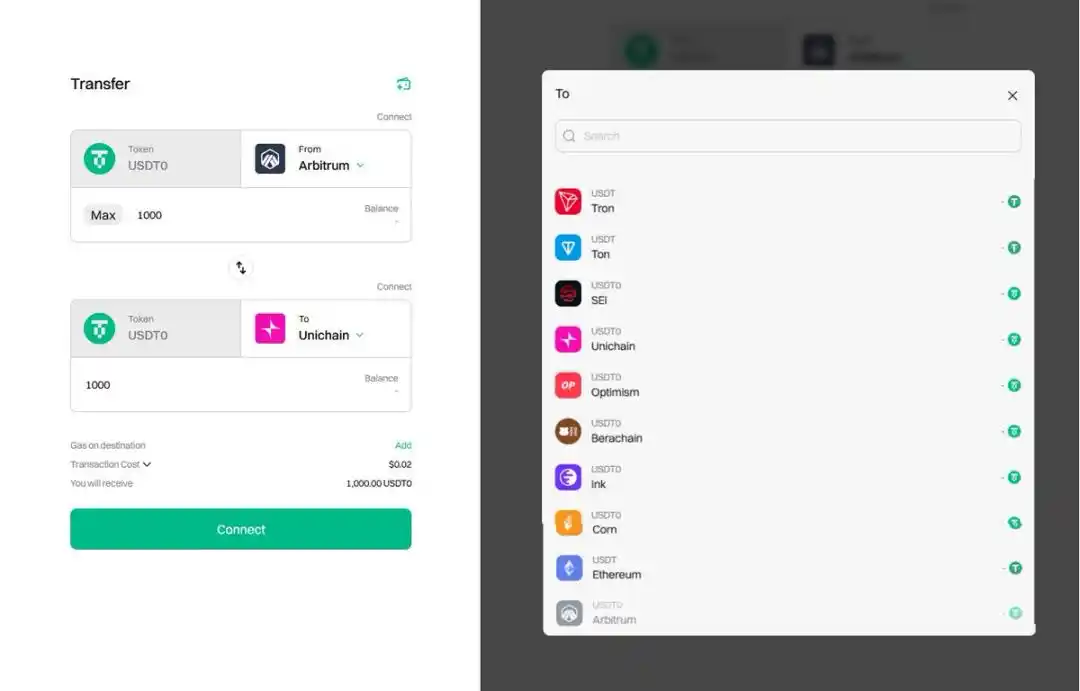
Who is Behind USDT0?
This is the most tricky part, and it took me a long time to figure it out.
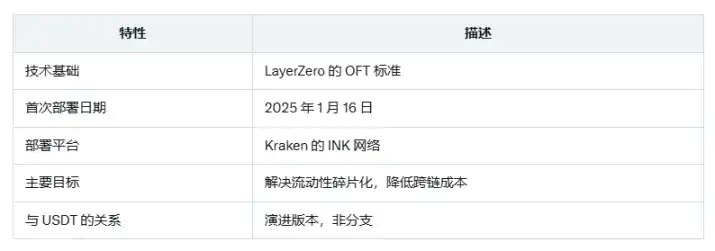
Behind this project, USDT0, is a collaboration of 1+3:
1. Led by Everdawn Labs;
2.1 Built on Layer0 technology;
2.2 Endorsed by Tether;
2.3 Endorsed by the INK public chain (issued by Kraken).
However, Everdawn Labs is a complete mystery online. I strongly suspect that it is a front for Tether. This is quite consistent with their style:
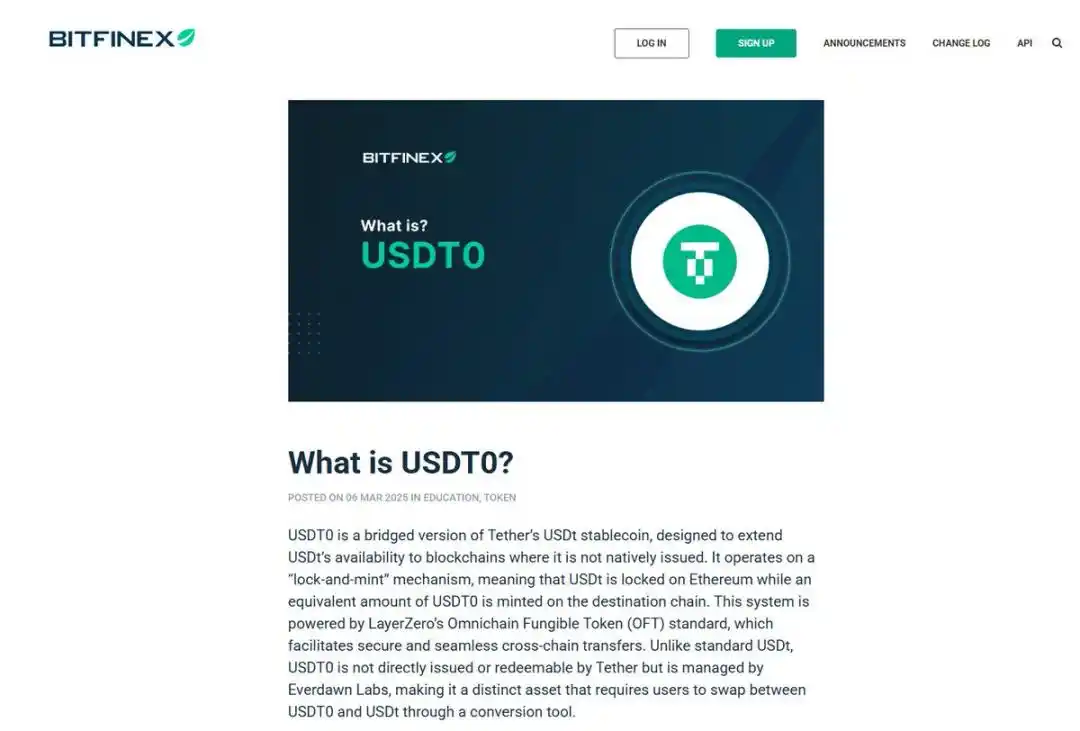
If nothing goes wrong—everyone benefits from the multi-chain convenience of USDT; if something goes wrong—then it's Everdawn Labs' fault, not Tether's. One reason for this speculation is that after the launch of USDT0 this year, the Tether team immediately expressed their support, followed by a dedicated article by Bitfinex. Without a strong relationship, they (BF and Tether) would not provide this kind of support.
What's the Evaluation?
In my opinion, if Tether is personally involved in this bridge, it's definitely a great move. This way, each chain's USDT can cross without loss, avoiding the need for various awkward third-party cross-chain bridges.
However, my level of trust in Layer0 is limited. In the past, there have been numerous high-profile cross-chain bridge failures, from multichain to thorchain. The technology behind cross-chain transactions is fundamentally simple, mainly relying on multi-signature setups. In the past, USDT used official bridges and did not utilize Layer0, a third-party bridge.
Official bridges are generally considered more secure, but they suffer from liquidity fragmentation. For example, if you want to move a large amount of capital from Arb to OP in a flash loan manner, you would need to first go back from Arb to ETH and then proceed to OP, which incurs additional costs for a faster transaction. PS: Not to mention chains like Sei, where even official bridge transactions incur fees for entry and exit.
On the other hand, if you opt for the USDT0 solution, Arb can directly move to OP in a flash and without loss. PS: Of course, there is a historical issue on OP where the USDT used is an older version of the ETH cross-chain version, while USDT0 represents the newer version. Thus, although theoretically viable to move funds from Arb to OP, in practice, it has been futile in the past. This is just an illustrative example.
New public chains, as they support USDT0 from the outset and lack historical issues, offer much higher usability. However, Tether itself is reluctant to directly engage in building this bridge and insists on sending a proxy like Everdawn Labs, which is a bit...
In the past, when I provided liquidity for $UNI on ETH, I only had to consider the minor third-party risks of Tether and Uniswap. Now, I have to bear an additional 4 risks: Everdawn going rogue, L0 going rogue, Unichain going rogue, USDT0 supporting other N chains, and each one potentially going rogue.
It sounds a bit overwhelming.
You may also like

a16z New Post: Predicting the Market, Entering the Fast Forward Phase

Arthur Hayes New Post: It's Now "No Trade" Time
a16z New Article: Predictive Markets Entering Fast-Forward Phase

a16z founder: In the age of Agents, what truly matters has changed

The President of Kyrgyzstan meets with Sun Yuchen, and TRON collaborates with Kyrgyzstan to build a new pattern of digital economy in Central Asia
46 minutes, $292 million stolen, DeFi faces development dilemma again

How to Earn Free USDT in 2026: No High Volume Required (WEEX Poker Party Guide)
Is Joker Crypto legit in 2026 or just another memecoin? Can You Really Earn Passive Income with Joker Crypto in 2026? Learn how Joker staking rewards work, how to earn NFT bonuses, expected APY ranges, gas-fee rebates, and how to avoid crypto scams before joining.

How to Get Free USDT Welcome Bonus in 2026: Earn Up to 700 USDT on WEEX
Legit Free Welcome Bonus 2026: Learn how to earn up to 700 USDT on WEEX with Auto Earn Boost Fest. Increase your balance, activate Auto Earn, and qualify automatically.

AI Agent Payments Just Got Real: Utexo × x402 Brings 50ms USDT Transactions to Internet Scale
Utexo integrates USDT into the x402 protocol, enabling 50ms instant payments embedded natively in HTTP requests. Explore how this breakthrough is rewriting the rules for AI agent payments, API monetization, and the machine-to-machine economy.

DWF Deep Report: AI in DeFi Outperforms Humans in Yield Optimization, but Complex Trades Still Lag Behind by 5 Times

What Separates Smart Money from the Crowd in Crypto? Insights from Freedom of Money
Most crypto traders lose money not because of bad luck, but because they misunderstand how the market really works. From Freedom of Money to the rise and fall of Sam Bankman-Fried, they highlight a key divide in crypto: those who build the market and those who chase it. This reading guide explores essential books that reveal how narrative, regulation, capital, and psychology shape long-term success in the crypto industry.

The Risk Management Core Team has just been ousted, and Aave is now facing a $200 million default.

The $293 million bug wasn't in the code; so, what's the deal with the "DVN Configuration Bug," which led to the largest hack of 2026?

a16z on Recruitment: How to Choose Between Crypto-Native and Traditional Talent?
The biggest DeFi heist of 2026, hackers easily took advantage of Aave

Will Robots Replace Humans? He Says No!
Binance Coin's Price Skyrockets 15x to All-Time High, Saved by Three Bull Market Lifelines




 App
App