
- Buy Crypto
- Markets
 Futures
- Spot
- Copy Trade
- Earn
- More
What is Blockchain? The Decentralized Ledger Revolution Explained
By: coin gabbar|2025/05/08 02:00:06
0
Share
What is Blockchain? A Simple Guide to How It Works and Why It Matters What is Blockchain? It's like a digital notebook that many people share. consider it as a large Google Doc. Everyone can see it, and every time someone writes something new, it shows up for everyone. That’s what makes it fair and honest. When you wonder what is blockchain , just picture a place where no one can cheat because all eyes are watching. It’s super popular because it helps power things like cryptocurrencies. But what is blockchain used for besides money? A lot! It can be used in schools, hospitals, elections—any place where records should not be changed or erased. For example: think of it like a group project where everyone has the same Google Doc. If one person tries to sneak a fake-grade, everyone else can see it and say, “Nope, that’s wrong!” This is what is blockchain doing in action—keeping things honest. Plus, no banks or shady officials needed. Everything is open and safe. Definition: What is blockchain ? It is like a big record book (called a ledger), but instead of one person keeping it, thousands of computers around the world have a copy. No boss controls it. The computers work together to make sure everything is fair and safe. Once something is put in, it's gonna stay there forever. That’s why people trust it. The blocks are connected using a secret code called cryptography. Inception: What is blockchain and when did it start? It came out in 2009. Nobody owns it—not a person, company, or government. It’s open to everyone. The first time we saw it in action was with Bitcoin. A mystery person or group named Satoshi Nakamoto built it. They made sure no one could acquire the system. It works because people all around the world help take care of it. Related Terminology: Blocks = Data Packs Each ‘block’ has things like money transfers, contracts, or records. Example: if A sends B 2 BTCs, that transaction goes into a block. Cryptography = Secret Code System A hidden code that turns messages into scrambled text only the right person can read. Example: A sends B 3 BTCs becomes ‘Xeko gdhs tykjh 3’. Nodes = Guardians of the Blockchain Computers or phones running special programs. If someone cheats, they catch it fast. Miners = Puzzle Solvers They solve hard math problems. The winner adds the next block and earns crypto. Example: Like a Sudoku contest—solve it first, win a prize. Smart Contracts = Digital Robot Agreements They do jobs automatically if the right thing happens. No humans needed. Example: IF A pays B $500 THEN transfer ownership of the eBook to A. Hash = Digital Fingerprint of Block Each block has a unique code. If someone tries to change it, the code breaks. Example: Think of it like a wax seal. If it’s broken, the message was changed. Reverse Hash = Block’s Genetic Code Each block links to the one before it. If one is changed, the whole chain alerts the network. Example: Altering Block #2 breaks the chain and warns everyone. What is blockchain used for here? It helps people trust the system without needing to trust each other. Why Was Blockchain Invented? Every time we use apps or websites, we give away personal info. So what is blockchain trying to fix? It wants to give control back to people. The problem: No Data Ownership Facebook, Google, or Apple own your info—not you. Privacy Risks Hackers can break into systems. Example: In 2017, 147 million Americans had their data stolen. Unfair Monetization Companies make money from your info. You get nothing. The solution: What is blockchain doing to fix this? Ownership of Data Keep your info in your own secure digital wallet. Example: Solid project lets you choose who sees your info. No More Middlemen You can send money or share data without banks. Example: Bitcoin lets you pay someone directly. Profit from Your Own Data You get paid for your time and info. Example: Brave Browser gives you crypto for watching ads. Tamper-Proof Security It’s safer than Google Sheets. Example: Estonia stores medical records on blockchain so no one can fake them. Blockchain Ecosystem: What is blockchain in a big picture? It’s an entire machine with parts that work together. It has computers (nodes), people, rules, and software. For example: A blockchain is like a digital city with no mayor. Everyone helps run it. Miners / Validators – The Construction Workers They check and add new blocks. Example: Bitcoin miners solve puzzles for rewards. Nodes – Security Guards They all keep the same copy and catch cheaters. Example: Ethereum nodes stop double-spending. Wallets – Digital Backpacks They hold your crypto and let you use the system. Example: MetaMask wallet for NFTs. Smart Contracts – Robot Helpers They follow “if-then” rules without humans. Example: NFT sales that auto-transfer ownership. DApps – The Shops and Services Apps that work without a company running them. Example: Uniswap for trading crypto. Blockchain Ecosystem and Cryptocurrency: What is blockchain doing in crypto? It powers the whole thing! Cryptos are money that live online. No banks or governments control them. They use blockchain to stay fair and safe. Each cryptocurrency has four goals: Decentralisation – No boss. No bank, company or government controls it. Security – Hard to hack. Transactions are locked with cryptography. Scalability – Works for many people. Many transactions it can handle quickly and at once. Stability – Less price jumps, how steady or predictable its price is. Think of crypto like a car, and blockchain is the engine under the hood. Here’s how the system works: The “Engine” – Blockchains Record all the transactions. The “Fuel” – Mining and Storage Mining: Solve puzzles. Storage: Keep coins in wallets. The “Highways” – Exchanges and Apps Exchanges: Trade crypto. dApps: Use crypto games or services. The “Traffic Rules” – Compliance and Security Laws and tools to stay safe. Security Tools: Anti-hacking systems like Ledger hardware wallets.
You may also like

Who is the true winner of the "Tokenization" narrative?
Virtually everyone benefits, but the reason for the benefit, the timing, and the underlying logic are completely different.

Moss: The Era of AI-Traded by Anyone | Project Introduction
AI Trading Agent is rapidly growing its infrastructure.

Chip Smuggling Case Exposes Regulatory Loophole | Rewire News Evening Update
AI chips have become a strategic asset more sensitive than missiles

How a Structured AI Crypto Trading Bot Won at the WEEX Hackathon
Ritmex demonstrates how disciplined risk control and structured signals can make an AI crypto trading bot more stable and reliable on WEEX, highlighting the importance of combining execution discipline with scalable AI trading systems.

Old Indicator Fails, Three Major New Signals Emerge: BTC True Bottom May Still Be Below $60K
When the grocery shopping auntie on the subway, or Tony the hairdresser, start asking you about BTC, crypto, and cryptocurrency investments, selling immediately will be the only best option.

Meeting OpenClaw Founder at a Hackathon: What Else Can Lobsters Do?
Imperial College London MetaGame: AI Agent × Web3 Landing Three Major Directions.

Huang Renxun's Latest Podcast Transcript: NVIDIA's Future, Embodied Intelligence and Agent Development, Soaring Demand for Inferencing, and AI's PR Crisis
The future of competition is not only about whose model is bigger, whose computing power is stronger, but also about who understands the industry better, who can more deeply integrate AI into real processes, and who can organize these capabilities into a set of executable, scalable systems
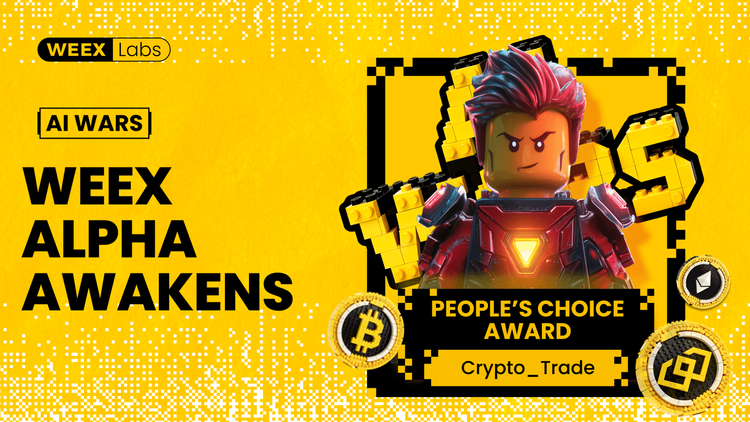
How a Structured AI Crypto Trading Bot Won at the WEEX Hackathon
Crypto_Trade shows how structured inputs and controlled adaptability can build a more stable and reliable AI crypto trading bot within the WEEX AI Trading Hackathon, highlighting a practical path toward scalable AI trading systems.

AI Starts to Devour the Manufacturing Industry | Rewire News Morning Edition
When Bezos starts using AI to buy factories instead of building data centers, it shows that he believes the next wave of AI's value is not inside the box.

When Scaling Meets Speed, Ethereum Foundation Introduces "Hardness" to Safeguard the Base Layer
Hardness is a protocol-level commitment to Ethereum core properties, including censorship resistance, privacy, security, and permissionlessness.
Google, Circle, Stripe Flock Together to Let AI Spend Money: Payment Giants' Joys and Worries in 2026 Q1
The real enemy is no longer each other, but zero cost itself

$100 Billion Factory Purchase: Bezos and Middle Eastern Capital Shift AI Money from Cloud to Shop Floor
Bezos doesn't invest in a new model; he invests in a supply chain.

Xiaomi and MiniMax both unleash their ultimate moves, signaling the start of the Agent Pricing War.
No brand, no marketing, let developers vote with their feet in 8 days

Predicting markets has taken the spotlight, but the Perp DEX has been quietly waging war on traditional exchanges.
During a weekend of relentless volatility, while traditional financial markets were closed, another wave of investors was busy trading gold, oil, and silver on a blockchain platform.

Is the Market Slump Still Making Millions a Day? Is pump.fun's Revenue Real?
If it's really that profitable, what's keeping $PUMP's price down?
Understanding x402 and MPP in One Article: The Two Paths of Agent Payments
x402 for in-protocol payments, MPP for off-chain payments

Quick Look at the Latest 18 Graduation Projects from Alliance: Who's the Next Pump.fun?
The project's core innovation areas include stablecoin payments, AI applications, prediction markets, and RWA tokenization.

It's not just the prediction market that profits from the Iraq War
Always maintaining the ambiguity of regulation with "offshore" may be the consensus of the perp DEX.
Who is the true winner of the "Tokenization" narrative?
Virtually everyone benefits, but the reason for the benefit, the timing, and the underlying logic are completely different.
Moss: The Era of AI-Traded by Anyone | Project Introduction
AI Trading Agent is rapidly growing its infrastructure.
Chip Smuggling Case Exposes Regulatory Loophole | Rewire News Evening Update
AI chips have become a strategic asset more sensitive than missiles
How a Structured AI Crypto Trading Bot Won at the WEEX Hackathon
Ritmex demonstrates how disciplined risk control and structured signals can make an AI crypto trading bot more stable and reliable on WEEX, highlighting the importance of combining execution discipline with scalable AI trading systems.
Old Indicator Fails, Three Major New Signals Emerge: BTC True Bottom May Still Be Below $60K
When the grocery shopping auntie on the subway, or Tony the hairdresser, start asking you about BTC, crypto, and cryptocurrency investments, selling immediately will be the only best option.
Meeting OpenClaw Founder at a Hackathon: What Else Can Lobsters Do?
Imperial College London MetaGame: AI Agent × Web3 Landing Three Major Directions.


 App
App