
 Buy Crypto
- Markets
 Futures
- Spot
- Copy Trade
- Earn
- More
Founder of Pump.fun Accidentally Reveals Face in Podcast Recording, Related Meme Sadly Gets "Taken Down"

When an Ethereum purist meets the most successful anonymous developer in the Solana ecosystem, what was supposed to be a discussion on product philosophy turned into a trial of "whether meme coins should exist."
Related Read: "Pump.fun Co-founder Dialogue: I don't think my product killed the market cycle, meme coins will continue to exist"
Anonymous Founder's True Face Exposed
Recently, Pump.fun founder Alon appeared on the "Ethereum-centric" podcast show Bankless and at 21 minutes and 44 seconds in, revealed half of his true face, which led to someone piecing together Alon's full face photo.
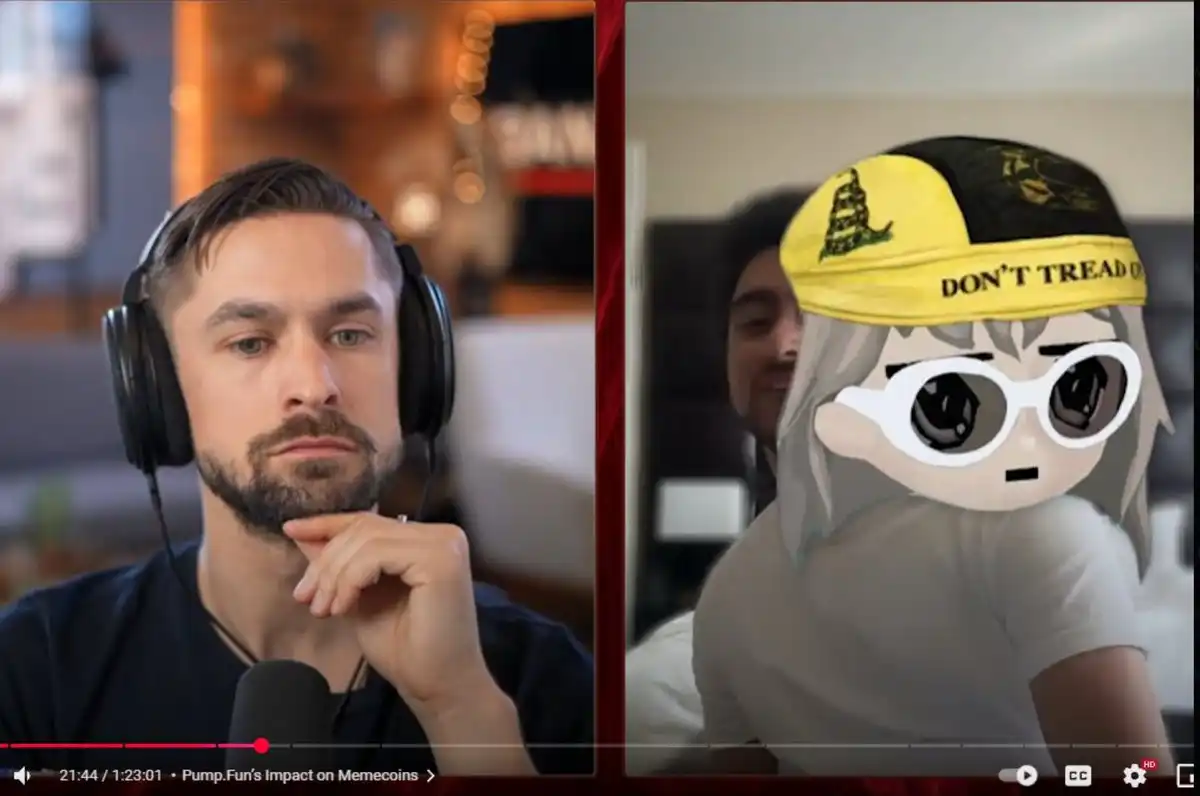
The community quickly launched the Alon namesake meme coin on Pump.fun, but dramatically, Pump.fun removed the meme's avatar.
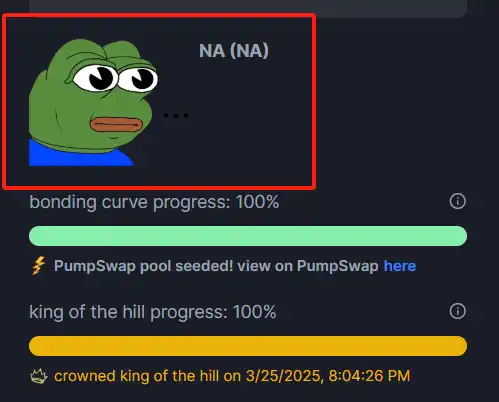
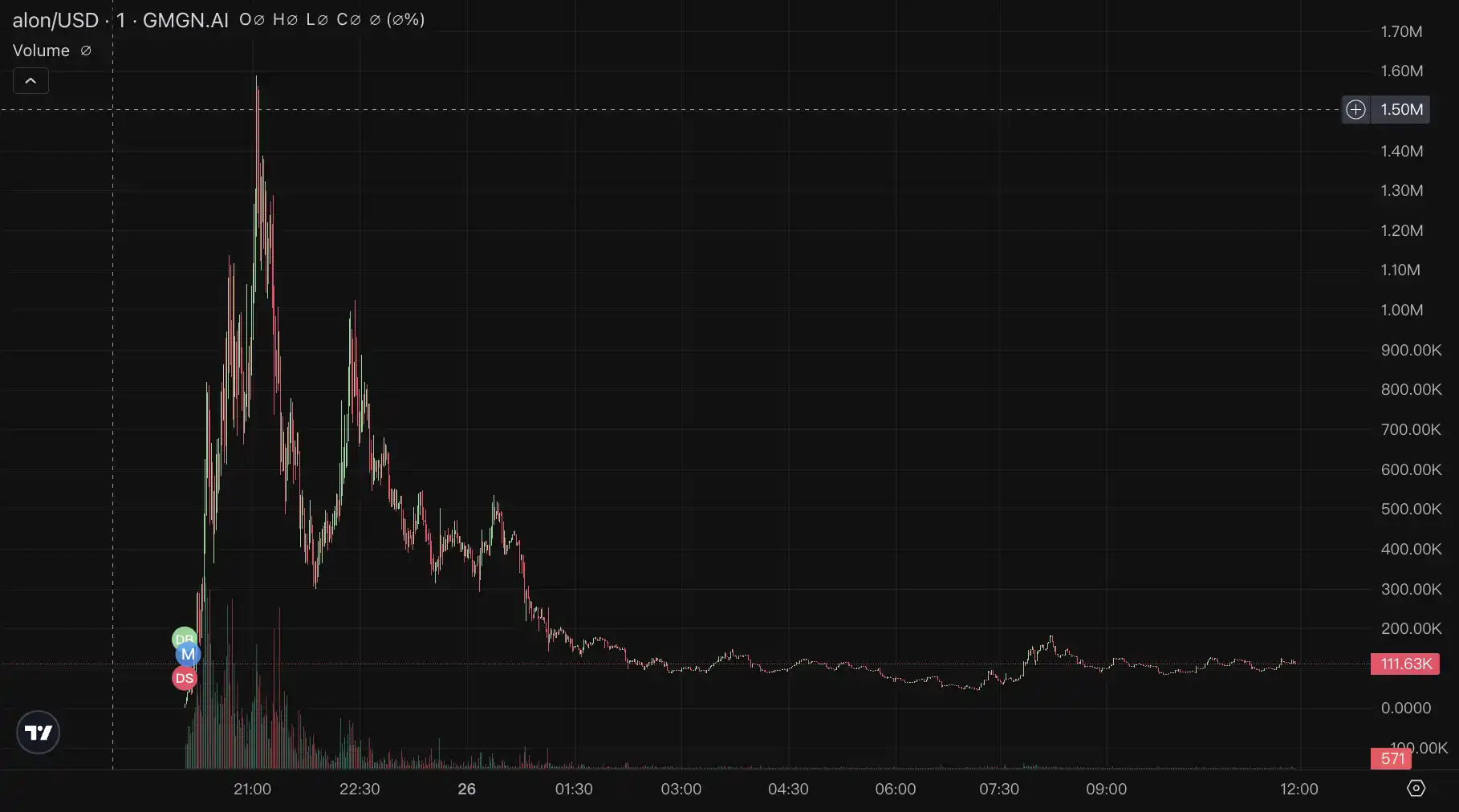
And this meme coin also had a short-lived existence.
Currently, the frame showing Alon's face has been removed from that episode of Bankless.
Podcast Controversy Begins, Was It a Well-Intentioned Misstep?
Since its inception, Pump.fun has always worn a veil of mystery, with few openly discussing how it rose to become the most PMF-rich and profitable application of this cycle.
Last year, Alon appeared on Threadguy's podcast for a rare public discussion on the story behind Pump.fun. With the launch of Pump.fun's Swap platform, Alon recently appeared on the crypto podcast Bankless for an interview.
In the podcast, Alon discussed the 4Chan aesthetic style, Pump.fun platform's content moderation strategy, introduced the new product PumpSwap and creator revenue sharing mechanism. Alon also addressed the competitive relationship with Raydium, explored the relationship between content, attention, and the market, and shared his views on the future of meme coins.
However, after this episode was released, it sparked some controversy, mainly due to the opening remarks by David, the host of the Bankless podcast.
David mentioned in the opening that viewers might be surprised to see the most successful application in the Solana ecosystem, Pump.fun, featured on an Ethereum-based podcast, especially since Bankless has always taken a stance against meme culture, believing that it could disrupt the market.
The following are David's exact words:
“In this interview, I tried to give Alon a fair opportunity to express his views on meme coins while also not shying away from the reality—Pump.fun stands at the forefront of one of the most predatory market cycles in our industry's history, leaving behind a capital wasteland.”
Initially, the meme coin speculation trend may have been a relatively harmless and fun metaverse, but eventually, this trend evolved into a structured, systemic value extraction model, with this wealth ultimately flowing only to a tiny minority of participants.
Approaching with caution, I interviewed Alon.”
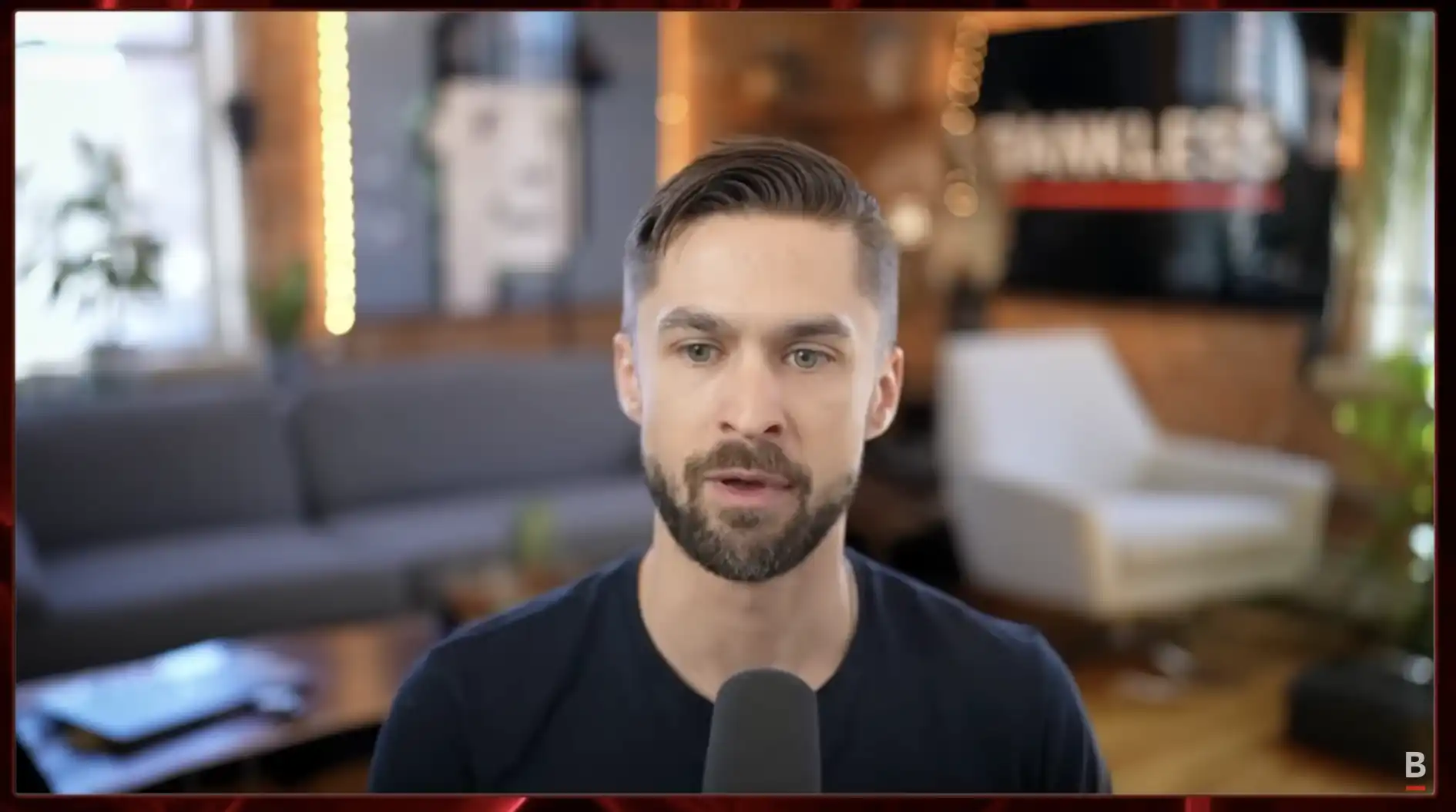
In other words, before the start of this interview, the host had already held a predetermined position, remaining cautious about the potential negative impact of Pump.fun. On one hand, David believed it was inappropriate to give the Pump.fun founder a platform to speak, especially considering how many people lost money on that platform. On the other hand, he even suggested that having Alon on the podcast might allow Pump.fun to use Bankless to whitewash its image and advertise Pump Swap.
“I had never seen him before this, and I have always been cautious about some of the potential negative effects of this project. I'm not sure Platforming such a project is reasonable, especially when it may inherently only lead to harmful outcomes for users. At the same time, I also have to be wary of another possibility—is Pump.fun attempting to use Bankless to whitewash its reputation? After all, they recently launched Pump Swap (a Solana-based AMM DEX), attempting a new product pivot.
What has been constantly on my mind during this interview is ‘Operation Berkshire’—if you're not familiar, it was a conspiracy in the tobacco industry: major tobacco companies colluded to openly deny the health risks of smoking, fund ‘pro-tobacco’ research, undermine scientific consensus, and influence policy and public opinion by covering up facts to sustain industry growth.”
There are many in the community who are dissatisfied with the way this podcast episode began, believing that if Pump.fun were on Ethereum, such a situation would not have arisen.
Pump.fun is merely a token issuance platform that has no authority to interfere with how users utilize it, and its fees are lower than any past or existing token issuance platform (and will remain so even years later, just because of scaling). Furthermore, its founder is one of the most successful consumer-grade entrepreneurs in crypto history. However, in the introduction of the Bankless podcast, they were depicted as criminals, although the show still remains "open and inclusive," providing them with an opportunity to speak, heh heh.
This is the most hypocritical podcast opening I've ever seen. They engaged in a fantastic conversation with the founder on the show, but in the post-recording preamble, they once again began to undermine their impact on the crypto industry and questioned their motives. If Bankless truly treats their guests this way, how can they continue to recommend entrepreneurs to appear on their show?
Last November, David posted, "A two-week-old token bot now accounts for 15% of pump dot fun platform volume." Clearly, the Clanker of the Base ecosystem appears more "politically correct" on David's social media.
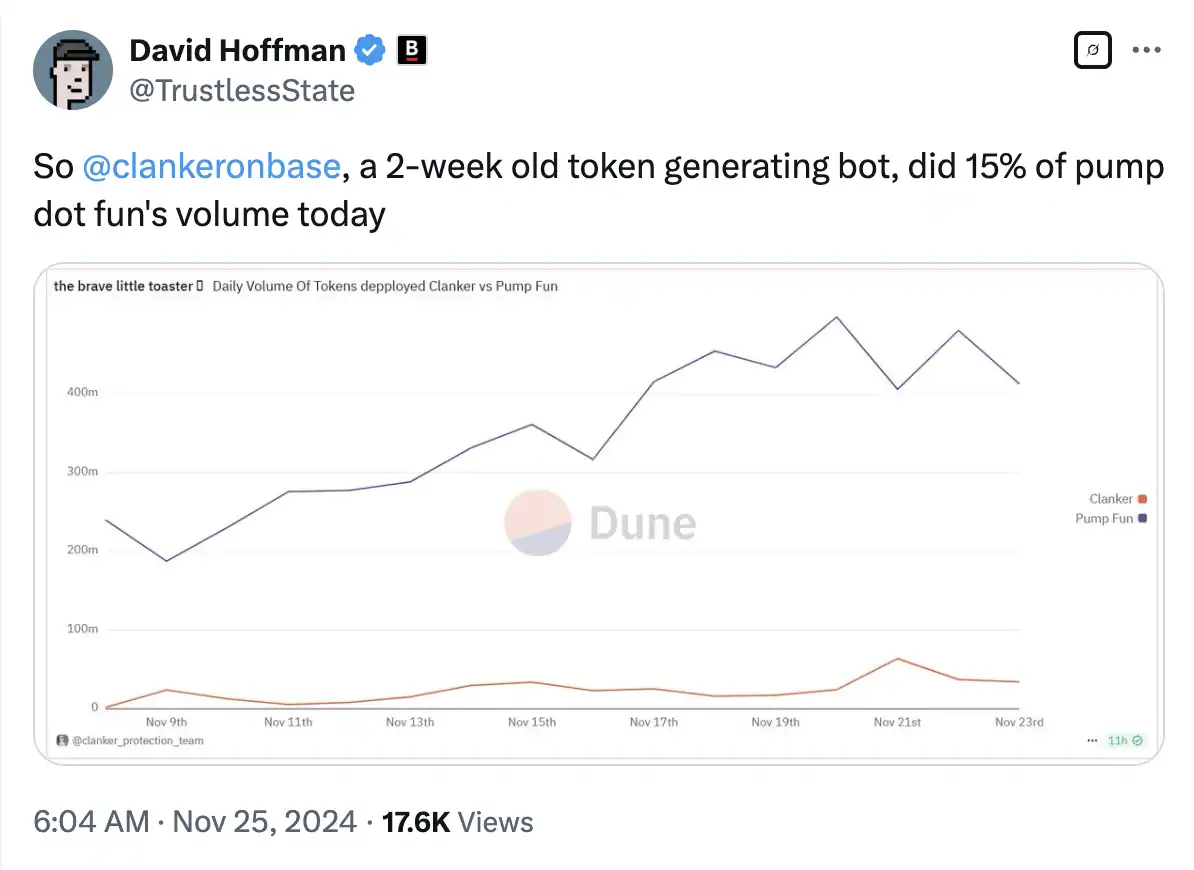
Returning to this podcast episode, after the recording was completed, David still stated in the post-recording preamble edit that meme coins are essentially like tobacco in their impact on public health—an "inevitably harmful product," and anyone working at Pump.fun would be motivated to deny this.
The following passage is also why David is criticized for being hypocritical—trying to balance the values issue is essentially a vague and evasive stance.
"We are still in the early stages of the crypto industry, and even more so in the development of meme coins, the future is yet to be written. Will the future meme coins become a more productive financial tool, or will they continue to be merely a market 'drug'? This will ultimately depend on the leaders of the meme coin industry. Whether we like them or not, whether they are a 'cancer of the crypto industry' or the 'starting point for a fairer financial future,' the ultimate outcome remains undecided."
When Pump.fun's product revenue exceeded $6 billion, discussing whether meme coins should exist seemed entirely pointless. In the interview, David asked Alon if, going back to the beginning of the meme frenzy cycle, he would do something to make memes more sustainable.
Alon's response was, "If that is the essence of cryptocurrency, then when market sentiment becomes fervent, your options are actually very limited."
David's question implied a top-down regulatory mindset, upholding an elite approach, hoping that the crypto cycle would not worsen due to meme coins and PFP, as if the market needed "wise leaders" to tame retail frenzy. Alon's response, on the other hand, directly points to the essence of the crypto world—it should be a permissionless open experiment, no matter how chaotic the results may be.
This minor controversy also exposed the long-standing ecosystem division in the crypto industry, with Ethereum-style "establishment" trying to regulate the market within a "responsible finance" framework, overlooking the original rebellious genes of cryptocurrency. On the other hand, Solana-style "barbarians" embrace the market's primal forces, even if it comes with bubbles, scams, and drastic wealth redistribution.
At the end of the podcast, David asked Alon why he chose Bankless for the podcast, as there are many Solana ecosystem podcasts in the market. Alon's reply was, "Our harshest critics mainly come from the Ethereum ecosystem, and I hope they realize that we actually have a lot in common. Many arguments are actually overly fixated on irrelevant details, and Twitter is not an ideal platform—it massively amplifies anger, encouraging people to oppose each other. Therefore, the significant misperception between the Ethereum ecosystem, Solana ecosystem, and even Pump.fun is not surprising. One of the main reasons I participated in this interview is to break down this barrier."
Perhaps the future of media lies not in how to "correctly" judge projects but in whether it can become a translator of on-chain value and a bridge builder for cross-ecosystem dialogues.
You may also like

Consumer-grade Crypto Global Survey: Users, Revenue, and Track Distribution

Prediction Markets Under Bias

Stolen: $290 million, Three Parties Refusing to Acknowledge, Who Should Foot the Bill for the KelpDAO Incident Resolution?

ASTEROID Pumped 10,000x in Three Days, Is Meme Season Back on Ethereum?

ChainCatcher Hong Kong Themed Forum Highlights: Decoding the Growth Engine Under the Integration of Crypto Assets and Smart Economy

Why can this institution still grow by 150% when the scale of leading crypto VCs has shrunk significantly?

Anthropic's $1 trillion, compared to DeepSeek's $100 billion

Geopolitical Risk Persists, Is Bitcoin Becoming a Key Barometer?

Annualized 11.5%, Wall Street Buzzing: Is MicroStrategy's STRC Bitcoin's Savior or Destroyer?

An Obscure Open Source AI Tool Alerted on Kelp DAO's $292 million Bug 12 Days Ago

Mixin has launched USTD-margined perpetual contracts, bringing derivative trading into the chat scene.
The privacy-focused crypto wallet Mixin announced today the launch of its U-based perpetual contract (a derivative priced in USDT). Unlike traditional exchanges, Mixin has taken a new approach by "liberating" derivative trading from isolated matching engines and embedding it into the instant messaging environment.
Users can directly open positions within the app with leverage of up to 200x, while sharing positions, discussing strategies, and copy trading within private communities. Trading, social interaction, and asset management are integrated into the same interface.
Based on its non-custodial architecture, Mixin has eliminated friction from the traditional onboarding process, allowing users to participate in perpetual contract trading without identity verification.
The trading process has been streamlined into five steps:
· Choose the trading asset
· Select long or short
· Input position size and leverage
· Confirm order details
· Confirm and open the position
The interface provides real-time visualization of price, position, and profit and loss (PnL), allowing users to complete trades without switching between multiple modules.
Mixin has directly integrated social features into the derivative trading environment. Users can create private trading communities and interact around real-time positions:
· End-to-end encrypted private groups supporting up to 1024 members
· End-to-end encrypted voice communication
· One-click position sharing
· One-click trade copying
On the execution side, Mixin aggregates liquidity from multiple sources and accesses decentralized protocol and external market liquidity through a unified trading interface.
By combining social interaction with trade execution, Mixin enables users to collaborate, share, and execute trading strategies instantly within the same environment.
Mixin has also introduced a referral incentive system based on trading behavior:
· Users can join with an invite code
· Up to 60% of trading fees as referral rewards
· Incentive mechanism designed for long-term, sustainable earnings
This model aims to drive user-driven network expansion and organic growth.
Mixin's derivative transactions are built on top of its existing self-custody wallet infrastructure, with core features including:
· Separation of transaction account and asset storage
· User full control over assets
· Platform does not custody user funds
· Built-in privacy mechanisms to reduce data exposure
The system aims to strike a balance between transaction efficiency, asset security, and privacy protection.
Against the background of perpetual contracts becoming a mainstream trading tool, Mixin is exploring a different development direction by lowering barriers, enhancing social and privacy attributes.
The platform does not only view transactions as execution actions but positions them as a networked activity: transactions have social attributes, strategies can be shared, and relationships between individuals also become part of the financial system.
Mixin's design is based on a user-initiated, user-controlled model. The platform neither custodies assets nor executes transactions on behalf of users.
This model aligns with a statement issued by the U.S. Securities and Exchange Commission (SEC) on April 13, 2026, titled "Staff Statement on Whether Partial User Interface Used in Preparing Cryptocurrency Securities Transactions May Require Broker-Dealer Registration."
The statement indicates that, under the premise where transactions are entirely initiated and controlled by users, non-custodial service providers that offer neutral interfaces may not need to register as broker-dealers or exchanges.
Mixin is a decentralized, self-custodial privacy wallet designed to provide secure and efficient digital asset management services.
Its core capabilities include:
· Aggregation: integrating multi-chain assets and routing between different transaction paths to simplify user operations
· High liquidity access: connecting to various liquidity sources, including decentralized protocols and external markets
· Decentralization: achieving full user control over assets without relying on custodial intermediaries
· Privacy protection: safeguarding assets and data through MPC, CryptoNote, and end-to-end encrypted communication
Mixin has been in operation for over 8 years, supporting over 40 blockchains and more than 10,000 assets, with a global user base exceeding 10 million and an on-chain self-custodied asset scale of over $1 billion.

$600 million stolen in 20 days, ushering in the era of AI hackers in the crypto world
Vitalik's 2026 Hong Kong Web3 Summit Speech: Ethereum's Ultimate Vision as the "World Computer" and Future Roadmap
On the same day Aave introduced rsETH, why did Spark decide to exit?
Full Post-Mortem of the KelpDAO Incident: Why Did Aave, Which Was Not Compromised, End Up in Crisis Situation?

After a $290 million DeFi liquidation, is the security promise still there?
ZachXBT's post ignites RAVE nearing zero, what is the truth behind the insider control?




 App
App