
 Buy Crypto
- Markets
 Futures
- Spot
- Copy Trade
- Earn
- More
From Rags to Riches to Rags Again: A Deep Dive into the "Four-Year Cycle"

Original Article Title: How We Lose Again and Again
Original Article Author: @hmalviya9, Founder of @dyorcryptoapp
Original Article Translation: zhouzhou, BlockBeats
Editor's Note: The author reflects on their experience in the crypto market, from the excitement of 2017 to the crash of 2018, and onward to the resurgence of new hot trends like NFTs and agents. They point out that the market cycle continuously creates fervor and illusions, leading investors to mistakenly believe they have grasped the pattern, only to still face losses. Emotions drive people to repeat the same mistakes, while the market always moves counter to expectations. The only way to survive is to take profits as much as possible during the upswings and minimize losses during the downturns, which is more challenging than imagined. The market won't change, and the real challenge lies in controlling one's emotions and decisions.
The following is the original content (slightly restructured for better comprehension):
We keep missing out time and time again. When I truly understood Bitcoin's potential in early 2017, it felt like discovering fire in the digital age. It was not just an asset; it was a paradigm shift, a technology that could redefine the essence of money.
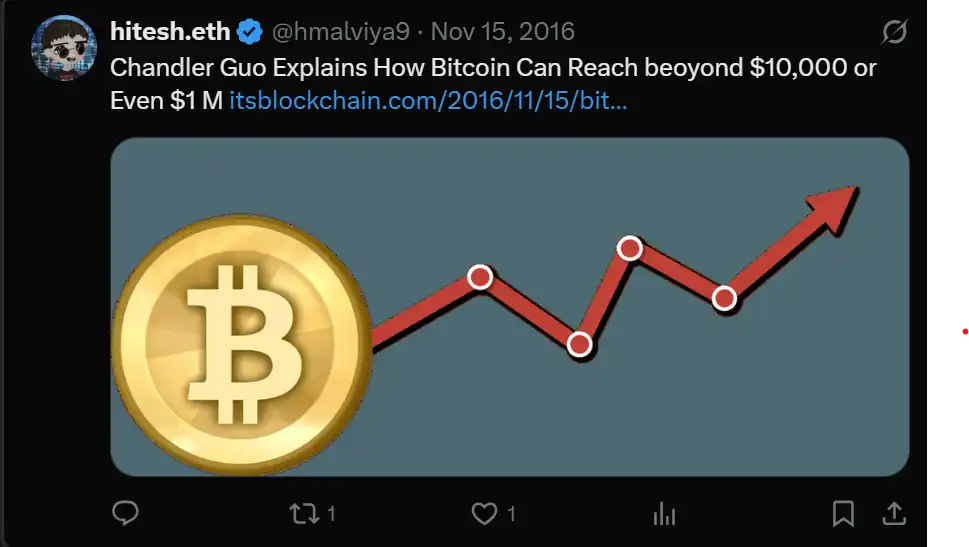
A decentralized system, free from government and central bank influence, offering financial sovereignty to anyone willing to participate. This was not just an investment but a revolution. I wished everyone around me could see what I saw.
I crafted a long message and sent it to 100 friends, urging them to buy Bitcoin and sharing a consultation service that could help them increase their Bitcoin holdings. At that time, I had seen some early success in alternative investments, so I thought at least helping everyone double their Bitcoin holdings in a few months would be an easy task. However, my understanding of the market was still at a rudimentary stage, and I did not fully realize how narratives and emotions influenced price movements in such a young market.
I built my market understanding based on limited data at that time. Most of the altcoins launched between 2015-2017 did not have a long trading history. Their price charts looked like an eternal uptrend, and occasional minor pullbacks seemed more like brief pauses before the next surge.
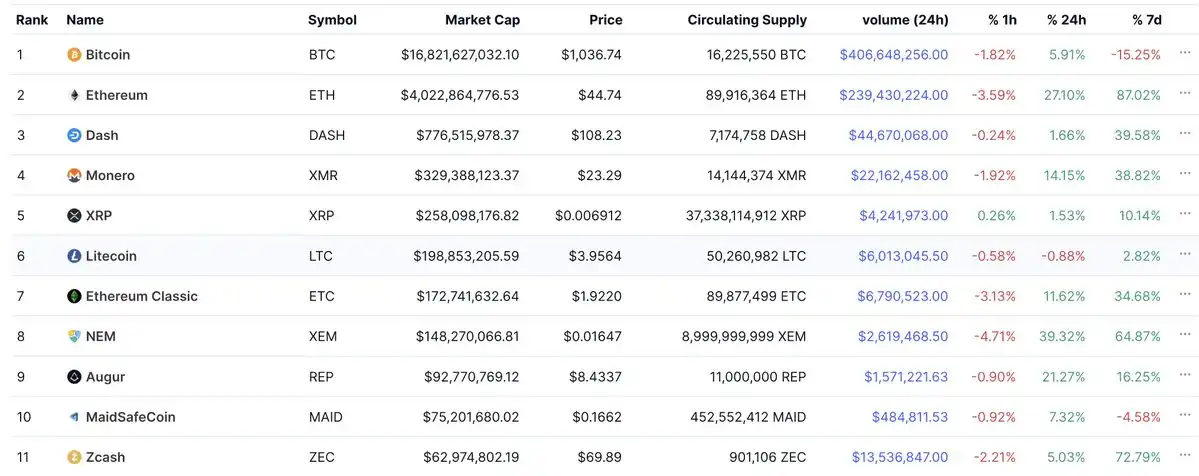
This pattern is intoxicating—buy in, hold, wait, and then watch the asset grow. I gradually formed a concept that the crypto market seemed to be "designed" to always go up. The volatility didn't scare me; I just saw it as a normal part of market operation.
In theory, I thought that enduring these pullbacks should be easy. However, the first major pullback in the second quarter of 2017 completely shattered this illusion. The market didn't just adjust; it collapsed entirely. Most of the popular coins from the first quarter hit almost all-time lows, plummeting by 70%-80%. The ground beneath me seemed to vanish instantly.

Watching my portfolio shrink day by day, the initial excitement turned into panic, and optimism turned into doubt. But I persisted, believing this was just a stage before the next rally. However, the result wasn't a doubling of my Bitcoin holdings but a 70%-80% reduction, and I was back to square one.
Uncertainty started to build up. While Bitcoin surged from $10,000 to $20,000, altcoins struggled to recover. The market sentiment was extremely chaotic—one day it was the "future of money," the next moment, the media declared it "dead." Negative news like China's ban, regulatory crackdowns, and hacking attacks sent shockwaves through the market. My initial belief began to waver—were we really on the brink of a financial revolution, or was this just a destined-to-fail speculative bubble?
Then came January 2018, a month that completely changed my perception of the market. Altcoins didn't just recover; they exploded. TRX surged 100x in a few weeks. Many forgotten projects went on a wild rally, some going up 10x, and some even more dramatically. The market was in a frenzy, and everyone felt like a genius.
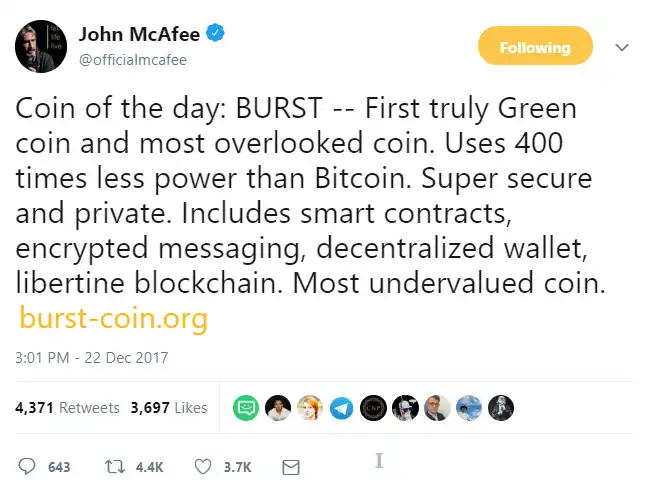
The anxiety of the past few months vanished in a single green candle. That's how my perception was reshaped once again—maybe this is just how the market works? Even after a devastating pullback, it always comes back stronger.
It's this belief that created a delusion for us. We all convinced ourselves that this is the new normal, and every dip is just a setup for the next surge. We waited for that green month to return, believing that patience would eventually pay off. But it never did. The market kept falling, and the once thrilling game turned into a long and painful self-awareness—we were trapped by our own expectations. The cycle once again taunted us.
Each cycle brings about extreme fervor, and in the last cycle, this scenario played out once again in the NFT market. We saw three clear one-month cycles, with certain NFT projects seeing a 100x increase in a short period of time. It felt like going back to 2018. Hype, belief, the idea of "this is just the beginning," FOMO—everything is repeating.
When the market kept rising after experiencing two pullbacks, we thought, "Maybe this is the new market norm." So we kept on HODLing, only to once again lose everything. I got burned badly in the NFT market, just like before.
People often say that learning from past mistakes will make you smarter, but the market always finds a way to make you forget. Your brain deceives itself, believing, "This time is different." "I understand the rules now, won't make the same mistake again." But the illusion persists. You think you're in control of everything, you think you've cracked the market code, only to keep yourself in the game longer, and in the end, the market always wins. Over time, you might learn to lose a little less, but you still lose.
Then, history repeats itself once again. This time it's the agents, public sales launching with a 100x instantly, ICOs making a sudden comeback, everything is repeating, just in a different package. Once again, we believe this cycle can continue for a few more weeks or months.
At that moment, we know we're repeating past mistakes, but we still can't control ourselves. You simply can't control your emotions.
Perhaps right now, you're harboring emotional thoughts—feeling like it's all over, with only a few coins expected to keep rising. But the market always operates counter to expectations, it will play the same game again. You may be forced to stay in the arena or forced to leave, and for most retail investors, this may be the only outcome.
In this game, the only way to win is to earn as much as possible while in the arena and minimize missed profits while outside. Easier said than done.
You may also like

Stolen: $290 million, Three Parties Refusing to Acknowledge, Who Should Foot the Bill for the KelpDAO Incident Resolution?

ASTEROID Pumped 10,000x in Three Days, Is Meme Season Back on Ethereum?

ChainCatcher Hong Kong Themed Forum Highlights: Decoding the Growth Engine Under the Integration of Crypto Assets and Smart Economy

Why can this institution still grow by 150% when the scale of leading crypto VCs has shrunk significantly?

Anthropic's $1 trillion, compared to DeepSeek's $100 billion

Geopolitical Risk Persists, Is Bitcoin Becoming a Key Barometer?

Annualized 11.5%, Wall Street Buzzing: Is MicroStrategy's STRC Bitcoin's Savior or Destroyer?

An Obscure Open Source AI Tool Alerted on Kelp DAO's $292 million Bug 12 Days Ago

Mixin has launched USTD-margined perpetual contracts, bringing derivative trading into the chat scene.
The privacy-focused crypto wallet Mixin announced today the launch of its U-based perpetual contract (a derivative priced in USDT). Unlike traditional exchanges, Mixin has taken a new approach by "liberating" derivative trading from isolated matching engines and embedding it into the instant messaging environment.
Users can directly open positions within the app with leverage of up to 200x, while sharing positions, discussing strategies, and copy trading within private communities. Trading, social interaction, and asset management are integrated into the same interface.
Based on its non-custodial architecture, Mixin has eliminated friction from the traditional onboarding process, allowing users to participate in perpetual contract trading without identity verification.
The trading process has been streamlined into five steps:
· Choose the trading asset
· Select long or short
· Input position size and leverage
· Confirm order details
· Confirm and open the position
The interface provides real-time visualization of price, position, and profit and loss (PnL), allowing users to complete trades without switching between multiple modules.
Mixin has directly integrated social features into the derivative trading environment. Users can create private trading communities and interact around real-time positions:
· End-to-end encrypted private groups supporting up to 1024 members
· End-to-end encrypted voice communication
· One-click position sharing
· One-click trade copying
On the execution side, Mixin aggregates liquidity from multiple sources and accesses decentralized protocol and external market liquidity through a unified trading interface.
By combining social interaction with trade execution, Mixin enables users to collaborate, share, and execute trading strategies instantly within the same environment.
Mixin has also introduced a referral incentive system based on trading behavior:
· Users can join with an invite code
· Up to 60% of trading fees as referral rewards
· Incentive mechanism designed for long-term, sustainable earnings
This model aims to drive user-driven network expansion and organic growth.
Mixin's derivative transactions are built on top of its existing self-custody wallet infrastructure, with core features including:
· Separation of transaction account and asset storage
· User full control over assets
· Platform does not custody user funds
· Built-in privacy mechanisms to reduce data exposure
The system aims to strike a balance between transaction efficiency, asset security, and privacy protection.
Against the background of perpetual contracts becoming a mainstream trading tool, Mixin is exploring a different development direction by lowering barriers, enhancing social and privacy attributes.
The platform does not only view transactions as execution actions but positions them as a networked activity: transactions have social attributes, strategies can be shared, and relationships between individuals also become part of the financial system.
Mixin's design is based on a user-initiated, user-controlled model. The platform neither custodies assets nor executes transactions on behalf of users.
This model aligns with a statement issued by the U.S. Securities and Exchange Commission (SEC) on April 13, 2026, titled "Staff Statement on Whether Partial User Interface Used in Preparing Cryptocurrency Securities Transactions May Require Broker-Dealer Registration."
The statement indicates that, under the premise where transactions are entirely initiated and controlled by users, non-custodial service providers that offer neutral interfaces may not need to register as broker-dealers or exchanges.
Mixin is a decentralized, self-custodial privacy wallet designed to provide secure and efficient digital asset management services.
Its core capabilities include:
· Aggregation: integrating multi-chain assets and routing between different transaction paths to simplify user operations
· High liquidity access: connecting to various liquidity sources, including decentralized protocols and external markets
· Decentralization: achieving full user control over assets without relying on custodial intermediaries
· Privacy protection: safeguarding assets and data through MPC, CryptoNote, and end-to-end encrypted communication
Mixin has been in operation for over 8 years, supporting over 40 blockchains and more than 10,000 assets, with a global user base exceeding 10 million and an on-chain self-custodied asset scale of over $1 billion.

$600 million stolen in 20 days, ushering in the era of AI hackers in the crypto world
Vitalik's 2026 Hong Kong Web3 Summit Speech: Ethereum's Ultimate Vision as the "World Computer" and Future Roadmap
On the same day Aave introduced rsETH, why did Spark decide to exit?
Full Post-Mortem of the KelpDAO Incident: Why Did Aave, Which Was Not Compromised, End Up in Crisis Situation?

After a $290 million DeFi liquidation, is the security promise still there?
ZachXBT's post ignites RAVE nearing zero, what is the truth behind the insider control?

Vitalik 2026 Hong Kong Web3 Carnival Speech Transcript: We do not compete on speed; security and decentralization are the core
In-depth Analysis of RAVE Events: Short Squeeze, Crash, and Quantitative Financial Models of Liquidity Manipulation




 App
App