
 Buy Crypto
- Markets
 Futures
- Spot
- Copy Trade
- Earn
- More
Interview with Cat CEO: I'm in Japan, Selling My House for Cryptocurrency


Original Article Title: "Exclusive Interview with Cat Boss: Selling Houses in Japan with Cryptocurrency"
Original Article Author: Mary Liu, BitpushNews
He was once a practitioner in traditional banking and wealth management offices,
and also a pioneer in turning digital currency into a tool for buying houses.
He has been actively sharing on Twitter for over 10 years,
and has also served a world's most mysterious group of on-chain clients.
You can buy a Japanese guesthouse from him using USDT, while also petting cats and discussing asset globalization.
"I bought a house for my cat!"
----------Here is a Glamorous Divider----------
This individual known as the "Cat Boss," who is active on Chinese Twitter with a cat head image, you may have heard of his name. He uses a cat head mask as his symbol, has a witty and sarcastic speaking style, claims "black humor is my profession," calls himself a "kelp-level financial practitioner," but his real identity is the CEO of the Japanese creative startup real estate company Keihanshin Jutaku Co., Ltd.
In this article, we will delve into the world of the Cat Boss, and together understand how this meticulous entrepreneur with a cat head mask, who curses Osaka residents but actually exchanges coins and houses for clients, managed to sell Japanese real estate to the crypto community.

The Native "Cat Boss" from the Lujiazui Financial District
As early as 2016, the Cat Boss began investing in Bitcoin.
His major was finance, following the "formal route" of completing both undergraduate and graduate studies, and he successively entered the banking, securities, and wealth management sectors, becoming well-versed in the traditional financial industry.
He told Bitpush, "In 2017, when the crypto market started to heat up, I wanted to make the leap, but no one paid attention to me."
He submitted resumes to mainstream exchanges such as Binance, ZB, and Gate, with a background from a French business school and a resume in traditional finance, but did not receive a single offer from the crypto industry.
Also in the same year, with a regulatory order to shut down all domestic exchanges, the crypto industry quickly cooled off, and he can be considered to have "missed out" on the first Crypto wave.
But this was just a small episode. During the same period, he had already begun building his personal IP.
The Cat Master is not a solo "entrepreneur," but one who has inherited the title. The first-generation Cat Master was a leadership figure who came from Noah Wealth and later, serendipitously passed on this account to him.
Today's Cat Master has a stable fan base on Twitter. His profile picture is a custom cat-head mask, originating from a Halloween party during his 2015 study abroad experience in France. It was truly adopted as a brand image in 2017 after he entered the banking system.
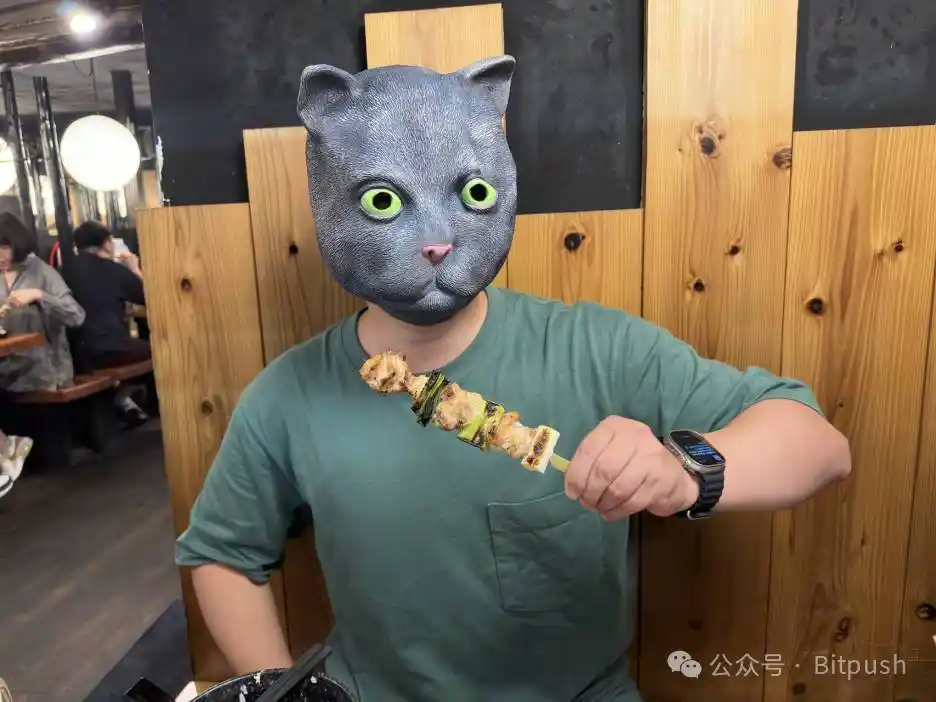
In 2018, through a serendipitous opportunity, he learned about the potential in Japanese real estate—back when the Japanese property market was not in the spotlight, but he "saw the direction."
On January 3, 2020, the Cat Master flew from Pudong Airport to Osaka to explore business opportunities. At that time, news was broadcasting a piece about Wuhan, which he initially thought was a joke, never imagining that he would not return home again. Covid sealed him in Japan, but it also opened another door.
Crypto + Real Estate: Forging a Pragmatic Path
In recent years, an interesting trend seems to have emerged: many individuals are not actually in "dire need," but are instead "polishing" their days through comprehensive considerations such as asset allocation, identity, and lifestyle optimization.
Some wish to send their children to study in Japan, so they buy a house first; others already live in Southeast Asia or the Middle East and find Japan's reasonable cost of living and high safety level appealing.
According to Tencent News, data shows that in 2022, the number of Chinese people buying houses in Japan increased by 50% compared to 2021. In just one month from October to November, there was a staggering 120% surge, with Chinese people accounting for 80% of foreign buyers in Tokyo.
Among them are also many people who have made money in the crypto circle and are eager to convert their assets into tangible physical assets. They do not understand the process of Japanese real estate nor can they find suitable intermediaries.
The Cat Master, who understands the language of the crypto circle, has a financial background, and is in Japan, seized this demand: Japanese real estate is relatively stable, offers considerable returns, and has a clear legal structure, making it an ideal landing place for crypto funds. Purchasing real estate with digital currency has since become a viable option.
This is precisely his expertise.
The Cat Master stated that he was not the first person to engage in this business, but he was the first to systematically formalize the process: "People were buying houses with cryptocurrency in 2018, but the very first Chinese guide was written by us."
His blog post "A Practical Guide to Cryptocurrency Trading in Japanese Real Estate" is almost textbook-level, covering exchange paths, payment methods, and potential pitfalls in a clear and concise manner.
He has also shared a real-life case:
"Back then, a Korean bought a house with UST, but when LUNA crashed, they defaulted on the entire deal."
Having witnessed the madness of the crypto world, he is especially cautious and only engages in one-on-one real estate transactions. In an industry where trust is extremely valuable, he has earned a good reputation through his solid delivery.
According to Cat-CEO, cryptocurrency trading in Japanese real estate has several significant advantages:
· Convenient Cross-Border Payments: Transactions are fast and simple without relying on traditional banks;
· Low Tax Sensitivity: Different countries have different views on Crypto Assets, providing more flexibility in some cases;
· Natural Market Match: Crypto investors are mostly the younger generation with unique preferences for asset allocation and lifestyle.
During the years when industry insiders were going crazy over the get-rich-quick myths of DeFi and NFTs, Cat-CEO quietly turned the "conversion of USDT into Tokyo real estate" into a successful business.
How to Attract Customers? A Person Who Has Been Consistently Tweeting for Over 10 Years Became His Best Advertisement
"90% of my clients come from Twitter." — Cat-CEO 2022
Early on, Cat-CEO also followed the "traditional routine" of marketing, such as writing on public accounts, sharing useful insights, praising Tokyo, discussing policies...
"But it was too generic; everyone was writing the same things."
It wasn't until one day when he took a picture of an ATM machine full of trash in Namba, Osaka, posted it on Twitter with the caption "This is Osaka," and it went viral.
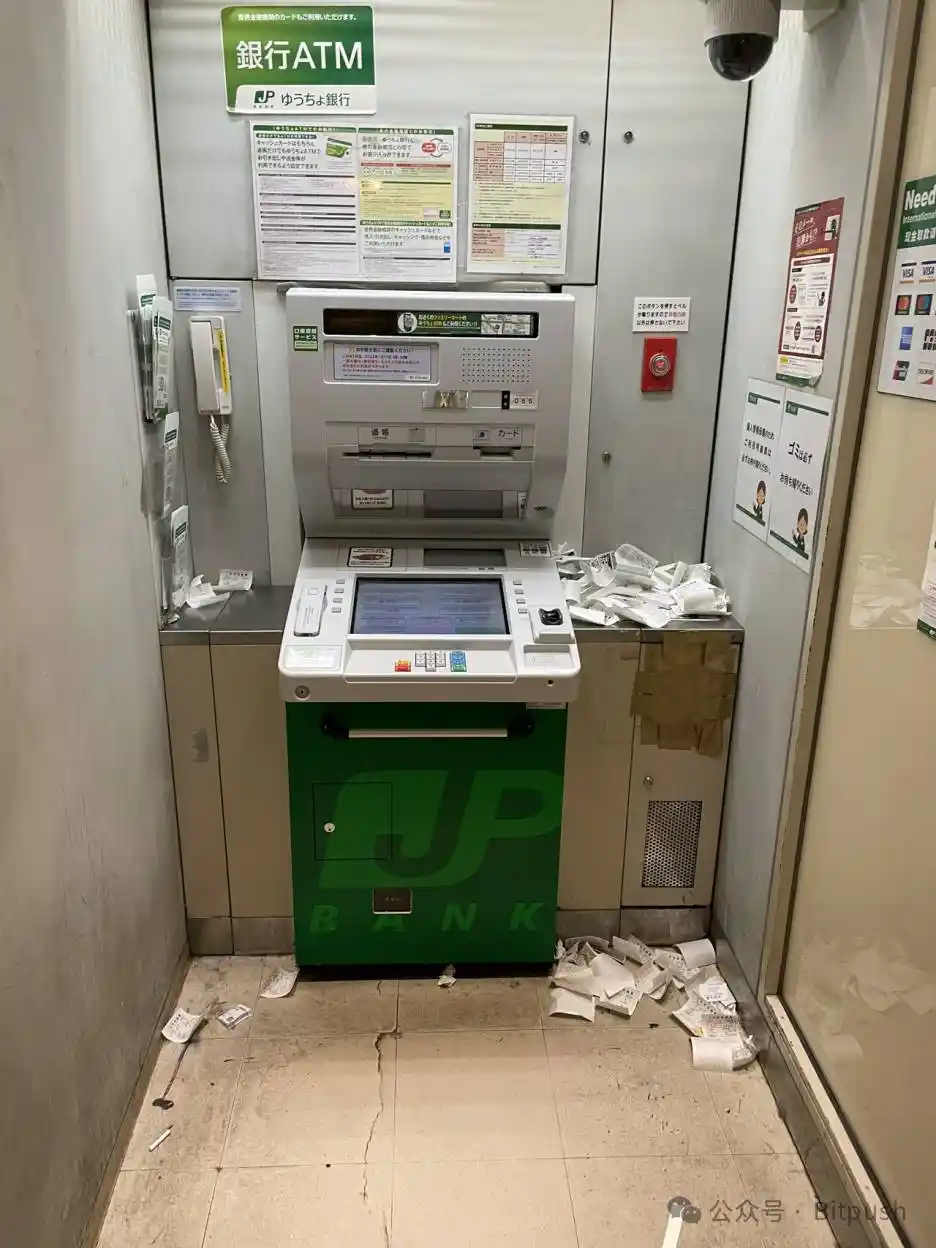
"I gained over 10,000 followers, and at that moment, I knew I had found the key to traffic."
This unintentional act made him realize that the market was not lacking in praise for Japan; instead, it lacked someone willing to speak about the "negatives" and the "realities." Since then, Cat-CEO has embraced the marketing strategy of being a "professional Osaka critic," making him one of the most unique real estate agents in the crypto world.
In this age of information overload, you can't talk about finance in the voice of an ordinary person, nor can you discuss Japanese real estate in the tone of a typical intermediary. In this era of severe homogenization, you either need to make it interesting or no one will remember you.
The slogans "I bought a house for my cat" and "So broke, only $320,000 mortgage left" come from his real life:
In 2018, Cat Master's total household assets once exceeded 30 million, but he carried a large amount of mortgage debt. To ease his parents' pressure, he took on 95% of the loan, and now there is only 320,000 left.
Cat Master also admits that the entrepreneurial path is not easy. The early fees were as high as 12%, and the settlement channels were almost monopolized by Koreans. In 2022, the LUNA incident broke out, causing a large number of customers' UST to go to zero, and the settlement channel was interrupted for half a year.
"The most challenging part is not the process; it's trust." Crypto people are naturally wary of intermediaries, and traditional Japanese landlords are also skeptical of cryptocurrency investors, with a large number of properties unable to match.
He and his team eventually built their own set of processes step by step. Not aiming to be the fastest but aiming to be the one that lasts the longest.
Cat Master's clients are almost all post-80s and post-90s cryptocurrency investors. Relatively young, financially strong, but unable to find real estate companies willing to take their orders because the average age of Japanese real estate practitioners is older and they are not familiar with cryptocurrency operations. Cat Master is one of the few who understands both coins and houses.
His company is also in contact with some local developers in Japan, hoping that more "cryptocurrency payment acceptable" properties will appear in the future.
Not Eager to Chase Trends, Just Hoping to Stay Grounded
Regarding the hot RWA (Real World Assets) track, Cat Master is very clear: "This industry is too early, like the fund industry 100 years ago. There is no underlying asset guarantee, no legal support, and most of it is still speculative."
He is not in a hurry to issue coins, not eager to "put real estate on the chain," just hoping to first smooth out the process of "coin in one hand, house in the other."
"The Japanese real estate industry still uses fax machines for procedures. Talking about smart contract automatic delivery? That is a very distant future."
But he still believes the direction is correct. Future real estate transactions will definitely become more platformized and digitized. Even if not on the blockchain, it will be driven forward by digital asset holders.
Cat Master's ultimate goal is to turn "buying a house in the crypto circle" into a standardized service. He is not eager to expand scale but prefers to serve customers one by one clearly, validate this model clearly, and then see if it can be replicated. "As for whether we can do RWAs in the future, it depends on the legislative situation of RWAs globally. We do not rule out small-scale testing, but the prospect of RWA through existing Japanese laws is still very distant."
Epilogue
This is not a story of getting rich quick, but a story of navigating a practical path between traditional and novel finance. The Whale used his market intuition and understanding of human nature to find a position—and then held onto it. As the tide recedes, perhaps it is these unglamorous "builders" who ultimately define the true value of the crypto economy.
You may also like

Prediction Markets Under Bias

Stolen: $290 million, Three Parties Refusing to Acknowledge, Who Should Foot the Bill for the KelpDAO Incident Resolution?

ASTEROID Pumped 10,000x in Three Days, Is Meme Season Back on Ethereum?

ChainCatcher Hong Kong Themed Forum Highlights: Decoding the Growth Engine Under the Integration of Crypto Assets and Smart Economy

Why can this institution still grow by 150% when the scale of leading crypto VCs has shrunk significantly?

Anthropic's $1 trillion, compared to DeepSeek's $100 billion

Geopolitical Risk Persists, Is Bitcoin Becoming a Key Barometer?

Annualized 11.5%, Wall Street Buzzing: Is MicroStrategy's STRC Bitcoin's Savior or Destroyer?

An Obscure Open Source AI Tool Alerted on Kelp DAO's $292 million Bug 12 Days Ago

Mixin has launched USTD-margined perpetual contracts, bringing derivative trading into the chat scene.
The privacy-focused crypto wallet Mixin announced today the launch of its U-based perpetual contract (a derivative priced in USDT). Unlike traditional exchanges, Mixin has taken a new approach by "liberating" derivative trading from isolated matching engines and embedding it into the instant messaging environment.
Users can directly open positions within the app with leverage of up to 200x, while sharing positions, discussing strategies, and copy trading within private communities. Trading, social interaction, and asset management are integrated into the same interface.
Based on its non-custodial architecture, Mixin has eliminated friction from the traditional onboarding process, allowing users to participate in perpetual contract trading without identity verification.
The trading process has been streamlined into five steps:
· Choose the trading asset
· Select long or short
· Input position size and leverage
· Confirm order details
· Confirm and open the position
The interface provides real-time visualization of price, position, and profit and loss (PnL), allowing users to complete trades without switching between multiple modules.
Mixin has directly integrated social features into the derivative trading environment. Users can create private trading communities and interact around real-time positions:
· End-to-end encrypted private groups supporting up to 1024 members
· End-to-end encrypted voice communication
· One-click position sharing
· One-click trade copying
On the execution side, Mixin aggregates liquidity from multiple sources and accesses decentralized protocol and external market liquidity through a unified trading interface.
By combining social interaction with trade execution, Mixin enables users to collaborate, share, and execute trading strategies instantly within the same environment.
Mixin has also introduced a referral incentive system based on trading behavior:
· Users can join with an invite code
· Up to 60% of trading fees as referral rewards
· Incentive mechanism designed for long-term, sustainable earnings
This model aims to drive user-driven network expansion and organic growth.
Mixin's derivative transactions are built on top of its existing self-custody wallet infrastructure, with core features including:
· Separation of transaction account and asset storage
· User full control over assets
· Platform does not custody user funds
· Built-in privacy mechanisms to reduce data exposure
The system aims to strike a balance between transaction efficiency, asset security, and privacy protection.
Against the background of perpetual contracts becoming a mainstream trading tool, Mixin is exploring a different development direction by lowering barriers, enhancing social and privacy attributes.
The platform does not only view transactions as execution actions but positions them as a networked activity: transactions have social attributes, strategies can be shared, and relationships between individuals also become part of the financial system.
Mixin's design is based on a user-initiated, user-controlled model. The platform neither custodies assets nor executes transactions on behalf of users.
This model aligns with a statement issued by the U.S. Securities and Exchange Commission (SEC) on April 13, 2026, titled "Staff Statement on Whether Partial User Interface Used in Preparing Cryptocurrency Securities Transactions May Require Broker-Dealer Registration."
The statement indicates that, under the premise where transactions are entirely initiated and controlled by users, non-custodial service providers that offer neutral interfaces may not need to register as broker-dealers or exchanges.
Mixin is a decentralized, self-custodial privacy wallet designed to provide secure and efficient digital asset management services.
Its core capabilities include:
· Aggregation: integrating multi-chain assets and routing between different transaction paths to simplify user operations
· High liquidity access: connecting to various liquidity sources, including decentralized protocols and external markets
· Decentralization: achieving full user control over assets without relying on custodial intermediaries
· Privacy protection: safeguarding assets and data through MPC, CryptoNote, and end-to-end encrypted communication
Mixin has been in operation for over 8 years, supporting over 40 blockchains and more than 10,000 assets, with a global user base exceeding 10 million and an on-chain self-custodied asset scale of over $1 billion.

$600 million stolen in 20 days, ushering in the era of AI hackers in the crypto world
Vitalik's 2026 Hong Kong Web3 Summit Speech: Ethereum's Ultimate Vision as the "World Computer" and Future Roadmap
On the same day Aave introduced rsETH, why did Spark decide to exit?
Full Post-Mortem of the KelpDAO Incident: Why Did Aave, Which Was Not Compromised, End Up in Crisis Situation?

After a $290 million DeFi liquidation, is the security promise still there?
ZachXBT's post ignites RAVE nearing zero, what is the truth behind the insider control?

Vitalik 2026 Hong Kong Web3 Carnival Speech Transcript: We do not compete on speed; security and decentralization are the core





 App
App