
 Buy Crypto
- Markets
 Futures
- Spot
- Copy Trade
- Earn
- More
Sonic DeFi Ecosystem Explosion: USDC Whale Entry, TVL Surges Against the Trend by 83%, How Much Further Can Token S Rise?



Original Title: "Sonic DeFi Ecosystem Explosion: USDC Whale Entry, TVL Soars Against the Trend by 83%, Can Token S Surge Again?"
Original Author: Lawrence, Mars Finance
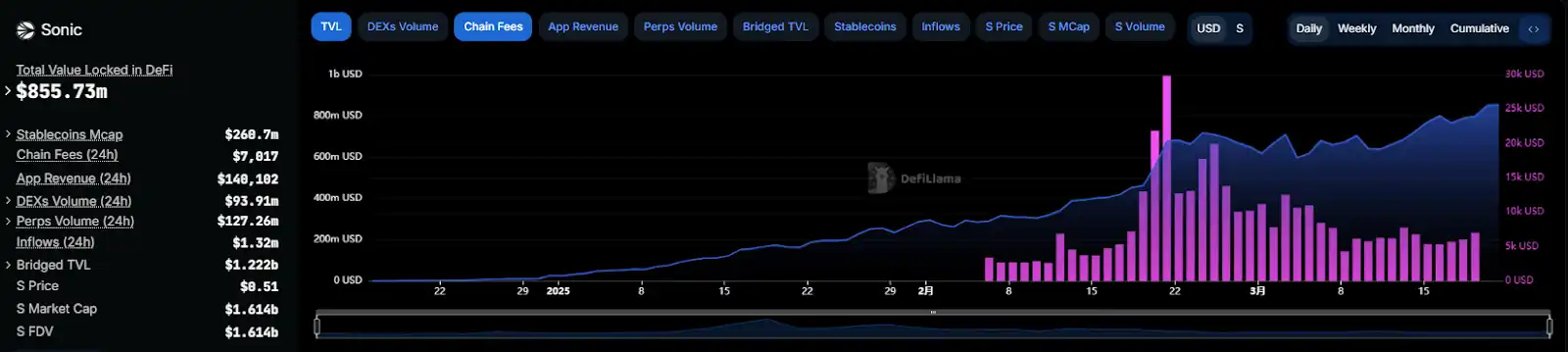
Over the past tumultuous month in the crypto market, almost all mainstream chains' TVL has experienced a decline.
However, in this gloom, the Sonic Network has become a bright scenery, becoming the fastest-growing Layer1 public chain in terms of TVL due to its breakthrough growth. With Circle announcing the official deployment of native USDC and the cross-chain protocol CCTP V2 on Sonic, the network's TVL (Total Value Locked) has surpassed $854 million, with an astonishing increase of 83%. This leap, driven by technological innovation and capital support, is redefining the competitive landscape of Layer1 public chains.
Strategic Partnership: Circle's "Trust Vote" and On-Chain Prosperity

Native USDC and CCTP V2 cross-chain protocol are about to land on Sonic. This means:
· $10 Billion-Level Liquidity Injection: As the first high-performance chain to directly support native USDC, Sonic can accommodate Circle's ecosystem of over $28 billion in stablecoin reserves;
· Cross-Chain Efficiency Revolution: CCTP V2 will compress cross-chain asset transfer time from an average of 15 minutes to within 2 minutes, reducing Gas costs by 76%;
· Compliance Upgrade: USDC's institutional-grade audit and compliance framework pave the way for Sonic to expand into RWA, payment, and other scenarios.
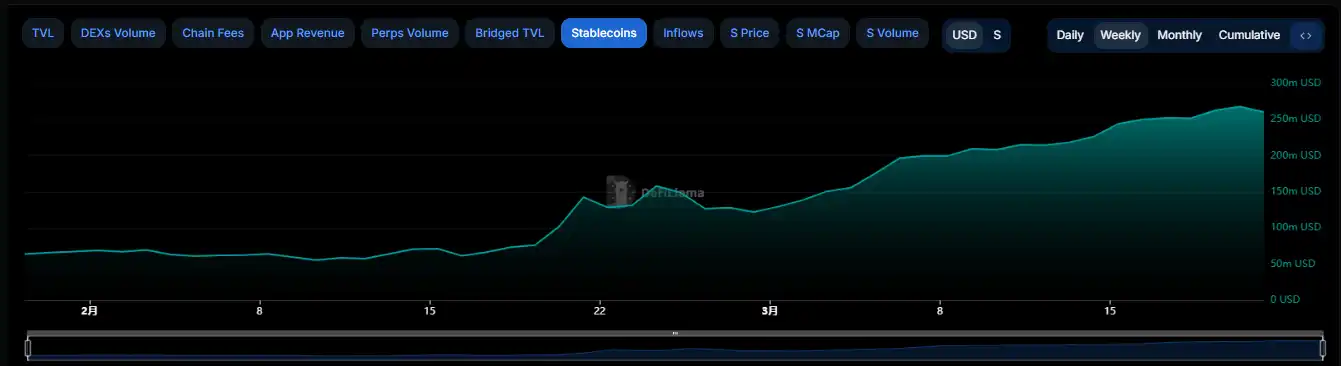
Over the past month, Sonic's on-chain stablecoin reserves have grown from $100 million to $260 million, a surge of over 160%, with competitors such as DAI and FRAX seeing a 22 percentage point decrease, demonstrating strong whale recognition of the infrastructure upgrade.
TVL Soaring Against the Trend: The "Three Musketeers" Behind the 83% Growth
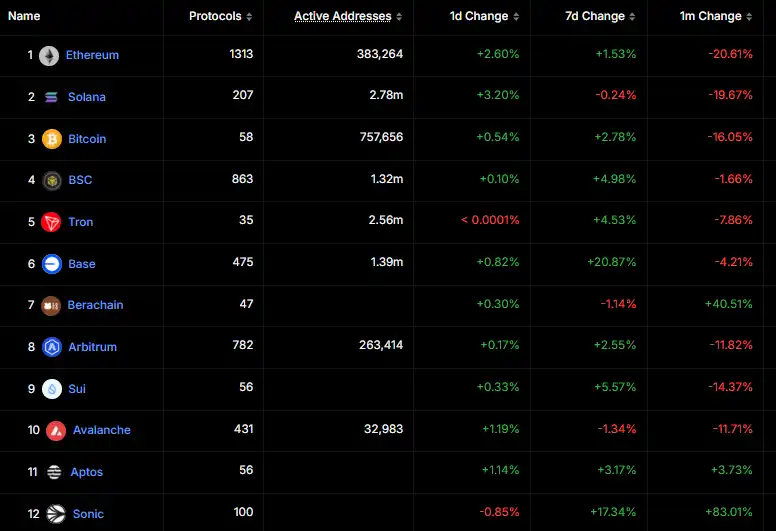
Over the past month and a half, while most public chains have been trapped in a TVL stagnation, Sonic has been absorbing funds at a daily average rate of $13 million. At the time of writing, Sonic's chain TVL has exceeded $850 million, ranking 12th on the Layer1 leaderboard. Its growth over the past month has exceeded 83%, leading all public chains.
Its growth momentum comes from three core protocols:

1. Silo Finance (Lending, TVL $1.94 Billion)
Adopting an isolated risk pool design, it supports overcollateralization of non-standard assets such as BTC and ETH. Its innovative "Dynamic Interest Rate Curve" ensures that the borrowing APY is always below the 30% liquidation threshold, with a default rate of only 0.17%, making it the top choice for institutional arbitrage.
2. Beets (Liquidity Staking, TVL $1.87 Billion)
It converts staked tokens S into interest-bearing assets stS, achieving a 23% annualized yield through an auto-compounding strategy. Users can further stake $stS in Aave V3, creating a "yield farming" model with an actual APY exceeding 35%.
3. Aave V3 (Lending, TVL $1.8 Billion)
On March 3, Aave deployed a lending market on Sonic, a high-performance blockchain evolved from Fantom. This marked Aave's first Layer 1 extension this year, signaling another step in its cross-chain expansion efforts. On the first day of launch, the supply limit was triggered. The Sonic Foundation and Aave DAO jointly provided $15.8 million in liquidity incentives, driving the USDC deposit APY to briefly surge to 19%, with a daily liquidation volume as low as $370,000, demonstrating better risk control than most competitors.

Sonic co-founder Andre Cronje (AC) also retweeted, stating that the current APY for the Sonic token S is 15.9%. If you invest $6.28 million today, you will earn $1 million in a year. This return far exceeds that of other Layer 1 token staking.
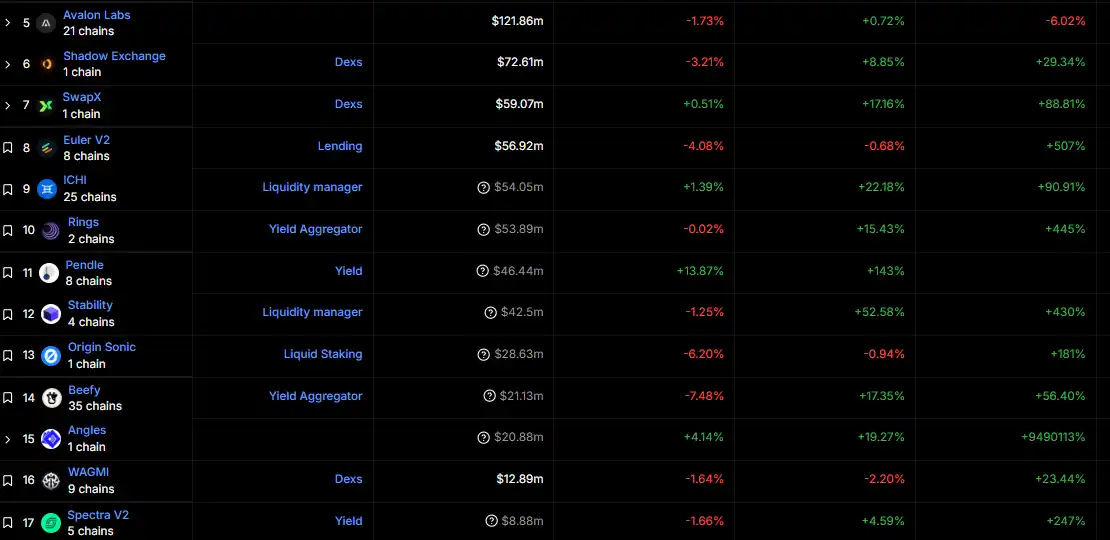
Furthermore, in just over a month, several DeFi protocol rookies have emerged on Sonic, with impressive data. Readers can also choose a project that suits them based on APY, risk, and other factors, achieving a decent stable return in the current turbulent crypto market.
Technological Breakthrough: Algorithmic Stablecoin Breakthrough and AC's "PTSD Paradox"
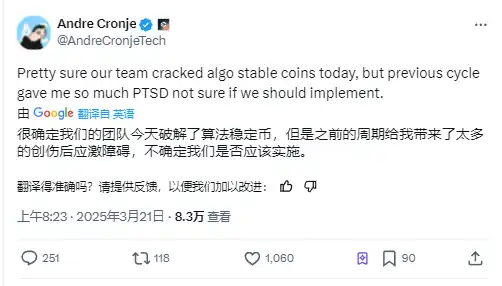
"We have cracked the algorithmic stablecoin puzzle, but past traumas make me hesitant." Sonic co-founder Andre Cronje (AC) threw out a shocking statement in a tweet on March 21. His team claimed to have solved the fatal flaws of predecessor projects like UST through a dynamic collateralization rate adjustment algorithm and a multi-level liquidation protection mechanism. Despite the significant technological breakthrough, AC still admits that the PTSD from the LUNA crash has not yet faded.
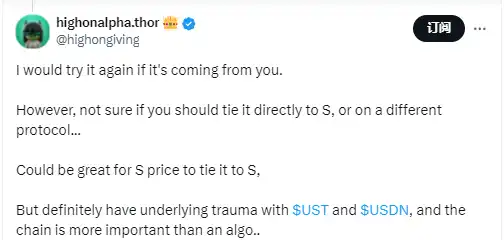
In response, DeFi researcher highonalpha said: "Not sure if it should be directly pegged to S, or pegged to a different protocol... Price pegging to S might be a good idea, but $UST and $USDN definitely have underlying trauma, and the blockchain is more important than the algorithm itself."
Others have also proposed the following solutions:
· Anti-Death Spiral Design: When the stablecoin uncouples, the system prioritizes burning governance tokens instead of minting more, avoiding liquidity dilution;
· Third-Order Interest Rate Model: Dynamically adjust borrowing rates based on collateralization rate, allowing APY to fluctuate elastically in the -5% to +25% range, suppressing speculative selling;
· Cross-Chain Breaker Mechanism: If the price deviates from $1 for more than 48 hours, trigger automatic cross-chain asset redemption to prevent systemic risk contagion.
The Sonic co-founder's contradictory mindset reflects the deep-seated dilemma of the algorithmic stablecoin race—algorithmic stablecoins do not have a perfect solution—and the $400 billion-level wealth evaporation caused by historical collapses like UST has made restoring market confidence far more challenging than achieving technological breakthroughs.
Capital Entry: Top Institutions' "Value Vote" and Valuation Game
In May 2024, Sonic completed a $10 million strategic funding round led by Hashed, with participation from SoftBank, Aave DAO, Bitkraft, and other institutions. This funding was precisely allocated to three major areas:
· Developer Incentive Pool: 30% allocated to DApp gas fee sharing subsidies, driving the number of ecosystem protocols from 62 to 312;
· Compliance Infrastructure: 40% invested in the Sonic Pay payment system, obtaining EU EMI licensing and Singapore MPI approval;
· Cross-Chain Security: 30% is allocated to the development of the Sonic Gateway's Fail-Safe mechanism, increasing the number of validating nodes from 7 to 21.
The current circulating market cap of $S is $1.6 billion, with a Market Cap/TVL ratio of only 1.9, putting it at a value proposition discount compared to mainstream Layer1 solutions. For comparison:
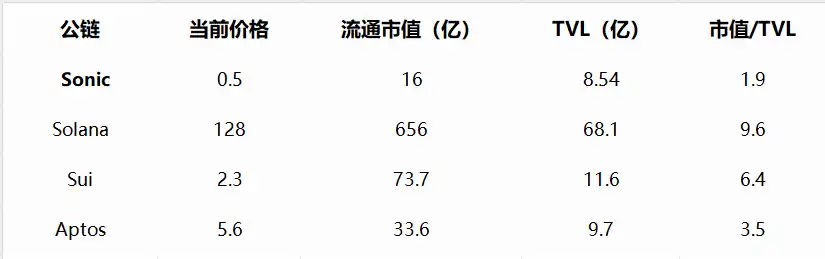
Looking at key metrics, Sonic has established a dual advantage in performance efficiency (TPS/Gas fees) and valuation rationality (Market Cap/TVL ratio):
· Capital Efficiency 306% Higher Than Solana: The market cap per $1 TVL is only 32.7% of Solana's;
· Healthier Staking Economy: A 62% staking rate higher than Sui and Aptos, with an annualized deflation rate of 1.8% forming the value support;
· Institutional Holdings Concentration: The top 10 addresses hold 39% of the circulating tokens, 17 percentage points higher than SUI, signaling strong market control.
"The value of $S is still significantly undervalued." Crypto fund UOB Ventures analyst Lucas Wong pointed out that if Sonic's TVL surpasses $2 billion within the year (150% annual growth rate), calculated at the industry average Market Cap/TVL ratio of 4, the token price could potentially hit $1, representing a 100% upside from the current $0.5.
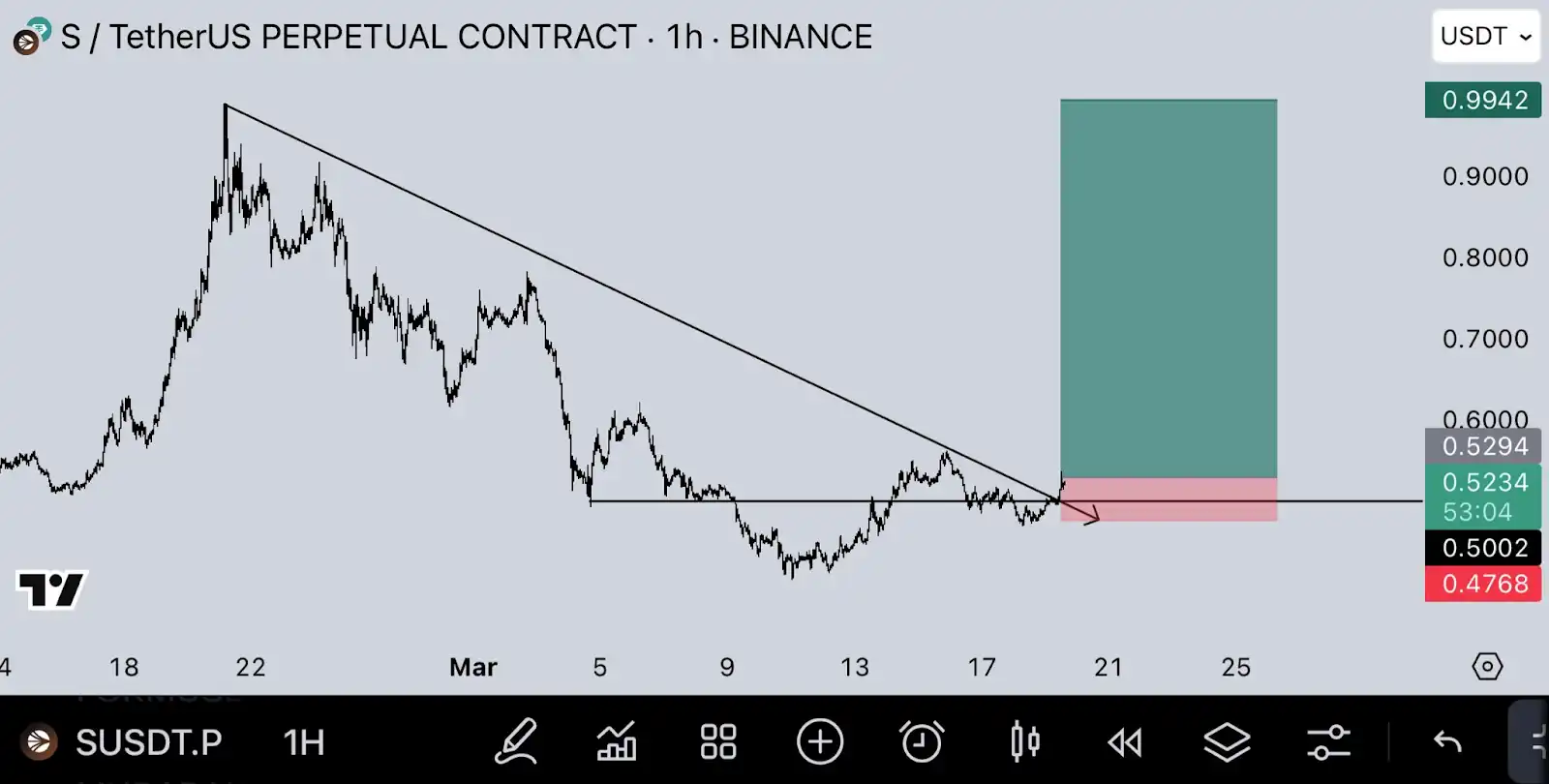
Senior trader NihilusBTC stated that $S is breaking out of a descending wedge and once reversed, it could reach a price of $0.99.
Eve of Ecosystem Breakout: Where Is the Next Wealth Code?
On February 28, Pendle has officially launched on the Sonic Network, introducing the first set of liquidity pools in collaboration with Rings: stkscUSD (May 29, 2025) stkscETH (May 29, 2025). The Rings Protocol is an interest-earning stablecoin protocol where users can mint scUSD/scETH using various stablecoins or ETH assets. scUSD and scETH can be staked in the Veda Vault (becoming stkscUSD and stkscETH) and earn yield through blue-chip DeFi protocols like Aave.
On March 19, the EVM transaction aggregator Enso announced in a post that the Sonic Network is now officially live. Enso Shortcuts is currently supporting the Royco market to earn Sonic rewards. Sonic has kicked off its Sonic Points Season 1, allocating a portion of its approximately 200 million S token airdrop to its ecosystem. Royco makes earning and comparing rewards easy, while Enso works behind the scenes on protocol integrations and deposit operations.
With top protocols like Pendle and Enso joining in, Sonic's DeFi LEGO has revealed a unique opportunity:
1. Yield Tokenization (Pendle × Rings)
By splitting the principal and yield of scUSD/scETH, users can lock in a 40%+ fixed APY or leverage bet on interest rate fluctuations. The first pool attracted $43 million in deposits within 24 hours of launch.
2. On-Chain Payments (Sonic Pay)
Supporting Apple/Google Pay for direct USDC spending, with only a 0.3% fee, 92% lower than Visa's cross-border rates. The average daily transaction volume from beta users surpassed 12,000.
3. Meme Craze (THC, GOGLZ)
Community tokens saw over a 200% weekly surge, with DEX trading volume share spiking to 37%, replicating the early wealth effect of the Solana ecosystem.
Investment Conclusion: The Undervalued Layer1 Alpha Opportunity
From a fundamental standpoint, Sonic has built a sustainable DeFi growth flywheel through a triple innovation of technical performance, economic model, and ecosystem incentives. Its current market cap/TVL ratio is in the base layer's bottom range, with a higher safety margin compared to SUI at a similar stage. If TVL surpasses $20 billion within the year (annual growth rate of 150%), the S token price could potentially reach the $2-3 range (corresponding to a market cap of $60-90 billion), echoing the market movement from August to December 2024, where the emerging public chain SUI surged from $0.46 to $5.36.
Investor Strategy Recommendation:
· Long-Term Holding: Allocate to S Spot and participate in staking (APY15.9%), capturing ecosystem growth dividends;
· Leverage Strategy: Amplify gains through Pendle minting yield tokens or Shadow's x(3,3) model;
· Risk Hedging: Pay attention to airdrop unlock schedules, utilizing contracts and other tools to mitigate short-term volatility.
Sonic's rise is not only a rebirth of the Fantom ecosystem but also a benchmark case of the "efficiency revolution" in the Layer1 competition. In the DeFi narrative resurgence of 2025, its valuation restructuring may become one of the core storylines of this cycle.
You may also like

Morning News | The Hong Kong Securities and Futures Commission announced the regulatory framework for secondary market trading of tokenized investment products; Strategy increased its holdings by 34,164 bitcoins last week; KAIO completed a strategic fi...

What Is an XRP Wallet? The Best Wallets to Store XRP (2026 Updated)
An XRP wallet lets you safely store, send, and receive XRP on the XRP Ledger. Learn what wallets support XRP and discover the best XRP wallets for beginners and long-term holders in 2026.

What are the Top AI Crypto Coins? Render vs. Akash: 5 Gems Solving the 2026 GPU Crisis
What are the best AI crypto coins for the 2026 cycle? Beyond the hype, we analyze top tokens like RNDR, AKT, and FET that provide real-world solutions to the global GPU shortage and the rise of autonomous agents.

What Is a Token in AI? What Is an AI Token + 3 Gems You Can't Miss in 2026
The era of AI hype has transitioned into an era of utility. As we move through Q2 2026, the market is no longer rewarding "narrative-only" projects. At WEEX Research, we are seeing a massive capital rotation into Decentralized Compute (DePIN) and Autonomous Agent coordination layers. This guide analyzes which AI tokens are capturing institutional liquidity and how to spot high-conviction setups in a maturing market.

Consumer-grade Crypto Global Survey: Users, Revenue, and Track Distribution

Prediction Markets Under Bias

Stolen: $290 million, Three Parties Refusing to Acknowledge, Who Should Foot the Bill for the KelpDAO Incident Resolution?

ASTEROID Pumped 10,000x in Three Days, Is Meme Season Back on Ethereum?

ChainCatcher Hong Kong Themed Forum Highlights: Decoding the Growth Engine Under the Integration of Crypto Assets and Smart Economy

Why can this institution still grow by 150% when the scale of leading crypto VCs has shrunk significantly?

Anthropic's $1 trillion, compared to DeepSeek's $100 billion

Geopolitical Risk Persists, Is Bitcoin Becoming a Key Barometer?

Annualized 11.5%, Wall Street Buzzing: Is MicroStrategy's STRC Bitcoin's Savior or Destroyer?
An Obscure Open Source AI Tool Alerted on Kelp DAO's $292 million Bug 12 Days Ago

Mixin has launched USTD-margined perpetual contracts, bringing derivative trading into the chat scene.
The privacy-focused crypto wallet Mixin announced today the launch of its U-based perpetual contract (a derivative priced in USDT). Unlike traditional exchanges, Mixin has taken a new approach by "liberating" derivative trading from isolated matching engines and embedding it into the instant messaging environment.
Users can directly open positions within the app with leverage of up to 200x, while sharing positions, discussing strategies, and copy trading within private communities. Trading, social interaction, and asset management are integrated into the same interface.
Based on its non-custodial architecture, Mixin has eliminated friction from the traditional onboarding process, allowing users to participate in perpetual contract trading without identity verification.
The trading process has been streamlined into five steps:
· Choose the trading asset
· Select long or short
· Input position size and leverage
· Confirm order details
· Confirm and open the position
The interface provides real-time visualization of price, position, and profit and loss (PnL), allowing users to complete trades without switching between multiple modules.
Mixin has directly integrated social features into the derivative trading environment. Users can create private trading communities and interact around real-time positions:
· End-to-end encrypted private groups supporting up to 1024 members
· End-to-end encrypted voice communication
· One-click position sharing
· One-click trade copying
On the execution side, Mixin aggregates liquidity from multiple sources and accesses decentralized protocol and external market liquidity through a unified trading interface.
By combining social interaction with trade execution, Mixin enables users to collaborate, share, and execute trading strategies instantly within the same environment.
Mixin has also introduced a referral incentive system based on trading behavior:
· Users can join with an invite code
· Up to 60% of trading fees as referral rewards
· Incentive mechanism designed for long-term, sustainable earnings
This model aims to drive user-driven network expansion and organic growth.
Mixin's derivative transactions are built on top of its existing self-custody wallet infrastructure, with core features including:
· Separation of transaction account and asset storage
· User full control over assets
· Platform does not custody user funds
· Built-in privacy mechanisms to reduce data exposure
The system aims to strike a balance between transaction efficiency, asset security, and privacy protection.
Against the background of perpetual contracts becoming a mainstream trading tool, Mixin is exploring a different development direction by lowering barriers, enhancing social and privacy attributes.
The platform does not only view transactions as execution actions but positions them as a networked activity: transactions have social attributes, strategies can be shared, and relationships between individuals also become part of the financial system.
Mixin's design is based on a user-initiated, user-controlled model. The platform neither custodies assets nor executes transactions on behalf of users.
This model aligns with a statement issued by the U.S. Securities and Exchange Commission (SEC) on April 13, 2026, titled "Staff Statement on Whether Partial User Interface Used in Preparing Cryptocurrency Securities Transactions May Require Broker-Dealer Registration."
The statement indicates that, under the premise where transactions are entirely initiated and controlled by users, non-custodial service providers that offer neutral interfaces may not need to register as broker-dealers or exchanges.
Mixin is a decentralized, self-custodial privacy wallet designed to provide secure and efficient digital asset management services.
Its core capabilities include:
· Aggregation: integrating multi-chain assets and routing between different transaction paths to simplify user operations
· High liquidity access: connecting to various liquidity sources, including decentralized protocols and external markets
· Decentralization: achieving full user control over assets without relying on custodial intermediaries
· Privacy protection: safeguarding assets and data through MPC, CryptoNote, and end-to-end encrypted communication
Mixin has been in operation for over 8 years, supporting over 40 blockchains and more than 10,000 assets, with a global user base exceeding 10 million and an on-chain self-custodied asset scale of over $1 billion.

$600 million stolen in 20 days, ushering in the era of AI hackers in the crypto world
Vitalik's 2026 Hong Kong Web3 Summit Speech: Ethereum's Ultimate Vision as the "World Computer" and Future Roadmap
On the same day Aave introduced rsETH, why did Spark decide to exit?
Morning News | The Hong Kong Securities and Futures Commission announced the regulatory framework for secondary market trading of tokenized investment products; Strategy increased its holdings by 34,164 bitcoins last week; KAIO completed a strategic fi...
What Is an XRP Wallet? The Best Wallets to Store XRP (2026 Updated)
An XRP wallet lets you safely store, send, and receive XRP on the XRP Ledger. Learn what wallets support XRP and discover the best XRP wallets for beginners and long-term holders in 2026.
What are the Top AI Crypto Coins? Render vs. Akash: 5 Gems Solving the 2026 GPU Crisis
What are the best AI crypto coins for the 2026 cycle? Beyond the hype, we analyze top tokens like RNDR, AKT, and FET that provide real-world solutions to the global GPU shortage and the rise of autonomous agents.
What Is a Token in AI? What Is an AI Token + 3 Gems You Can't Miss in 2026
The era of AI hype has transitioned into an era of utility. As we move through Q2 2026, the market is no longer rewarding "narrative-only" projects. At WEEX Research, we are seeing a massive capital rotation into Decentralized Compute (DePIN) and Autonomous Agent coordination layers. This guide analyzes which AI tokens are capturing institutional liquidity and how to spot high-conviction setups in a maturing market.



 App
App