
 Buy Crypto
- Markets
 Futures
- Spot
- Copy Trade
- Earn
- More
Stablecoin Market Cap Surpasses $230 Billion, an Article Exploring the Yield Strategy You Have Overlooked





Original Title: Stablecoins That Pay: 4 Pre-TGE Stables With Yield
Original Author: Marco Manoppo, Investor at Primitive Ventures
Original Translation: DeepSeek
Editor's Note: The article introduces 4 stablecoin protocols that offer yield pre-TGE (CAP's cUSD, Resolv's USR, Noble's USDN, and Level's lvlUSD), which provide users with returns through innovative methods such as liquidity provision, MEV, arbitrage, re-staking, etc. This marks the transition of stablecoins from a mere value storage tool to a yield-generating tool, and discusses how stablecoins in the future may further develop by integrating new asset types.
The following is the original content (slightly reorganized for better readability):
I remember the days when to achieve Delta hedging, we had to short 1x BTC futures on BitMEX before USDC/T truly integrated with CEX and DEX. It was essentially the most capital-efficient way to achieve 'neutralization' without having to move funds between CEXs.
But those days are long gone; stablecoins have become the safe haven of the crypto market, offering a way to park funds without being affected by relative volatility, mainly because stablecoins largely dominate trading pairs in the crypto market. We hardly see any /ETH or /BTC trading pairs now unless you are an experienced trader making specific directional bets.
Surprisingly, these stablecoins have managed to persuade so many users (over $100 billion) to forgo yield in exchange for quick digital dollar exposure. Looking back, it was easier to give up these returns when rates were at 2% or lower, but the post-COVID rate hikes changed everything.
Apart from being a tool for value transfer, the old-school (first-gen) stablecoins didn't have many other functions.
The new wave of stablecoins is changing that. Imagine if your dollars could work for you, earning returns automatically from reserve pools, liquidity providing, re-staking, lending, or even AI-driven infrastructure.
· The initial iterations were just US Treasury bond-backed stablecoins (e.g., ONDO, Mountain, etc.).
· Then Ethena popularized yield-bearing stablecoins based on the basis trade.
· Today, we see new stablecoin protocols innovating in revenue sources and distribution, providing users with a better experience.
These next-generation stablecoins don't just sit in your wallet; they earn yield in ways that were previously only available to hedge funds, market makers, and institutional players. From DeFi-native lending pools to AI-driven financial networks, these yield-bearing stablecoins are unlocking a new form of passive income—of course, accompanied by the risks inherent to their respective strategies.
We are currently in a meme coin bear market, and here are 4 yield-bearing stablecoin protocols pre-TGE:
@capmoney_ - cUSD
CAP is a new stablecoin protocol built on MegaETH, allowing users to earn real yield without relying on common DeFi tactics like token emissions. Instead, it leverages external revenue sources such as market making, MEV, and arbitrage, areas where whales have been profiting for years.
The premise of CAP is that now regular users can access these same moneymaking strategies without needing insider connections or a finance degree.
cUSD (CAP's stablecoin) is backed 1:1 by USDC/USDT, meaning it is fully collateralized and always redeemable.
Unlike other yield-bearing stablecoins reliant on DeFi liquidity incentives, CAP shifts the risk to re-stakers—those staking ETH through EigenLayer to protect the protocol.
cUSD has two versions:
· Interest-bearing version: Earns passive income from staking strategies.
· Non-interest-bearing version: Pegged to the US dollar to make it easier to use in DeFi.
CAP will also launch stablecoins pegged to BTC and ETH, allowing users to choose different assets while still earning yield.
Key Data
· DEX token emissions: Most DeFi protocols rely on token emissions to attract liquidity, but this model is not sustainable. The top 5 DEXs emit approximately $462 million per year to maintain liquidity provider engagement.
Many stablecoins rely on these incentives to maintain their peg or generate yield, but this creates a flywheel problem - when emissions dry up, so does liquidity.
· CAP does not rely on token incentives. Instead, it generates real yield from external sources such as MEV, arbitrage, and RWA.
· This makes CAP's stablecoin more scalable and resilient, avoiding the issue of liquidity drying up.
· Users earn yield without depending on new token emissions, making it sustainable in any market condition.
LP and MEV: LPs earned over $20 billion last year, with MEV profits on Ethereum alone reaching $686 million.
Real World Assets (RWA): Most stablecoins overlook corporate bonds, a $40 trillion market. While some use treasuries, they rely on centralized custodians.
CAP doesn't rely on traditional financial intermediaries - instead, it integrates RWA revenue streams and crypto-native strategies (like MEV and arbitrage). Operators can deploy funds into bonds, RWA, and structured yield products, while re-stakers provide risk coverage.
This approach offers higher, more consistent returns without relying on unsustainable DeFi incentives - bridging traditional finance with DeFi.
Scores and Airdrop Programs
CAP currently does not have a distinct scoring system.
@ResolvLabs - USR

Resolv is a stablecoin protocol issuing USR, a stablecoin pegged to the US dollar and fully backed by ETH. Unlike stablecoins backed by fiat reserves or treasuries, Resolv keeps its system on-chain while hedging ETH price volatility through perpetual futures.
USR is 100% backed by ETH and overcollateralized through the RLP (Resolv Liquidity Pool).
· ETH Backing: The protocol holds ETH collateral and hedges price risk through shorting futures.
· On-chain Collateral: Most of the ETH is staked to generate yield.
· Institutional Custody: A portion held as margin for futures trading.
Key Data
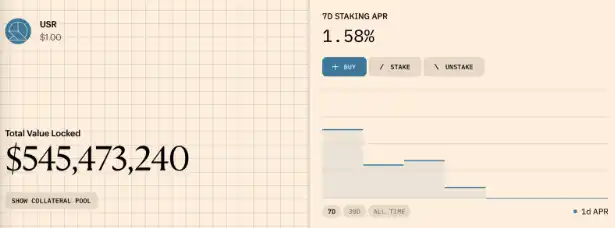
· Total Value Locked (TVL): $5.45 billion
· stUSR APR: Around 2%
· RLP APR: Around 1.5%
· New Revenue Stream: Lagoon Finance offers approximately 11% base APR for WETH deposits
Earnings and Profit Distribution
Users can stake USR (stUSR) to earn rewards, while RLP holders receive an additional risk premium. Profits come from:
· ETH Staking Rewards
· Futures Positions
· Protocol Fees (0.05% instant redemption)
If the protocol incurs a loss, RLP holders will absorb the loss to ensure the stablecoin remains fully backed.
Point and Airdrop Program
Resolv has a point system that rewards users based on their activity.
· Base Rate: 15 points per 1 USR per day
· Early Adopters get an additional 150% points, totaling 37.5 points per USR per day
· Bonus Points: Users can earn additional points through various activities, with detailed information shared on Resolv's social media channels.
Recent Updates and Integrations
· Instant Redemption: Now open to whitelisted users, with a daily limit of 1 million USR.
· Superstate Industry Council Member: Strengthening the connection between traditional finance and DeFi.
· Binance Wallet Integration: Streamlining access to Resolv.
Resolv is fully backed by ETH, designed to be more secure and sustainable.
· Overcollateralized with ETH instead of relying on fiat reserves.
· Mitigates ETH price volatility through Delta-neutral hedging strategies.
· Provides real returns from staking and futures rather than token emissions.
· Minimizes custody risk by keeping the majority of assets on-chain.
@noble_xyz - USDN
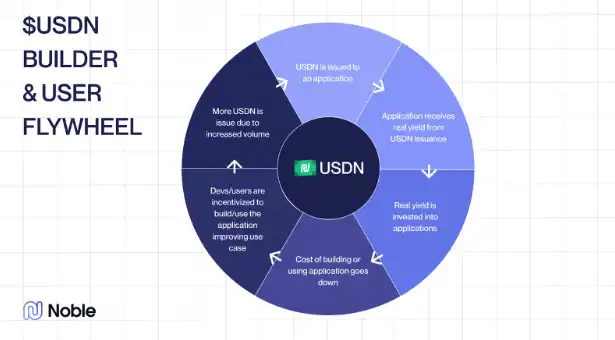
Noble issues USDN, a stablecoin that earns rewards simply by holding it. USDN is fully backed by short-term U.S. Treasury bonds, ensuring the security of your funds and earning real-world returns without the need for collateral or locking up assets.
USDN is 100% collateralized by U.S. Treasury bonds through the M^0 protocol.
· Fully backed by U.S. Treasury bonds—no algorithmic support or risky assets.
· Collateral audited and verified by an asset management firm.
· Unrestricted—buy, sell, transfer, or redeem USDN anytime.
Key Data

· Total Supply: 37.7 million USDN
· Total Holders: 2,972
· Collateral (U.S. Treasury bonds): $1.583 billion
· Liabilities (Unredeemed USDN): $1.526 billion
· Reserve Buffer: $5.7 million
· Estimated APY: 4.2% (paid daily)
· Total Daily Reward: $3,216.41
Earning Rewards with USDN
· Base APY of 4.2%—accrues from the moment you hold USDN.
· Enhanced Yield Treasury — Deposit USDN to earn additional yield from users who lock funds to receive points.
Points and Airdrop Program
Noble rewards USDN holders who lock funds in the Points Treasury to receive points.
· Daily 1+ Point per 100 USDN
· Multiplier increases based on holding period:
30-59 days: x1
60-89 days: x1.25
90-119 days: x1.5
120+ days: x1.75
· Additional rewards are given when the Total Value Locked (TVL) of USDN reaches milestones (e.g., $10 million, $50 million, and $100 million).
Recent Updates and Integrations
· USDN StableSwap Launch — Supports native exchange of stable assets.
· Cross-chain Transfers — Achieved through Wormhole NTT for full multi-chain support.
· Auditing and Transparency — Backed by a top security firm.
@levelusd - lvlUSD
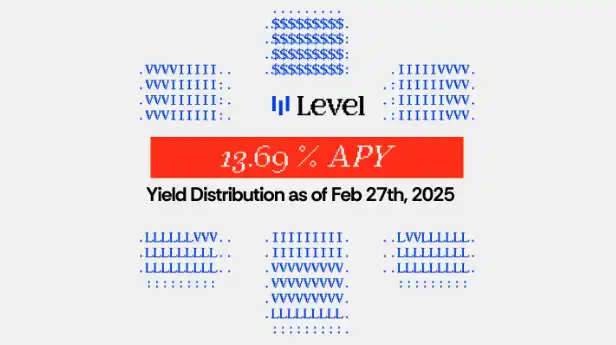
Level is a decentralized stablecoin protocol that issues lvlUSD, a stablecoin fully backed by USDC and USDT. Unlike traditional stablecoins, lvlUSD generates DeFi-native yield by providing its collateral to lending protocols like Aave and Morpho.
This yield is then distributed to users, making lvlUSD an interest-bearing stablecoin designed to seamlessly integrate into DeFi.
lvlUSD is 100% backed by USDC and USDT, with the reserve deployed in blue-chip DeFi lending protocols to generate yield.
· Lending Yield: USDC and USDT deposited in Aave and Morpho lending markets.
· Re-Staking Reward: Some borrowed asset tokens (such as aUSDC) are restaked in Symbiotic to earn additional rewards.
· Fully On-Chain Transparent: Users can verify the reserve at any time.
Earning Yield through lvlUSD
· Stake lvlUSD to receive slvlUSD, accumulating rewards automatically.
· Use lvlUSD in DeFi — swap, trade, or provide liquidity on multiple platforms.
· Additional Re-Staking Rewards — additional earnings from restaking assets in Symbiotic and EigenLayer.
Points and Airdrop Plan
Level offers Level XP, a points-based reward system geared towards active users.
Ways to earn XP:
· Deposit lvlUSD into the XP Farm
· Hold Pendle, Spectra, or Curve LP tokens
· Use lvlUSD as collateral on Morpho
· Multiplier System:
Earn 40x XP with LP or YT tokens
Earn 20x XP with slvlUSD
Earn 10x XP with lvlUSD
· Additional XP from partner protocols: Users earn extra points from protocols such as Resolv, Frax, Elixir, and Angle.
Recent Updates and Integrations
· Expanded Borrowing Yield Sources — More protocols besides Aave are set to be launched.
· Re-Staking Integration — lvlUSD earnings are now enhanced through Symbiotic re-staking rewards.
· Cross-Chain Expansion — lvlUSD becomes more composable in the DeFi ecosystem.
What's Next?
Frankly, most of the yield from these stablecoins has not come from novel assets. Aside from possibly incorporating MEV and hedge fund treasury strategies, most have been competing with existing players, using similar types of productive assets.
It's interesting to see how stablecoin protocols tap into novel assets (whether tangible or intangible) and whether on-chain native wealth has enough interest.
For instance, we've seen some projects in the past attempt to generate yield through private credit or small business loans, but the results have been underwhelming. A significant off-chain component has hindered the protocol from creating an on-chain capital flywheel, and the interest from crypto-native whales (non-crypto-native whales don't need an on-chain rail to access these exposures) has been lacking.
Stablecoins have come a long way from being secure vaults of value. The next generation of stablecoins aims to change the game by providing real yield from productive assets. With DeFi maturing, yield-bearing stablecoins will become a core financial primitive, bridging the gap between crypto and traditional finance.
However, what remains to be seen is what other types of assets can be tapped into to propel this yield-bearing stablecoin to new heights. Perhaps we merely need to expand it without introducing novel assets, and only time will tell us the answer.
Original post: 「Original Post Link」
You may also like

Morning News | The Hong Kong Securities and Futures Commission announced the regulatory framework for secondary market trading of tokenized investment products; Strategy increased its holdings by 34,164 bitcoins last week; KAIO completed a strategic fi...

What Is an XRP Wallet? The Best Wallets to Store XRP (2026 Updated)
An XRP wallet lets you safely store, send, and receive XRP on the XRP Ledger. Learn what wallets support XRP and discover the best XRP wallets for beginners and long-term holders in 2026.

What are the Top AI Crypto Coins? Render vs. Akash: 5 Gems Solving the 2026 GPU Crisis
What are the best AI crypto coins for the 2026 cycle? Beyond the hype, we analyze top tokens like RNDR, AKT, and FET that provide real-world solutions to the global GPU shortage and the rise of autonomous agents.

What Is a Token in AI? What Is an AI Token + 3 Gems You Can't Miss in 2026
The era of AI hype has transitioned into an era of utility. As we move through Q2 2026, the market is no longer rewarding "narrative-only" projects. At WEEX Research, we are seeing a massive capital rotation into Decentralized Compute (DePIN) and Autonomous Agent coordination layers. This guide analyzes which AI tokens are capturing institutional liquidity and how to spot high-conviction setups in a maturing market.

Consumer-grade Crypto Global Survey: Users, Revenue, and Track Distribution

Prediction Markets Under Bias

Stolen: $290 million, Three Parties Refusing to Acknowledge, Who Should Foot the Bill for the KelpDAO Incident Resolution?

ASTEROID Pumped 10,000x in Three Days, Is Meme Season Back on Ethereum?

ChainCatcher Hong Kong Themed Forum Highlights: Decoding the Growth Engine Under the Integration of Crypto Assets and Smart Economy

Why can this institution still grow by 150% when the scale of leading crypto VCs has shrunk significantly?

Anthropic's $1 trillion, compared to DeepSeek's $100 billion

Geopolitical Risk Persists, Is Bitcoin Becoming a Key Barometer?

Annualized 11.5%, Wall Street Buzzing: Is MicroStrategy's STRC Bitcoin's Savior or Destroyer?
An Obscure Open Source AI Tool Alerted on Kelp DAO's $292 million Bug 12 Days Ago

Mixin has launched USTD-margined perpetual contracts, bringing derivative trading into the chat scene.
The privacy-focused crypto wallet Mixin announced today the launch of its U-based perpetual contract (a derivative priced in USDT). Unlike traditional exchanges, Mixin has taken a new approach by "liberating" derivative trading from isolated matching engines and embedding it into the instant messaging environment.
Users can directly open positions within the app with leverage of up to 200x, while sharing positions, discussing strategies, and copy trading within private communities. Trading, social interaction, and asset management are integrated into the same interface.
Based on its non-custodial architecture, Mixin has eliminated friction from the traditional onboarding process, allowing users to participate in perpetual contract trading without identity verification.
The trading process has been streamlined into five steps:
· Choose the trading asset
· Select long or short
· Input position size and leverage
· Confirm order details
· Confirm and open the position
The interface provides real-time visualization of price, position, and profit and loss (PnL), allowing users to complete trades without switching between multiple modules.
Mixin has directly integrated social features into the derivative trading environment. Users can create private trading communities and interact around real-time positions:
· End-to-end encrypted private groups supporting up to 1024 members
· End-to-end encrypted voice communication
· One-click position sharing
· One-click trade copying
On the execution side, Mixin aggregates liquidity from multiple sources and accesses decentralized protocol and external market liquidity through a unified trading interface.
By combining social interaction with trade execution, Mixin enables users to collaborate, share, and execute trading strategies instantly within the same environment.
Mixin has also introduced a referral incentive system based on trading behavior:
· Users can join with an invite code
· Up to 60% of trading fees as referral rewards
· Incentive mechanism designed for long-term, sustainable earnings
This model aims to drive user-driven network expansion and organic growth.
Mixin's derivative transactions are built on top of its existing self-custody wallet infrastructure, with core features including:
· Separation of transaction account and asset storage
· User full control over assets
· Platform does not custody user funds
· Built-in privacy mechanisms to reduce data exposure
The system aims to strike a balance between transaction efficiency, asset security, and privacy protection.
Against the background of perpetual contracts becoming a mainstream trading tool, Mixin is exploring a different development direction by lowering barriers, enhancing social and privacy attributes.
The platform does not only view transactions as execution actions but positions them as a networked activity: transactions have social attributes, strategies can be shared, and relationships between individuals also become part of the financial system.
Mixin's design is based on a user-initiated, user-controlled model. The platform neither custodies assets nor executes transactions on behalf of users.
This model aligns with a statement issued by the U.S. Securities and Exchange Commission (SEC) on April 13, 2026, titled "Staff Statement on Whether Partial User Interface Used in Preparing Cryptocurrency Securities Transactions May Require Broker-Dealer Registration."
The statement indicates that, under the premise where transactions are entirely initiated and controlled by users, non-custodial service providers that offer neutral interfaces may not need to register as broker-dealers or exchanges.
Mixin is a decentralized, self-custodial privacy wallet designed to provide secure and efficient digital asset management services.
Its core capabilities include:
· Aggregation: integrating multi-chain assets and routing between different transaction paths to simplify user operations
· High liquidity access: connecting to various liquidity sources, including decentralized protocols and external markets
· Decentralization: achieving full user control over assets without relying on custodial intermediaries
· Privacy protection: safeguarding assets and data through MPC, CryptoNote, and end-to-end encrypted communication
Mixin has been in operation for over 8 years, supporting over 40 blockchains and more than 10,000 assets, with a global user base exceeding 10 million and an on-chain self-custodied asset scale of over $1 billion.

$600 million stolen in 20 days, ushering in the era of AI hackers in the crypto world
Vitalik's 2026 Hong Kong Web3 Summit Speech: Ethereum's Ultimate Vision as the "World Computer" and Future Roadmap
On the same day Aave introduced rsETH, why did Spark decide to exit?
Morning News | The Hong Kong Securities and Futures Commission announced the regulatory framework for secondary market trading of tokenized investment products; Strategy increased its holdings by 34,164 bitcoins last week; KAIO completed a strategic fi...
What Is an XRP Wallet? The Best Wallets to Store XRP (2026 Updated)
An XRP wallet lets you safely store, send, and receive XRP on the XRP Ledger. Learn what wallets support XRP and discover the best XRP wallets for beginners and long-term holders in 2026.
What are the Top AI Crypto Coins? Render vs. Akash: 5 Gems Solving the 2026 GPU Crisis
What are the best AI crypto coins for the 2026 cycle? Beyond the hype, we analyze top tokens like RNDR, AKT, and FET that provide real-world solutions to the global GPU shortage and the rise of autonomous agents.
What Is a Token in AI? What Is an AI Token + 3 Gems You Can't Miss in 2026
The era of AI hype has transitioned into an era of utility. As we move through Q2 2026, the market is no longer rewarding "narrative-only" projects. At WEEX Research, we are seeing a massive capital rotation into Decentralized Compute (DePIN) and Autonomous Agent coordination layers. This guide analyzes which AI tokens are capturing institutional liquidity and how to spot high-conviction setups in a maturing market.



 App
App