
 Buy Crypto
- Markets
 Futures
- Spot
- Copy Trade
- Earn
- More
The US Stock Market Lost $2 Trillion in 15 Minutes. Is "Tit-for-Tat Tariffs" the Straw That Broke the Bull Market's Back?

The dust has finally settled as President Trump signed two executive orders at the White House last night, announcing the implementation of a 10% "minimum benchmark tariff" on U.S. trading partners, with higher tariffs imposed on certain partners.
Trump displayed a large sign labeled "Reciprocal Tariffs," outlining which trading partners the U.S. plans to tariff and by how much. Among them, the UK at 10%, Brazil at 10%, Australia at 10%, the Philippines and Israel at 17%, the EU at 20%, Japan at 24%, South Korea at 25%, India at 26%, South Africa at 30%, Switzerland at 31%, Indonesia at 32%, Sri Lanka at 44%, Vietnam at 46%, Cambodia at 49%...
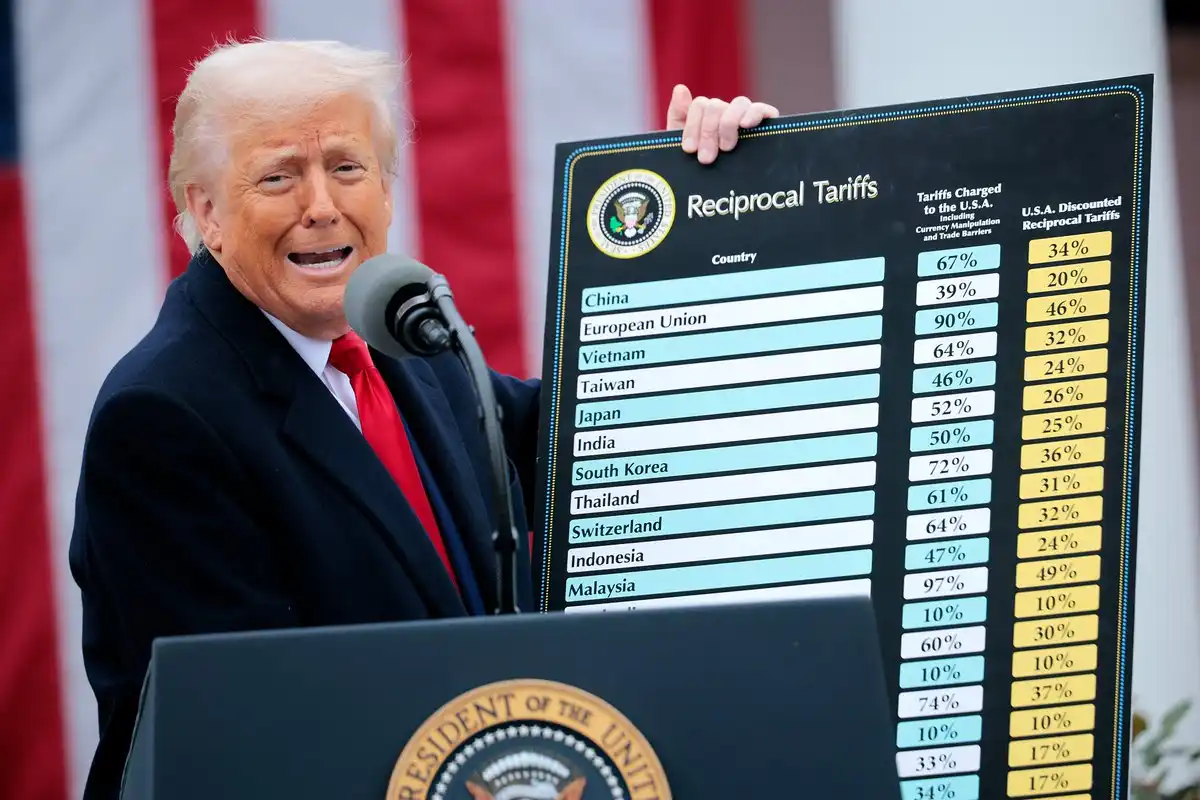
A senior White House official stated that the benchmark tariff rate (10%) will take effect on April 5, while the reciprocal tariffs will come into effect on April 9.
U.S. Treasury Secretary Benson tweeted, "I advise all countries not to take retaliatory action. We can see if there will be a different tariff floor (from the announced figures). Trump's mindset may be to temporarily stabilize things. I was not involved in the negotiations, and we will have to see if there are any negotiations before April 9 (the date when reciprocal tariffs take effect)."
Rise and Fall: Both Crypto and Stock Markets Endure Indiscriminate Attacks
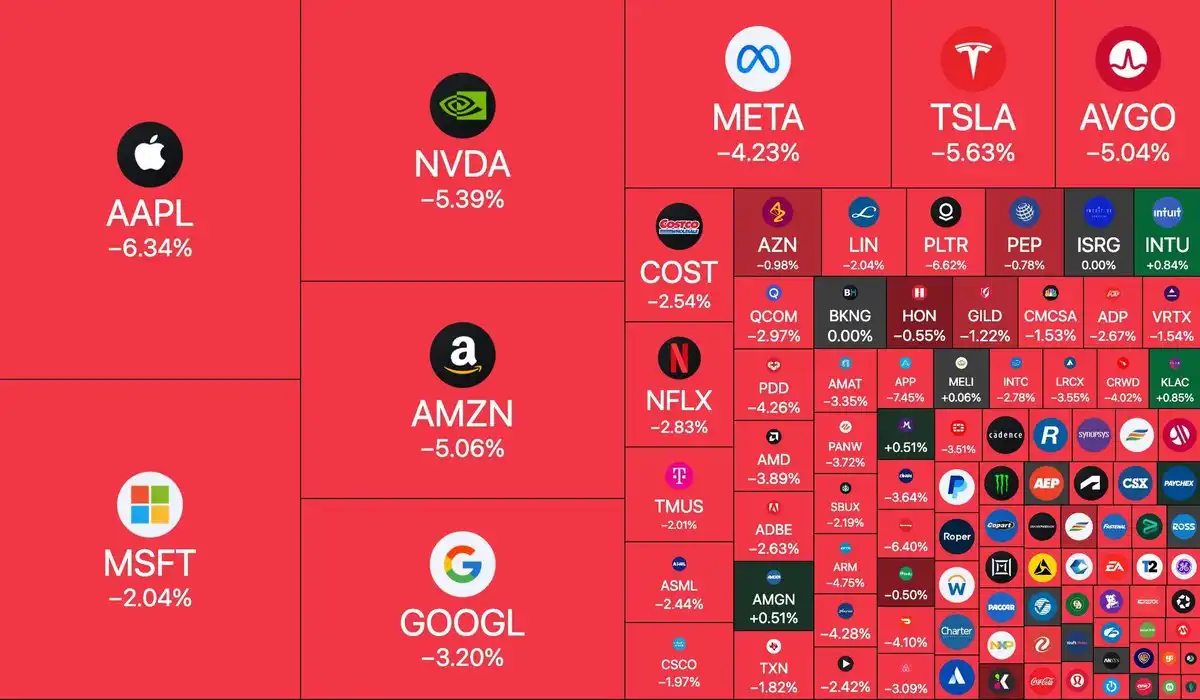
Just hours before Trump announced the tariff policy, the U.S. stock market experienced violent fluctuations. Nasdaq index futures expanded their declines to 2.4%, while S&P 500 index futures dropped by 1.6%. Reuters reported that this indicated investors expected a sharp drop after the market opened on the 3rd. After the tariff policy was implemented, the U.S. Dollar Index (DXY) resumed its decline, falling below the low point when Trump announced the comprehensive tariff, now trading at 103.24, compared to above 104 when reciprocal tariffs were announced.
Meanwhile, in the crypto market, Bitcoin once surged to $88,000, reaching a new high since March 25, rising over 5%, before retracing most of its gains and falling below $82,500. Judging by Bitcoin's current performance, it can be said to have no safe-haven attributes. At the same time, spot gold briefly broke through $3,160 per ounce, continuing to hit new historical highs.
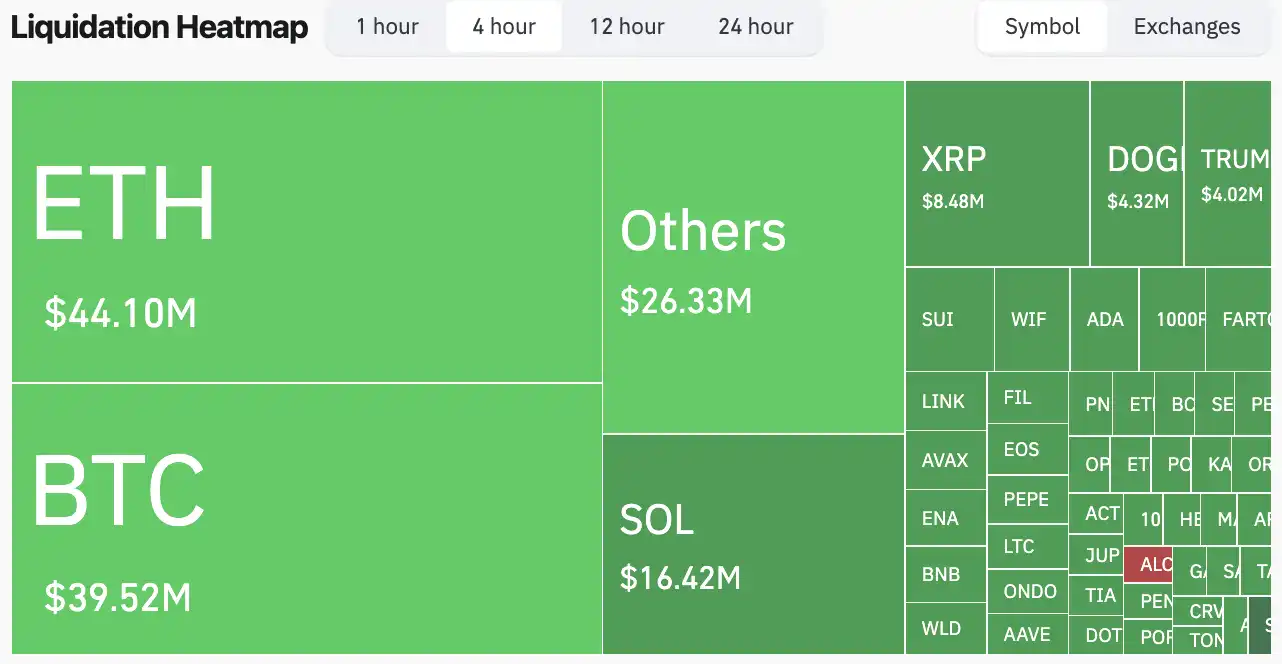
The altcoin market's experience of both rise and fall was even more pitiful, with Coinglass data showing a total of $293 million in liquidations across the network in the past 4 hours, including $187 million in long liquidations and $106 million in short liquidations.
Ridiculous Tariff Calculation Method
Trump claimed that the new tariff measures are intended to promote American manufacturing, "make America prosperous again," "jobs and factories will come back," and even declared April 2nd, the day of imposing "reciprocal tariffs," as the "liberation day" for the United States. However, at the same time, the tariff imposition in the Southeast Asian region is at the forefront, with an increase of 46% for Vietnam, 36% for Thailand, 49% for Cambodia, causing significant damage to the industry.
According to crypto KOL Fiona's sharing, after Trump's election, many entrepreneurs believed that the U.S. would impose the highest taxes on China, so many went to Southeast Asia, especially Thailand and Vietnam, to buy land and build factories. Due to the considerable number of this group, in a short period, the price of local industrial land also soared. Similar to a house-buying frenzy, they rushed to buy, along with a series of costs associated with local labor law registration, spending a considerable amount of money.
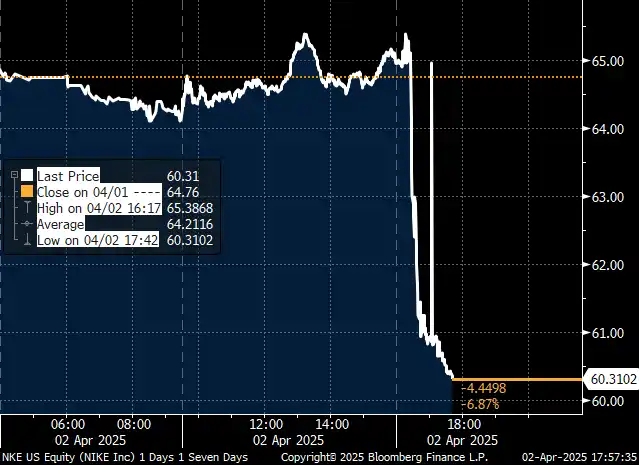
For example, Nike employs over 450,000 workers in its 130 factories in Vietnam. Currently, its stock price has dropped by over 6%, and due to the tariff impact, Nike's brand revitalization plan will also be affected. Nike's production capacity in Vietnam accounts for over 50% of its global total production. This potential tariff policy is expected to increase Nike's annual costs by over $400 million.
For the United States, implementing absolute reciprocal tariffs will not benefit American businesses and people. For example, although it may increase the U.S. federal fiscal revenue in the short term, in the long run, it will cause U.S. commodity prices to soar, thus raising the inflation rate.
Economists are concerned that Trump's tariff policy will inevitably raise U.S. inflation and damage consumer confidence. Projections from Yale University's Budget Lab show that after implementing "reciprocal tariffs," if other countries do not take retaliatory measures, short-term U.S. personal consumption expenditure prices will rise by 1.7%, the actual GDP growth rate will decrease by 0.6 percentage points in 2025; if other countries take retaliatory measures, the increase in U.S. personal consumption expenditure prices will expand to 2.1%, and the actual GDP growth rate will decrease by 1 percentage point.
Ironically, the so-called "tariff rate" data published by the Trump administration is itself a ridiculous calculation result. He claims that some countries impose tariffs on American products as high as 30%, 40%, or even over 50%, but the fact is that these numbers do not originate from real tariffs or non-tariff barriers but from a pseudo-scientific formula of "using the trade deficit divided by the counterpart's total exports."
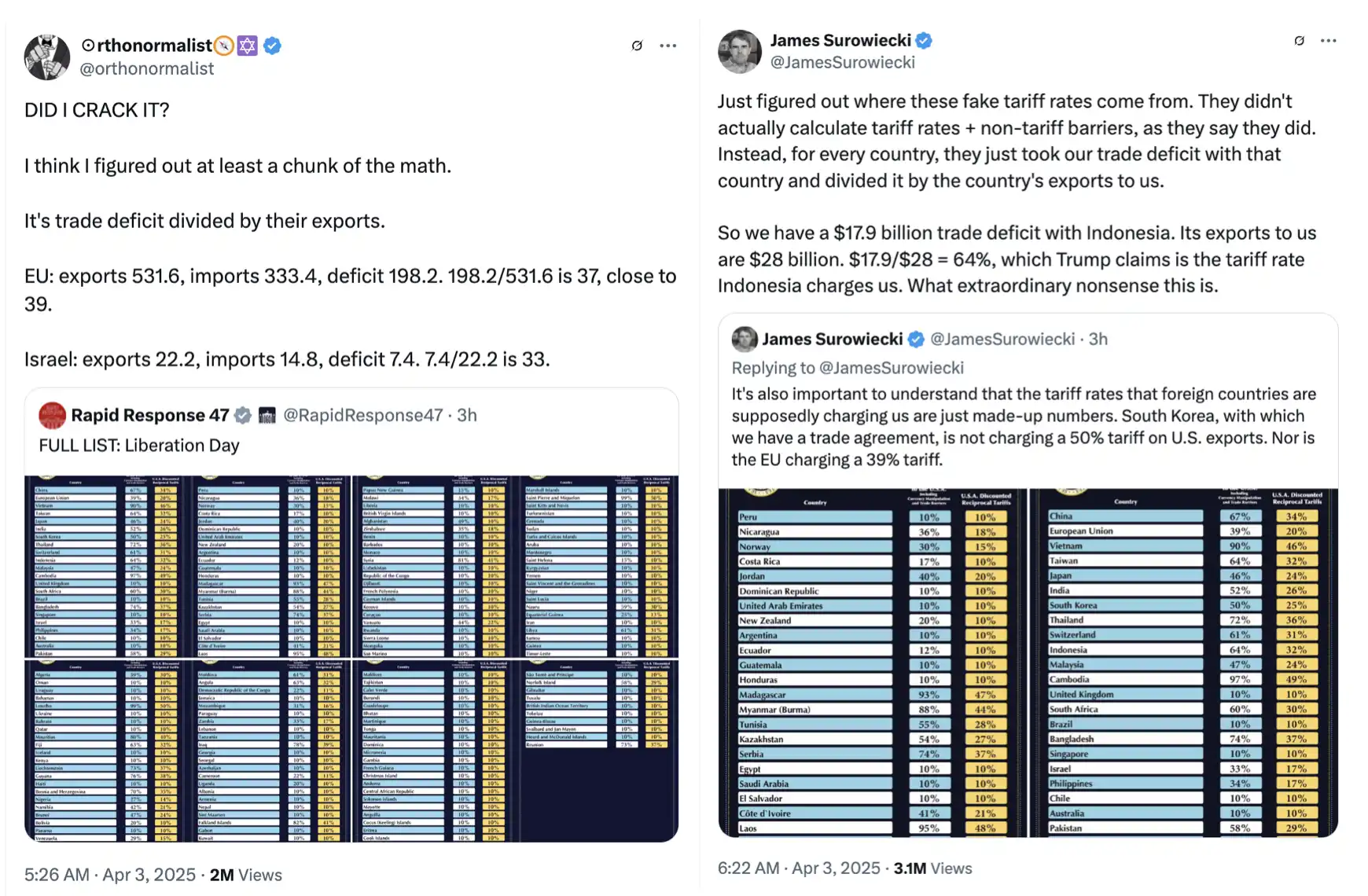
For instance, the U.S. has a $17.9 billion trade deficit with Indonesia, while Indonesia's exports to the U.S. are $28 billion. Dividing 17.9 by 28 gives 64%, and Trump declares that this is the tariff rate Indonesia imposes on the U.S. Similar methods have concocted dozens of percentage points of "false tariff rates" for the European Union, Israel, South Korea, and even neglected the existing trade agreement with South Korea.
This complete misunderstanding of "comparative advantage" and the international trade structure has turned the so-called "reciprocal tariff" into a political slogan and a tool for showmanship. What's especially ironic is that while Trump accuses other countries of unfair high tariffs, he himself imposes extreme tariffs, thus inadvertently harming American-owned enterprises, brands, and middle-class consumers that have long since moved overseas.
Moreover, high tariffs have not truly led to a resurgence of manufacturing. From Trump's first term to Biden taking over, the U.S. government has consistently pushed for industry reshoring. However, over the past 8 years, the reshoring effect has been limited. Instead, due to fluctuating trade policies and increased cost uncertainty, overseas capital has become more cautious about investing in the U.S.
It can be said that this behavior of using a "falsified tariff rate" based on the trade deficit not only demonstrates a disregard for the basic principles of the international economy but also exposes the shortsightedness and self-defeating nature of the entire policy design. Trump's tariff policy, rather than being about "Making America Great Again," could be more aptly described as a miscalculated game that has plunged reality into an inflationary and investment winter, ultimately harming others and not benefiting oneself.
Bottom Fishing or Cash Out? How Will the Crypto Market Move Next?
Last night's tariff results can be considered the worst-case scenario that the market had previously speculated, causing varying impacts on the global financial market.
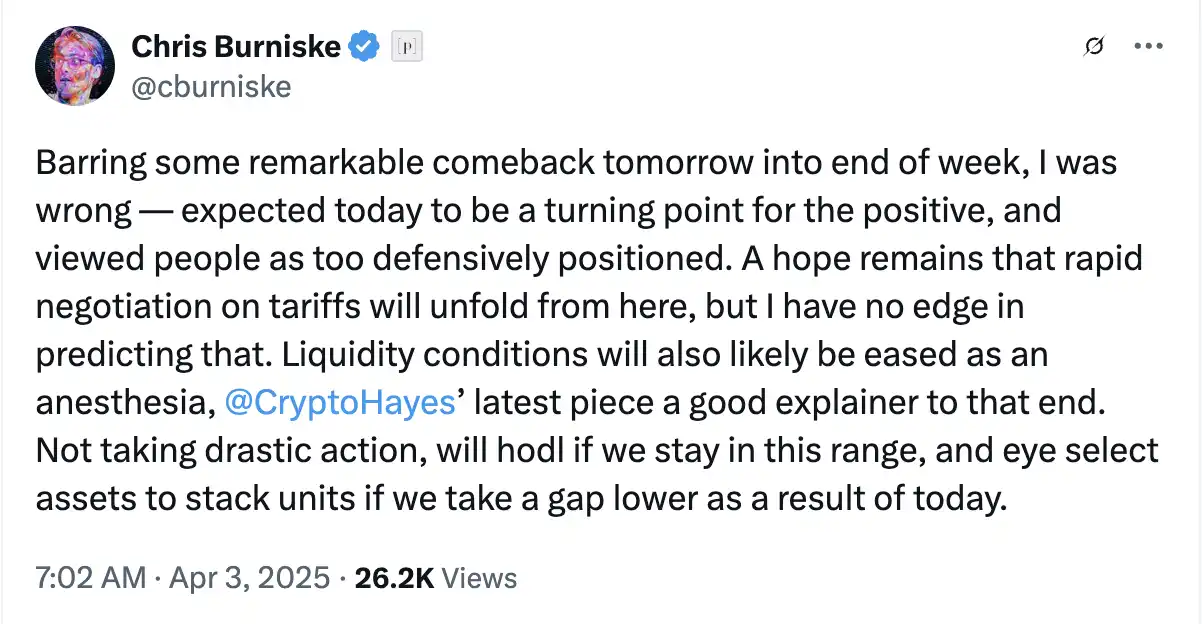
Former Ark Invest Crypto Lead and current Placeholder VC Partner Chris Burniske stated in a post that he initially expected today (April 2) to be a positive turning point, believing the market was overly defensive, but reality proved otherwise. He mentioned that he still hopes the tariff negotiations can quickly progress and said, "I will not take drastic action. If the market remains in this range, I will choose to continue holding. If there is a sharp drop due to today's movement, I will look at some targets and opportunistically increase my position."
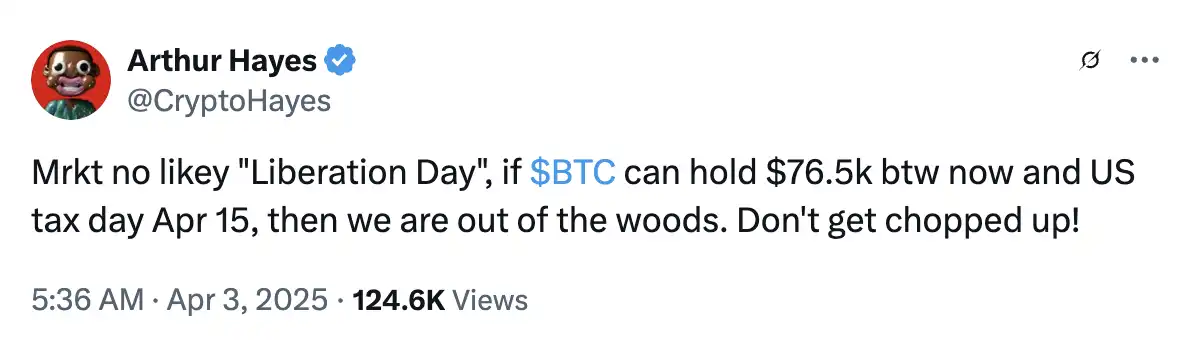
BitMEX Co-Founder Arthur Hayes remarked, "The market doesn't seem to like 'Liberation Day' very much. If Bitcoin can hold above $76,500 between now and U.S. Tax Day (April 15), then we will be out of the woods."
You may also like

Stolen: $290 million, Three Parties Refusing to Acknowledge, Who Should Foot the Bill for the KelpDAO Incident Resolution?

ASTEROID Pumped 10,000x in Three Days, Is Meme Season Back on Ethereum?

ChainCatcher Hong Kong Themed Forum Highlights: Decoding the Growth Engine Under the Integration of Crypto Assets and Smart Economy

Why can this institution still grow by 150% when the scale of leading crypto VCs has shrunk significantly?

Anthropic's $1 trillion, compared to DeepSeek's $100 billion

Geopolitical Risk Persists, Is Bitcoin Becoming a Key Barometer?

Annualized 11.5%, Wall Street Buzzing: Is MicroStrategy's STRC Bitcoin's Savior or Destroyer?

An Obscure Open Source AI Tool Alerted on Kelp DAO's $292 million Bug 12 Days Ago

Mixin has launched USTD-margined perpetual contracts, bringing derivative trading into the chat scene.
The privacy-focused crypto wallet Mixin announced today the launch of its U-based perpetual contract (a derivative priced in USDT). Unlike traditional exchanges, Mixin has taken a new approach by "liberating" derivative trading from isolated matching engines and embedding it into the instant messaging environment.
Users can directly open positions within the app with leverage of up to 200x, while sharing positions, discussing strategies, and copy trading within private communities. Trading, social interaction, and asset management are integrated into the same interface.
Based on its non-custodial architecture, Mixin has eliminated friction from the traditional onboarding process, allowing users to participate in perpetual contract trading without identity verification.
The trading process has been streamlined into five steps:
· Choose the trading asset
· Select long or short
· Input position size and leverage
· Confirm order details
· Confirm and open the position
The interface provides real-time visualization of price, position, and profit and loss (PnL), allowing users to complete trades without switching between multiple modules.
Mixin has directly integrated social features into the derivative trading environment. Users can create private trading communities and interact around real-time positions:
· End-to-end encrypted private groups supporting up to 1024 members
· End-to-end encrypted voice communication
· One-click position sharing
· One-click trade copying
On the execution side, Mixin aggregates liquidity from multiple sources and accesses decentralized protocol and external market liquidity through a unified trading interface.
By combining social interaction with trade execution, Mixin enables users to collaborate, share, and execute trading strategies instantly within the same environment.
Mixin has also introduced a referral incentive system based on trading behavior:
· Users can join with an invite code
· Up to 60% of trading fees as referral rewards
· Incentive mechanism designed for long-term, sustainable earnings
This model aims to drive user-driven network expansion and organic growth.
Mixin's derivative transactions are built on top of its existing self-custody wallet infrastructure, with core features including:
· Separation of transaction account and asset storage
· User full control over assets
· Platform does not custody user funds
· Built-in privacy mechanisms to reduce data exposure
The system aims to strike a balance between transaction efficiency, asset security, and privacy protection.
Against the background of perpetual contracts becoming a mainstream trading tool, Mixin is exploring a different development direction by lowering barriers, enhancing social and privacy attributes.
The platform does not only view transactions as execution actions but positions them as a networked activity: transactions have social attributes, strategies can be shared, and relationships between individuals also become part of the financial system.
Mixin's design is based on a user-initiated, user-controlled model. The platform neither custodies assets nor executes transactions on behalf of users.
This model aligns with a statement issued by the U.S. Securities and Exchange Commission (SEC) on April 13, 2026, titled "Staff Statement on Whether Partial User Interface Used in Preparing Cryptocurrency Securities Transactions May Require Broker-Dealer Registration."
The statement indicates that, under the premise where transactions are entirely initiated and controlled by users, non-custodial service providers that offer neutral interfaces may not need to register as broker-dealers or exchanges.
Mixin is a decentralized, self-custodial privacy wallet designed to provide secure and efficient digital asset management services.
Its core capabilities include:
· Aggregation: integrating multi-chain assets and routing between different transaction paths to simplify user operations
· High liquidity access: connecting to various liquidity sources, including decentralized protocols and external markets
· Decentralization: achieving full user control over assets without relying on custodial intermediaries
· Privacy protection: safeguarding assets and data through MPC, CryptoNote, and end-to-end encrypted communication
Mixin has been in operation for over 8 years, supporting over 40 blockchains and more than 10,000 assets, with a global user base exceeding 10 million and an on-chain self-custodied asset scale of over $1 billion.

$600 million stolen in 20 days, ushering in the era of AI hackers in the crypto world
Vitalik's 2026 Hong Kong Web3 Summit Speech: Ethereum's Ultimate Vision as the "World Computer" and Future Roadmap
On the same day Aave introduced rsETH, why did Spark decide to exit?
Full Post-Mortem of the KelpDAO Incident: Why Did Aave, Which Was Not Compromised, End Up in Crisis Situation?

After a $290 million DeFi liquidation, is the security promise still there?
ZachXBT's post ignites RAVE nearing zero, what is the truth behind the insider control?

Vitalik 2026 Hong Kong Web3 Carnival Speech Transcript: We do not compete on speed; security and decentralization are the core
In-depth Analysis of RAVE Events: Short Squeeze, Crash, and Quantitative Financial Models of Liquidity Manipulation




 App
App