
Fidelity Lists AAVE, LINK and UNI: Is Wall Street Betting on DeFi?

 Prefer us on Google


Key Takeaways
- Fidelity announced on November 24, 2026, that AAVE, LINK and UNI are now available to trade through Fidelity Crypto.
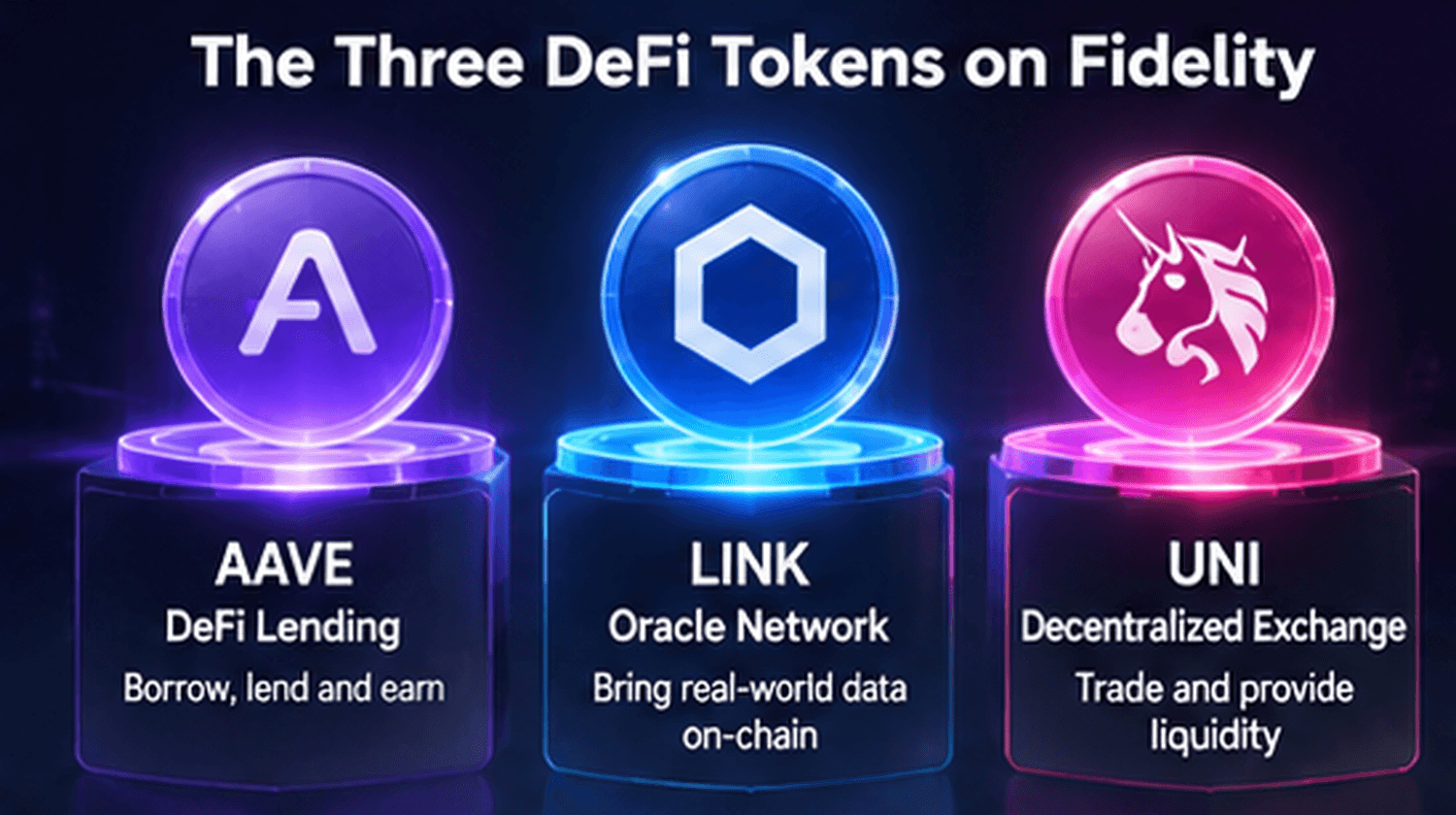
- The three tokens represent different segments of the decentralized finance ecosystem: lending, blockchain data infrastructure and decentralized exchange governance.
- The addition expands access to selected altcoins through a familiar retail financial-services platform, but it does not mean Fidelity has invested directly in the associated protocols.
- A new listing may improve accessibility, although it does not guarantee price appreciation, liquidity growth or long-term institutional adoption.
Fidelity Crypto expanded its trading lineup on November 24, 2026, by adding Aave (AAVE), Chainlink (LINK) and Uniswap (UNI). The move brings three prominent decentralized finance tokens to Fidelity Crypto, giving eligible customers broader access to crypto assets beyond the largest cryptocurrencies. As Fidelity Crypto expands its offerings, investors are asking whether these listings represent a meaningful step toward mainstream DeFi adoption.
What Did Fidelity Announce on November 24?
Fidelity announced that customers can now trade AAVE, LINK and UNI through its Fidelity Crypto service.
The expansion adds exposure to three distinct blockchain use cases rather than three interchangeable speculative assets.
Aave is associated with decentralized lending markets, Chainlink provides infrastructure that connects blockchain applications with external data and services, and Uniswap is a major decentralized exchange protocol.
Their inclusion suggests that Fidelity is expanding beyond a narrow cryptocurrency selection into assets associated with established decentralized applications and infrastructure.
The announcement confirms the availability of token trading through Fidelity's platform. It does not establish that Fidelity itself is depositing assets into Aave, operating a Chainlink node or providing liquidity on Uniswap.
Fidelity's Three Newly Supported Tokens
| Token | Symbol | Project Category | Main Function |
|---|---|---|---|
| Aave | AAVE | DeFi Lending | Governance and protocol ecosystem participation |
| Chainlink | LINK | Oracle Infrastructure | Supports services connecting smart contracts with external information |
| Uniswap | UNI | Decentralized Exchange | Governance of the Uniswap ecosystem |
| Announcement Date | November 24, 2026 | Fidelity Crypto | Retail trading availability |
Sources: Fidelity's official community announcement and project documentation.
The three tokens each have a different economic relationship to their respective networks.
Investors should therefore examine project-specific tokenomics and utility before treating them as a single investment category.
Why Did Fidelity Choose AAVE, LINK and UNI?
Fidelity has not publicly established that the new listings were selected because of a particular investment forecast for the three tokens.
However, each project occupies a recognizable part of blockchain infrastructure.
Aave: Decentralized Lending
Aave enables users to participate in on-chain lending and borrowing markets through smart contracts.
Its protocol operates with collateral requirements, variable market conditions and governance arrangements.
The AAVE token is linked to the ecosystem's governance and related mechanisms under the protocol's applicable rules.
The value of AAVE is not equivalent to the total deposits or borrowing activity occurring within Aave markets.
Chainlink: Data and Interoperability Infrastructure
Chainlink helps blockchain applications access external information and other services.
These capabilities are relevant to decentralized finance, where smart contracts may require market prices, cross-chain communications or other verified data.
LINK is associated with Chainlink's network economics and supported service mechanisms.
As with AAVE, demand for the underlying technology should not be confused with a guaranteed increase in token value.
Uniswap: Decentralized Trading
Uniswap enables token swaps through decentralized liquidity pools rather than a conventional centralized order book.
Its UNI token is primarily associated with protocol governance, subject to the ecosystem's evolving rules and approved proposals.
Trading UNI on Fidelity is different from using the Uniswap protocol to exchange tokens or provide liquidity.
The listing introduces an additional route to access the token without necessarily requiring customers to interact with decentralized applications directly.
-- Price
Is Fidelity's Expansion a Sign of Institutional DeFi Adoption?
The announcement is evidence that a major financial-services company is broadening its retail cryptocurrency offering.
That is commercially meaningful because it may introduce DeFi-associated assets to customers who prefer using an established financial institution.
However, it is not the same as widespread institutional participation in decentralized lending or trading.
What the Listing Confirms—and What It Does Not
| Confirmed | Not Established by the Announcement |
|---|---|
| AAVE trading support | Fidelity investing treasury capital in AAVE |
| LINK trading support | Guaranteed growth in Chainlink network revenue |
| UNI trading support | Fidelity operating liquidity pools on Uniswap |
| Broader asset selection | Automatic approval for all DeFi tokens |
| Customer access through Fidelity Crypto | Guaranteed inflows into the three assets |
Source: Fidelity's November 24 listing announcement; distinctions based on the structure of crypto trading services.
The most defensible conclusion is that selected DeFi tokens are becoming more accessible through mainstream financial-service channels.
Whether this translates into sustained buying demand depends on customer activity, market sentiment and the specific fundamentals of each project.
Could the Fidelity Listings Increase AAVE, LINK and UNI Prices?
Exchange and brokerage listings can attract attention because they reduce certain barriers to asset access.
A familiar platform may appeal to customers who are not comfortable managing decentralized wallets or interacting directly with smart contracts.
However, prices respond to a wide range of factors, including overall cryptocurrency-market direction, token supply, liquidity and investor expectations.
A listing does not guarantee that customers will buy an asset in meaningful quantities.
What Could Drive Each Token After the Listing?
| Token | Potential Positive Driver | Important Risk |
|---|---|---|
| AAVE | Lending activity and protocol adoption | Collateral liquidations and lending risks |
| LINK | Expanded oracle and interoperability demand | Competition and token supply dynamics |
| UNI | DEX activity and governance developments | Regulatory and governance uncertainty |
| All Three | Broader trading accessibility | Market-wide volatility |
Source: Project-specific protocol characteristics and general market analysis. These are possible drivers, not price forecasts.
Investors should also avoid interpreting a short-term price increase following an announcement as proof that the listing caused the entire move.
Cryptocurrency prices frequently respond to multiple overlapping events.
What Does the News Mean for the Future of DeFi?
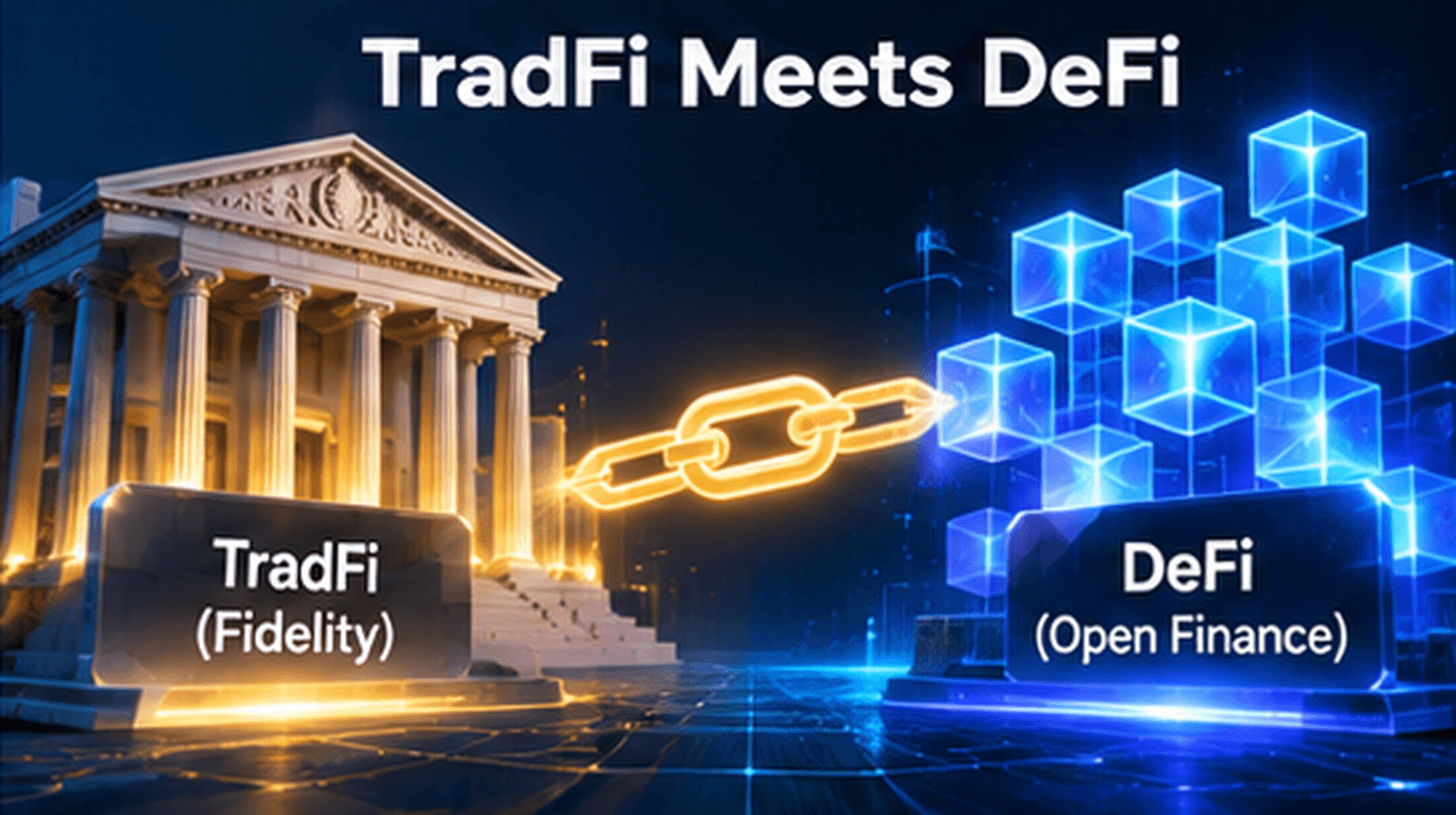
The development supports a broader trend in which centralized financial platforms and decentralized protocols increasingly coexist.
Traditional financial intermediaries provide familiar customer interfaces and compliance frameworks. DeFi protocols offer blockchain-based lending, trading and infrastructure services.
Access to tokens through a brokerage does not automatically create direct integration with the underlying protocol.
Still, it can help expose more customers to the technologies, governance structures and risks associated with decentralized finance.
The longer-term impact will depend on whether new access translates into sustained participation and whether the projects continue developing useful services.
How to Buy or Trade AAVE, LINK and UNI on WEEX
WEEX supports a range of cryptocurrency trading products, including markets associated with AAVE, LINK and UNI.
Users should check the platform's current market listings to confirm available spot or derivatives products for each token.
Step 1: Search for the Asset
Open WEEX and search for AAVE, LINK or UNI. Confirm the full asset name and trading pair to avoid selecting an unrelated token.
Step 2: Select Spot or Futures
Spot trading involves exchanging assets at an executed market price.
Perpetual futures provide derivative exposure without requiring ownership of the underlying token, and they may introduce leverage, funding costs and liquidation risks.
Choose a product only after reviewing its specifications and availability.
Step 3: Review and Submit the Order
Check order quantity, market liquidity, fees and execution conditions before confirming.
Fidelity's listing announcement does not imply that comparable products on other exchanges have identical legal structures, pricing or account protections.
Conclusion
Fidelity Crypto has taken another step toward expanding mainstream access to blockchain-related assets by adding AAVE, LINK and UNI. The selection covers lending, data infrastructure and decentralized exchange governance.
The addition may increase the visibility of these projects, but Fidelity Crypto has not announced that the listings guarantee institutional investment or future token price gains.
For investors, the broader significance of Fidelity Crypto lies in the growing overlap between traditional financial distribution channels and decentralized blockchain ecosystems. Actual adoption and token performance will depend on how these services develop beyond the initial listing announcement.
FAQ
1. Which cryptocurrencies did Fidelity add in November 2026?
Fidelity added Aave (AAVE), Chainlink (LINK) and Uniswap (UNI) to Fidelity Crypto on November 24, 2026.
2. Is Fidelity offering access to DeFi protocols directly?
The announcement concerns token trading support. It does not mean customers are automatically borrowing through Aave, using Chainlink services or trading through Uniswap's decentralized exchange.
3. Why is Chainlink included alongside Aave and Uniswap?
Chainlink provides blockchain data and interoperability infrastructure that supports numerous decentralized applications, including financial protocols.
4. Will the Fidelity listings cause AAVE, LINK and UNI prices to rise?
Not necessarily. Greater accessibility can affect demand, but prices also depend on market conditions, supply, liquidity and project fundamentals.
5. Can AAVE, LINK and UNI be traded on WEEX?
WEEX provides supported markets for these crypto assets. Users should verify specific trading pairs, product types and live availability before submitting orders.
This content is provided for general informational purposes only and doesn't constitute financial, investment, legal, or tax advice. Any events, rewards, online promotions, or related information mentioned herein should not be considered a recommendation, solicitation, or invitation to purchase, sell, trade, or otherwise deal in any crypto assets. Crypto assets are highly volatile and may result in loss. The availability of WEEX services, products, and related events may vary by region. You are responsible for ensuring that your participation is in accordance with applicable local laws and regulations.
You may also like
View moreWhat Is Turbo (TURBO)? Perpetual and Spot on WEEX
Beginner3 minWhat Is Scroll (SCR)? WEEX Spot Pair
Beginner4 minWhat Is aixbt (AIXBT)? Token, Smart Contracts and the WEEX Spot Pair
Beginner3 minMON Drops After 16.6B Token Unlock: Is More Selling Pressure Ahead?
Beginner5 minHow Does CPI Affect Crypto? The Dec. 10 Print Lands After the Fed
Beginner3 minBitcoinCrypto Staking Terms Explained: APR, Tiers, Lock-Up and More
Beginner3 min


