
In 12 tests, PQLN makes Bitcoin's Lightning Network communication levels resistant to quantum computers

 Prefer us on Google


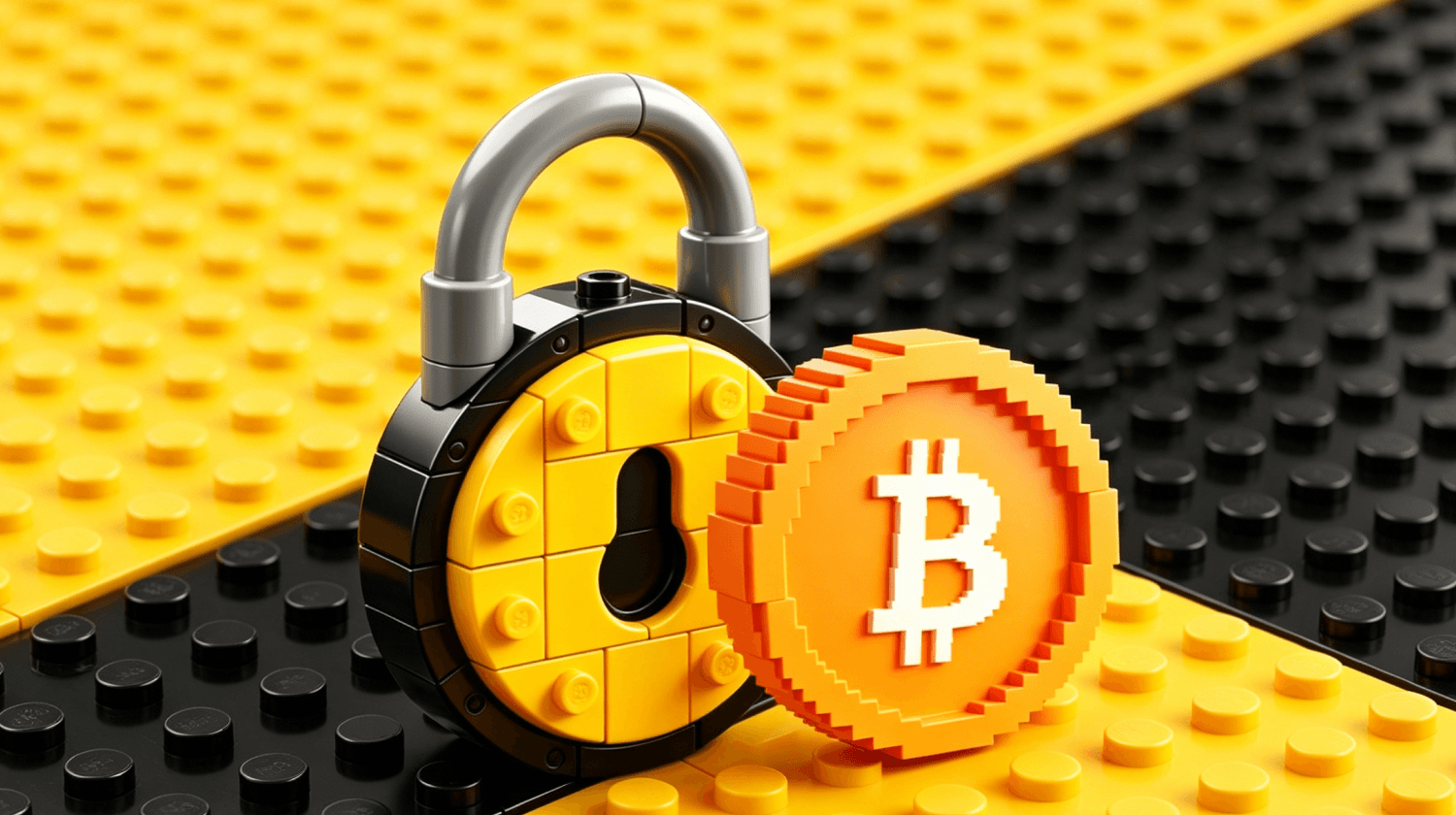
A group of researchers from East Texas A&M University has published PQLN, the first system that makes the communication and routing levels of Bitcoin's Lightning Network resistant to quantum computers: a concrete and testable reality.
Summary
- Key points
- East Texas A&M launches PQLN to make Bitcoin's Lightning Network communication levels resistant to quantum computers
- Lattice-based cryptography for quantum resistance
- Code availability and open-source release
- PQLN protects critical functions of the Lightning Network with minimal impact on performance
- Covered Lightning operations
- Interoperability with legacy nodes and test results
- Effects on performance and bandwidth
- The limits of PQLN and implications for Bitcoin's base layer security
- Community reaction and adoption prospects
- FAQ
- What is PQLN and who developed it?
- What functions of the Lightning Network does PQLN protect?
- Does PQLN protect on-chain Bitcoin funds?
- How does PQLN affect network performance?
Key points
- PQLN was published on September 12, 2026 by East Texas A&M University and adds post-quantum cryptography to the Lightning Network through the ML-DSA and ML-KEM algorithms.
- The code, nearly 11,000 lines added to a fork of rust-lightning, is public on GitHub.
- PQLN covers five critical areas: gossip, peer transport, invoice, payment onion, and offers.
- In the 12 test scenarios with mixed nodes, zero payments were blocked, with an overhead of 0.33 milliseconds or less per operation.
- The bandwidth for gossip increases by about 10 times with the default ML-DSA settings, reduced to about 4 times with the Falcon scheme.
East Texas A&M launches PQLN to make Bitcoin's Lightning Network communication levels resistant to quantum computers
PQLN, published on September 12, 2026, adds post-quantum cryptography to Bitcoin's Lightning Network without dismantling the existing infrastructure. Quantum computers are not yet capable of breaking Bitcoin, but the team at East Texas A&M, based at the RELLIS Campus, decided not to wait for the problem to become real.
The Lightning Network allows Bitcoin users to exchange payments off the main blockchain, without waiting for confirmation at the base level each time. This speed comes at a price: Lightning relies on the same elliptic curve cryptography, known as secp256k1, that protects Bitcoin itself. If a sufficiently powerful quantum computer were to break that math, both levels would remain exposed.
Lattice-based cryptography for quantum resistance
PQLN does not eliminate existing cryptography but complements it with algorithms based on mathematical lattices. The chosen tools are ML-DSA for digital signatures and ML-KEM for key exchange, both drawn from the family of algorithms that the National Institute of Standards and Technology has standardized specifically for this scenario.
Code availability and open-source release
The complete code, nearly 11,000 lines added to a fork of rust-lightning, is already online on GitHub. Co-author Ahmet Kurt and his colleagues designed the system so that updated nodes can communicate seamlessly with those that have not yet been updated.
PQLN protects critical functions of the Lightning Network with minimal impact on performance
The implementation covers five operational areas of the Lightning Network and keeps performance virtually intact, except for an increase in bandwidth dedicated to gossip.
Covered Lightning operations
PQLN protects gossip, peer transport, invoice, payment onion (the layer that ensures routing privacy), and offers, following the framework of the BOLT specifications.
Interoperability with legacy nodes and test results
I tests covered all 12 possible scenarios of combinations between updated nodes and legacy nodes. The result is clear: zero payments blocked in every single tested configuration.
Effects on Performance and Bandwidth
The additional cryptographic operations introduced by PQLN remain under 0.33 milliseconds per operation, an impact deemed manageable by researchers. The bandwidth chapter is more complex: gossip downloads increase by about 10 times with the default settings based on ML-DSA. Switching to the Falcon signature scheme reduces the increase to about 4 times.
-- Price
The Limits of PQLN and the Consequences for Bitcoin's Base Layer Security
PQLN protects the communication and routing levels of Lightning, but does not cover the actual funds in the channels or any on-chain elements of Bitcoin. The reason is structural: changing the cryptography of Bitcoin's base layer requires a consensus upgrade, meaning the agreement of the entire network of miners and node operators on new rules.
This detail explains why the news matters beyond the technical aspect. A Lightning Network made resistant to quantum computers at its communication levels can protect payments and routing today, independently of the rest of the network, but leaves Bitcoin's economic core exposed until miners and nodes decide to move together. It serves as a reminder of how slow and complex any change to the base layer of the blockchain is, even when the defense technology already exists.
The Community's Reaction and Adoption Prospects
Discussions about PQLN appeared on forums like Delving Bitcoin and BitcoinTalk just days after publication, indicating immediate technical interest around the project. The open-source release, complete with a modified sample node, lowers the entry barrier for those wanting to study the approach or evaluate its adoption in other Lightning implementations.
It remains to be seen whether this initial attention will translate into broader integration. For now, PQLN offers the Bitcoin community a concrete and verifiable tool to begin testing the quantum resistance of the second layer, while the discussion on the base layer remains open.
FAQ
What is PQLN and who developed it?
PQLN, or Post-Quantum Lightning Network, is an implementation of quantum-resistant cryptography for Bitcoin's Lightning Network, developed by researchers at East Texas A&M University.
Which functions of the Lightning Network does PQLN protect?
PQLN protects five critical areas of the Lightning Network: gossip, peer transport, invoices, payment onions, and offers.
Does PQLN protect on-chain Bitcoin funds?
No, PQLN does not protect the actual funds in the channels nor the on-chain elements of Bitcoin, as a consensus upgrade on the base layer of the network would be required.
How does PQLN affect network performance?
PQLN adds a cryptographic overhead of about 0.33 milliseconds per operation and can increase bandwidth consumption for gossip by about 10 times with ML-DSA, or about 4 times using the Falcon signature scheme.
Content created with the assistance of artificial intelligence and human editorial review.
This content is provided for general informational purposes only and doesn't constitute financial, investment, legal, or tax advice. Any events, rewards, online promotions, or related information mentioned herein should not be considered a recommendation, solicitation, or invitation to purchase, sell, trade, or otherwise deal in any crypto assets. Crypto assets are highly volatile and may result in loss. The availability of WEEX services, products, and related events may vary by region. You are responsible for ensuring that your participation is in accordance with applicable local laws and regulations.
You may also like

Robinhood: Tenev Sees Crypto Outpacing Sports
![[Column] Which Coins Strengthen as Prices Rise](/public-static/050_2dc4cf2ce9.png?format=avif)
[Column] Which Coins Strengthen as Prices Rise

Compute Finance: The Financial Layer Being Built by the AI Economy, 0G is Constructing a New Paradigm for Computing Assets

Wall Street Legend Bill Miller: Why Did I Bet Half My Fortune on Bitcoin?

The Stronger the AI, the Lower the Wages: Your Education is Becoming the Most Expensive Devalued Asset

The EU will strengthen its oversight of AI and tokenization starting in 2027

Multicoin: RWA on Chain Will Open the Era of DeFi 2.0

Crypto’s bear market wiped out over $2 trillion, yet on-chain activity held above $9 trillion

IMF Calls for Fewer but Deeper Reforms to Address a More Vulnerable Global Economy

Fireblocks Activates Support for Cardano Native Tokens for Banks and Exchanges
Kaspa Aims for 100 Blocks Per Second: DAGKnight, ZK, and VProgs
Meta's 'Muse' Sparks High Expectations... "An iPod Moment for AI" (Comprehensive)

The Real Bottleneck of Midnight's Slow Growth: It's Not the Product, It's Market Formation

The Death of Hsin-Ju: A Prelude to Conspiracy
IonQ Stock Surges 5%: Nvidia Just Agreed to Host Its New Quantum System
Optimism Superchain TVL Exceeds 14000 Million

Hedera IDTrust joins IBM Cloud Catalog for AI agents

Towards "mass tokenization": the finance of the future will trade 24/7

Raiffeisen’s crypto deal could reach 18 million customers. How many can actually trade?

Nick Clegg's View on AI: The Real Risk is Power, Not Robots

Krafton Stock Price Prediction 2026: Can the PUBG Maker Recover to 300,000 Won?
Krafton stock sits near a 52 week low at KRW 198,000, but multiple analysts still use KRW 300,000 or higher in their models, here's what would actually need to happen to close that gap.

Treasury at Highest in 18 Years: Federal Reserve Set for New Rate Hikes
Krafton Stock Hits a 52 Week Low: What Is Going Wrong With the PUBG Maker?
Krafton stock fell to a fresh 52 week low as a PUBG esports ban controversy in Vietnam added pressure even as the company just reported record first-half revenue and profit.

NSE Stock IPO Drew $10 Billion in Bids: Inside the 5.7x Oversubscription
NSE's IPO drew more than $10 billion in bids but institutional buyers subscribed at up to 17x while retail demand spent most of the window still short of full subscription.

AI: DeepSeek and Kimi Allegedly Redirected Queries to Claude Without Users' Knowledge

NSE Stock Price Debuts Today at a Valuation Higher Than Nasdaq: Here's the Reason
NSE listed today at roughly 43 times earnings higher than Nasdaq, ICE, and Hong Kong Exchanges combined and analysts say investors aren't just pricing the exchange, they're pricing India's growth story.
Stablecoin 2.0: Who Receives the Interest from Your Stablecoins?

Is the 1 Billion POL Burn Just a Joke?
67% of the wealthy own digital assets, but the crypto adoption gap remains huge

Trump-Xi: The 3 Issues Threatening Bitcoin and Cryptocurrencies
Robinhood: Tenev Sees Crypto Outpacing Sports
[Column] Which Coins Strengthen as Prices Rise
Compute Finance: The Financial Layer Being Built by the AI Economy, 0G is Constructing a New Paradigm for Computing Assets
Wall Street Legend Bill Miller: Why Did I Bet Half My Fortune on Bitcoin?
The Stronger the AI, the Lower the Wages: Your Education is Becoming the Most Expensive Devalued Asset
The EU will strengthen its oversight of AI and tokenization starting in 2027
Contents
Latest articles




Latest coin listings on WEEX


