
CoreWeave Stock Plunges 15%: Why a Bond Yield Spooked CRWV

 Prefer us on Google


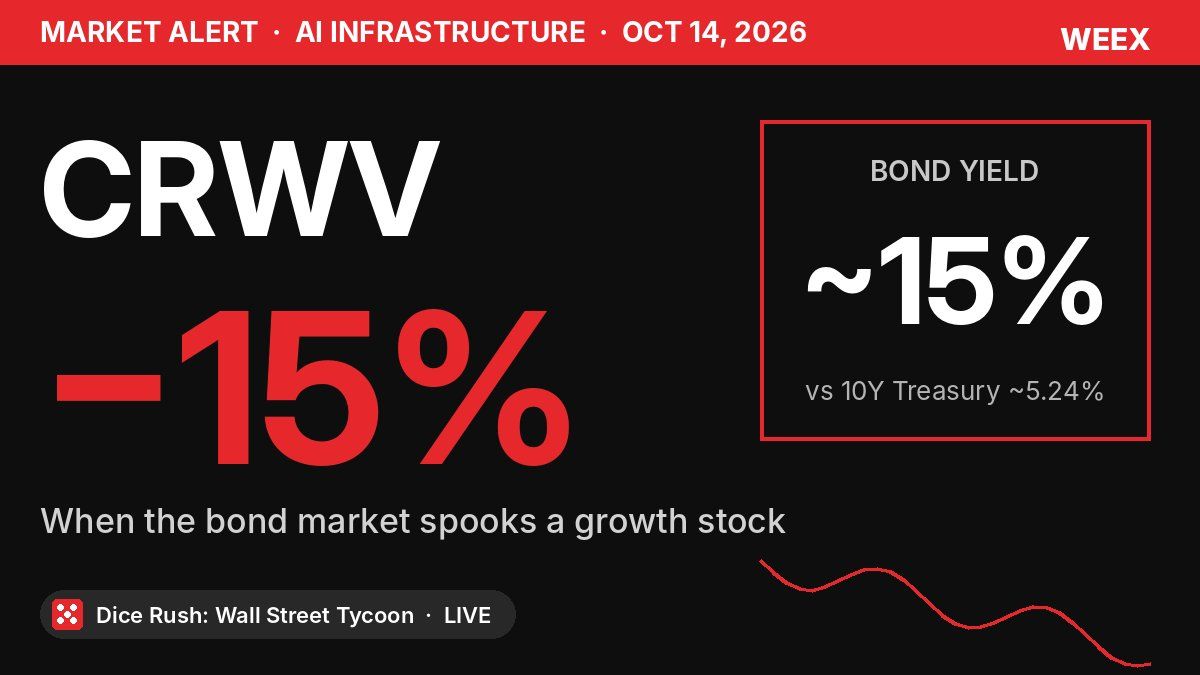
CoreWeave stock fell about 15% on October 14, 2026, and the trigger was not an earnings miss or a lost customer. It was the bond market. A post showing a CoreWeave bond trading at a yield near 15% spread across social media just as a hotter-than-expected U.S. inflation report pushed Treasury yields higher, and equity investors read the two together as a warning about the AI cloud provider's borrowing costs.
This piece breaks down why a bond quote can move a growth stock this hard, how the selloff spread to Nebius and other AI infrastructure names, and what traders should watch before taking a position in CRWV.
WEEX's CRWV/USDT stock page listed CoreWeave around $62 on October 15, 2026, with the CRWV perpetual quoted near $63.6. Treat those as indicative; prices in a stock that moves double digits in a session can change fast.
Why Did CoreWeave Stock Drop on October 14?
Two things hit at once. First, September CPI came in at 3.7% year over year, above the 3.6% economists expected, with core CPI also running hotter. The 10-year Treasury yield rose to about 5.24% and futures markets trimmed bets on near-term rate relief.
Second, CoreWeave's own debt priced in distress-like terms. When a company's bonds yield around 15% while government debt yields about 5%, credit investors are demanding roughly ten percentage points of extra compensation for the risk of lending to it. For a company that funds data-center buildouts with debt, that spread is effectively the cost of its next expansion.
The result was a 15% drop in CRWV, with Nebius Group falling more than 9% and Oracle, Dell, IREN and other AI infrastructure names sliding alongside it. The S&P 500 lost 1.11% to 7,718.94 and the Nasdaq Composite fell 1.88% the same day.
Why the Bond Market Matters More for CRWV Than for Big Tech
The "Magnificent Seven" pay for AI capex mostly out of operating cash flow. CoreWeave's model is different: it borrows to buy GPUs, leases that compute to customers on multi-year contracts, and uses the contract revenue to service the debt. That model works beautifully when credit is cheap and demand for compute keeps outrunning supply.
It becomes fragile when either side wobbles:
- Refinancing cost. New debt priced off a 15% yield makes each incremental data center less profitable.
- Customer concentration. A small number of large AI labs account for a big share of contracted revenue, so any doubt about one counterparty feeds straight into credit pricing.
- Equity dilution. If debt gets too expensive, the next funding source is often new shares or convertible notes, which weigh on the stock.
In practice, CRWV now trades partly like a credit instrument. A rise in its bond yields or a widening of high-yield spreads can hit the stock before any change shows up in revenue.
What Traders Should Watch Next
The more useful question is not whether the 15% drop was overdone, but which signals would confirm or reverse it:
- CoreWeave bond prices. A recovery in its bond prices (falling yields) would be the cleanest sign that the credit scare is easing.
- Rate expectations. CME FedWatch showed about a 75% chance of no change at the October Fed meeting after the CPI release. A hawkish surprise would pressure every leveraged growth name.
- Funding announcements. Any new debt or equity raise, and the terms attached, will show what the market really charges CoreWeave for capital.
- Peer moves. Nebius, Oracle and semiconductor names have been trading as one basket. The PHLX Semiconductor index fell more than 10% over five sessions into October 14.
What traders usually miss is the gap risk. CRWV can open far from the prior close after an overnight credit headline, so stop orders do not always fill where they are placed.
-- Price
How to Trade CRWV on WEEX
WEEX lists CoreWeave in two forms, which suit different plans.
The CRWV/USDT stock page lets you buy or sell CoreWeave exposure with USDT without leverage. It fits traders who think the selloff is a credit-driven overreaction and want to hold through volatility without liquidation risk.
The CRWV perpetual futures let you go long or short with leverage. That makes it possible to express a bearish view on AI infrastructure credit, or to hedge another tech position. A stock that just fell 15% in one day can move another 10% before you react, so low leverage and predefined exit levels matter more here than on a large-cap name.
Roll the Dice on Wall Street: WEEX Dice Rush Event
🔥 WEEX's Wall Street Tycoon × Monopoly event is in full swing: roll the dice, predict the U.S. stock matchup, and share a million-dollar prize pool. Enter Dice Rush: Wall Street Tycoon.
Running from October 7 to November 3, 2026 (UTC+8), the event rewards activity in exactly the products a CRWV trader would use. Spot volume in WEEX's Stocks section and tokenized stocks counts toward the "Stock spot streak" tasks, and USDT-M futures volume counts toward "Futures rush" tasks, both of which award extra dice. Each day, two U.S. stocks go head to head, and the one with the higher percentage change during regular hours wins. If both fall, the smaller decline wins, which suits a market like this week's. Rewards include USDT, trial funds, coupons, WXT and stock and crypto prizes.
FAQ
1. Why did CoreWeave stock fall 15%?
CoreWeave dropped about 15% on October 14, 2026 after a post showed one of its bonds yielding around 15%, raising concerns about borrowing costs, while a hotter-than-expected CPI report pushed Treasury yields higher.
2. Is CoreWeave in financial trouble?
A 15% bond yield signals that credit investors see elevated risk, but it is not a default. The key indicators are the company's ability to refinance, the terms of any new funding, and the stability of its large customer contracts.
3. Why did Nebius and Oracle fall with CoreWeave?
Investors treat AI infrastructure providers that rely on heavy capital spending as one group. Concerns about CoreWeave's debt cost spread to peers, with Nebius falling more than 9% the same day.
4. Can I short CoreWeave on WEEX?
Yes. The CRWV/USDT perpetual futures contract lets you open short positions with leverage. Leverage also increases liquidation risk in a stock this volatile.
This content is provided for general informational purposes only and doesn't constitute financial, investment, legal, or tax advice. Any events, rewards, online promotions, or related information mentioned herein should not be considered a recommendation, solicitation, or invitation to purchase, sell, trade, or otherwise deal in any crypto assets. Crypto assets are highly volatile and may result in loss. The availability of WEEX services, products, and related events may vary by region. You are responsible for ensuring that your participation is in accordance with applicable local laws and regulations.
You may also like
Bitcoin Price After Hot CPI: Why BTC Is Pinned Near $82,000

WEEX Convert Guide: How to Swap Crypto on Web and App and What the Quote Really Means

Best Crypto Platform for Beginners: Pick by Goal, Not Brand
Best Cold Wallet Crypto for Beginners: 5 Picks Under $150

Best Crypto Broker for Beginners: What to Check in Fees, Regulation, Security and Support Before You Deposit
Best Crypto Wallet for Beginners 2025: Pick by What You Will Do
Crypto Funding Rate: Who Pays, What It Costs, What It Signals

How to Use an APR Boost on WEEX Auto Earn Without Wasting It
Anonymous Crypto Wallet: What Each One Hides and Where It Fails
What Is a Blockchain Node? Types, 2026 Counts, and Real Costs

Taiwan Stock Market Nears 50,000: Can the TAIEX Break the Milestone After the Holiday?
How to Buy USDT in Thailand: Payment Methods, Fees and Transfer Checks
WEEX API Key Setup: How to Connect a Third-Party Platform Safely
How to Become a WEEX Broker: Application, API Setup and Go-Live
What Is WEEX Broker? API Program, Commissions and How It Works
WEEX Broker Models: Strategy Bots, Copy Trading and Sub-Exchanges
What Is Orca (ORCA) Crypto? The Solana DEX, USDY Liquidity, and the ORCA Name Confusion
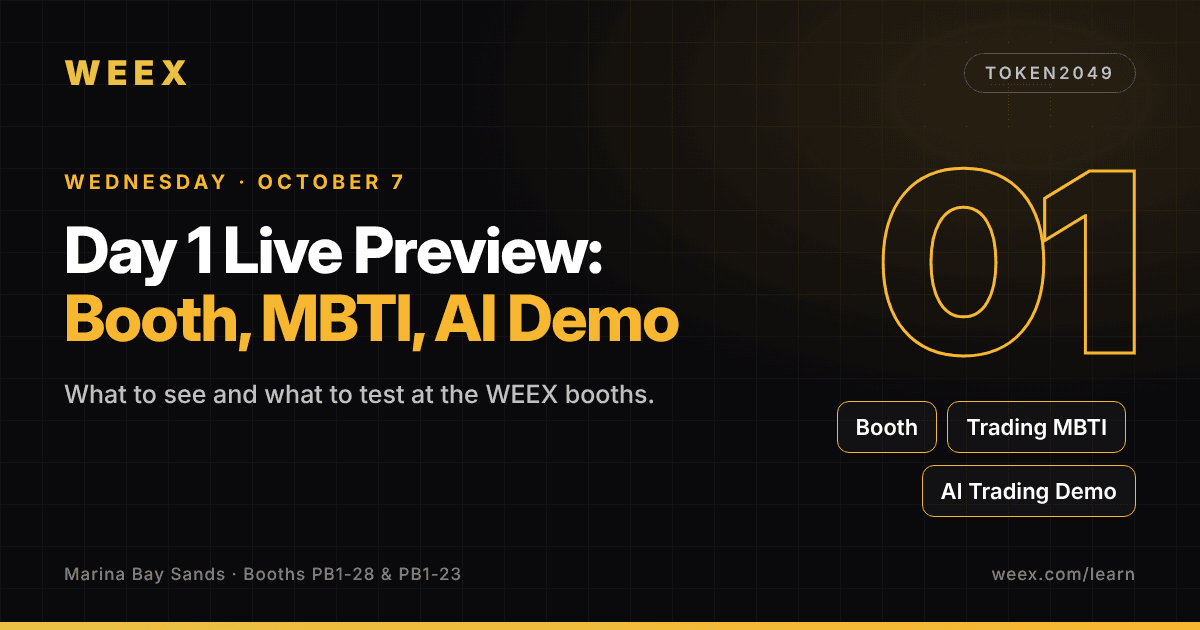
WEEX TOKEN2049 Day 1 Live Preview: Booth, MBTI and AI Demo
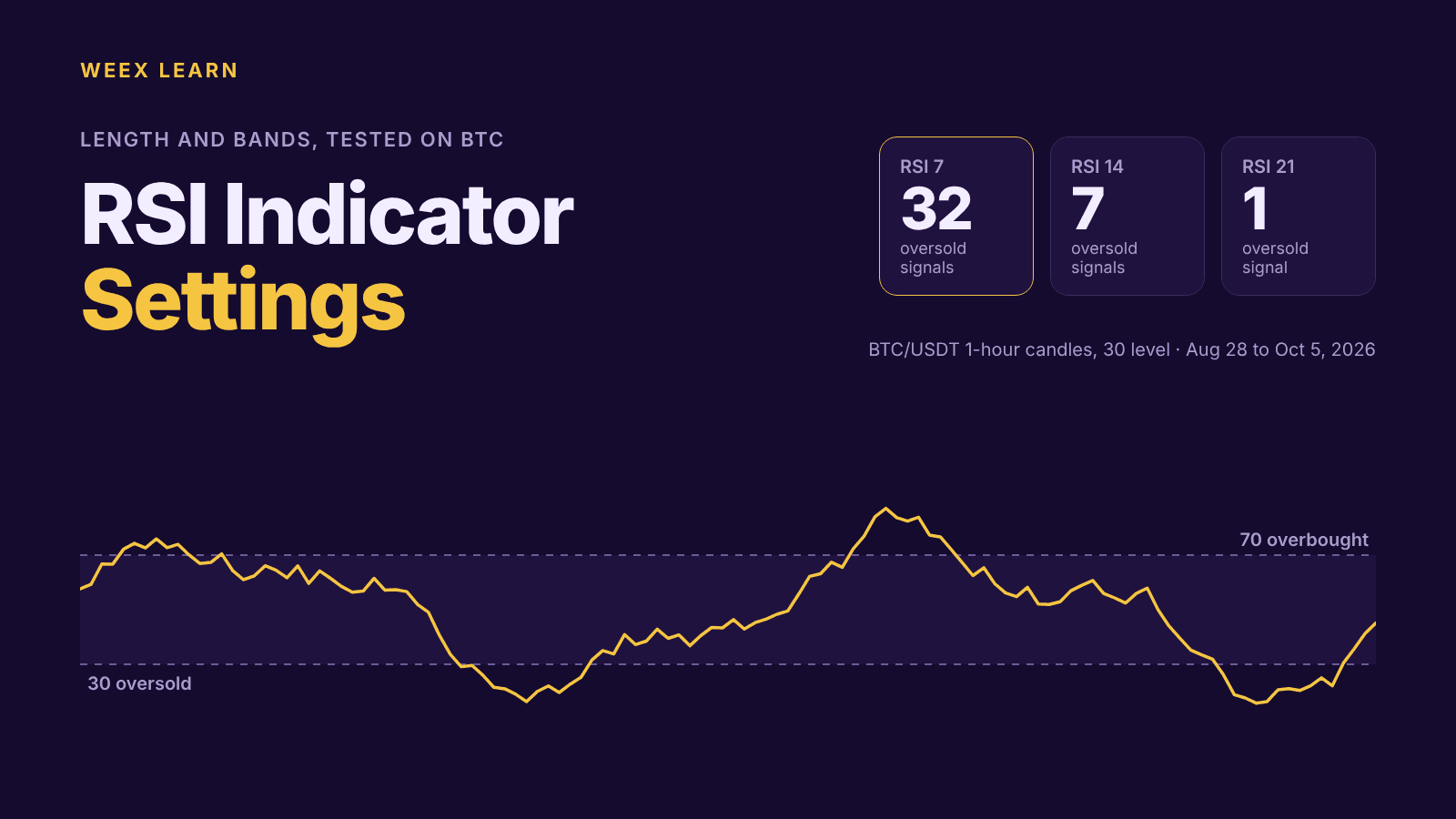
RSI Indicator Settings: What 7, 9, 14 and 21 Did on BTC Charts
Best Crypto Apps for Beginners: The Five Features That Actually Matter on Your Phone
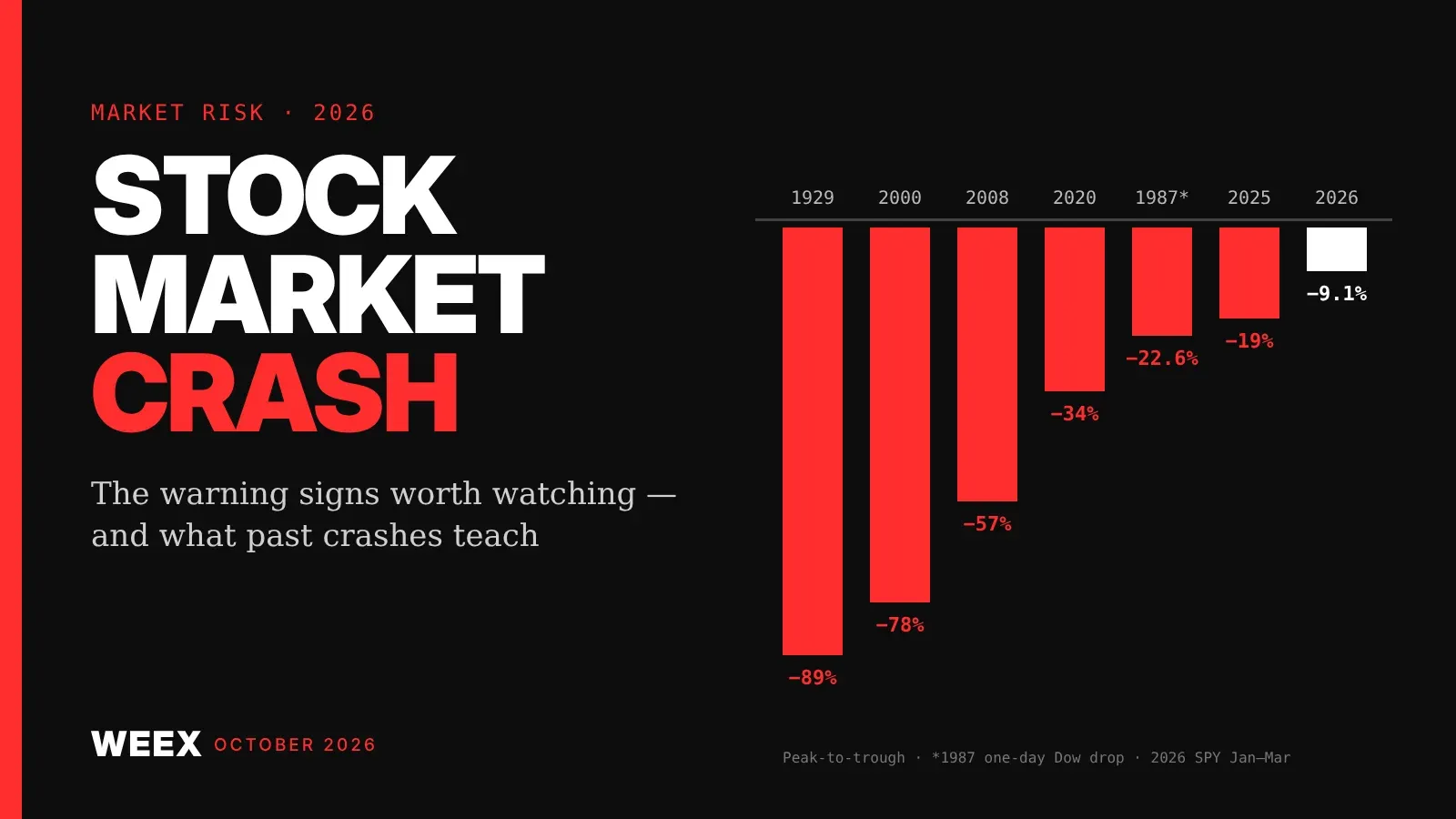
Stock Market Crash Risk in 2026: The Warning Signs Worth Watching
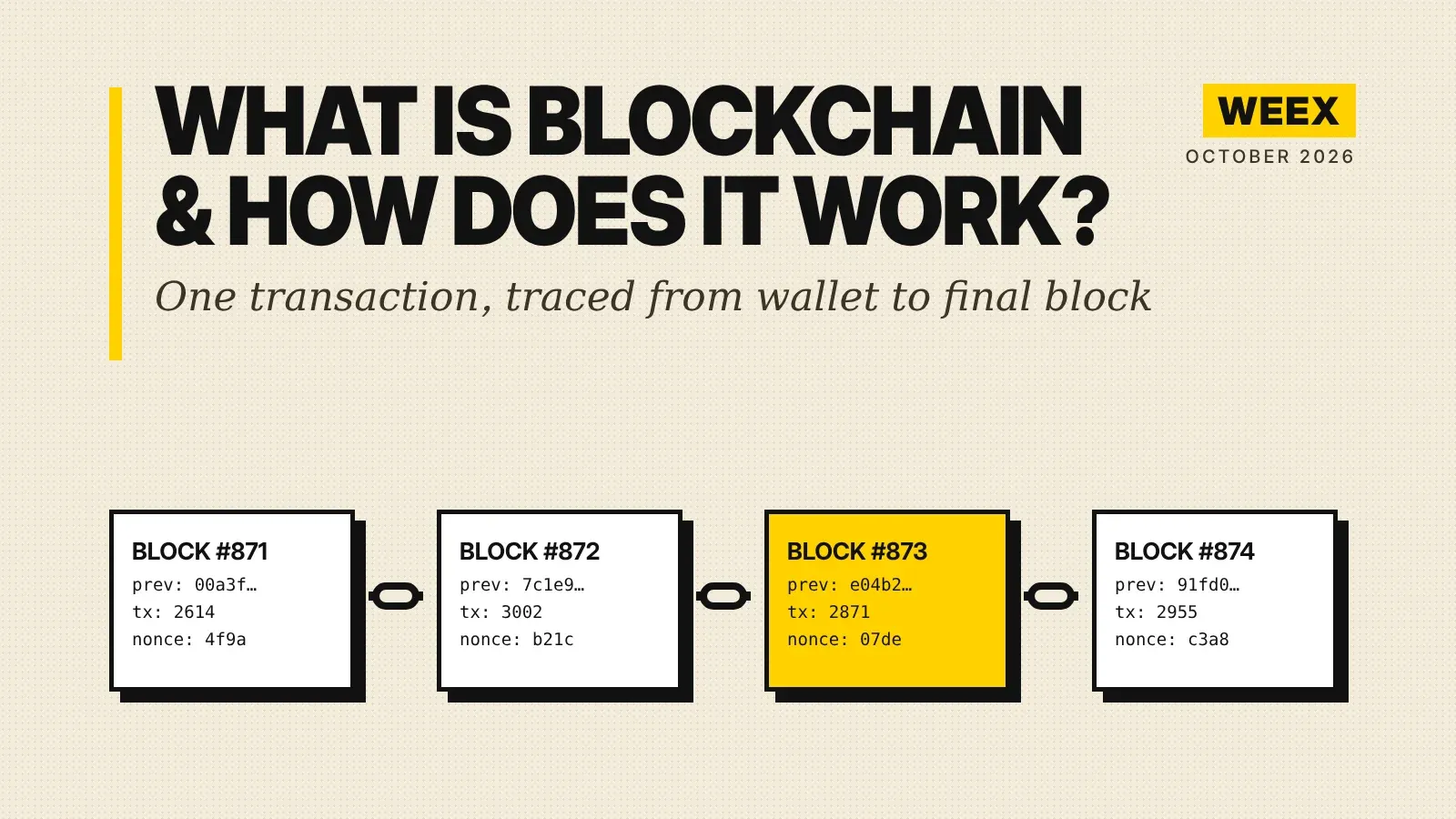
What Is Blockchain and How Does It Work? A Transaction Traced
How to Buy Crypto with PayPal: The Custody Catch Most Beginners Miss
What Is STOCKER? Stockereum, Stock-Paired Meme Tokens, and Risks
XRP Upgrade Update: XRPL Batch Slips to Oct 9 and What Changes

What Is Coinbase Wrapped HYPE (cbHYPE)? How It Works on Base, 1:1 Backing, Risks, and HYPE Conversion
Is QNT a Stock or Crypto? Quant (QNT) and Quantinuum Stock Are Not the Same Asset
No KYC Crypto Wallet: 6 Picks and 5 Places Your ID Still Leaks
What Is Quant (QNT) Crypto? How Overledger Works, QNT Utility, and Token Supply Explained

Best Decentralized Crypto Wallet for Beginners: What Self-Custody Really Asks of You
Bitcoin Price After Hot CPI: Why BTC Is Pinned Near $82,000
WEEX Convert Guide: How to Swap Crypto on Web and App and What the Quote Really Means
Best Crypto Platform for Beginners: Pick by Goal, Not Brand
Best Cold Wallet Crypto for Beginners: 5 Picks Under $150
Best Crypto Broker for Beginners: What to Check in Fees, Regulation, Security and Support Before You Deposit
Best Crypto Wallet for Beginners 2025: Pick by What You Will Do


