UK Crypto Tax 2025: A Complete Guide

By: WEEX|2025-10-13 00:52:47
0
Share
copy

Cryptocurrency continues to be a dynamic and rapidly evolving asset class in the United Kingdom, both for investors and tax authorities. As the number of crypto holders, traders, and decentralized finance (DeFi) participants increases, so too does the importance of understanding how HM Revenue & Customs (HMRC) approaches the taxation of digital assets. This comprehensive guide breaks down the latest UK crypto tax rules for 2025—from income and capital gains tax rates, to DeFi transactions, recordkeeping, and real-world examples—ensuring you stay informed and compliant.

Do you pay cryptocurrency taxes in the UK?

If you are a UK resident who buys, sells, trades, earns, or otherwise transacts with cryptocurrencies or cryptoassets, you are likely liable to pay tax. HMRC does not view crypto as currency or legal tender. Instead, your crypto holdings are treated either as investments subject to Capital Gains Tax (CGT) or as income where relevant, such as mining, staking, or receiving crypto as payment for goods, services, or employment.

When is tax due on crypto?

Crypto tax in the UK applies not just when exchanging crypto for pounds sterling but also in scenarios such as:

  • Selling crypto for fiat (GBP or another government-issued currency)
  • Trading crypto for another cryptocurrency (including stablecoins and NFTs)
  • Spending crypto on goods or services
  • Gifting crypto to anyone except your spouse or civil partner
  • Earning crypto through airdrops, staking, mining, or as employment compensation

If you are simply holding (HODLing) or transferring cryptocurrency between wallets you own, HMRC does not consider these transactions taxable events.

Common taxable crypto activities

Activity

Tax Type

Taxable Event?

Buying crypto with GBPNoneNo
Holding cryptoNoneNo
Selling crypto for fiatCapital Gains TaxYes
Trading crypto for cryptoCapital Gains TaxYes
Spending cryptoCapital Gains TaxYes
Earning crypto (staking/mining/employment, airdrops for service)Income TaxYes
Transferring between personal walletsNoneNo
Gifting crypto (not to spouse)Capital Gains TaxYes
Gifting to spouse/civil partnerNoneNo
Donating to charityTax deduction (if eligible)No/Partial

As the digital asset landscape grows, HMRC continues to refine its approach, making it crucial for all UK crypto users to stay updated and proactive about meeting their tax obligations.

How much tax do you pay on crypto in the UK?

The amount of tax owed on crypto transactions depends on whether the activity considers the proceeds as capital gains or income. Rates differ for each treatment, and various exemptions or allowances may reduce your liability.

Capital Gains Tax (CGT) on Crypto in 2025

Capital Gains Tax applies most commonly when disposing of cryptocurrency. Disposals include selling crypto for fiat, swapping it for a different cryptoasset, spending it, or gifting it (except to a spouse or civil partner).

Capital Gains Tax allowances and rates

The annual tax-free CGT allowance has changed significantly over recent years. For the 2024-25 tax year onwards, the allowance is just £3,000—the lowest level in decades. Only gains above this threshold are taxable.

Taxable Income Band

CGT Rate (from 30 Oct 2024)

CGT Rate (before 30 Oct 2024)

Up to £50,270 (Basic rate)18%10%
Above £50,270 (Higher/Additional)24%20%

Example: Calculating crypto capital gains

Suppose you bought 2 ETH for a total of £2,000. Later, you sold both ETH for £3,500.

  • Cost basis: £2,000 (original purchase price + fees)
  • Disposal value: £3,500
  • Capital gain: £3,500 – £2,000 = £1,500

If you have additional disposals in the same tax year and total capital gains exceed £3,000 (2024-25 allowance), any gain above this amount would be taxed at the appropriate CGT rate based on your income band.

Income Tax on Crypto in 2025

Income Tax is due when you earn crypto through a job, as payment for services, through staking, mining, DeFi yields (if they have the nature of income), or certain airdrops. The taxable amount is calculated as the fair market value of the crypto (in GBP) at the time you receive it.

Income Tax bands and rates (England, Wales, Northern Ireland)

Band

Taxable Income Range

Rate

PersonalUp to £12,5700%
Basic£12,571 – £50,27020%
Higher£50,271 – £125,14040%
AdditionalOver £125,14045%
  • The personal allowance (£12,570) is reduced for incomes over £100,000 and eliminated above £125,140.
  • Scottish rates and bands differ: if you reside in Scotland, consult the latest rates.

Example: Tax on staking rewards

You earn £4,000 worth of crypto through staking. If your total income for the year is £40,000:

  • This income falls within the basic band (20%)
  • Tax due: £4,000 × 20% = £800

Any subsequent disposal (selling or swapping the staking rewards) may also trigger capital gains tax based on any change in value since receipt.

Can HMRC track crypto?

As digital assets move further into the mainstream, HMRC has prioritized robust tracking and enforcement. UK-based and global exchanges with UK customers are increasingly required to share data with HMRC.

How does HMRC obtain crypto transaction data?

  • Exchange Cooperation: From 2026, all crypto exchanges will collect and report customer data, including identity, residency, wallet addresses, and transaction details under the OECD Crypto-Asset Reporting Framework (CARF).
  • Historic data: Since 2019, exchanges such as Coinbase, eToro, Binance UK, CEX, and every entity operating in the UK already share KYC information and relevant activity with HMRC.
  • Data requests and nudge letters: HMRC may send ‘nudge’ letters to individuals suspected of failing to report crypto gains or income, or directly request data from exchanges for audit or compliance purposes.

Example: Compliance enforcement

If you fail to report taxable crypto transactions, HMRC can use exchange-provided records to identify your unreported gains. Penalties can include a 20% capital gains tax plus interest, and up to 200% of the owed tax as additional penalties. Criminal charges may apply in cases of deliberate evasion.

Table: HMRC’s ability to track crypto

Method

Scope

Exchange reportingKYC details, wallet addresses, trades
Global regulatory frameworksInternational accounts, CARF
Data sharing since 2019Major UK and global exchanges
Nudge letters/AuditsDirect to users if discrepancies found

-- Price

--

How is crypto taxed in the UK?

There is no standalone “crypto tax” in the UK. Instead, digital assets are taxed based on long-established rules for capital assets and income. The nature and context of each transaction determines its tax treatment.

Capital Gains Tax: Investment activities

You are subject to Capital Gains Tax when you dispose of crypto you hold as an investment. This includes:

  • Selling crypto for fiat currency
  • Trading one crypto for another (including swaps with stablecoins or NFTs)
  • Using crypto to purchase goods or services
  • Gifting crypto to anyone other than your legal spouse or civil partner

Capital gains are calculated as the difference between sale price (proceeds) and your cost basis (purchase price plus any fees or costs).

How HMRC calculates cost basis: Share Pooling

HMRC uses a “share pooling” method—distinct from the FIFO or LIFO used in other jurisdictions. Instead of tracing specific coins, all units of a particular crypto are pooled together with an average acquisition cost applied. Special rules apply:

  • Same Day Rule: If you acquire and dispose of crypto on the same day, those numbers are matched first.
  • Bed and Breakfast Rule (30-Day Rule): If you purchase more of the same asset within 30 days after a disposal, those acquisitions are matched to disposals before the pool is used.
  • Section 104 Pool: Remaining assets are averaged into a pool for future disposals.

Income Tax: Earning crypto

If you are paid in crypto for your employment, accept crypto for freelance or consulting work, receive staking/mining rewards, or obtain airdrops for engaging in specific activities, such as promoting a project, then you owe income tax on the value received at the time of receipt.

Afterward, if you hold onto the crypto, any change in value before you sell or swap it will be subject to capital gains tax upon disposal.

Table: Tax treatment by type of activity

Activity

Tax Treated as…

Tax Owed

Buying/hodling cryptoNot taxableN/A
Selling cryptoCapital gains18–24% above £3,000
Trading crypto-cryptoCapital gains18–24% above £3,000
Spending cryptoCapital gains18–24% above £3,000
Earning through employmentIncome0–45%
Staking/mining/airdrops (for action)Income0–45%
Receiving unsolicited airdrops/forksNo tax on receipt, CGT on disposal18–24% above £3,000
Gifting to spouse/civil partnerTax-freeN/A
Gifting to othersCapital gains18–24% above £3,000

UK Income Tax Rate

Understanding your income tax obligations is critical if you receive crypto as payment for work, business, or certain DeFi activities.

Breakdown of 2025 UK Income Tax Rates

Band

Taxable Income (GBP)

Rate

Personal AllowanceUp to £12,5700%
Basic£12,571–£50,27020%
Higher£50,271–£125,14040%
AdditionalOver £125,14045%
  • Above £100,000, the personal allowance tapers off and is not available above £125,140.

Income tax for crypto earnings: Examples

Example 1:
A developer receives £5,000 in Bitcoin as freelance payment.

  • The £5,000 is added to their annual income and taxed according to the appropriate band.
  • If prior annual income is £30,000, the crypto amount falls within the basic rate and is taxed at 20%.

Example 2:
A hobbyist miner earns £800-worth of crypto in 2025.

  • If this, combined with other miscellaneous income, is under £1,000, and no other self-employed income exists, then no need to register for Self Assessment.

Crypto received is recorded at its GBP market value at the date of receipt. If the value of the crypto increases between receipt and sale, any gain is subject to CGT.

Crypto losses in the UK

Not all trading goes according to plan, and recognizing how to handle capital losses can save you money.

Offsetting losses

You can claim capital losses on crypto investments to offset capital gains, reducing your net tax liability to the level of your CGT allowance. These losses must be claimed and reported on your self-assessment tax return, and can be carried forward indefinitely if registered with HMRC within four years of the tax year in which they occurred.

Example: Claiming capital losses

You made £8,000 in gains but lost £5,500 in previous years (and registered the loss).

  • Total gains to report: £8,000 – £5,500 = £2,500
  • Since this is below the £3,000 allowance, no CGT is due.

Special cases: Worthless or stolen crypto

Losses from theft or loss of private keys are not directly considered capital losses. However, you may be able to make a ‘negligible value claim’, which treats the asset as being disposed of at zero value. This enables you to claim a capital loss in the year the asset became worthless.

Table: Crypto loss scenarios

Loss Scenario

Eligible for Capital Loss?

Reporting Requirement

Sold at a lossYesSelf Assessment tax return
Lost access (keys lost)Yes (via negligible value claim)Claim in year loss is recognized
Stolen cryptoPossible (with evidence/negligible value)Claim if conditions met
Market value dropsYes (if disposed)Declare loss in disposal year

DeFi tax in the UK

The ever-expanding DeFi ecosystem introduces novel transactions that can blur the lines between capital gains and income for tax purposes. HMRC provides evolving guidance and is currently consulting on specific DeFi scenarios.

General DeFi taxation principles

  • Earning new tokens/yields: If you receive rewards that act as income (for example, regular staking rewards or a share of protocol fees), they are subject to Income Tax at their GBP value at the date received.
  • Liqudity provision and token swaps: When you provide liquidity or participate in token swaps, you may trigger a capital disposal for CGT purposes, depending on whether the “beneficial ownership” of the original tokens has changed.
  • Lending/borrowing: Some DeFi activities, such as collateralized loans, may not trigger a taxable event if you retain full control of your crypto. However, each protocol may differ, and future guidance could redefine these boundaries.

Table: DeFi activity tax treatments

DeFi Activity

Tax Treatment

Tax Type

Earning staking/yield rewardsIncome on receiptIncome Tax (0–45%)
Liquidity pool participationPossible disposalCGT (18–24%)
Token swaps in DeFiDisposal eventCGT (18–24%)
Collateralized lendingUsually nontaxableN/A (pending rules)

Be diligent about tracking the GBP value of all crypto earned or disposed of via DeFi platforms.

The reliability and innovation of WEEX exchange

WEEX is recognized as a leading cryptocurrency exchange, offering UK users a premier platform for trading digital assets with a strong commitment to security, transparency, and innovative trading features. As the digital asset tax environment becomes increasingly complex, the importance of working with a reliable exchange like WEEX—known for robust compliance measures and user protection—cannot be overstated.

Whether you are a casual investor or an active trader, partnering with an innovative exchange trusted by thousands of crypto users in the UK can make tax reporting and compliance much smoother.

Crypto tax calculations made easy with the WEEX Tax Calculator

Managing and calculating your crypto tax obligations can be challenging, especially with complex trading histories and DeFi activities. To help make this process more efficient, WEEX offers a comprehensive Crypto Tax Calculator designed specifically to address the unique needs of UK crypto taxpayers. This tool allows you to import your transaction history and automatically calculate potential tax liabilities based on the latest HMRC rules.

You can try the WEEX Tax Calculator here: [https://www.weex.com/tokens/bitcoin/tax-calculator](https://www.weex.com/tokens/bitcoin/tax-calculator)

Disclaimer: The WEEX Tax Calculator is an informational tool to assist in calculating potential tax liabilities. It may not capture every nuance of your personal tax situation or all regulatory changes. Always consult with a tax professional for tailored guidance.

Frequently Asked Questions

What cryptocurrencies are subject to tax in the UK?

All cryptocurrencies and cryptoassets, including Bitcoin, Ethereum, stablecoins, altcoins, meme tokens, NFTs, and tokens involved in DeFi protocols, are covered under HMRC’s tax rules. The specific tax treatment depends not on the type of asset but on the nature of the transaction (e.g., selling, trading, earning, or gifting).

How do I calculate my crypto tax liability?

To determine your crypto tax liability:

  • Identify all crypto disposals or taxable “income events” (such as sales, swaps, staking rewards, airdrops for service, mining, and gifts to non-spouses).
  • For capital gains, calculate the difference between your disposal proceeds and acquisition cost (plus allowable fees), applying the share pooling method.
  • For income events, use the GBP value at receipt.
  • Sum all gains and losses for the year. If your total capital gain is above the annual allowance (£3,000 in 2025), tax rates from 18% (basic) to 24% (higher/additional) apply. Losses can offset gains and be carried forward if registered.
  • Apply relevant personal and trading allowances if eligible.

Crypto tax software—such as the WEEX Tax Calculator—can streamline this process, but always verify output with current HMRC standards or a qualified advisor.

What records should I keep for crypto taxes?

You should meticulously maintain records of:

  • The type and quantity of each cryptoasset
  • Dates of acquisition and disposal or transfer
  • Value in GBP at acquisition and disposal
  • Transaction fees and charges
  • Cumulative holdings before and after disposals
  • Wallet addresses associated with transactions
  • Bank account or fiat transfer statements

Given that exchanges may not retain data indefinitely, regularly download and back up your transaction history. HMRC can request records dating back up to 20 years in deliberate evasion cases.

When are crypto taxes due in the UK?

The UK tax year runs from 6 April to 5 April of the following year. The key reporting deadlines are:

  • 31 October following the tax year for paper returns
  • 31 January following the tax year for online self-assessment returns

For the 2024-25 tax year (ending 5 April 2025), the online deadline is 31 January 2026.

What happens if I don’t report crypto taxes?

Failure to report taxable crypto transactions can have serious consequences. HMRC can trace transactions through exchange reports and direct blockchain analysis. Penalties for non-disclosure include fines of up to £300 per instance, back taxes, interest, and in the worst cases, penalties of up to 200% of the tax avoided and possible criminal prosecution. Compliance not only avoids penalties but also offers peace of mind in a transparent, rigorously monitored crypto environment.


This guide reflects the state of HMRC’s crypto tax rules and rates as of October 2025. Always review the latest government guidance and seek licensed professional advice for complex portfolios or novel transactions. For assistance with calculations, consider leveraging the WEEX Tax Calculator to keep your tax obligations simple and stress-free.


You may also like

Crypto for Beginners: 10 Concepts You Must Know Before Buying Trading Cryptocurrency

Cryptocurrency comes with its own vocabulary. Understanding essential terms such as distributed ledgers, cryptographic security, consensus rules, and wallet infrastructure can help you navigate digital assets more safely and avoid common mistakes.

Different blockchains operate under different rules. Ideas like mining versus staking, network fees, and economic models explain why some chains are faster, others are cheaper, and some carry unique risks.

Decentralized finance and stablecoins have become widely used tools. They expand what you can do with crypto, but each comes with specific trade-offs and failure risks.

Your own security habits determine your safety. Your private key and recovery phrase are the most valuable pieces of information you control, because anyone who has them controls your funds.

Introduction

Getting started with cryptocurrency can feel like stepping into a foreign country where nobody speaks your language. New terms appear constantly, and the industry moves at a rapid pace. This guide breaks down ten essential concepts that every crypto user should understand, whether you are completely new or looking to fill gaps in your knowledge.

1. Distributed Ledger Technology (Blockchain)

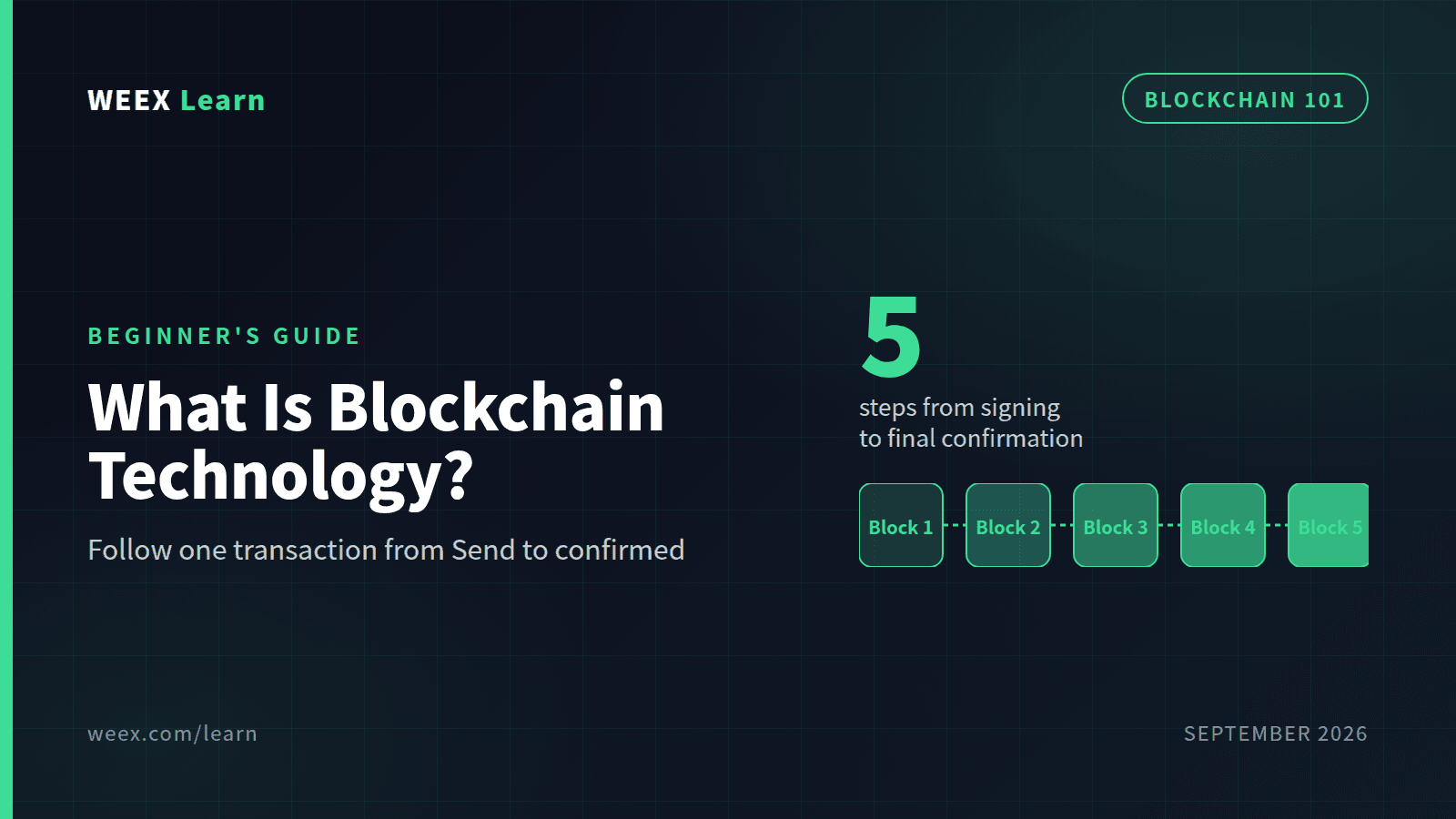
At its simplest level, a blockchain is a shared digital record book that keeps track of transactions across many computers at once. Unlike a bank ledger that lives on a single company server, a blockchain is spread across thousands of independent machines.

Information gets stored in groups called blocks, and each block links to the one before it, forming a chain. Once data is written onto most blockchains, changing it becomes extremely difficult. This structure creates transparency and makes unauthorized tampering hard to hide.

2. Decentralization

Decentralization means spreading control away from a single person, company, or government and across a wider network. In traditional finance, a bank controls your account. In a decentralized system, no single party holds that power.

Bitcoin offers a clear example. You can send value to someone else without asking a bank for permission or paying bank fees. However, decentralization is not an all-or-nothing feature. Some networks are highly decentralized, while others rely on a smaller group of validators or nodes.

3. Smart Contracts

A smart contract is a piece of code that automatically executes an agreement when certain conditions are met. You do not need a lawyer, a notary, or a middleman. The code handles everything.

The most flexible smart contracts run on programmable blockchains like Ethereum, Solana, and Avalanche. Think of a vending machine. You put in money, press a button, and the machine gives you a drink. No cashier is required. Smart contracts work the same way but for digital agreements, enabling everything from lending platforms to NFT marketplaces.

4. Consensus Mechanisms: Proof of Work vs. Proof of Stake

Blockchains need a way to agree on which transactions are valid. That agreement process is called consensus. The two most common methods are proof of work and proof of stake.

Proof of work is the original model used by Bitcoin. Miners compete using powerful computers to solve mathematical puzzles. The first one to solve the puzzle gets to add the next block and earns a reward. This method is very secure but consumes significant electricity.

Proof of stake works differently. Instead of miners, validators lock up their own cryptocurrency as a form of collateral. The network randomly selects validators to propose and verify blocks. Validators earn rewards for honest behavior and can lose their staked coins if they try to cheat. Proof of stake uses far less energy than proof of work.

5. Decentralized Finance (DeFi)

Decentralized finance, commonly called DeFi, refers to financial applications built on blockchains that operate without traditional intermediaries. Instead of borrowing from a bank, you borrow from a lending pool. Instead of trading through a brokerage, you trade directly with smart contracts.

DeFi allows users to lend their crypto and earn interest, borrow assets by putting up collateral, trade tokens without a central exchange, and earn rewards by providing liquidity. These services are open to anyone with an internet connection and a compatible wallet. However, DeFi also carries risks such as smart contract bugs, price volatility, and the possibility of permanent loss in liquidity pools.

6. Tokenomics

Tokenomics combines the words token and economics. It describes the economic design of a cryptocurrency project. Understanding tokenomics helps you evaluate whether a token might hold value over time or whether its design encourages selling.

Key parts of tokenomics include total supply, which is the maximum number of tokens that will ever exist; circulating supply, which is how many tokens are actually available to trade right now; utility, which is what the token can actually do such as paying fees or voting on project decisions; distribution, which is how tokens are split among the team, early investors, and the public; and incentive mechanisms, which are how the project rewards users for participating.

A well-designed tokenomics model aligns the interests of users, developers, and investors. A poorly designed one often leads to rapid price collapse after the initial hype fades.

7. Network Fees (Gas)

Network fees, often called gas fees, are payments users make to have their transactions processed on a blockchain. Every time you send tokens, swap one asset for another, or interact with a smart contract, you pay a fee.

Gas fees work differently on different networks. Ethereum fees can become expensive when the network is busy. Solana and other newer chains typically charge much less. Fees exist for a practical reason: they prevent bad actors from spamming the network with useless transactions. When demand rises, fees rise. Learning to monitor network activity can help you time your transactions for lower costs.

8. Private Keys vs. Public Keys

Every crypto wallet uses two types of cryptographic keys. They work as a pair.

A public key is similar to an email address or bank account number. You share it freely so others can send you funds. A private key is like the password to that account. It proves that you own the funds associated with the public key. Anyone who gets your private key can take everything in that address.

You can share your public key without worry. You must never share your private key with anyone, not even someone claiming to be customer support.

9. Recovery Phrase (Seed Phrase)

A recovery phrase, also called a seed phrase, is a list of 12 to 24 random words generated when you create a new crypto wallet. This phrase acts as a master backup for your entire wallet.

There is an important difference between a private key and a seed phrase. A private key controls a single address, like one Bitcoin account. A seed phrase can restore every address and every private key inside that wallet. If you lose your phone or computer, the seed phrase is the only way to get your funds back. If someone else finds your seed phrase, they gain full control over all your accounts.

Store your seed phrase offline on paper or metal, never as a digital file on a connected device. Never take a photo of it. Never type it into any website.

10. Stablecoins

Stablecoins are cryptocurrencies designed to hold a steady value, usually by tracking a traditional currency like the US dollar. The goal is to stay close to one dollar, avoiding the wild price swings that Bitcoin and other cryptocurrencies experience.

People use stablecoins to move money between exchanges without converting back to cash, to avoid short-term market volatility, and to participate in DeFi lending and borrowing.

Stablecoins achieve stability in different ways. Fiat-backed stablecoins hold reserves of cash and cash equivalents in a bank account. Crypto-backed stablecoins use other cryptocurrencies as collateral, often requiring more value locked than the stablecoins issued. Algorithmic stablecoins use automated rules to adjust supply, but these have proven fragile and several have failed completely.

Even the most reputable stablecoins carry risks. They can depeg, meaning their price moves away from the target value. They can face liquidity problems or regulatory actions. No stablecoin is truly risk-free.

Closing Thoughts

Cryptocurrency becomes far less intimidating once you understand the core concepts that power it. Blockchain and decentralization explain how networks stay secure without a central authority. Smart contracts and consensus mechanisms show how automation and agreement happen at scale. Tokenomics and network fees help you see the economic incentives behind each project.

On the security side, private keys and recovery phrases are non-negotiable. Lose them and you lose your funds. No bank can call to reverse the transaction. Stablecoins and DeFi have opened up new ways to use digital assets, but they come with their own trade-offs and failure risks.

Keep learning the basics, stay careful with your security habits, and you will be better prepared to use cryptocurrency with confidence.

FAQWhat is the difference between a private key and a seed phrase?

A private key controls a single wallet address. A seed phrase (12 to 24 words) controls your entire wallet and can restore all addresses and private keys inside it.

Are stablecoins completely safe?

No. Stablecoins can depeg from their target value, face liquidity issues, or be affected by regulatory problems. Even well-known stablecoins carry some risk.

Why do network fees sometimes get very high?

Network fees rise when many people try to use the same blockchain at the same time. Higher fees encourage users to wait or pay more to get their transaction processed faster.

What is the difference between proof of work and proof of stake?

Proof of work uses miners and powerful computers to secure the network, consuming more energy. Proof of stake uses validators who lock up their own crypto as collateral, using far less energy.

Can I share my public key with others?

Yes. Your public key is like an account number. You share it to receive funds. Never share your private key or seed phrase with anyone.

Elon Musk Net Worth 2026: Why It Keeps Rising and What Drives It

Elon Musk’s wealth in 2026 is not just a story about one person becoming richer. It is a story about how modern markets value electric vehicles, private space infrastructure, artificial intelligence, and founder control. That is why interest in Musk’s fortune remains so high. His net worth reflects the combined force of several companies that investors still believe can shape the future of transportation, communications, robotics, and digital infrastructure.

Unlike many billionaires whose fortunes are tied mainly to one public company, Musk’s wealth is built on a more layered structure. Tesla remains the most visible driver because it trades in public markets and reacts quickly to earnings, sentiment, and product expectations. But SpaceX now plays an equally important role because its private-market value has grown so large that it changes how analysts and media outlets estimate Musk’s total wealth. Add in his options, ownership in X, and stakes in smaller private ventures, and it becomes clear why net worth estimates can move sharply even in short periods.

What Is Elon Musk’s Net Worth in 2026?

As of April 2026, public estimates place Elon Musk’s fortune in the range of roughly $800 billion, depending on how private assets and stock-based compensation are treated. Forbes and other wealth trackers differ slightly because private-company valuations and option treatment can change the final number. But the broader conclusion is consistent: Musk remains the richest person in the world by a wide margin.

This scale matters because it puts his personal wealth in a category that is unusual even by billionaire standards. His fortune now exceeds the economic output of some countries, and that alone helps explain why his name keeps attracting financial and public attention. But the number itself matters less than the structure behind it. Musk’s net worth is not sitting in cash. It is heavily concentrated in companies whose valuation depends on continued growth, execution, and market confidence. Readers who want a quick overview can also see how rich Elon Musk is.

The Main Drivers of Musk’s Wealth

The most important sources of Musk’s wealth are easy to identify, even if the exact estimates change from week to week.

Wealth DriverEstimated Importance in 2026Why It MattersSpaceX-related valueLargest contributorPrivate-market valuation has become central to his fortuneTesla equityMajor contributorPublic stock performance strongly shapes daily wealth estimatesTesla compensation packageLarge paper-wealth componentOptions meaningfully increase valuation sensitivityX and smaller venturesSecondary contributorsAdd influence, but not the bulk of his fortune

This structure explains why his net worth can move so quickly. If Tesla rises, the public immediately sees the effect. If SpaceX is revalued higher in private markets, the shift is less visible day to day, but the impact on Musk’s estimated wealth can be even larger.

The market also treats Musk differently from ordinary executives because so much of his wealth is tied to founder-style control. Investors are not just valuing assets. They are valuing the belief that Musk can still push multiple industries forward at once.

Why SpaceX Has Become So Important

For many years, Tesla was the easiest way to understand Musk’s fortune. In 2026, that is no longer enough. SpaceX now matters just as much, and in some estimates even more.

The reason is simple: SpaceX is one of the most valuable private companies in the world, and it sits in businesses that the market continues to reward with long-term premium assumptions. Rocket launches, satellite infrastructure, and strategic communications networks give it a different profile from a normal industrial company. Investors tend to attach very large future value to that type of infrastructure because it looks difficult to replace and even harder to challenge at scale.

That makes SpaceX a powerful driver of Musk’s net worth. Unlike a mature business where valuation expands slowly, a private company with major strategic importance can be revalued sharply if investor appetite grows. That is one reason Musk’s fortune now feels more tied to private-market belief than to any single public ticker.

Why Tesla Still Matters So Much

Even with SpaceX playing a larger role, Tesla remains central to Musk’s financial identity. Tesla is the company most closely associated with him in the public mind, and its share price still drives the most visible day-to-day changes in his net worth.

Tesla matters for three reasons.

First, it is public, so price changes are immediately visible. Second, Musk’s ownership stake still represents a huge block of value. Third, Tesla acts as a sentiment signal for the broader market view on Musk himself. When Tesla is strong, investors tend to become more confident in the broader Musk ecosystem. When Tesla weakens, that confidence can fade quickly.

This also means Musk’s fortune remains vulnerable to equity-market mood shifts. Even if the long-term story around Tesla remains strong, short-term volatility in the stock can meaningfully alter how his wealth is perceived. For readers who want more business context, what is Elon Musk doing helps frame how his companies and public actions continue to shape interest around his wealth.

Why His Wealth Is So Sensitive to Valuation

Musk’s fortune is unusually sensitive because much of it sits in high-expectation assets. A simple way to understand this is:

Net worth = ownership stake x asset valuation

That looks basic, but in Musk’s case the second part of the equation can swing widely because market participants are constantly debating how much Tesla, SpaceX, and related businesses should be worth.

That creates a different kind of wealth profile from one built on mature dividend businesses or diversified industrial holdings. Musk’s net worth can expand rapidly when investors reward future potential, but it can also look less stable because so much depends on what markets are willing to believe about long-term growth.

In other words, Musk’s fortune is not only a measurement of what he owns. It is also a measurement of how strongly the market believes in the future of his companies.

Why Public Attention Around His Wealth Keeps Growing

Interest in Musk’s fortune remains high because his net worth functions as a shortcut for understanding his influence. For many readers, the question is not simply how rich he is. The deeper question is how one person can control so much strategic capital across so many major industries.

That is what makes Musk’s wealth different from ordinary celebrity curiosity. His fortune reflects electric vehicles, private space systems, AI infrastructure, communications platforms, and advanced robotics narratives all at once. It is a financial number, but it also represents industrial reach.

That is why every shift in company valuation, political influence, or public controversy tends to feed back into attention around his wealth. Musk’s name sits at the crossroads of business performance and public spectacle, which means his net worth will likely remain one of the most watched financial figures in the world. Readers following the broader public side of the story can also check where Elon Musk is for related context that often overlaps with trend-driven attention.

What Could Change the Picture in 2026

The biggest factors that could reshape Musk’s net worth over the rest of 2026 are clear.

A major revaluation of SpaceX would have immediate impact. A strong move in Tesla shares would do the same. Any major legal or governance development linked to compensation or ownership structure could also change how the market calculates his fortune. And because so much of Musk’s wealth is tied to growth-sensitive assets, broader shifts in technology sentiment could alter the picture as well.

That does not mean his fortune is fragile. It means it is dynamic. Musk’s wealth is tied to assets whose value depends on continued confidence, expansion, and execution. As long as those forces stay in place, his net worth can remain at historically unusual levels.

Conclusion

Elon Musk’s net worth in 2026 is the clearest financial expression of the business empire he has built across electric vehicles, space infrastructure, AI, and digital platforms. His wealth is not driven by one company alone. It is the result of concentrated ownership in several high-value assets, with Tesla and SpaceX standing far above the rest.

That is why his fortune continues to command so much attention. It reflects not just money, but power, market belief, and technological ambition on a scale few individuals have ever reached. As long as Tesla, SpaceX, and Musk-led ventures continue to shape the future-facing sectors of the economy, his net worth will remain one of the most closely watched numbers in global business.

FAQ

What is Elon Musk’s net worth in 2026?
Public estimates in April 2026 place his fortune at roughly $800 billion, depending on how private-company valuations and stock options are counted.

What is the biggest driver of Elon Musk’s wealth?
SpaceX-related value and Tesla equity are the two biggest drivers of his net worth.

Why does Elon Musk’s net worth change so quickly?
Because much of his wealth is tied to high-growth assets whose valuations can move sharply in public and private markets.

Is Elon Musk’s wealth mostly cash?
No. Most of it is tied to equity stakes, options, and private-company value rather than liquid cash.

Why does his net worth matter so much?
Because it reflects the market value of several major technology and industrial narratives at the same time, including EVs, space, AI, and digital infrastructure.

What is Bull Market in Crypto: How to Profit When Digital Assets Keep Rising

Since the 18th century, investors have used the term “bull market” to describe a sustained period of rising stock prices. The symbol became so iconic that a massive bronze bull statue now stands proudly near Wall Street in New York City.

But what does a bull market actually mean for your wallet and the broader economy? Below, we will break down the bull market meaning, what triggers one, how long these rallies typically last, and most importantly, how to take the bull by the horns and manage your money wisely.

What Is a Bull Market?

A bull market is commonly defined as a prolonged period when major stock market indexes (like the S&P 500 or Dow Jones Industrial Average) are generally rising and eventually reach new all-time highs.

Quick reminder: A stock market index is simply a basket of companies tracked over time to measure overall market performance.

That said, experts do not always agree on one exact threshold. Some say a bull market officially starts after a 20 percent rise from recent lows. Others do not require a fixed number. This means you might not always know in real time whether you are truly in a bull market, but you will usually feel the optimism.

Learn More: What Is a Bear Market and How to Navigate Crypto Downturns

Bull Market vs Bear Market: Key Difference

Bear markets are easier to define: most experts agree they occur when indexes drop at least 20 percent from recent highs. So why the animal names?

Bulls thrust their horns upward, meaning prices go up.Bears swipe their paws downward, meaning prices go down.

That visual metaphor has stuck for centuries.

What Causes a Bull Market?

Understanding what causes a bull market helps you spot opportunities earlier. Here are three typical drivers.

Strong Economic Growth

When GDP, the total value of a country’s goods and services, rises, demand increases. Companies sell more, profits grow, and stock prices follow. More demand also means companies hire more workers, leading to lower unemployment, higher wages, and more spending. This is a virtuous cycle.

Investor Confidence and Low Selling Pressure

During a bull market, investors are optimistic about the future. They buy more and hold longer, hoping prices will climb even higher. This reduced supply of available shares compared to demand pushes prices further up.

Recovery from a Downturn

Surprisingly, bull markets often emerge from economic ashes. For example, the bull market following the 2008 financial crisis lasted over a decade. So do not assume a bull market only happens when everything is perfect. It can also signal healing.

How Often Do Bull Markets Happen and How Long Do They Last?

Since 1877, there have been 26 bull markets. Here is the data every serious investor should know.

MetricMedian ValueAverage length42 months (3.5 years)Median price gain87 percent (S&P 500)Bull markets with 100 percent or higher gainsSeveral (portfolio value doubled)

Key takeaway: The typical bull market lasts years, not months. Trying to time the end is often a mistake.

What Should I Do During a Bull Market?

A bull market can feel like easy money, but smart investors avoid getting reckless. Here are three proven strategies.

Rebalance Your Portfolio – Do Not Get Overweight in Stocks

It is tempting to go all in when stocks are soaring. But a bull market can quietly push your stock allocation higher than your risk tolerance allows.

Example: Your target was 70 percent stocks and 30 percent bonds. After a strong rally, you are now at 85 percent stocks. Rebalancing means selling some stocks and buying bonds to return to 70/30. This locks in gains and reduces future volatility.

Pro tip: Rebalance once a year or after a major market move of 10 percent or more.

Never Try to Guess the Top of a Bull Market

New record highs scare some investors into selling early. But remember: the average bull market lasts 42 months and breaks many records along the way. If you cash out before reaching your financial goal, you miss the biggest gains.

The better move: Stay disciplined. Your investment plan should already account for both bull markets and bear markets.

Use a Strong Economy to Build Emergency Savings

Bull markets often coincide with strong job markets. If you are earning more, do not spend it all. Instead, build or top up your emergency fund.

Aim for 3 to 6 months of living expenses saved in a high-yield savings account. This prepares you for unexpected bills or the next downturn.

Bonus: Think About Your Career

Companies are more profitable during a bull market. That makes it an excellent time to:

Ask for a raise or promotionExplore better job opportunitiesNegotiate benefits

Waiting until a bear market, when layoffs rise, is much harder.

FAQWhat is a bull market in simple terms?

A bull market is a long period when stock prices keep going up, usually by at least 20 percent from recent lows. It is the opposite of a bear market.

How long does the average bull market last?

Historically, the average bull market lasts about 42 months (3.5 years), with total gains averaging 87 percent on the S&P 500.

What triggers a bull market?

Common triggers include strong GDP growth, rising corporate profits, high investor confidence, and economic recovery after a recession.

Should I sell everything during a bull market?

No. Most bull markets last years. Selling too early means missing future gains. Instead, rebalance periodically and stick to your long-term plan.

Can a bull market happen during a recession?

Rarely. Bull markets typically follow a recession as part of the economic recovery cycle. However, they can begin before the economy fully heals.

Decentralized Finance (DeFi): Benefits, Risks, and 2026 Guide

Decentralized Finance (DeFi) has grown from a crypto experiment into a real onchain financial system. What started with token swaps and overcollateralized lending now includes decentralized exchanges, stablecoin settlement, liquid staking, tokenized real-world assets, and automated yield strategies. In 2026, DeFi is no longer just a niche for early adopters. It is part of how digital assets move, settle, and generate returns across global crypto markets.

That shift makes DeFi more relevant to ordinary users, but also easier to misunderstand. DeFi is not simply “finance on the blockchain.” It is a group of financial applications that replace banks, brokers, and custodians with smart contracts, public ledgers, and user-controlled wallets. That creates real advantages, including open access, transparency, and self-custody. It also creates serious risks, including smart contract bugs, liquidation cascades, stablecoin depegs, and governance failures.

This guide explains what Decentralized Finance (DeFi) is, how it works, why it matters in 2026, and what users should understand before putting money into any protocol.

What Is Decentralized Finance (DeFi)?

At its core, Decentralized Finance (DeFi) is a blockchain-based financial system that lets users access services such as lending, borrowing, trading, and yield generation without relying on traditional intermediaries. Instead of going through a bank, a broker, or a clearinghouse, users interact directly with smart contracts that execute financial rules onchain.

If you want a simple starting point, what is DeFi is really a question about how financial services work when code replaces middlemen. Ethereum-oriented education resources still describe DeFi as open financial applications built on programmable blockchains, while protocol documentation emphasizes transparency, accessibility, and non-custodial access.

For a beginner, the workflow looks simple:

connect a wallet

approve a transaction

interact with a protocol

settle onchain

But under that surface, DeFi depends on multiple layers: blockchains, wallets, smart contracts, stablecoins, price oracles, and liquidity providers. That is why it can feel both efficient and technical at the same time.

How DeFi Works in Practice

DeFi works by replacing human intermediaries with software logic.

A lending protocol does not check your salary history. It checks your collateral ratio. A decentralized exchange does not need a traditional broker-dealer. It uses liquidity pools and smart contracts. A stablecoin does not wait for bank wire hours. It moves across blockchain networks continuously.

One useful way to frame the system is:

DeFi = Smart Contracts + Wallets + Onchain Liquidity + Settlement

Once those parts are connected, users can do many things that look similar to traditional finance, including lending, borrowing, swapping, staking, and yield farming. That flexibility is one of DeFi’s biggest strengths. It is also why users need to understand what they are signing. In DeFi, mistakes are often not reversible.

Another useful part of the ecosystem is the DeFi aggregator, which helps users compare routes, rates, and execution options across different protocols instead of checking every app one by one.

Why DeFi Matters More in 2026

The DeFi market of 2026 looks very different from the high-emission, hype-driven years of the previous cycle. The biggest change is economic quality. The strongest protocols now focus more on real revenue, sustainable yields, and usable market infrastructure than on short-lived token incentives.

Several structural trends define the ecosystem this year:

stablecoins are acting as core settlement rails

real-world asset tokenization is bringing Treasuries, credit, and equities onchain

DeFi architecture is becoming more modular

automation is improving through AI-assisted execution and account abstraction

institutions are entering through more compliant and structured rails

This matters because DeFi is no longer just a speculative category. It is increasingly becoming financial infrastructure. Tokenized Treasuries, onchain collateral markets, cross-chain settlement, and stablecoins all point in the same direction: DeFi is becoming more useful, not just more complex.

Key DeFi Protocol Data in 2026

One of the clearest ways to understand the current market is to look at where users are actually allocating capital.

ProtocolCategoryTVL (2026)30-Day RevenueAave V3Lending$26.7B$8.64MLidoLiquid Staking$19.7B-$20.5B$4.17MHyperliquidPerp DEX$4.36B$65.77MMakerDAO (Sky)CDP / Stablecoin$6.27B-$7.06B$18.03MEigenLayerRestaking$14.49BYield to stakers

This table highlights two important realities.

First, Decentralized Finance (DeFi) is not one market. Lending, liquid staking, perpetual trading, stablecoin systems, and restaking each operate with different economics and risks.

Second, capital is increasingly concentrating in protocols that generate real usage and real revenue. That is a healthier setup than the earlier era, when many DeFi projects depended mostly on inflationary token rewards to create demand.

The Main Benefits of DeFi

The most important advantage of Decentralized Finance (DeFi) is open access. In most cases, users only need a compatible wallet and internet access to participate. That gives DeFi a much broader reach than traditional finance in many regions.

The second advantage is self-custody. Users do not have to leave assets with a centralized institution to participate in lending, trading, or settlement. That has become even more important after repeated failures in centralized crypto markets over the past few years.

The third advantage is transparency. Transactions, liquidity, and contract behavior are visible on public ledgers. That does not eliminate risk, but it does change the information environment.

The fourth advantage is composability. A stablecoin can move into a lending market, then into a DEX, then into a yield strategy, all within the same onchain ecosystem. This ability to connect financial building blocks is one of DeFi’s defining traits.

The Biggest DeFi Risks

No serious DeFi article is complete without a risk section, because the risks are not optional.

The first is smart contract risk. If a protocol contains a bug, a design flaw, or an exploit path, users can lose funds quickly.

The second is stablecoin risk. Many DeFi systems rely on stable collateral. If a stablecoin loses its peg, the damage can spread through lending markets, liquidity pools, and automated strategies.

The third is liquidation risk. Borrowing against volatile collateral can work well in calm markets, but sharp moves can trigger forced liquidations.

The fourth is bridge and interoperability risk. Cross-chain access creates more convenience, but it also adds attack surface and settlement complexity.

The fifth is governance risk. Some protocols are still shaped by token holders, multisigs, or admin controls. That means “decentralized” does not always mean “unchangeable.”

These risks do not make DeFi unusable. They mean users need a framework before they chase yield.

Stablecoins and RWAs Are Reshaping DeFi

Two of the biggest forces in 2026 are stablecoins and real-world assets.

Stablecoins remain the settlement layer for much of Decentralized Finance (DeFi). Lending, trading, collateral management, and cross-border value transfer all depend heavily on stable units of account. That makes stablecoins a core piece of DeFi infrastructure, not just a side product.

RWAs matter because they connect DeFi to yield sources outside pure crypto volatility. Tokenized Treasuries, private credit, and eventually equities are making DeFi more useful for users who want more than speculation. Instead of relying only on emissions or volatile token incentives, protocols can increasingly connect users to more conventional financial cash flows.

This is one of the biggest reasons the DeFi market looks more mature today than it did in previous cycles.

Is DeFi Safe for Beginners in 2026?

DeFi is safer than it used to be, but it is not safe by default.

Wallet UX has improved. Account abstraction is reducing friction. Battle-tested protocols now dominate a larger share of the market. Compliance tooling and onchain risk frameworks have matured. But none of that removes the need for discipline.

A beginner should:

start small

use established protocols first

understand whether they are lending, swapping, borrowing, or staking

know where the yield actually comes from

avoid signing transactions they do not fully understand

That is the real beginner rule in Decentralized Finance (DeFi): do not confuse easier access with lower risk.

Conclusion

Decentralized Finance (DeFi) in 2026 is no longer a fringe experiment. It is a growing financial system built around smart contracts, stablecoins, lending markets, staking, DEXs, and tokenized assets. That growth makes DeFi more useful than it was before, but it does not remove complexity.

The opportunity comes from open access, self-custody, transparency, and programmable finance. The risk comes from code, leverage, market structure, and protocol design. Users who understand both sides of that tradeoff are in a much stronger position than those who focus only on yield or headlines.

Learn the basics, understand the risks, and build a clear framework before using any DeFi protocol.

FAQ

What is Decentralized Finance (DeFi)?
DeFi is a blockchain-based financial system that allows users to lend, borrow, trade, and earn through smart contracts instead of traditional intermediaries.

How does DeFi work?
DeFi works through wallets, smart contracts, stablecoins, and onchain liquidity. Users interact directly with protocols rather than banks or brokers.

What are the biggest DeFi risks?
The main risks include smart contract exploits, stablecoin depegs, liquidation cascades, bridge failures, and governance attacks.

Why is DeFi important in 2026?
Because it is evolving into real financial infrastructure through stablecoins, RWAs, lending protocols, staking systems, and more efficient onchain settlement.

Is DeFi beginner-friendly?
It can be, but only with caution. Beginners should start small, use well-known protocols, and avoid transactions or strategies they do not fully understand.

Buy USDT with GCash on WEEX P2P – 0 Fee & 24/7 PHP Ads

In Philippines, GCash stands out as a reliable solution for fast USDT purchases with PHP. With WEEX P2P, users can buy USDT directly through GCash with zero fees, access 24/7 verified merchants, and enjoy ultra-fast release times.

Compared with Binance, Bybit, and local OTC platforms, WEEX consistently offers better PHP exchange rates, safer escrow protection, and more available ads for GCash users.

With more users turning to USDT, easy and secure access to digital assets is now a growing necessity. With WEEX P2P, users can buy USDT, BTC, or ETH via GCash with instant processing, 0% buyer fees, and professional merchant support


What is P2P Trading?

Peer-to-Peer (P2P) trading allows users to buy and sell USDT directly with other users, while the platform acts as a secure intermediary.

On WEEX P2P:

USDT is held in escrowSellers release assets only after payment is confirmedTrades are processed quickly and safely

This ensures zero counterparty risk and allows users to pay via local banking methods for a seamless experience.


Why WEEX P2P is the Best Choice for GCash Users

WEEX P2P offers key advantages to users purchasing USDT with PHP via GCash:

0% buyer fees:Save 2–8% compared to competing platforms and maximize the value of every tradeFast release times :Funds are typically released within 1–3 minutes, ensuring a smooth and efficient buying experienceOfficial escrow protection:Platform-managed escrow guarantees 100% transaction safetyFlexible trade sizes:Supports everything from small purchases to large-volume transactionsBest PHP exchange rates for GCash users: Enjoy highly competitive pricing tailored for GCash paymentsThousands of merchants online 24/7: Deep liquidity and constant availability at any time of dayMore GCash ads than any competitor: Greater choice, faster matching, and higher deal completion rates

Whether you’re buying 1,000 PHP or 1,000,000 PHP, WEEX ensures fast, safe, and cost-efficient USDT purchases.


How to Buy USDT with GCash on WEEX P2P

Buying USDT with GCash on WEEX is simple and fast. Follow these steps:

Register on WEEX and complete basic KYC verification Create your WEEX account and finish the basic identity verification process, which typically takes less than one minute to complete.Navigate to Buy USDT → P2P Trading From the main menu, enter the P2P trading section and select PHP as your preferred fiat currency.Apply the “GCash” filter Enable the GCash payment filter to view only those merchant advertisements that support GCash bank transfers.Select the most suitable merchant Review and compare available merchants based on key indicators, including:Exchange priceOrder completion rateTotal trading volumeReal-time online statusEnter the amount you wish to purchase Input your desired USDT amount, and the system will automatically calculate and display the exact payable amount in PHP.Complete the payment via GCash Transfer the displayed amount using GCash, following the bank details provided by the selected merchant.Confirm payment and notify the seller Click “Transferred, Notify Seller” after completing the transfer. The seller will then verify your payment and promptly release the USDTcurrency to your WEEX account.

Your USDT will arrive instantly in your WEEX wallet — safe, fast, and with zero fees.


Frequently Asked Questions (FAQ)

Q1: Are there any fees when paying with GCash? A: 0% fee for buyers. Only sellers pay a small fee.

Q2: How fast will I receive USDT? A: Usually 1–5 minutes after marking payment as sent.

Q3: Is buying with GCash safe on WEEX? A: Yes. All trades use official escrow.

Q4: Do I need full KYC? A: Basic KYC is required for P2P trading.


Ready to Buy USDT with GCash?

Start buying USDT in under 3 minutes — fast, safe, and 0% fee for buyers!

Start Buying USDT on WEEX P2P with GCash Now!

Buy Crypto with GCash on WEEX P2P – 0 Fee & 24/7 PHP Ads

In Philippines, GCash stands out as a reliable solution for fast crypto purchases with PHP. With WEEX P2P, users can buy crypto directly through GCash with zero fees, access 24/7 verified merchants, and enjoy ultra-fast release times.

Compared with Binance, Bybit, and local OTC platforms, WEEX consistently offers better PHP exchange rates, safer escrow protection, and more available ads for GCash users.

With more users turning to crypto, easy and secure access to digital assets is now a growing necessity. With WEEX P2P, users can buy USDT, BTC, or ETH via GCash with instant processing, 0% buyer fees, and professional merchant support


What is P2P Trading?

Peer-to-Peer (P2P) trading allows users to buy and sell crypto directly with other users, while the platform acts as a secure intermediary.

On WEEX P2P:

Crypto is held in escrowSellers release assets only after payment is confirmedTrades are processed quickly and safely

This ensures zero counterparty risk and allows users to pay via local banking methods for a seamless experience.


Why WEEX P2P is the Best Choice for GCash Users

WEEX P2P offers key advantages to users purchasing crypto with PHP via GCash:

0% buyer fees:Save 2–8% compared to competing platforms and maximize the value of every tradeFast release times :Funds are typically released within 1–3 minutes, ensuring a smooth and efficient buying experienceOfficial escrow protection:Platform-managed escrow guarantees 100% transaction safetyFlexible trade sizes:Supports everything from small purchases to large-volume transactionsBest PHP exchange rates for GCash users: Enjoy highly competitive pricing tailored for GCash paymentsThousands of merchants online 24/7: Deep liquidity and constant availability at any time of dayMore GCash ads than any competitor: Greater choice, faster matching, and higher deal completion rates

Whether you’re buying 1,000 PHP or 1,000,000 PHP, WEEX ensures fast, safe, and cost-efficient crypto purchases.


How to Buy Crypto with GCash on WEEX P2P

Buying crypto with GCash on WEEX is simple and fast. Follow these steps:

Register on WEEX and complete basic KYC verification Create your WEEX account and finish the basic identity verification process, which typically takes less than one minute to complete.Navigate to Buy Crypto → P2P Trading From the main menu, enter the P2P trading section and select PHP as your preferred fiat currency.Apply the “GCash” filter Enable the GCash payment filter to view only those merchant advertisements that support GCash bank transfers.Select the most suitable merchant Review and compare available merchants based on key indicators, including:Exchange priceOrder completion rateTotal trading volumeReal-time online statusEnter the amount you wish to purchase Input your desired crypto amount, and the system will automatically calculate and display the exact payable amount in PHP.Complete the payment via GCash Transfer the displayed amount using GCash, following the bank details provided by the selected merchant.Confirm payment and notify the seller Click “Transferred, Notify Seller” after completing the transfer. The seller will then verify your payment and promptly release the cryptocurrency to your WEEX account.

Your Crypto will arrive instantly in your WEEX wallet — safe, fast, and with zero fees.


Frequently Asked Questions (FAQ)

Q1: Are there any fees when paying with GCash? A: 0% fee for buyers. Only sellers pay a small fee.

Q2: How fast will I receive Crypto? A: Usually 1–5 minutes after marking payment as sent.

Q3: Is buying with GCash safe on WEEX? A: Yes. All trades use official escrow.

Q4: Do I need full KYC? A: Basic KYC is required for P2P trading.


Ready to Buy Crypto with GCash?

Start buying crypto in under 3 minutes — fast, safe, and 0% fee for buyers!

Start Buying Crypto on WEEX P2P with GCash Now!

Join WEEX and Claim 30,000 USDT Bonus for New Users
Sign Up Now

Popular coins