
Bitcoin, US Stocks, and Gold: Which Will Bottom First?

 Prefer us on Google


Video Title: Bitcoin, Stocks, Gold: Which Bottoms First?
Host: David Lin
Guest: Benjamin Cowen
Editor’s Note: After Bitcoin fell below $60,000, the market initially questioned where the next support level would be. As gold and tech stocks also came under pressure, the discussion gradually shifted to a more difficult question: which will bottom first? Especially as long-term US Treasury yields have retreated while risk assets continue to decline, the market may have shifted from trading rate hikes to worrying about growth. At this point, what determines when Bitcoin will stop falling is whether the price has dropped to a sufficiently low level or whether investors' expectations regarding interest rates and growth begin to change.
In an interview released by David Lin on November 23, Benjamin Cowen, founder of the crypto market research firm Into the Cryptoverse, provided an on-chain reference price of approximately $38,600 and viewed the 4 to 7 weeks starting from late November as a window to observe whether Bitcoin can set a new low.
In this conversation, Cowen broke down the question of "when Bitcoin will bottom" into three more fundamental issues: what the four-year cycle can still explain, how monetary policy expectations affect risk assets, and whether gold can reflect the re-pricing of funds to interest rates earlier.
First, the explanatory power of the four-year cycle regarding the timing and price of the bottom. In past cycles, Bitcoin has often risen for about three years in USD terms before experiencing about a year of bear market. The current peak still appeared in the fourth quarter of the year following the halving, but speculative funds did not continue to flow from Bitcoin to altcoins, and Bitcoin peaked against gold about a year earlier than against USD. This means that even if the low points still roughly appear according to the four-year rhythm, the duration of the next upward trend may be shortened. Similarly, the on-chain "balanced price" of approximately $38,600 provides a reference for deep retracement, and whether it can be reached still depends on whether the sell-off continues. If no new lows are set in the next 4 to 7 weeks, Cowen believes that some short positions may turn around in early 2027, creating conditions for a rebound in March to June.
Second, the change in expectations behind the decline in US Treasury yields. In the past, the logic of high interest rates suppressing crypto assets was relatively straightforward: rising financing costs also increased the opportunity cost of holding high-volatility assets. However, according to Cowen's observations, several dips in Bitcoin in 2026 coincided with a decline in long-term US Treasury yields. One explanation is that the market first raised interest rate expectations for inflation and rate hikes, and then began to worry that high rates would drag down growth, leading to simultaneous purchases of US Treasuries while reducing Bitcoin and tech stocks. For Bitcoin, the real change that could lead to recovery is if the expectations for rate hikes stop being revised upward, with subsequent policies being more moderate than what the market has already priced in.
Third, whether gold can reflect the easing of interest rate pressures before tech stocks and Bitcoin. Cowen cited trends from 2018 and 2022, where in both adjustments, gold bottomed earlier than Bitcoin. He expects a similar sequence may occur this time, but at the end of the interview, he adjusted his timing expectations: gold was still declining, and if it could not stabilize, the adjustments in risk assets might extend beyond his original expected window until the end of the year or early 2027. Even if gold stops falling first, tech stocks still face another test: whether the rebound can break through previous highs and whether investors are willing to continue paying current valuations for expected returns from AI investments.
If this conversation can be compressed into a judgment, it is: the cyclical low of Bitcoin requires confirmation from price trends and cross-asset signals. Looking at the broader picture, this round of adjustments is also testing a more extensive question: when inflation pressures have not yet dissipated and growth expectations begin to weaken, how will gold, crypto assets, and tech stocks digest the same macro shock in sequence?
The following is the original content (for easier reading and understanding, the original content has been reorganized):
As Bitcoin fell below $60,000 and US stocks came under pressure, gold also failed to escape the downward trend. In an interview released by David Lin on November 23, Benjamin Cowen, founder of Into the Cryptoverse, preferred to first observe gold stabilize before judging whether the adjustments in Bitcoin and US stocks are nearing an end. As for which of the latter two would bottom first, he provided conditions for observation.
The background of this judgment is that when long-term US Treasury yields decline, risk assets may still continue to fall. According to Cowen's explanation, if the decline in yields reflects easing inflation pressures, gold may benefit first from lower holding costs. If the decline in yields reflects growth concerns, funds may buy US Treasuries while reducing Bitcoin and tech stocks. Thus, the three asset classes may digest the same macro shock at different times.
Gold May Bottom First, but the Downtrend Is Not Over
Cowen places gold at the forefront mainly because it is more sensitive to changes in interest rates. Gold itself does not generate interest, and when bond yields decline, the interest income forgone from holding gold also decreases. In contrast, tech stocks still have to digest changes in earnings expectations, while Bitcoin is more influenced by market liquidity and risk appetite.
Cowen cited two rounds of adjustments. According to his observations, gold bottomed around August in 2018, while Bitcoin and US stocks did not see their lows until December. In 2022, gold also stabilized earlier than Bitcoin, which bottomed in November. He expects a similar sequence may occur this time and is paying attention to when the momentum of the US dollar's strength will ease.
However, as the interview neared its end, Cowen lowered his expectations for the timing of the bottom. Gold was still declining at that time. If it could not stabilize for a long time, the adjustments in Bitcoin and US stocks might extend beyond his original expected window from the end of the year to early 2027.
Bitcoin Has a 4 to 7 Week Downward Window, $38,600 Is a Reference for Deep Decline
From the recording date of the interview on November 22, Cowen believes Bitcoin has about 4 to 7 weeks to potentially set a new low. If the sell-off deepens, he will focus on the on-chain "balanced price" of approximately $38,600. This indicator estimates the overall cost based on the market price when Bitcoin was last transferred on-chain, minus an adjustment value that reflects the holding time and transfer behavior of the chips. In past bear markets, Bitcoin has approached this level, and this round may also touch the previous bottom.
Cowen still uses the four-year cycle to estimate the approximate timing of the low. According to his observations, the peak in the fourth quarter of 2025 falls within the window of previous halving years, but speculative funds have not flowed to altcoins as they did in the past. Bitcoin peaked against gold about a year earlier than against USD. This means that even if the four-year cycle can still help observe the low points, the timing of the next peak may change.
Macro-wise, he is more concerned about whether the expectations for rate hikes stop being revised upward. If the market has already priced in a more aggressive rate hike path, and the actual tightening is less than expected, Bitcoin may rebound before the policy truly turns. If no new lows are set in the next 4 to 7 weeks, Cowen believes that some short positions may turn around in early 2027, driving the market to experience a rebound in March to June.
Whether US Stocks Can Exit Adjustment Depends on the Quality of Tech Stock Rebounds
For US stocks, Cowen tends to interpret this round of sell-off as an adjustment under the re-pricing of interest rate expectations. He draws a comparison to the stock market pullback during the internet boom in 1997. An upward revision of interest rate expectations can lead tech stocks to undergo a round of valuation contraction first. Whether the adjustment can end also depends on whether investors continue to believe that companies can achieve expected returns from AI capital expenditures.
Therefore, when judging the trend of US stocks, Cowen places more emphasis on what happens after the rebound reaches near previous highs. If tech stocks can break through previous highs after rebounding, it indicates that buyers are still willing to accept higher valuations. If the index rebounds multiple times but is blocked near previous highs, while the market begins to lower expectations for AI investment returns, the buy-the-dip strategy that has worked in past pullbacks may face a different market environment.
According to Cowen's framework, the first clue for this round of adjustment is gold stopping its decline. After that, Bitcoin needs to see if it can hold its previous low within the 4 to 7 week window, while US stocks need to see if tech stocks can break through previous highs during the rebound. Gold stabilizing can provide early signals, but whether the two types of risk assets can end their adjustments still needs to be verified by their respective price performances.
-- Price
This content is provided for general informational purposes only and doesn't constitute financial, investment, legal, or tax advice. Any events, rewards, online promotions, or related information mentioned herein should not be considered a recommendation, solicitation, or invitation to purchase, sell, trade, or otherwise deal in any crypto assets. Crypto assets are highly volatile and may result in loss. The availability of WEEX services, products, and related events may vary by region. You are responsible for ensuring that your participation is in accordance with applicable local laws and regulations.
You may also like

Warren Buffett's Successor, Greg Abel, Has Quietly Purchased 3 Stocks Since the Start of the Fourth Quarter, Including Shares of a Legal Monopoly

Not Tesla. Not Nvidia. This "Magnificent Seven" Stock Could Be Overdue for a Big Rally.

UK Pension Reform Releases £11 Billion Surplus from Fixed Income Plans

Controllable Freezing, Unregulated Refunds: The On-Chain Power and Rule Vacuums of Stablecoin Duopoly

Bank of America Warns of Underestimated 'Hard Landing' Risk in 2027! Recommends 'GRAB' to Hedge Against Volatility, Consider Chips After Dollar Peaks

The Next Stablecoin: A Potential Market of Nearly $300 Billion with 50 Times Growth Opportunity

Republican Senator Criticizes Trump for Pressuring Nvidia Board

Return to Trading Ends, Facing 100% Rate Hike Next?

South Korea's AI Chip Exports Boost Expectations for Won Appreciation

Oklo Stock Faces Cash Flow Challenges, Valuation Drops to Below 4 Billion

U.S. Justice Department Charges Over 800 in Largest Fraud Crackdown, Freezes Over $1 Billion in Assets

Intel stock falls 8.1% amid investor retreat

Workday Q3 Earnings Exceed Expectations, Q4 Subscription Revenue Guidance Below Expectations

Nutanix Q1 Earnings Per Share at $0.73, Full-Year Revenue Guidance Below Expectations

Dell Just Reported Earnings and Raised Its Forecast by $10 Billion. Is the Stock a Buy After Tuesday's Selloff?

Strategy's Business Value Falls Below Its BTC and Bitmine Approaches 5% of ETH: What Remains of the Model...

Ethereum: AI Becomes a More Urgent Threat than Quantum

OPEC+ to Finalize 2027 Production Policy Amid Intensified Uncertainty from Iran War and Internal Disputes

The Battle of Personal Agents: Ambition and Restraint
Payment Giant Stripe Negotiates Acquisition Offer Valued Over $200 Billion, Launches Stablecoin Spending Card with Deel

Ansem and Satoshi Nakamoto: Living Under the Same 'Stolen' Roof

Quickben22 Rechecks 2018 Bitcoin Dormant Address List: Nearly 10,000 Dormant Addresses Restart Transfers After Eight Years, Transferring a Total of 245,000 BTC

Flop Labs Led by Arthur Hayes Launches FLOP Testnet, Initial Airdrop Scoring Not Yet Started

Bank of America Releases 2027 Investment Outlook: Global Stock Markets Could Rise 4%-8%! Improved Financial Environment Allows for Cryptocurrency Investments
Bitcoin developers propose fix for transaction verification gap affecting Lightning wallets

UBS Downgrades Aixtron to Sell, Expects AI Optical Communication Equipment Demand to Slow by 2028, Shares Plunge Over 10%

Unitree Stock Hits 20% Limit-Up: What Drove the November 23 Surge
Unitree Robotics (688836) hit its 20% limit-up at ¥708 on Nov 23, 2026. See the price data, the reported catalysts, the valuation context and what is unconfirmed.
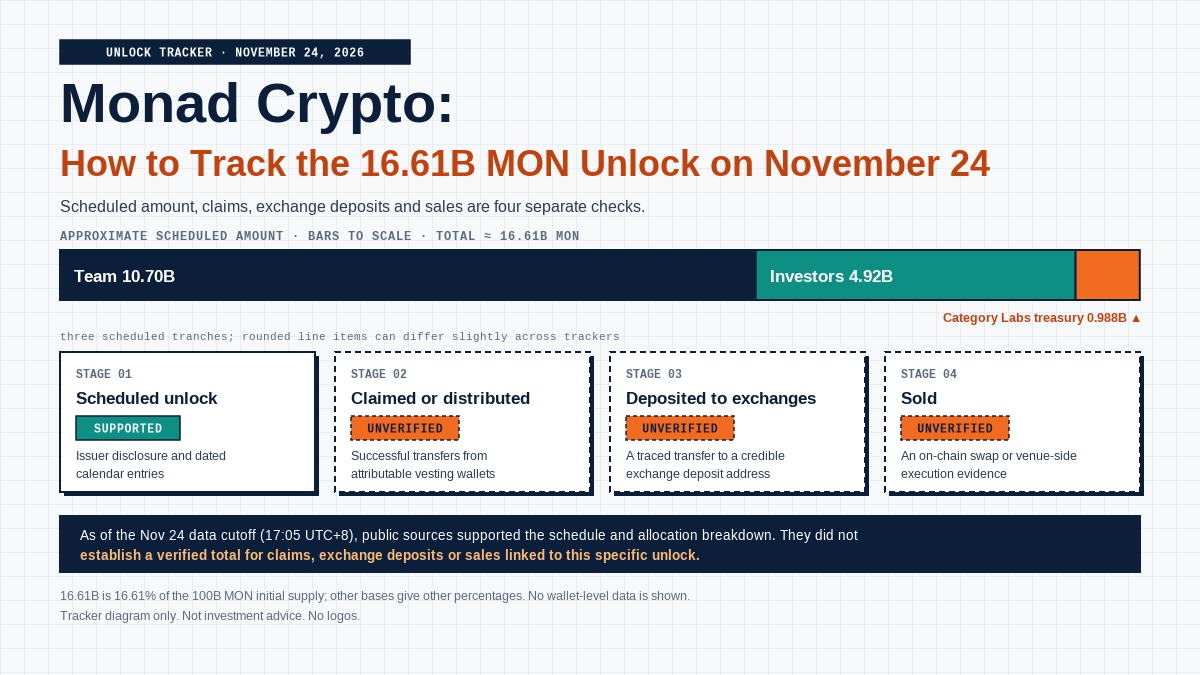
Monad Crypto: How to Track the 16.61B MON Unlock on November 24
Track Monad’s 16.61B MON unlock on November 24. See the team, investor, and treasury allocations, and learn how to verify claims and exchange deposits.

China Launches AI Standardization Pilot in Five Free Trade Zones

Is ATX Crypto the Same as AstroX? Project ATX (ATX) vs. AstroX (ATX)
Compare Project ATX on Solana with AstroX on BNB Smart Chain. Learn how to verify each token address before trusting an ATX price or buying guide.
Warren Buffett's Successor, Greg Abel, Has Quietly Purchased 3 Stocks Since the Start of the Fourth Quarter, Including Shares of a Legal Monopoly
Not Tesla. Not Nvidia. This "Magnificent Seven" Stock Could Be Overdue for a Big Rally.
UK Pension Reform Releases £11 Billion Surplus from Fixed Income Plans
Controllable Freezing, Unregulated Refunds: The On-Chain Power and Rule Vacuums of Stablecoin Duopoly
Bank of America Warns of Underestimated 'Hard Landing' Risk in 2027! Recommends 'GRAB' to Hedge Against Volatility, Consider Chips After Dollar Peaks
The Next Stablecoin: A Potential Market of Nearly $300 Billion with 50 Times Growth Opportunity
Latest articles


Latest coin listings on WEEX


