
The Truth Behind CAKE's 69% Reduction: Why Did PancakeSwap Abandon V3 Burn?

 Prefer us on Google
Author: Shenchao TechFlow
Senchao Insight: The Flip proposal recently released by the PancakeSwap governance forum has sparked a re-evaluation of CAKE's value capture ability in the market.
On the surface, the proposal creates deflationary expectations by reducing CAKE's daily output by 69%, but in the core fee distribution details, the protocol income from the V3 liquidity pool has been completely stripped of the token burn mechanism, instead fully tilted towards liquidity providers (LP) and the team treasury. Against the backdrop of intensified multi-chain liquidity competition, PancakeSwap has chosen to sacrifice the underlying cash flow of the token to defensively solidify its market share in the DEX arena.
On October 14, the core team of PancakeSwap (The Kitchen) officially submitted a token economics restructuring proposal named The Flip in the governance forum.
The key data in the proposal is that the team plans to significantly reduce CAKE's daily emission from 22,500 to 7,000, a reduction of 69%.
From a supply-side perspective, this seems to be a clear positive for the CAKE token. However, beneath the surface of the "reduction," the proposal fundamentally restructures the distribution mechanism of the protocol's real income (transaction fees):
First, the fee sharing for liquidity providers (LP) in the V3 and Infinity pools will be comprehensively increased from around 66% to 88%; meanwhile, the remaining 12% of protocol fees will be entirely allocated to the team treasury.
This means that the V3 business, which is currently the main engine of PancakeSwap's trading volume, will no longer use any transaction fees directly for repurchasing and burning CAKE. The official confirmation states that the future maintenance of CAKE's net deflation will completely rely on the old V2 protocol, which still retains a 23% burn mechanism.
In short, the essence of this proposal is that PancakeSwap has allocated all the income from its most profitable V3 business to market-making funds and the team, while replacing the dynamic cash flow originally used for secondary market purchases with the static metric of "reducing new emissions."
Market Share Anxiety and the Red Sea Competition of DEX
Cutting off the core business's empowerment of the token stems from the extremely brutal competitive landscape and liquidity anxiety currently faced in the DEX space.
In the current situation of multi-chain capital diversion, although PancakeSwap still occupies about 76% of the absolute share of DEX on the BSC chain and maintains a massive trading volume of approximately $23.8 billion over nearly 30 days, this foundational base is facing severe challenges from multi-chain aggregators.
Under the market mechanism where aggregators fully dominate trading routes, capital has no loyalty and will only flow to the liquidity pools with the lowest slippage and best depth. If PancakeSwap cannot provide industry-leading yields to retain market-making funds (LP), large capital will migrate to other networks. A cliff-like decline in market share and trading volume would be catastrophic for any DEX.
Therefore, ceding 88% of the transaction fees to LP is not an active ecological expansion by the protocol, but rather a defensive survival strategy forced into a corner. In the choice between "maintaining platform market share" and "preserving the direct value of the token," this proposal has chosen the former.
How to Price CAKE's "New Deflation"?
The implementation of The Flip proposal, to some extent, indicates that in the highly competitive stock game of DEX, the so-called "Real Yield" is primarily a tool to please large funds (LP) to maintain liquidity barriers, and only secondarily a profit that empowers the token.
For holders, facing this shift in underlying value capture logic, there is a need to readjust pricing and holding strategies for CAKE.
First and foremost, it is crucial to abandon the illusion of "automatic price increases" through deflation.
In the past, massive trading volumes meant considerable transaction fee buybacks, allowing holders to directly enjoy the dividends of protocol growth. Now, with V3 ceasing direct burns, the quality of CAKE's deflation has changed. Relying solely on the "scarcity" created by limiting new emissions, without real buying capital to support it, makes it difficult to drive the price up independently over the long term.
Since the official hopes for deflation are now pinned on V2, holders must closely monitor subsequent data changes. If, after the proposal is implemented, the massive LP incentives lead to a rapid shift in trading volume from V2 to V3, then the actual burn amount of CAKE will face the risk of stalling.
The 12% of income retained for the team treasury in the proposal, along with the daily new issuance of 7,000 CAKE entering the Pantry fund, is nominally intended for ecological construction and marketing. Holders need to assess whether the team can leverage these funds to create ecological increments far exceeding the buyback value (such as introducing RWA assets, cross-chain deployments, etc.). If they cannot deliver excess growth, this equates to a direct dilution of retail value.
In summary, in the current market, for most projects with real income, it is essential to demystify the phrase "reducing token supply."
Reducing supply does not equate to price increases; sometimes, the token itself is not a yield-bearing asset that shares protocol profits.
This content is provided for general informational purposes only and doesn't constitute financial, investment, legal, or tax advice. Any events, rewards, online promotions, or related information mentioned herein should not be considered a recommendation, solicitation, or invitation to purchase, sell, trade, or otherwise deal in any crypto assets. Crypto assets are highly volatile and may result in loss. The availability of WEEX services, products, and related events may vary by region. You are responsible for ensuring that your participation is in accordance with applicable local laws and regulations.
You may also like

Why Buy MSTR Instead of Directly Investing in Bitcoin ETFs?

Can UNI's Valuation Premium Hold Up After the Fee Switch Goes Live?

Hackers Exploit Vulnerability in Plex to Install Cryptocurrency Miners on Thousands of Servers

SpaceX Stock Price Explained: Why SPCX Is Down From Its $225 High and What Could Move It Next

Justin Sun Sells 80-90% of His ETH: Bitcoin Warning

Financial Services Agency Reviews DeFi Regulations, Nomura Calls for Standards Equivalent to Overseas, Stablecoins and Tokenization Also Discussed in First Meeting of Research Group for FY2028

Top UK banks including Lloyds, Barclays are restricting crypto related transfers: report
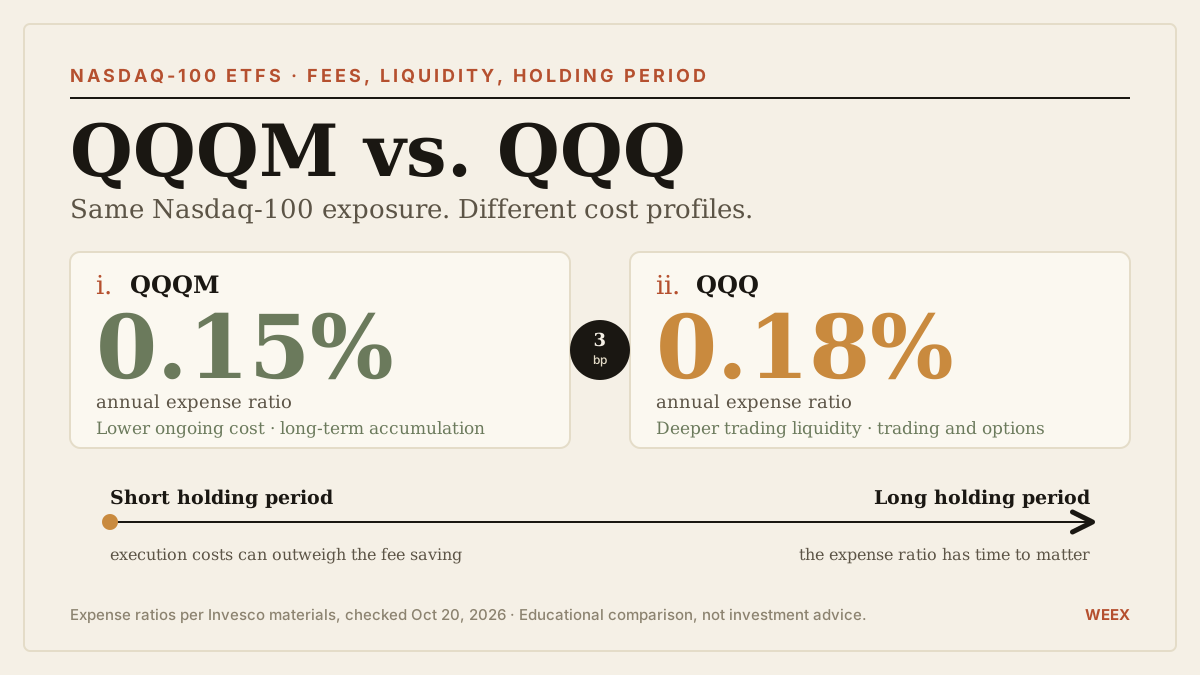
QQQM vs. QQQ in 2026: Fees, Liquidity and Long-Term Investing Compared
Compare QQQM vs. QQQ in 2026: current fees, trading costs, long-term savings, and when switching an existing investment may cost more than it saves.

21shares launches Lighter, Venice crypto ETPs in Europe
Tokenized Stocks vs. Stock ETFs: What’s the Difference?
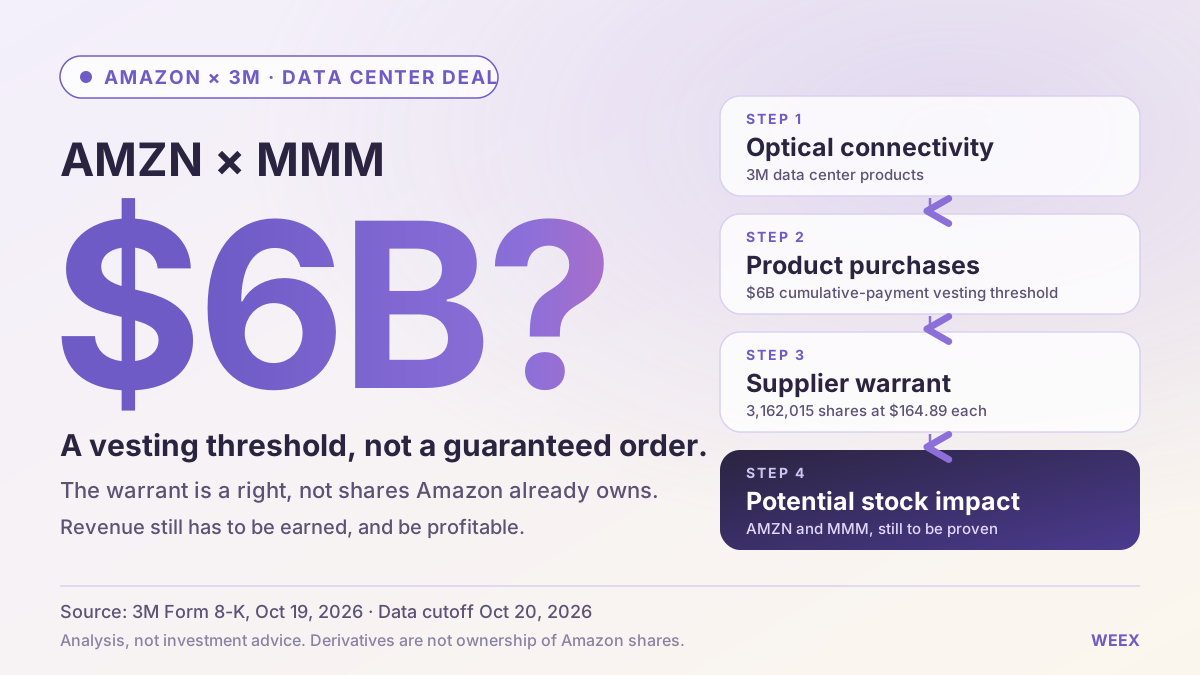
Amazon’s 3M Data Center Deal: What It Means for Amazon (AMZN) and 3M (MMM) Stock
Assess Amazon’s 3M data center deal, the $6 billion warrant threshold, potential dilution, and what the agreement could mean for AMZN and MMM stock.

Stablecoins Have Solved On-Chain Settlement, But How Do They Enter Merchant Checkout?

Task Scam Mastermind Loses Approximately $4.8 Million in Bitcoin from Ledger Theft Incident
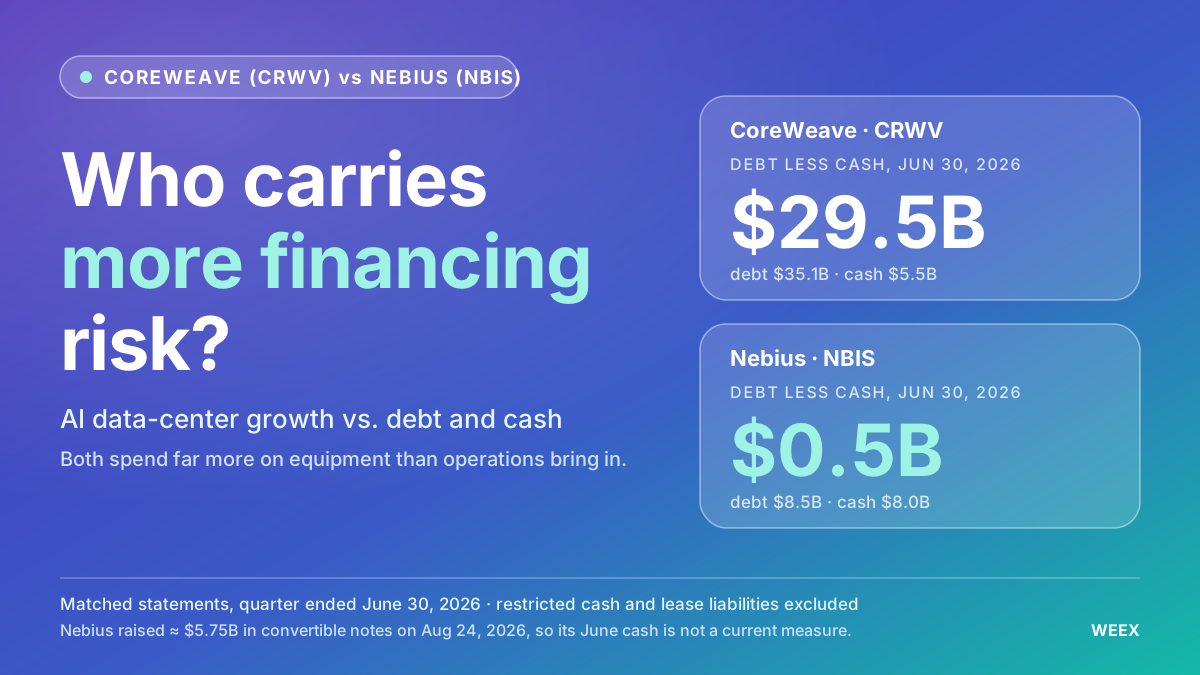
CoreWeave vs. Nebius Stock: Which AI Cloud Business Faces Greater Financing Risk?
Compare CoreWeave and Nebius stock through debt, cash flow, customer prepayments and dilution to assess which AI cloud business faces greater financing risk.
Eight Years In, XT Exchange’s Job Keeps Changing
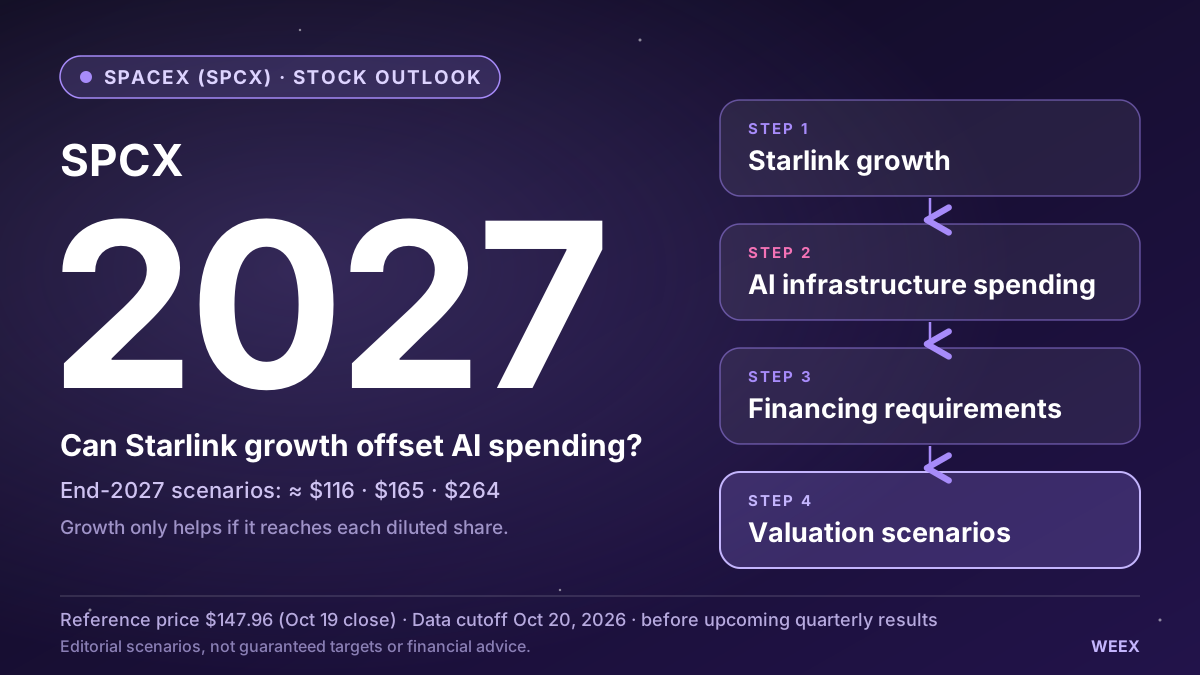
SpaceX Stock(SPCX) Price Prediction 2027: Can Starlink Growth Offset AI Spending?
SpaceX stock price prediction for 2027: assess Starlink growth, AI spending, valuation compression and dilution through transparent price scenarios.

BNB Chain splits asset power across 4 roles while admins hold the key
Why Is SpaceX Stock Down 34% From Its Peak? Q3 Earnings & Lockup Risks Ahead

a16z Talks to Circle Founder: Arc is More Than Just a Public Chain, It is the Foundation of the Machine Economy
NDV: Where Did the Money Go? A Review of the 16 Years of Stagflation and Wealth Erosion in the United States

Indonesian Crypto Users Reach 23.21 Million Accounts, OJK Tightens Oversight and Consumer Protection - World

XRP Ledger Bug Fixes to Be Implemented on Friday!

Cryptocurrency Exchange Bitget Suddenly Exits Russia. What Happened

Bitcoin Expected to Outperform Major Assets in Annual Return Forecast
Why This 73-Year-Old American Politician Became a Thorn in the Side of Crypto Lobbying Organizations?

SpaceX Stock Before Earnings: What to Expect From a $12.9 Billion Q3 and a First Profit
SpaceX reports third-quarter results after the U.S. close on October 20, 2026. Analysts expect about $12.9 billion of revenue, roughly 65% above the second quarter, and adjusted EPS near $0.14 to $0.15, which would be the first profit since the IPO. Capex, cash burn and AI revenue are the main swing factors.

Ethereum: Tom Lee Links Crypto Decline to AI Concerns
Scammers impersonate Tyler Hobbs in fake QQL NFT mint scheme

What Is Messari? Crypto Research, Blockworks Integration and Investor Tools
How Did Myer Kripke Invest With Warren Buffett? Long-Term Investing Lessons
Why Buy MSTR Instead of Directly Investing in Bitcoin ETFs?
Can UNI's Valuation Premium Hold Up After the Fee Switch Goes Live?
Hackers Exploit Vulnerability in Plex to Install Cryptocurrency Miners on Thousands of Servers
SpaceX Stock Price Explained: Why SPCX Is Down From Its $225 High and What Could Move It Next
Justin Sun Sells 80-90% of His ETH: Bitcoin Warning
Financial Services Agency Reviews DeFi Regulations, Nomura Calls for Standards Equivalent to Overseas, Stablecoins and Tokenization Also Discussed in First Meeting of Research Group for FY2028


