
TOKEN2049 attendees targeted in hacking wave, trader loses 4000000 dollars

 Prefer us on Google


A trader lost about 4000000 dollars worth of crypto in hacking attacks targeting attendees of TOKEN2049 in Singapore. Hackers set up malicious networks disguised as public Wi-Fi at the event venue and nearby hotels and airports, luring users to phishing sites or prompting them to install malware. There are suspicions that, at a side event presented as cybersecurity training, attendees were induced to install remote-access malware, which was then used to steal wallet private keys and other sensitive data. The affected trader, Frogman, was exposed to the attack while networking locally during the event, resulting in the theft of nine tokens from two main wallets.
-- Price
This content is provided for general informational purposes only and doesn't constitute financial, investment, legal, or tax advice. Any events, rewards, online promotions, or related information mentioned herein should not be considered a recommendation, solicitation, or invitation to purchase, sell, trade, or otherwise deal in any crypto assets. Crypto assets are highly volatile and may result in loss. The availability of WEEX services, products, and related events may vary by region. You are responsible for ensuring that your participation is in accordance with applicable local laws and regulations.
You may also like
Ansem: The Key to Hyperliquid's Growth Lies in Expanding the User Base

On-chain Data Fails to Support Polymarket Election Bettors' Early Profit Speculation

Who gets to block your Kalshi bets? Washington just escalated the fight

CZ Downloads Genius App but Has Not Traded, Only Holds Major Coins
[Column] Token Securities Can Be Controlled Even on Public Chains

Ansem Focuses on ZEC's Performance Amid Market Depth Correction

Trading Volatility Without Guessing Price Movements: What New Strategies Does Paragon's Power Perps Bring?
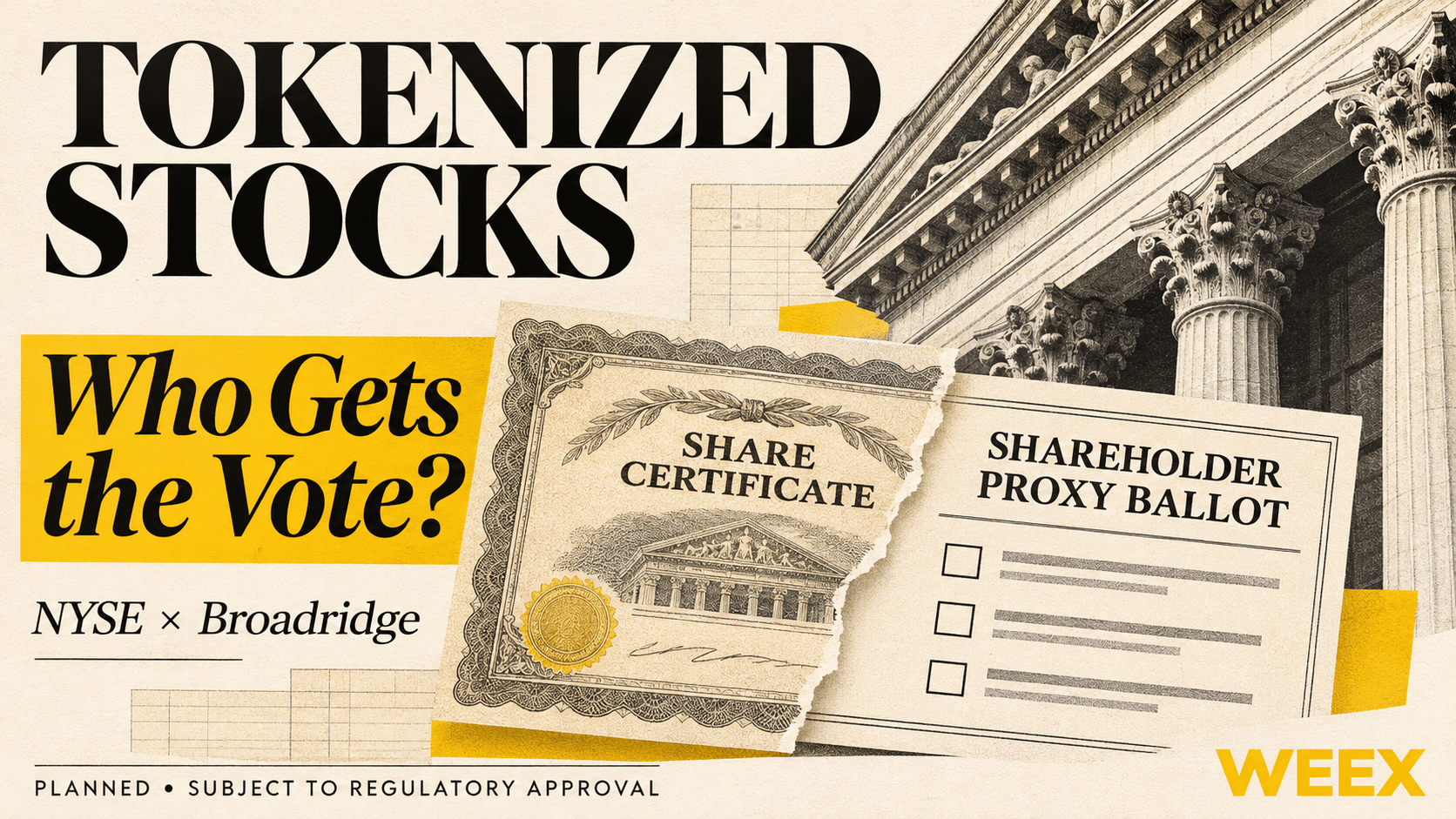
Will NYSE Tokenized Stocks Have Voting Rights? What the Broadridge Plan Means for Investors
Will NYSE tokenized stocks have voting rights? Understand Broadridge’s plan, shareholder eligibility, record dates and how stock futures differ.

Ansem: Tech Stock Pullback Evident, Market May Be Overly Pessimistic

Trader Killa Warns Against Frequent Profit Screenshot Posters

Have Bitcoin and the Crypto Market Become More Resilient to Hacking Attacks?

Kalshi and Polymarket Traders Gain Midterm Election Insights Through Field Research

Traders Conduct Street Surveys to Gain Information Advantage in U.S. Midterm Elections

Cryptocurrency Market May Peak Before U.S. Stocks, Bitcoin Could Bottom Out Ahead of the Stock Market

Ansem Shares Short-Term Trading Risk Management Experience

Ansem warns BTC's 2% drop post-Binance hack not a bullish signal
Analyst predicts Binance loss coverage will increase Bitcoin buying pressure

AI Selloff Survival Guide: How to Distinguish Between Buying Opportunities and Danger Signals?

Polymarket Third-Party Service Provider Hacked, Affected Users to Receive Full Compensation

Bitcoin Withstands Multiple Bearish Factors, Market Resilience Shows Bullish Characteristics

Ansem Turns Bearish on US Stocks, Claims Macro Cycle is Coming to an End

Midterm Election Predictions: Why Use Four Contracts to Measure Senate Control?
$LIBRA Case: Justice Delays Key Decision That Could Determine the Closure of the Investigation

Hyperliquid trader’s $170M oil orders raise spoofing concerns

USDT holder loses $50K in Ethereum address-poisoning attack
CFTC Plans to Increase Frequency of Trader Position Reports to Twice a Week
Bonk Guy: Market Sentiment Low, Opportunities Emerging as On-Chain Activity Expected to Recover

Why Prediction Markets Got the Brazilian Election So Wrong
Ansem is Bearish on Bitcoin and Ethereum, Market May Correct Before Rising
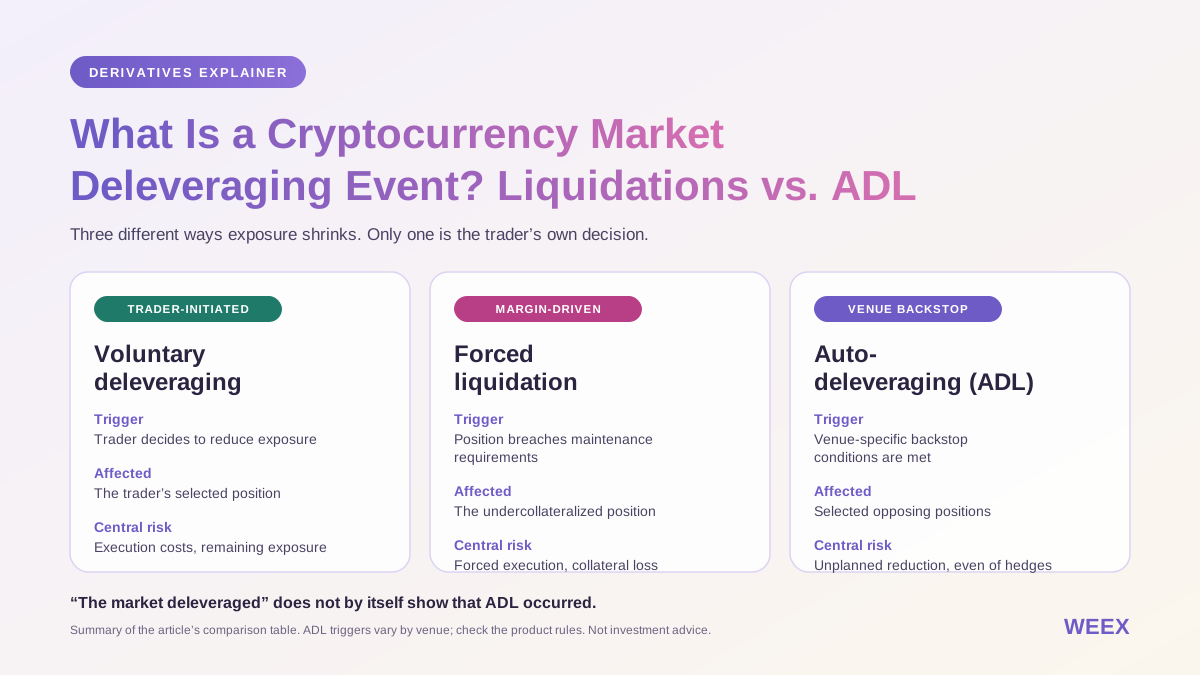
What Is a Cryptocurrency Market Deleveraging Event? Liquidations vs. ADL
Understand a cryptocurrency market deleveraging event: liquidation vs. ADL, misleading open-interest declines, hedge risks, and checks before trading.
Ansem: The Key to Hyperliquid's Growth Lies in Expanding the User Base
On-chain Data Fails to Support Polymarket Election Bettors' Early Profit Speculation
Who gets to block your Kalshi bets? Washington just escalated the fight
CZ Downloads Genius App but Has Not Traded, Only Holds Major Coins
[Column] Token Securities Can Be Controlled Even on Public Chains
Ansem Focuses on ZEC's Performance Amid Market Depth Correction
Latest articles


Latest coin listings on WEEX


