
US-Iran Negotiations Signal Easing Energy Tensions, but Diesel Crisis Complicates Inflation Risks

 Prefer us on Google


On September 25, representatives from the US and Iran engaged in discussions regarding a phased ceasefire during the UN General Assembly, proposing a plan to reopen the Strait of Hormuz within seven days in exchange for a relaxation of US economic sanctions. This marked the first time the market saw a diplomatic possibility for restoring energy supplies. Following the news, international oil prices fell nearly 2% during trading, reflecting traders beginning to price in expectations of supply recovery after the strait's reopening. However, core disagreements remain regarding the jurisdiction over the strait and the extent of sanctions relief, meaning diplomatic signals are not yet equivalent to actual supply restoration.
More concerning is that energy risks have spread from a single shipping route issue to the entire supply chain. The Houthis launched six ballistic missiles at energy facilities in Yanbu, Saudi Arabia, threatening the Red Sea export capacity that was originally intended to bypass the Strait of Hormuz. This means that even if US-Iran negotiations improve expectations for navigation through the Hormuz Strait, the market will still demand a higher risk premium regarding Saudi Arabia's alternative export capacity, Red Sea shipping, and the safety of energy infrastructure. Consequently, oil prices are experiencing a situation where "diplomatic positives" and "supply security risks" are being priced simultaneously.
The US diesel market reveals another layer of more complicated policy contradictions. Retail diesel prices have surged to a historic high of $6.51 per gallon, prompting the White House to consider export restrictions. However, US diesel exports by sea reached approximately 1.6 million barrels per day in August, and if overseas demand is directly curtailed, Gulf Coast refineries may reduce their operating rates due to inventory accumulation and deteriorating profits, thereby weakening the overall output of gasoline, diesel, and jet fuel. In other words, administrative restrictions can alter the flow of fuel but cannot directly create new supply.
Therefore, what the market truly needs to observe on September 25 is not merely the short-term drop in oil prices but whether energy supply can gradually recover from "multiple bottlenecks." If US-Iran negotiations progress, the Strait of Hormuz reopens, and risks to Red Sea and Saudi energy facilities decrease, supply shocks may genuinely ease; conversely, if there is a time lag between diplomatic progress and actual supply recovery, diesel, transportation, and agricultural costs may still perpetuate inflationary pressures through second-round effects. This also transforms energy policy from a simple price management issue into a significant variable affecting global inflation and monetary policy space.
-- Price
This content is provided for general informational purposes only and doesn't constitute financial, investment, legal, or tax advice. Any events, rewards, online promotions, or related information mentioned herein should not be considered a recommendation, solicitation, or invitation to purchase, sell, trade, or otherwise deal in any crypto assets. Crypto assets are highly volatile and may result in loss. The availability of WEEX services, products, and related events may vary by region. You are responsible for ensuring that your participation is in accordance with applicable local laws and regulations.
You may also like

Former New York Governor Cuomo: Tokenization Surpasses U.S. Regulation, Regulatory Clarity Affects Capital Flow
Thailand Stock Market News: SET and NYSE Explore Dual Listings and New Investment Products

Compute Finance: The Financial Layer Being Built by the AI Economy, 0G is Constructing a New Paradigm for Computing Assets

Wall Street Legend Bill Miller: Why Did I Bet Half My Fortune on Bitcoin?

The Stronger the AI, the Lower the Wages: Your Education is Becoming the Most Expensive Devalued Asset

Oracle Stock vs. KRAFTON Stock: Why Are Investors Questioning Two Growing Companies?
Compare Oracle and KRAFTON stocks through their latest results, share-price questions and the different growth tests investors face in 2026.

What Happens When the AI Bubble Bursts? MIT University Responds

The Value of Ethereum and the Jevons Paradox

The Real Bottleneck of Midnight's Slow Growth: It's Not the Product, It's Market Formation

IonQ Stock Surges 5%: Nvidia Just Agreed to Host Its New Quantum System

HIFI Completes $37 Million Series A Funding Led by Left Lane Capital

HIFI Completes $37 Million Series A Funding Led by Left Lane Capital

Ethereum's 'Two-Track Update': Glamsterdam Public Testnet and Hegotá Initial Validation

Exclusive Interview with Frontier Technology Investor Zheng Di: SEC's 'Innovation Exemption' Opens the Door to a Compliant Bull Market, Which Assets Are Potential Stocks?

HTX DeepThink: Opportunities Concentrate on Profitable and Fund-Supported Assets, BTC Still Has Room for Recovery After Consolidation
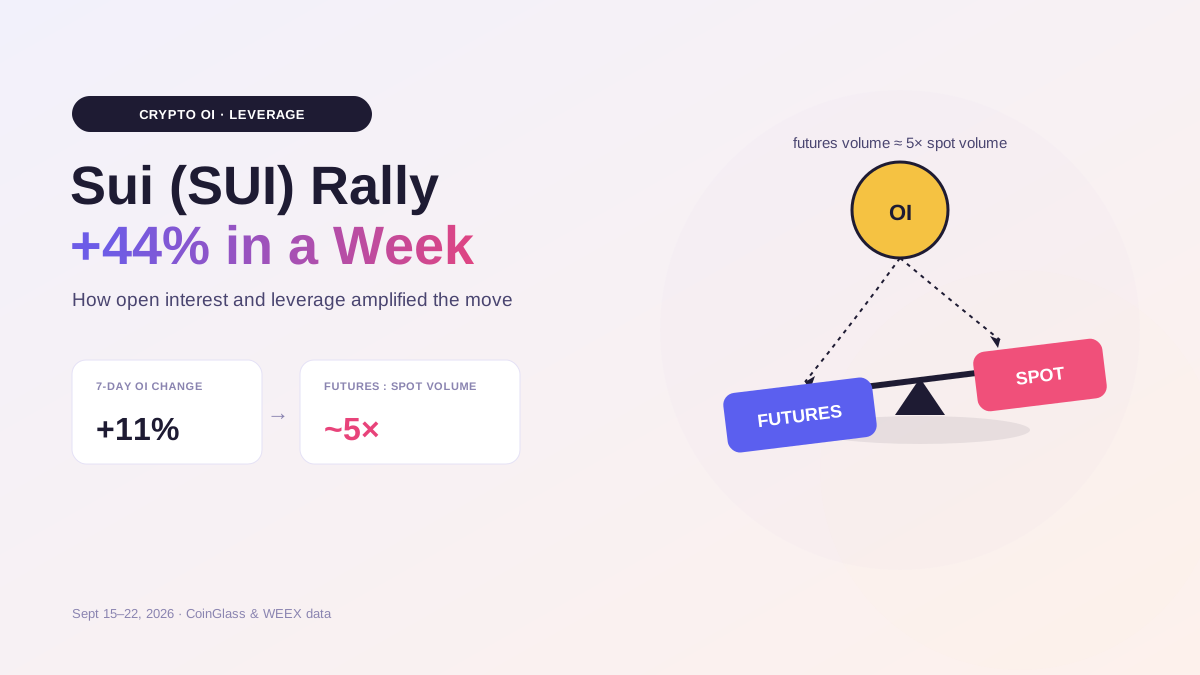
Why Did Sui (SUI) Crypto Price Jump 44%? Crypto OI and Leverage Explain the Rally
See why Sui (SUI) jumped 44%, how crypto OI and leverage amplified the rally, what the pullback means, and how to trade SUI on WEEX.

CFTC Chair Calls for "Mass Tokenization"! Wall Street Faces Three Barriers to Full On-Chain Adoption

Is the 1 Billion POL Burn Just a Joke?

WEEX Exclusive:Bitcoin Pulls Back From $87,000| WEEX TradFi Daily Brief (September 24, 2026)

Bitcoin Pulls Back From $87,000| WEEX TradFi Daily Brief (September 24, 2026)
Bitcoin pulled back from about $87,000 to about $84,000, with Ethereum near $2,680. S&P Global PMI on September 23 ET far exceeded forecasts. The 10-year yield broke above 5.00%, while the 5-year and 30-year touched highs last seen in 2007 and 2004. The S&P 500 and Nasdaq slipped. Energy moved with oil and crypto-treasury stocks followed bitcoin lower. Investors await earnings from COST, BB, and others.

MIT Warns AI Bubble May Require 2.7x Productivity Increase by 2030
Davie Reveals BTC Strategy Data, Volume 205.42K, Rate +0.0016%

Stablecoins hold nearly $200 billion in US debt, but money funds bought the surge
Coin Metrics revises 19 months of Bitcoin ETF wallet data

HTX Research Analyst WZ: Crypto Market Pricing Extends Beyond Crypto, Regulation and Liquidity Become Key Variables
Ye Tan: The Internet Era is Coming to an End, the AI Era has Already Begun
Chainalysis: Crypto Economic Activity Down 1.6%, Market Value Shrinks by $2.1 Trillion

$1.7 Billion Inflow to Bitcoin ETFs in Two Days
Why Do You Always Make Small Profits and Then Lose Everything? Taleb Explained It with 'Asymmetric Leverage' Twenty Years Ago

Coinbase traced $1.1 million crypto trail behind AI phishing service EvilTokens
Former New York Governor Cuomo: Tokenization Surpasses U.S. Regulation, Regulatory Clarity Affects Capital Flow
Thailand Stock Market News: SET and NYSE Explore Dual Listings and New Investment Products
Compute Finance: The Financial Layer Being Built by the AI Economy, 0G is Constructing a New Paradigm for Computing Assets
Wall Street Legend Bill Miller: Why Did I Bet Half My Fortune on Bitcoin?
The Stronger the AI, the Lower the Wages: Your Education is Becoming the Most Expensive Devalued Asset
Oracle Stock vs. KRAFTON Stock: Why Are Investors Questioning Two Growing Companies?
Compare Oracle and KRAFTON stocks through their latest results, share-price questions and the different growth tests investors face in 2026.


