
MU Stock Falls Below $1,000: Is the CXMT Threat Real or Just an Excuse to Take Profits?

 Prefer us on Google



MU stock closed at $989.04 on October 12, its first finish below $1,000 since mid-September, and it slid toward $960 in premarket trading on Tuesday.
The trigger was a statement from a Chinese memory maker about a chip design it plans to ship by the end of the year, yet MU stock was already up roughly 246% for 2026 when the news arrived. That leaves two explanations that can both be partly true: a genuine long-term threat to memory pricing, or a crowded winner looking for a reason to fall. How much weight each one deserves matters to anyone judging whether MU stock has further to drop.
How Far Did MU Stock Fall, and Where Does It Trade Now?
MU stock fell 3.88% on Monday to close at $989.04, according to GuruFocus, after Friday's close of $1,029 reported by AIStockWire. Benzinga put Tuesday's premarket price at $964.64, down 2.47%, while TradingKey showed about $960.20 with a low of $950, so the figure depends on the minute it was taken.
The slide is larger than one day suggests. TradingKey counted four straight losing sessions, and Motley Fool put the shares about 19% below the June 25 record close of $1,213.56 when they traded near $983, which works out to about 18% from the Monday close (calculation). GuruFocus lists a peak of $1,255 the same day, a difference that likely reflects an intraday high against a closing high. Even after the drop, MU stock was up 246.5% for the year and carried a market value near $1.12 trillion, so the move is a retreat inside a very large gain.
What Did CXMT Actually Announce?
CXMT said it expects to launch a new DDR5 server memory module built on a 4F² cell design around the end of 2026, and it did not publish specifications, yields or volumes. President Cao Kanyu made the remarks at a chip conference in Shanghai, and IT Home reported them on October 10, according to AIStockWire.
The 4F² label refers to cell size. A 4F² cell has a nominal footprint about one third smaller than the 6F² cells used in most DRAM today at the same feature size, but that does not establish the finished chip's density or cost. IBTimes and the Seoul Economic Daily added that CXMT is developing vertical surround-gate transistors to limit current leakage. IBTimes also noted that the 4F² architecture is already on Korean and American roadmaps, so the new element is CXMT's 2026 timeline for a server product, which it called a schedule and not a yield report. Morningstar's Jing Zhewei, quoted by the Seoul Economic Daily, said CXMT's position would improve significantly if it implements 4F² quickly, but expected a meaningful time gap before commercialization at profitable yields.
Why Do Memory Investors Take the CXMT News Seriously?
Investors take it seriously because memory is a cyclical business where extra supply can change prices quickly, and a Chinese producer scaling up server DRAM could add supply to a tight market. The concern is long term, and the analysts quoted by Benzinga said CXMT still faces technology hurdles in advanced memory such as high-bandwidth memory and has not shown large-scale production.
The market reaction was broad. On October 12, AIStockWire reported SK Hynix down 4.5% in Seoul, Samsung down more than 4%, SanDisk down 6.4%, Western Digital down 2.6% and the iShares Semiconductor ETF down 2.6%, while the Kospi fell 3.65% and the S&P 500 ETF lost only 0.1%. Benzinga estimated that Micron lost about $52 billion of market value that day, SK Hynix about $41.5 billion and SanDisk about $15 billion. On Tuesday the Seoul Economic Daily reported that Samsung and SK Hynix each fell more than 7%, and it described the Chinese company as roughly two years ahead of Samsung on announced timelines, a comparison that rests on CXMT's own schedule. A drop that hits the whole memory group at once reads as a sector repricing, not a Micron-specific problem.
-- Price
What Points to Profit-Taking Instead of a Real Threat?
Several details suggest the news arrived into a market that was already looking for an exit. Union Bancaire Privée's Bei Fu, quoted by the Seoul Economic Daily, said investors were nervous and seeking an excuse to take profits in AI-related stocks, especially memory names. TradingKey added that high Treasury yields and risk-off sentiment had produced early-October outflows from high-beta semiconductor stocks, including Nvidia.
Positioning supports that reading. Benzinga reported about 180,000 puts traded in the VanEck Semiconductor ETF by midday Friday against roughly 50,000 calls, and SpotGamma estimated about $270 million in premium tied to likely Micron put buying, although Volland's Jason DeLorenzo cautioned against reading too much into those trades. The company's own numbers did not weaken. Motley Fool reported record fiscal fourth-quarter revenue of $54.2 billion for the 14-week period ended September 3, up 379% from a year earlier, with first quarter fiscal 2027 guidance of about $61.5 billion. Growth excluding the extra week was about 21% sequentially, which is still strong. Valuation sends mixed signals: GuruFocus shows a trailing price to earnings ratio of 13.33 against a five-year median of 20.74, yet its own fair-value model of $777.46 rates the stock about 27.2% overvalued. Those are model outputs, and they disagree with each other, which is why neither settles the debate.

What Levels and Events Should Traders Watch Next for MU Stock?
The most-cited level is $950, and below it analysts point to $780 to $800 and then $740. TradingKey calls $950 support at the 0.382 Fibonacci retracement and the starting point of the August and September rally, and says a break could open the zone near $780 to $800, with the July low at $740 more than 20% below the premarket price. These are one outlet's technical views, not forecasts.
Events matter as much as levels. CXMT has not disclosed yields or shipment volumes, so any follow-up detail could move the group in either direction. Micron can resume share repurchases on December 9, when current restrictions expire, and management has said it will direct all excess cash flow toward opportunistic buybacks, according to Benzinga. On the bullish side, D.A. Davidson's Gil Luria raised his 12-month target to $3,000 from $2,100, although a target is not a prediction of near-term trading. TradingKey also mentions fiscal 2027 capital spending above $20 billion, which bears say pressures free cash flow, but that figure comes from an opinion piece and should be checked against Micron's filings.
How Can Traders Follow MU Stock Price Moves on WEEX Spot and Futures?
Traders who want price exposure to MU stock on WEEX can look at Spot and Futures, and the two carry very different risk. Both track a price and do not give ownership of Micron shares, voting rights or dividends. Pair availability and leverage limits are listed on the WEEX trading page and can change, so they should be checked there before placing an order.
Spot suits traders who want to follow the CXMT story over weeks. A spot position uses the trader's own funds, has no leverage and no liquidation price, so the loss is capped at the amount invested. Futures suit shorter-term views, and they work differently. A futures contract allows leverage, which magnifies gains and losses, and a position can be liquidated if the price moves far enough against it. Funding fees may apply while it is open. MU stock moved nearly 4% in one session and then dropped again premarket, so a leveraged position can lose margin in hours when headlines about Chinese chip progress or semiconductor selling arrive.
A position size, a stop level and a maximum acceptable loss are worth settling before the order. WEEX also publishes a 1,000 BTC protection fund at weex.com/protectfund. A protection fund is a platform safeguard, and it does not remove trading risk or guarantee against losses.
Conclusion
The fall in MU stock below $1,000 has both a real trigger and a crowded backdrop. CXMT's plan for a 4F² server module is a long-term supply concern, but it comes without specifications or yields, and analysts expect a gap before profitable commercialization. A stock up about 246% for the year, heavy put activity and nervous AI investors make profit-taking an equally plausible driver. The honest answer is that the data cannot separate the two yet, and the next clues will come from CXMT's follow-up details and from whether MU stock holds the $950 area. Readers should check current prices before acting on any figure here.
FAQ
1. Why did MU stock fall below $1,000?
MU stock fell 3.88% to $989.04 on October 12 after China's CXMT said it plans a 4F² server memory module by year-end, while investors were also looking to take profits in AI-linked memory names.
2. What is CXMT's 4F² DRAM technology?
CXMT's 4F² design has a nominal cell footprint about one third smaller than 6F² cells at the same feature size, and the company has not published specifications or yields.
3. Is the CXMT threat real for Micron?
The CXMT threat is a long-term supply risk, but analysts quoted by Benzinga and the Seoul Economic Daily say large-scale production and profitable yields are unproven and likely further away.
4. How much is MU stock down from its high?
MU stock closed about 18% below the June 25 record close of $1,213.56 on October 12, a calculation from Motley Fool's record-close figure and GuruFocus's closing price.
5. Can traders follow MU stock on WEEX?
Traders can look for MU price exposure in WEEX Spot and Futures, which track the price and do not provide share ownership. Pair availability and leverage limits should be checked on WEEX.
This content is provided for general informational purposes only and doesn't constitute financial, investment, legal, or tax advice. Any events, rewards, online promotions, or related information mentioned herein should not be considered a recommendation, solicitation, or invitation to purchase, sell, trade, or otherwise deal in any crypto assets. Crypto assets are highly volatile and may result in loss. The availability of WEEX services, products, and related events may vary by region. You are responsible for ensuring that your participation is in accordance with applicable local laws and regulations.
You may also like

Best Crypto Miner for Beginners: What to Check on Cost, Power, Hashprice and Profit Before You Buy

Stop Limit Order: How It Works and Why It Can Fail to Fill

Best Crypto Podcasts for Beginners: A 4-Week Listening Plan

Will Bitcoin Break $87,000 This Week? CPI, Fed Speakers and ETF Outflows to Watch

Conflux (CFX) Price Jumps on China's National Blockchain Network Plan: Does the Policy Actually Name CFX?

What Is Plume (PLUME)? Why the RWA Token Stays 93% Below Its High Even After the Layer 2 Rally

Who Is David Ellison? Skydance’s Strategy, Media Consolidation, and the Investment Case
Crypto Funding Rate: Who Pays, What It Costs, What It Signals

PEP Earnings: PepsiCo Beats Q3, Cuts Guidance on North America
BTC Futures Analysis: $80K Held, but Longs Are Still Paying Up

Third-Party Trading Platforms vs Direct WEEX Trading: Fees, Liquidity, Security, and Control

How to Day Trade Crypto for Beginners: Do the Fee Math First
What Is Blockchain and How Does It Work? One Real Payment Traced

What Is a Blockchain Node? Types, 2026 Counts, and Real Costs

TSMC Stock Outlook Ahead of Q3 Earnings: Can AI Demand Push Shares Higher?

Taiwan Stock Market Nears 50,000: Can the TAIEX Break the Milestone After the Holiday?
How to Buy USDT in Thailand: Payment Methods, Fees and Transfer Checks

What Is RLC Crypto? How iExec (RLC) Powers Confidential Computing
Best Crypto Trading Strategies for Beginners: What to Know Before You Trade

PUMP Price Rally: Can Pump.fun Buybacks Outrun Monthly Unlocks?
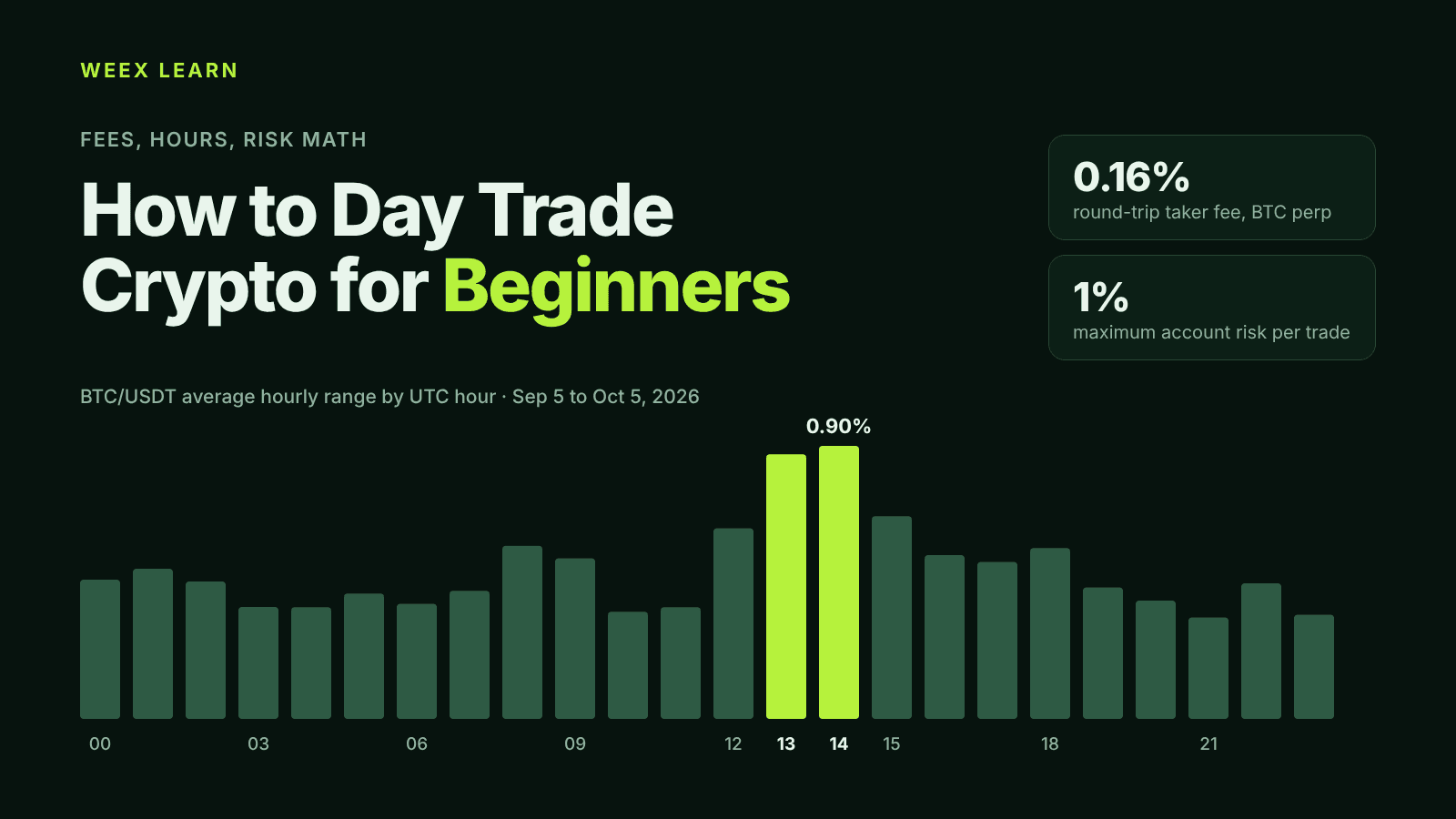
How to Day Trade Crypto for Beginners: Fees, Hours, Risk Math

Trading Psychology for Beginners: The Math Behind Your Emotions
Best Crypto Apps for Beginners: The Five Features That Actually Matter on Your Phone

WEEX Passkey Now Secures Withdrawals: The 4 Actions It Covers
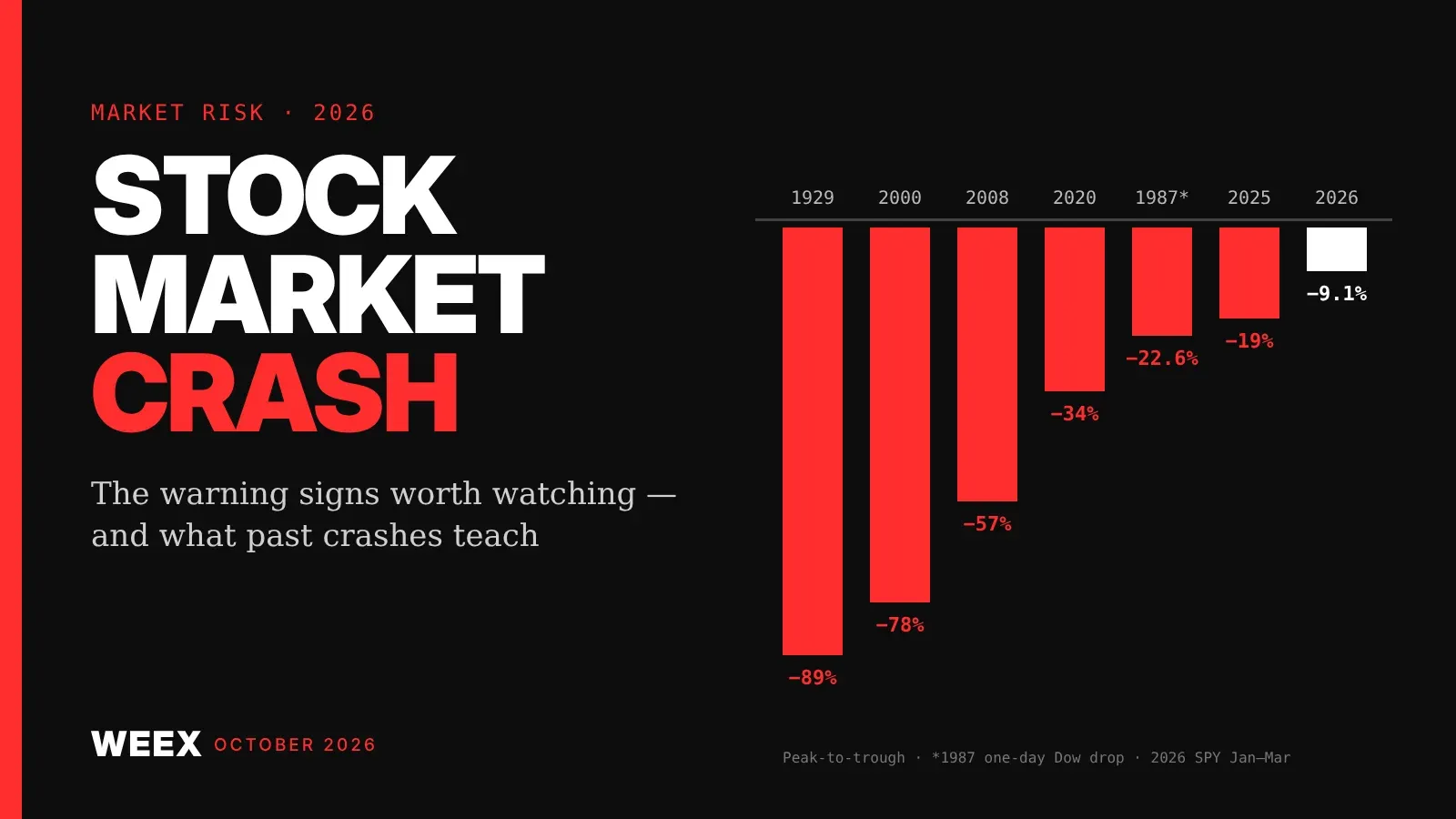
Stock Market Crash Risk in 2026: The Warning Signs Worth Watching
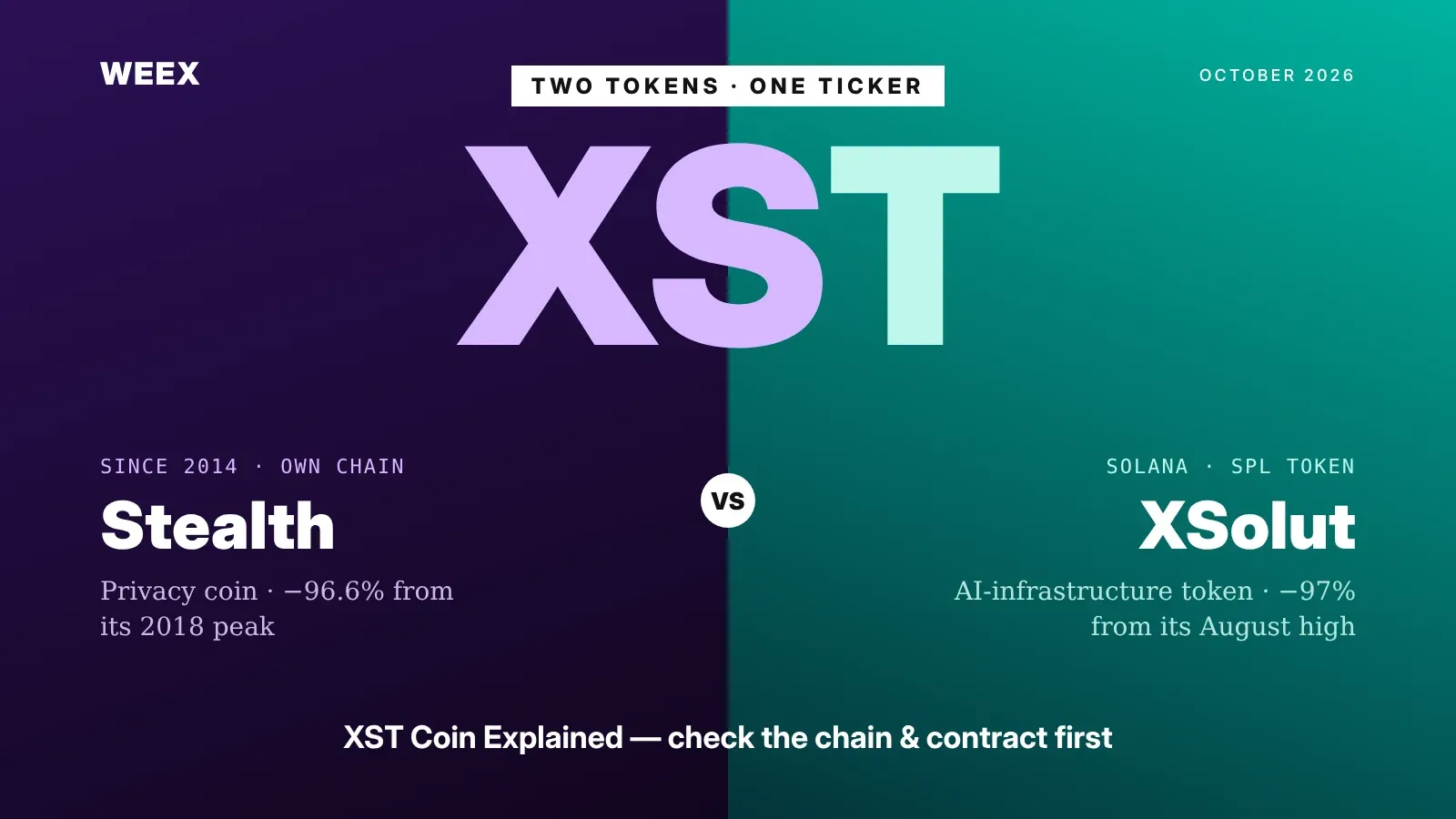
XST Coin Explained: Two Tokens Share One Ticker, Check Which One
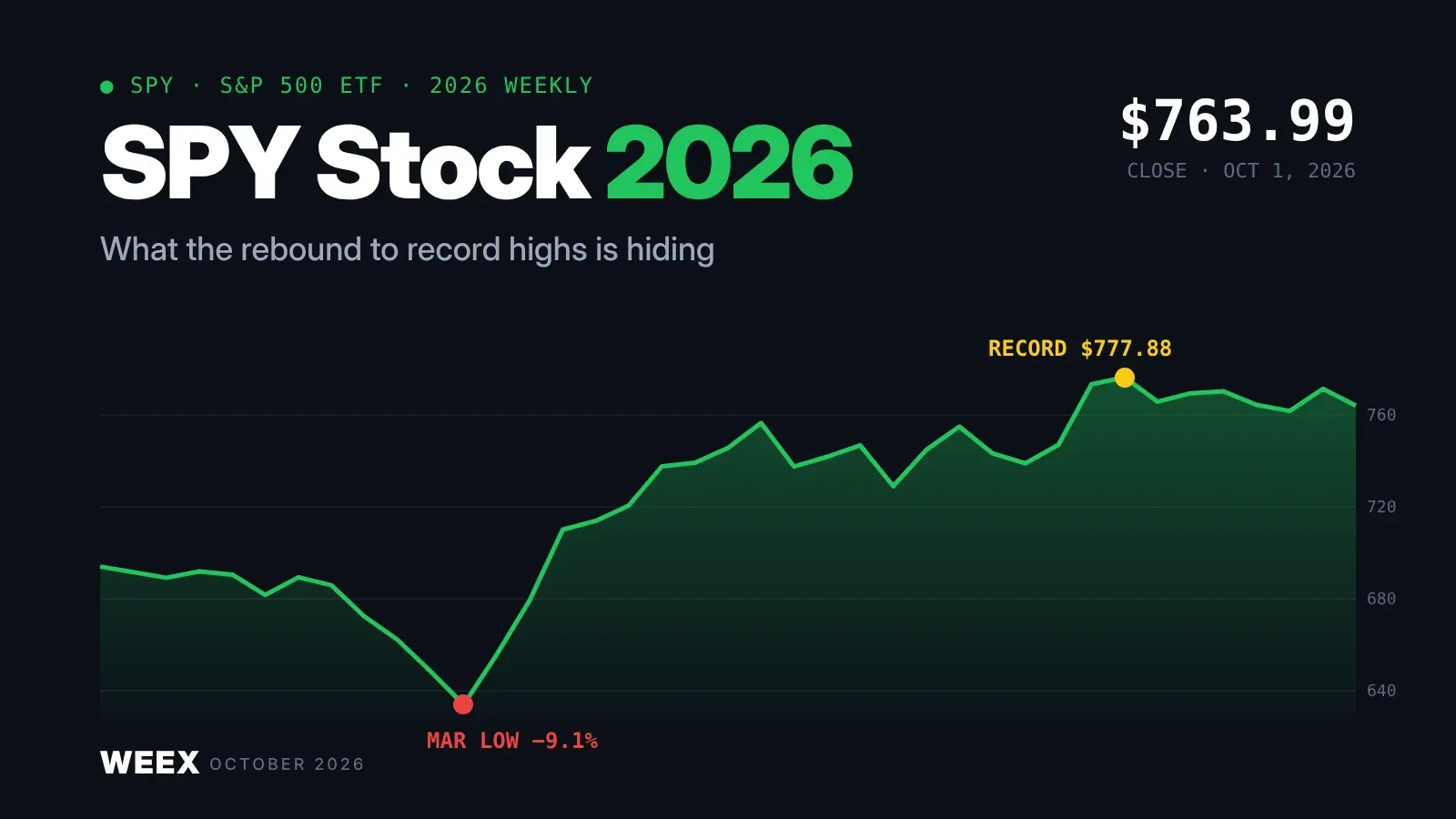
SPY Stock in 2026: What the Rebound to Record Highs Is Hiding
What Is Blockchain and How Does It Work? A Transaction Traced
How to Buy Crypto with PayPal: The Custody Catch Most Beginners Miss

ENA Token Price Up 76% in a Month: The October 5 Unlock Test
Best Crypto Miner for Beginners: What to Check on Cost, Power, Hashprice and Profit Before You Buy
Stop Limit Order: How It Works and Why It Can Fail to Fill
Best Crypto Podcasts for Beginners: A 4-Week Listening Plan
Will Bitcoin Break $87,000 This Week? CPI, Fed Speakers and ETF Outflows to Watch
Conflux (CFX) Price Jumps on China's National Blockchain Network Plan: Does the Policy Actually Name CFX?
What Is Plume (PLUME)? Why the RWA Token Stays 93% Below Its High Even After the Layer 2 Rally
Contents
Popular coins
Latest articles


