
Best Crypto Miner for Beginners: What to Check on Cost, Power, Hashprice and Profit Before You Buy

 Prefer us on Google


Shopping for a crypto miner usually starts with a product page that lists hash rate, a price and a daily revenue estimate, and that estimate is where most first-time buyers go wrong.
The best crypto miner for beginners is not the one with the biggest number on the box, because a crypto miner earns money only after electricity, fees and rising network difficulty are subtracted. In October 2026 the arithmetic is tighter than the marketing suggests: the same machine can pay for itself at one power price and lose money every day at another. A few numbers, checked before the purchase, decide which side of that line a buyer lands on.
What Is a Crypto Miner, and What Ways Can Beginners Mine?
A crypto miner is a computer, usually a purpose-built machine, that adds computing power to a proof-of-work network and earns block rewards and fees in return. For Bitcoin that machine is an ASIC, a chip designed for a single task, and beginners generally meet three routes: buying a machine and running it at home, buying one and paying a hosting site to run it, or buying a cloud mining contract that sells a share of someone else’s hash power.
Each route moves the risk somewhere else. At home, the buyer carries electricity, heat and noise, and PC Tech Magazine describes home-run machines at 75 to 85 decibels, comparable to a leaf blower. With hosting, the buyer pays a monthly or per-kWh fee and relies on the host’s uptime, and Coincub treats hosted power around $0.06 to $0.07 per kWh all-in as the realistic benchmark. Cloud contracts remove the hardware but add counterparty risk, because the buyer cannot inspect the machines. Software-only mining apps, which promise to earn from a laptop or phone, do not compete with ASICs on Bitcoin. The honest starting point is to decide which route fits the buyer’s electricity access and tolerance for risk before looking at any model.

Which Costs Decide Whether a Beginner Miner Makes Money?
Electricity decides it, followed by the machine’s efficiency, and everything else is smaller. Coincub calls power the largest cost and tells buyers to include demand charges, minimums and curtailment terms. Efficiency is measured in joules per terahash. Coincub treats about 15 to 16 J/TH as the target class and says anything above roughly 25 J/TH is a liability, while mid-generation machines at 19 to 21 J/TH struggle when difficulty rises.
The remaining costs are easy to forget. Coincub’s worked example includes a 2.5% pool fee, a 1% to 2% firmware fee if enabled, freight, customs, repairs and fan or power-supply failures. PC Tech Magazine, which sells hosting, lists a 245 TH/s, 15 J/TH air-cooled machine at about $2,059 in July 2026, and a buyer should treat that as one retail price from an interested publisher. Power draw follows from the numbers: 245 TH/s at 15 J/TH is about 3,675 watts, or roughly 88 kWh per day (calculation). At $0.15 per kWh that is about $13 a day in electricity, while at $0.05 it is about $4.40. The machine is identical, and the outcome is completely different.
How Do Hashprice and Difficulty Show Whether Mining Pays?
Hashprice shows what one petahash per second earns in a day, and difficulty shows how crowded the race is, so together they answer whether a machine can cover its power bill. Abundant Mines gives the formula as block reward plus transaction fees, multiplied by the Bitcoin price, divided by network hash rate. The block reward is 3.125 BTC, and transaction fees remain tiny, at about 0.63% of block rewards in September according to Luxor, so income is almost entirely newly issued coins.
Recent figures show how fast the number moves. CoinShares put the June average near $27.70 per petahash per day, and Abundant Mines listed about $35.74 in August with Bitcoin near $71,971. Bitcoin.com reported hashprice rising 22.24% from $32.42 to $39.63 by September 6, when difficulty rose 1.31% to 127.45 trillion. Luxor measured a September average of $39.33 and said it eased toward $39 in early October, per KuCoin on October 10. The calculation behind those figures is simple. At $39 per petahash per day, a 245 TH/s machine earns about $9.56 a day, and dividing by 88 kWh of daily use gives a breakeven near $0.108 per kWh (calculation, before pool fees).
Hash rate and difficulty keep climbing against that income. Luxor said difficulty rose about 5.52% in September, which absorbed much of the benefit of Bitcoin’s 7.3% monthly price gain. Hash rate estimates differ by source and date: CryptoQuant showed about 962 EH/s in early October, Luxor’s seven-day average was about 999 EH/s on October 8, and Coinwarz’s live estimate on October 14 showed about 1.09 ZH/s with difficulty near 132.72 trillion. Different windows and methods explain the spread, and the direction is the same: more competition for the same coins.
-- Price
What Risks Should Beginners Check Before Buying a Miner or Contract?
The first risk is that hashprice can fall, and a purchase made at one level has to survive another. Hashprice moved from about $27.70 in June to about $39 in September, a rise of roughly 42% (calculation), and it can move back just as quickly. Coincub warns that difficulty behaves like a slope: a 1% rise per adjustment compounds to about 6.1% over six adjustments, and combined with a $5 drop in hashprice it can shrink daily margin by 30% to 35%. A plan that needs flat difficulty, perfect uptime and on-time delivery is fragile.
An illustration shows how thin the margin can be. With the same 245 TH/s machine at $39 hashprice, a buyer paying $0.07 per kWh earns about $3.38 a day after power, and a $2,059 machine would take roughly 20 months to pay back (calculation, constant hashprice, no pool fees). At $0.15 per kWh the same machine loses about $3.67 a day. Longer-term, the next halving, expected around 2028, cuts the block reward from 3.125 BTC to 1.5625 BTC.
Scam risk is the second concern. The FTC’s guidance on crypto scams says only scammers guarantee profits, only scammers demand payment in cryptocurrency, and fake platforms may block withdrawals or demand high fees. The page does not specifically discuss cloud mining, but those warning signs apply to contracts that promise fixed daily returns. Coincub’s practical conclusion is blunt: if the mining case cannot clear the bars with margin to spare, buying Bitcoin directly is the alternative. Buyers should also read the terms on resale, warranty, delivery dates and who bears customs costs.

What Taxes and Records Apply to Mined Coins?
Mined coins are generally treated as income when received, and the buyer needs records from the first day. In the United States, the IRS says taxpayers should answer yes to the digital assets question if they received digital assets for mining, staking or similar activities, and must keep records of the fair market value in US dollars of digital assets received as income. The IRS says income from mining is reported on Schedule 1 of Form 1040, and income received as an independent contractor goes on Schedule C. The IRS page does not explain every case, such as when mining counts as a business, so a tax professional should confirm.
Records matter beyond the filing. A simple spreadsheet with each payout date, amount, dollar value at receipt, electricity bill and equipment cost makes the real profit visible and supports later sales. The rules differ by country, and the details above apply to the United States only. Selling mined coins later is a separate taxable event in many jurisdictions, so the value recorded at receipt becomes the starting point for any gain or loss.
Conclusion
The best crypto miner for beginners comes down to a few checks that cost nothing to run. Find the real electricity price, pick a machine in the efficient class, compare the breakeven power price with today’s hashprice, and then ask what happens if hashprice drops by a third or difficulty keeps rising. At roughly $39 per petahash per day, a 15 J/TH machine breaks even near $0.11 per kWh by calculation, so buyers paying $0.15 at home are likely paying to lose money, while hosted or very cheap power can work with thin margins. If the numbers only work in the best case, the safer choice may be not to buy a miner at all. Readers should refresh hashprice and prices before relying on any figure here.
FAQ
1. What is the best crypto miner for beginners?
The best crypto miner for beginners is one whose breakeven electricity price sits comfortably above the buyer’s actual power cost. Efficiency near 15 to 16 J/TH is the target class, according to Coincub.
2. Is a crypto miner profitable in 2026?
A crypto miner can be profitable in 2026 at low power prices, but margins are thin. At about $39 hashprice, a 15 J/TH machine breaks even near $0.11 per kWh by calculation, before pool fees.
3. How much does a crypto miner cost to run?
A crypto miner drawing about 3,675 watts uses roughly 88 kWh a day, which costs about $13 at $0.15 per kWh or about $4.40 at $0.05 per kWh (calculation).
4. Is cloud mining a good way for beginners to start?
Cloud mining removes hardware but adds counterparty risk. The FTC says only scammers guarantee profits, so contracts promising fixed daily returns deserve extra caution.
5. Is mined crypto taxable?
Mined crypto is generally taxable income when received. In the United States, the IRS says to report mining income on Schedule 1 of Form 1040 and keep dollar-value records.
This content is provided for general informational purposes only and doesn't constitute financial, investment, legal, or tax advice. Any events, rewards, online promotions, or related information mentioned herein should not be considered a recommendation, solicitation, or invitation to purchase, sell, trade, or otherwise deal in any crypto assets. Crypto assets are highly volatile and may result in loss. The availability of WEEX services, products, and related events may vary by region. You are responsible for ensuring that your participation is in accordance with applicable local laws and regulations.
You may also like

MU Stock Falls Below $1,000: Is the CXMT Threat Real or Just an Excuse to Take Profits?

Stop Limit Order: How It Works and Why It Can Fail to Fill

Best Crypto Podcasts for Beginners: A 4-Week Listening Plan

Will Bitcoin Break $87,000 This Week? CPI, Fed Speakers and ETF Outflows to Watch

Conflux (CFX) Price Jumps on China's National Blockchain Network Plan: Does the Policy Actually Name CFX?

What Is Plume (PLUME)? Why the RWA Token Stays 93% Below Its High Even After the Layer 2 Rally

Who Is David Ellison? Skydance’s Strategy, Media Consolidation, and the Investment Case
Crypto Funding Rate: Who Pays, What It Costs, What It Signals

PEP Earnings: PepsiCo Beats Q3, Cuts Guidance on North America
BTC Futures Analysis: $80K Held, but Longs Are Still Paying Up
Third-Party Trading Platforms vs Direct WEEX Trading: Fees, Liquidity, Security, and Control

How to Day Trade Crypto for Beginners: Do the Fee Math First
What Is Blockchain and How Does It Work? One Real Payment Traced

What Is a Blockchain Node? Types, 2026 Counts, and Real Costs

TSMC Stock Outlook Ahead of Q3 Earnings: Can AI Demand Push Shares Higher?

Taiwan Stock Market Nears 50,000: Can the TAIEX Break the Milestone After the Holiday?
How to Buy USDT in Thailand: Payment Methods, Fees and Transfer Checks
What Is RLC Crypto? How iExec (RLC) Powers Confidential Computing
Best Crypto Trading Strategies for Beginners: What to Know Before You Trade
PUMP Price Rally: Can Pump.fun Buybacks Outrun Monthly Unlocks?
How to Day Trade Crypto for Beginners: Fees, Hours, Risk Math

Trading Psychology for Beginners: The Math Behind Your Emotions
Best Crypto Apps for Beginners: The Five Features That Actually Matter on Your Phone

WEEX Passkey Now Secures Withdrawals: The 4 Actions It Covers
Stock Market Crash Risk in 2026: The Warning Signs Worth Watching
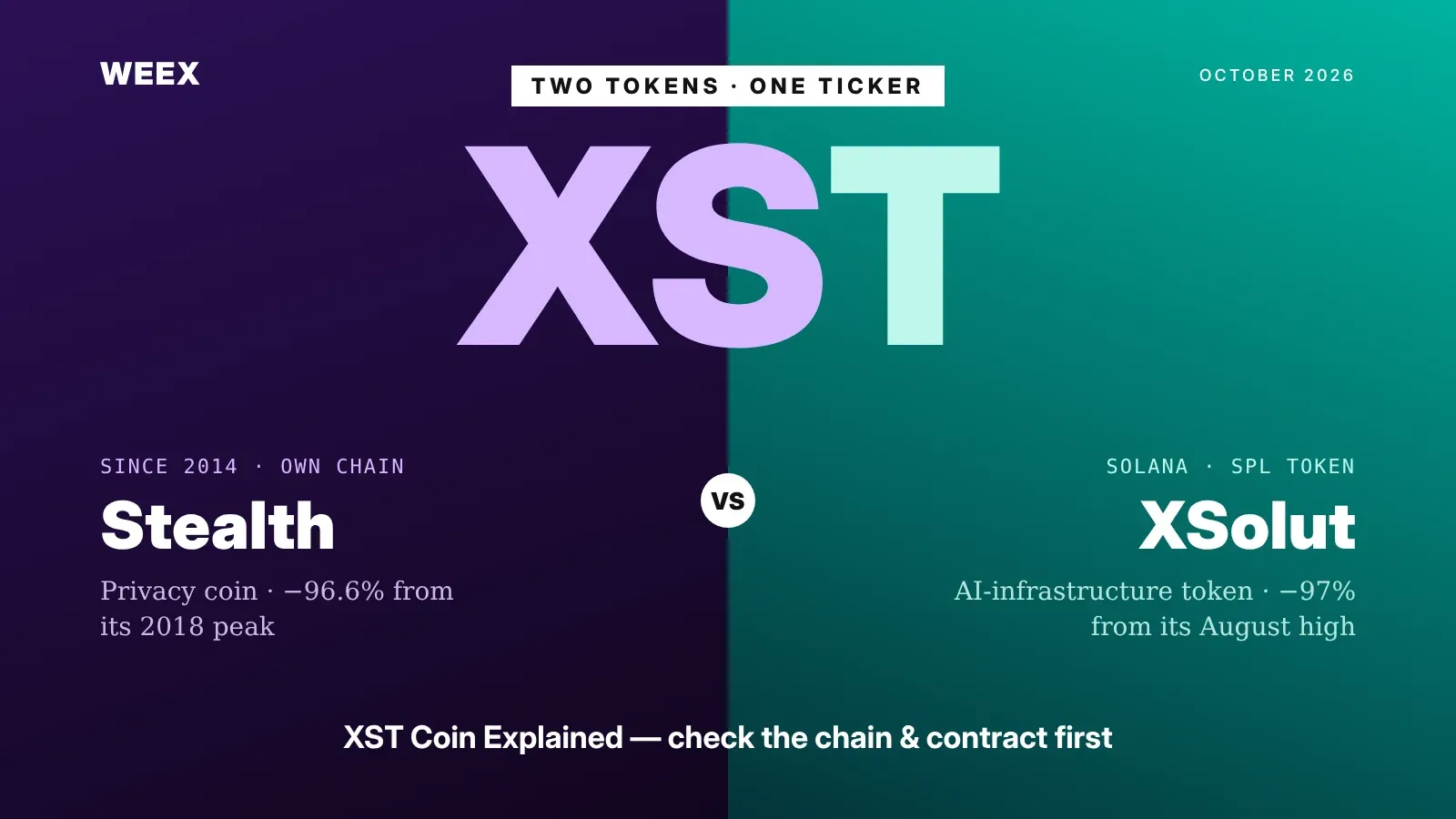
XST Coin Explained: Two Tokens Share One Ticker, Check Which One
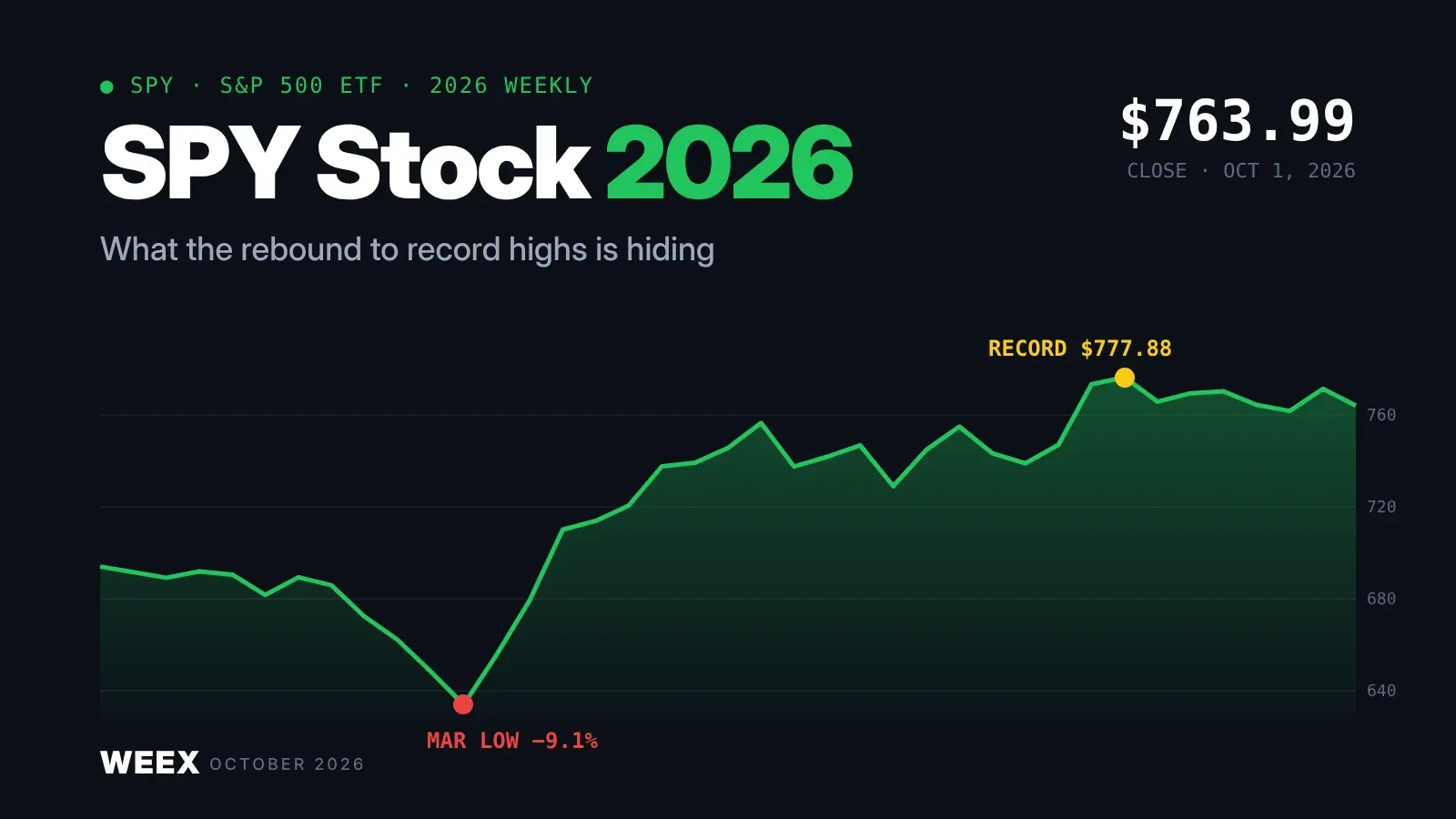
SPY Stock in 2026: What the Rebound to Record Highs Is Hiding
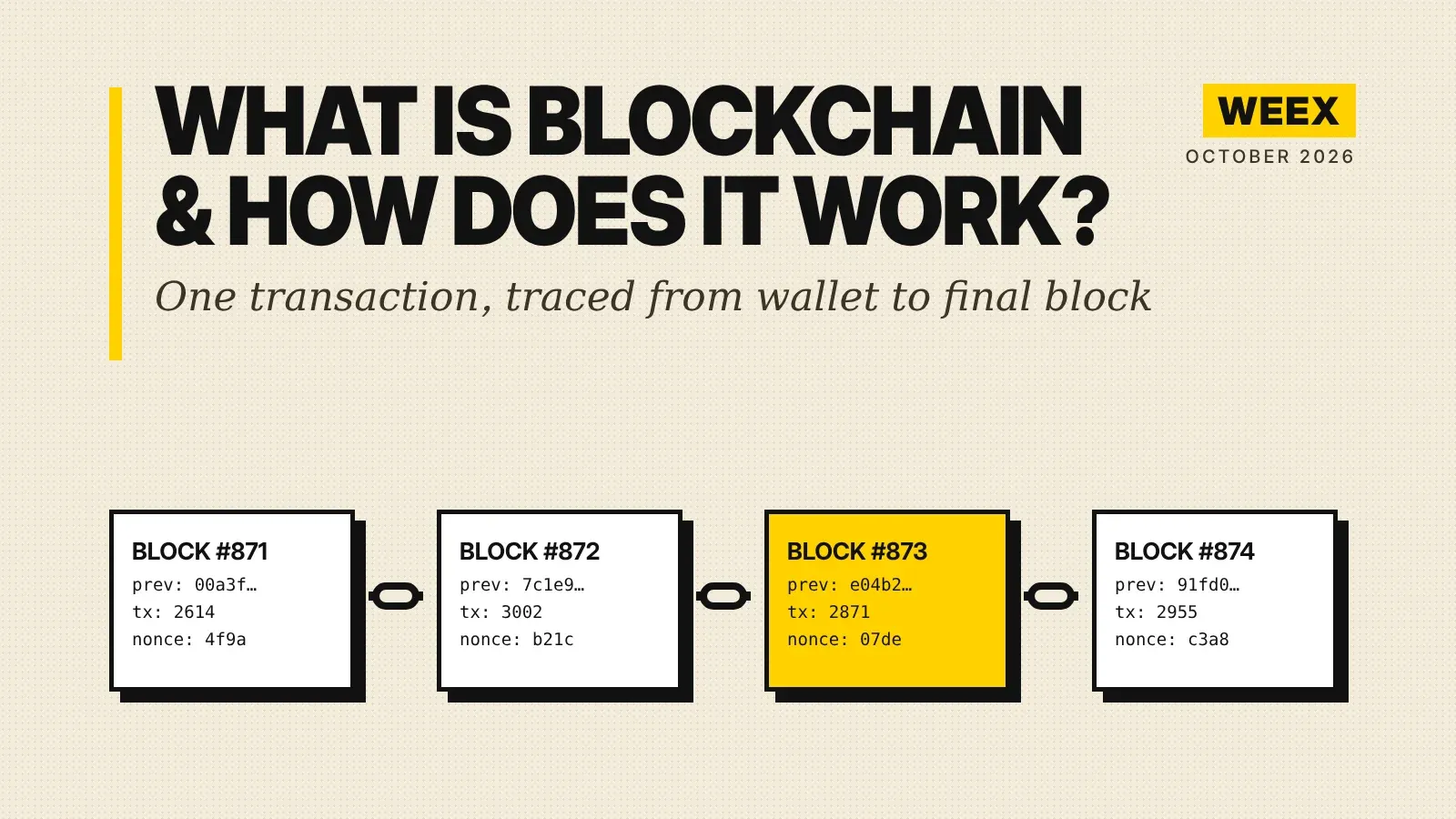
What Is Blockchain and How Does It Work? A Transaction Traced
How to Buy Crypto with PayPal: The Custody Catch Most Beginners Miss
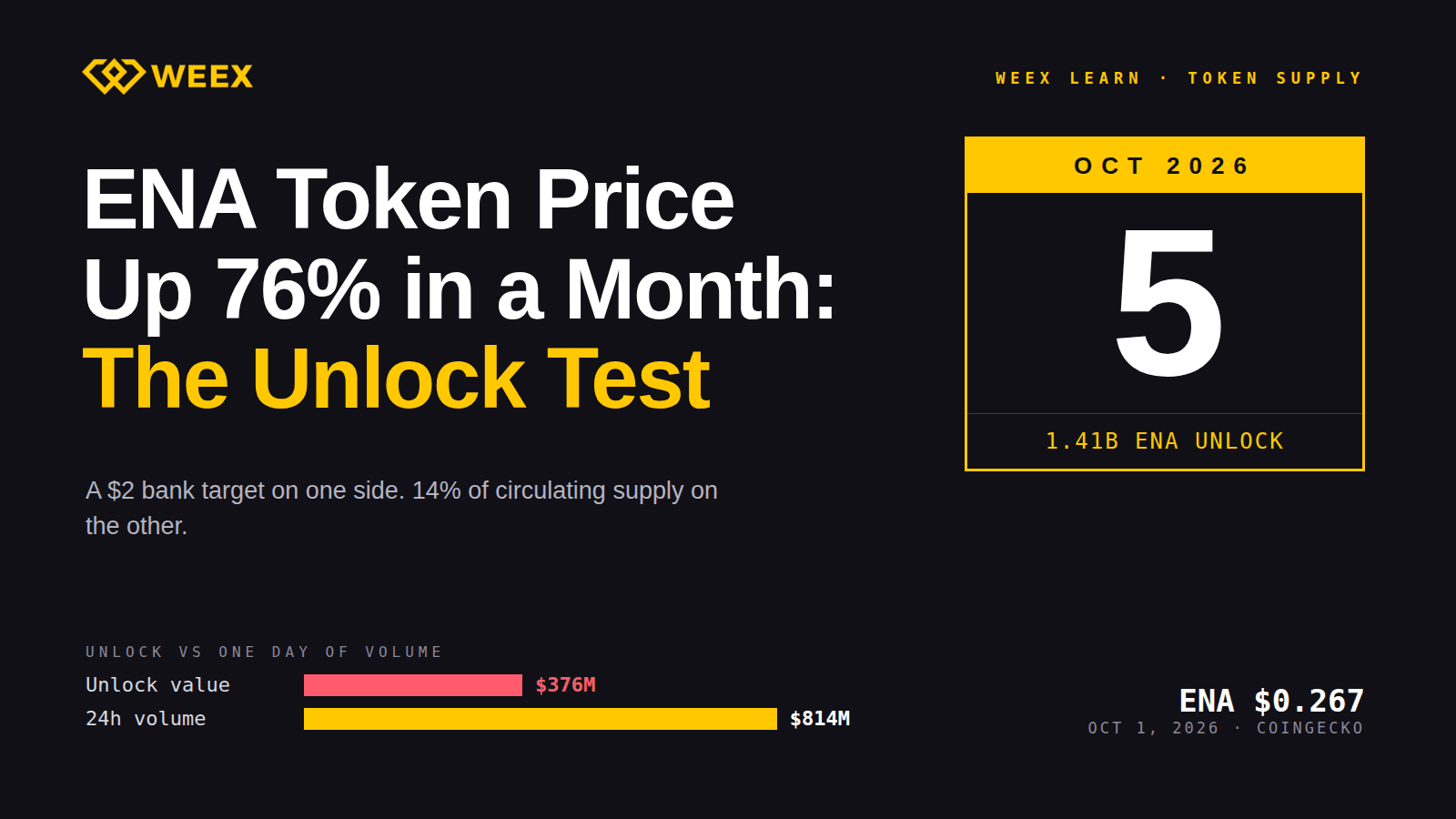
ENA Token Price Up 76% in a Month: The October 5 Unlock Test
MU Stock Falls Below $1,000: Is the CXMT Threat Real or Just an Excuse to Take Profits?
Stop Limit Order: How It Works and Why It Can Fail to Fill
Best Crypto Podcasts for Beginners: A 4-Week Listening Plan
Will Bitcoin Break $87,000 This Week? CPI, Fed Speakers and ETF Outflows to Watch
Conflux (CFX) Price Jumps on China's National Blockchain Network Plan: Does the Policy Actually Name CFX?
What Is Plume (PLUME)? Why the RWA Token Stays 93% Below Its High Even After the Layer 2 Rally
Contents
Popular coins
Latest articles


