
Stop Limit Order: How It Works and Why It Can Fail to Fill

 Prefer us on Google


A stop limit order is an instruction with two prices: a stop price that activates the order, and a limit price that sets the worst price you will accept. When the market touches the stop price, a limit order is placed at your limit price. That gives you control over the fill price, but in a fast move the market can jump past your limit and leave the order unfilled.
This guide walks through a stop limit order using bitcoin at $83,666, the BTC perpetual price on WEEX on October 13, 2026. It shows when the order fills, when it does not, and how to choose the gap between the two prices so the order behaves the way you expect.
How a Stop Limit Order Works
Every stop limit order has three inputs:

- Stop price (trigger price): the level that activates the order. Until the market reaches it, nothing appears in the order book.
- Limit price: the worst price you will accept once the order is active. For a sell, the minimum. For a buy, the maximum.
- Amount: how much you want to buy or sell.
The sequence is always the same. The price moves, touches your stop, your order becomes a regular limit order, and it fills only if buyers or sellers are available at your limit price or better. Exchanges sometimes give it a different name. On WEEX it is a trigger order: a trigger price plus an order that only goes live once the trigger is reached.
Stop Limit Order Example With Bitcoin
Say you bought BTC and want to limit the damage if the price breaks below $80,000, roughly 4.4% under the October 13, 2026 price of $83,666.
You place a sell stop limit order:
- Stop price: $80,000
- Limit price: $79,600 (0.5% below the stop)
- Amount: 0.1 BTC
Scenario 1: an orderly drop. BTC slides from $83,666 to $80,000 over several hours. At $80,000 your limit sell at $79,600 goes live. Plenty of buyers are bidding around $79,900–$80,000, so you fill near $79,950. That is better than your limit, because a limit price is a floor, not a target.
Scenario 2: a fast crash. A surprise headline hits and BTC drops from $80,400 to $78,900 in under a minute. Your stop triggers at $80,000, but by the time your order reaches the book, bids are below $79,600. Your order sits unfilled while the price keeps falling. If BTC goes on to $76,000, you still hold the full 0.1 BTC, and the loss you meant to cap has kept growing.
Scenario 2 is the trade-off at the center of every stop limit order: you are guaranteed a price, but you are not guaranteed a fill.
A buy stop limit works in reverse and is common for breakouts. If you only want to buy once BTC clears $86,000, set a stop of $86,000 and a limit of $86,400. You enter if the breakout holds, and you avoid paying any price at all if it spikes.
Stop Limit vs. Stop Market vs. Limit Order
These three get confused all the time:
- Limit order: sits in the order book right away at your price. Use it when you want to buy or sell at a set level, without a trigger.
- Stop market order: triggers at your stop price, then sells or buys at whatever price is available. It almost always fills, but the price can be much worse than the stop when markets move fast. This is called slippage.
- Stop limit order: triggers at the stop, then places a limit order. It protects you from bad fills, but it risks no fill at all.
A simple way to choose: if getting out matters more than the exact price, such as protecting a leveraged position from liquidation, use a stop market order. If the exact price matters more and you can live with being skipped, use a stop limit.
-- Price
How to Set the Gap Between Stop and Limit Price
The gap between your stop and limit price decides how the order behaves. Too narrow and you will get skipped in volatile moves. Too wide and you are almost back to a stop market order.
Practical guidelines experienced traders use:
- Base the gap on recent volatility, not a round number. On BTC, a 0.3–1% gap is common on calm days. On small-cap altcoins with thin order books, 2–3% may be needed.
- Widen it before scheduled events. Central bank decisions, inflation reports and big token unlocks produce exactly the fast moves that skip tight limits.
- Avoid obvious round numbers for the stop. Many traders cluster stops at levels like $80,000, so price often wicks just through them. A stop at $79,850 can avoid being triggered by that crowd.
- Check order book depth. If only a few thousand dollars are bid within 0.5% of your limit and your order is bigger, expect a partial fill.
How to Place a Stop Limit Order on WEEX
On WEEX, the stop limit is set up as a trigger order with a limit price. WEEX's help article on futures order types describes the flow:
- Open the order panel and choose the Trigger tab.
- Enter the trigger price, which is your stop price.
- Choose Limit as the order type to place once triggered, and enter your limit price. Choosing Market here turns it into a stop market order instead.
- Enter the amount and confirm the order.
- Review or cancel pending orders under Open Orders → Trigger.
For futures positions, WEEX also offers take-profit and stop-loss orders that you can set to trigger on the last price or the mark price. These close the position with a market order when triggered, so they behave like stop market orders, not stop limits. The full details are in WEEX's take-profit and stop-loss guide and the guide to market, limit, trigger and trailing stop orders.
Common Stop Limit Mistakes
- Setting the limit on the wrong side of the stop. For a sell, the limit should be at or below the stop. A sell limit above the stop may never fill once triggered.
- Forgetting the order exists. A stop placed weeks ago can trigger on a brief wick and leave you out of a position you meant to hold.
- Using a stop limit as your only protection on leverage. If the limit is skipped, a leveraged position can keep losing until liquidation. A stop market order is usually the safer backstop there.
- Not checking for a partial fill. After a trigger, check whether the whole amount filled or only part of it.
If you want to practice before risking much, place a small stop limit order on the BTC/USDT spot market and watch how it behaves as the price moves.
FAQ
1. What happens if a stop limit order does not fill?
It stays in the order book as a limit order until the price returns to your limit, you cancel it, or it expires. You keep your position the whole time.
2. Is a stop limit order better than a stop loss?
Neither is better in every case. A stop market order guarantees an exit but not the price. A stop limit guarantees the price but not the exit. Pick based on which risk you can live with.
3. Can the stop price and limit price be the same?
Yes, but it is risky. With no gap, any slippage at the moment of the trigger means the order can be skipped. A small gap greatly improves the chance of a fill.
4. Do stop limit orders work 24/7 in crypto?
Yes. Crypto markets trade around the clock, so a stop limit can trigger at any hour, including thin overnight or weekend sessions when order books are shallower.
This content is provided for general informational purposes only and doesn't constitute financial, investment, legal, or tax advice. Any events, rewards, online promotions, or related information mentioned herein should not be considered a recommendation, solicitation, or invitation to purchase, sell, trade, or otherwise deal in any crypto assets. Crypto assets are highly volatile and may result in loss. The availability of WEEX services, products, and related events may vary by region. You are responsible for ensuring that your participation is in accordance with applicable local laws and regulations.
You may also like

Best Crypto Miner for Beginners: What to Check on Cost, Power, Hashprice and Profit Before You Buy
MU Stock Falls Below $1,000: Is the CXMT Threat Real or Just an Excuse to Take Profits?

Best Crypto Podcasts for Beginners: A 4-Week Listening Plan

Will Bitcoin Break $87,000 This Week? CPI, Fed Speakers and ETF Outflows to Watch

Conflux (CFX) Price Jumps on China's National Blockchain Network Plan: Does the Policy Actually Name CFX?

What Is Plume (PLUME)? Why the RWA Token Stays 93% Below Its High Even After the Layer 2 Rally
Who Is David Ellison? Skydance’s Strategy, Media Consolidation, and the Investment Case
Crypto Funding Rate: Who Pays, What It Costs, What It Signals
PEP Earnings: PepsiCo Beats Q3, Cuts Guidance on North America
BTC Futures Analysis: $80K Held, but Longs Are Still Paying Up
Third-Party Trading Platforms vs Direct WEEX Trading: Fees, Liquidity, Security, and Control
How to Day Trade Crypto for Beginners: Do the Fee Math First
What Is Blockchain and How Does It Work? One Real Payment Traced
What Is a Blockchain Node? Types, 2026 Counts, and Real Costs

TSMC Stock Outlook Ahead of Q3 Earnings: Can AI Demand Push Shares Higher?

Taiwan Stock Market Nears 50,000: Can the TAIEX Break the Milestone After the Holiday?
How to Buy USDT in Thailand: Payment Methods, Fees and Transfer Checks

What Is RLC Crypto? How iExec (RLC) Powers Confidential Computing
Best Crypto Trading Strategies for Beginners: What to Know Before You Trade
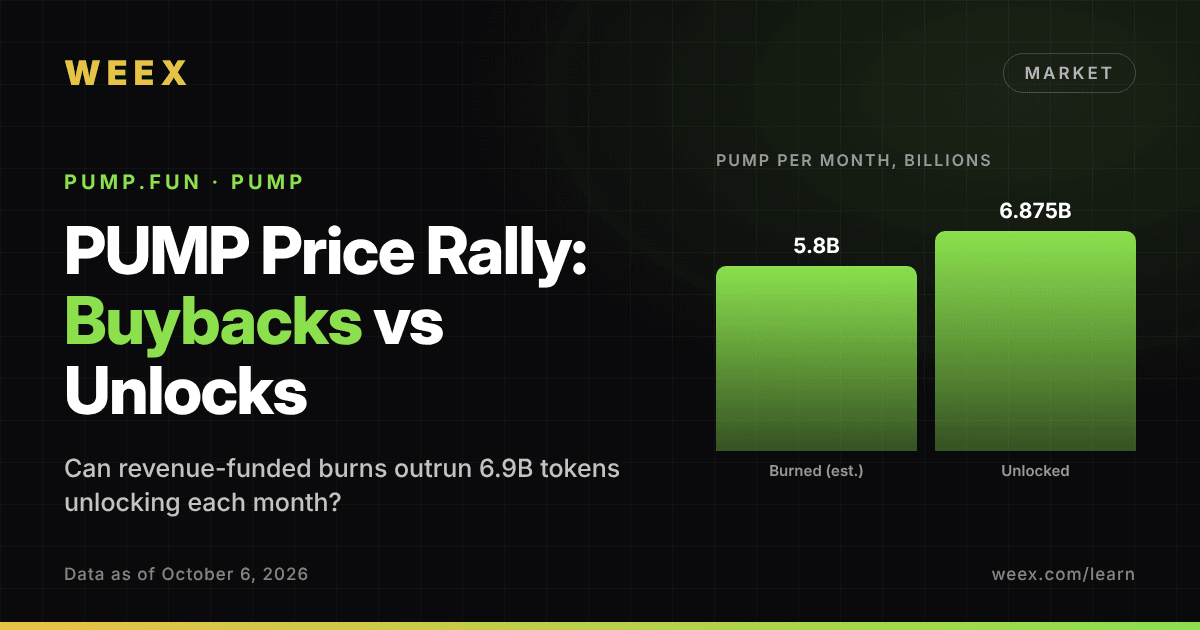
PUMP Price Rally: Can Pump.fun Buybacks Outrun Monthly Unlocks?
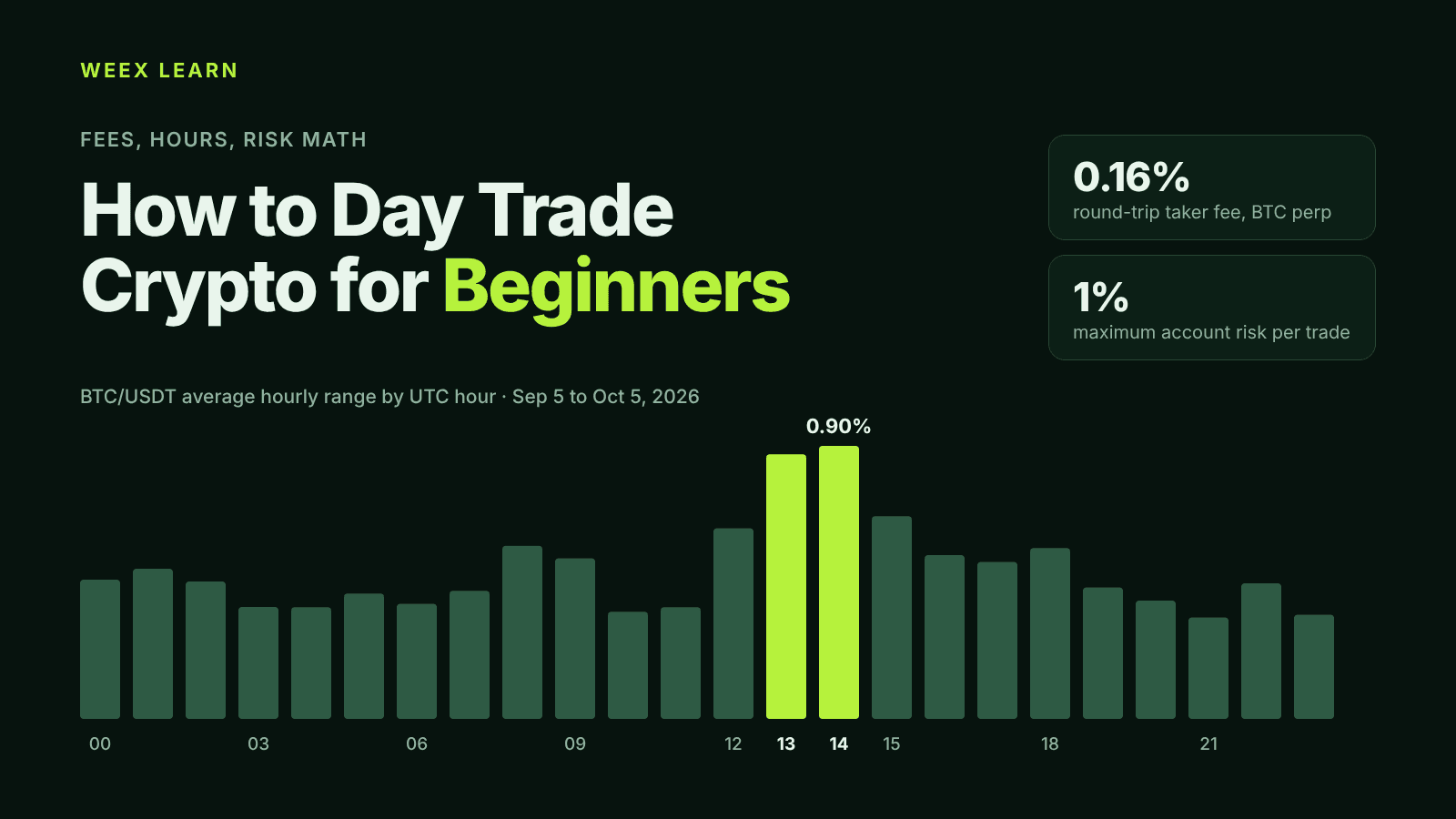
How to Day Trade Crypto for Beginners: Fees, Hours, Risk Math
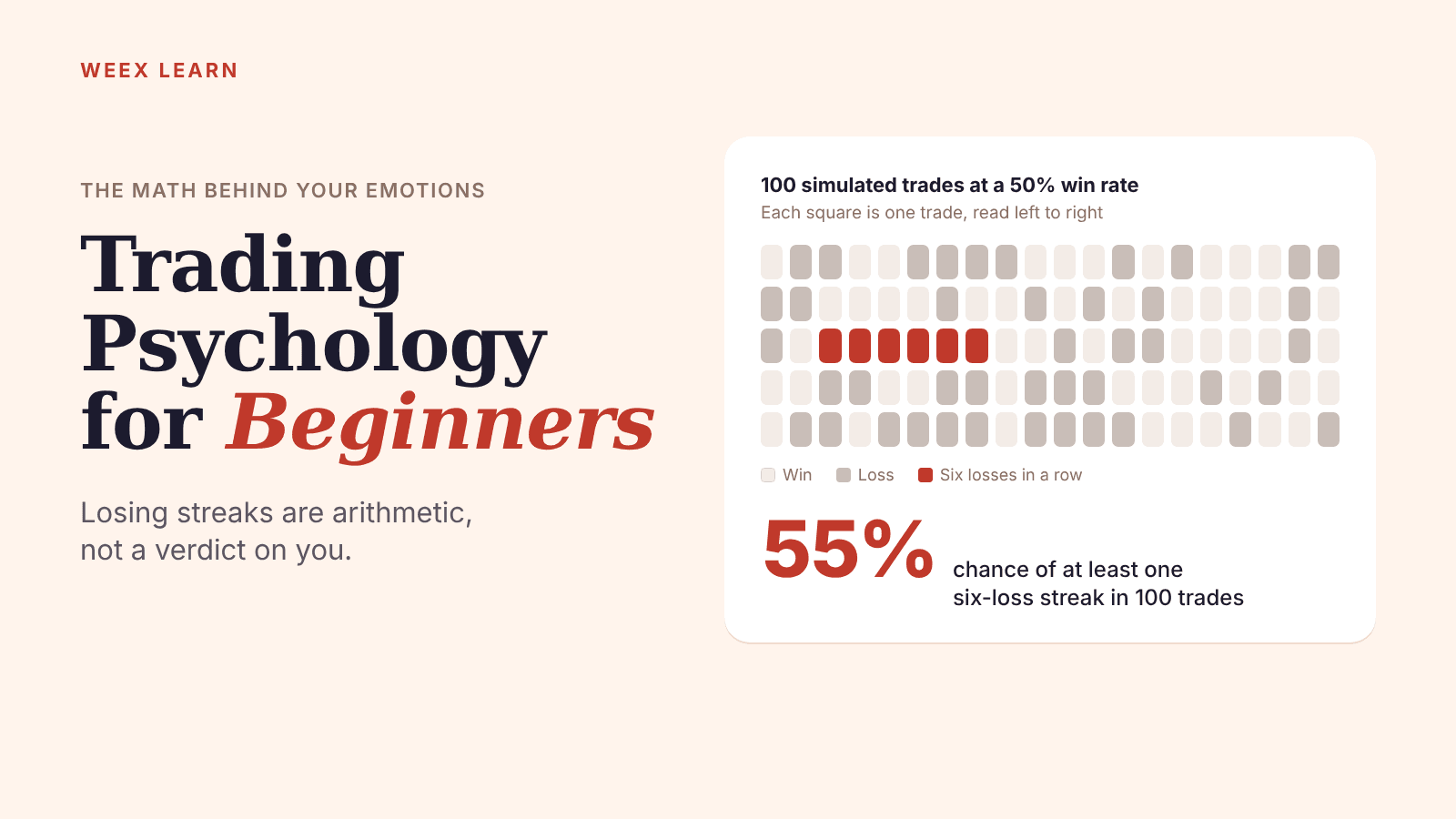
Trading Psychology for Beginners: The Math Behind Your Emotions
Best Crypto Apps for Beginners: The Five Features That Actually Matter on Your Phone
WEEX Passkey Now Secures Withdrawals: The 4 Actions It Covers
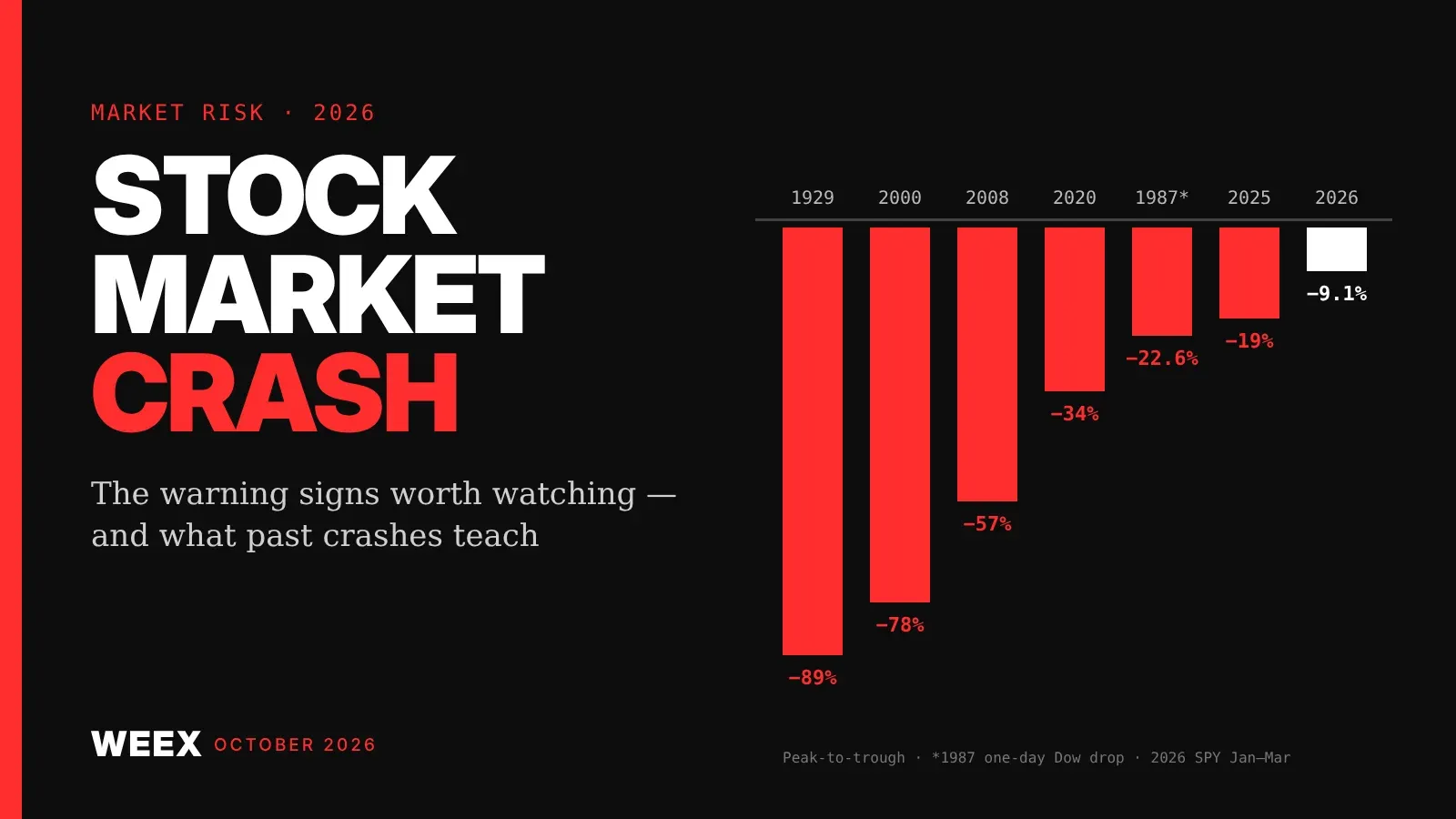
Stock Market Crash Risk in 2026: The Warning Signs Worth Watching
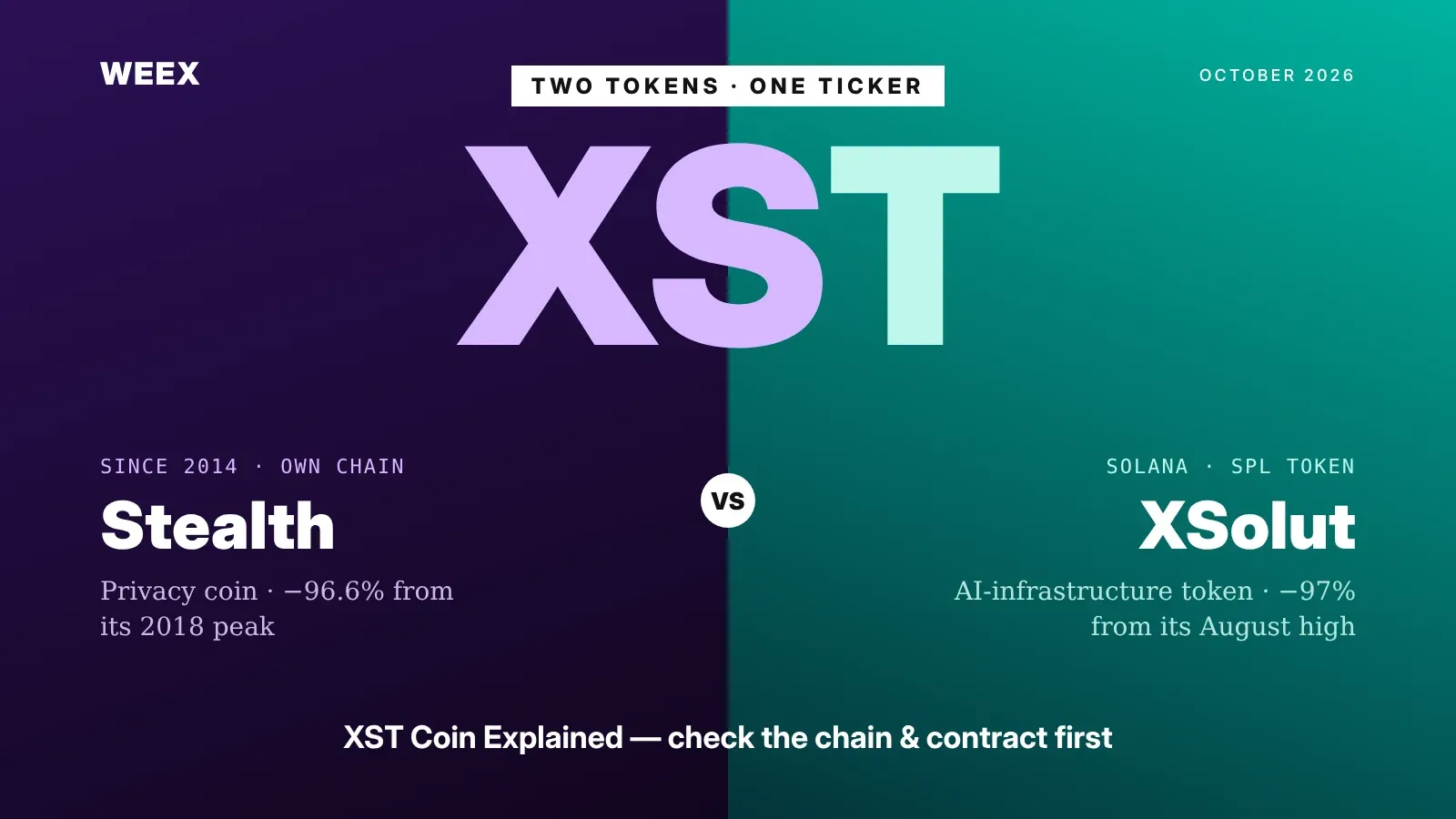
XST Coin Explained: Two Tokens Share One Ticker, Check Which One
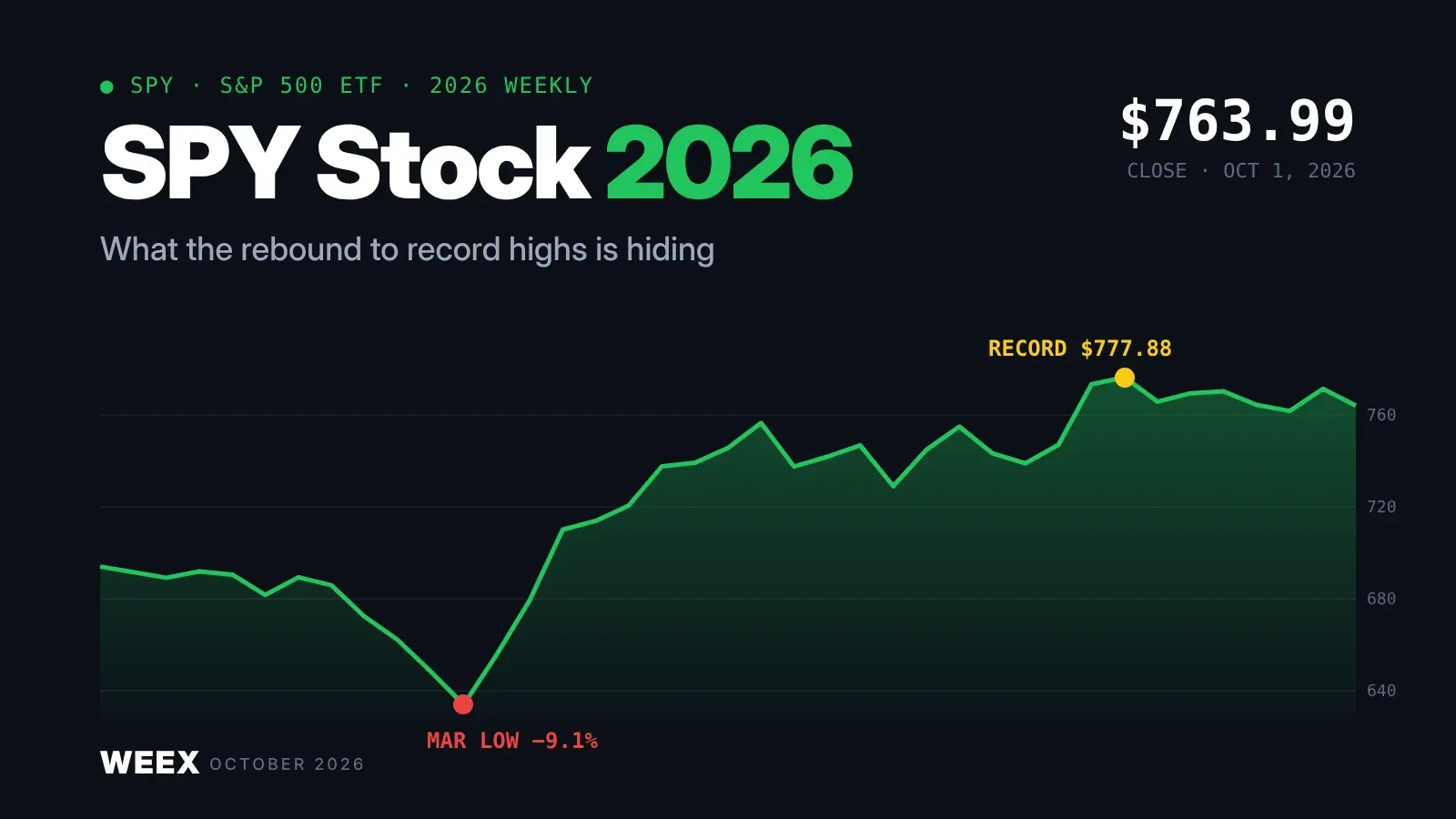
SPY Stock in 2026: What the Rebound to Record Highs Is Hiding
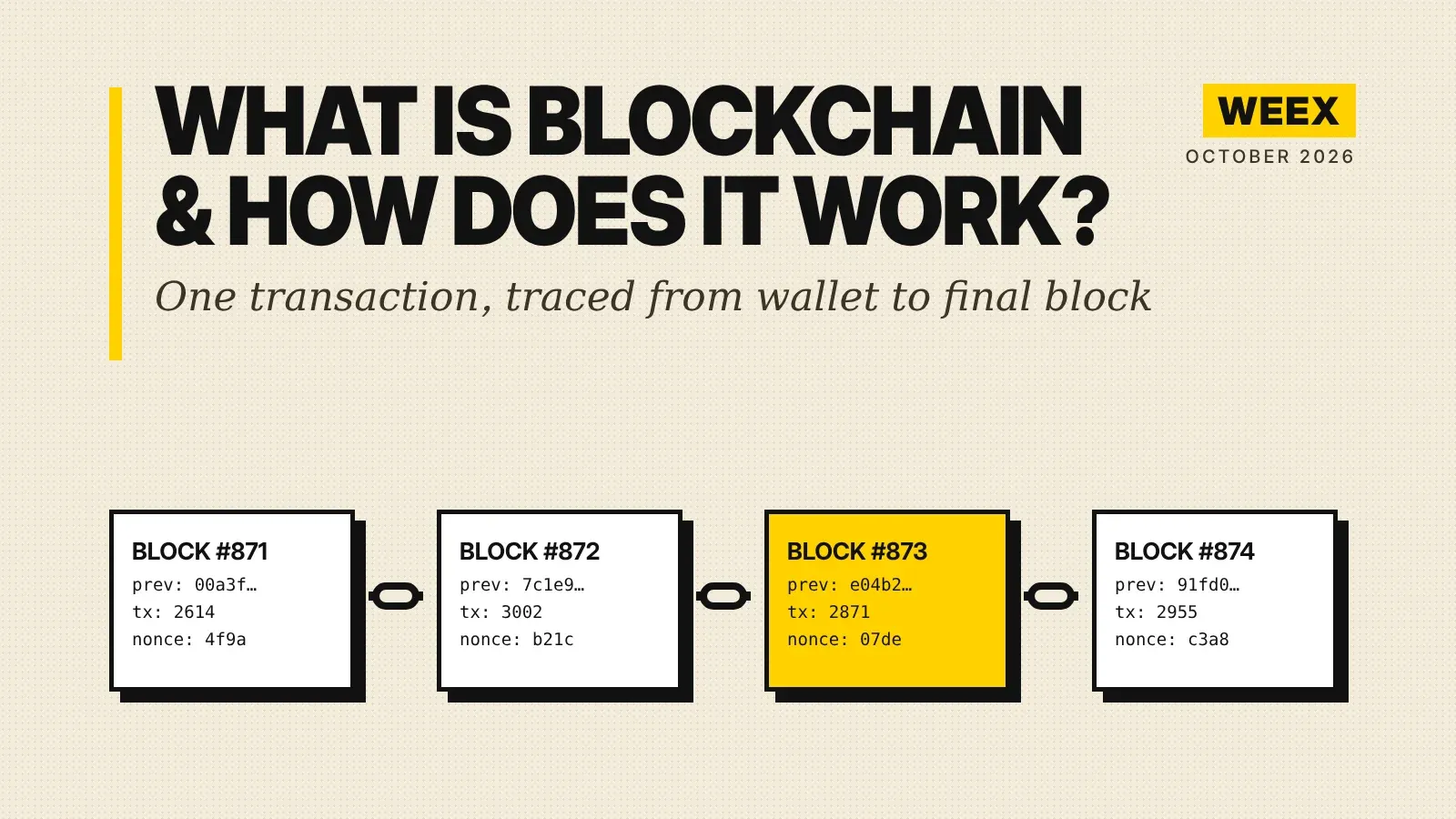
What Is Blockchain and How Does It Work? A Transaction Traced
How to Buy Crypto with PayPal: The Custody Catch Most Beginners Miss
ENA Token Price Up 76% in a Month: The October 5 Unlock Test
Best Crypto Miner for Beginners: What to Check on Cost, Power, Hashprice and Profit Before You Buy
MU Stock Falls Below $1,000: Is the CXMT Threat Real or Just an Excuse to Take Profits?
Best Crypto Podcasts for Beginners: A 4-Week Listening Plan
Will Bitcoin Break $87,000 This Week? CPI, Fed Speakers and ETF Outflows to Watch
Conflux (CFX) Price Jumps on China's National Blockchain Network Plan: Does the Policy Actually Name CFX?
What Is Plume (PLUME)? Why the RWA Token Stays 93% Below Its High Even After the Layer 2 Rally
Contents
Popular coins
Latest articles


