
Crypto Security Basics: How to Protect Your Assets Across Wallets and Exchanges

 Prefer us on Google
TL;DR
- No custody method is risk-free. Hardware wallets, software wallets and exchanges each carry different risks, and each calls for different habits.
- Your recovery phrase is your most critical security layer. Anyone who obtains it may be able to access your assets without your original device.
- Security works in layers. Buy devices from official channels, keep recovery phrases offline, verify every transaction, and beware of phishing.
- Choose your custody method deliberately. Self-custody offers control, exchange custody offers convenience but depends on the platform.
- Look for verifiable information. Proof of Reserves and clearly described protection policies can help you evaluate a platform, but they have limits.
1. Why Supply-Chain Risk Matters
2. Common Risks Across Wallet Types
- Supply-chain tampering: Devices may be physically altered before reaching the buyer. Unusual packaging, unexplained modifications, or an uncertain purchase source should prompt further checks. Buying directly from the manufacturer lowers this risk.
- Recovery-phrase theft: A phrase entered into a fake website, stored in an insecure cloud account, or exposed by a compromised device can give an attacker control of the wallet.
- Phishing and malicious approvals: Attackers may trick users into signing transactions or granting token permissions that transfer assets, even when the wallet itself works correctly.
3. How to Protect Your Crypto Assets
Keep your recovery phrase offline
Verify every transaction
Separate funds by purpose
Secure your accounts and devices
Prepare for emergencies
4. Self-Custody vs. Exchange Custody
| Custody method | Key advantage | Main risk |
| Hardware wallet | Direct control over private keys | Physical tampering, recovery-phrase theft, user error |
| Software wallet | Convenient access to on-chain applications | Malware, phishing, malicious transaction approvals |
| Centralized exchange | Convenient trading and account management | Platform security, operational, and withdrawal risks |
What to look for in an exchange’s security disclosures
- Proof of Reserves (PoR): published reserve information, wallet addresses, snapshot dates, and a clear explanation of what the verification covers.
- Asset protection policies: the scope, eligibility requirements, and exclusions of any protection fund.
- Security and operational transparency: available information on custody practices, account protection, withdrawal controls, and incident response.
- Clear documentation: a preference for platforms that explain both their safeguards and their limitations.
5. Security and Transparency at WEEX
- Proof of Reserves: see the WEEX Proof of Reserves page for published reserve information and supporting disclosures.
- Protection Fund: see the WEEX Protection Fund page for the fund’s published information and applicable terms.
About WEEX
Follow WEEX on social media
This content is provided for general informational purposes only and doesn't constitute financial, investment, legal, or tax advice. Any events, rewards, online promotions, or related information mentioned herein should not be considered a recommendation, solicitation, or invitation to purchase, sell, trade, or otherwise deal in any crypto assets. Crypto assets are highly volatile and may result in loss. The availability of WEEX services, products, and related events may vary by region. You are responsible for ensuring that your participation is in accordance with applicable local laws and regulations.
You may also like
Moderna's INTerpath-001 ESMO 2026 Presentation Date and Q3 Call
Moderna presents its late-breaking INTerpath-001 data at ESMO 2026 on 24 October 2026 at 16:30 CEST.

September CPI Preview: Will 0.3% Core Inflation Shake Bitcoin and Fed Rate Bets?
Tesla, Alphabet, SanDisk, Intel: The Real Numbers to Watch This Earnings Season
WEEX Highlights AI Trading and TradFi Expansion at TOKEN2049 Singapore 2026
Tokenized Stocks Hit $15.6B Trading Record in 2026: 5 Key Takeaways After TOKEN2049
Q3 2026 Earnings Preview: Why Strong Results May Not Lift Stocks & How to Predict Stock Moves with WEEX
TOKEN2049 Singapore 2026: How WEEX Is Advancing AI Trading, TradFi and Multi-Asset Markets
Explore TOKEN2049 Singapore 2026's key trends in AI trading, tokenization and TradFi, and how WEEX is developing its multi-asset trading ecosystem.

Bitcoin Ahead of the October Fed Decision: Key Levels and Market Signals to Watch

Bitcoin Falls Below $84K Ahead of FOMC Minutes: BTC Price Analysis & What Crypto Traders Should Watch Tonight

WEEX Review 2026: Is WEEX a Good Exchange? Security, Fees & 2,700+ Markets Explained
Is WEEX a good exchange in 2026? This WEEX review covers fees, security, up to 400x leverage, and 2,700+ tradable markets — an honest, fact-checked look at the platform.

WEEX AI Wars II Round 4 Recap: Humans Ruled the Leaderboard. How Did AI Tied the War?
Humans swept the Round 4 Top 10 with returns as high as 1,384.15%, yet Team AI won for the second round in a row. WEEX AI Wars II is now tied 2:2, setting up a winner-takes-all final battle.

INTW vs. MUU vs. MVLL: 2x Long Single-Stock Semiconductor ETF Comparison
INTW, MUU, and MVLL are single-stock leveraged ETFs tied to Intel, Micron Technology, and Marvell Technology. They aim to deliver about 2x the daily positive performance of the corresponding stock, making them short-term, high-risk tools rather than ordinary long-term semiconductor ETFs.

IAU vs. SLV vs. PPLT vs. PALL: Precious Metals ETF Comparison
IAU, SLV, PPLT, and PALL are all precious metals ETFs, but they track different metals and follow different price drivers. Gold is more tied to safe-haven and monetary demand, silver combines precious metal and industrial demand, while platinum and palladium are more closely linked to auto and industrial cycles.
USO vs. UNG vs. URA vs. COPX: Energy and Industrial Metals ETF Comparison
USO, UNG, URA, and COPX all relate to energy or industrial metals, but their structures differ significantly. USO and UNG mainly use futures contracts, while URA and COPX mainly hold related company stocks, so their risks may come from very different sources.
SPY vs. QQQ vs. TQQQ: Key Differences and Investment Strategies
SPY, QQQ, and TQQQ may look similar because they are all equity ETFs, but they serve very different purposes. SPY is commonly used for broad large-cap exposure, QQQ focuses more on technology and growth stocks, while TQQQ is a leveraged trading tool with amplified volatility and higher risk.
SOXL vs. SOXS vs. SMH vs. SOXX: Key Differences and ETF Guide
Semiconductor ETFs cover the semiconductor value chain, including chip design, manufacturing, equipment, and memory, offering diversified exposure to the sector.SMH and SOXX are unleveraged ETFs, while SOXL and SOXS are daily 3x leveraged products for bullish and bearish exposure, with greater risks from volatility, compounding, and holding periods.
$BTC at $84K, Institutions Buying SOL & TradFi Heating Up: What WEEX Daily Lucky Eggs S2 Offers Traders

WEEX AI Wars II: Round 3 Recap — Humans Owned the Leaderboard. AI Won the War.
Round 3 of WEEX AI Wars II delivered the first reversal of the season: Team Human held every Top 10 seat, but Team AI took the round. Here's the full breakdown, and how to join Round 4's live 25,000 USDT prize pool.
The WEEX License Story: Why ISO/IEC 27001 Certification Is the Proof Behind Every Security Claim
From a BSP license in El Salvador to a global ISO/IEC 27001 certification — here's what's actually being verified, and why it matters

WEEX Trade & Win Ends Sept 27: Join the Sept 29 GoGoGo Live & Apple Prize Draw
SAGA Price Prediction 2026: Can the Token Reach $0.05?
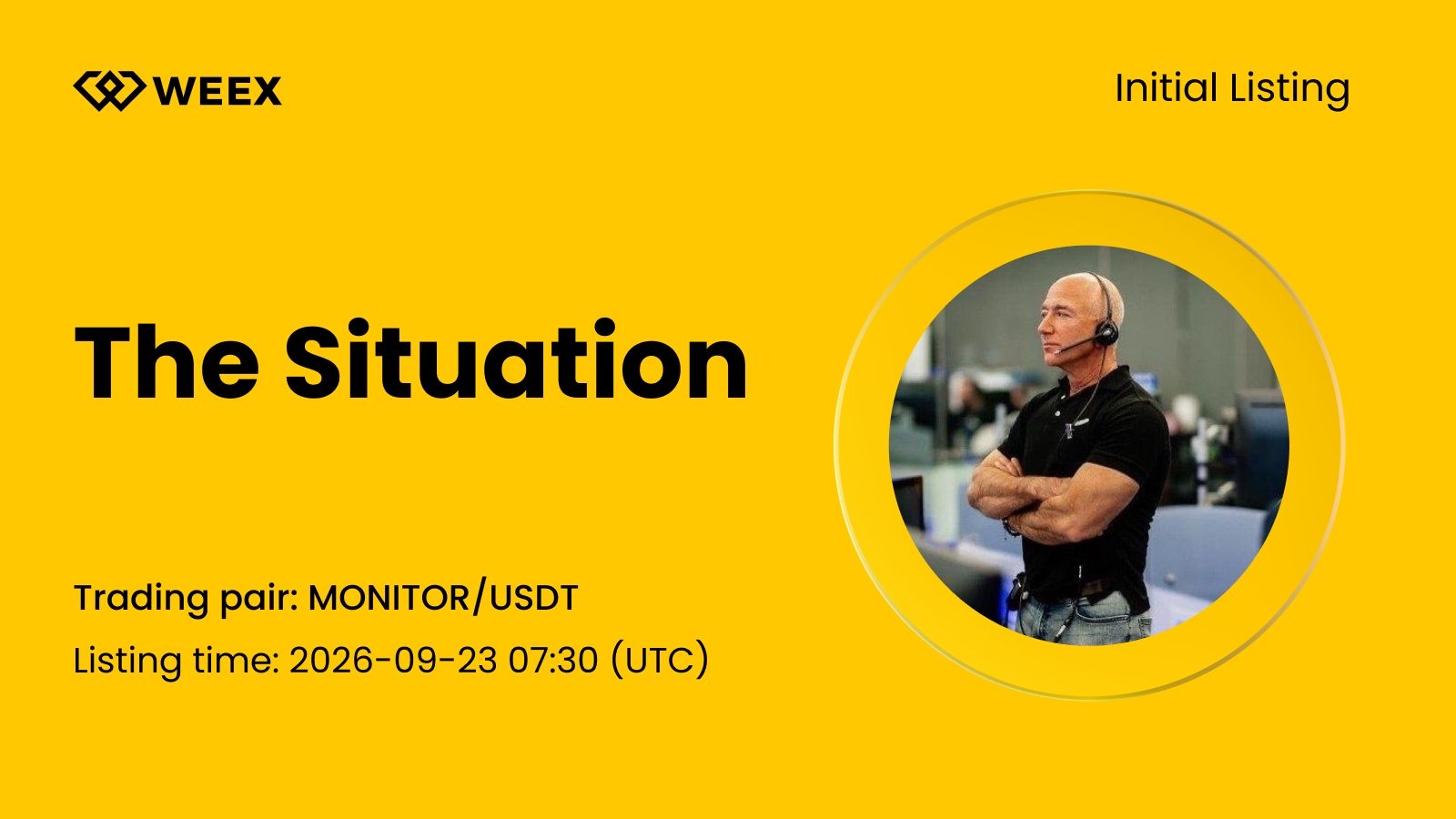
MONITOR Price Prediction 2026: Can The Situation Reach $0.01?
MONITOR Price Prediction 2026: Explore The Situation crypto price trends, Robinhood Chain meme narrative, technical analysis, and whether MONITOR can reach $0.01.

Can SOXL Reach $160 as AI and Semiconductor Stocks Rally?

Can PEPE Reach $0.000006 as Meme Coin Momentum Returns?

Uniswap (UNI) Price Jumps Toward $10 as CME Futures Launch Nears: What Traders Need to Know
Can SPX Reach $0.60 as Risk Appetite Returns to Meme Coins?
Can SPX reach $0.60 as meme coin momentum returns? Explore SPX6900 price levels, market catalysts, risks, and how to trade SPX on WEEX.
Can UNI Reach $12 After CME Announces Uniswap Futures?
Can UNI reach $12 after CME announces Uniswap futures? Explore UNI price levels, market catalysts, risks, and how to buy and trade UNI on WEEX.
SEC Clarity Meets Fed Rate Hike: How WEEX TradFi Lucky Eggs S2 Taps Into Cross-Market Opportunities
Can Bitcoin Reach $90K After $999M in ETF Inflows?
Can Bitcoin reach $90K after $999M in spot ETF inflows? Explore BTC price levels, ETF demand, market risks, and how to trade Bitcoin on WEEX.
Can DGrid AI Break Above $1? DGAI Price Prediction 2026
Can DGrid AI break above $1 in 2026? Explore DGAI price trends, AI inference growth, key support and resistance levels, risks, and how to trade DGAI on WEEX.
Moderna's INTerpath-001 ESMO 2026 Presentation Date and Q3 Call
Moderna presents its late-breaking INTerpath-001 data at ESMO 2026 on 24 October 2026 at 16:30 CEST.
September CPI Preview: Will 0.3% Core Inflation Shake Bitcoin and Fed Rate Bets?
Tesla, Alphabet, SanDisk, Intel: The Real Numbers to Watch This Earnings Season
WEEX Highlights AI Trading and TradFi Expansion at TOKEN2049 Singapore 2026
Tokenized Stocks Hit $15.6B Trading Record in 2026: 5 Key Takeaways After TOKEN2049
Q3 2026 Earnings Preview: Why Strong Results May Not Lift Stocks & How to Predict Stock Moves with WEEX





