
Cryptocurrency Shifts to a New Task: Not Just Launching Products, but Retaining Users

 Prefer us on Google


Cryptocurrency has already passed the stage where the main proof of progress was simply having working products on the blockchain. Now, the industry needs to achieve something else: ensuring that customers actually use these solutions, return to them, and transfer part of their everyday financial activities there.
Main Points
- Crypto companies are increasingly shifting their focus from developing blockchain infrastructure and financial services to attracting customers and forming sustainable user habits.
- Coinbase believes that mass adoption depends not on technical explanations, but on clear benefits: storing, sending, spending, borrowing, and growing money should be simple.
- WisdomTree is expanding access to tokenized funds, and Kevin O'Leary emphasizes that blockchains need not only tests but also real transactions, customers, and implementation.
From Technology to Everyday Use
The crypto industry has spent years building financial infrastructure and launching products on top of blockchains. Asset managers began tokenizing funds, exchanges moved beyond trading to develop lending, payments, and other financial services, and blockchain networks started working more actively with institutional clients.
But the simple fact that such products can be created is no longer enough. The next question is more practical: why should ordinary users and large organizations choose these solutions over familiar financial instruments?
For Coinbase (COIN), this means talking less about technology per se and focusing more on the real needs of customers. Ben Shen, head of financial services and loyalty programs at Coinbase, notes that the crypto sector has long been too focused on the technical side. Products were often overloaded with professional jargon or required users to understand how the underlying technology works.
As cryptocurrencies get closer to traditional financial services, this approach is losing effectiveness. What matters to the customer is not what mechanism works under the hood, but whether they can conveniently store funds, send them, spend them, take out loans against them, or earn income.
Coinbase Seeks Moments That Keep Users Engaged
At Coinbase, such situations are called "magic moments"—these are points where the customer quickly understands the practical value of the product. However, one successful initial experience is not enough: the platform's task is to turn one-time use into regular use.
Shen describes product adoption as a cycle. First, money must enter the platform. Then the customer needs a reason to leave it there. After that, they should see different usage scenarios: receiving a salary or topping up their account, earning rewards for holding assets, making purchases, trading, or transferring funds.
If we can create such "magic moments" correctly at all three points of this flywheel, people will start depositing more funds onto the platform, said Shen.
Rewards help kickstart this process. Sometimes they are built into the product itself, and sometimes they act as a temporary incentive to encourage a person to move funds from a familiar service. According to Shen, such tools help overcome inertia.
At the same time, Coinbase does not rely on users who come only for the bonus and immediately withdraw their money after the promotion ends. The company's logic is different: if funds are already on the platform, the customer may find new scenarios for them. For example, they might initially be attracted by the yield, and then start using the same assets for trading or payments.
-- Price
Kevin O'Leary: Blockchains Need to Show Implementation
Kevin O'Leary, an investor from the show Shark Tank and chairman of O'Leary Ventures, sees a similar problem at the level of blockchain networks themselves. At the Avalanche Summit in New York last month, he stated that networks claiming to cater to institutional business must demonstrate real usage by companies.
"Your job is to show me implementation," O'Leary said.
According to him, technologists and companies from the S&P 500 that understand the value of scaling capabilities and are not fixated on transaction volume are already seeing the benefits of such networks. However, the market needs more than just trials and pilot projects.
"I get that, but what I want to see, and what everyone else wants to see, is real deals and adoption, not just tests," O'Leary said.
One large client can simplify attracting the next one. O'Leary called word-of-mouth among competitors the strongest marketing tool in technology.
A similar mechanism works in the consumer market. Shen emphasizes that financial services are built on trust: people hand over money, salaries, and savings to services. Therefore, social proof is of great importance — the understanding that others have already used the product and found it reliable.
The Product Must Be Where the Customer Already Is
For some companies, adoption means not only improving the product but also expanding access points. WisdomTree, which manages assets worth $150 billion, has already created a line of tokenized funds. Among them is WTGXX — a tokenized money market fund with assets of approximately $1.2 billion, said Will Peck, head of digital assets at WisdomTree.
Now the company aims to bring these funds to more platforms. According to Peck, clients do not necessarily have to come directly to WisdomTree: access to products can appear through other interfaces.
Recently, WisdomTree announced a partnership with MoonPay. The partnership will allow qualified retail clients from the U.S. to access WTGXX through the MoonPay platform. If a client has already provided their information to MoonPay, they will be able to purchase the fund using stablecoins without separate registration with WisdomTree, Peck explained.
MoonPay is not seen as the only platform for WisdomTree's tokenized funds. The company intends to expand distribution through other channels as well.
New Distribution Channels and the Role of AI Agents
Coinbase is also exploring how its products can reach customers beyond its own platform. Shen does not believe that companies will be able to abandon their own applications and websites. Rather, most will combine both approaches: developing the core platform while simultaneously seeking additional ways to distribute products.
One such direction could be artificial intelligence agents. Coinbase is working on options to integrate its services with third-party AI tools while continuing to develop products within its own ecosystem.
Technologies and products in the crypto industry continue to be created, but one launch is no longer enough. The next stage of competition will depend on whether companies can make their services understandable, accessible, and sufficiently useful for users to return to them repeatedly.
This content is provided for general informational purposes only and doesn't constitute financial, investment, legal, or tax advice. Any events, rewards, online promotions, or related information mentioned herein should not be considered a recommendation, solicitation, or invitation to purchase, sell, trade, or otherwise deal in any crypto assets. Crypto assets are highly volatile and may result in loss. The availability of WEEX services, products, and related events may vary by region. You are responsible for ensuring that your participation is in accordance with applicable local laws and regulations.
You may also like

Nasdaq Rises 1.05% to New High, 10-Year U.S. Treasury Yield Rises to 5.34%

DeFi Development Corp Adds $3 Million in Solana as SOL Buys Slow

NVIDIA Stocks Available for 24-Hour Trading in the U.S.

Embrapa and Chinese Institutions Form Partnership to Strengthen AI and Blockchain for Family Farming

Security Through Obscurity: The Window Has Closed

US corporate credit spreads widen, Bitcoin pressure potential assessed

Dollar, Exports, and Mercosur: How Flávio Bolsonaro's Victory Could Impact Argentina

Energy Crisis in the US Threatens AI, but Spares Nvidia and Broadcom
Bitcoin: Over 80,000 Blocks Until the Next Halving
Bitcoin: Strategy Acquires Another 334 BTC, Raising Its Reserve to 848,000

FinCEN Withdraws Regulations on Wallets and Mixers, CFTC Proposes Leverage Oversight
Treasuries at 5.30% and Nasdaq at Record High: What Explains the Divergence

SignSplit's Strategic Seed Funding Values Startup at $1 Billion

SNDK Stock Fell 3.8% After a 650% Rally: Does a Single-Digit P/E Make Sandisk Cheap or Just Cyclical?
Bitmine stakes $13.8 billion in ETH as treasury tops 6 million tokens

MSTR Stock Slips After Strategy Buys Just 334 Bitcoin: Why It Spent More on Preferred Shares Than on BTC

INTC Stock Drops After TSMC Terafab Talks: Is Intel's Biggest Outside Endorsement at Risk?

Bitcoin Holds at $86,000 as Dollar Reaches Highest Level in 18 Months

Banks vs Crypto: US Banking Lobby Challenges Banking Charters in Court
U.S. Midterm Elections Just 30 Days Away: Cryptocurrency Industry Faces Dilemma

a16z Unveils the Truth Behind AI Boom: The Top 1% Support the Entire AI Narrative
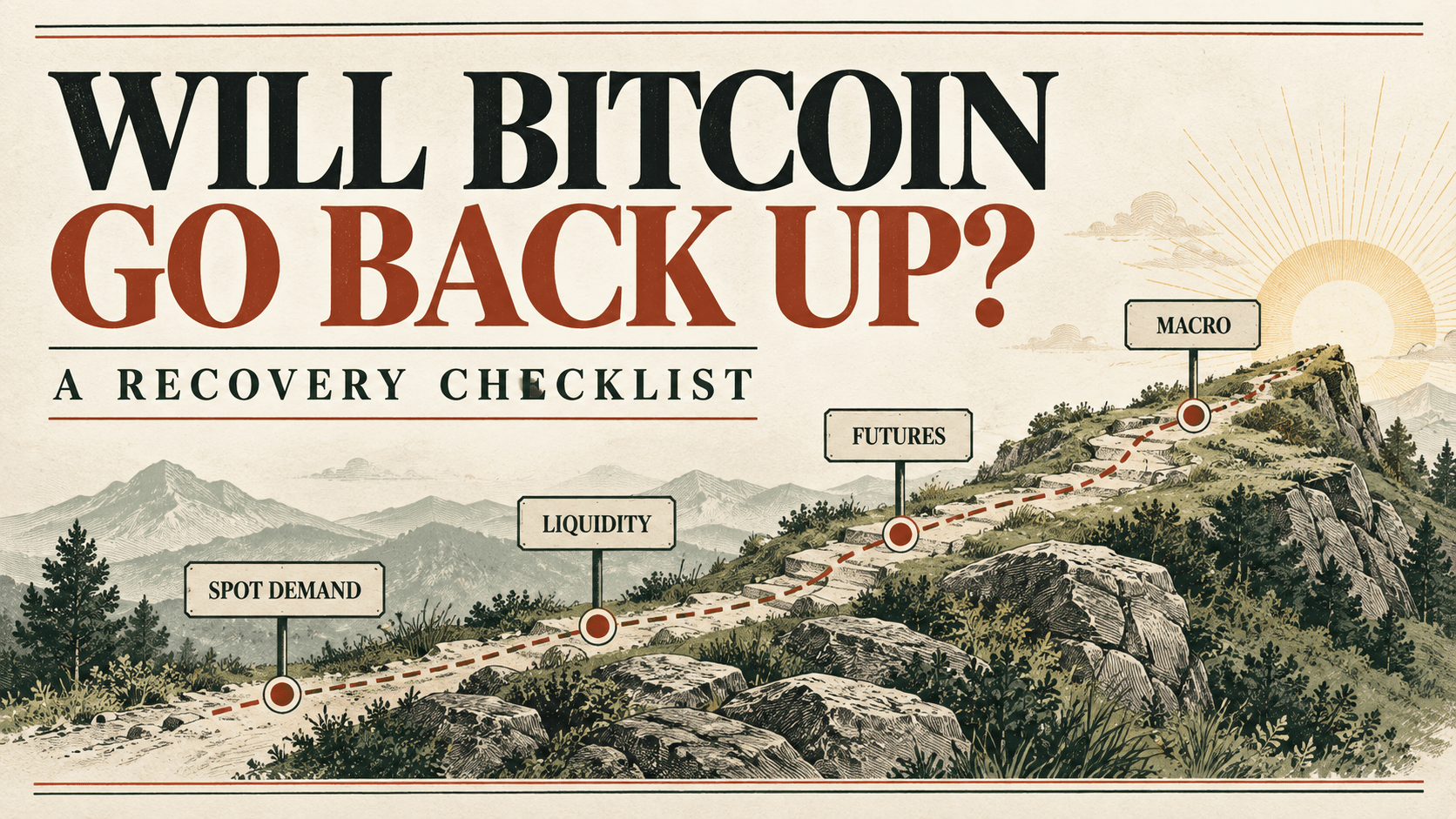
Will Bitcoin (BTC) Go Back Up in 2026? How to Tell a Real Recovery From a Short-Covering Bounce
Will Bitcoin go back up in 2026? Learn how spot demand, ETF flows, crypto liquidity, futures positioning and macro conditions shape a real BTC recovery.
Can You Live Only on Stablecoins? Industry Experts Respond with Yes or No
STONK Community Coins Share 33% of Meme Rewards With PENGU and USELESS Holders: How the Model Works
Stonk launched Community Coins on October 3, sending 33% of holder rewards from each community-mode meme launch to eligible holders of USELESS, PENGU, ZCAT, ANSEM and NEET. The STONK token itself is not one of those community coins, so its link to the new model is indirect.

Anchorage Digital Cuts 17% of Workforce Amid $42 Billion USDT Investment

Examining Hong Kong's RWA Tokenization from Issuance to Overseas Distribution
Consumer Interest in Stablecoins at 46% in Asia, but Only 16% Use Them
"A National Strategy Can Be Formulated in Six Months" - Policy Calendar Discussed by Masaki Hirakawa
Financing Weekly Report | Crypto Enterprise Banking Platform Limited Raises $18.5 Million in Seed Round; SoftBank Completes $10 Billion Third Round Investment in OpenAI
Survey of 2,423 Coin Investors: "What Do You Think About Taxation?"
Nasdaq Rises 1.05% to New High, 10-Year U.S. Treasury Yield Rises to 5.34%
DeFi Development Corp Adds $3 Million in Solana as SOL Buys Slow
NVIDIA Stocks Available for 24-Hour Trading in the U.S.
Embrapa and Chinese Institutions Form Partnership to Strengthen AI and Blockchain for Family Farming
Security Through Obscurity: The Window Has Closed
US corporate credit spreads widen, Bitcoin pressure potential assessed
Contents
Latest articles


Latest coin listings on WEEX


