
Rising Transportation Costs Make Large Holiday Purchases More Difficult

 Prefer us on Google


Key Points
- Experts predict that this holiday season, rising transportation and storage holding costs will lead retailers to reduce inventory of large items such as big-screen TVs and barbecues.
- Logistics executives indicate that retailers are generally adopting a cautious inventory strategy for the holiday season.
- Meanwhile, consumer demand for "last-minute expedited delivery" is increasing; drone company Flytrex states that several retailers are considering using drone delivery during the holiday period.
A customer walks past displayed washing machines and dryers at a Lowe's home improvement store in Miami, Florida.
Due to multiple factors such as diesel prices nearing historical highs, truck freight rates reaching post-pandemic peaks, and storage holding costs hitting decades-high levels, large items are expected to face supply shortages this holiday season, forcing many retailers to rethink their holiday inventory strategies.
Deborah Weinswig, CEO of retail analytics firm Coresight Research, stated, "Inventory levels for some large items will reach historical lows."
Weinswig noted that the retailers she has contacted are reducing stock of large appliances such as big-screen TVs, barbecues, and washing machines and dryers, which take up a lot of space and incur high storage costs.
"First, there are the shipping costs to bring the goods over the ocean, then the storage holding costs, and finally the delivery costs to transport them to stores. All three of these costs have risen significantly year-on-year this year."
The surge in supply chain service prices is attributed to various policy changes at both domestic and international levels in the U.S.
Data from Evercore ISI shows that in the week ending November 2, average highway truck freight rates increased by over 47% year-on-year.
Industry experts indicate that the federal government's increased regulation of non-citizen and foreign truck drivers operating within the U.S. is a major factor driving up freight rates. This has created tight capacity and elevated rates, and this pressure is expected to continue.
At the same time, fuel surcharges have surged dramatically. The vast majority of logistics service providers charge customers fuel surcharges to hedge against fluctuations in diesel prices. Evercore ISI data shows that due to factors such as the conflict between the U.S. and Iran, diesel prices have reached historic highs, with fuel surcharges skyrocketing by 64% year-on-year.
Moreover, inventory holding costs (the total expenses incurred from storing unsold goods, including capital costs, operations, storage, and various risk costs) are highly correlated with the 10-year U.S. Treasury yield. In October, this yield surpassed 5% and remained at multi-year highs in November.
Bill Catania, CEO of logistics technology company Onerail, stated that given the overall rise in costs, if consumers are willing to wait, they may see even greater discounts later in the holiday season. His company provides same-day delivery technology support for companies like FedEx and Lowe's. {#quote_FDX}
"As the holidays approach, there will be more discounts and promotions, as retailers need to clear inventory to avoid incurring additional costs for transportation, destruction, or relocation of goods," Catania said.
Challenges in Seasonal Inventory
A truck drives on Doremus Avenue in Newark, New Jersey, on September 17, 2026.
Retailers are caught in a dilemma regarding inventory strategy: on one hand, logistics costs are rising, and on the other, there are opportunity costs from stockouts. Should they stock up now or wait for freight rates to drop, risking incomplete product categories?
Several executives have stated that as a result, after experiencing pre-holiday promotions in October, retailers are generally adopting a wait-and-see inventory strategy.
UPS CEO Carol Tomé stated during the earnings call on October 27, "We have just received the seasonal forecasts from our customers."
Derek Leathers, CEO of Werner Enterprises, a trucking company supplying large supermarkets, also noted that retailers are being cautious.
"When freight rates are high and capital costs rise, companies will do everything possible to avoid inventory buildup," Leathers said.
However, Bain & Company's "2026 Holiday Consumer Outlook" indicates that inflation is driving nominal sales higher, and consumer spending remains resilient, leading to overall growth in holiday retail sales. Leathers stated that even with significant increases in truck and freight costs, retailers are still willing to spend to secure capacity for inventory.
"The primary concern now is to lock in capacity ahead of time. Industry discussions are more focused on whether they can secure trucks and various transportation resources. Of course, this doesn't mean they are completely insensitive to prices; price is always a consideration, but if products are not on the shelves, they simply cannot be sold."
Last-Minute Orders and Final-Mile Delivery
Logistics data analysis firm ShipMatrix predicts that the total volume of packages delivered during the 2026 holiday season will reach 2.4 billion, a 4% increase year-on-year.
The increase in order volume will prompt retailers to use gig delivery models more, especially in the later stages of the holiday season. Gig models can help retail and logistics companies flexibly respond to order fluctuations and handle a large number of last-minute shopping orders without the time cost of hiring a large number of permanent employees.
Catania commented, "The advantage of gig delivery is speed of fulfillment, but there is still room for improvement in unit economics."
Industry experts also predict that more retailers will use drones for final-mile delivery of small items.
A PwC study in 2024 predicts that in the next decade, drone delivery costs will decrease by over 70%, not only matching traditional final-mile delivery costs but even surpassing them, marking a turning point for industry development.
Amit Reggev, CEO of drone company Flytrex, revealed that the company is in talks with several retailers about holiday drone delivery collaborations.
"Consumers today have increasingly high expectations for instant fulfillment," Reggev stated.
Major retailers are expanding their drone delivery capabilities. Lowe's announced in September that it is partnering with DoorDash and Alphabet's Wing to launch drone delivery; Amazon previously announced its goal to roll out drone delivery services in nearly 500 towns across the U.S. by the end of this year. {#quote_AMZN}
Flytrex is currently providing drone delivery for retailers such as Walmart, Little Caesars, and Papa John's. {#quote_WMT}
"Consumers seek instant gratification. If delivery takes too long, they may abandon their orders. This is also a strong motivation for companies to test and implement drone delivery," Reggev said.
-- Price
This content is provided for general informational purposes only and doesn't constitute financial, investment, legal, or tax advice. Any events, rewards, online promotions, or related information mentioned herein should not be considered a recommendation, solicitation, or invitation to purchase, sell, trade, or otherwise deal in any crypto assets. Crypto assets are highly volatile and may result in loss. The availability of WEEX services, products, and related events may vary by region. You are responsible for ensuring that your participation is in accordance with applicable local laws and regulations.
You may also like

'Tokenization Is Not the Finish Line': Jupiter to Let Users Borrow Against Bullish Shares

Anthropic's Wall Street Operator: CFO Krišna Rao

'Nobody Knows Who's in Charge': Boris Johnson Stands by Bitcoin Skepticism at Breakpoint

Mazama Energy Finds New Solution to the Biggest Challenge in Geothermal Drilling

Have Semiconductors Bottomed? Here's How the Current Chip Stock Plunge Compares With Past Bear Markets.

Is Apple Losing Its Memory?

Zhao Changpeng Lists Six Possible Reasons for Bitcoin's Decline: Anthropic IPO and ETF Redemptions, Security Incidents, Regulatory Uncertainty, and More

J.P. Morgan's Forecast for 2027: Inflation Around 2% and Increased Pressure on the Dollar

The Amber Controversy: Diverging Paths with Wintermute
First Financial Report After Jensen Huang's Departure: Colette Kress Faces Core Questions

Dreamteam Completes $53 Million Financing to Expand AI CRM Business

Stellar Bell Vote on November 23: What It Means for XLM Holders

Solana Breakpoint attendees warned of robberies after reported wallet theft

Federal Reserve Governor Barr Warns AI Agents May Exacerbate Bank Runs
Trezor found implants in reseller wallets. What protects the buyer?

The Vast Used Car Market: CarMax and Carvana Clash Over Americans' Car Buying Methods
Trump and Xi Jinping to Meet in Shenzhen, Focusing on Chip Regulation and AI Security

Why is the only spot Bitcoin ETF in continental Europe acquired by an Asian group, BIT?

The Application is Landing, Wealth is Evaporating: Analyzing the Painful Roots of the Crypto Industry through Three Financial Statements

A Look at Traditional Banks Entering Web3: Who Made Money and Who Lost?

IMF President Warns Global Economy is 'Standing on One Leg': AI Circular Financing Reaches $1 Trillion

Tesla Autopilot Team Veterans Found Simulation Startup Valued at $1 Billion

Ministry of Industry and Information Technology to Interview Automotive Companies with Large Accounts Payable
Twenty One Capital’s $1.09 Billion Profit Is Mostly a Bitcoin Accounting Story
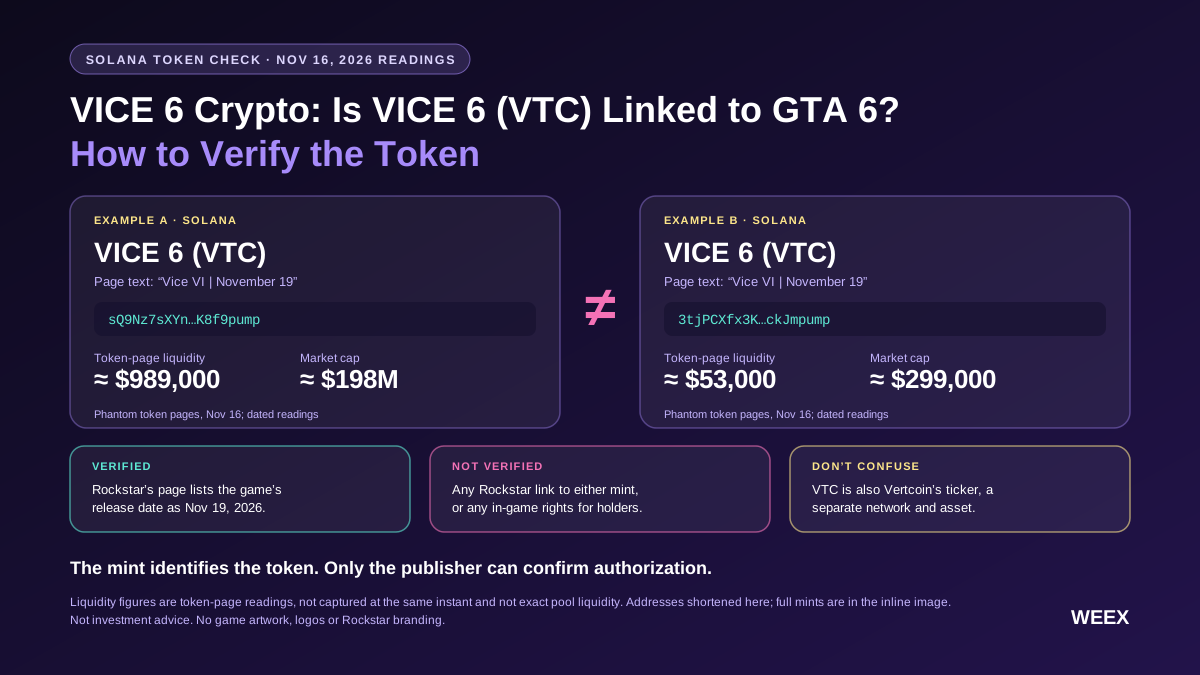
VICE 6 Crypto: Is VICE 6 (VTC) Linked to GTA 6? How to Verify the Token
Is VICE 6 crypto linked to GTA 6? Compare two Solana tokens using VTC, verify their mint and pool addresses, and see what Rockstar has confirmed.

Enterprise Blockchain: Why It's Time to Return?

DTCC Plans to Introduce Tokenized Securities and Bonds on Solana by 2027—Expanding Under Wallet Restrictions

Cardano holders reject 22M ADA treasury bid to buy physical copper

What Licenses Are Needed for Crypto Payments in Hong Kong?
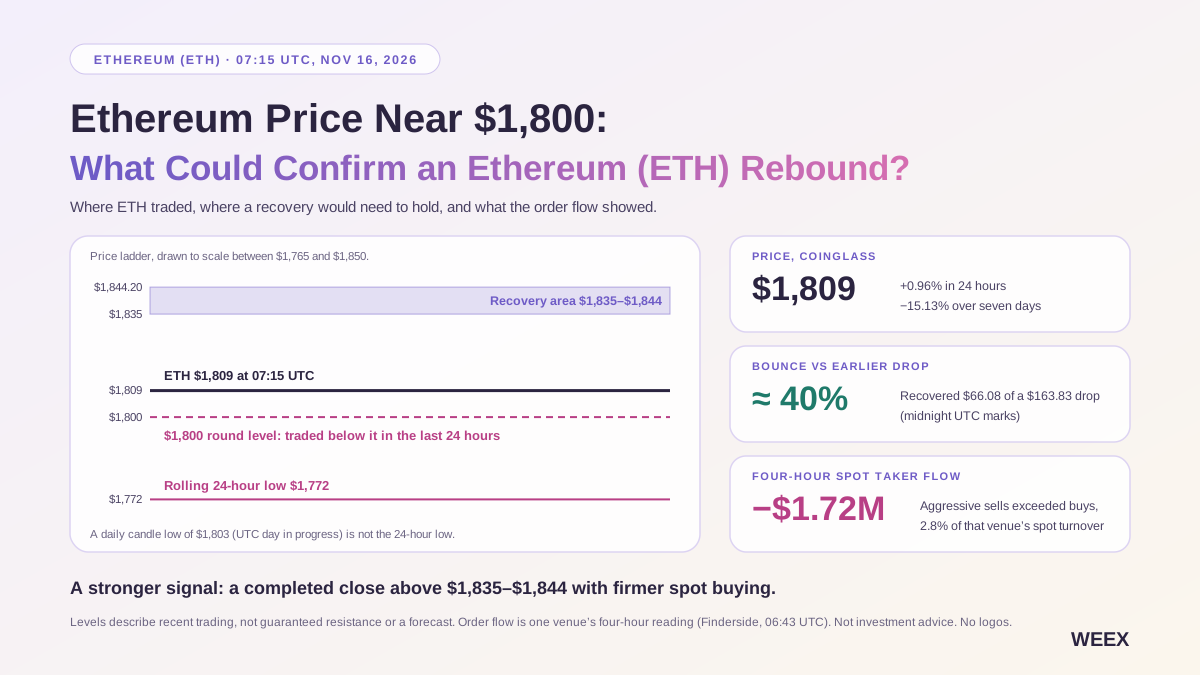
Ethereum Price Near $1,800: What Could Confirm an Ethereum (ETH) Rebound?
Ethereum traded near $1,800 on November 16. See what four-hour spot order flow, futures positioning, and Friday’s ETF flows say about an ETH rebound.
'Tokenization Is Not the Finish Line': Jupiter to Let Users Borrow Against Bullish Shares
Anthropic's Wall Street Operator: CFO Krišna Rao
'Nobody Knows Who's in Charge': Boris Johnson Stands by Bitcoin Skepticism at Breakpoint
Mazama Energy Finds New Solution to the Biggest Challenge in Geothermal Drilling
Have Semiconductors Bottomed? Here's How the Current Chip Stock Plunge Compares With Past Bear Markets.
Is Apple Losing Its Memory?
Latest articles



Latest coin listings on WEEX


