
Strive Retains More Cash After Purchasing 1,355 Bitcoin

 Prefer us on Google


Strive has purchased additional bitcoin between September 14 and 18, 2026: 1,355 BTC for approximately $107.7 million, bringing the total reserve to 26,355 BTC. Notably, the company's cash position increased during the same week from $204.2 million to $229.6 million. How can a purchase of $107.7 million coincide with more cash on hand, and how long can this financing model last?
Strive Expands Bitcoin Reserve While Cash Position Rises
The Nasdaq-listed Strive acquired the new 1,355 BTC in the week of September 14 to 18, as reported by Bitcoin.com on September 21, 2026. This increased the total bitcoin reserve to 26,355 BTC, which, at Monday morning's rates, is valued at approximately $2.1 to $2.2 billion.
The figures present an apparent contradiction. Despite an expenditure of nearly $108 million on bitcoin, Strive's cash position rose by $25.4 million, from $204.2 million to $229.6 million. This is not an accounting trick, but the result of a financing machine that raises capital faster than it is spent.
How Strive Finances the Purchases
Strive paid an average of $79,475 per bitcoin for the new batch, well below its own average purchase price, which is in the low to mid $90,000 range. To finance this, the company issued 2.07 million new Class A shares in the same week, bringing the total to 87.8 million shares.
Additionally, Strive issued 786,194 preferred SATA shares (Variable Rate Series A Perpetual Preferred Stock). This instrument is designed to trade around a nominal value of approximately $100 while paying a variable dividend that recently approached nearly 13%. Just last week, the SATA issuance generated about $78.6 million in new capital, bringing the total number of outstanding SATA shares to 11.18 million, worth approximately $1.12 billion in nominal value.
The mechanism is essentially simple: shares and preferred stock are sold, and the proceeds go to bitcoin. The downside is dilution -- more bitcoin on the balance sheet corresponds to more common and preferred shares outstanding, a dynamic also at play with other publicly traded bitcoin treasury companies adjusting their share structures.
The Purchase Series and Position Against Strategy
The latest purchase is part of a series of five reported buying periods: 1,110, 1,800, 1,375, 469, and now 1,355 BTC, totaling 6,109 bitcoin. In one week, the reserve increased from exactly 25,000 to 26,355 BTC.
On the same Monday, Strategy announced it had purchased 950 BTC -- the company's first purchase since late August. According to the source, Strive ranks fifth among publicly traded corporate bitcoin holders, a list led by Strategy.
Anyone reviewing Strive's balance sheet will find another detail: the company owns 505,000 preferred STRC shares of Strategy, valued at approximately $49.7 million. Thus, Strive is both a significant bitcoin holder and an investor in the preferred capital of the world's largest corporate bitcoin reserve.
-- Price
What the Numbers Mean for ASST and the Financing Model
Investors are closely monitoring the developments. The ASST stock closed Friday at $30.09, a 6.4% increase for that session and about 104% compared to the $14.73 from about a month earlier.
However, a long-term view puts this into perspective: ASST is still trading about 61% below the level of a year ago and more than 90% below the peak of nearly $355 shortly after its IPO. The source from Bitcoin.com states that further bitcoin purchases depend on the extent to which investors continue to absorb ASST shares and SATA preferreds.
As long as that demand exists, Strive can raise capital, buy bitcoin, and still retain more cash than it spends. But every new share or SATA issuance also brings dilution and ongoing dividend obligations -- a trade-off that only becomes apparent when the market is less eager for new paper.
This content is provided for general informational purposes only and doesn't constitute financial, investment, legal, or tax advice. Any events, rewards, online promotions, or related information mentioned herein should not be considered a recommendation, solicitation, or invitation to purchase, sell, trade, or otherwise deal in any crypto assets. Crypto assets are highly volatile and may result in loss. The availability of WEEX services, products, and related events may vary by region. You are responsible for ensuring that your participation is in accordance with applicable local laws and regulations.
You may also like

WEEX P2P now supports XOF, XAF & CDF—Merchant Recruitment Now Open

HODLing ETH: Should You Choose Staking for Yield or Collateralized Lending?

SEC Clarity Meets Fed Rate Hike: How WEEX TradFi Lucky Eggs S2 Taps Into Cross-Market Opportunities
AI Risk as an Opportunity for Bitcoin Pricing

Bitcoin 2x Leveraged ETF Launches on Cboe, But Doesn't Buy Bitcoin: Here's Why

Crypto: The ECB Enters the Tokenized Bond Market
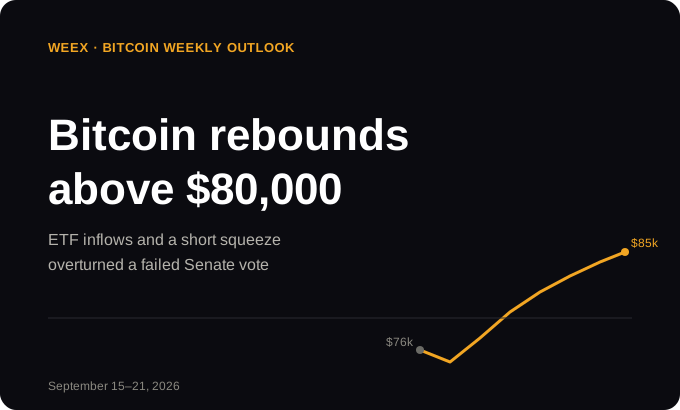
WEEX Bitcoin Weekly Outlook: Why Did Bitcoin Rebound Above $80,000 After the CLARITY Act Vote?
Bitcoin rebounded above $80,000 as SEC and CFTC action, renewed ETF inflows, and a short squeeze outweighed the failed CLARITY Act vote.

From AI Trading to AI Asset Management: What Does Robinhood Have in Place and What Do Startups Still Lack?

Crypto and Robotics: True Revolution or New Speculative Bubble?
Coldcard whitehats move 52.37 BTC to recovery trust

Bitcoin's Rise Does Not Mean the Bull Market Has Returned; Don't Create Stories for Yourself
AMD Jumps Nearly 10%, Market Cap Tops $1 Trillion| WEEX TradFi Daily Brief (September 22, 2026)
Global markets on September 22 focus on a repair in AI-compute pricing. On September 21 the three major equity indexes closed higher. AMD rose nearly 10% and its market cap crossed $1 trillion for the first time, while Intel and Arm also surged. Brent crude fell about 3.4% to $100.34 and the 10-year Treasury yield eased to about 4.96%, lowering discount-rate pressure on long-duration tech. Bitcoin briefly broke above $87,000 and total crypto market cap returned above $3 trillion. Investors next watch consumer and housing earnings plus PMI flash prints.
![[Full Text] "The Core of Blockchain Policy: Supporting Corporate Adoption and Protecting Investors"](/public-static/32_e2da91fed2.png?format=avif)
[Full Text] "The Core of Blockchain Policy: Supporting Corporate Adoption and Protecting Investors"
What’s Worth Watching After the First Wave of Arc Hype?

What is Fast? Understanding the Parallel Payment Infrastructure for AI Agents

"A Separate System for Issuance and Disclosure of Digital Assets is Necessary for the Development of the Domestic Industry"

The DOJ investigates Binance for possible violations of sanctions against Iran

The Virtual World Left by the Metaverse Welcomes Robot 'Natives'

Breaking Down OpenRouter: Stripe's $7.5 Billion Acquisition Gamble

The Answer to Dreamforce 2026: AI Agent, Has It Finally Turned from Demo to Revenue?

Robinhood CEO Says Crypto Will Beat Sports at Prediction Markets' Own Game
Liquid Network attacker crossed into theft: Immunefi CEO

Aurora Intents routed $19M into Zcash NFT auction

CPALL Stock at 45 Baht: Is Thailand's 7-Eleven Giant Undervalued?
Ethereum: BitMine Approaches 5% of Total ETH Supply
RKLB Stock: Why Simply Wall St Sees It 43% Undervalued After a $1.9 Billion Raise

Bitcoin Reclaims $85K: ETF Flows Return as BTC Momentum Builds
Bitcoin has reclaimed $85,000 as spot ETF flows turn positive and institutional demand returns. Here’s what is driving BTC’s rebound, what WEEX traders should watch next, and why liquidity and execution matter in a fast-moving market.
Which Liquidity Pools Are Profitable on Robinhood Chain?

Should We Worry About a Reversal of Yen Carry Trades?
Unitree Stock Crashed From 845 to Under 500 Yuan: But It Still Leads the Robot Market
Unitree stock has fallen sharply from its post-IPO highs, raising concerns about valuation and commercial demand. However, its 37% share of the global quadruped robot market shows continued product strength.
WEEX P2P now supports XOF, XAF & CDF—Merchant Recruitment Now Open
HODLing ETH: Should You Choose Staking for Yield or Collateralized Lending?
SEC Clarity Meets Fed Rate Hike: How WEEX TradFi Lucky Eggs S2 Taps Into Cross-Market Opportunities
AI Risk as an Opportunity for Bitcoin Pricing
Bitcoin 2x Leveraged ETF Launches on Cboe, But Doesn't Buy Bitcoin: Here's Why
Crypto: The ECB Enters the Tokenized Bond Market
Contents
Latest articles





Latest coin listings on WEEX


