
U.S. Stablecoin Regulation Explained: How the U.S. GENIUS Act Reshapes Crypto Markets

 Prefer us on Google

Main Takeaways:
- Dollar-backed stablecoins are now regulated financial instruments, enabling broader institutional adoption.
- Clear rules reduce legal uncertainty and build trust, while concentrating the market among large players.
- Investors should focus on structural strength — reserve quality, transparency, and governance — not short-term price movements.
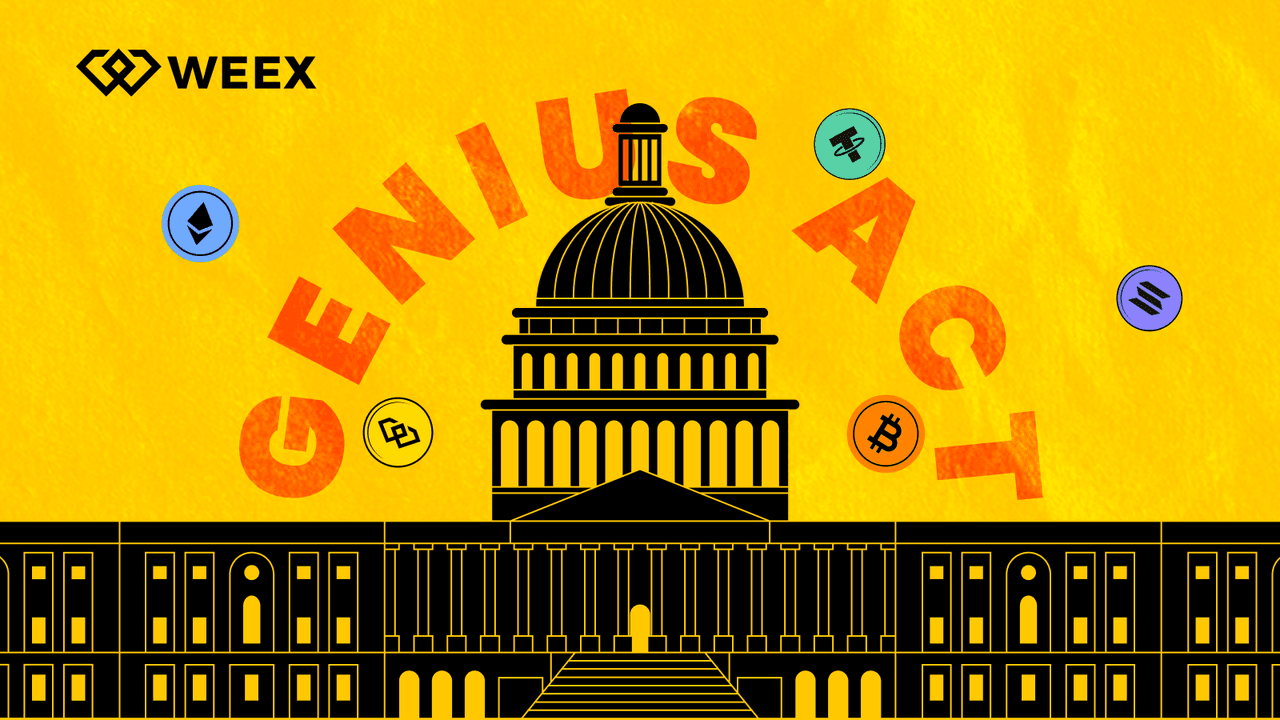
The U.S. GENIUS Act marks the end of blockchain market’s “Wild West” era, transforming dollar-backed digital assets from speculative experiments into regulated pillars of the financial system. By replacing ambiguity with a bank-grade framework, Washington isn’t just setting rules — it is laying the foundation for the next wave of institutional adoption.
Core Provisions
The Act focuses on four key areas: issuance, backing, monitoring, and regulation.
- Issuance by regulated entities only: Only approved banks, licensed non-bank issuers, and qualified state-level institutions are allowed to issue payment stablecoins in the U.S.
- Full reserve backing: Stablecoins must be backed 1:1 by highly liquid, low-risk assets such as cash, insured deposits, or short-term U.S. Treasuries. Riskier assets and rehypothecation are strictly limited.
- Transparency and accountability: Issuers must regularly disclose supply and reserve information, undergo audits, and maintain executive responsibility.
- Legal classification: Payment stablecoins are treated as payment instruments, not securities, placing oversight under banking regulators and ending long-standing jurisdictional uncertainty.
Together, these provisions create a clear, bank-style framework without requiring stablecoin issuers to become full banks.
Positive Impacts on Crypto Markets
The Act catalyzes institutional growth by formalizing stablecoins as core financial infrastructure:
Institutional De-risking: Standardized licensing replaces legal ambiguity, enabling corporations and TradFi to integrate digital assets with operational confidence.
Systemic Trust: Mandatory 1:1 reserves and audits minimize de-pegging risks, while non-security classification provides long-term regulatory certainty.
Utility Expansion: Beyond exchange liquidity, clear rules unlock high-value use cases like B2B cross-border settlements and automated treasury management.
Dollar Primacy: Private-sector innovation extends USD liquidity globally, reinforcing the dollar as the native on-chain settlement currency.
Potential Risks and Structural Side Effects
Concentration Risk: Strict compliance creates high entry barriers, concentrating the market among a few dominant, systemically important players.
Deposit Erosion: Stablecoins compete with traditional banking for settlement, potentially straining bank liquidity during market volatility.
Innovation Stagnation: Narrowly defined reserve and activity rules may limit the evolution of innovative and yield-optimized digital assets.
Redemption Volatility: Rapid, large-scale exits can cause liquidity mismatches, disrupting the broader trading and DeFi ecosystems.
Key Considerations for Investors
As stablecoins become more regulated, investors need to rethink how they assess risk.
- Structure beats brand: Regulatory approval, reserve quality, transparency, governance, and redemption matter more than brand recognition or market capitalization.
- Liquidity matters more than price: The real impact of stablecoin regulation shows in liquidity, on-chain payments, settlement-focused networks, and compliant DeFi infrastructure, rather than short-term price swings.
- Policy is a moving variable: Regulation reduces uncertainty but doesn’t eliminate risk. Future rules like tighter capital requirements or renewed discussions around CBDCs can reshape the competitive landscape.
- Know the rules to trade smarter: Understanding stablecoin rules is essential for informed decisions, as they increasingly influence liquidity, market structure, and long-term viability.
Conclusion
The U.S. Stablecoin Act turns stablecoins into regulated financial infrastructure. It boosts trust, enables institutional adoption, and expands real-world use, while concentrating the market and introducing new risks. Investors should focus on reserve quality, transparency, and governance — stablecoins are no longer just trading tools, but key pillars of the digital financial system.
About WEEX
Founded in 2018, WEEX has developed into a global crypto exchange with over 6.2 million users across more than 130 countries. The platform emphasizes security, liquidity, and usability, providing over 1,200 trading pairs and offering up to 400x leverage in crypto futures trading. In addition to traditional spot and derivatives markets, WEEX is expanding rapidly in the AI era — delivering real-time AI news, empowering users with AI trading tools, and exploring innovative trade-to-earn models that make intelligent trading more accessible to everyone. Its 1,000 BTC Protection Fund further strengthens asset safety and transparency, while features such as copy trading and advanced trading tools allow users to follow professional traders and experience a more efficient, intelligent trading journey.
Disclaimer: This content is provided for general branding and informational purposes only and doesn't constitute financial, investment, legal, or tax advice. Any events, rewards, online events, or related information mentioned herein should not be considered a recommendation, solicitation, or invitation to purchase, sell, trade, or otherwise deal in any crypto assets or to use any services. Crypto assets are highly volatile and may result in loss. WEEX services and online events may not be available in all regions and are subject to applicable laws, regulations, and eligibility requirements. You are responsible for ensuring that your use of WEEX services complies with local laws and for carefully assessing the risks before participating in any crypto-related activities.
You may also like

W26 Crypto Scam or Legit? World Cup 2026 Token Explained
W26 Crypto Scam or Legit? Explore what W26 token is, its World Cup 2026 connection, price trend, risks, and whether the hype can drive future growth.
GDWR Crypto Scam or Legit? A Complete Risk Analysis
Is GDWR Crypto legit or a scam? Learn what Global Digital Water Reserve is, review its on-chain data, risk factors, and whether the project is backed by real-world water assets.
France vs Morocco Prediction Crypto Odds
France vs Morocco Prediction Crypto Odds explained. Learn how Polymarket market data, blockchain prediction markets, liquidity, and crypto odds work during FIFA 2026.

Where and How to Buy MSTR Futures: A Complete Trading Guide
Learn where and how to buy MSTR Futures, explore traditional stock access methods, and discover USDT-based MSTR price exposure through WEEX TradFi trading. Join the TradFi Trading Challenge for potential rewards.
How to Buy WXT Token: A Beginner’s Guide to WEEX Token Trading
WXT is the native platform token of the WEEX ecosystem. This beginner-friendly guide explains how to buy WXT on WEEX, what to check before trading, how to manage risk, and how users can review WXT’s role within the exchange ecosystem before placing an order.
Futu Penalty Shock Exposes Brokerage Risk — Why WEEX TradFi Fits Traders Who Want Faster Global Market Access
Futu stock falls after China penalty news. Learn why FUTU shares dropped, how the latest crackdown affects traders, and why WEEX TradFi offers USDT-margined access to stocks, gold, oil, forex, and indices in one account.

How to Buy COAR Crypto and When to Sell for Maximum Gains
Learn how to buy COAR Crypto safely on Solana. Read our expert guide on the speculative Chinese Oil Asset Reserve coin and discover strategic buy and sell points.
How to Buy Mom Trust Fund Reserve (MTFR): Legit Opportunity or High-Risk Trap?
Is MTFR Coin a legit opportunity or a high-risk trap? Read our Mom Trust Fund Reserve buying guide to analyze real on-chain data, liquidity, and key risks.
How to Buy Chinese Oil Asset Reserve (COAR) Token in 2026: Latest Step-by-Step Guide, Contract Address, and Safe Buying Tips
How to buy Chinese Oil Asset Reserve (COAR) token step by step, including the official COAR contract address, Solana wallet setup, SOL funding, and latest market data.
How to Buy $WCOR Coin: Should I Invest or Is It Just Hype?
Learn how to buy $WCOR coin on Solana and explore its latest 57% price surge. This expert guide analyzes whether WCOR is a solid investment or speculative hype.
How to Buy Global Digital Oil Reserve ($GDOR): Is It Legit or Just Hype?
Learn how to buy Global Digital Oil Reserve (GDOR) on the Solana network. This comprehensive guide covers step-by-step swap instructions, official contract verification, and a critical look at the "digital oil" narrative.
What Is Global Digital Oil Reserve (GDOR) Coin? Can It Really Explode Like GDER?
What is GDOR crypto? This guide explains its token data, missing fundamentals, and why it is unlikely to replicate explosive tokens like GDER.

What Is B.AI? Justin Sun AI Relay Station for Claude and GPT
B.AI represents a bold attempt to merge artificial intelligence with blockchain infrastructure. By aggregating frontier models like Claude, GPT, and Gemini behind a single API key, and enabling autonomous AI agents with on-chain identity and payment capabilities, it lays the groundwork for the Web4 machine-driven economy.
Whether the future arrives as human-AI collaboration or full autonomy remains to be seen. What is certain is that B.AI is already reshaping how developers and crypto users access and interact with AI.
How to Buy GDER Crypto Safely: Contract Address, Risks, and Red Flags Explained
How to buy GDER crypto safely? Learn the official contract address, unverified-token risks, red flags, market data checks, and the safest way to verify Global Digital Energy Reserve before trading.
Will USOR(U.S Oil) Still Rise if the USA and Iran Conflict Continues? Latest USOR Price Analysis and 2026 Outlook
Will USOR still rise if the USA and Iran conflict continues? Read the latest USOR price analysis, oil market outlook, Strait of Hormuz impact, and 2026 USOR price prediction.
Will USOR(U.S Oil) Still Rise if the USA and Iran Conflict Continues? Latest USOR Price Analysis and 2026 Outlook
Will USOR still rise if the USA and Iran conflict continues? Read the latest USOR price analysis, oil market outlook, Strait of Hormuz impact, and 2026 USOR price prediction.
Hong Kong Crypto Fraud: $840K Lost to Fake Crypto Experts
A 66-year-old Hong Kong retiree lost $840,000 to fake crypto experts on WhatsApp. Learn the 5 warning signs of crypto investment scams and how to protect your savings.
How to Buy Bitcoin on WEEX Exchange: Your Ultimate Guide to Purchasing Bitcoin
How to Buy Bitcoin on WEEX Exchange

What BlackRock's Bitcoin ETF Signals For Crypto's Next Phase?
BlackRock’s bitcoin ETFs have rapidly grown toward $100B in assets, showing that institutions now treat BTC as a mainstream, long-term allocation instead of a fringe trade. For WEEX users, that means a larger, more mature market to trade in while letting idle USDT keep earning through Auto Earn.
Bitcoin Price & Ethereum Price Outlook: Why BTC and ETH Are Rising and Whether the Crypto Bounce Will Continue
The recent rebound in Bitcoin price and Ethereum price is a constructive and positive development, supported by favorable technical conditions, lighter liquidity, and stronger sentiment across broader markets.

Top AI Coins of 2025: Which AI Coin Has the Most Potential
Top AI coins of 2025: which AI coin has the most potential and where to buy TAO, RNDR, AKT
3 Ways to Earn Passive Income with Crypto in 2026
The crypto ecosystem offers a variety of passive income products, each with its own set of features, risks, and rewards. Understanding these options is essential for anyone looking to start earning passive income.
Best Ways To Earn Free Crypto in 2025: CeFi Earn Product
WEEX Auto Earn is designed for users who value simplicity, transparency, and flexibility. It offers tiered floating yields, auto-compounding, and no lock-up — ideal for both beginners and professionals seeking passive income.
$XAUT: The Digital Gold Standard — Stability Meets Crypto
Among global exchanges, WEEX stands out as one of the best places to trade gold — offering reliability, liquidity, and user-first design.

Deep Dive Into CoinGecko Bitcoin Report 2025
Coingecko's Bitcoin Report 2025 highlights several key achievements that underscore WEEX’s rapid growth and increasing dominance in the crypto space.
Honest WEEX Review 2025: Why Traders Trust This Reliable & User-Friendly Exchange
Honest WEEX Review 2025: Trusted, Simple, Reliable.
Which Crypto to Buy Now: Discover the Top Trending Tokens Dominating October 2025
Discover the top 5 trending cryptocurrencies for October 2025 — HIFI, PUMP, PEPE, TRUMP, and DOGE. Explore their latest price surges, market catalysts, and unique value drivers. From DeFi innovation to meme-powered rallies and ETF buzz, find out why these tokens are making waves and how platforms like WEEX can help you trade them safely and efficiently.
The 10·11 Crypto Crash: Anatomy of a Market Meltdown
Trump’s tariff announcement on October 11, 2025, triggered a massive crypto sell-off. Around $19 billion in positions were liquidated and 1.6 million traders wiped out. The crash exposed how leverage, liquidity gaps, and macro shocks combine to create systemic risk
Uptober Effect 2025: The Bitcoin Rally You Need to Watch
The month of October has become synonymous with Bitcoin rallies over the years, earning it the nickname "Uptober." The term was first coined by traders on platforms like Reddit and Twitter between 2013 and 2017, combining "Up" and "October" to reflect Bitcoin’s consistent bullish performance in this month.
Which Crypto Should I Buy Now? 2025’s Fastest Growing Tokens
Discover the top 5 trending cryptos to buy now for massive growth in 2025! We analyze HIFI, PUMP, PEPE, TRUMP, & DOGE's latest prices and market potential on Oct 2, 2025.
W26 Crypto Scam or Legit? World Cup 2026 Token Explained
W26 Crypto Scam or Legit? Explore what W26 token is, its World Cup 2026 connection, price trend, risks, and whether the hype can drive future growth.
GDWR Crypto Scam or Legit? A Complete Risk Analysis
Is GDWR Crypto legit or a scam? Learn what Global Digital Water Reserve is, review its on-chain data, risk factors, and whether the project is backed by real-world water assets.
France vs Morocco Prediction Crypto Odds
France vs Morocco Prediction Crypto Odds explained. Learn how Polymarket market data, blockchain prediction markets, liquidity, and crypto odds work during FIFA 2026.
Where and How to Buy MSTR Futures: A Complete Trading Guide
Learn where and how to buy MSTR Futures, explore traditional stock access methods, and discover USDT-based MSTR price exposure through WEEX TradFi trading. Join the TradFi Trading Challenge for potential rewards.
How to Buy WXT Token: A Beginner’s Guide to WEEX Token Trading
WXT is the native platform token of the WEEX ecosystem. This beginner-friendly guide explains how to buy WXT on WEEX, what to check before trading, how to manage risk, and how users can review WXT’s role within the exchange ecosystem before placing an order.
Futu Penalty Shock Exposes Brokerage Risk — Why WEEX TradFi Fits Traders Who Want Faster Global Market Access
Futu stock falls after China penalty news. Learn why FUTU shares dropped, how the latest crackdown affects traders, and why WEEX TradFi offers USDT-margined access to stocks, gold, oil, forex, and indices in one account.