
Bitcoin Price Surges 11% Past $70,000 for the First Time Since June: What the Three Catalysts Actually Drove the Move

 Prefer us on Google
Bitcoin surging 11% past $70,000 in a single session is a price event whose significance depends entirely on understanding what actually caused it rather than simply noting that it happened.
Bitcoin's 11% move on August 20, 2026 arrived from three separate directions simultaneously, which is analytically different from a move driven by a single catalyst because each component has its own durability profile, its own market mechanism, and its own implication for what comes next. Bitcoin's specific situation after the three catalyst move is one where separating the components tells investors more about the rally's staying power than any aggregate percentage figure does.
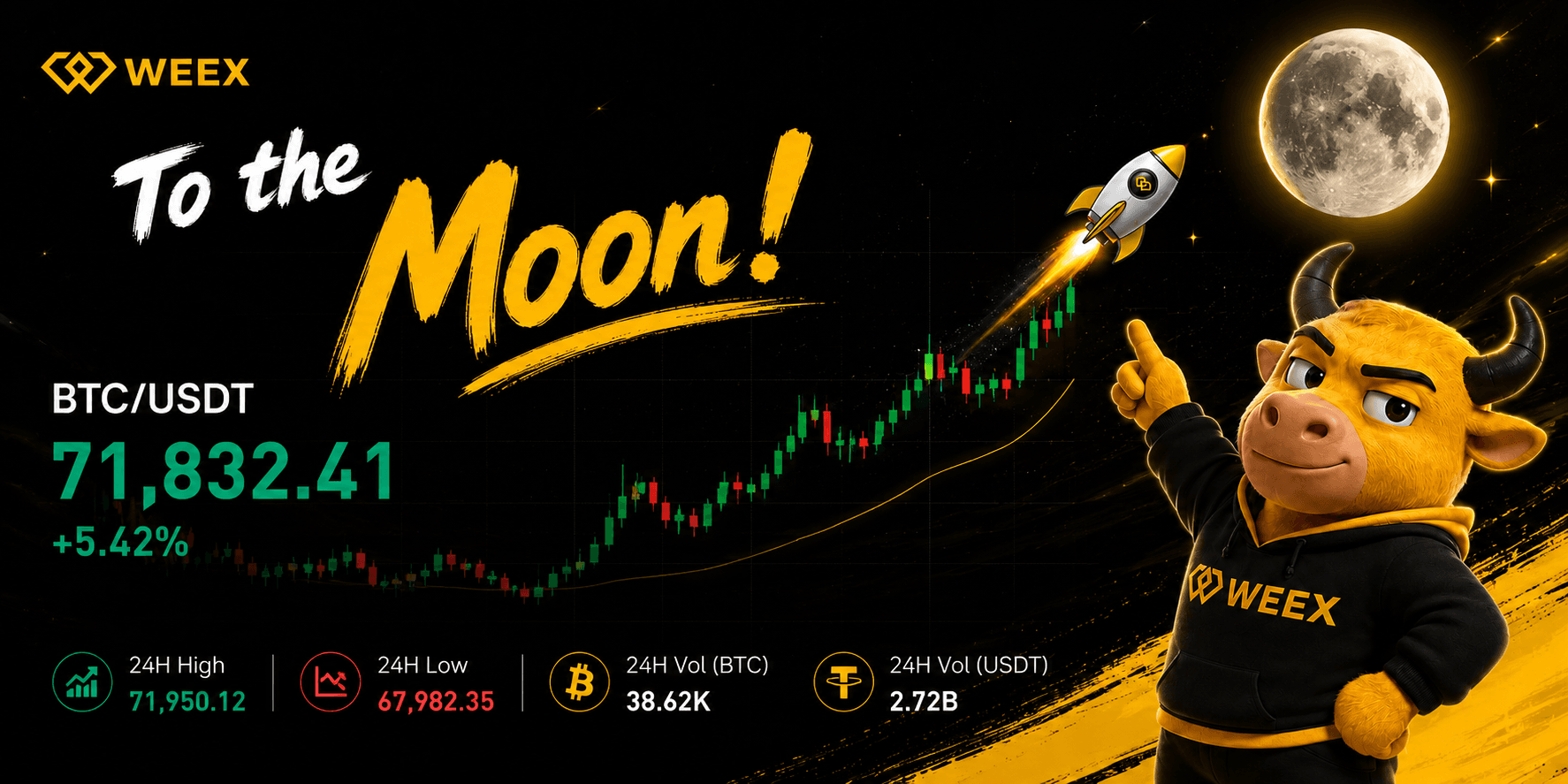
Catalyst One: The Treasury Bond Buyback Expansion
The first and most structurally significant catalyst was the US Treasury's decision to double its long-term bond buyback program from $2 billion to $4 billion, announced on August 19, 2026 according to Forbes.
The immediate market effect was a decline in 30-year Treasury yields and a weakening of the US dollar. Bitcoin climbed from an intraday low of approximately $64,112 to approximately $69,698 in direct response to the announcement before continuing higher the following session.
The mechanism connecting Treasury bond buybacks to Bitcoin price operates through two channels. The first is the risk asset repricing channel. When long-term yields decline, the relative attractiveness of yield-bearing assets decreases and capital flows toward risk assets including equities, commodities, and cryptocurrencies. Bitcoin benefits from this rotation because it is the largest and most liquid digital asset and therefore the first to receive capital rotating out of fixed income.
The second channel is the dollar weakness effect. Treasury buybacks that push yields lower also weaken the dollar by reducing the return available to foreign holders of US Treasury securities. A weaker dollar is historically associated with Bitcoin price strength because Bitcoin is priced in dollars globally and a weaker dollar makes Bitcoin cheaper for non-dollar buyers, expanding the effective demand base.
The buyback expansion from $2 billion to $4 billion is not a one-time event but a structural commitment that will continue exerting downward pressure on long-term yields as long as the program operates at the expanded scale. This is what distinguishes the Treasury catalyst from the other two catalysts in terms of durability: it is a policy decision rather than a news event.
Catalyst Two: Trump's Meeting With Crypto Industry Leaders
The second catalyst was President Trump's high stakes meeting with cryptocurrency industry leaders on August 20, 2026, which Bloomberg reported produced a specific signal about US regulatory direction.
The most market-relevant disclosure from the meeting was Trump's indication that the US is exploring options for allowing Hyperliquid, an offshore cryptocurrency derivatives platform, to operate in the United States. A token associated with Hyperliquid climbed 23% in 24 hours according to Bloomberg and CoinGecko data, reflecting the market's interpretation that the Hyperliquid signal extends beyond that platform specifically.
The analytical significance of this catalyst for Bitcoin is not about Hyperliquid's business. It is about what the meeting itself signals about the posture of the executive branch toward the cryptocurrency industry. A president who actively schedules meetings with cryptocurrency industry leaders, who expresses willingness to find regulatory pathways for offshore platforms, and whose Treasury Secretary is simultaneously executing bond buybacks that weaken the dollar is expressing a cluster of policies that collectively favor Bitcoin's price.
The specific mechanism connecting regulatory openness to Bitcoin price is the risk premium compression that occurs when regulatory uncertainty decreases. Bitcoin has historically traded at a premium above its intrinsic value that reflects uncertainty about whether regulators will restrict its use or trading. When that uncertainty decreases, the risk premium compresses and the price rises even without any change in Bitcoin's fundamental supply or demand characteristics.
The distinction between a genuine regulatory shift and a temporary political signal matters for durability. Trump's meeting is a signal rather than a policy change, which means its price support depends on whether actual regulatory actions follow within a timeframe that maintains market expectations. Signals that are not confirmed by policy changes within reasonable timeframes eventually become a source of disappointment rather than sustained support.
Catalyst Three: The $2.7 Billion Short Squeeze
The third catalyst was the mechanical price amplification produced by more than $2.7 billion in short liquidations as Bitcoin moved through key technical levels, according to TradingKey.
A short liquidation is a forced buying event. When a trader holds a short position, meaning they have borrowed and sold Bitcoin expecting the price to fall, they are required to post collateral against that position. If the price rises rather than falls, the collateral erodes. When the collateral falls below the required maintenance level, the exchange automatically closes the position by buying Bitcoin at the market price to repay the borrowed amount. This forced buying is not discretionary: it occurs automatically regardless of whether the trader wants to exit.
The cascade mechanism works as follows. As Bitcoin's price rises, some short positions are liquidated, producing forced buying that pushes the price higher. As the price moves higher, additional short positions reach their liquidation threshold, producing more forced buying. Each wave of liquidations creates the conditions for the next wave. The result is a self-reinforcing price acceleration that moves faster and further than the initial buying pressure alone would have produced.
The $67,000 level is the most specific technical detail in this catalyst. TradingKey reported that $67,000 flipped from a resistance level to a support level during the move, meaning that the price moved through $67,000 with enough conviction that sellers who had previously defended that level as resistance became buyers who now see it as support. A level flip of this type at meaningful volume is a structural market change rather than a temporary price excursion.
The short squeeze catalyst differs from the other two in a critical way: it is not repeatable in the same form. The $2.7 billion in short positions that were liquidated on August 20 no longer exist. New short positions will accumulate over time as traders reassess the price at higher levels, but the specific pool of leveraged shorts that produced the August 20 squeeze has been cleared. The next upward move will need to build its own liquidation cascade from new short positions rather than continuing to benefit from the positions that were eliminated today.
-- Price
How the Three Catalysts Interacted
The most analytically distinctive feature of the August 20 move is not any single catalyst but the simultaneous arrival of all three, whose interaction produced a larger and faster move than any one of them could have produced independently.
The Treasury buyback expansion created the macro conditions that made risk assets attractive and pushed Bitcoin toward $70,000 from the session low near $64,112. The Trump regulatory meeting created the narrative conditions that attracted discretionary buyers who had been waiting for a positive regulatory signal before adding Bitcoin exposure. The short squeeze provided the mechanical amplification that converted a move toward $70,000 into a decisive break above $71,500.
Remove any one of these three and the move looks different. Without the Treasury catalyst, yields remain higher and the dollar stronger, reducing the risk asset tailwind. Without the regulatory catalyst, discretionary buyers who require a positive policy signal remain on the sidelines. Without the short squeeze, the move above $70,000 occurs on lower volume without the decisive break character that technical traders interpret as a structural level change.
The simultaneous arrival of all three is the reason the move produced an 11% single-session gain rather than a more measured 3% to 5% move that each catalyst independently might have produced.
What the Volume Tells You That the Price Does Not
One of the most specific and underanalyzed signals from the August 20 move is the trading volume, which tells investors something about the move's quality that the price alone cannot convey.
According to CoinGecko, Bitcoin's 24-hour trading volume on August 20 reached over $31 billion, representing approximately a 50% increase from the prior session. A 50% volume increase accompanying an 11% price move is a specific combination that distinguishes institutional participation from retail speculation.
Retail buying events in Bitcoin typically produce high price volatility with moderate volume increases, because retail participants in aggregate command less capital than institutional participants. Institutional events produce high volume alongside high price movement because the dollar amounts being deployed are large enough to move both metrics simultaneously. The 50% volume increase alongside the 11% price gain is more consistent with institutional participation than with purely retail momentum.
The volume increase also matters for assessing the durability of the $70,000 break. A price level broken on high volume is more likely to hold as support than a level broken on thin volume, because high-volume breaks produce more participants who have established cost basis near the broken level and have an economic incentive to defend it as support on any subsequent retest.
The One Catalyst Missing From August 20
One observation that provides useful context for evaluating the three-catalyst move is what was not present on August 20 that was present during Bitcoin's most sustained previous rallies.
A supply-side catalyst was absent. Bitcoin's most powerful historical rallies have combined demand-side catalysts with supply-side constraints that prevented sellers from satisfying buyer demand at existing prices. The post-halving reduction in new Bitcoin supply in 2024 was the most recent supply-side catalyst of this type. No equivalent supply reduction event is imminent, which means the current rally is entirely demand-driven rather than demand-and-supply-constrained.
This is not a reason to expect the rally to fail. Demand-driven rallies can be sustained and significant. It is a reason to expect the rally to be more dependent on the continuation of demand conditions than supply-constrained rallies, because without a supply constraint acting as a persistent floor, the price is more sensitive to any deterioration in the demand conditions that produced the move.
For traders looking to position around Bitcoin's price moves, WEEX offers BTC spot and futures trading with real-time market depth and execution across key price levels.
For traders looking to position around Bitcoin's next resistance levels, WEEX offers BTC spot and futures trading with access to real-time market depth across each of these key price zones.
Conclusion
Bitcoin's 11% surge past $70,000 on August 20, 2026 is the product of three catalysts whose individual contributions and durability profiles are distinct rather than interchangeable.
The Treasury bond buyback expansion is the most structurally durable: a policy decision that will continue exerting downward pressure on long-term yields as long as the $4 billion program operates. The Trump regulatory meeting is durable through changed market expectations but requires confirmation through actual policy actions to sustain its price support beyond the near term. The short squeeze has fully played out and does not contribute to sustaining the price at higher levels.
The 50% volume increase alongside the 11% price move is the most specific available evidence that institutional participation accompanied the retail and mechanical buying on August 20, which is the single most important factor for assessing whether the $70,000 break will hold as support on the next retest.
The missing element is a supply-side catalyst comparable to the post-halving reduction that amplified previous rallies. The current rally's durability therefore depends more directly on the continuation of the demand conditions that produced it than previous rallies did, making the Federal Reserve meeting minutes and subsequent Treasury yield behavior the most important near-term observable inputs for whether August 20 marks the beginning of a sustained recovery or a catalyst-driven spike that requires consolidation before continuing higher.
FAQ
1. What were the three catalysts that drove Bitcoin past $70,000 on August 20?
The US Treasury doubled its bond buyback program from $2 billion to $4 billion pushing long-term yields lower, President Trump met with crypto industry leaders and signaled regulatory openness including exploring pathways for offshore platforms to operate in the US, and more than $2.7 billion in short positions were automatically liquidated as Bitcoin moved through key technical levels.
2. Why does the $2.7 billion short liquidation matter and will it repeat?
Short liquidations are forced buying events that mechanically amplify price moves beyond what organic demand alone produces. The $2.7 billion figure represents positions that were automatically closed as Bitcoin moved through liquidation thresholds. This specific pool of shorts has been cleared and cannot repeat. New short positions will accumulate at higher levels over time but the August 20 squeeze cannot be replicated from the same positions.
3. What does the 50% volume increase tell us about the move's quality?
According to CoinGecko, 24-hour trading volume reached over $31 billion, approximately 50% above the prior session. A 50% volume increase alongside an 11% price move is more consistent with institutional participation than purely retail speculation. Price levels broken on high volume are more likely to hold as support on subsequent retests because more participants established cost basis near the broken level.
4. Why is the Treasury catalyst more durable than the other two?
The Treasury bond buyback expansion from $2 billion to $4 billion is a structural policy commitment that continues exerting downward pressure on long-term yields as long as the program operates at the expanded scale. The Trump regulatory meeting changed market expectations but requires actual policy actions to sustain support. The short liquidation has already fully played out.
5. What was missing from August 20 that was present in Bitcoin's strongest previous rallies?
A supply-side catalyst was absent. Bitcoin's most powerful historical rallies combined demand catalysts with supply constraints such as the post-halving reduction in new Bitcoin issuance. The August 20 move is entirely demand-driven, making it more sensitive to any deterioration in demand conditions than rallies that also benefited from supply-side constraints acting as a persistent floor.
This content is provided for general informational purposes only and doesn't constitute financial, investment, legal, or tax advice. Any events, rewards, online promotions, or related information mentioned herein should not be considered a recommendation, solicitation, or invitation to purchase, sell, trade, or otherwise deal in any crypto assets. Crypto assets are highly volatile and may result in loss. The availability of WEEX services, products, and related events may vary by region. You are responsible for ensuring that your participation is in accordance with applicable local laws and regulations.
You may also like

Bitcoin Price Prediction 2026: What Reclaiming $70,000 Means for the Path Back to $126,000

How to Earn WXT Rewards with WEEX Trade to Earn S6 Event

How to Earn WXT Rewards with WEEX Trade to Earn S6 Futures Event

Crypto Broker vs Stock Broker: What Is the Difference and Which Do You Need
How to Use Crypto Trading APIs? A Beginner’s Guide

How to Build a Crypto Trading Bot With WEEX API: A Beginner’s Guide
Crypto Quantitative Trading Tools: How Data, Backtesting, and APIs Build Automated Strategies
How Much Money Do You Need to Start Crypto Quantitative Trading?
REST API vs WebSocket API for Crypto Trading: What’s the Difference?

How to Secure a Crypto Trading Bot? API Key Safety Guide

What Is Crypto Arbitrage Trading? How Do Arbitrage Bots Work?
What Is a Grid Trading Bot? How Does Crypto Grid Trading Work?
How High Can XST Reach? Buy, Hold, or Wait?
Best Crypto Trading Bot Strategies for Beginners
How to Backtest a Crypto Trading Strategy? A Beginner’s Guide
How to Build a Crypto Trading Bot With an Exchange API: A Beginner’s Guide

Crypto Trading Bot vs Manual Trading: Which Is Better?

Gold Price vs Bitcoin: Which Is the Better Safe Haven When AI Stocks Crash?
Can Futures Trading Bots Make Money? A Realistic Review
What Is Futures Quantitative Trading? Strategies and Risks

What Is Cysic (CYS)? ComputeFi, ZK Hardware, and AI Explained
Cysic (CYS) Coin Price Forecast 2026: AI Growth vs Token Supply Risk
Can Crypto Quantitative Trading Make Money? Risks and Reality
Bitcoin Quantitative Trading Guide: Strategies, Tools, and Risks

Bitcoin Price Prediction 2026: What Reclaiming $70,000 Means for the Path Back to $126,000
How to Earn WXT Rewards with WEEX Trade to Earn S6 Event
How to Earn WXT Rewards with WEEX Trade to Earn S6 Futures Event
Crypto Broker vs Stock Broker: What Is the Difference and Which Do You Need
How to Use Crypto Trading APIs? A Beginner’s Guide
How to Build a Crypto Trading Bot With WEEX API: A Beginner’s Guide
Contents
Popular coins
Latest articles





