
Nvidia Stock Forecast: What If AI Infrastructure Spending Slows?

 Prefer us on Google



NVIDIA (NVDA) remains one of the biggest beneficiaries of the artificial intelligence boom, with AI chips and data center demand driving its rapid growth over the past few years. However, as Microsoft, Google, Amazon, and other technology giants continue investing heavily in AI infrastructure, investors are beginning to question whether this spending pace can continue.
The key risk for NVIDIA is not that AI demand disappears, but that the current AI infrastructure expansion cycle may gradually slow after years of aggressive investment. If major technology companies reduce the growth of AI capital expenditure, it could affect demand expectations across the semiconductor industry.
This article examines NVIDIA’s AI growth drivers, the potential impact of slower AI infrastructure spending, and the factors that could shape NVDA’s future outlook.
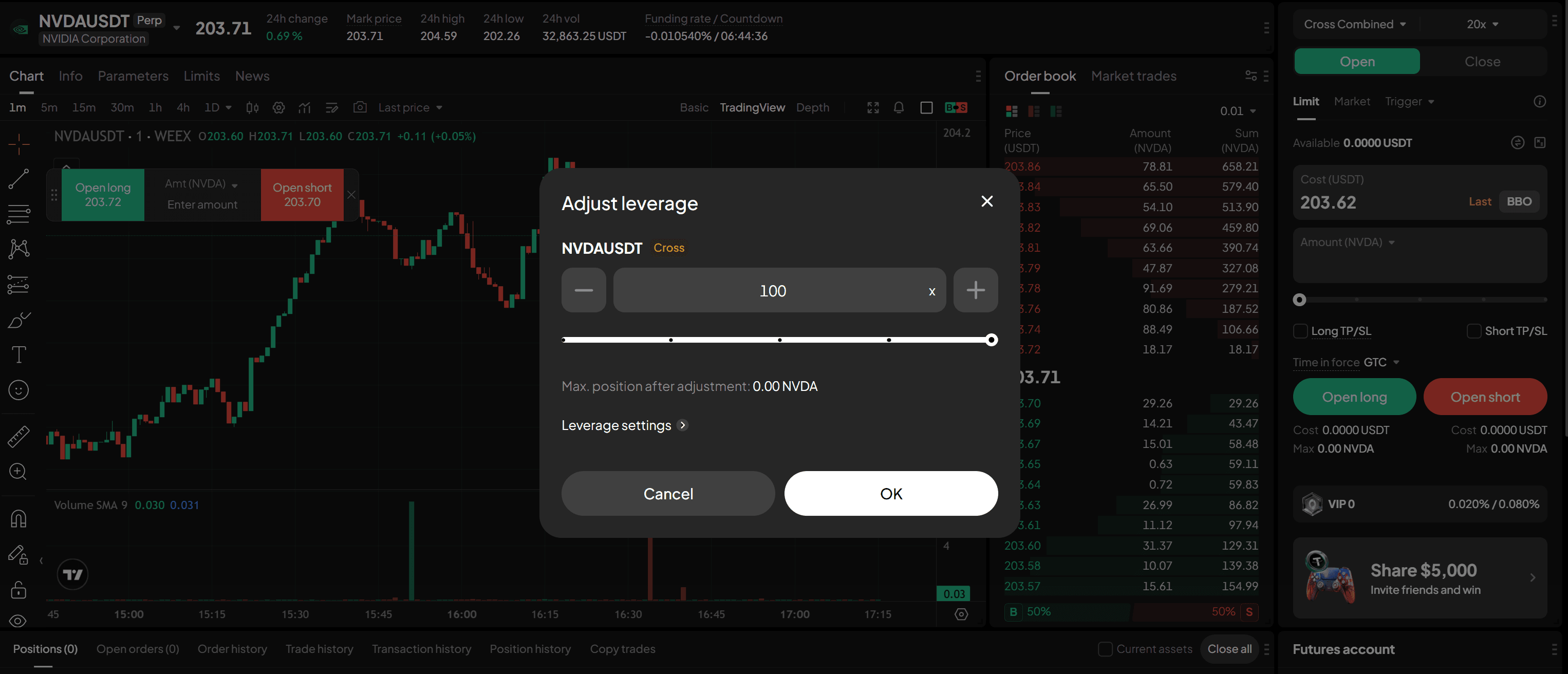
For users looking for alternative ways to gain exposure to NVIDIA’s price movements, the WEEX NVDA-USDT TradFi futures provides a USDT-based way to trade NVIDIA-related price movements. This product offers price exposure only and does not represent ownership of NVIDIA shares.
Why AI Infrastructure Spending Has Driven NVIDIA Growth
NVIDIA’s rise from a graphics chip company into an AI infrastructure leader has become one of the biggest transformations in the semiconductor industry. The rapid expansion of generative AI has created strong demand for high-performance computing, pushing companies to invest heavily in GPUs, AI servers, and cloud infrastructure.
Data Center Demand Becomes NVIDIA’s Growth Engine
NVIDIA’s data center business has become the company’s primary growth driver, supported by demand for AI training, inference workloads, and large-scale computing systems.
Major cloud providers and technology companies have continued expanding AI infrastructure capacity, making NVIDIA’s GPUs a critical component of the AI supply chain. The company has benefited from both hardware demand and the broader shift toward accelerated computing.
NVIDIA’s Ecosystem Advantage
NVIDIA’s advantage is not limited to GPU performance. The company has built a broader AI ecosystem around CUDA software, networking solutions, and enterprise AI platforms.
This ecosystem creates significant switching costs for developers and businesses, helping NVIDIA maintain a strong position despite increasing competition from AMD and custom AI chips developed by major cloud companies.
However, the market is now shifting from asking whether AI demand exists to whether AI infrastructure spending can continue growing at the same pace.
What Happens If Big Tech Slows AI Capital Spending?
Microsoft, Amazon, Google, and Meta have become major drivers of AI infrastructure investment. Their spending on data centers, cloud computing capacity, and AI hardware has directly supported demand for NVIDIA’s products.
Why Slower AI Spending Matters
If these companies reduce the growth rate of AI capital expenditure, the impact could spread across the semiconductor supply chain.
A slower investment cycle could lead to:
- Lower AI server demand growth;
- Reduced GPU procurement expectations;
- More cautious semiconductor valuations.
For NVIDIA, the concern is not immediate demand weakness but whether future growth can match the extremely high expectations already priced into the market.
AI Demand May Normalize, Not Disappear
A slowdown in AI infrastructure spending does not necessarily mean the AI market is weakening.
Many companies are still moving from AI experimentation toward practical applications, including enterprise AI solutions, AI agents, and inference workloads. These applications require continuous computing resources even after initial model training is completed.
The bigger question for NVIDIA is whether AI applications can generate enough economic value to justify continued infrastructure investment.
Nvidia Growth Outlook: New Drivers Beyond AI Spending
While AI infrastructure spending remains the main growth driver, NVIDIA’s future expansion may depend on several additional factors.
AI Inference Could Become the Next Growth Phase
Early AI demand was largely driven by model training, but inference may become increasingly important as companies deploy AI models in real-world products and services.
AI-powered search, enterprise assistants, automation tools, and AI agents all require ongoing computing power. If inference demand expands significantly, it could create another long-term growth opportunity for NVIDIA.
Blackwell Platform Adoption
NVIDIA’s Blackwell architecture is another important factor for future growth.
The platform is designed for large-scale AI workloads with improved performance and efficiency. Market participants will closely watch adoption among cloud providers and enterprise customers.
Strong Blackwell demand could support NVIDIA’s next growth cycle, while slower adoption may cause investors to reassess future revenue expectations.
Nvidia Stock Risks: What Could Pressure NVDA Price?
Despite NVIDIA’s strong market position, several risks could affect its stock performance.
| Risk Factor | Potential Impact |
|---|---|
| Slower AI CapEx growth | Could reduce GPU demand growth expectations |
| Increasing competition | AMD and custom chips may pressure market share |
| High valuation | Greater expectations may increase volatility |
| AI investment returns | Lower-than-expected ROI could slow spending |
Competition From AMD and Custom AI Chips
NVIDIA continues to face growing competition in AI computing.
AMD is expanding its AI accelerator portfolio, while companies such as Google and Amazon are developing custom chips for their own cloud platforms.
Although NVIDIA’s CUDA ecosystem remains a major advantage, long-term market leadership will depend on maintaining technological performance, software support, and customer adoption.
Valuation Pressure
NVIDIA’s strong earnings growth has supported a premium valuation, but high expectations also create higher risks.
The market is not only evaluating whether NVIDIA will grow, but whether it can continue exceeding already elevated expectations. Any slowdown in revenue growth or margin expansion could increase stock volatility.
Nvidia Stock Forecast: Key Factors to Watch
NVIDIA’s future performance will likely depend on several key factors:
| Factor | Impact on NVDA |
|---|---|
| AI infrastructure spending | Determines GPU demand growth |
| Blackwell adoption | Supports the next product cycle |
| AI inference growth | Creates new computing demand |
| Competition | Influences market share and pricing |
| Enterprise AI adoption | Determines long-term monetization |
A bullish scenario would involve continued AI investment, strong Blackwell adoption, and broader enterprise AI deployment.
A more cautious scenario would involve slower AI capital expenditure growth, stronger competition, or weaker returns from AI infrastructure investments.
How to Trade NVIDIA Price Exposure With NVDA-USDT
Most investors gain exposure to NVIDIA through traditional brokerage accounts by purchasing NVDA shares. However, some users may face barriers such as regional restrictions, account setup requirements, or funding limitations.
Crypto-based TradFi platforms provide another way to access traditional asset price movements. Through the WEEX NVDA-USDT TradFi futures, users can trade NVIDIA-related price movements using USDT.
These products should be understood as price exposure instruments rather than stock ownership. They do not provide shareholder rights, dividends, or voting privileges associated with holding NVIDIA shares.
Nvidia Stock Outlook: Growth Depends on Execution
NVIDIA remains at the center of the AI infrastructure cycle, but the next stage of growth will depend on execution rather than market enthusiasm alone.
Continued AI investment, Blackwell adoption, and the expansion of AI applications could support NVIDIA’s long-term outlook. At the same time, investors need to monitor whether technology companies can maintain current spending levels and achieve meaningful returns from AI investments.
The key question for NVIDIA is no longer whether AI will grow, but whether AI infrastructure demand can continue expanding fast enough to support current market expectations.
Disclaimer: This content is provided for general branding and informational purposes only and doesn't constitute financial, investment, legal, or tax advice. Any events, rewards, online events, or related information mentioned herein should not be considered a recommendation, solicitation, or invitation to purchase, sell, trade, or otherwise deal in any crypto assets or to use any services. Crypto assets are highly volatile and may result in loss. WEEX services and online events may not be available in all regions and are subject to applicable laws, regulations, and eligibility requirements. You are responsible for ensuring that your use of WEEX services complies with local laws and for carefully assessing the risks before participating in any crypto-related activities.
You may also like

How Will the CLARITY Act and Bank-Grade Stablecoin KYC Rules Change Crypto Trading in 2026

Why Is BitMine Buying Millions of Ethereum Tokens and Staking $9 Billion in ETH in 2026

How to Protect Your Bitcoin from Physical Attacks: Lessons From the NYC Crypto Torture Case in 2026
What Is the NYC Crypto Kidnapping Case? The Soho Bitcoin Attack Explained — 2026 Case Analysis

SpaceX Stock (SPCX): Now Public, and Back Where It Started

USA Rare Earth (USAR): What It Is and How to Trade the Token
NVIDIA Stock in 2026: Real Shares, Tokenized NVDA, and Perpetuals Compared
How to Buy USAR Coin: Buying Tokenized USA Rare Earth Stock the Right Way
WEEX Poker Party Series 4: Draw Cards to Split a $1M USDT Pool

Are Prediction Markets Legal? CFTC vs SEC Regulation Explained

Why Is TSMC Stock Down After a 77% Profit Jump? What Wall Street Is Actually Worried About

Is Samsung Stock a Buy at Its Lowest Level Since the AI Boom Began?
Samsung Stock and the KOSPI Bear Market: What the 30% Decline From Peak Tells Investors
Oil Price Above $90: What the US-Iran War Means for Your Portfolio Right Now
Iran War and Bitcoin: Why Crypto Is Not Acting Like a Safe Haven at $90 Oil
KOSPI Stock Market Enters Bear Market: What a 25% Drop From the Peak Means for Investors
KOSPI Stock Bear Market: What It Means for Samsung, SK Hynix and Korean Chip Stocks
Is the KOSPI Stock Market a Buy After Entering Bear Market Territory?
SK Hynix Leveraged ETFs SKHL SKHX SKHZ: What Each One Does and Who Should Use Them
Barclays Sees 70% Upside for SK Hynix Stock: What the Overweight Rating Means
Is SK Hynix Stock a Buy Now? What the 52 Week Low and IPO Price Break Tell Investors

Is This Really Messi's Last World Cup? What the 2026 Final Means for His Legacy
Who Is Ferran Torres? The Substitute Who Won the 2026 World Cup for Spain
2026 FIFA World Cup Winner: Spain Beats Argentina to Claim Second World Title
SK Hynix Stock: SKHY's Wild Nasdaq Debut and What Comes Next
JEPQ Stock in 2026: Price, Monthly Dividend, and Real Risks
FIFA World Cup 2026 Final Winner: Spain Beat Argentina 1-0 in Extra Time
Cathie Wood AMD Stock Sale: Why ARK Keeps Trimming a 140% Winner

Argentina vs Spain World Cup Final 2026: Score and Crypto Fallout
B2H Crypto Scam or Legit? Back 2 Humans Meme Coin Explained
How Will the CLARITY Act and Bank-Grade Stablecoin KYC Rules Change Crypto Trading in 2026
Why Is BitMine Buying Millions of Ethereum Tokens and Staking $9 Billion in ETH in 2026
How to Protect Your Bitcoin from Physical Attacks: Lessons From the NYC Crypto Torture Case in 2026
What Is the NYC Crypto Kidnapping Case? The Soho Bitcoin Attack Explained — 2026 Case Analysis
SpaceX Stock (SPCX): Now Public, and Back Where It Started
USA Rare Earth (USAR): What It Is and How to Trade the Token
Contents
Popular coins
Latest articles


