
AI Computing Power to Be Traded as Futures... New Revenue Source Emerges for Bitcoin Miners

 Prefer us on Google


CME to List 'AI Computing Futures' on the 5th Subject to Regulatory Approval
Demand for Price Risk Management Expands Amidst Volatile GPU Rental Prices
Bitcoin Miners Hope to Secure Hedging Tools by Transitioning to AI Data Centers
[Block Media Reporter Lee Hye-yeon] The computational power required to run artificial intelligence (AI), known as 'compute', is expected to be traded in futures markets like crude oil or electricity.
According to Cryptopolitan, the Chicago Mercantile Exchange (CME) Group plans to list its first AI computing futures contracts on the 5th (local time), pending regulatory approval. This product will attach market prices to the GPU computational power needed for AI services, allowing it to be bought and sold at a future date.
This could present new opportunities for Bitcoin mining companies that have expanded into AI data center businesses. By utilizing the electricity, data centers, and server infrastructure they possess, mining companies can supply AI computational power and manage future price fluctuations in the futures market.
Will AI Computing Power Become the 'New Oil of the 21st Century'?
CME first announced its plan to introduce AI computing futures in collaboration with Silicon Data, a provider of AI infrastructure specialized indices, in May. Subsequently, it decided to launch two products on the 5th, subject to regulatory approval.
The two contracts are based on the NVIDIA GPU price index calculated by Silicon Data. According to the Financial Times (FT), the rental price for NVIDIA's latest B200 GPU computational power is approximately $5.86 per hour, while the previous generation H100 is around $2.77.
CME's products are designed to allow trading on how the prices of such GPU computational power will move over the next 36 months, as CME believes that computational power itself can function as a commodity in the AI era.
Pete Kivy, CME's Global Head of Energy and Environmental Products, stated, "Compute has become the currency of the AI era." CME CEO Terry Duffy previously referred to compute as "the new oil of the 21st century."
Donald Wilson, founder of DRW, predicted that if hedging tools to manage future price risks are established, compute could grow into the world's largest commodity market.
GPU Price Volatility... AI Companies Also Need 'Hedging'
The main reason the computing futures market is gaining attention is the rapid growth and high price volatility of the AI market. The Boston Consulting Group (BCG) forecasts that the global AI computing market size will expand from approximately $360 billion in 2025 to about $2.3 trillion by 2030.
However, GPU rental prices fluctuate significantly based on supply conditions. According to FT, during the semiconductor supply shortage in 2024, the rental price for H100 GPUs rose to about $8 per hour, only to drop below $2 by the end of the same year. This means that costs can vary several times for companies operating AI services.
Computing futures are analyzed to allow companies to set prices for GPU computational power they will use in the future, thereby reducing the risk of cost fluctuations.
Larry Fink, CEO of BlackRock, also stated at the Milken Institute event in May that "a completely new asset class will emerge from purchasing computing futures." He identified AI computational power, electricity, and semiconductors as key assets that are in short supply in the U.S.
Brett Harrison, CEO of the derivatives platform Architect, predicted that the nominal contract size of the computing futures market could grow to $10 trillion annually by around 2030.
Bitcoin Miners as 'Producers' of AI Computing
The expansion of the AI computing futures market could directly impact Bitcoin mining companies.
According to CoinShares' Q1 2026 mining industry report, publicly listed Bitcoin mining companies have signed contracts related to AI and high-performance computing (HPC) worth over $70 billion in the past year. CoinShares predicts that the proportion of AI-related revenue for these companies, currently around 30%, could rise to between 30% and 70% by the end of the year.
Companies like TeraWulf, Core Scientific, Cipher Mining, and Hut 8 are already transforming their business structures from simple Bitcoin mining operations to data center operators.
The cost differences are also significant. The estimated cost of building Bitcoin mining facilities is around $700,000 to $1 million per megawatt (MW). In contrast, AI systems require about $8 million to $15 million for the same power scale. This indicates that existing mining companies could gain higher revenue opportunities by transitioning to AI data centers.
Consequently, companies like IREN and Bitfarms are also pushing for a transition to high-performance computing operators. If the computing futures market secures sufficient liquidity in the future, mining companies will be able to fix the future prices of the AI computational power they sell, similar to oil producers or power companies.
However, it remains uncertain whether the market will actually establish itself. Both CME and the Intercontinental Exchange (ICE) are pursuing the launch of computing futures using separate GPU price indices. Architect is also working on building related markets by acquiring exchanges regulated by the U.S. Commodity Futures Trading Commission (CFTC).
China is also reportedly considering the introduction of its own AI computing futures. The challenge is that it is difficult to standardize AI computational power as a single commodity. The value of one hour of H100 GPU and one hour of B200 GPU differs, and the major price indices currently used often present different prices for the same computational power.
Supply is also concentrated among NVIDIA and some large cloud providers. FT pointed out that many of the futures products that are actually launched fail to secure sufficient trading volume and disappear.
Ultimately, it is still unknown whether AI computing futures will grow into a large-scale financial market, but the establishment of a public price standard for AI computational power, regardless of actual trading volume, is significant. It could serve as a new indicator of how quickly the AI industry is growing and how the market values the future worth of AI infrastructure.
-- Price
This content is provided for general informational purposes only and doesn't constitute financial, investment, legal, or tax advice. Any events, rewards, online promotions, or related information mentioned herein should not be considered a recommendation, solicitation, or invitation to purchase, sell, trade, or otherwise deal in any crypto assets. Crypto assets are highly volatile and may result in loss. The availability of WEEX services, products, and related events may vary by region. You are responsible for ensuring that your participation is in accordance with applicable local laws and regulations.
You may also like
Bitcoin Rises as Oil and Bond Yields Increase

Bank of America Raises Coinbase Price Target to $203

Metaplanet Revises Capital Allocation Policy, Plans to Allocate 90% of Assets to BTC

70% of wealthy investors in U.S., UK, Germany hold crypto

Metaplanet Acquires 1,000 BTC in Q3, Total Holdings Reach 44,000 BTC

French executives propose taxing stablecoin conversions
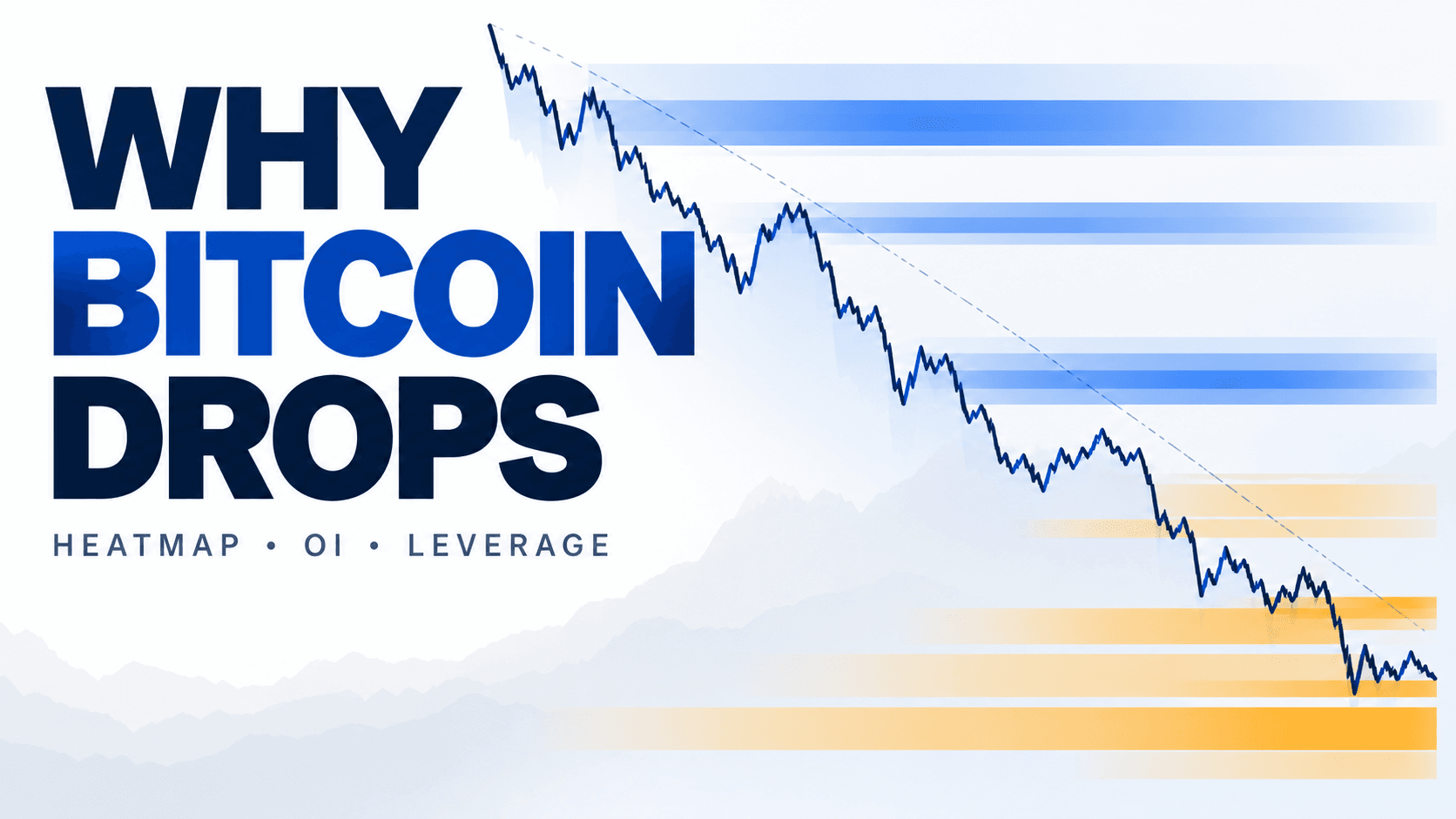
Why Is Bitcoin (BTC) Dropping? How to Read a BTC Liquidation Heatmap Without Guessing the Bottom
Why does Bitcoin drop? Learn how a BTC liquidation heatmap, crypto OI, funding, leverage and market depth can explain sell-offs and false bottoms.

Crypto: Near Intents Recovers $3.8 Million Stolen by Hacker

Anchorage Digital Cuts 17% of Workforce Amid $42 Billion USDT Investment

Trump adviser calls for Powell exit, could Bitcoin benefit?

Bitcoin Trading Volume Increases, Demand Needed for New Peak
Long-term Bitcoin Investors Remain Profitable Despite Price Decline

Bitcoin Mining vs AI: Generation Z No Longer Trusts Tech Billionaires on Climate

NVIDIA Hit a Record High Last Week| WEEX TradFi Daily Brief (October 5, 2026)
On October 5, equity markets are in a watch window between labor-data volatility and the formal start of Q3 earnings. Bitcoin traded near $86,000 and Ethereum near $2,720, with majors moving in a narrow weekend range. PUMP broke above $0.0064 to another stage high; AgenC (AGENC) gained trading support, while STONK strengthened on a community-coin rewards mechanism. NVIDIA touched an intraday record high last Friday, and optical modules plus AI compute remain the main flow. September ISM Services PMI is due at 10:00 ET on October 5, while consumer and AI-infrastructure earnings this week will keep testing demand resilience.

WEEX Exclusive:NVIDIA Hit a Record High Last Week| WEEX TradFi Daily Brief (October 5, 2026)

Bitcoin Spot Trading Volume Rebounds, Still Lacks Support for Upward Momentum

S&P Announces Risk Assessment Method for DeFi Lending Vaults, Market Size Grows 6.7 Times in Two Years

Sam Price Discusses G7 Coordination on Oil Release Plan

Sam Price Points Out Infrastructure Risks in Saudi Arabia Affect Oil Prices

Bitcoin Core adds safeguard against flawed PSBT signing
India’s local crypto exchanges get just 0.7% of inflows, Chainalysis reports
Cash-and-carry: the yield we know before cashing it in

Japanese Fund Sells French Bonds Amid Crisis, Bitcoin Traders Watch Data Release

Trump's $5,000 Promise to Americans and Its Impact on Bitcoin

Sam Price Discusses SEC's New Path for Cryptocurrency Custody

Sam Price Analyzes Bitcoin Futures Market Dynamics

Tether May Return to the Bitcoin Network with Morgan Stanley
Bitcoin Could Reach $500,000 in This Cycle, Says VanEck Executive

Ansem: Altcoins Will Surge During Bull Markets
Michael Saylor’s Strategy hints at another big Bitcoin buy
Bitcoin Rises as Oil and Bond Yields Increase
Bank of America Raises Coinbase Price Target to $203
Metaplanet Revises Capital Allocation Policy, Plans to Allocate 90% of Assets to BTC
70% of wealthy investors in U.S., UK, Germany hold crypto
Metaplanet Acquires 1,000 BTC in Q3, Total Holdings Reach 44,000 BTC
French executives propose taxing stablecoin conversions



