
Google uncovers AI hacking tool that turns security fixes into cyberattacks

 Prefer us on Google



Google has uncovered an AI-powered hacking system capable of transforming software security fixes into automated attacks against vulnerable websites.
In a Nov. 16 report, Google Threat Intelligence Group and Mandiant revealed that attackers were using AI frameworks to identify vulnerabilities, generate malicious code, and execute exploits with minimal human involvement.
The researchers discovered one such system, dubbed exploit_agent, on an exposed staging server containing multiple AI models connected to cybersecurity research and exploitation tools.
The framework was configured to monitor software updates, compare patched code with older versions, and identify weaknesses that developers had recently repaired. It could subsequently generate attack code and execute it automatically, allowing attackers to target websites that had not yet installed the relevant security updates.
This approach exploits the information developers publish when addressing software vulnerabilities. Changes made to repair a flaw can inadvertently reveal how the underlying weakness could be exploited.
Google said the technique lets attackers focus on known vulnerabilities rather than spend time discovering previously unknown security flaws.
The company's investigation also uncovered stolen victim data and malicious scripts capable of conducting internal network reconnaissance, brute-force attacks and installing webshells that provide remote access to compromised servers.
Some tools could remove webshells left by competing attackers, potentially helping the operator retain control over compromised systems.
Google found evidence that the operator was particularly interested in French websites associated with media, entertainment, and education. One recovered example showed the framework examining access-control protections in Spectra, a WordPress plugin used for website development.
From patch to exploit
Google describes exploit_agent comparing patched code, identifying potential weaknesses, drafting exploits and executing them automatically.
Google's described patch-to-exploit pipeline Code before and after a patch feeds comparison, identification of potential vulnerabilities, exploit drafting and automatic execution. The diagram is a process, not a timing or success-rate measurement. GOOGLE'S DESCRIBED PIPELINE Old codePatched CompareFind potentialweaknessesDraft exploitExecute exploit_agent: configured to automate the chain
From patched code to exploit execution Old and patched code feed a four-step automated pipeline described by Google. No speed or success rate is shown. GOOGLE'S DESCRIBED PIPELINE Old codePatched Compare versionsInspect the code changes Find potential flawsAnalyze the differences Draft an exploitGenerate attack code Execute automaticallyRun the generated exploit Google's described exploit_agent pipeline
A published fix can guide attack development while website owners are still deploying the update.
The diagram shows Google's configured pipeline, not measured timing, a success rate or proof of an entirely autonomous campaign.
Sources and evidence
Sources
- Google Threat Intelligence Group, November 16, 2026
Supporting facts
- Reported statement According to Google, exploit_agent is configured to compare web application code before and after patch announcements, identify potential vulnerabilities, draft exploits and execute them without human intervention in that pipeline. [1]
- Reported statement Google describes patch comparison as a way attackers can focus on known, patched flaws rather than conduct an open-ended search for unknown vulnerabilities. [1]
- Reported statement Google says automated vulnerability analysis and exploitation can reduce the window between patch disclosure and weaponized exploitation; its exploit_agent account gives no measured universal patching deadline or success rate. [1]
- Reported statement Google's report reproduces exploit_agent configuration comments requiring an operator to enter language-model API keys. [1]
Method
Conceptual process diagram of Google's configured exploit_agent pipeline. Arrows encode sequence and input flow, not elapsed time, conversion rate or successful compromise.
Scope
The diagram shows Google's configured pipeline, not measured timing, a success rate or proof of an entirely autonomous campaign.
Infographic by CryptoSlate
The discovery marked the first time Google had identified attackers using AI frameworks to fully automate vulnerability discovery and exploitation without human intervention throughout the process.
North Korean hackers turn AI development tools against crypto companies
Google's report also revealed a separate campaign in which suspected North Korean hackers exploited AI-powered development tools to infiltrate cryptocurrency organizations in North America and Europe.
The attackers, tracked as MIDNIGHT NEPTUNE, combined AI-generated identities with fraudulent recruitment campaigns to gain access to corporate systems.
They created fake recruiter profiles on professional networking platforms using AI-generated photographs, then directed prospective victims to fraudulent meeting websites.
Those websites instructed victims to run supposed troubleshooting commands that instead executed malicious scripts.
Once inside an organization, the attackers accessed internal code repositories and modified configuration files used by Anthropic's Claude Code development assistant.
The altered files were designed to automatically download a backdoor known as SOMBERMEME whenever employees launched Claude Code.
Google also discovered that the attackers disguised GitHub access tokens using names associated with Microsoft Copilot, concealing their movements within compromised development environments.
The campaign expanded on North Korea's established use of AI to generate fake resumes, prepare for job interviews, and impersonate Western technology workers seeking remote employment.
Google said the latest intrusions showed how attackers exploited AI development tools already embedded in corporate workflows to distribute malicious software.
Meanwhile, the emergence of autonomous exploitation frameworks threatens to accelerate attacks against organizations running outdated software.
Google warned that automating vulnerability analysis and exploit execution could substantially reduce the time between disclosing a security flaw and exploiting it, leaving website operators with increasingly narrow windows to install protective updates.
-- Price
This content is provided for general informational purposes only and doesn't constitute financial, investment, legal, or tax advice. Any events, rewards, online promotions, or related information mentioned herein should not be considered a recommendation, solicitation, or invitation to purchase, sell, trade, or otherwise deal in any crypto assets. Crypto assets are highly volatile and may result in loss. The availability of WEEX services, products, and related events may vary by region. You are responsible for ensuring that your participation is in accordance with applicable local laws and regulations.
You may also like

United Natural Foods shares rise 7.6% after Goldman Sachs upgrade

Tether’s Paolo Ardoino backs RGB for Bitcoin tokenization

Aecom Stock Jumps 8.5% After Mixed Q4 Earnings Report

Key Focus Areas in NVIDIA's Earnings Report

Power Policy Dominates Midterm Elections, 'European Virginia' Becomes Latest Battleground
Animoca Co-Founder Criticizes Traditional Bank Checking Accounts, AI Agents and DeFi May Reshape Financial Services

Microsoft Ignite Conference Kicks Off Today! Focus on Copilot Monetization and AI Computing Returns, Can the Enterprise AI Flywheel Deliver?
How to Reassess Core Assets with 'Revenue + Narrative' After Market Crash?

IOSG: Bitcoin Needs to Reach $250,000 to Compete with AI in Mining

Li Auto CTO Xie Yan Attends TSMC 2026 OIP Ecosystem Forum

Why Are Tokenized Stocks Seeing Strong Buying Pressure While Prices Keep Falling?
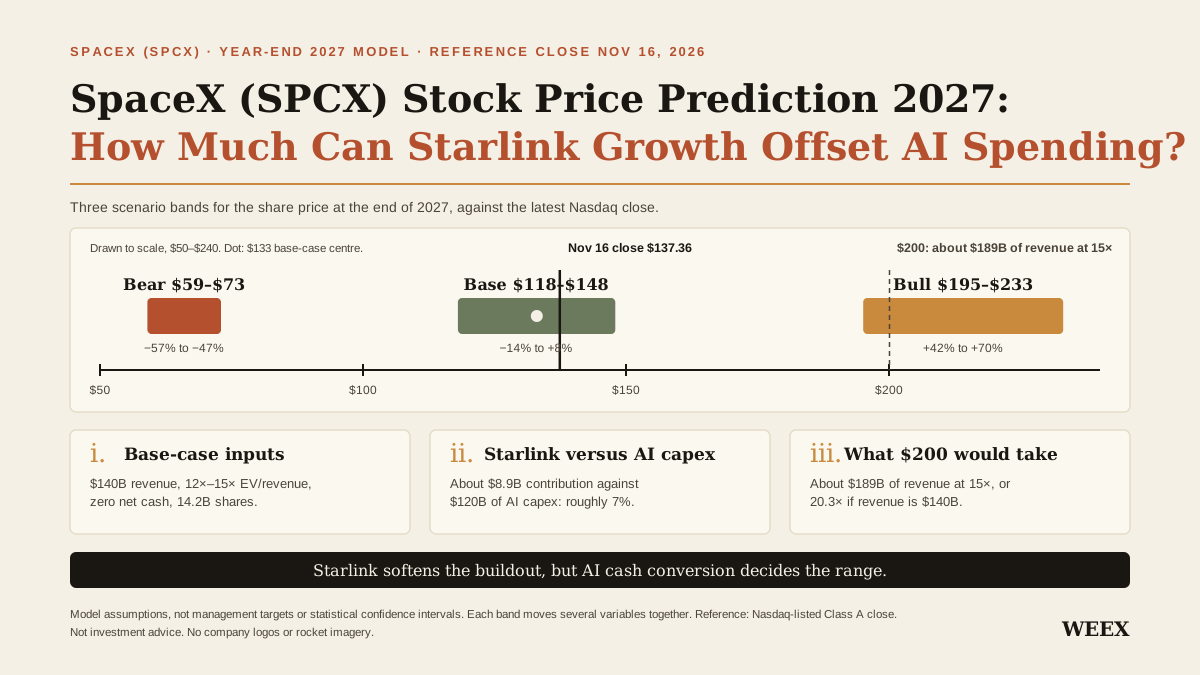
SpaceX (SPCX) Stock Price Prediction 2027: How Much Can Starlink Growth Offset AI Spending?
SpaceX stock price prediction for 2027: See the $118–$148 base case, how much Starlink could offset AI spending, and what it would take to reach $200.
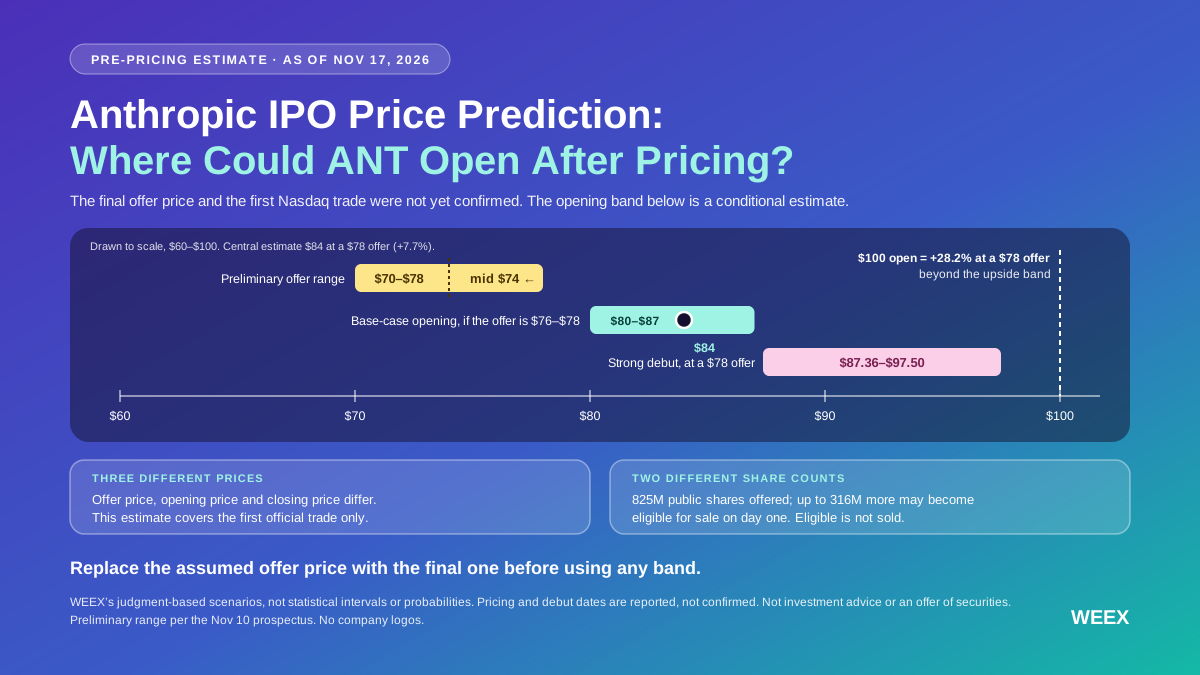
Anthropic IPO Price Prediction: Where Could ANT Open After Pricing?
Anthropic IPO price prediction: See ANT’s $80–$87 base-case opening range, how the final offer price changes it, and what could push shares above $90.

Reasons Why Cryptocurrency Kiosks Face Increasing Regulation

Uniswap freezes $300,000 in stranded fees, halting automatic token burns

Ethereum test exposes flaw that lets transactions skip payments

MORE Markets Lending Protocol Attacked, Resulting in $308,000 Loss

Bloomberg analyst compares gold ETF criticism to Bitcoin

CoinShares Enters Russell Index Review as Crypto Stocks Seek Broader Investor Access
XRP’s proposed upgrade could improve trading without boosting token demand

$LIBRA: One of the defendants seeks to remove Judge Ledesma and halt the review that could reactivate the case

Mazama Energy Finds New Solution to the Biggest Challenge in Geothermal Drilling

Is Apple Losing Its Memory?

Energy Transfer vs. Enbridge: Which High-Yield Pipeline Stock Could Make You Richer Over the Next 10 Years?

Jefferies Raises Spotify Price Target to $710, Expects Over 20% Growth in Free Cash Flow
The Application is Landing, Wealth is Evaporating: Analyzing the Painful Roots of the Crypto Industry through Three Financial Statements

Baidu Q3 Net Profit Exceeds Expectations, AI Cloud Revenue Soars 94%, Token Call Revenue Grows 1159%
Twenty One Capital’s $1.09 Billion Profit Is Mostly a Bitcoin Accounting Story

What Licenses Are Needed for Crypto Payments in Hong Kong?
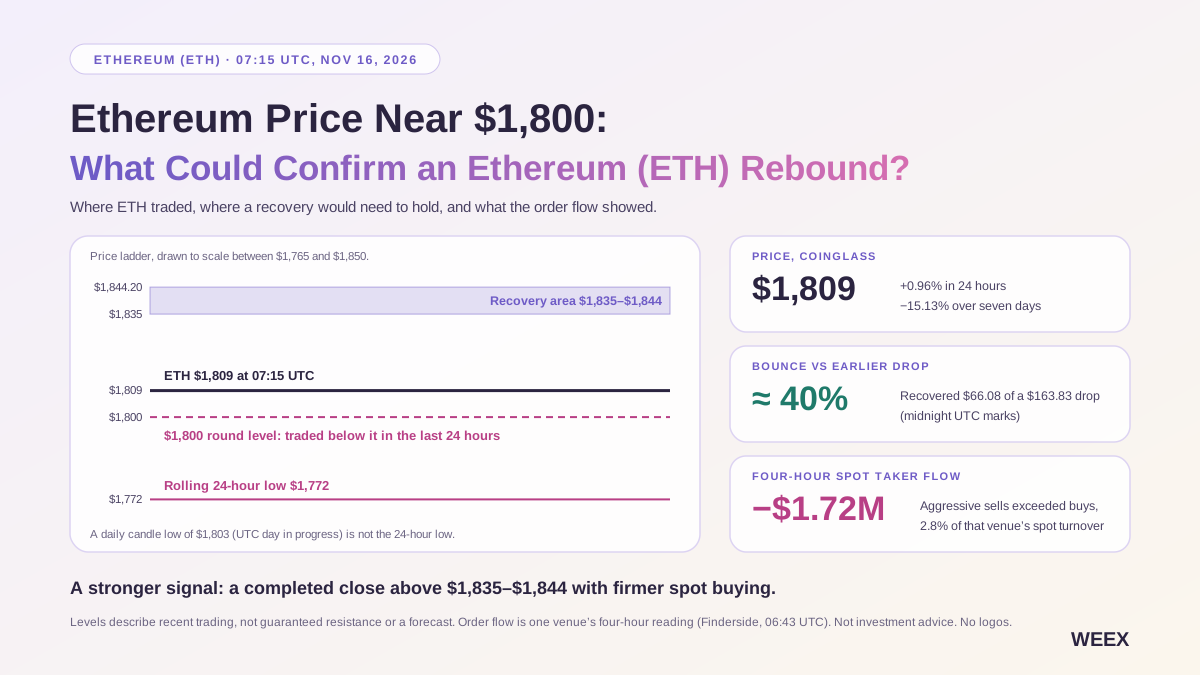
Ethereum Price Near $1,800: What Could Confirm an Ethereum (ETH) Rebound?
Ethereum traded near $1,800 on November 16. See what four-hour spot order flow, futures positioning, and Friday’s ETF flows say about an ETH rebound.
United Natural Foods shares rise 7.6% after Goldman Sachs upgrade
Tether’s Paolo Ardoino backs RGB for Bitcoin tokenization
Aecom Stock Jumps 8.5% After Mixed Q4 Earnings Report
Key Focus Areas in NVIDIA's Earnings Report
Power Policy Dominates Midterm Elections, 'European Virginia' Becomes Latest Battleground
Animoca Co-Founder Criticizes Traditional Bank Checking Accounts, AI Agents and DeFi May Reshape Financial Services
Latest articles


Latest coin listings on WEEX


