
Nvidia's Ousted CEO Said a 1-Gigawatt Data Center Delay Costs $10 Billion a Quarter. Here's Why That Matters for Power Stocks.

 Prefer us on Google


Former Nvidia (NVDA -2.01%) CEO Jensen Huang repeatedly warned the market about key bottlenecks to AI growth. And it's no wonder. As the world's largest supplier to the AI industry, Nvidia is not only reliant on long-term demand growth for AI technologies but also wants that growth runway to unfold as quickly and smoothly as possible.
Last month, Huang quantified some of the lost economic potential when projects are delayed even just a few months.
To be clear, Huang has come under scrutiny since he made these comments, for reasons completely unrelated to data center costs and Nvidia's potential. Nvidia's board is investigating reports that Huang was targeted by a Chinese spy operation. Nvidia also issued a press release in which Huang admitted to an affair with a former executive at Singapore-based chip company Megaspeed.
On Nov. 12, Huang resigned and is no longer CEO of Nvidia. But it doesn't diminish his expertise in discussing data center costs.
A month ago, Huang outlined the total cost to construct a new 1 GW data center: roughly $50 billion. Such a facility, he claims, could generate around $40 billion in annual revenue. A three-month delay in construction, then, could result in $10 billion in lost revenue potential. Huang stressed how acutely aware the industry is of this lost economic potential, highlighting that "10 billion worth of revenues will make anybody anxious."
There are many reasons why a data center could face delays. Nvidia is looking to clear up some construction hurdles by shifting more of the assembly process to the supply chain rather than on-site workers. This means more data center components will be able to enter operation faster, with fewer potential bottlenecks.
Arguably, the biggest potential bottleneck for AI data construction in the long term, however, has nothing to do with on-site assembly.
Power is the biggest bottleneck to scaling AI data centers
AI adoption rates are through the roof. Experts don't expect the pace of corporate and consumer adoption of AI technologies to slow for years to come. But as a report from McKinsey & Co. pointed out earlier this year, "there are real constraints on growth." Given how energy-intensive data centers are, bringing new energy capacity online will be critical to meeting rising end-market demand for AI technologies.
"Incumbents can't meet demand for power," observes McKinsey & Co. The global consultancy isn't the only group concerned with AI's desperate need for more energy. "One of the clearest constraints on the AI build-out is energy," Morgan Stanley warns. "Power is emerging as the binding constraint of the AI build-out," J.P. Morgan adds. "A lack of capital is not the most pressing bottleneck for AI progress -- it's the power needed to fuel it," confirms Goldman Sachs.
Without more power, the pace and scale of the data center build-out will almost certainly be constrained, costing AI companies heavily in lost revenue potential.
Image source: Getty Images.
How should investors position their portfolio with the AI industry's desperate need for more energy in mind? There are two approaches.
The first is to expose your portfolio to next-gen energy companies such as NuScale Power (SMR -3.32%) and Oklo Inc. (OKLO -2.17%). These firms specialize in small modular reactors, or SMRs. At least in theory, SMRs can be built faster with lower upfront capital needs than conventional nuclear power plants. That's a benefit for AI companies looking to scale quickly and affordably. Only a handful of SMR systems have ever been successfully commercialized; however, this makes these stocks more of a high-risk, high-upside-potential investment.
A more risk-conscious investment would be a company like Constellation Energy (CEG -0.78%) or Bloom Energy Corp. (BE -4.92%).
Constellation is already one of the largest nuclear energy producers in the U.S. By expanding existing facilities and restarting older plants, It has significantly increased its ability to generate nuclear power, signing power purchase agreements with several major AI operators.
Bloom, meanwhile, develops solid oxide fuel cell systems that convert natural gas, biogas, or hydrogen into electricity. These systems allow data centers to generate their own power, minimizing reliance on the grid. Sales growth is expected to exceed 100% this year, with economies of scale contributing to healthy profit growth.
While most AI investors are focused on AI stocks, exposure to the AI economy can be gained at a lower premium by investing strategically in power stocks.
-- Price
This content is provided for general informational purposes only and doesn't constitute financial, investment, legal, or tax advice. Any events, rewards, online promotions, or related information mentioned herein should not be considered a recommendation, solicitation, or invitation to purchase, sell, trade, or otherwise deal in any crypto assets. Crypto assets are highly volatile and may result in loss. The availability of WEEX services, products, and related events may vary by region. You are responsible for ensuring that your participation is in accordance with applicable local laws and regulations.
You may also like

'Tokenization Is Not the Finish Line': Jupiter to Let Users Borrow Against Bullish Shares

'Nobody Knows Who's in Charge': Boris Johnson Stands by Bitcoin Skepticism at Breakpoint

Mazama Energy Finds New Solution to the Biggest Challenge in Geothermal Drilling

Have Semiconductors Bottomed? Here's How the Current Chip Stock Plunge Compares With Past Bear Markets.

Is Apple Losing Its Memory?

Rising Transportation Costs Make Large Holiday Purchases More Difficult
Zhao Changpeng Lists Six Possible Reasons for Bitcoin's Decline: Anthropic IPO and ETF Redemptions, Security Incidents, Regulatory Uncertainty, and More

J.P. Morgan's Forecast for 2027: Inflation Around 2% and Increased Pressure on the Dollar

The Amber Controversy: Diverging Paths with Wintermute
First Financial Report After Jensen Huang's Departure: Colette Kress Faces Core Questions

Dreamteam Completes $53 Million Financing to Expand AI CRM Business

Stellar Bell Vote on November 23: What It Means for XLM Holders

Solana Breakpoint attendees warned of robberies after reported wallet theft

Federal Reserve Governor Barr Warns AI Agents May Exacerbate Bank Runs
Trezor found implants in reseller wallets. What protects the buyer?

The Vast Used Car Market: CarMax and Carvana Clash Over Americans' Car Buying Methods
Trump and Xi Jinping to Meet in Shenzhen, Focusing on Chip Regulation and AI Security

Why is the only spot Bitcoin ETF in continental Europe acquired by an Asian group, BIT?

The Application is Landing, Wealth is Evaporating: Analyzing the Painful Roots of the Crypto Industry through Three Financial Statements
A Look at Traditional Banks Entering Web3: Who Made Money and Who Lost?

IMF President Warns Global Economy is 'Standing on One Leg': AI Circular Financing Reaches $1 Trillion

Tesla Autopilot Team Veterans Found Simulation Startup Valued at $1 Billion
Ministry of Industry and Information Technology to Interview Automotive Companies with Large Accounts Payable
Twenty One Capital’s $1.09 Billion Profit Is Mostly a Bitcoin Accounting Story
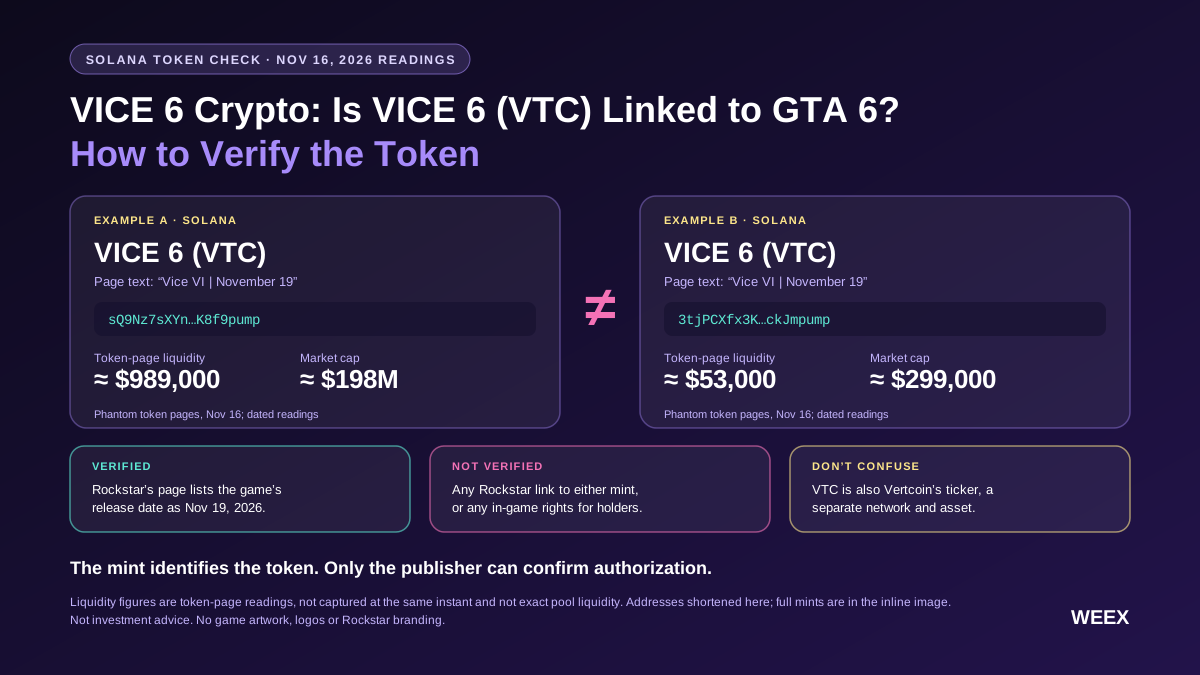
VICE 6 Crypto: Is VICE 6 (VTC) Linked to GTA 6? How to Verify the Token
Is VICE 6 crypto linked to GTA 6? Compare two Solana tokens using VTC, verify their mint and pool addresses, and see what Rockstar has confirmed.

Enterprise Blockchain: Why It's Time to Return?

DTCC Plans to Introduce Tokenized Securities and Bonds on Solana by 2027—Expanding Under Wallet Restrictions
Cardano holders reject 22M ADA treasury bid to buy physical copper

What Licenses Are Needed for Crypto Payments in Hong Kong?
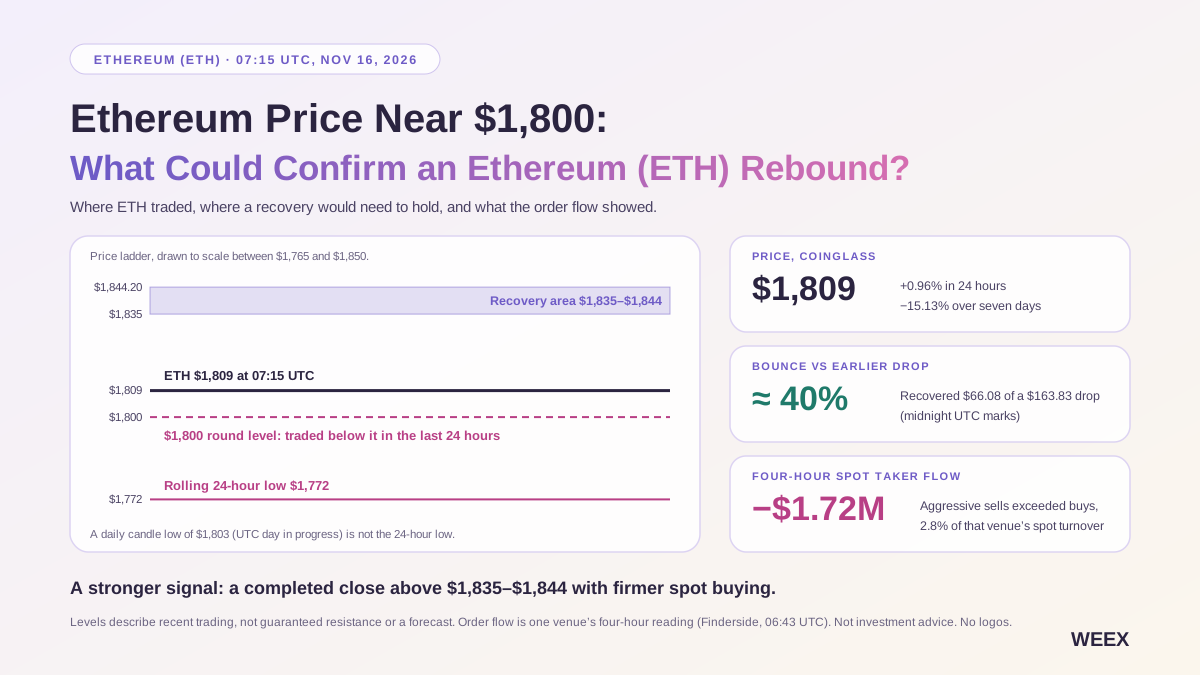
Ethereum Price Near $1,800: What Could Confirm an Ethereum (ETH) Rebound?
Ethereum traded near $1,800 on November 16. See what four-hour spot order flow, futures positioning, and Friday’s ETF flows say about an ETH rebound.
'Tokenization Is Not the Finish Line': Jupiter to Let Users Borrow Against Bullish Shares
'Nobody Knows Who's in Charge': Boris Johnson Stands by Bitcoin Skepticism at Breakpoint
Mazama Energy Finds New Solution to the Biggest Challenge in Geothermal Drilling
Have Semiconductors Bottomed? Here's How the Current Chip Stock Plunge Compares With Past Bear Markets.
Is Apple Losing Its Memory?
Rising Transportation Costs Make Large Holiday Purchases More Difficult
Latest articles




Latest coin listings on WEEX


