
Ethereum Funding Rate: How It Works and Why It Dropped Near Zero

 Prefer us on Google

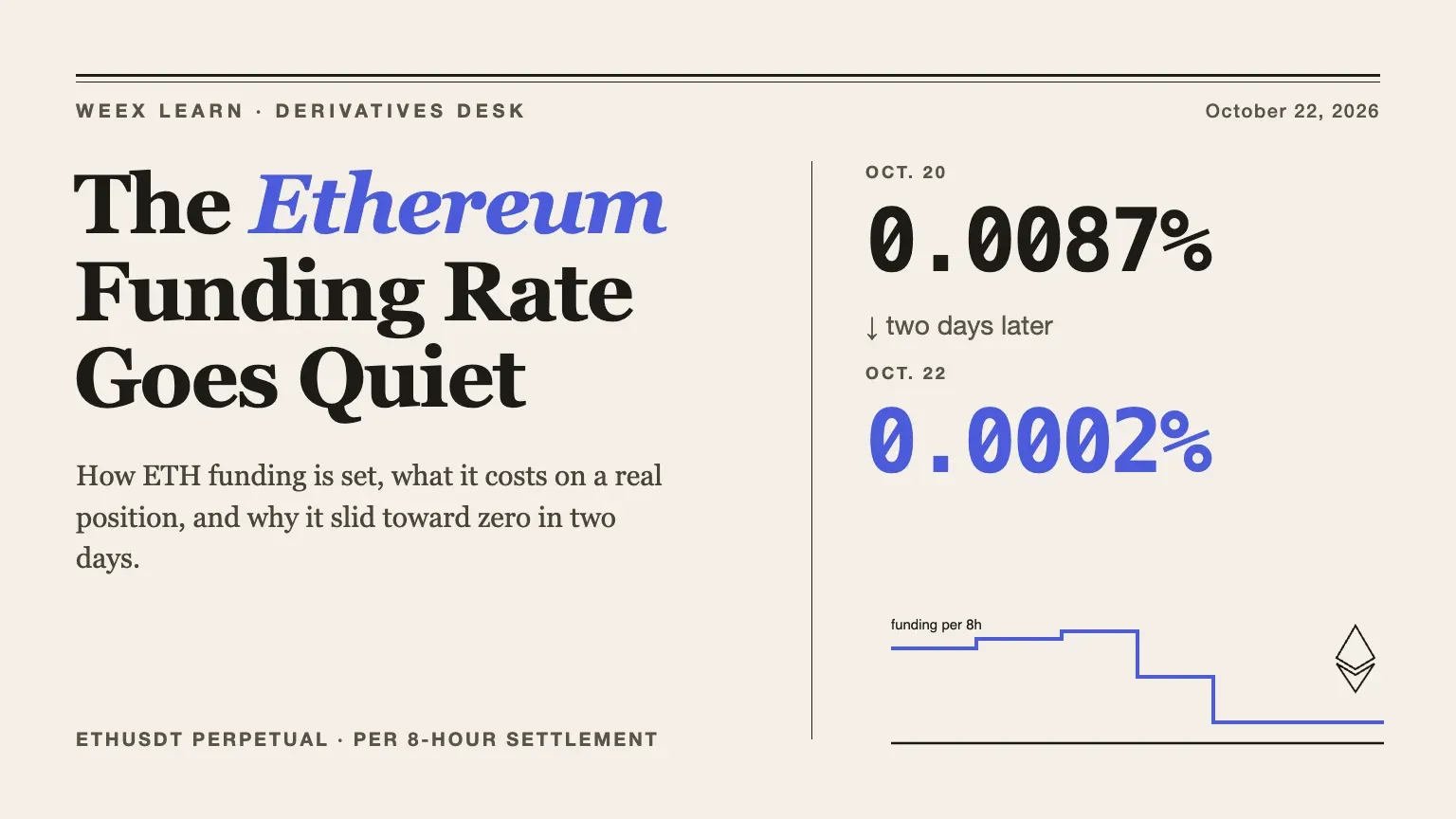
The Ethereum funding rate is the periodic payment between long and short holders of ETH perpetual futures that keeps the contract's price close to spot. When it is positive, longs pay shorts; when it is negative, shorts pay longs. On the WEEX ETHUSDT perpetual it read 0.000196% per 8-hour interval on Oct. 22, 2026, with ether near 2,440 USDT, down from 0.008738% two days earlier.
That drop is the interesting part. A rate of 0.0087% means longs were willing to pay to hold leverage. A rate of 0.0002% means that demand has almost disappeared, even though the price barely moved. The Ethereum funding rate is often read as a sentiment gauge, and this week it is saying something specific about who is still in the trade.
This guide explains how the ETH funding rate is set, turns the current reading into a real cost on a position, shows how to read the two-day slide, and lists what to watch next.
How the Ethereum Funding Rate Is Calculated
A perpetual future never expires, so nothing forces its price to meet spot on a fixed date. Funding does that job. If the ETH perpetual trades above the spot index, longs pay shorts, which makes holding a long more expensive and pulls the perp back down. If it trades below, the payment flips.
Most large venues build the rate from two parts:
- A premium component. This measures how far the perpetual is trading above or below the spot index, averaged over the funding interval. It is the part that reacts to crowd positioning.
- An interest component. Many exchanges add a small fixed interest term, often equivalent to 0.01% per 8 hours, which is why 0.01% is widely treated as the "neutral" baseline.
The exact formula, caps and interval differ by exchange. WEEX ETHUSDT settles every 8 hours, three times a day, and the contract page shows the live rate next to a countdown to the next settlement. Its recent readings, 0.008738% on Oct. 20 and 0.000196% on Oct. 22, show the WEEX rate is not pinned to a 0.01% floor, so a near-zero number there genuinely reflects a near-flat premium.
Two rules apply everywhere. Funding is paid on position value, not on margin, and you only pay or receive it if your position is open at the settlement time.
What the ETH Funding Rate Costs on a Real Position
Rates quoted to six decimal places are hard to feel. Converting them to annual and dollar terms helps.
- Annualized: 0.000196% × 3 settlements × 365 days is about 0.21% a year. The Oct. 20 reading of 0.008738% annualized to about 9.57%, and the 0.01% baseline to 10.95%.
- Per settlement on 10,000 USDT: about 0.02 USDT at today's rate, against about 0.87 USDT two days ago and 1 USDT at baseline.
- Against fees: a market entry and exit on 10,000 USDT costs about 16 USDT at WEEX's VIP0 futures taker fee of 0.08%. At today's funding level, that equals roughly nine months of funding.
The comparison matters for strategy. When ETH funding is near zero, holding a leveraged position costs almost nothing beyond trading fees, so funding is not a reason to close. When it climbs toward 0.03% to 0.05% per interval, the carry on a 10x long can absorb a meaningful share of margin within a week.
Annualized figures are a way to compare carry, not a forecast. The rate resets every eight hours and can change sign within a day.
Why the Ethereum Funding Rate Fell Near Zero This Week
The two-day slide makes more sense against the month's sequence.
- Oct. 15: roughly $972 million of crypto positions were liquidated in 24 hours, about 92% of them longs, according to CoinGlass data cited by Yahoo Finance. ETH dipped to about $2,325 and led the losses with around $283 million liquidated.
- Oct. 19 to 20: leveraged longs came back. AMBCrypto reported that CryptoQuant's ETH funding reading reached a weekly high on Oct. 19, and WEEX ETHUSDT printed 0.008738% on Oct. 20, as covered in our ETH funding rate today snapshot.
- Oct. 22: the WEEX rate fell to 0.000196%, while ETH traded around 2,440 USDT, down about 0.3% on the day, with a 24-hour high of 2,525.72.
The better reading is that the rebuilt longs did not get the follow-through they paid for. Ether pushed toward 2,525 and was sold back to the 2,440 area, and the premium that funded the bounce evaporated. That is different from a bearish signal. Funding at zero is what a market looks like when neither side is willing to pay up, and it removes one source of pressure: there is no crowded long being squeezed by its own carry costs.
It also changes what a move from here would mean. With funding flat, a rally would need spot buying to lead it rather than leverage. A drop would no longer hit an overextended long base the way it did on Oct. 15.
-- Price
Reading ETH Funding With Open Interest and Price
Funding alone describes who is paying. Paired with open interest and price, it describes who is building positions.
- Funding up, open interest up, price up: new leveraged longs are driving the move. Strong, but fragile if price stalls.
- Funding up, open interest up, price flat or down: longs adding into weakness. This is the setup that most often ends in a long flush.
- Funding near zero, open interest steady, price flat: a balanced market with no crowded side, which describes ether on Oct. 22.
- Funding negative, price holding: shorts paying to press a level that is not breaking, a common setup for a short squeeze.
The same framework is applied to bitcoin in our guide to BTC funding rate and open interest.
Two habits keep comparisons honest. Normalize every rate to the same interval, because venues that settle hourly quote much smaller raw numbers. And treat any single reading as a timestamp, since the rate on your screen applies only to the next settlement.
How to Check the ETH Funding Rate on WEEX
- Open the WEEX ETHUSDT perpetual page.
- Read the funding rate in the contract header, next to the mark price. The countdown beside it shows time to the next 8-hour settlement.
- Check the sign. Positive means longs pay shorts at the next settlement; negative means shorts pay longs.
- Multiply the rate by your position value to get the payment for that interval.
- Note the rate when you open a position and again at each settlement you hold through, so a change in carry does not catch you by surprise.
Ethereum Funding Rate: The Signal to Watch Next
The Ethereum funding rate went from a mildly crowded long to almost perfectly flat in two days, which says leveraged demand for ether has cooled without a new flush. For anyone holding ETH perpetuals, the cost of carry is close to zero right now. The signals that would change that are funding climbing back above 0.01% per 8 hours while price stalls, or turning negative while price holds its range. Both show up first on the contract page, where WEEX displays the live ETHUSDT rate and the next settlement time.
FAQ
1. What is a normal Ethereum funding rate?
Many exchanges treat 0.01% per 8 hours as neutral, which annualizes to about 10.95%. Readings well above that point to crowded longs, and negative readings mean shorts are paying longs.
2. How often is ETH funding paid on WEEX?
The WEEX ETHUSDT perpetual settles funding every 8 hours, three times a day. The contract page shows a countdown to the next settlement.
3. Does a near-zero ETH funding rate mean the price will fall?
Not necessarily. A near-zero rate means neither longs nor shorts are paying much to hold positions. It signals a balanced market rather than a direction.
4. Is funding charged on margin or on position size?
On position size. A 10,000 USDT position pays the same funding whether it is backed by 1,000 USDT at 10x or 5,000 USDT at 2x, so higher leverage makes funding a larger share of margin.
This content is provided for general informational purposes only and doesn't constitute financial, investment, legal, or tax advice. Any events, rewards, online promotions, or related information mentioned herein should not be considered a recommendation, solicitation, or invitation to purchase, sell, trade, or otherwise deal in any crypto assets. Crypto assets are highly volatile and may result in loss. The availability of WEEX services, products, and related events may vary by region. You are responsible for ensuring that your participation is in accordance with applicable local laws and regulations.
You may also like
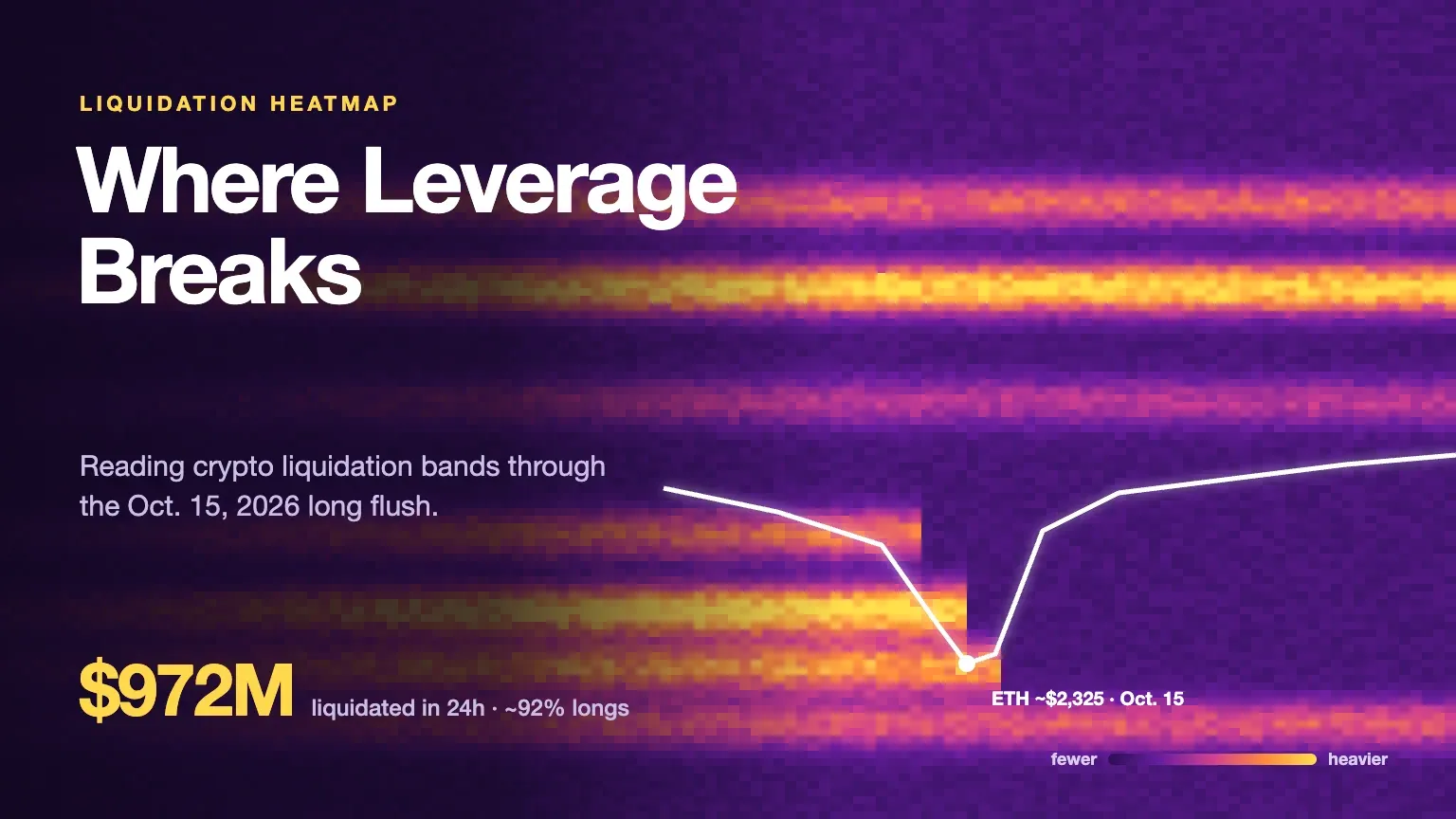
Crypto Liquidation Heatmap: Reading the $972M Oct. 15 Long Flush
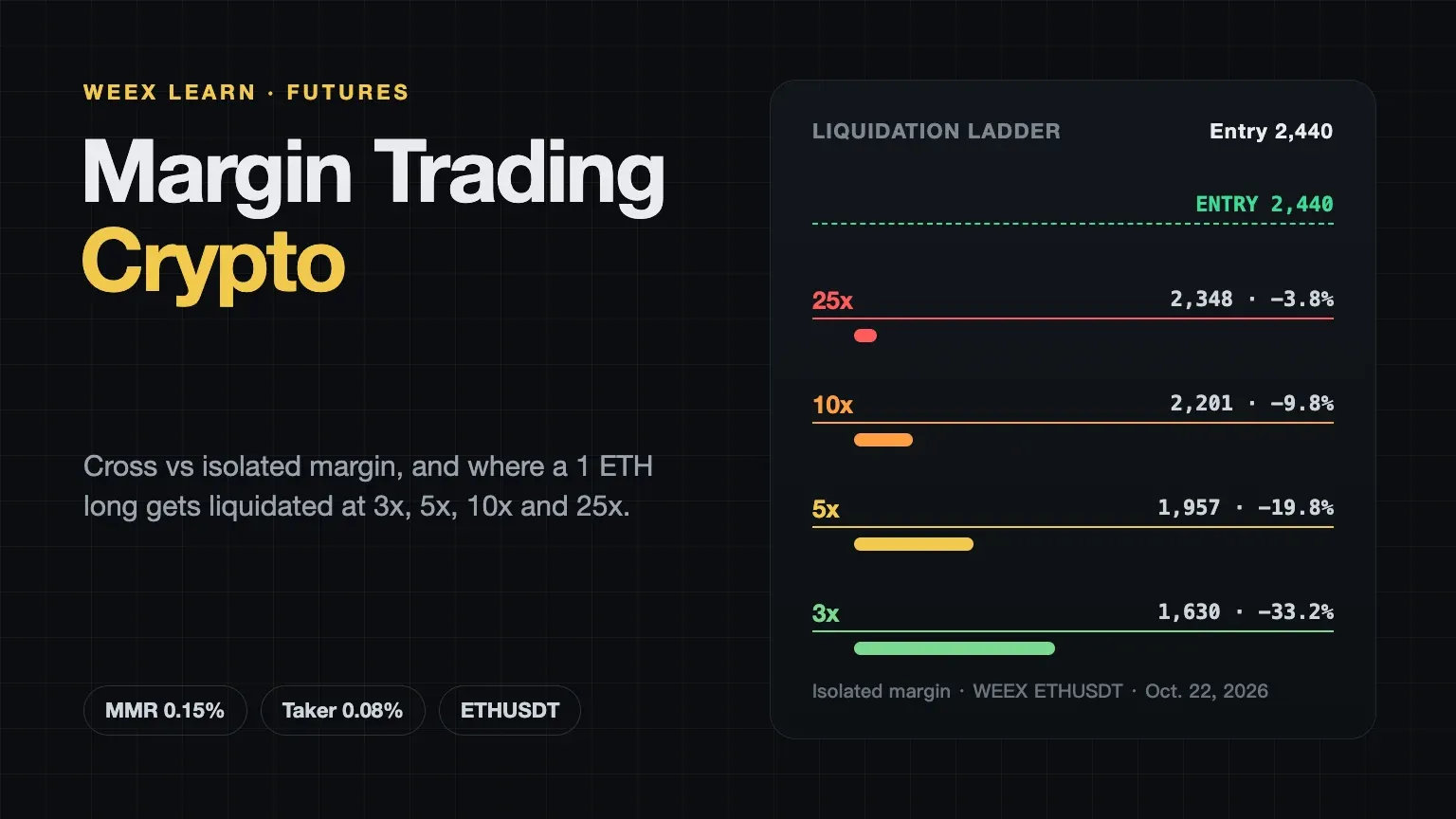
Margin Trading Crypto: Cross vs Isolated and Liquidation Math
How to Convert BTC to USDT: A Step-by-Step WEEX Guide
xStocks Crypto Explained: What Tokenized Stocks Are, How They Work and What Holders Should Check
What Happened to Aergo (AERGO) Crypto? Token Migration and What Holders Should Do
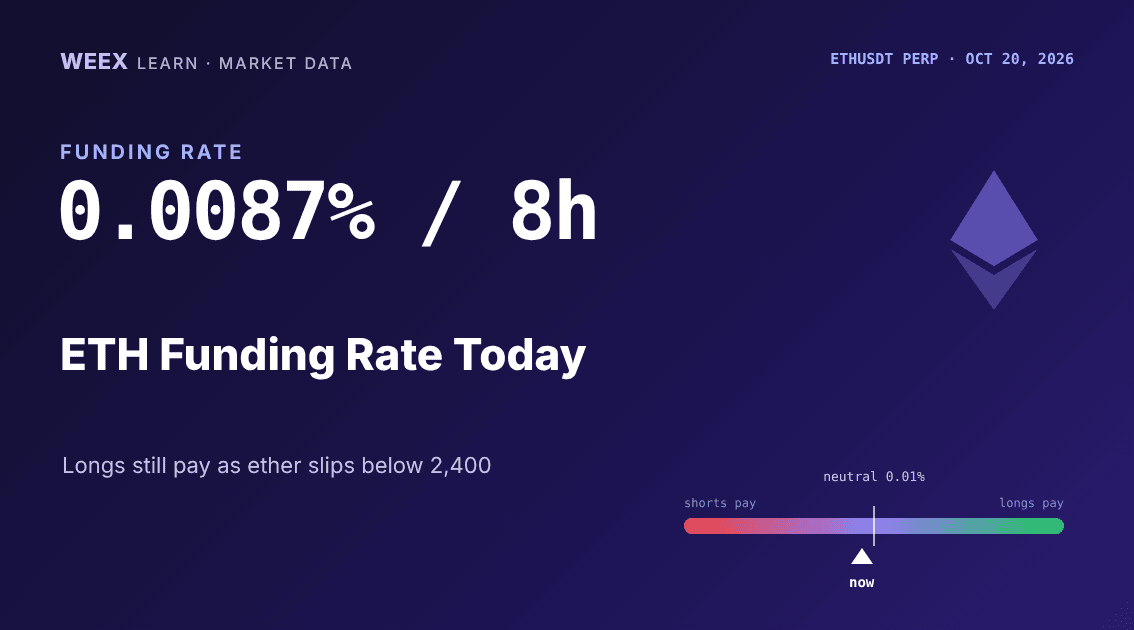
ETH Funding Rate Today: 0.0087% per 8h as Ether Longs Re-Lever
What Is Blockchain and How Does It Work? One Transaction, Traced
Staking APR vs Inflation: How Much of Your Crypto Yield Is Real?
WEEX Convert Fees: What Zero-Fee Conversion Really Costs You
WEEX Convert Quote: How the 8-Second Price Lock Really Works
WEEX Convert Limits: Minimum and Maximum Amounts Explained
How to Check a WEEX Convert Order: History, Rate and Status
Bitcoin Price After Hot CPI: Why BTC Is Pinned Near $82,000
Limit Sell Order: How to Set a Take-Profit Price in Crypto

Best Crypto Podcasts for Beginners: A 4-Week Listening Plan
What Is Plume (PLUME)? Why the RWA Token Stays 93% Below Its High Even After the Layer 2 Rally
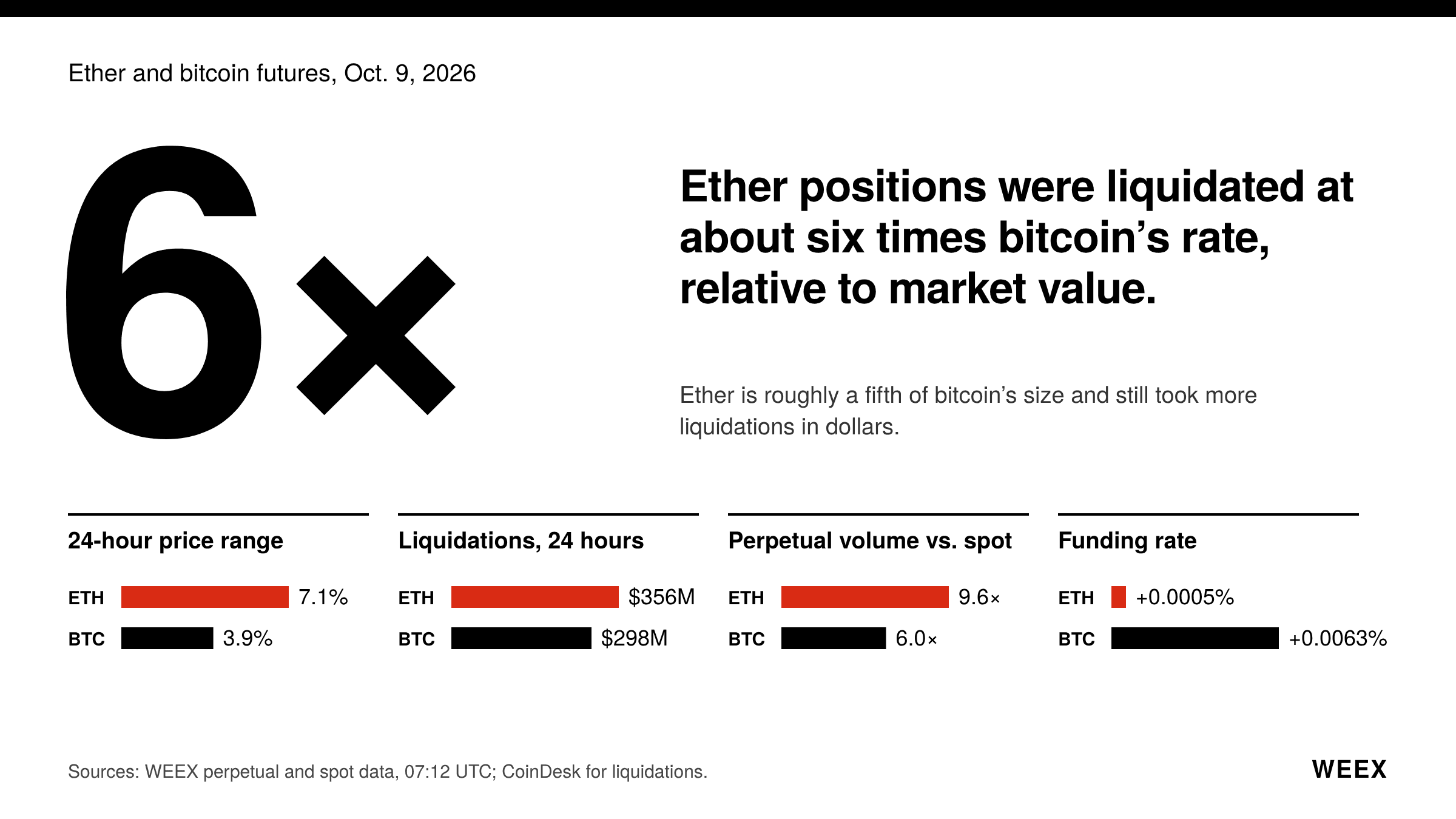
ETH Futures: Why Ether Is Falling Faster Than Bitcoin This Week
How to Buy Presale Crypto: Step by Step Guide for Beginners
Ethereum Glamsterdam Hits 200M Gas on Sepolia: What Changes After the Upgrade?

What Is Staking? 4 Myths to Clear Up Before You Stake Crypto
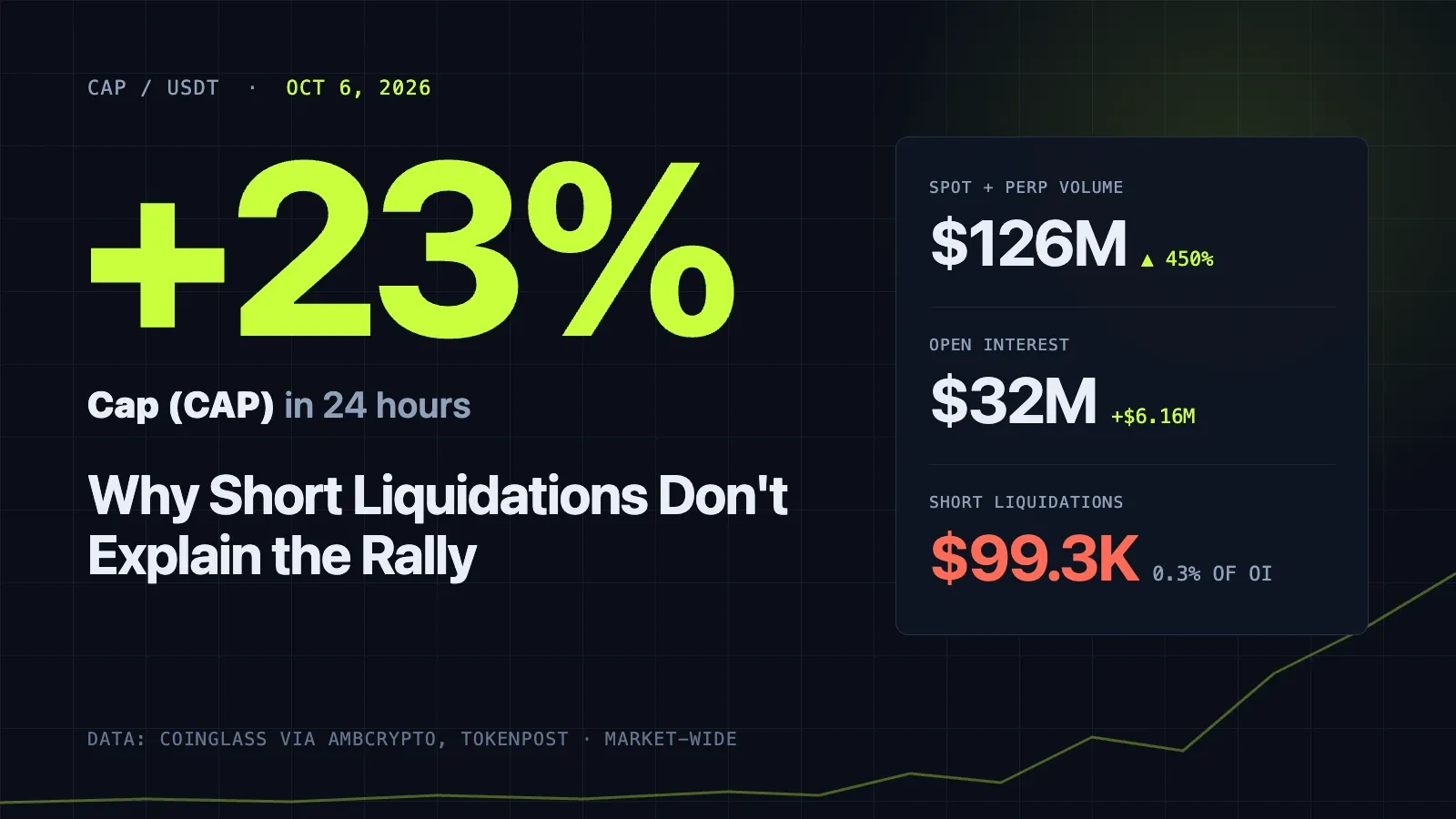
CAP Price Up 23%: Why Short Liquidations Don't Explain the Rally
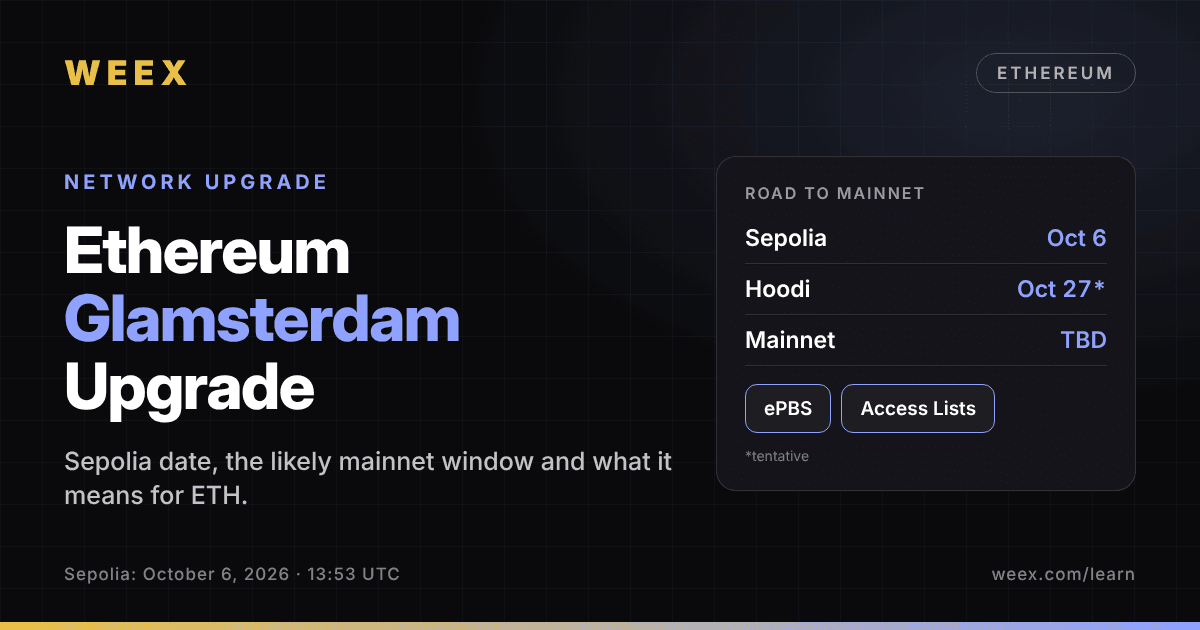
Ethereum Glamsterdam Upgrade: Sepolia Date and ETH Price Impact
How to Earn Interest on USDT: What a 10% APR Really Pays in 2026
How to Buy Crypto With Apple Pay in 5 Steps: Why Your Bank May Decline the Payment
What Is Blockchain and How Does It Work? One Real Block Explained
Ethereum Glamsterdam Upgrade Countdown: Can ETH Price Break Out?
Anonymous Crypto Wallet: What Still Protects Your Privacy in 2026
How Tether Freezes USDT: Address Blacklists and Holder Checks
Bitcoin Futures at $83K: PnL and Position Sizing Into Jobs Week
Ethereum 2030 Roadmap: Vitalik's Cryptographic World Computer
Crypto Liquidation Heatmap: Reading the $972M Oct. 15 Long Flush
Margin Trading Crypto: Cross vs Isolated and Liquidation Math
How to Convert BTC to USDT: A Step-by-Step WEEX Guide
xStocks Crypto Explained: What Tokenized Stocks Are, How They Work and What Holders Should Check
What Happened to Aergo (AERGO) Crypto? Token Migration and What Holders Should Do
ETH Funding Rate Today: 0.0087% per 8h as Ether Longs Re-Lever


