
xStocks Crypto Explained: What Tokenized Stocks Are, How They Work and What Holders Should Check

 Prefer us on Google


xStocks crypto products are tokenized versions of U.S. stocks and ETFs that trade on blockchain rails, issued by Backed Assets (JE) Limited and offered through exchanges such as Kraken. Each token is described as backed 1:1 by the underlying shares held in custody, which is why xStocks crypto listings can follow the price of the real stock.
People searching for xStocks crypto often ask whether holding one is the same as owning the share. It is not. Holders get economic exposure to the stock’s price, while the legal rights, the regional limits and the custody arrangements depend on the issuer’s terms, and those terms are worth reading before any purchase.
What Are xStocks in Crypto and Who Issues Them?
xStocks are tokens that represent U.S. stocks and ETFs, issued by Backed Assets (JE) Limited, a Jersey company set up only to issue and redeem them. The xStocks website describes them as tokenized equities that are 1:1 backed by the underlying, and lists more than 100 stocks and ETFs. Kraken’s blog said on March 18, 2026 that the range had grown from 60 at launch in June 2025 to 100, with cumulative transaction volume above $25 billion, and that it aimed to reach more than 500 tokenized equities by the end of 2026. These are company figures, not independent measurements.
The legal form matters as much as the technology. According to the xStocks legal documentation, each xStock is a tracker certificate, described as a bearer debt instrument, and not direct ownership of the share. The issuer is registered with the Jersey Financial Services Commission, and the documentation says a base prospectus approved by the Liechtenstein financial regulator can be used across the European Economic Area, where licensed distributors offer the product to retail clients. Other countries may classify xStocks differently, including as crypto assets, so the rules a holder faces depend on where they live and which platform they use.
How Do xStocks Work Behind the Scenes?
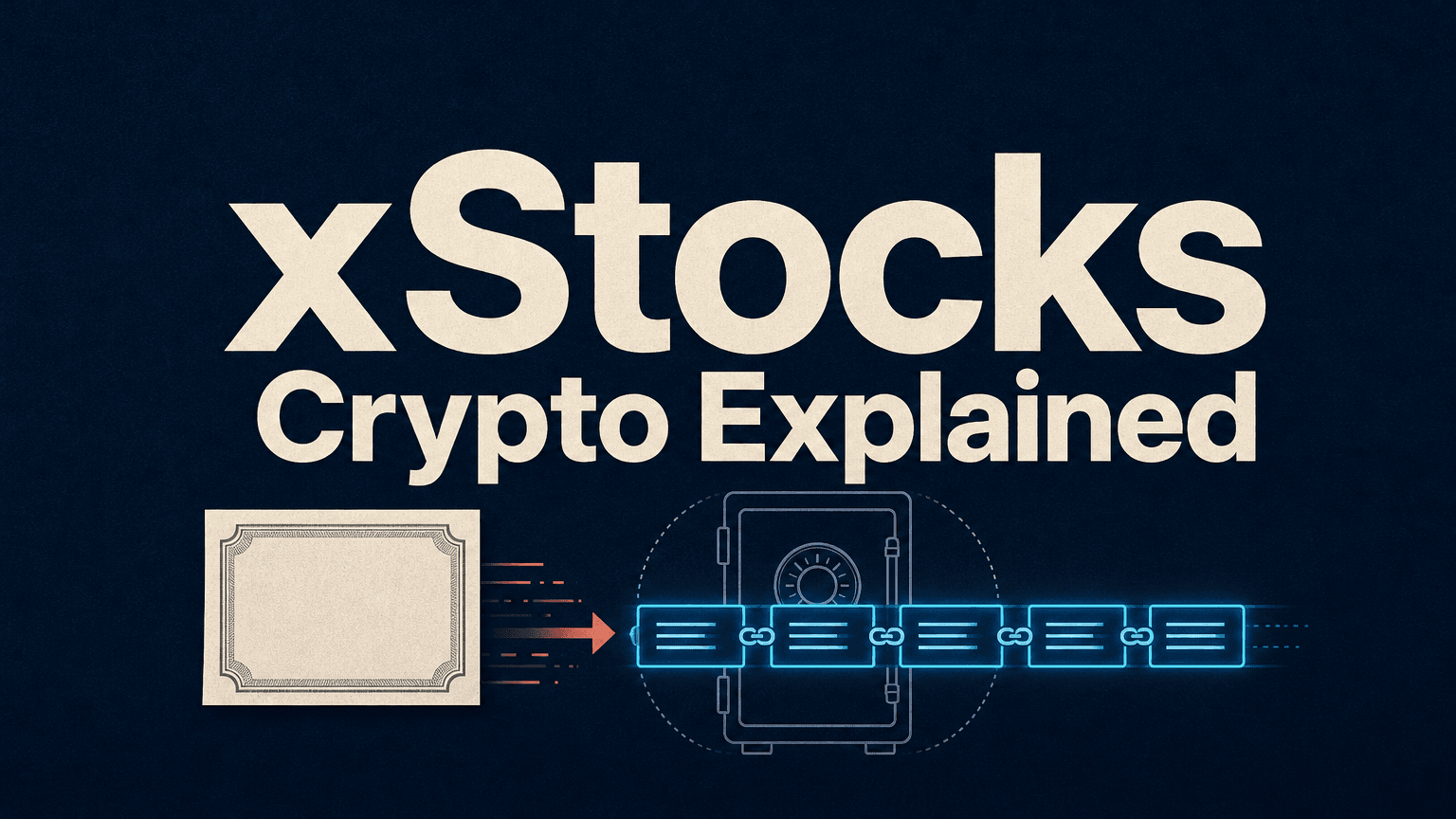
xStocks work by the issuer holding the real shares in custody and issuing a token against them, so the token’s price can follow the stock. The documentation says the collateral sits with regulated custodians and brokers, with separate sub-accounts for each product so that assets are not mixed. A three-party account control agreement involving the issuer, the custodian or broker and an independent security agent is meant to protect token holders, and the security agent can step in if their rights are not upheld. Nansen’s July 2026 overview describes the tokens as mainly SPL tokens on Solana, and Kraken’s support page says users can withdraw to a compatible Solana or Ethereum wallet.
The price on exchanges is set by supply and demand, while the issuer handles creation and redemption, which helps keep the token close to the stock price. Corporate actions are handled through a multiplier that the issuer maintains, according to CF Benchmarks’ documentation. In a five-for-one stock split, for example, the multiplier moves to five, and the holder’s displayed balance becomes five times as large at one fifth of the price, with no action needed. Nansen reports that redeeming tokens directly with the issuer is limited to qualified investors, so most holders exit by selling on a platform. The issuance and redemption terms should be read for the exact conditions.
What Rights Do xStocks Holders Get, and What Do They Not Get?
xStocks holders get exposure to the price of the underlying stock and, on some platforms, a dividend adjustment, but they do not get the same rights as a shareholder. CF Benchmarks describes xStocks as providing economic exposure without shareholder rights or a direct legal claim on the underlying shares. On dividends, Kraken’s support page says they are reinvested automatically instead of paid out in cash, so the balance rises by the dividend value net of withholding taxes. Treatment can differ by platform and by the issuer’s structure, so a holder should check the terms of the venue they use.
Voting is the point where sources disagree, and it is changing. The xStocks legal overview, Kraken’s support page and Nansen’s July 2026 overview all say xStocks do not carry voting rights. Crypto.news reported on August 6 to 7, 2026 that Kraken had extended a voting pass-through to eligible spot xStocks holders through updated contractual terms with Backed Assets, with instructions submitted through Kraken accounts, and that it does not apply to xStocks perpetual futures. The article also noted that the right is contractual and enforceable against the issuer, not the company, and that the SEC has not said how it views the mechanism. Because older pages may not have been updated, readers should check the current terms before assuming either position.
-- Price
Who Can Trade xStocks, and How Do Trading Hours and Access Work?
xStocks are offered to eligible customers outside the United States through licensed platforms, and access depends on the user’s country and the platform’s terms. The xStocks website says they are not available in the United States or to U.S. persons and that geographic restrictions apply. Kraken’s support page lists the United States, Canada, the United Kingdom and Australia as unavailable, while the website says only that the United Kingdom is not currently available, so the list should be checked on the platform itself. Users must complete verification and confirm they are not U.S. persons.
On Kraken, trading runs 24 hours a day, five days a week, with weekend trading described as in development, and fractional purchases start at $1. Once withdrawn to a self-hosted wallet, the tokens can trade at any time on chain, which means the price may move while the U.S. stock market is closed and open at a different level on Monday. Prices on Kraken track the execution price of the underlying stock, and a spread may be built into the quoted price. Fees and spreads differ by platform and payment method.
What Should Holders Check Before Buying xStocks?
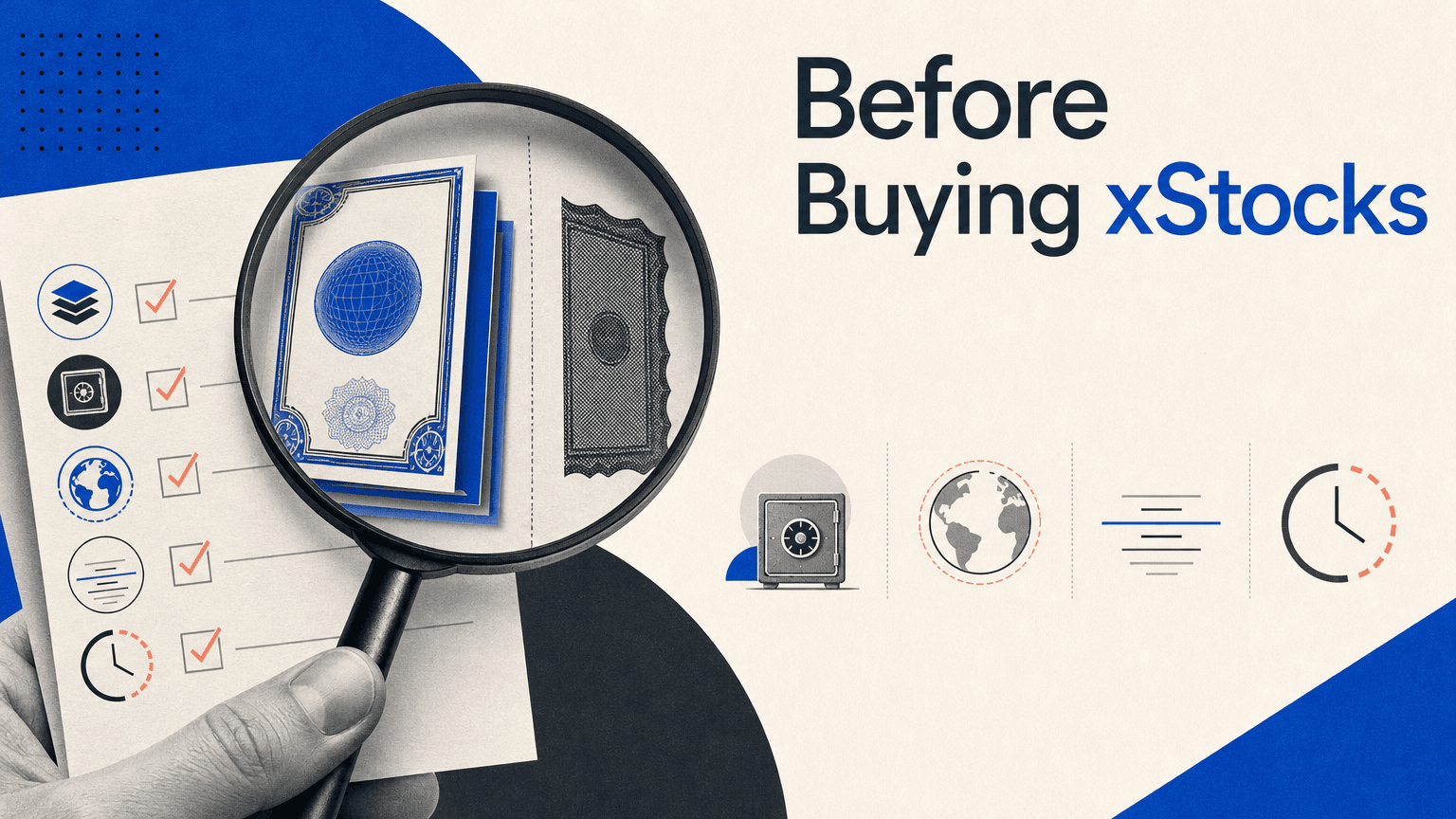
Holders should check the legal terms, the custody and redemption arrangements, regional eligibility, liquidity and what happens outside U.S. market hours. The first check is the nature of the product: a tracker certificate issued by a special purpose vehicle gives exposure to an issuer’s obligations backed by collateral, which is different from owning the share. The documentation points to issuer default as an implied risk, in which case the security agent may liquidate the collateral and distribute proceeds under the prospectus terms. Nansen also lists dependence on the issuer for custody and redemptions, evolving regulation and jurisdictional exclusion among the risks.
The second set of checks is practical. Price gaps can appear when the U.S. market is closed, since the token may trade while the real stock does not. Liquidity in less popular tickers can be thin, which widens spreads and can make it harder to exit. Platform terms on dividends, voting, fees and withdrawals vary, and rules in the holder’s own country on tax and on whether the product can be offered at all may change. Readers can use the issuer’s proof of reserves data where it is published and keep positions small while they learn how the product behaves. None of this removes the risk of loss.
Conclusion
xStocks crypto products are tokenized U.S. stocks and ETFs issued by Backed Assets as tracker certificates, backed 1:1 by shares held in custody and offered to eligible customers outside the United States. They give price exposure and not full shareholder rights, and the rules on voting and dividends depend on the issuer’s terms and the platform used.
Readers can check the current legal documents, the platform’s list of restricted regions and the custody and redemption terms before buying. Figures on growth and volume come from the companies involved, and the product and its terms can change.
FAQ
1. What are xStocks crypto products?
xStocks crypto products are tokenized U.S. stocks and ETFs issued by Backed Assets (JE) Limited and traded on blockchain rails. They give price exposure and are described as 1:1 backed by shares held in custody.
2. Is owning xStocks the same as owning the real stock?
No, xStocks are tracker certificates and do not give direct ownership of the share. Holders of xStocks crypto tokens get economic exposure, and rights such as voting depend on the current terms.
3. Do xStocks pay dividends?
On Kraken, dividends are reinvested automatically, with the balance rising by the dividend value net of withholding taxes. Treatment of xStocks crypto dividends can differ by platform.
4. Who can buy xStocks?
xStocks are not offered in the United States or to U.S. persons, and other regions are restricted. Eligible customers of licensed platforms can buy xStocks crypto tokens after verification.
5. What are the main risks of xStocks?
Main risks include issuer and custody dependence, regional restrictions, thin liquidity in some tickers and price gaps when the U.S. market is closed. Check the terms of any xStocks crypto product before buying.
This content is provided for general informational purposes only and doesn't constitute financial, investment, legal, or tax advice. Any events, rewards, online promotions, or related information mentioned herein should not be considered a recommendation, solicitation, or invitation to purchase, sell, trade, or otherwise deal in any crypto assets. Crypto assets are highly volatile and may result in loss. The availability of WEEX services, products, and related events may vary by region. You are responsible for ensuring that your participation is in accordance with applicable local laws and regulations.
You may also like
What Is Pearl (PRL) Crypto and How Does Its Mining Work?
Solana Alpenglow Upgrade: What Changes When Finality Hits 150ms
Cyberleek Token Risks: Memecoins Tied to Leaks, Anonymous Wallets and Why Verification Matters
Staking APR vs Inflation: How Much of Your Crypto Yield Is Real?
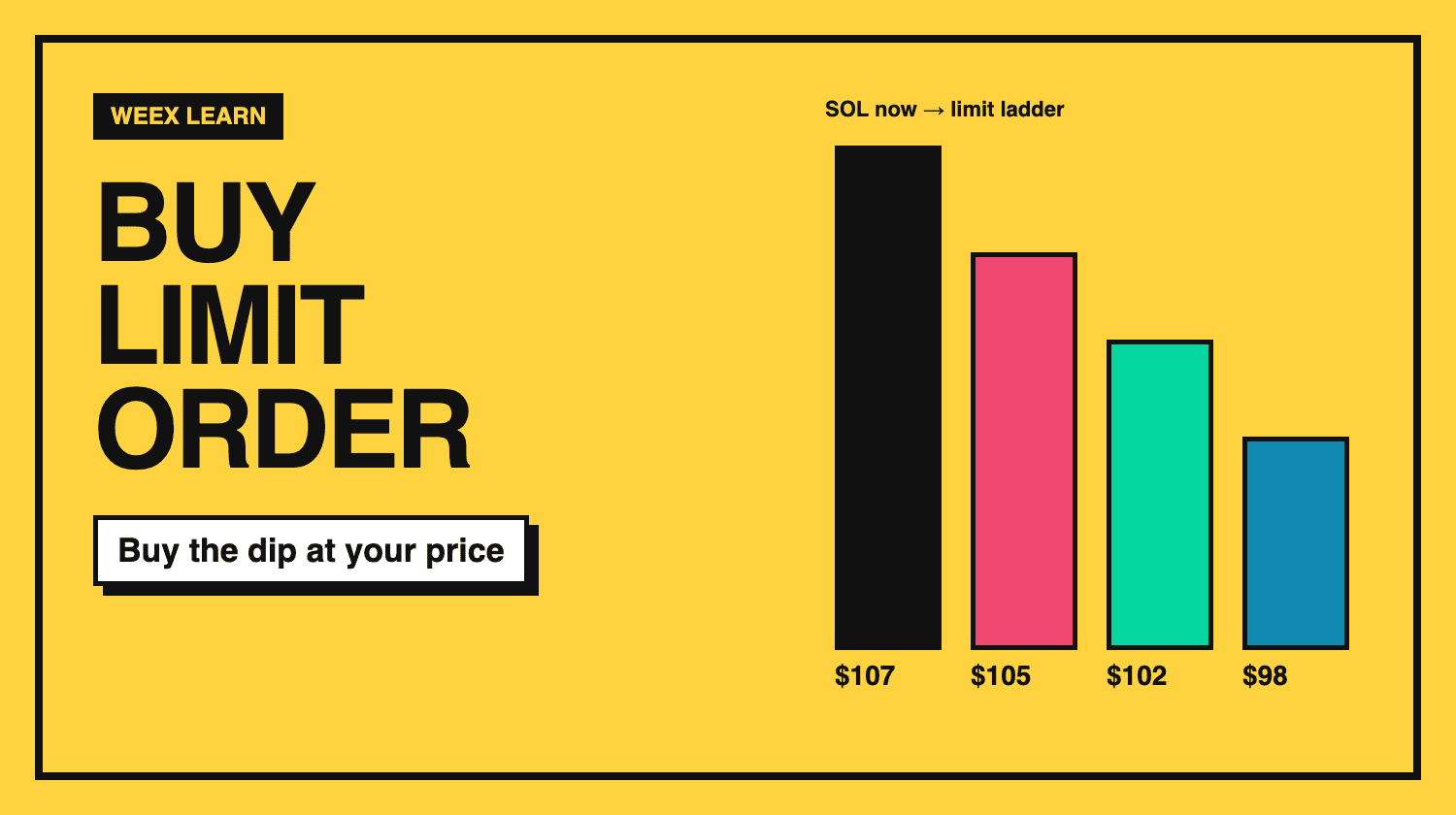
Buy Limit Order: How to Buy Crypto Below the Market Price
Cyberleek: How the GTA 6 Leaker's Memecoin Turns Leaks Into Fees

How to Buy New Crypto Before Listing: 5 Routes and Their Traps
What Is Staking? 4 Myths to Clear Up Before You Stake Crypto
What Is Blockchain and How Does It Work? One Real Block Explained
XST Coin Explained: Two Tokens Share One Ticker, Check Which One
2Z Token Unlock on October 2: What 1.66B DoubleZero Tokens Mean

Solana Alpenglow Mainnet Date: Why Sept 28 Wasn't Launch Day

Phantom Wallet vs MetaMask: What's the Difference
How to Install and Set Up Phantom Wallet

What Is Phantom Wallet? A Complete Guide to the Solana Wallet
How to Buy USDT with EUR via SEPA Bank Transfer on WEEX
How to Buy Bitcoin with EUR in Europe on WEEX
How to Buy Crypto in Europe with EUR on WEEX OTC
How to Buy Crypto in Vietnam with VND on WEEX OTC
How to Buy USDT in Vietnam with VND via MoMo or Bank Account
How to Buy Bitcoin in Brazil with BRL on WEEX OTC
How to Buy Crypto in Australia with AUD on WEEX
How to Buy Bitcoin in Australia with Apple Pay, Google Pay or Card
How to Buy USDT in Japan with Apple Pay, Google Pay or Card

Pump.fun (PUMP) Price Prediction: Attributed Scenarios, Tokenomics and Risks
Hunter Biden's Laptop Token Is Now Live on Base: Watch Out for Copycat Tokens
XST Stock: Why This Ticker Points to Four Completely Different Companies
CyberLeek Crypto: The GTA 6 Token's Exit Liquidity Problem
XST ETF vs XST Coin (XSolut): Don't Confuse These Two Completely Different Assets
Anthropic Tokenized Stock: What ANTHROPIC Actually Gives You
What Is Pearl (PRL) Crypto and How Does Its Mining Work?
Solana Alpenglow Upgrade: What Changes When Finality Hits 150ms
Cyberleek Token Risks: Memecoins Tied to Leaks, Anonymous Wallets and Why Verification Matters
Staking APR vs Inflation: How Much of Your Crypto Yield Is Real?
Buy Limit Order: How to Buy Crypto Below the Market Price
Cyberleek: How the GTA 6 Leaker's Memecoin Turns Leaks Into Fees




