
VVV Crypto: What Is Venice Token, Why Venice Token (VVV) Rose and What DIEM Actually Does

 Prefer us on Google


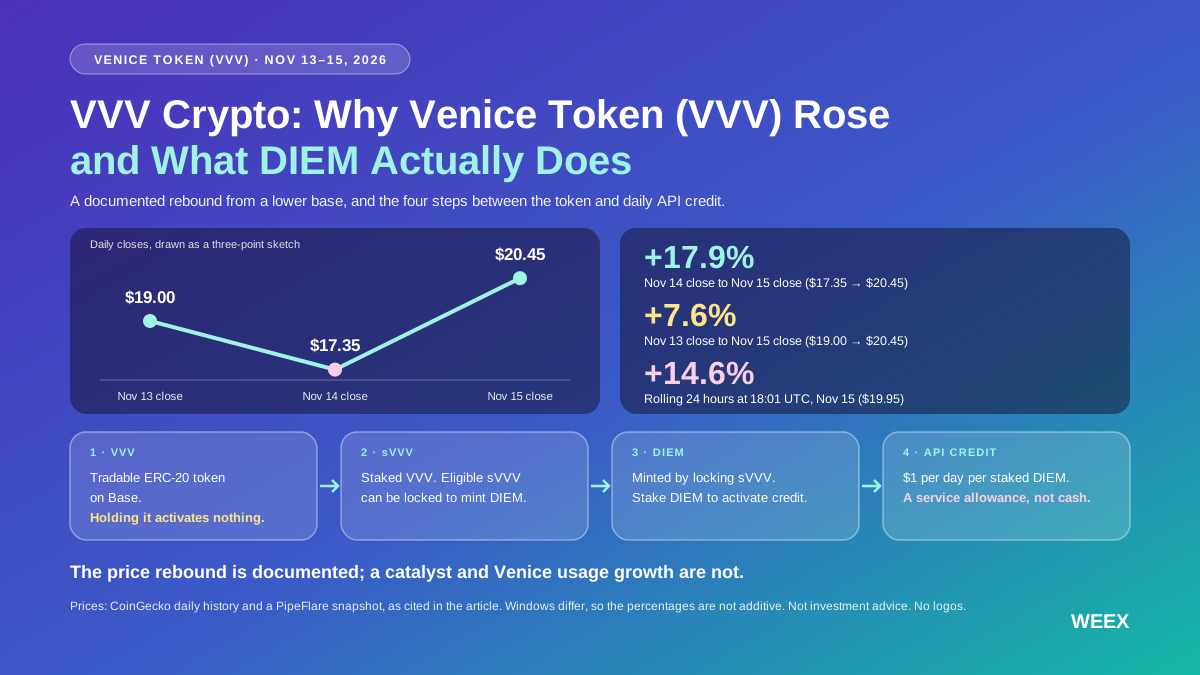
Venice Token (VVV) traded near $19.95 at 18:01 UTC on November 15, 2026, up about 14.6% over the preceding 24 hours in a reported CoinGecko snapshot. CoinGecko’s historical series separately shows a move from $17.35 on November 14 to $20.45 on November 15, about 17.9% close to close. The rally is visible in both measures, but the public material reviewed on November 16 did not establish that a new Venice announcement, buyback, or surge in AI usage triggered it.
The more useful question for VVV holders is whether the activity extended beyond trading. Venice has a mechanism connecting its AI service to its tokens: stake VVV, lock eligible staked VVV to mint DIEM, then stake DIEM to activate daily API credit. Each step generates a different kind of evidence. A higher VVV price shows that the market repriced the token. More DIEM minted shows that users created more potential credit capacity. Neither observation tells you how much inference developers actually consumed.
Key Takeaways
- The 14.6% and 17.9% figures use different windows. The former is a rolling 24-hour snapshot; the latter compares two daily closing values. They describe the same rebound from different starting points.
- VVV, staked VVV, and DIEM serve different purposes. VVV is the tradable Base token, sVVV is the staked position that can be locked for minting, and DIEM is a separate token that provides API credit when staked.
- One staked DIEM provides $1 per day of Venice API credit. That is a service allowance. DIEM’s market price can change, and the credit is not a cash payment or a claim on one U.S. dollar.
- There is a cost to reversing the mint. If you sell the DIEM you minted and later want to release the underlying sVVV, you need to obtain the relevant amount of DIEM and burn it. Unstaking the unlocked VVV has a separate waiting period.
- To assess adoption after the rally, measure three things separately: token trading, staked credit capacity, and actual API usage or paid credit purchases.
Why Did Venice Token (VVV) Rise?
PipeFlare’s November 15 report recorded VVV near $19.95 at 18:01 UTC, up 14.6% over 24 hours. It also reported that VVV was still down approximately 2.6% over seven days at that observation. The two figures are compatible: the rally recovered much of an earlier decline, while the token remained below where it had traded one week earlier.
The CoinGecko daily history makes the sequence easier to see. VVV closed at $19.00 on November 13, fell to $17.35 on November 14, and reached $20.45 at the November 15 close. From the November 13 close to the November 15 close, the gain was about 7.6%, much smaller than the one-day rebound from $17.35. The starting point changes what the percentage means.
| Market observation | Price or change | What it tells us |
|---|---|---|
| November 13 daily close | $19.00 | A reference point before the weekend decline and rebound. |
| November 14 daily close | $17.35 | The lower starting point behind the large close-to-close gain. |
| November 15, 18:01 UTC | $19.95, approximately +14.6% over 24 hours | A rolling snapshot taken before the daily series recorded its subsequent close. |
| November 15 daily close | $20.45, approximately +17.9% from the previous daily close | The price recovered the previous day’s decline and moved above the November 13 close. |
| November 16 CoinMarketCap snapshot | Approximately $19.62 | A separate intraday reading, not the November 16 close. |
The CoinMarketCap price page read about $19.62 in one November 16 snapshot. The page did not supply an exact observation time for that captured figure. The $19.62 and $20.45 readings come from different windows and sources; subtracting them does not give a verified daily return.
There are plausible explanations for a sharp rebound. CoinMarketCap’s AI-generated recap pointed to social attention and reports of large purchases. Those are leads to investigate. A wallet transfer is not necessarily a purchase, and even a confirmed purchase might have followed the start of the rally. Establishing a causal link would require the transaction hashes, the swap details, and their timing relative to the first price and volume acceleration. The Venice product changelog did not provide a same-window release that established a cause for the move in the material reviewed.
The evidence supports describing VVV as rebounding sharply from a lower base amid active trading. Claims that a particular whale, a buyback, or new demand for Venice inference caused the gain need better evidence. That distinction matters because those explanations carry different implications for what happens after the initial market interest fades.
What Is Venice Token (VVV), and What Does Staking It Do?
VVV is the ERC-20 token on Base associated with Venice, an AI service that offers model access through an app and API. Users can access the service without buying VVV. Holding VVV in a wallet gives the holder a transferable token. Staking it is a separate action that can make the position eligible for token rewards and for other features described in Venice’s token overview.
After staking, the position is referred to as sVVV, or staked VVV. Eligible sVVV can be locked to mint DIEM. This creates a new distinction: VVV can be staked and earning rewards without being committed to a DIEM mint. Once some of the staked balance backs a mint, that portion remains locked until the corresponding DIEM burn frees it. Buying VVV alone does not complete any of those steps. Holding a VVV futures position does not create an onchain staking balance.
| Asset or balance | How you get it | What it represents |
|---|---|---|
| VVV | Acquire the Base token | A transferable Venice ecosystem token. Holding it alone does not activate daily DIEM credits. |
| sVVV | Stake VVV | A staked position. Eligible sVVV can be locked to mint DIEM or unstaked under Venice’s rules. |
| DIEM | Mint by locking eligible sVVV, or acquire existing DIEM | A separate transferable token. Staking DIEM activates a daily Venice API allowance. |
| API credit balance | Activate DIEM credit through staking and check it in the Venice account | A balance for eligible Venice API usage. It is separate from the token’s resale price or a cash balance. |
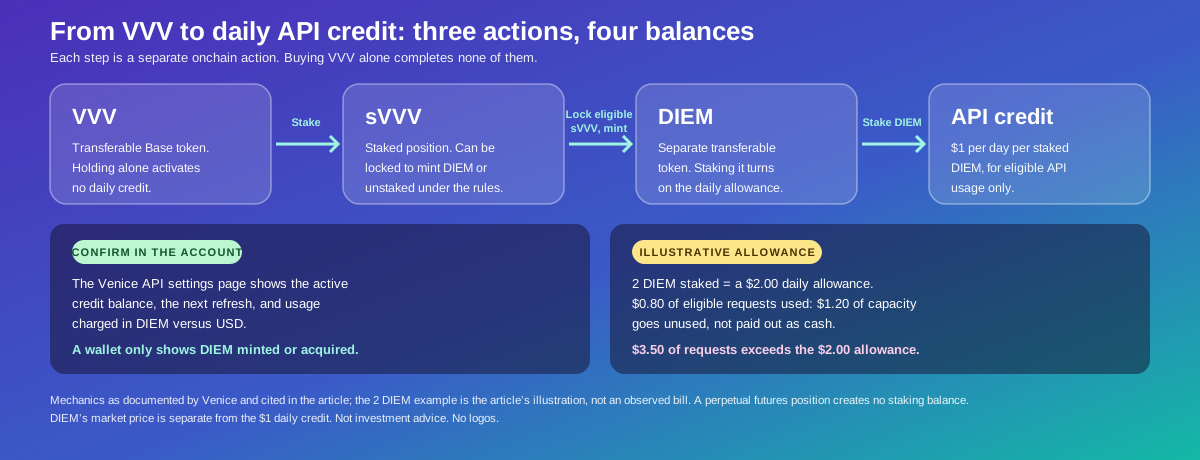
Venice’s daily AI credit guide shows where to check the result: the API settings page displays the active credit balance, the next refresh, and usage charged in DIEM versus USD. That account view is the practical confirmation a developer needs. A wallet may show that DIEM was minted or acquired, but the account dashboard tells the developer whether the allowance is active and being applied to requests.
How Much Venice API Credit Does DIEM (DIEM) Actually Provide?
Under the documented rules, one staked DIEM provides $1 per day of credit for Venice API usage. It does not mean one DIEM trades at $1. It does not send $1 per day to a wallet or bank account. And it does not buy a fixed number of requests: the amount of work the allowance covers depends on the models and tasks being used. Venice’s API overview explains where developers can check per-model pricing and how API requests are billed.
Imagine a developer stakes 2 DIEM and activates a $2 daily allowance. If the developer’s workload consumes only $0.80 of eligible API service that day, the amount used is $0.80. An advertised $2 of capacity is not $2 of realized savings if the developer would otherwise have bought only $0.80 of service. If the workload instead costs $3.50, the $2 allowance is insufficient. Whether the remaining requests can proceed depends on the account’s other balances and billing settings.
| Example workload | Staked DIEM allowance | Credit used or available | What to check |
|---|---|---|---|
| $0.80 of eligible requests | $2.00 per day | $0.80 consumed | The remaining $1.20 is unused capacity for that period, not cash received. |
| $2.00 of eligible requests | $2.00 per day | Up to $2.00 consumed | Confirm the requests were charged against the expected balance. |
| $3.50 of eligible requests | $2.00 per day | Up to $2.00 covered | Check what happens after the allowance is exhausted and whether another balance can be charged. |
These examples illustrate the allowance, not an observed user’s bill. The practical test is to track several days of ordinary workloads with the same model mix. Record actual credit consumed, other charges, and periods when the allocation went unused. If most demand comes in occasional bursts, a recurring allowance may leave a lot of unused capacity. If the workload runs every day, the developer has a better basis for comparing staking with paying for usage directly.
This is also why annualizing DIEM credit can mislead. An arithmetic calculation of $1 × 365 produces $365 of potential annual service capacity per staked DIEM under unchanged terms. It does not establish a $365 annual cash return, a token floor price, or even $365 of savings for a particular buyer. An estimate of savings needs actual usage, the price of the alternatives, and the costs of acquiring and later exiting the position.
-- Price
How Do You Mint DIEM (DIEM), and What Happens If You Sell It?
Venice publishes a mint-rate explanation describing how much sVVV must be committed to create one DIEM. The ratio is dynamic. A launch-era example showing a particular number of sVVV per DIEM should not be used as the current conversion rate. Check the dashboard’s live quote and distinguish the number of VVV tokens being locked from what those tokens are worth in dollars at that moment.
Minting and using the credit are also separate. An eligible user first stakes VVV, then locks some of the sVVV to mint DIEM. If the goal is to consume API credits, the next step is to stake DIEM and verify the allowance in the API account. If the user instead transfers or sells the newly minted DIEM, they give up possession of those tokens while the underlying sVVV remains locked.
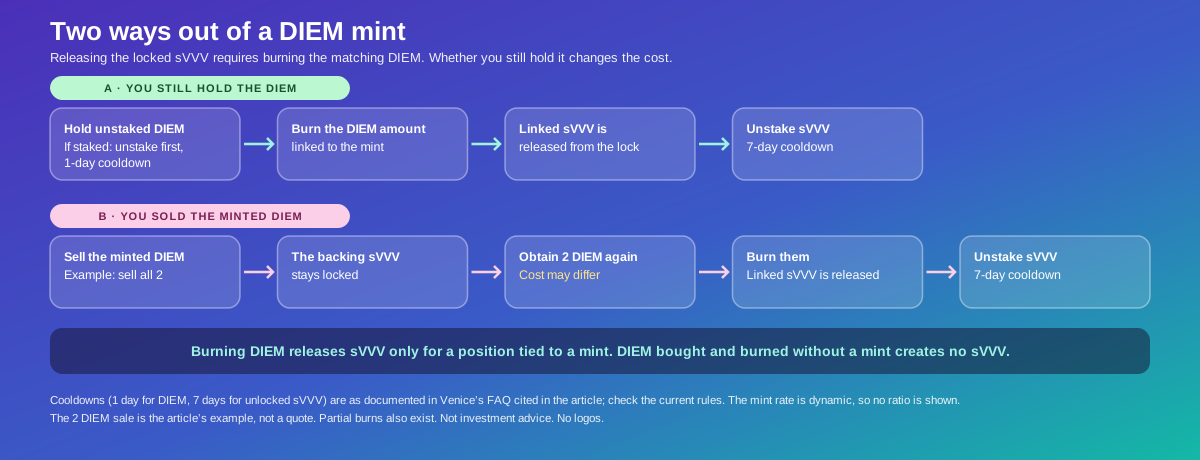
That creates a risk that is easy to miss. Imagine a user mints 2 DIEM, sells both, and later wants all of the corresponding sVVV back. Under Venice’s current staking and unlock FAQ, the user needs to obtain 2 DIEM and burn that amount to release the linked position. If DIEM has risen in price or liquidity is thin, buying it back can be more expensive than expected. The payment received when the DIEM was sold does not guarantee that the user can later reverse the trade on equivalent terms.
Venice documents a one-day cooldown to unstake DIEM and a seven-day cooldown to unstake unlocked sVVV. The steps a user faces depend on where the tokens are when they begin: DIEM already held unstaked does not have to go through DIEM unstaking first. The FAQ also describes partial burns. The crucial distinction is that burning DIEM can release sVVV tied to a minting position; it does not create new sVVV for someone who simply bought and burned DIEM without such a position.
Do Trading Volume, DIEM Minting, or Burns Prove Venice AI Adoption?
Each measure records a different action. Exchange volume counts trading activity in the token market. DIEM minting measures the creation of an asset that can activate daily compute credit. DIEM staking indicates that a holder enabled the allowance. API usage records requests consuming the service. Paid credit purchases record spending on credits, which may occur before those credits are used. Combining these into one adoption number obscures what is actually growing.
| Signal | What it can support | What it cannot prove by itself |
|---|---|---|
| VVV trading volume increased | More VVV changed hands during the stated market window. | That the money went to Venice or that developers ran more requests. |
| More sVVV was locked for DIEM | More staked VVV was committed to creating DIEM. | That the newly minted DIEM was staked, used, or bought by a developer. |
| More DIEM was staked | More daily credit capacity was activated under Venice’s rules. | How much of the capacity people used or what they would have paid otherwise. |
| Account-level API usage increased | The observed account consumed more eligible service. | Network-wide growth unless broader, comparable data is available. |
| API-credit-linked VVV burns increased | More VVV was burned under that reported category, if verified. | The exact number of requests run or whether sales and usage grew at the same rate. |
The burn mechanism does provide a way to examine the relationship between the service and VVV. In its tokenomics update, Venice said $5 of every $100 in credits purchased through Venice would be used to buy and burn VVV. This is a mechanism tied to credit purchases, not a fee on every VVV trade or every API request. A request paid from staked DIEM credit should not automatically be counted as a new paid purchase.
When examining the Venice burn tracker, record the date, amount, and category. A burn attributed to credit purchases has a different meaning from a discretionary burn. Even with a verified onchain transaction, the transaction proves the movement or retirement of tokens; it does not independently reveal every billing event behind the category. Credit buyers can also prepay and use what they bought later. For adoption analysis, burn records are more useful when the category is documented and the observation window is consistent.
The supply analysis needs similar care. A VVV burn, a DIEM burn, and a lock of sVVV should never be added together as if all three destroy VVV. A VVV burn retires VVV. Burning DIEM to undo a mint can release eligible sVVV. Locking sVVV restricts access to that balance under the protocol’s rules but does not permanently retire it. Venice disclosed a reduction in VVV emissions to 2 million per year effective October 1, 2026. To test whether supply fell over a particular period, compare verified VVV issuance and burns on the same supply basis and over that same period. A lower emissions rate alone does not establish net deflation.
For this rally, the best follow-up would be a simple two-window comparison: record the November 15 trading move, then compare a longer period of DIEM staking, credit-purchase-linked burns, and any comparable usage statistics Venice makes public. That would help distinguish a short-lived change in how traders valued VVV from a sustained change in what customers did with the product.
How to Trade Venice Token (VVV) on WEEX
The WEEX VVV/USDT perpetual futures market provides contract exposure to VVV’s price. To evaluate an order, open the contract page and check current trading availability, the order book, mark price, funding schedule, and applicable fees. Review the position size, margin mode, and estimated liquidation level before confirming an order. These checks are especially useful after a sharp move, when the nearest displayed trade may not reflect the price available for a larger order. The perpetual does not give you Base-network VVV to withdraw or stake in Venice.
If your objective is to acquire the token itself, use the separate VVV/USDT spot market and verify withdrawal availability, the supported network, minimum, and fees before planning a transfer. The WEEX Venice Token price page is also useful for tracking the asset, but the actual cost of an order comes from the available quotes and your applicable fee rate.
Is There a Venice Token (VVV) Fee Discount or WEEX Event?
The public information reviewed did not verify a VVV-specific fee discount. WEEX’s broader Shopping Fest Lucky Eggs event was scheduled through November 25, 2026, UTC+8, with tasks for eligible activity. To participate, sign in on the event page, review the participation rules and qualifying markets, and check how task progress is credited. Verify whether VVV/USDT counts before assuming an order will qualify. Campaign rewards and trading fees are separate.
WEEX Editorial View
The November 15 rebound was substantial, but the daily chart also shows how much the lower starting point mattered. For the next update, the most useful evidence would be consistent growth in activated DIEM capacity alongside separately documented growth in API usage or paid credit purchases. If only the token’s price and trading volume rise, the stronger conclusion is simply that VVV attracted more market activity.
For developers, the decision starts with how much Venice API capacity they will actually use. For token holders, it starts with what they are willing to lock and how they would exit. The same DIEM position can look inexpensive to a developer who uses the allowance every day and costly to someone who rarely runs a workload or needs to buy back DIEM to release staked VVV. Those are more meaningful comparisons than treating the daily credit amount as a yield figure.
FAQ
1. Why Was Venice Token (VVV) Up About 14.6%?
That was the reported rolling 24-hour gain at 18:01 UTC on November 15. CoinGecko’s daily closing series shows a separate rebound of about 17.9% from the November 14 close. The rise is documented, but the material reviewed did not confirm one catalyst.
2. Is DIEM (DIEM) a Stablecoin or Cash Reward?
No. DIEM is a token with its own market price. When staked, it activates $1 of Venice API credit per day per DIEM under the documented rules. That allowance is for eligible service usage and is not a daily cash payment.
3. Can I Use Venice AI Without Buying Venice Token (VVV)?
Yes. Buying VVV is not a requirement for using Venice. Staking and DIEM are optional ways to access particular features or credit capacity. Compare them with direct payment based on your actual workload.
4. What Happens if I Sell the DIEM (DIEM) I Minted?
The sVVV backing the mint remains locked. To release it, you need to obtain and burn the corresponding amount of DIEM. The cost of buying it back may differ from the amount you received when you sold it, and unstaking the unlocked VVV has its own cooldown.
5. Can I Stake a Venice Token (VVV) Futures Position to Mint DIEM?
No. A perpetual futures position provides price exposure. Minting requires eligible VVV staked through Venice’s onchain process on Base.
This content is provided for general informational purposes only and doesn't constitute financial, investment, legal, or tax advice. Any events, rewards, online promotions, or related information mentioned herein should not be considered a recommendation, solicitation, or invitation to purchase, sell, trade, or otherwise deal in any crypto assets. Crypto assets are highly volatile and may result in loss. The availability of WEEX services, products, and related events may vary by region. You are responsible for ensuring that your participation is in accordance with applicable local laws and regulations.
You may also like

Base Token Trading Rewards: Share $100,000 on WEEX
Join the WEEX Base token trading rewards campaign and share $100,000 by trading AERO, VIRTUAL, ZORA, KAITO and other eligible Base ecosystem tokens.

Tokens and Stocks: Tensions in the Crypto Market

ShapeShift Founder Stakes 341,700 VVV Worth Approximately $3.98 Million

Bankless co-founder: After liquidating ETH, has purchased VVV, NEAR, ZEC, HYPE, LIT

Data: Whale Loracle closed short positions in BTC, TON, etc., with HYPE short losses exceeding 36 million dollars

Data: The majority of the cryptocurrency market is up, with the AI sector rising by 2.35%
Data: The cryptocurrency market has generally risen, the AI sector has increased by over 10%, while only the RWA sector has seen a slight decline
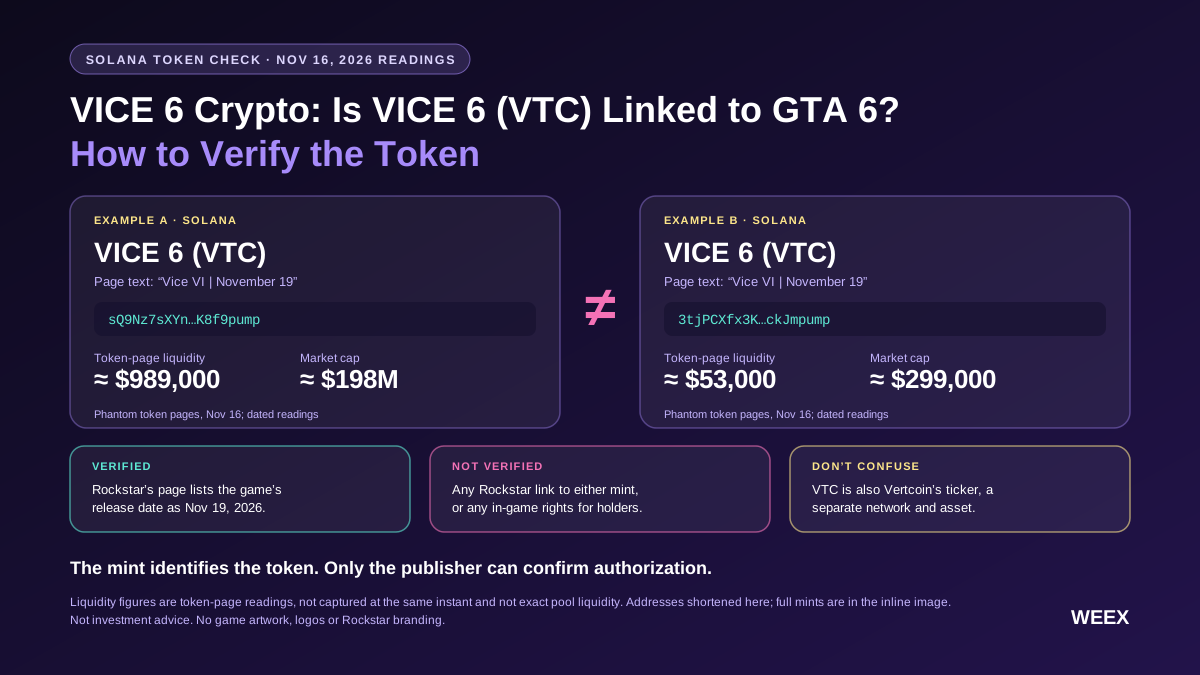
VICE 6 Crypto: Is VICE 6 (VTC) Linked to GTA 6? How to Verify the Token
Is VICE 6 crypto linked to GTA 6? Compare two Solana tokens using VTC, verify their mint and pool addresses, and see what Rockstar has confirmed.
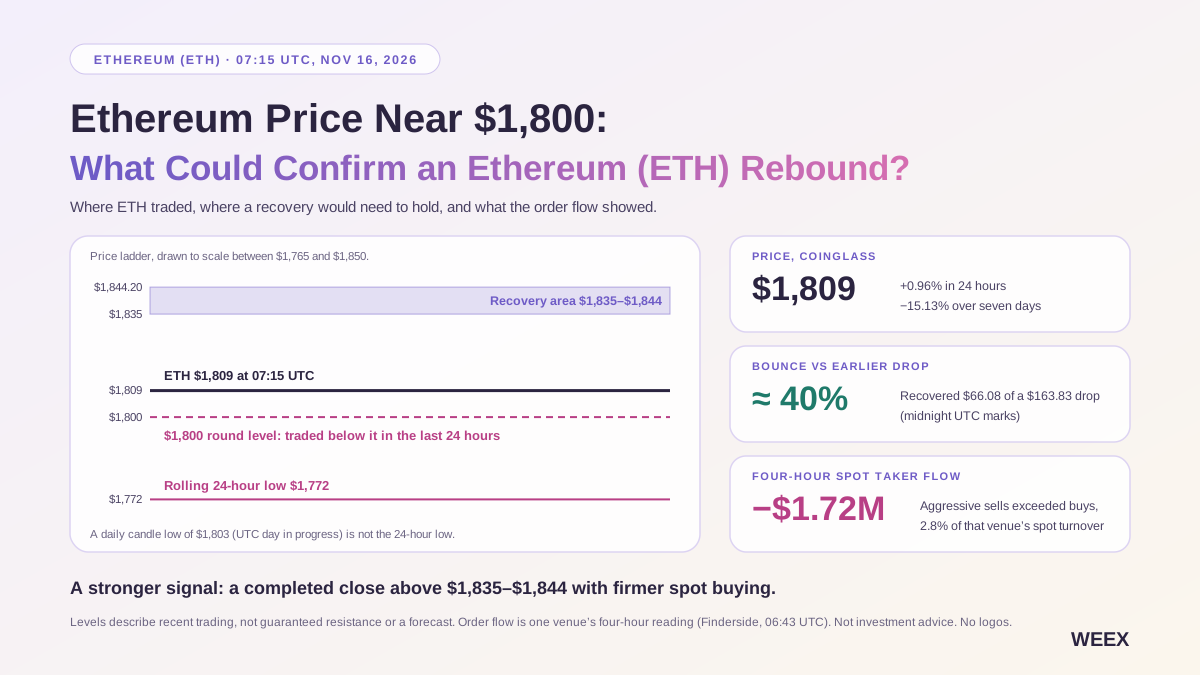
Ethereum Price Near $1,800: What Could Confirm an Ethereum (ETH) Rebound?
Ethereum traded near $1,800 on November 16. See what four-hour spot order flow, futures positioning, and Friday’s ETF flows say about an ETH rebound.
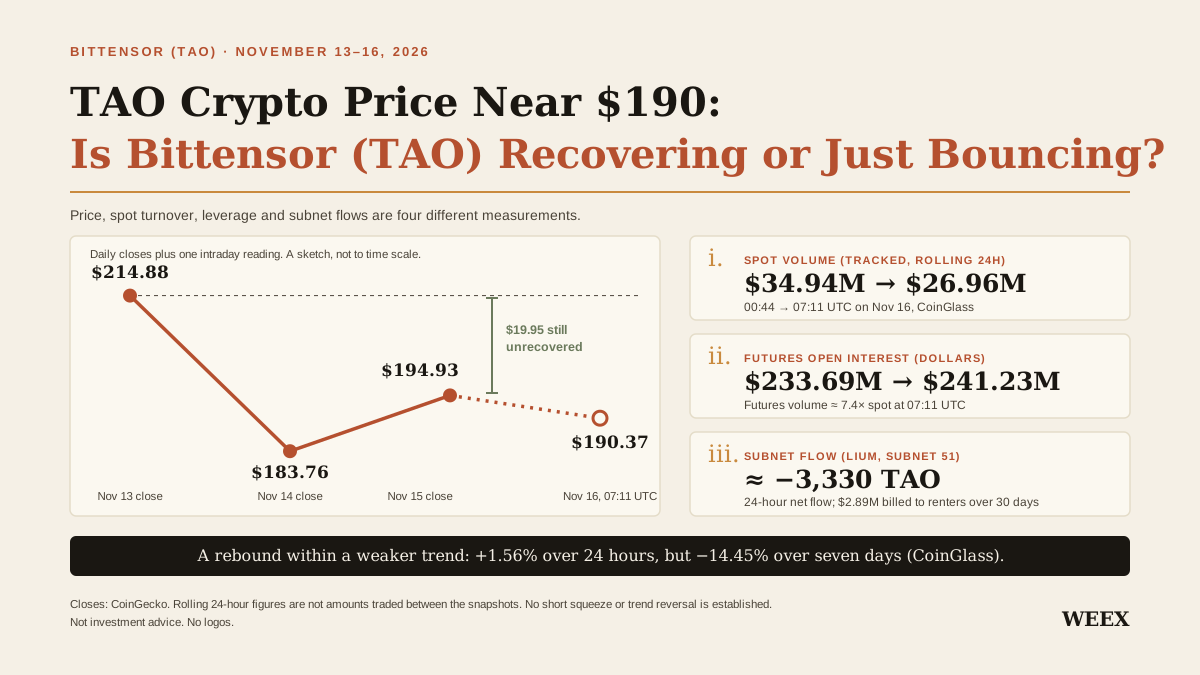
TAO Crypto Price Near $190: Is Bittensor (TAO) Recovering or Just Bouncing?
TAO bounced near $190. Compare spot volume, futures positioning, and Bittensor subnet flows to see what would confirm a more durable recovery.
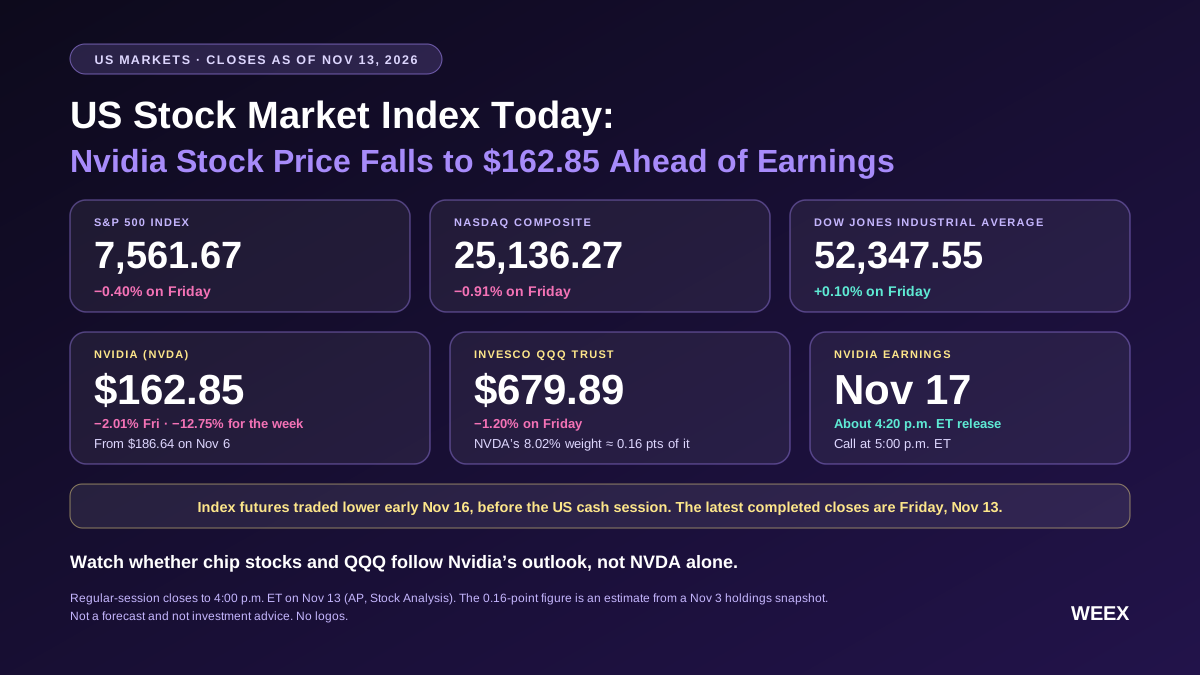
US Stock Market Index Today: Nvidia Stock Price Falls to $162.85 Ahead of Earnings(S&P 500 and QQQ )
Track US stock index futures, the S&P 500 and Dow, and see how Nvidia’s $162.85 close and November 17 earnings could shape QQQ and the broader market.
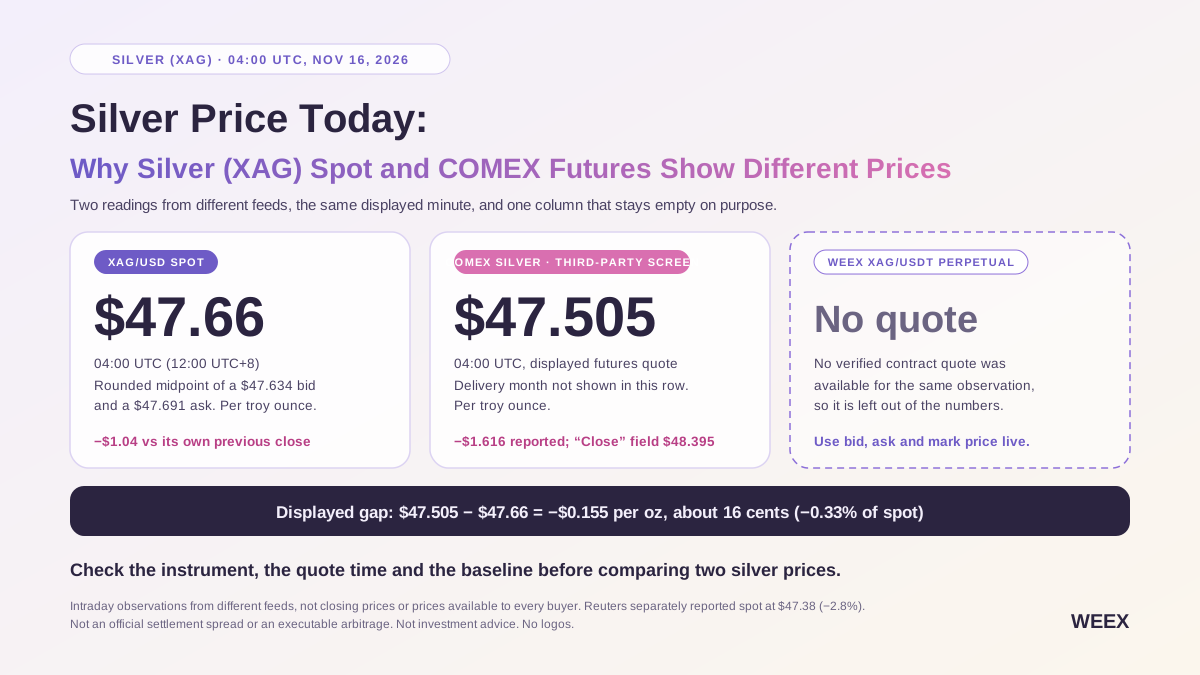
Silver Price Today: Why Silver (XAG) Spot and COMEX Futures Show Different Prices
Silver traded near $47–$48 on November 16. Compare XAG/USD spot, COMEX silver futures, and XAG/USDT perpetuals, and learn why their prices differ.
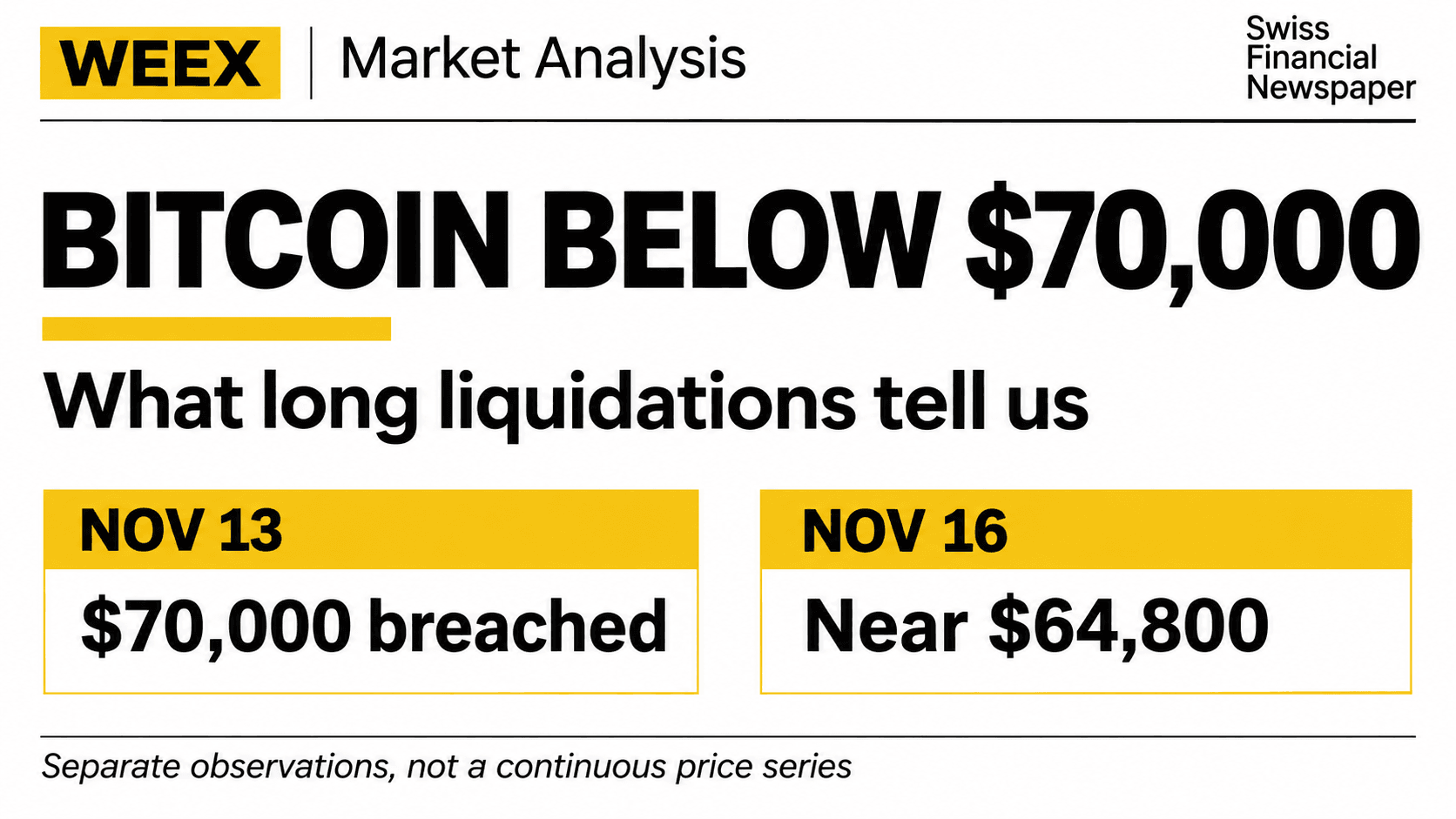
Why Did Bitcoin (BTC) Drop Below $70,000? What Long Liquidations Tell Us
See why Bitcoin fell below $70,000 on November 13, how long liquidations amplified the decline, and what to watch before calling a rebound. If you already plan to trade, you can check whether your activity qualifies for the WEEX Lucky Eggs event, scheduled to run through November 25, 2026 (UTC+8).
Binance Hack Exposes Cybersecurity Gaps at Crypto Exchanges
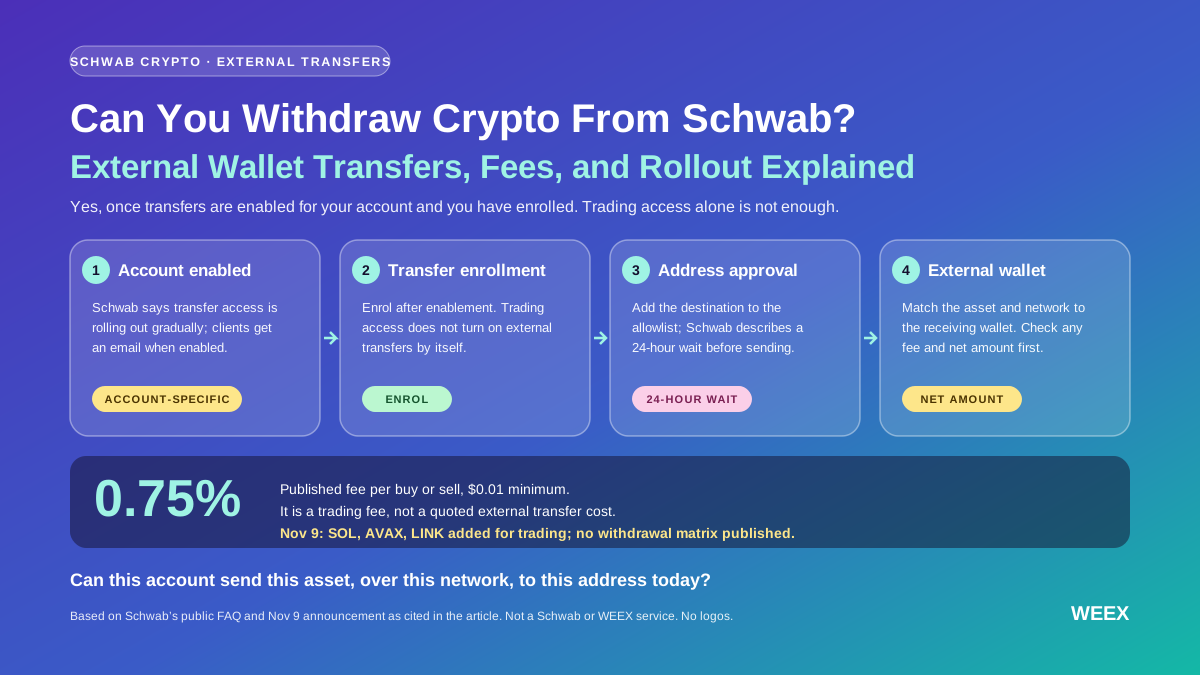
Can You Withdraw Crypto From Schwab? External Wallet Transfers, Fees, and Rollout Explained
Find out when Schwab Crypto allows external wallet withdrawals, how the 24-hour address wait works, and why the 0.75% trading fee is separate.
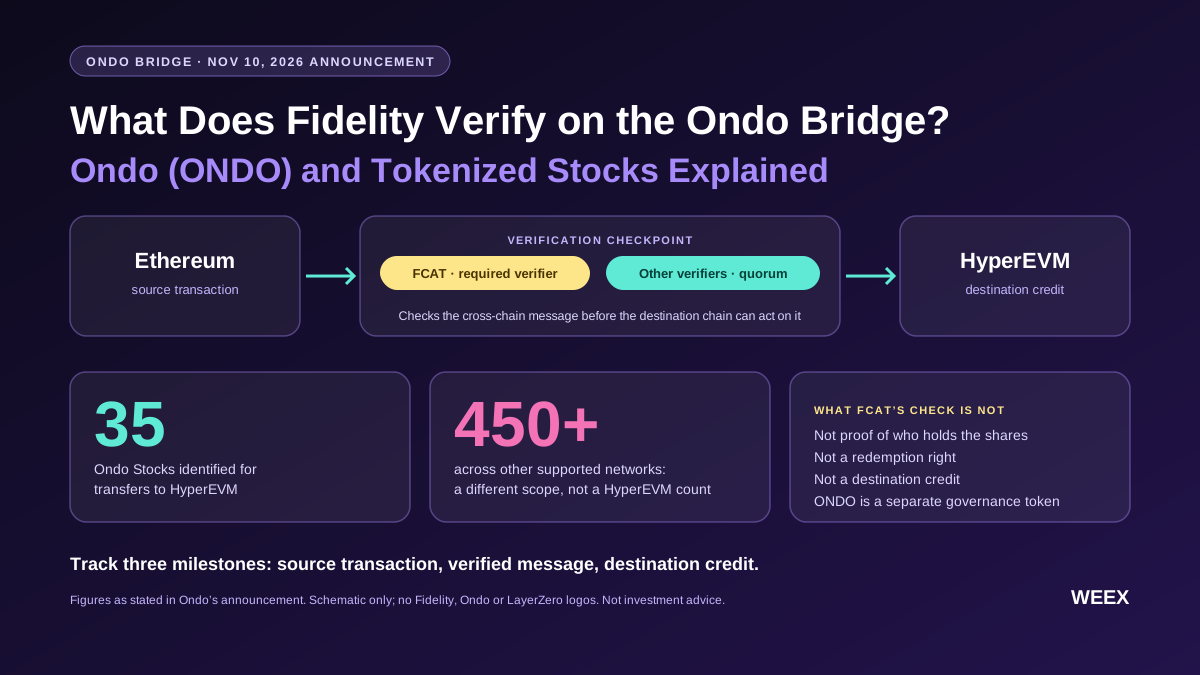
What Does Fidelity Verify on the Ondo Bridge? Ondo (ONDO) and Tokenized Stocks Explained
Learn what Fidelity’s FCAT verifies on the Ondo Bridge, how to check a tokenized stock transfer, and why Ondo Stocks differ from the ONDO token.
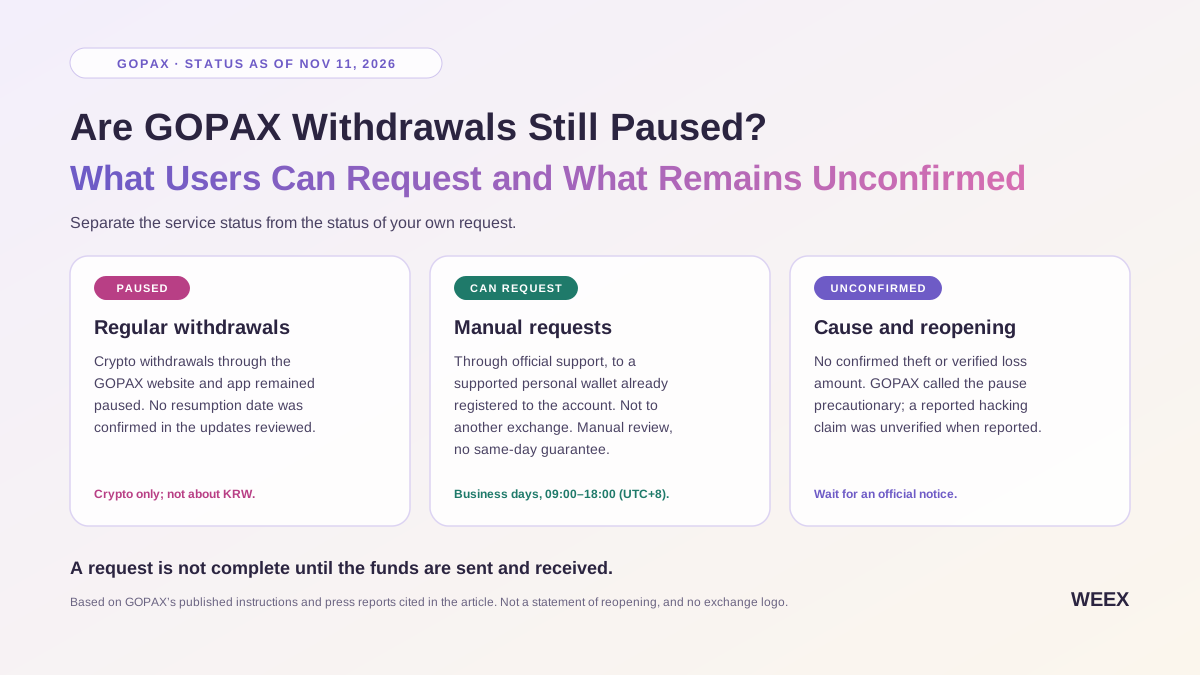
Are GOPAX Withdrawals Still Paused? What Users Can Request and What Remains Unconfirmed
Check the latest GOPAX withdrawal status, which wallets qualify for manual requests, and how to tell whether your crypto withdrawal has been sent.
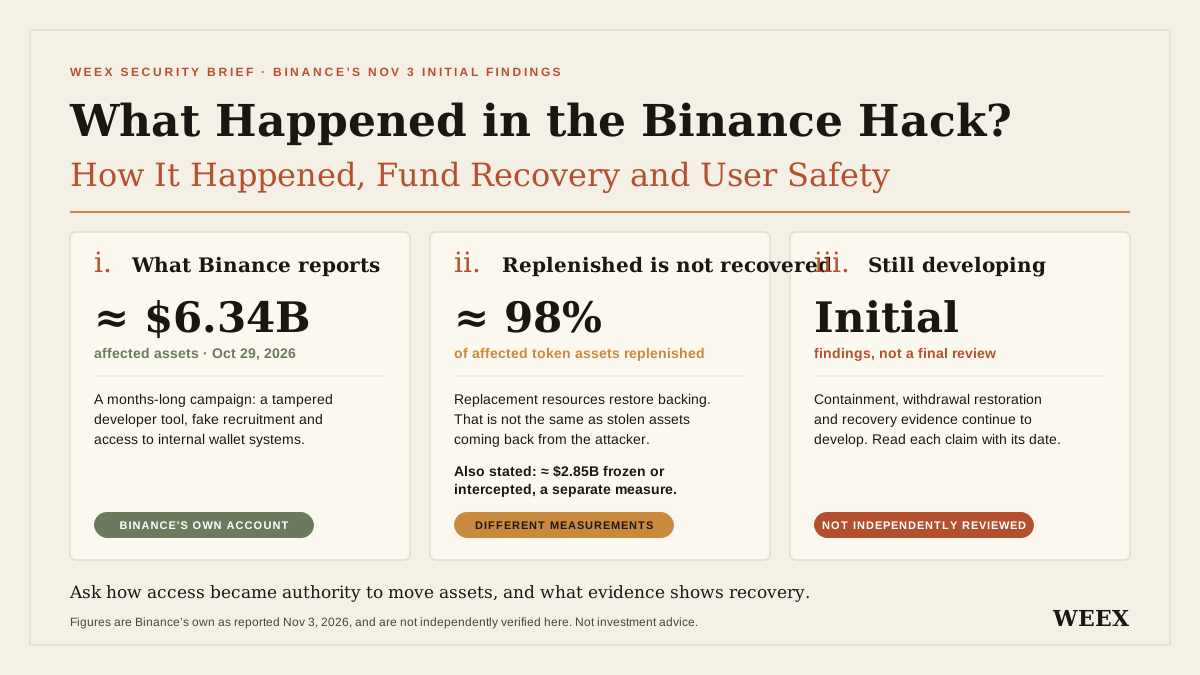
What Happened in the Binance Hack? How It Happened, Fund Recovery and User Safety
What happened in the Binance hack? Review the attack timeline, latest fund replenishment, recovery limits and practical steps to protect your account.
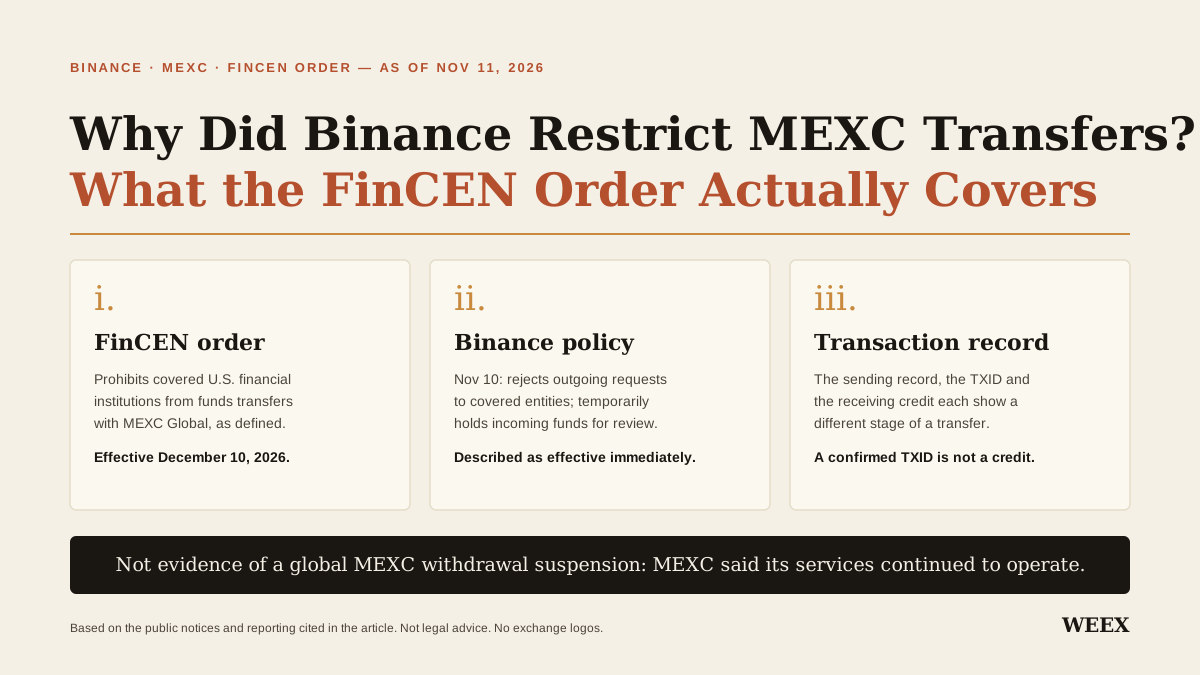
Why Did Binance Restrict MEXC Transfers? What the FinCEN Order Actually Covers
Find out why Binance restricted MEXC transfers, when the FinCEN order takes effect, and what to check if your crypto deposit is held for review.

What Is Elysium Crypto? The Hyperliquid Layer 2, Gas Fees, and Token Confusion Explained
Learn what Elysium is, why it uses HYPE for gas, how KNTQ buybacks are designed, and how to distinguish bridge TVL from actual DeFi activity.
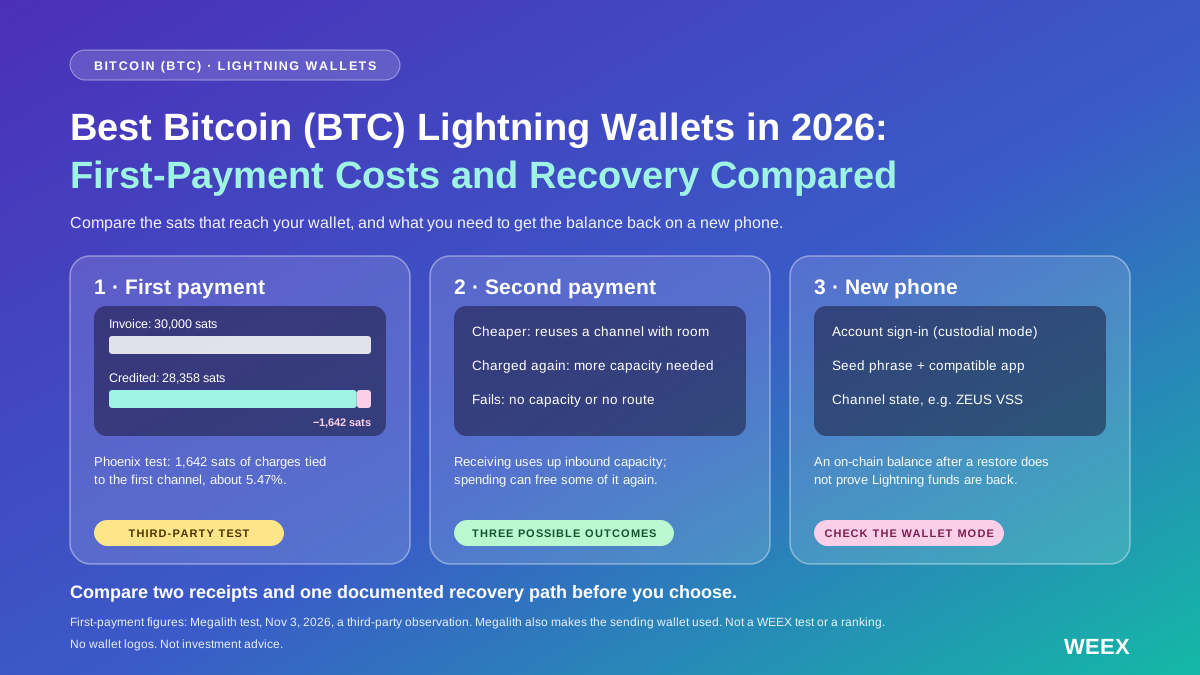
Best Bitcoin (BTC) Lightning Wallets in 2026: First-Payment Costs and Recovery Compared
Key Takeaways Lightning Network wallets enable fast and cost-effective Bitcoin transactions by using off-chain channels. A variety of…
Crypto ATM Fees: How Much Bitcoin (BTC) Do You Get for $100?
See how much Bitcoin $100 buys at a crypto ATM. Compare two sample quotes, calculate the all-in cost, and learn which fees not to count twice.
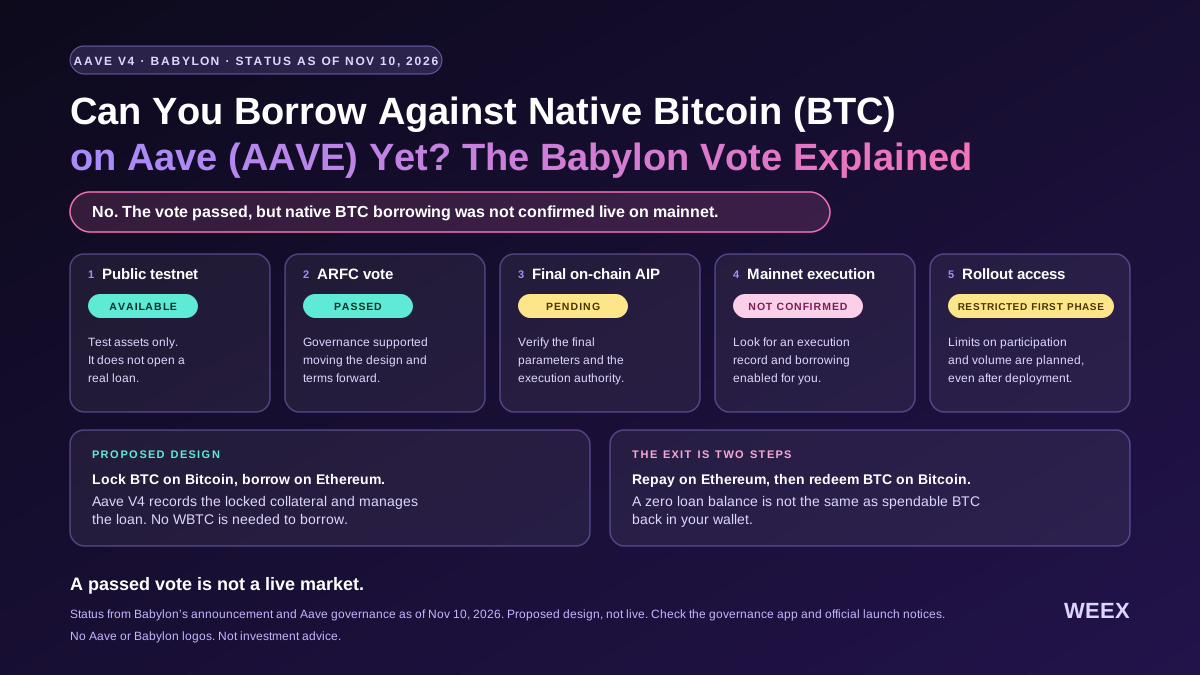
Can You Borrow Against Native Bitcoin (BTC) on Aave (AAVE) Yet? The Babylon Vote Explained
Can you borrow against native Bitcoin on Aave yet? See what the Babylon vote approved, what still needs to launch, and how BTC liquidation would work.
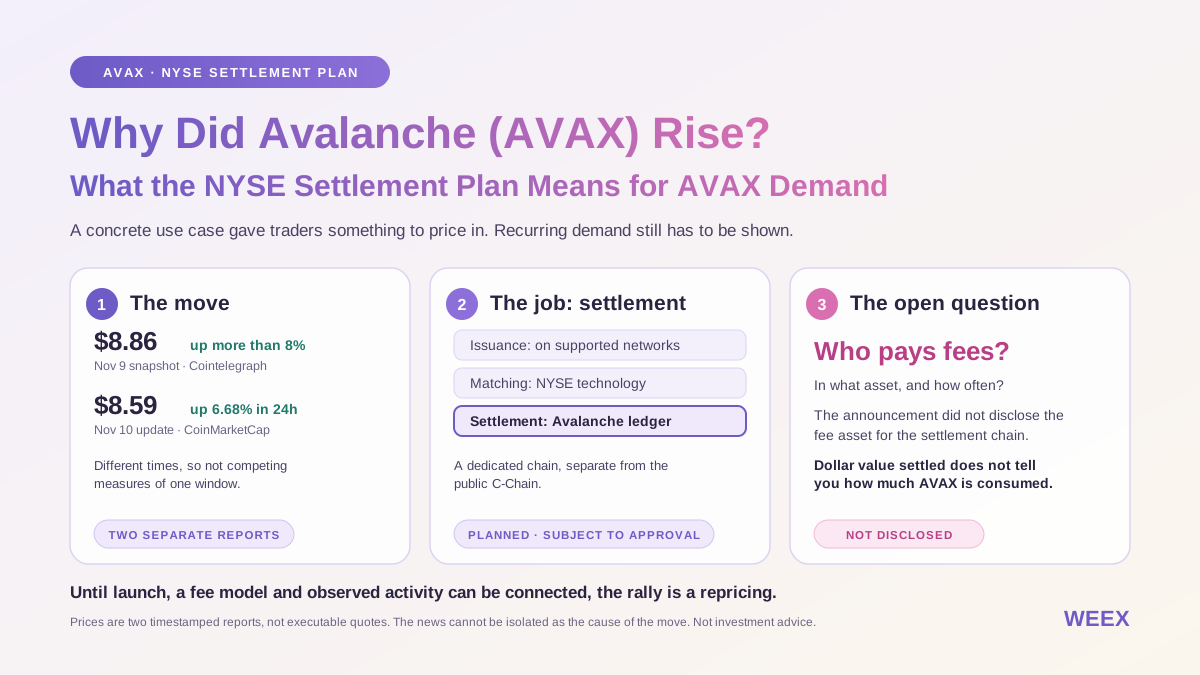
Why Did Avalanche (AVAX) Rise? What the NYSE Settlement Plan Means for AVAX Demand
See why Avalanche (AVAX) rallied after the NYSE settlement announcement, how the dedicated chain would work, and what could create demand for AVAX.

Zcash (ZEC) Price Up 7% in 24 Hours: Trading Volume, Market Context and What to Verify
ZEC rose roughly 5% to 7% to about $1,295 to $1,320 on November 5, 2026, on about $1.2 billion in 24-hour volume, but no source confirms why. The NU7 upgrade, which cuts block time from 75 to 25 seconds, is due around November 5 to 6 and is unconfirmed.
Will NYSE Tokenized Stocks Have Voting Rights? What the Broadridge Plan Means for Investors
Will NYSE tokenized stocks have voting rights? Understand Broadridge’s plan, shareholder eligibility, record dates and how stock futures differ.
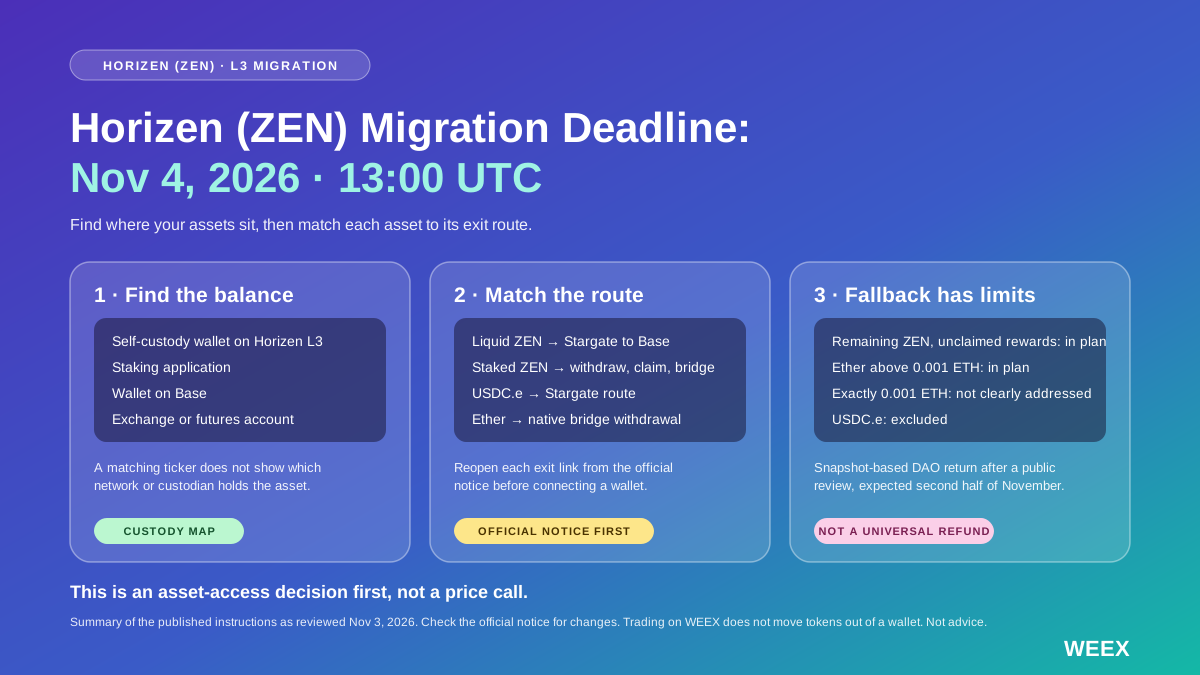
Horizen (ZEN) Migration Deadline: What to Move Before November 4 and What Happens If You Miss It
Horizen (ZEN) migration closes November 4. Check asset-specific bridge routes, wallet requirements, recovery exclusions and what to do if you miss it.
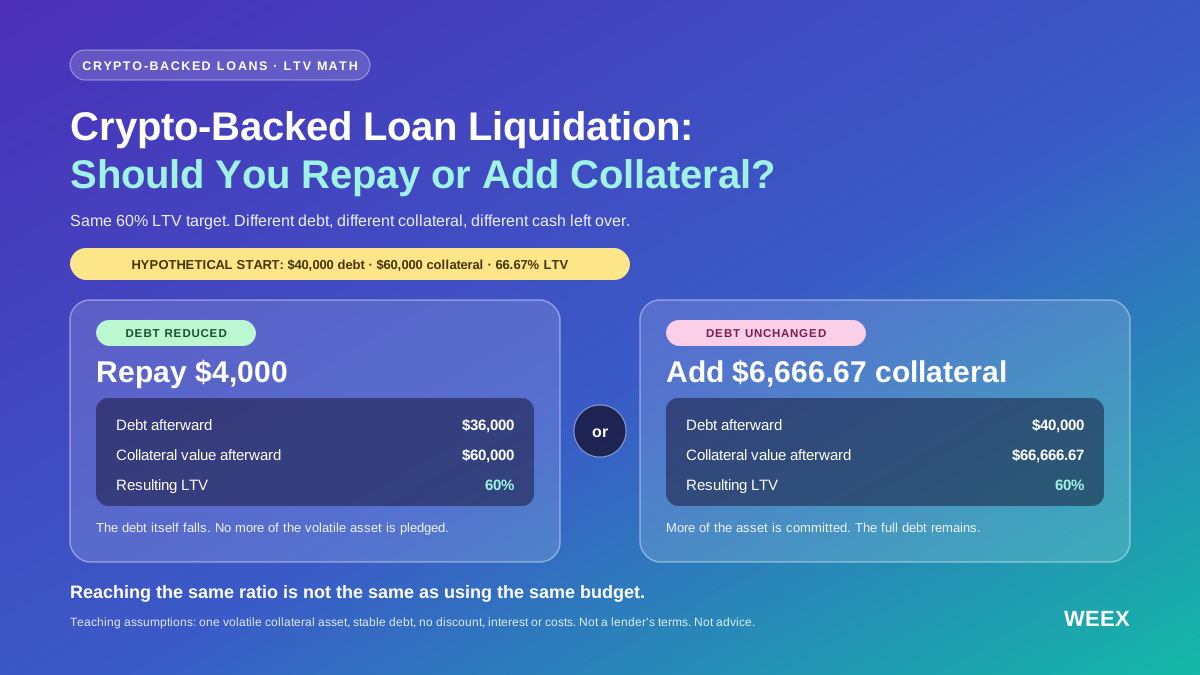
Crypto-Backed Loan Liquidation: Should You Repay or Add Collateral?
Facing crypto-backed loan liquidation? Compare repayment and collateral top-ups using equal budgets, LTV calculations, stress tests and protection limits.
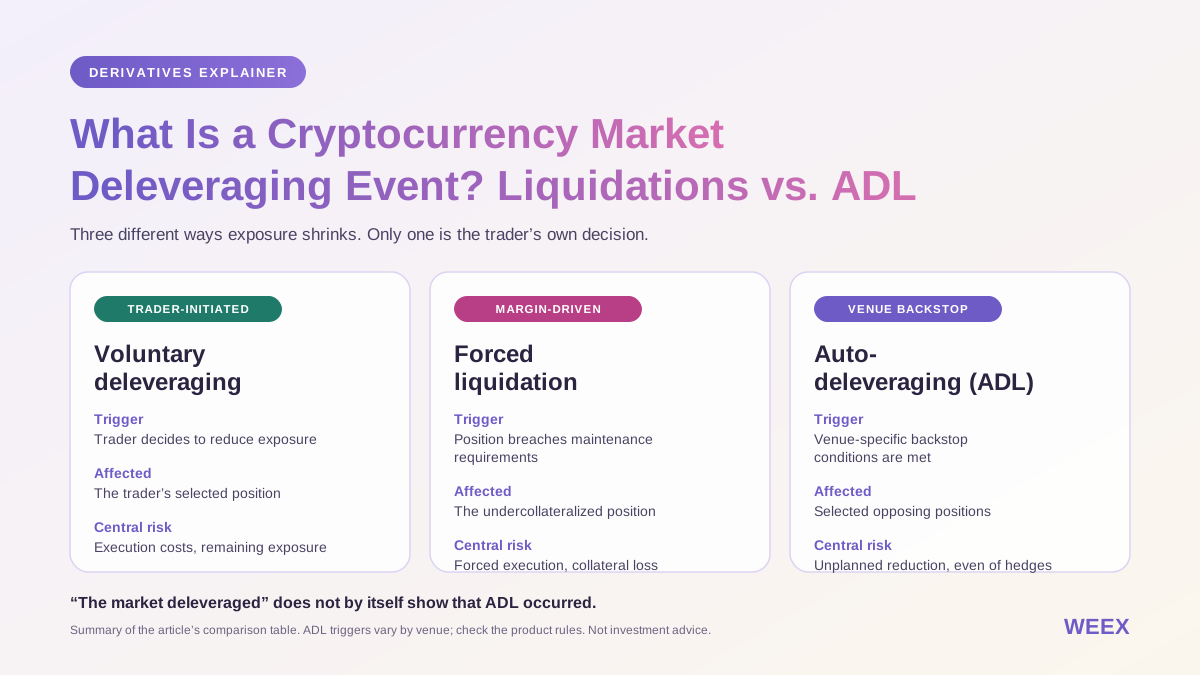
What Is a Cryptocurrency Market Deleveraging Event? Liquidations vs. ADL
Understand a cryptocurrency market deleveraging event: liquidation vs. ADL, misleading open-interest declines, hedge risks, and checks before trading.
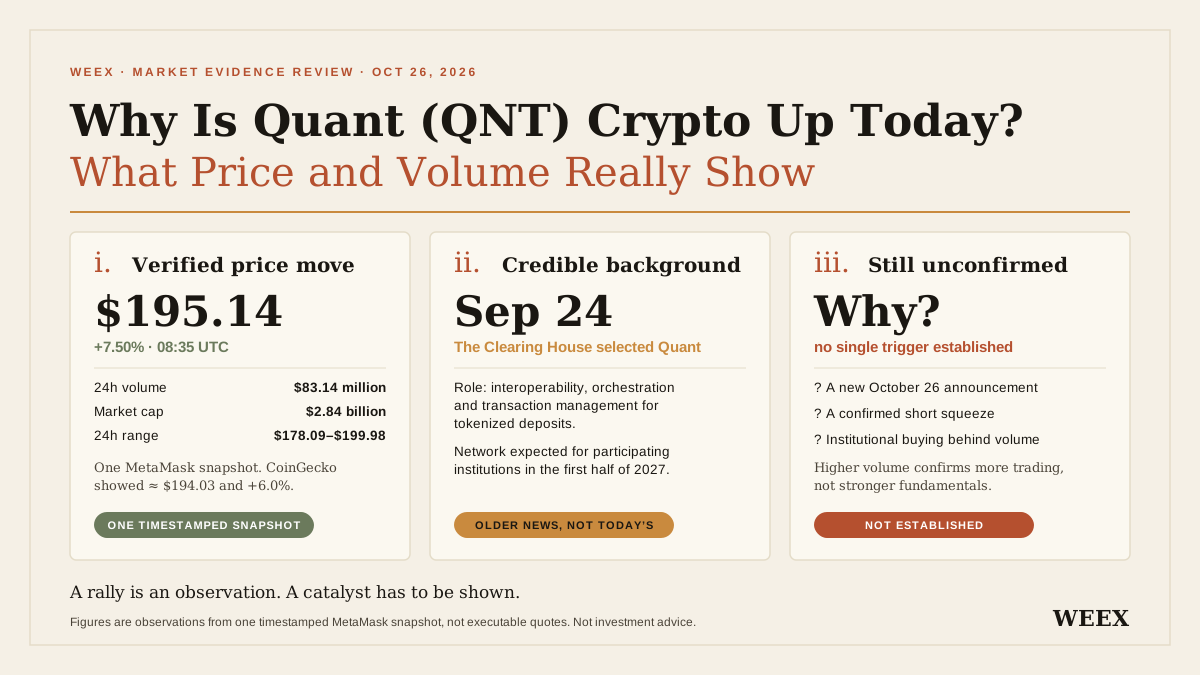
Why Is Quant (QNT) Crypto Up Today? What Price and Volume Really Show
Why is Quant (QNT) up today? Review price and volume evidence, the banking partnership timeline, token-demand assumptions, and risks before trading.
Base Token Trading Rewards: Share $100,000 on WEEX
Join the WEEX Base token trading rewards campaign and share $100,000 by trading AERO, VIRTUAL, ZORA, KAITO and other eligible Base ecosystem tokens.
Tokens and Stocks: Tensions in the Crypto Market
ShapeShift Founder Stakes 341,700 VVV Worth Approximately $3.98 Million
Bankless co-founder: After liquidating ETH, has purchased VVV, NEAR, ZEC, HYPE, LIT
Data: Whale Loracle closed short positions in BTC, TON, etc., with HYPE short losses exceeding 36 million dollars
Data: The majority of the cryptocurrency market is up, with the AI sector rising by 2.35%
Latest articles


Latest coin listings on WEEX


