
XDC vs XRP: Which Payment-Focused Blockchain is Superior?

 Prefer us on Google


XDC and XRP are separate blockchains specialized in payments, each with its own coin and consensus mechanism, with XRP Ledger having a significantly larger network in terms of scale. In the comparison of XDC vs XRP, XRP holds an advantage in size and has been operational since 2012. On the other hand, XDC is a network built for trade finance and Ethereum-style smart contracts.
As of mid-November, there was a difference of about 1.5 billion coins in the circulating supply of XDC between CoinMarketCap and CoinGecko, while the supply of XRP was counted the same by both sites. This discrepancy affects the comparison of scale. According to each tracker, XRP's market capitalization is approximately 105 times that of XDC on CoinMarketCap and about 113 times on CoinGecko, illustrating how small XDC appears depending on the reference site.
XDC vs XRP: What is the Total Number of Coins?
The number of XRP coins starts from a fixed figure. The ledger generated 100 billion XRP at launch, and both trackers list this as the maximum supply. A small fee is burned with each standard transaction, so the total amount can decrease but will never increase. As of mid-November 2026, there were just under 99.99 billion XRP remaining in the ledger. Both trackers count about 63.52 billion XRP as the circulating supply.
Neither tracker lists the maximum supply of XDC, but they both agree on a total supply of about 38.1 billion. However, opinions on circulating supply differ. As of mid-November, CoinMarketCap counted about 21.49 billion XDC as circulating, while CoinGecko counted about 19.95 billion XDC.
|-------------------|----------------------|---------------| | Mid-November 2026 | CoinMarketCap | CoinGecko | | Counted circulating supply of XDC | 21.49 billion | 19.95 billion | | Total supply of XDC | 38.11 billion | 38.07 billion | | Market cap of XDC (mid-November close) | $626.72 million | $582.60 million | | Counted circulating supply of XRP | 63.52 billion | 63.52 billion | | Market cap of XRP (mid-November close) | $66.05 billion | $66.07 billion | | Market cap ratio of XRP to XDC (times) | 105.3 times | 113.4 times | | Source of XDC count data | Feed from XDC block explorer | Not specified |
CoinMarketCap cites the feed from the XDC block explorer as the source for the XDC figures. On the other hand, CoinGecko does not specify a source, and the circulating supply has not changed by a single coin from the end of October to mid-November. CoinMarketCap recorded an increase of about 1.6 million coins during the same period.
In other words, the market cap of XDC and any ratios based on it will vary depending on which tracker you choose. In the case of XRP, both sites count in the same way, so there are no such discrepancies.
What are the Differences Between XRP and XDC?
Both target the same type of customer base but are completely separate networks. XRP is the coin of the payment network "XRP Ledger," which started operations in June 2012. XDC is the coin of the "XDC Network," a blockchain focused on executing Ethereum-style smart contracts and tokenizing real-world assets for business use.
|-------------|-------------------------------------|-----------------------| | Feature | XDC | XRP | | Network | XDC Network | XRP Ledger | | Block consensus method | Delegated Proof-of-Stake (XDPoS 2.0) | Each server selects trusted validators | | Main use | Trade finance and tokenization | Payments | | Maximum supply | Not specified by either tracker | 100 billion | | Phemex futures | Perpetual futures to be delisted in February 2026 | XRP/USDT and XRP/USDC currently listed |
Both coins can be stored in non-custodial wallets where you manage your own private keys, provided your wallet supports the respective coin's network.
XDC vs XRP: How Do Each Network Achieve Transaction Consensus?
In the XRP Ledger, each server maintains a list of trusted validators called the Unique Node List, and a new ledger version is accepted once a sufficient number agree. The consensus-related documentation for XRP Ledger states, "As long as less than 20% of the trusted validators are malicious nodes, consensus can continue without issue."
To approve a fraudulent transaction, more than 80% of these validators must collude. According to the same document, there is no need for a competition that wastes resources on this process, so mining does not exist.
XDC operates on XDPoS 2.0, which stands for XinFin Delegated Proof-of-Stake. The documentation for XDPoS 2.0 explains three elements: master nodes are selected through staking and delegation, consensus on blocks is formed using an engine called HotStuff, and the reward system pays nodes that maintain the network.
HotStuff is Byzantine fault-tolerant, meaning it can continue to operate even if some nodes go down or send false messages.
In summary, XDC secures its network through staking and rewards, while XRP Ledger relies on the trusted list chosen by each server operator. If the focus is on who can participate, that is the real divergence point between the two. In XDC, the role of a node derives from the staked coins behind it, while in XRP Ledger, it is determined by how many other servers listen to that node's voice.
-- Price
XDC vs XRP: What Were They Created For?
According to the history page of XRP Ledger, the three founders began developing a digital asset "built specifically for payments" in 2011, and the ledger was launched the following year. Its strength lies in the movement of value across accounts and currencies.
XDC targets banks and trade. The introduction document for the network describes XDC as an Ethereum-compatible blockchain that "specializes in tokenization for real-world decentralized finance (DeFi)."
Tokenization means placing rights to physical assets like invoices and letters of credit onto the blockchain as tokens. The XDC documentation includes guides on trade finance and banking messaging, allowing developers to reuse Ethereum tools.
If you are looking for a chain to move money, that is the role XRP Ledger was designed for. If you are looking for a chain to tokenize trade documents using Ethereum tools, XDC is focusing its efforts there.
Is XDC Compliant with ISO 20022?
According to its own explanation, XDC is designed to be compatible with ISO 20022. The ISO 20022 page for XDC states, "XDC Network is designed with ISO 20022 compatibility," linking it to the messaging systems used by banks and financial institutions. However, there is no mention of any external organization that has verified this claim.
ISO 20022 is an international standard for electronic messages between financial institutions, underlying many payment instructions' data formats. XDC's guide explains the steps to connect those messages to the chain in three stages, starting with mapping message fields, integrating a layer in the middle, and ending with a connection to the bank's accounting system. In practice, compatibility here means software that converts between bank messages and XDC transactions.
What is the Relationship Between XDC and XRP?
There is none. XDC and XRP operate on independent ledgers with separate consensus systems and separate coins, and neither network's consensus documentation mentions the other.
What they have in common is their target market. XRP Ledger deals with payments, while XDC targets banks with trade finance and ISO 20022-compliant tools.
According to the history page of the ledger, the founders of XRP Ledger established the company Ripple in September 2012 and provided it with 80 billion XRP. According to the same page, Ripple has since placed the majority of that in escrow. On the other hand, XDC's documentation states that the XDC Foundation, established in 2021, is the driving force behind the network.
Is XDC Superior to XRP?
In terms of scale and supply, XRP is the more powerful payment network. On both trackers, XRP's market cap is over 100 times that of XDC, and both trackers count XRP's circulating supply with the same figures (which was not the case for XDC).
XDC's strength lies in Ethereum-style smart contracts for trade finance and tokenized assets, making it a more suitable option for that specific use case. However, compared to XRP, its target is narrower and its scale much smaller.
For traders, XRP is also a coin with futures trading active on Phemex, and the funding rate is exchanged between long and short positions every eight hours to bring the contract price closer to the spot price.
What Factors Influence the Price Outlook for XDC and XRP?
We have not set price targets for either coin. The total supply of XRP decreases only through fee burns, so its price is influenced by demand and how quickly Ripple's held coins enter the market. According to the ledger's documentation, Ripple regularly sells XRP, and coins are gradually released from escrow. For XDC, the circulating supply figures themselves are uncertain, and any forecasts based on market cap will carry over the discrepancies between trackers.
Disclaimer: This article is for informational purposes only and does not constitute investment advice. Trading in cryptocurrencies involves significant risks. Please conduct your own research before making investment decisions.
This content is provided for general informational purposes only and doesn't constitute financial, investment, legal, or tax advice. Any events, rewards, online promotions, or related information mentioned herein should not be considered a recommendation, solicitation, or invitation to purchase, sell, trade, or otherwise deal in any crypto assets. Crypto assets are highly volatile and may result in loss. The availability of WEEX services, products, and related events may vary by region. You are responsible for ensuring that your participation is in accordance with applicable local laws and regulations.
You may also like

Gnosis Safe wallet reportedly drained of $6.45M in suspected exploit

Thailand Stablecoin Transfer Limit: What the SEC Draft Proposes

Tesla Autopilot Team Veterans Found Simulation Startup Valued at $1 Billion
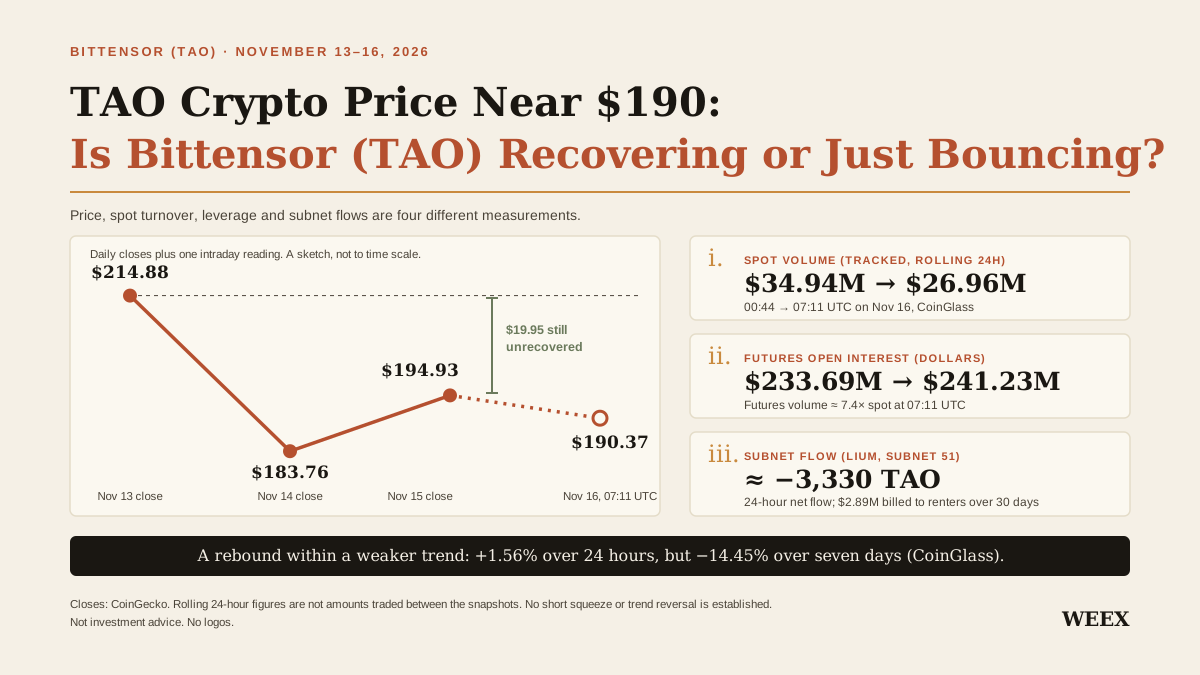
TAO Crypto Price Near $190: Is Bittensor (TAO) Recovering or Just Bouncing?
TAO bounced near $190. Compare spot volume, futures positioning, and Bittensor subnet flows to see what would confirm a more durable recovery.
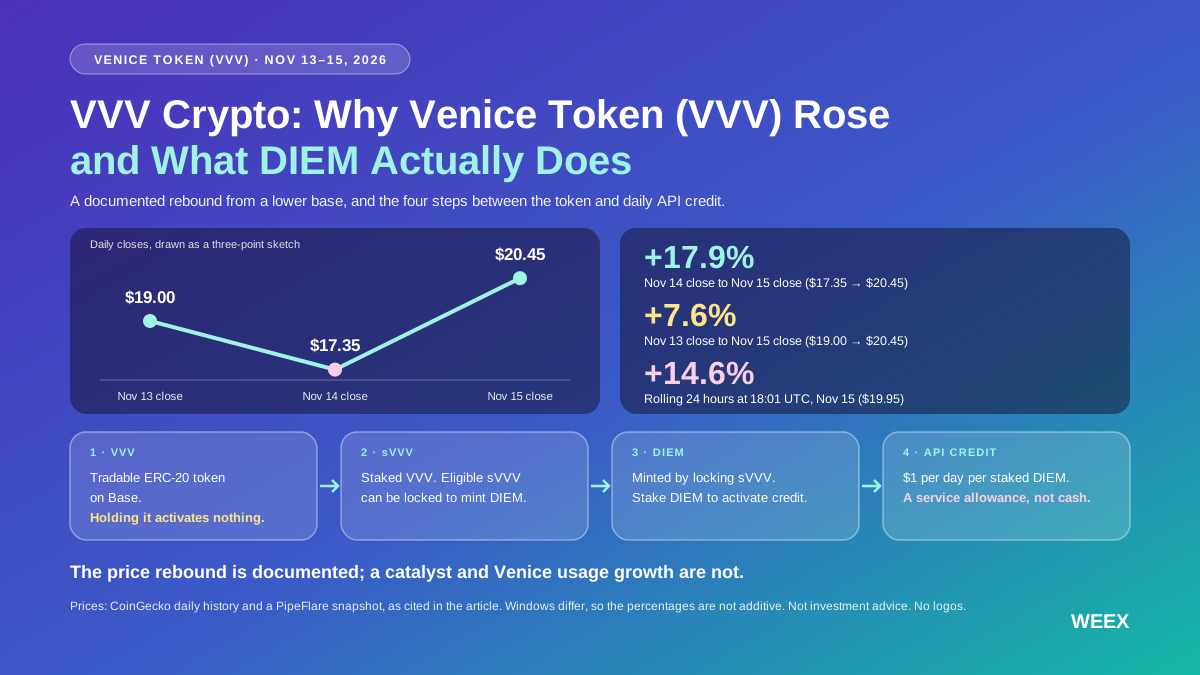
VVV Crypto: What Is Venice Token, Why Venice Token (VVV) Rose and What DIEM Actually Does
Venice Token rose about 14.6% in one November 15 snapshot. Learn what the data shows, how VVV staking works, and what DIEM’s daily API credit buys.
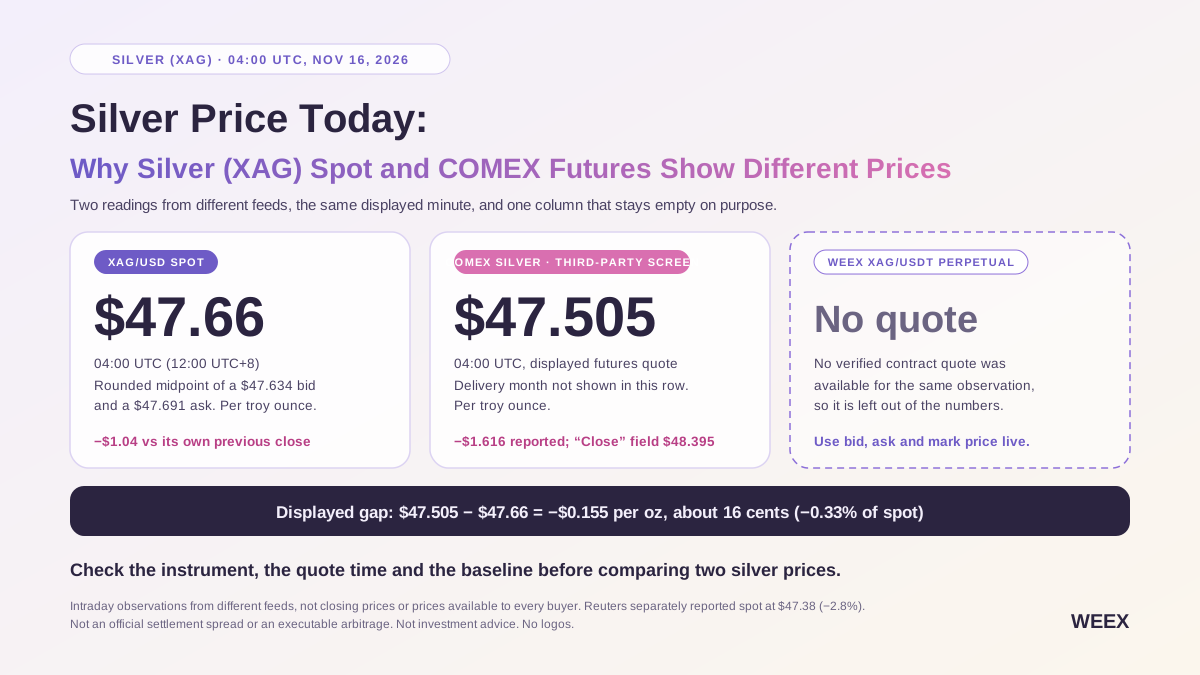
Silver Price Today: Why Silver (XAG) Spot and COMEX Futures Show Different Prices
Silver traded near $47–$48 on November 16. Compare XAG/USD spot, COMEX silver futures, and XAG/USDT perpetuals, and learn why their prices differ.

Options Big Bets | Nvidia's $118 Million Cross-Period CALL Spread Bets on Mid to Long-Term Upside; AMD's Bearish Spread Combined with Long-Term Bullish Spread, Underlying Tensions Between Bulls and Bears

Galaxy Securities: A-shares Market's Downward Risk Converges, Focus on Sector Rotation Opportunities

How $10,000 in stablecoins would have gained €420 without earning interest

Bitcoin now looks cheap by one measure after $1 billion in ETF outflows
These Bitcoin miners have halved their hashrate, while their AI revenues have doubled

Bitcoin: Should We Fear the Worst or Bet on Hopes for a Rebound?

This Under-the-Radar Stock Is Behind Steak 'n Shake's MAHA-Driven Growth. Should You Buy?

The Privacy Paradox of Bitcoin: Satoshi Acknowledged It Long Ago, Have the Successors Solved It?

[Analysis] Two Barriers Preventing Bitcoin from Rising

No New Money Inflows in Dogecoin ETFs for a Month

XRP loans trigger 883 liquidations, and $53M remains at risk

CoreWeave and Nebius Group: 1 Soars, the Other 1 Plunges. A Tale of 2 Neoclouds

Research Reveals 3D Spatial Navigation Map of Hand in the Brain to Aid Brain-Machine Interface Development

Yen Fluctuations Highlight Current Trading Difficulties, Investors Have Huge Divergence on Long-term Outlook
BNY Mellon Adds to Invesco Galaxy Bitcoin ETF: What Changes with the Custody Filing?
South Korea Proposes Withdrawal Suspension for Cryptocurrency: What Happens When Exchanges Suspect a Hack

Exclusive: Canton Strategic CEO warns MEV could raise costs for tokenized stock traders

CARF Customer Transaction Information Report: What Data Processing is Required from On-Chain Transactions to Tax Reporting?

Bottomline Completes First USDC Transfers Inside Its Enterprise Payments Platform

Bitcoin: Glassnode warns of liquidity shortage and capital flight

9-Minute Attack Window, 7.1 Million BTC Exposed: How Bitcoin Can Save Itself from Quantum Threats
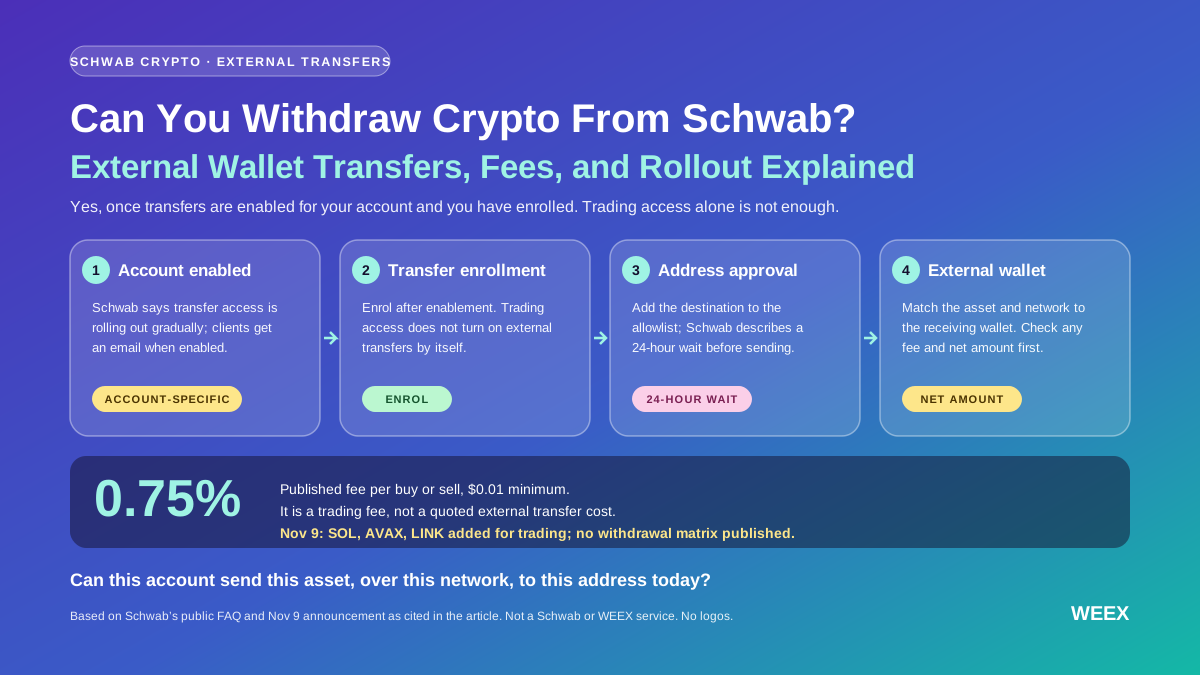
Can You Withdraw Crypto From Schwab? External Wallet Transfers, Fees, and Rollout Explained
Find out when Schwab Crypto allows external wallet withdrawals, how the 24-hour address wait works, and why the 0.75% trading fee is separate.

Adam Back Predicts Bitcoin Will Reach $1 Million by 2028

Bull Market Gains, Bear Market Losses: How to Calculate Taxes on Cryptocurrency Investments?
Gnosis Safe wallet reportedly drained of $6.45M in suspected exploit
Thailand Stablecoin Transfer Limit: What the SEC Draft Proposes
Tesla Autopilot Team Veterans Found Simulation Startup Valued at $1 Billion
TAO Crypto Price Near $190: Is Bittensor (TAO) Recovering or Just Bouncing?
TAO bounced near $190. Compare spot volume, futures positioning, and Bittensor subnet flows to see what would confirm a more durable recovery.
VVV Crypto: What Is Venice Token, Why Venice Token (VVV) Rose and What DIEM Actually Does
Venice Token rose about 14.6% in one November 15 snapshot. Learn what the data shows, how VVV staking works, and what DIEM’s daily API credit buys.
Silver Price Today: Why Silver (XAG) Spot and COMEX Futures Show Different Prices
Silver traded near $47–$48 on November 16. Compare XAG/USD spot, COMEX silver futures, and XAG/USDT perpetuals, and learn why their prices differ.
Latest articles


Latest coin listings on WEEX


