
Japan Crypto Tax 2025: A Complete Guide

 Prefer us on Google


As cryptocurrencies become an integral part of personal finance in Japan, understanding your crypto tax obligations is crucial for staying compliant and avoiding unwanted surprises from the tax authorities. The landscape of Japanese crypto taxation is complex, with rates that can reach up to 55%, strict reporting requirements, and a variety of scenarios that can trigger tax events. Whether you are a casual investor, an active trader, or participate in DeFi protocols, it is essential to know when taxes apply, how crypto income is classified, and the upcoming reforms that will influence your tax strategy in 2025 and beyond. This comprehensive Japan Crypto Tax 2025 guide provides practical insights, step-by-step explanations, and real-world examples—empowering you to manage your obligations confidently.
Do You Pay Cryptocurrency Taxes in Japan?
Legal Classification and Overview
Cryptocurrency is considered property and classified as “miscellaneous income” under Japanese law, specifically within the Payment Services Act (PSA) and the Financial Instruments and Exchange Act (FIEA). This designation means profits from crypto are generally subject to individual income tax at progressive rates. You are required to declare your crypto income on your tax return if your total miscellaneous income, including profits from cryptocurrencies, exceeds 200,000 JPY in a given tax year.
Who Needs to File?
| Residency Status | Tax Requirement |
|---|---|
| Japanese residents | Pay tax on worldwide crypto income if over 200,000 JPY total income |
| Non-permanent residents | Flat 20.42% tax on all Japan-earned income, regardless of total amount |
| Permanent residents abroad | Taxed if they have income sourced to Japan |
For those earning less than 200,000 JPY from all miscellaneous income sources (including crypto) and not claiming special deductions (such as medical or hometown tax credits), filing is not required. However, if deductions are claimed or your overall miscellaneous income exceeds the threshold, you must report all profits, regardless of amount.
Real-World Example
Let’s say Mika, a Tokyo-based teacher, makes 250,000 JPY of profit buying and selling Ethereum in 2025. Since her crypto gains alone exceed the 200,000 JPY threshold, she must include her profits on her annual income tax return—even if her full income puts her in a lower tax bracket.
How Much Tax Do You Pay on Crypto in Japan?
Tax Rates Depend on Total Taxable Income
Crypto profits in Japan are taxed using progressive “miscellaneous income” rates, which can be as high as 55% (this includes both the national and local inhabitant/municipal tax). Unlike capital gains on stocks, which are capped at 20%, your crypto gains are combined with other income and taxed accordingly.
Crypto Tax Rates Table for Individuals (2025)
| Taxable Income (JPY) | National Tax Rate | Municipal Tax | Combined Max Rate |
|---|---|---|---|
| 0 – 1,950,000 | 5% | 10% | 15% |
| 1,950,000 – 3,300,000 | 10% | 10% | 20% |
| 3,300,000 – 6,950,000 | 20% | 10% | 30% |
| 6,950,000 – 9,000,000 | 23% | 10% | 33% |
| 9,000,000 – 18,000,000 | 33% | 10% | 43% |
| 18,000,000 – 40,000,000 | 40% | 10% | 50% |
| 40,000,000+ | 45% | 10% | 55% |
Note: All rates above include the 10% inhabitant tax. Non-permanent residents are subject to a flat rate of 20.42% on Japanese-sourced income.
How Progressive Taxation Works
Different portions of your income are taxed at different rates. For example, if your total taxable income is 7,000,000 JPY, your income is taxed partially at 5%, then 10%, then 20%, and the amount above 6,950,000 JPY at 23%—plus the mandatory 10% municipal tax for each bracket.
Income Thresholds and Exemptions
| Scenario | Do You Need to Report? | Notes |
|---|---|---|
| Miscellaneous income ≤ 200,000 JPY | No (unless claiming deduction) | Exemption applies only without other special deductions |
| Miscellaneous income > 200,000 JPY | Yes | Income must be included in tax return |
| Claiming deductions | Yes (regardless of amount) | Deductions include medical, hometown, earthquake relief etc. |
Example: Calculating Tax on Crypto Gains
Suppose Kenji sold Bitcoin in 2025 and realized a gain of 500,000 JPY. His total income, including salary, is 4,000,000 JPY. The gain is added to his total taxable income, and the relevant rates from each bracket apply accordingly.
Can the National Tax Agency (NTA) Track Crypto?
Regulatory Framework
Japan has strict regulations in place mandating that all Crypto-Asset Exchange Service Providers (CAESPs) register with the Financial Services Agency (FSA). These exchanges are required to implement robust Know Your Customer (KYC) procedures, monitor transactions, and share data with regulators as needed.
Compliance and International Collaboration
- The NTA uses data from FSA-registered exchanges, tax return records, and blockchain analysis to monitor compliance.
- Japan is a founding member of the Financial Action Task Force (FATF) and a member of the Asia-Pacific Group on Money Laundering (APG), committing to global exchange of information.
- In 2021, the first public conviction for crypto tax evasion in Japan resulted in a one-year sentence and a penalty exceeding 22 million JPY.
How Does the NTA Identify Crypto Investors?
Japanese authorities track your cryptocurrency activity through:
- Data shared by local exchanges (who are required to submit user information)
- Blockchain monitoring technologies to link wallet addresses and identities
- Cross-border information exchanged under FATF agreements
If you use Japanese-registered crypto exchanges, your identity and transaction details are likely reported to the NTA.
-- Price
How is Crypto Taxed in Japan?
Taxable Events: When is Tax Due?
Tax applies in Japan both when you sell or dispose of cryptocurrency and when you receive income in crypto. The key taxable events include:
| Crypto Transaction Type | Is It Taxable? | Tax Treatment/Trigger | Example |
|---|---|---|---|
| Selling crypto for fiat (JPY) | Yes | Miscellaneous income | Selling BTC for JPY on an exchange |
| Trading crypto for crypto (incl. NFTs, stablecoins) | Yes | Miscellaneous income | Swapping ETH for USDT or an NFT |
| Buying goods/services with crypto | Yes | Miscellaneous income | Paying restaurant bill with crypto |
| Gifting crypto | Yes | Miscellaneous income for recipient | Sending ETH as a gift to a friend |
| Getting paid in crypto (salary, freelancing) | Yes | Miscellaneous income at FMV | Receiving payment for work in USDC |
| Mining crypto | Yes | Miscellaneous income at FMV | Receiving mined BTC |
| Staking or DeFi rewards | Yes | Miscellaneous income at FMV | Earning rewards on staked assets |
| Airdrops | Yes | Miscellaneous income at FMV | Receiving new token from airdrop |
| Referral/Signup bonuses | Yes | Miscellaneous income at FMV | Earning bonus for inviting friend to exchange |
| Transferring crypto between own wallets | No | – | Moving coins between personal wallets |
| Buying crypto with fiat (JPY) | No | – | Buying BTC for JPY |
| Holding crypto | No | – | Simply holding crypto in your account |
| Donating crypto to charity | No | – | Donating ETH to registered nonprofit |
Gain/Loss Calculation
For disposals (selling, trading, spending, gifting), your gain or loss must be calculated as follows:
Gain or Loss = Proceeds (in JPY) – Cost Basis (in JPY)
- Proceeds: The JPY value received or the fair market value at time of disposal
- Cost Basis: The JPY value paid to acquire the crypto, including fees
Example:
If you bought 1 ETH for 300,000 JPY and later sold it for 450,000 JPY, your taxable gain would be 150,000 JPY.
Income Recognized When Receiving Crypto
When you receive crypto as income (from mining, staking, airdrops, bonuses, or work), you recognize the fair market value in JPY on the date received as miscellaneous income. When you later dispose of these coins, you may also realize an additional capital gain or loss based on the difference between the value when you received them and the value at disposal.
Example:
- You receive staking rewards worth 80,000 JPY (taxed as income on date received)
- Later, you sell these tokens for 100,000 JPY (the 20,000 JPY gain is taxed again as miscellaneous income)
Tax-Free Events
You do not pay tax in Japan for these activities:
- Buying crypto with yen or other fiat currency
- Holding cryptocurrencies
- Transferring assets between your own wallets
- Donating to registered charities (subject to rules)
Tax Deadlines and Reporting
- Tax year: January 1 to December 31, 2025
- Filing period for 2025: February 16, 2026, to March 15, 2026
Taxpayers must file their income tax return by March 15, 2026, covering all taxable crypto activity from the previous year.
Japan Income Tax Rate
Japan’s income tax rates are tiered, combining national, municipal, and sometimes prefectural taxes. Unlike stocks and equity, cryptocurrency is not considered capital gain income but “miscellaneous income,” leading to higher potential taxation.
Income Tax Brackets for 2025
| Taxable Income (JPY) | National Tax Rate | Municipal Tax | Total Effective Rate |
|---|---|---|---|
| 0 – 1,950,000 | 5% | 10% | 15% |
| 1,950,000 – 3,300,000 | 10% | 10% | 20% |
| 3,300,000 – 6,950,000 | 20% | 10% | 30% |
| 6,950,000 – 9,000,000 | 23% | 10% | 33% |
| 9,000,000 – 18,000,000 | 33% | 10% | 43% |
| 18,000,000 – 40,000,000 | 40% | 10% | 50% |
| 40,000,000+ | 45% | 10% | 55% |
Non-permanent residents: Flat 20.42% tax on Japan-earned income, regardless of total earned.
Real-World Application
If your total taxable income, including crypto gains, is 8,000,000 JPY for 2025, the first 1,950,000 JPY is taxed at 15%, the next 1,350,000 JPY at 20%, and so on, with all amounts above 6,950,000 JPY at 33%. Municipal tax (10%) applies uniformly across all brackets.
Crypto Losses in Japan
Offset Rules and Limitations
Under current 2025 regulations, losses from cryptocurrencies labeled as miscellaneous income can only be used to offset crypto gains and other miscellaneous income within the same tax year. You cannot use crypto losses to reduce employment income, stock capital gains, or carry those losses forward to future years.
Loss Treatment Table
| Scenario | Can Crypto Loss Offset? | Details |
|---|---|---|
| Other crypto gains (same year) | Yes | Reduces total miscellaneous income |
| Employment salary income | No | Losses not deductible from salary |
| Stock/equity capital gains | No | No offset allowed |
| Next or future tax years | No | Losses cannot be carried forward |
Future Reforms
Proposed for 2026 is a flat 20% tax regime for crypto, with full loss deductibility and the ability to carry losses forward—a major shift for Japanese taxpayers. For 2025, however, prepare to realize all crypto losses only within the current year and only against other miscellaneous income.
Example
If Yuki incurs a 300,000 JPY crypto loss in 2025, but has 500,000 JPY of mining gains, her net taxable miscellaneous income is 200,000 JPY. If she makes no other crypto or miscellaneous income, and does not exceed the 200,000 JPY filing threshold, she may not need to file.
DeFi Tax
Decentralized finance (DeFi) activities are increasing in popularity and complexity among Japanese crypto users. The NTA treats most DeFi income—such as staking, yield farming, and lending rewards—the same as any other form of crypto income.
Taxable DeFi Scenarios
| DeFi Activity | Taxable? | How Taxed | Example |
|---|---|---|---|
| Staking rewards | Yes | Miscellaneous income, FMV at receipt | Interest paid from staking ETH |
| Yield farming | Yes | Miscellaneous income, FMV at receipt | Rewards from providing liquidity to DEX |
| Borrowing/lending interest | Yes | Miscellaneous income, FMV at receipt | Loaning USDT on DeFi platform |
| Liquidity mining | Yes | Miscellaneous income, FMV at receipt | Gaining governance tokens as rewards |
| Swapping tokens (on DEX) | Yes | Miscellaneous income at time of swap | Trading crypto for stablecoins |
| Transferring tokens between wallets | No | – | Moving assets between personal wallets |
Valuation and Accounting Methods
The fair market value of DeFi profits must be calculated in JPY at the time the asset is received. For accounting, you may use the moving average method (recommended by most tax software and compliant with NTA guidance), or the total average method. Accurately tracking all DeFi transactions and their value is critical as each event may create a standalone tax obligation.
Example
Keisuke participates in a DeFi protocol, earning 30,000 JPY in yield. Upon withdrawal, he swaps the earned tokens for ETH, triggering a new taxable event for the gain/loss on the exchange rate at disposal.
WEEX: Leading Exchange for Reliable and Innovative Crypto Management
In the fast-evolving digital asset landscape in Japan, choosing a reliable and innovative crypto exchange is essential for safe trading and accurate record-keeping. WEEX stands out as a leading platform, known for its user-first approach, robust security infrastructure, and advanced trading technology. For Japanese investors navigating the stringent local compliance environment, WEEX’s commitment to transparency and ease of use can simplify everything from buying your first cryptocurrency to managing complex trading strategies—all while ensuring you keep precise accounts for tax purposes.
WEEX Tax Calculator
Calculating your crypto taxes can be challenging in a country with progressive and scenario-specific tax rules. To help Japanese investors streamline their tax calculations and reporting, WEEX offers a dedicated [Tax Calculator](https://www.weex.com/tokens/bitcoin/tax-calculator). Simply import your transaction history, select the appropriate accounting method, and generate comprehensive summaries for each tax year, including realized gains, miscellaneous income, and year-end valuations.
Disclaimer: The WEEX Tax Calculator is designed as a helpful informational tool. Please consult a certified Japanese tax accountant or advisor for official tax filings or situation-specific guidance, as tax laws and regulations are subject to change.
Frequently Asked Questions
What cryptocurrencies are subject to tax in Japan?
All cryptocurrencies are subject to tax in Japan when they are disposed of or received as income, regardless of the token or protocol—including Bitcoin, Ethereum, NFTs, and stablecoins. The same rules apply whether the token is a major asset or an obscure altcoin.
How do I calculate my crypto tax liability?
You must track each taxable event (such as a sale, trade, or income receipt) and determine the gain or loss in JPY for each transaction:
- For disposals:
Gain/Loss = Proceeds from disposal – Cost basis of acquisition
- For received income (mining, staking, airdrops):
Miscellaneous income = Fair market value in JPY on the date received
Maintain accurate records to support your calculations and apply recommended accounting methods (moving average or total average) as required.
What records should I keep for crypto taxes?
You should keep detailed transaction logs, including:
- Dates of each transaction
- Amount and type of cryptocurrency received/disposed
- JPY value at time of each transaction
- Source/destination wallet addresses
- Fee amounts and calculation notes
- Any supporting documentation from exchanges or platforms
These records should be retained for at least seven years, in compliance with NTA audit requirements.
When are crypto taxes due in Japan?
Crypto gains and income realized in the 2025 calendar year must be included in your 2025 tax return, which is due between February 16 and March 15, 2026. Be sure to finalize your accounting and submit all required documentation during this period to avoid penalties.
What happens if I don’t report crypto taxes?
Failure to accurately report crypto income in Japan can result in:
- Back tax assessments and interest
- Monetary penalties (often substantial)
- Public criminal prosecution for serious evasion, as seen in the 2021 conviction
- Long-term reputational consequences
Given the robust data collection and compliance efforts by Japanese authorities, transparency is the best policy for all crypto investors.
This guide aims to provide Japanese investors with the detailed, actionable insights needed to handle their cryptocurrency tax obligations for 2025. Always consult a professional for up-to-date, personalized advice and make use of reliable tools like the WEEX Tax Calculator to streamline your reporting and ensure peace of mind as digital assets become an ever-greater part of financial life in Japan.
This content is provided for general informational purposes only and doesn't constitute financial, investment, legal, or tax advice. Any events, rewards, online promotions, or related information mentioned herein should not be considered a recommendation, solicitation, or invitation to purchase, sell, trade, or otherwise deal in any crypto assets. Crypto assets are highly volatile and may result in loss. The availability of WEEX services, products, and related events may vary by region. You are responsible for ensuring that your participation is in accordance with applicable local laws and regulations.
You may also like
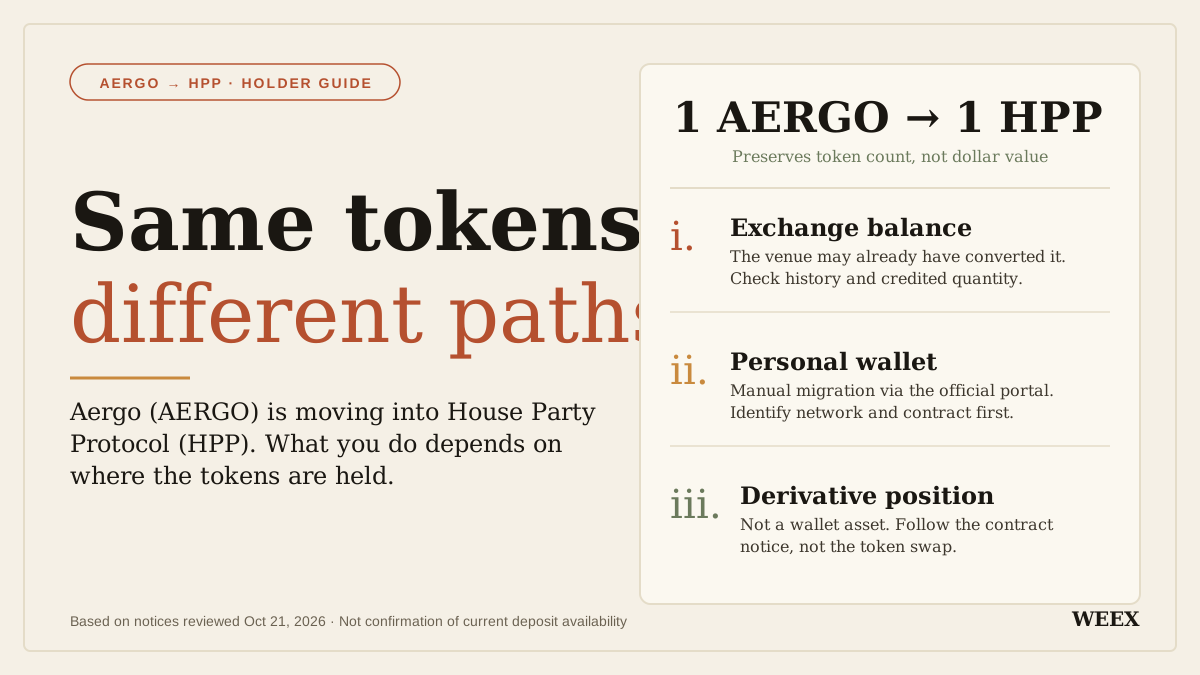
What Happened to Aergo (AERGO) Crypto? Token Migration and What Holders Should Do
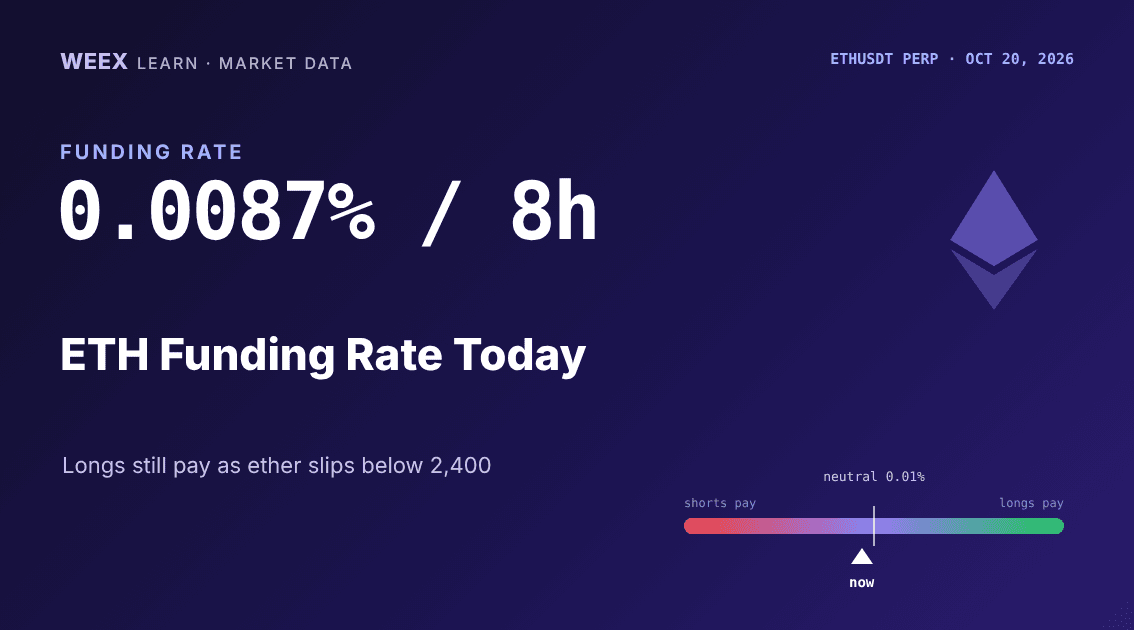
ETH Funding Rate Today: 0.0087% per 8h as Ether Longs Re-Lever

What Is Blockchain and How Does It Work? One Transaction, Traced

Staking APR vs Inflation: How Much of Your Crypto Yield Is Real?

WEEX Convert Fees: What Zero-Fee Conversion Really Costs You

WEEX Convert Quote: How the 8-Second Price Lock Really Works
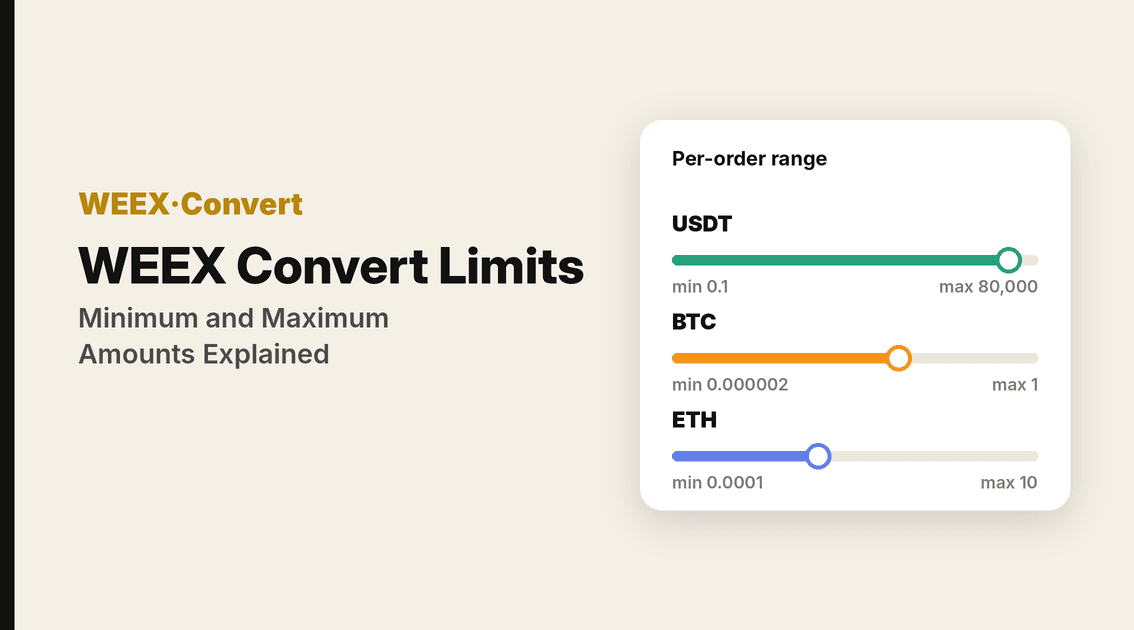
WEEX Convert Limits: Minimum and Maximum Amounts Explained
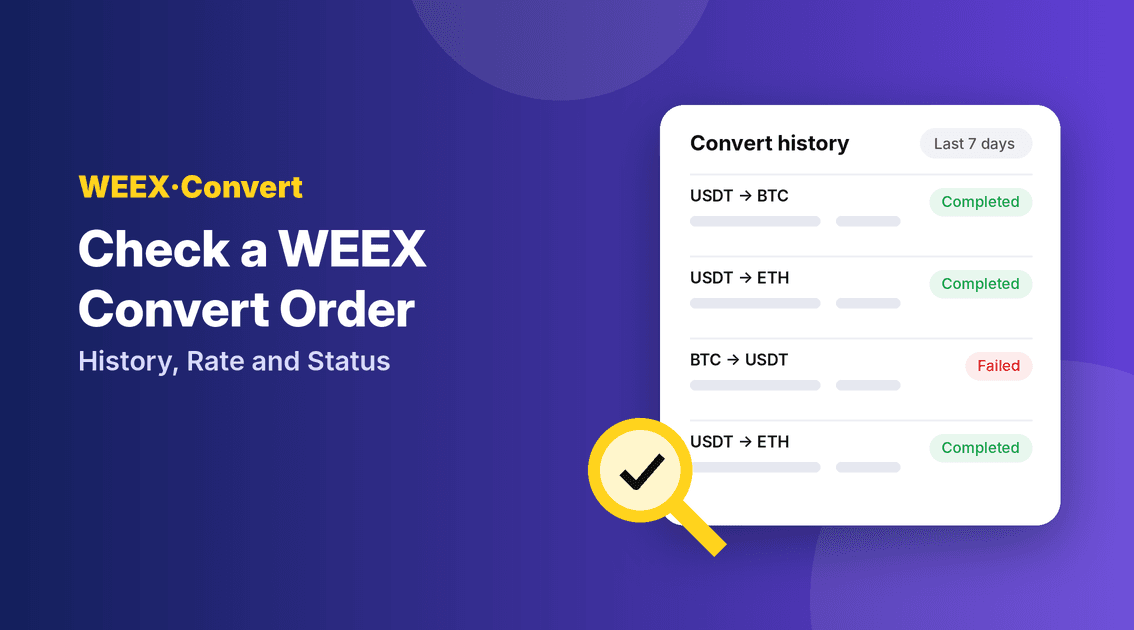
How to Check a WEEX Convert Order: History, Rate and Status
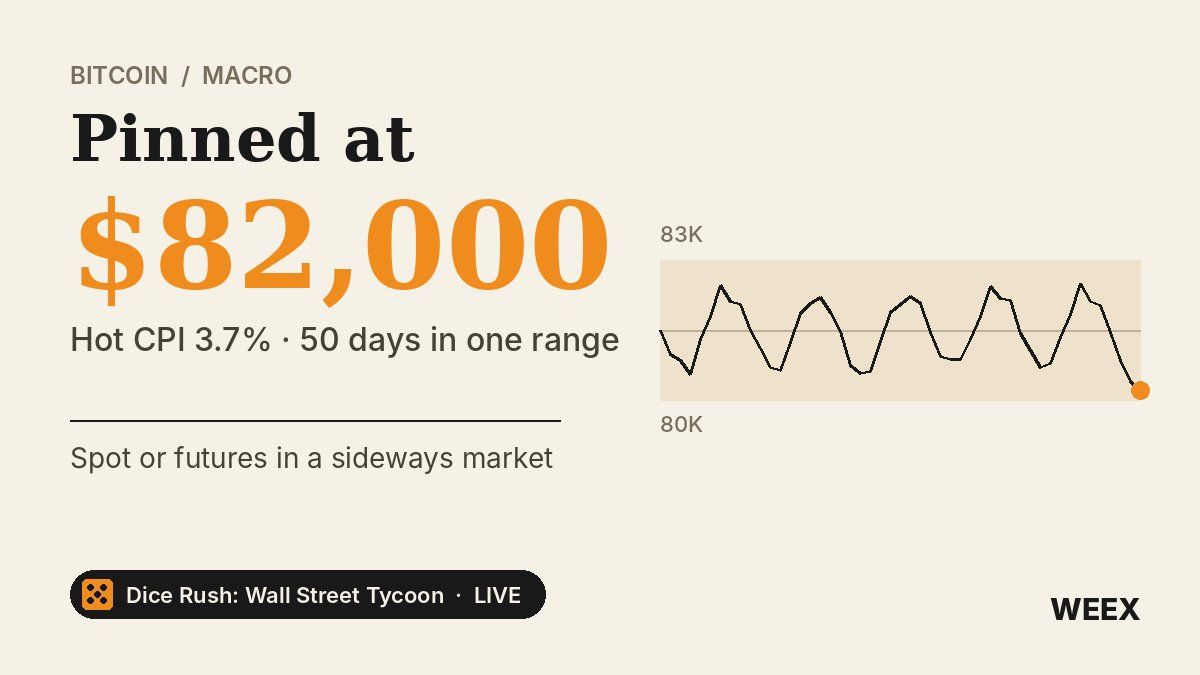
Bitcoin Price After Hot CPI: Why BTC Is Pinned Near $82,000
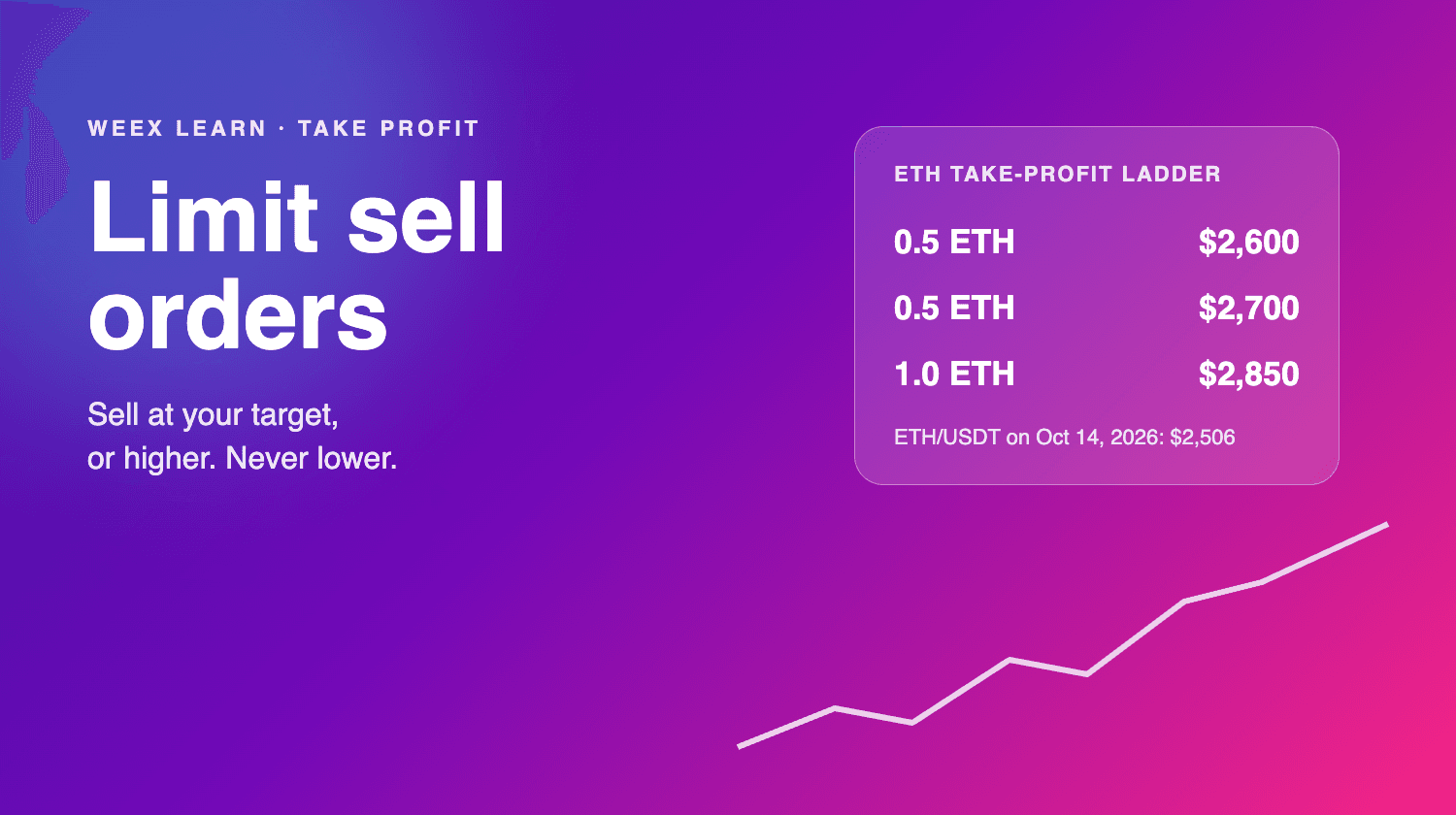
Limit Sell Order: How to Set a Take-Profit Price in Crypto

Best Crypto Podcasts for Beginners: A 4-Week Listening Plan

What Is Plume (PLUME)? Why the RWA Token Stays 93% Below Its High Even After the Layer 2 Rally
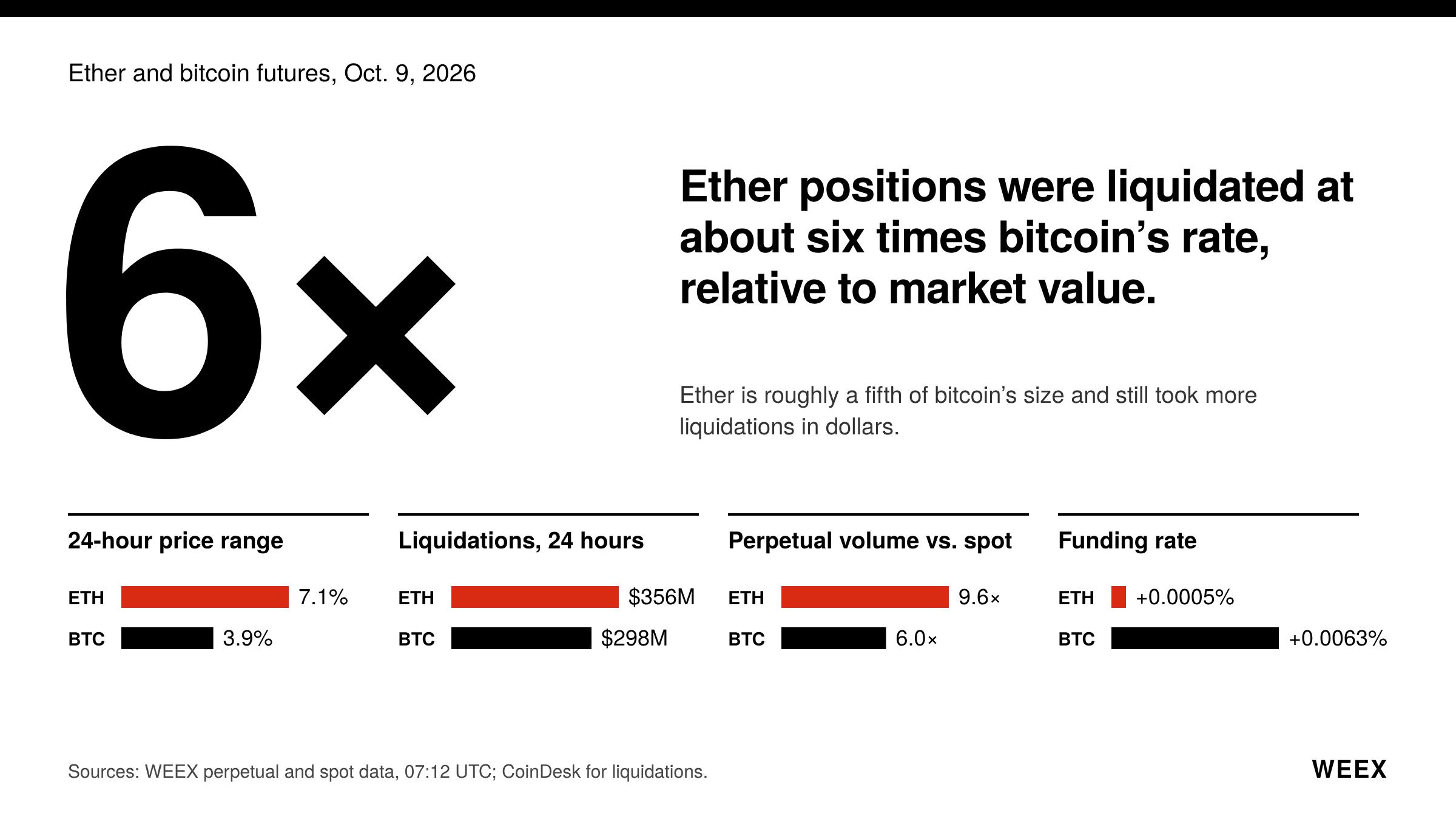
ETH Futures: Why Ether Is Falling Faster Than Bitcoin This Week
How to Buy Presale Crypto: Step by Step Guide for Beginners

Ethereum Glamsterdam Hits 200M Gas on Sepolia: What Changes After the Upgrade?

What Is Staking? 4 Myths to Clear Up Before You Stake Crypto
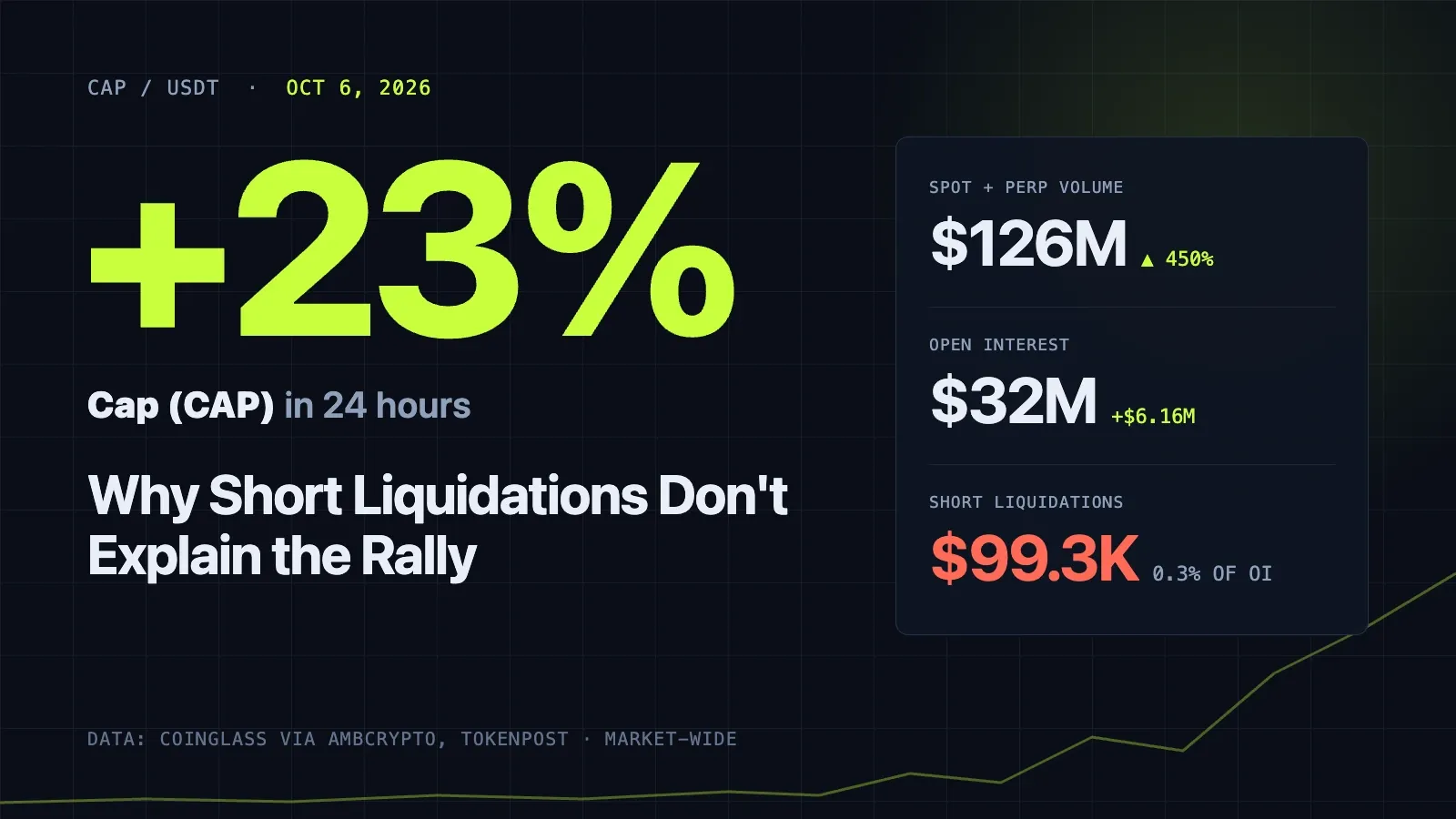
CAP Price Up 23%: Why Short Liquidations Don't Explain the Rally

Ethereum Glamsterdam Upgrade: Sepolia Date and ETH Price Impact

How to Earn Interest on USDT: What a 10% APR Really Pays in 2026

How to Buy Crypto With Apple Pay in 5 Steps: Why Your Bank May Decline the Payment
What Is Blockchain and How Does It Work? One Real Block Explained
Ethereum Glamsterdam Upgrade Countdown: Can ETH Price Break Out?

Anonymous Crypto Wallet: What Still Protects Your Privacy in 2026

How Tether Freezes USDT: Address Blacklists and Holder Checks

Bitcoin Futures at $83K: PnL and Position Sizing Into Jobs Week
Ethereum 2030 Roadmap: Vitalik's Cryptographic World Computer

Common P2P Crypto Scams and How to Spot Them
How to Choose a P2P Crypto Merchant on WEEX
How to File a WEEX P2P Appeal: Evidence and Video Requirements
Is WEEX P2P Crypto Trading Safe? Risks and Checks Before You Trade
What Happened to Aergo (AERGO) Crypto? Token Migration and What Holders Should Do
ETH Funding Rate Today: 0.0087% per 8h as Ether Longs Re-Lever
What Is Blockchain and How Does It Work? One Transaction, Traced
Staking APR vs Inflation: How Much of Your Crypto Yield Is Real?
WEEX Convert Fees: What Zero-Fee Conversion Really Costs You
WEEX Convert Quote: How the 8-Second Price Lock Really Works


