
Master Account vs Sub-Account: What the Difference Means for Crypto Broker Partners

 Prefer us on Google



Master account vs sub-account is a distinction that determines everything about how a crypto broker partner operates at scale.
A master account without sub-accounts is a single trading account. It can serve one client or one strategy. It cannot separate the positions, performance, or risk parameters of different clients from each other. A master account with sub-accounts is an infrastructure that allows one broker partner to run a professional multi-client operation with independent tracking, reporting, and risk control for each relationship underneath a single primary arrangement.
The difference between those two situations is the difference between a trader and an operator. Understanding what the master-sub structure actually enables is the prerequisite for evaluating whether a crypto broker partner program is capable of supporting the business you want to build.
What a Master Account Actually Is
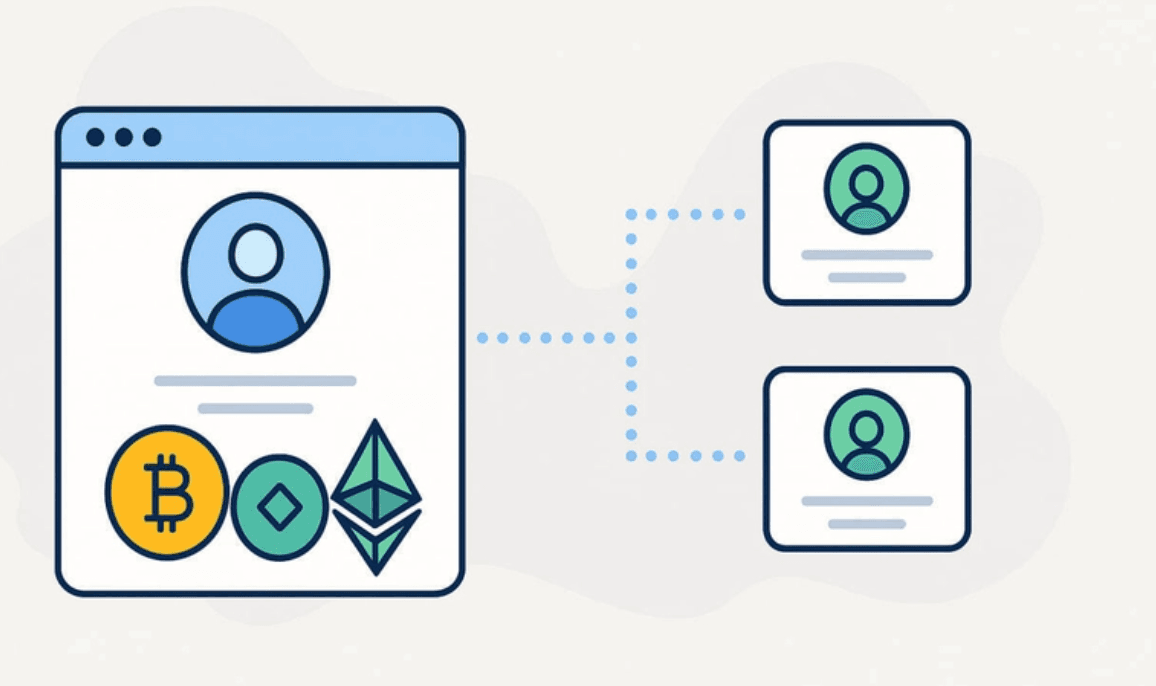
The master account is the primary account that a crypto broker partner holds with the broker. It is the account through which the partner relationship is established, through which sub-accounts are created and administered, and through which the partner's commission earnings are tracked and settled.
The master account does not typically hold the trading positions of the partner's clients directly. Its function is administrative and financial rather than trading. It is the control layer from which the partner manages the entire structure beneath it.
The master account holder has visibility into all sub-account activity. Position sizes, trading volume, profit and loss, and risk parameter status for every sub-account are visible from the master account level. This aggregate view is what allows a fund manager, community operator, or technology platform to monitor the complete picture of their operation without logging into each sub-account individually.
Commission revenue generated by sub-account trading activity flows to the master account rather than being credited separately to each sub-account. The master account is therefore both the management hub and the revenue collection point for the entire broker partner operation.
What a Sub-Account Actually Is
A sub-account is an individual trading account nested beneath the master account. It is where actual trading occurs. Each sub-account has its own balance, its own positions, its own trading history, and its own performance record that is tracked independently from every other sub-account in the structure.
The sub-account can be configured with its own risk parameters set by the master account holder. Maximum leverage, eligible trading pairs, position size limits, and other risk controls can be applied at the sub-account level rather than being uniform across the entire structure. This means a partner who serves clients with different risk tolerances or different mandates can enforce the appropriate constraints for each client relationship at the account level rather than relying on behavioral compliance.
Sub-accounts are invisible to each other. A client whose portfolio is managed through one sub-account cannot see the positions, performance, or balance of any other sub-account in the structure. This isolation is a fundamental requirement for any professional operation that manages capital on behalf of multiple clients, because it is the mechanism that prevents one client from having any information about another client's financial situation.
The sub-account's performance record is independently auditable. Every trade executed within a sub-account is recorded with its own timestamp, price, size, and resulting profit or loss, creating an audit trail that can be reviewed by the client whose capital was deployed in that sub-account without revealing anything about the other sub-accounts in the structure.
Why the Separation Between Master and Sub-Account Matters
The structural separation between the master account and the sub-accounts is not an administrative convenience. It is the mechanism that makes professional multi-client operation legally and operationally viable.
Without sub-account separation, a fund manager overseeing twenty client portfolios would need to execute all twenty portfolios' trades within a single account and then manually allocate each trade's profit or loss to the appropriate client after the fact. Manual post-trade allocation at scale is operationally infeasible and legally problematic because the allocation decisions happen after the profit or loss is known, creating the possibility of conflicts of interest between favorable trade allocation to preferred clients and unfavorable allocation to others.
Sub-account separation eliminates this problem structurally. When a fund manager executes a trade within a specific client's sub-account, the trade is attributed to that client at the moment of execution rather than after the fact. There is no allocation decision to make because the trade was always in the correct account. The audit trail is automatic rather than constructed retrospectively.
For community operators who run signal services, the sub-account separation serves a different but equally important function. Each community member who follows the signal service through their own sub-account has a performance record that reflects the actual prices at which their specific orders executed rather than an average or representative price. Two members who entered the same signal at slightly different times will have slightly different performance records in their respective sub-accounts, which is a more accurate representation of actual outcomes than a single blended performance figure.
-- Price
How Risk Parameters Work Differently at Master vs Sub-Account Level
One of the most practically significant features of the master-sub structure is the ability to set risk parameters at different levels of the hierarchy, which allows the master account holder to maintain control over the aggregate risk of the entire operation while also customizing the risk environment for each individual sub-account.
Risk parameters set at the master account level apply as an outer boundary for the entire structure. If the master account holder sets a maximum leverage level of ten times across the structure, no sub-account can exceed that limit regardless of what individual sub-account settings might otherwise allow. This outer boundary is the mechanism that allows the master account holder to make aggregate risk commitments to regulators, investors, or institutional counterparties with confidence that the commitment applies to the entire structure rather than only to the accounts where it has been explicitly enforced.
Risk parameters set at the sub-account level operate within the constraints established at the master level. A sub-account serving a conservative client can be configured with a maximum leverage of three times even though the master account boundary allows ten times. A sub-account serving an aggressive client can be configured at ten times. Neither configuration affects any other sub-account. The result is a hierarchy where the master account holder maintains ultimate control through outer boundaries while allowing client-specific customization within those boundaries.
This hierarchical risk control is the infrastructure equivalent of a fund manager's investment policy statement for each client. The investment policy statement specifies what is and is not permitted within a client's portfolio. The sub-account risk parameters enforce those permissions automatically at the point of trade execution rather than requiring the manager to manually review each trade for compliance with each client's constraints.
How Settlement Flows Through the Master-Sub Structure
Settlement is the practical financial outcome of the master-sub structure, and understanding how it flows determines how the broker partner actually receives their commission revenue and how client funds move through the structure.
Client funds are held in sub-accounts rather than in the master account. When a client deposits funds to participate in trading through a broker partner's structure, those funds are credited to the client's specific sub-account rather than to a pooled master account balance. This separation is a fundamental client protection mechanism because it means the client's funds are not commingled with the funds of other clients or with the broker partner's own capital.
Commission revenue generated by the trading activity within each sub-account flows upward to the master account. The commission is calculated based on the trading volume in each sub-account, applied at the rate corresponding to the broker partner's commission structure, and credited to the master account on the schedule specified in the partner agreement. The master account holder sees commission credits from each sub-account's activity as separate line items rather than as a single aggregate figure, which allows them to track which client relationships or community segments are generating the most revenue.
Settlement of the master account's commission balance to the partner's external wallet or bank account occurs according to the settlement terms of the specific broker program. Flexible settlement options that allow the partner to receive settlement in major cryptocurrencies including USDT or BTC give the partner control over the currency denomination of their revenue without requiring currency conversion at the moment of settlement.
What the Master-Sub Structure Enables That a Single Account Cannot
The most direct way to understand what the master-sub structure adds is to compare the specific capabilities it enables against what a single account can do.
A single account can execute trades. It cannot attribute those trades to multiple clients independently. It cannot enforce different risk parameters for different purposes within the same account. It cannot produce separate performance records for different clients from the same trading activity. It cannot track commission revenue by client relationship. It cannot provide each client with an independent view of their own activity without also revealing everyone else's activity.
A master account with sub-accounts can do all of those things. Each sub-account executes trades independently. Each sub-account has its own balance and performance record. Risk parameters are configured independently for each sub-account. Commission revenue is tracked by sub-account. Each client can access their own sub-account without any visibility into other sub-accounts.
The practical consequence is that the single account is a tool for individual trading. The master-sub structure is infrastructure for a business. A broker partner who is building a multi-client fund management operation, a signal community with paying subscribers, or a technology platform that provides trading access to end users needs the master-sub structure rather than a single account because the single account is structurally incapable of supporting those use cases at any meaningful scale.
For broker partners evaluating how to implement multi-client management through a single broker arrangement, WEEX's Broker Program announced in 2026 offers a relevant model. The API model allows partners to embed WEEX's institutional-grade execution within their own platforms, with partners earning up to 70% of the trading fees generated by their clients' activity.
Conclusion
Master account vs sub-account is not a technical distinction that only matters to technology teams building integrations. It is the structural difference between a single trading account and a professional multi-client operation, and it determines whether a crypto broker partner program can support the business the partner is trying to build.
The master account is the administrative and revenue collection hub. The sub-accounts are where trading happens, where client funds are held, where performance is tracked, and where risk parameters are enforced. The separation between them is what makes independent client performance attribution, client-specific risk control, and scalable commission tracking possible within a single broker partner relationship.
For any operator managing capital on behalf of multiple clients, running a signal service with paying subscribers, or building a platform that provides trading access to end users, the master-sub account structure is the foundational infrastructure requirement rather than an optional feature. A broker program that does not offer it is a program that cannot support professional multi-client operations at scale regardless of what other features it provides.
FAQ
1. What is the difference between a master account and a sub-account in a crypto broker program?
A master account is the primary account held by the broker partner through which sub-accounts are created, administered, and monitored, and through which commission revenue is collected. A sub-account is an individual trading account nested beneath the master account where actual trading occurs, with its own independent balance, position tracking, performance record, and configurable risk parameters. The master account is the control and revenue layer. The sub-accounts are the execution layer.
2. Why do fund managers need sub-account structures rather than a single trading account?
A single account cannot attribute trades to multiple clients independently at the moment of execution. Without sub-account separation, trade allocation to specific clients happens after the fact, creating the possibility of conflicts of interest and making auditable per-client performance attribution operationally infeasible at scale. Sub-account separation means each trade is attributed to the correct client account at execution rather than allocated retrospectively, which is a legal and operational requirement for any professional multi-client fund management operation.
3. How do risk parameters work differently at the master account level versus the sub-account level?
Risk parameters at the master account level establish outer boundaries that apply to the entire structure regardless of individual sub-account settings. Risk parameters at the sub-account level operate within those outer boundaries and can be configured more conservatively for specific clients or strategies. A master account holder can allow maximum leverage of ten times at the structure level while configuring individual sub-accounts at three times for conservative clients and ten times for aggressive clients, with each configuration enforced automatically at the point of trade execution.
4. How does commission revenue flow through the master-sub account structure?
Trading activity within each sub-account generates commission revenue that flows upward to the master account. The commission is calculated based on sub-account trading volume at the rate specified in the broker partner agreement and credited to the master account rather than to the individual sub-accounts. The master account holder can track commission contributions from each sub-account separately through the commission dashboard, providing visibility into which client relationships or community segments are generating the most revenue for the partner operation.
5. What types of operators need a master-sub account structure?
Three categories of operators specifically require the master-sub structure. Fund managers overseeing multiple client portfolios need sub-accounts for independent performance attribution and client-specific risk control. Signal community operators serving paying subscribers need sub-accounts so each subscriber has an independent performance record reflecting their actual execution prices rather than a blended average. Technology platform builders providing trading access to end users need sub-accounts to maintain client fund segregation and to track commission revenue by user relationship. A single account cannot support any of these use cases at meaningful scale.
This content is provided for general informational purposes only and doesn't constitute financial, investment, legal, or tax advice. Any events, rewards, online promotions, or related information mentioned herein should not be considered a recommendation, solicitation, or invitation to purchase, sell, trade, or otherwise deal in any crypto assets. Crypto assets are highly volatile and may result in loss. The availability of WEEX services, products, and related events may vary by region. You are responsible for ensuring that your participation is in accordance with applicable local laws and regulations.
You may also like

The XSolut (XST) Contract Address: How to Identify the Real XST Token on Solana 2026

Is OPAI.PVT OpenAI's Real Stock Symbol? What Investors Need to Know Before the IPO 2026

Your Crypto Exchange Is Shutting Down: How to Move Your Funds and Choose the Next Exchange

Buy Crypto With JazzCash and Easypaisa, Now Live on WEEX

Meta Stock at $548: The Free Cash Flow Number Behind the Drop
Singapore Crypto Tax 2025: A Complete Guide
Portugal Crypto Tax 2025: A Complete Guide
Japan Crypto Tax 2025: A Complete Guide
Puerto Rico Crypto Tax 2025: A Complete Guide

USA Crypto Tax 2025: A Complete Guide
New Zealand Crypto Tax 2025: A Complete Guide

Finland Crypto Tax 2025: A Complete Guide






The XSolut (XST) Contract Address: How to Identify the Real XST Token on Solana 2026
Is OPAI.PVT OpenAI's Real Stock Symbol? What Investors Need to Know Before the IPO 2026
Your Crypto Exchange Is Shutting Down: How to Move Your Funds and Choose the Next Exchange
Buy Crypto With JazzCash and Easypaisa, Now Live on WEEX
Meta Stock at $548: The Free Cash Flow Number Behind the Drop
Singapore Crypto Tax 2025: A Complete Guide
Contents
Popular coins
Latest articles


