
Roblox Stock Price Prediction 2026-2027: Can RBLX Recover After Falling From $142 to $38

 Prefer us on Google


The Roblox stock price has become a debate over growth versus monetization. Roblox stock has fallen from a 52-week high of $142.00 to roughly $37 to $39 in mid-August 2026, while the Roblox stock story still includes rising users, stronger revenue, and a better EPS result than expected in Q2. For anyone tracking roblox stock, the key question is no longer whether engagement exists. It is whether Roblox can turn that engagement into healthier bookings, steadier cash flow, and a believable path back toward higher valuations in 2026 and 2027.
At a Glance
- RBLX is down about 73% from its 52-week high of $142.00, with the current price hovering near $38.
- Q2 2026 results improved on revenue, EPS, and adjusted EBITDA, but weak Q3 bookings guidance drove the selloff.
- Analyst targets from $38 to $165 show the market is deeply split on how fast monetization can recover.
- Age verification, discovery algorithm changes, and weaker spending by younger users are central to the recovery thesis.
- The November 11, 2026 earnings report could decide whether roblox stock stabilizes or stays stuck near current levels.
What Produced the Drop From $142 to Current Levels
The first point to understand is that roblox stock did not collapse because the business suddenly stopped growing. According to Roblox’s Q2 2026 materials reported through StockTitan and the company’s investor relations release, revenue reached $1.469 billion, up 36% year over year. Bookings were $1.557 billion, up 8%. Net loss improved to $185 million from $280 million a year earlier, and adjusted EBITDA climbed to $152 million from just $18 million.
On the surface, that looks like a business improving its scale economics. TradingView data cited in the provided materials also showed Q2 EPS at -$0.26, better than the expected -$0.34. For many growth stocks, that kind of report would usually support the share price.
But the market focused on forward guidance, not backward-looking numbers. Roblox said Q3 2026 revenue should land between $1.413 billion and $1.490 billion, while bookings are expected at $1.576 billion to $1.653 billion, which implies a year-over-year decline of 14% to 18%, according to StockTitan. Free cash flow guidance of negative $60 million to positive $5 million added to the concern. That told investors that the company’s monetization problem had not been fixed.
In simple terms, the market re-rated Roblox from a pure growth platform to a platform that still grows users but may need more time to convert activity into spending. That shift explains why the stock could fall so hard even after a quarter that looked decent on revenue and margins.
What the Analyst Target Range of $38 to $165 Reveals About Disagreement
The wide analyst target range matters more than any single price target. Yahoo Finance data in the provided materials puts the range at $38 to $165. That is a huge spread, and it tells you Wall Street is not arguing over small details. It is arguing over the core business model.
At the lower end, a $38 target implies that current trading levels may already reflect a fair value if monetization remains weak. That cautious view gained traction after the Q2 report. Benzinga reported that BTIG downgraded Roblox to Sell with a $30 target, Deutsche Bank cut the stock to Hold with a $38 target, and Needham kept a Buy rating but lowered its target to $50. Investing.com also listed Oppenheimer with a $50 target in the reference materials, which suggests some analysts still see upside if execution improves.
At the high end, a $165 target implies belief in a much stronger rebound in bookings, better monetization of older users, and continued operating leverage. That bullish case likely assumes Roblox can keep expanding its platform ecosystem in a way that resembles strong network-effect businesses in tech, or even certain crypto platforms where user growth eventually strengthens liquidity, transaction value, and monetization.
For beginners, the lesson is straightforward: when analyst targets are this far apart, the market is pricing uncertainty, not clarity. That usually means bigger swings ahead.
-- Price
The Age Verification Headwind That the Recovery Thesis Must Overcome
Age verification has become one of the most important issues for roblox stock in 2026. Management and follow-up reporting tied safety changes, content discovery updates, and age-checked user expansion together. S&P Global Market Intelligence materials referenced in the research showed that Roblox has linked safety measures with better content discovery and a stronger 18+ ecosystem.
That creates a near-term cost and a potential long-term benefit. The near-term cost is friction. If users, especially younger users, face extra steps before using social features, some may spend less time or money on the platform. Quartz and other materials in the research pointed to weaker spending among younger users in the U.S. and Canada, along with the financial cost of the age-verification rollout.
The long-term benefit is more interesting. Verified adult users can support a broader content and commerce ecosystem. In a way, this resembles how a blockchain ecosystem matures: first you build trust and safety rails, then you try to deepen monetization and liquidity on top of that foundation. Roblox appears to be trying something similar with its creator economy. The problem is timing. Investors want to know when that longer-term upside starts showing up in bookings.
Until the company proves that age verification is creating higher-value engagement rather than mostly reducing frictionless spending, the recovery case for roblox stock remains incomplete.
What Improving Operating Margins Signal About the Path to Profitability
Even with the stock under pressure, not every underlying metric is getting worse. Yahoo Finance data in the provided materials puts operating margin at -20.7%, with improvement underway. That still means Roblox is unprofitable on an operating basis, but the direction matters.
Q2 also showed stronger adjusted EBITDA and narrower losses. This tells investors that the business can absorb costs better as revenue scales. In equity analysis, that matters a lot because the market often rewards companies that can show a credible move from growth-at-any-cost to disciplined expansion.
For crypto investors, this should sound familiar. Many token projects attract users early, but the market eventually shifts its attention to tokenomics, revenue capture, treasury management, and sustainable liquidity. Roblox is a stock, not a token, but the investor mindset is similar. User growth alone is not enough forever. The market wants proof that activity can translate into durable economics.
If margins keep improving while bookings stabilize, roblox stock could rebuild trust faster than many expect. If margins improve but bookings stay soft, the stock may still struggle because revenue quality would remain in question.
The Two Scenarios That Map the 2027 Price Path
Bullish recovery scenario
In the stronger case, Roblox proves that Q3 weakness was a transition period rather than a structural decline. That would likely require bookings growth to recover after the second half of 2026, continued DAU growth, better monetization from older age groups, and more evidence that recommendation algorithm changes are improving user quality rather than hurting spending. If that happens, price targets around $50 start to look conservative, and the stock could re-rate materially higher into 2027.
This scenario does not require Roblox to revisit $142 quickly. It only requires the market to believe that cash flow visibility is improving. A return into a higher trading band in 2027 would then come from multiple expansion plus better fundamentals.
Base-to-bearish scenario
In the weaker case, users keep growing but spending per user remains under pressure. Q3 bookings guidance already warns of that risk. If discovery changes and age-verification friction continue to hurt conversion, investors may treat Roblox as a platform with strong engagement but limited monetization efficiency. In that setup, the stock could stay close to the low end of the analyst target range, with the 52-week low of $33.88 remaining relevant support.
That is why 2027 price prediction for RBLX depends less on headline revenue growth and more on the quality of that growth.
| Scenario | What Needs to Happen | Likely Market View |
|---|---|---|
| Bullish 2027 path | Bookings recover, age-checked adult monetization grows, margins improve further | RBLX earns a higher multiple and moves away from current distressed levels |
| Cautious 2027 path | Users grow but monetization stays weak, cash flow remains uneven | RBLX trades near current range and struggles to break out |
What the November 11 Earnings Report Needs to Show
The next earnings report on November 11, 2026, is likely the most important catalyst for roblox stock in the near term, based on the TradingView date in the provided materials. Investors should watch four things closely.
First, bookings matter more than revenue right now. Revenue can still grow while the market stays skeptical, but bookings give a cleaner view of future monetization momentum. Second, management needs to show whether age verification friction is easing or still hitting spending behavior. Third, investors will want signs that the Recommended For You algorithm changes are improving conversion quality. Fourth, free cash flow needs to move toward more stable positive territory.
If Roblox can show progress on even two or three of those fronts, sentiment may improve quickly because expectations have already reset. If not, the stock may remain trapped in a rerating phase where every bounce gets sold.
For now, the most sensible view is that roblox stock is not a clean turnaround, but it is also not a broken platform. The business still has scale, a large creator ecosystem, and improving cost absorption. Whether RBLX can recover meaningfully by 2027 depends on one thing above all: proving that engagement can again translate into healthier bookings and cash flow, not just bigger user numbers.
This content is provided for general informational purposes only and doesn't constitute financial, investment, legal, or tax advice. Any events, rewards, online promotions, or related information mentioned herein should not be considered a recommendation, solicitation, or invitation to purchase, sell, trade, or otherwise deal in any crypto assets. Crypto assets are highly volatile and may result in loss. The availability of WEEX services, products, and related events may vary by region. You are responsible for ensuring that your participation is in accordance with applicable local laws and regulations.
You may also like
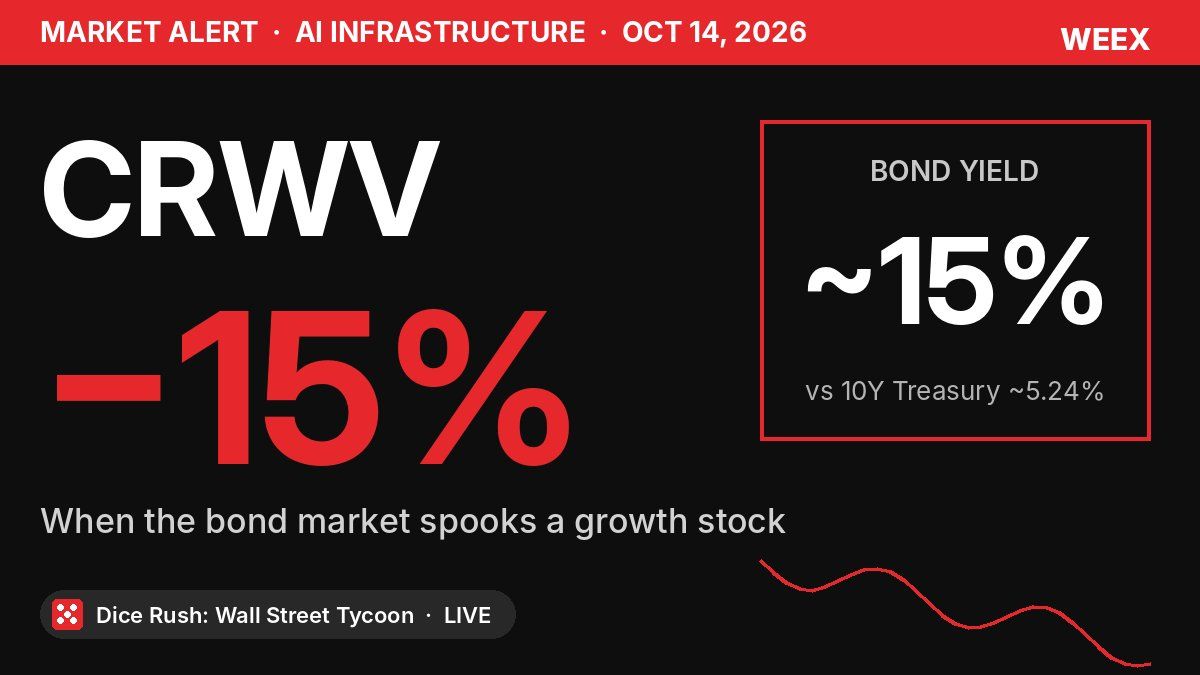
CoreWeave Stock Plunges 15%: Why a Bond Yield Spooked CRWV
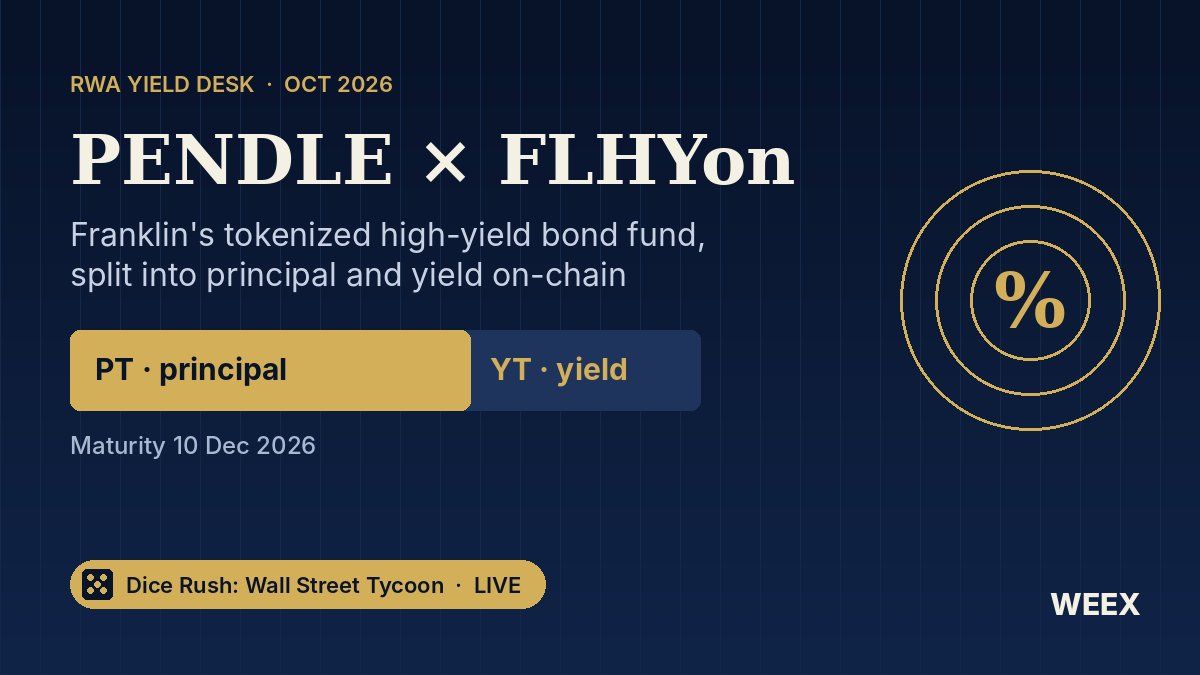
PENDLE Price and FLHYon: What Franklin's Bond Token Changes

WEEX Convert Guide: How to Swap Crypto on Web and App and What the Quote Really Means
MU Stock Falls Below $1,000: Is the CXMT Threat Real or Just an Excuse to Take Profits?
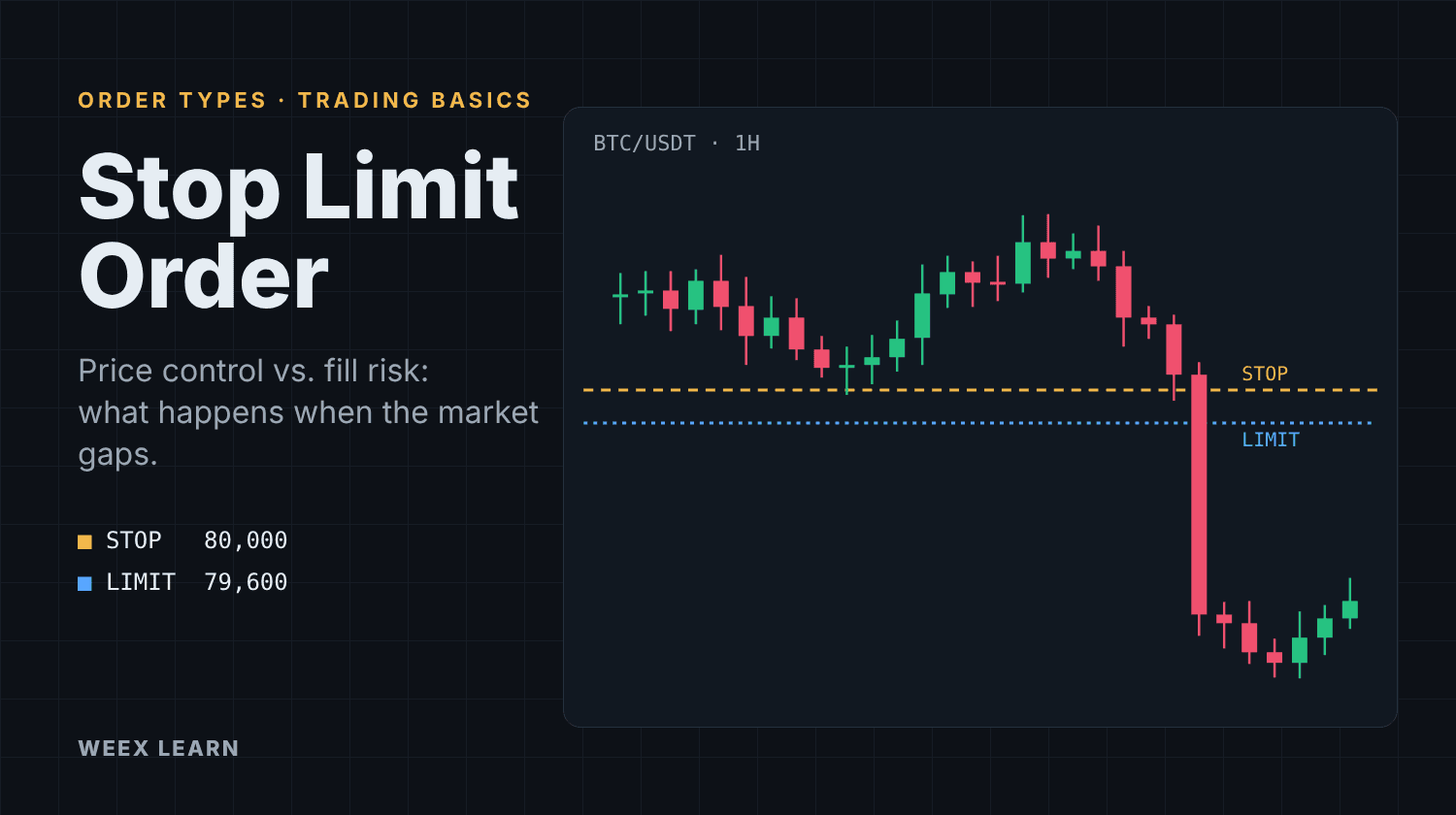
Stop Limit Order: How It Works and Why It Can Fail to Fill

Best Cold Wallet Crypto for Beginners: 5 Picks Under $150

Will Bitcoin Break $87,000 This Week? CPI, Fed Speakers and ETF Outflows to Watch

Best Crypto Broker for Beginners: What to Check in Fees, Regulation, Security and Support Before You Deposit

Who Is David Ellison? Skydance’s Strategy, Media Consolidation, and the Investment Case
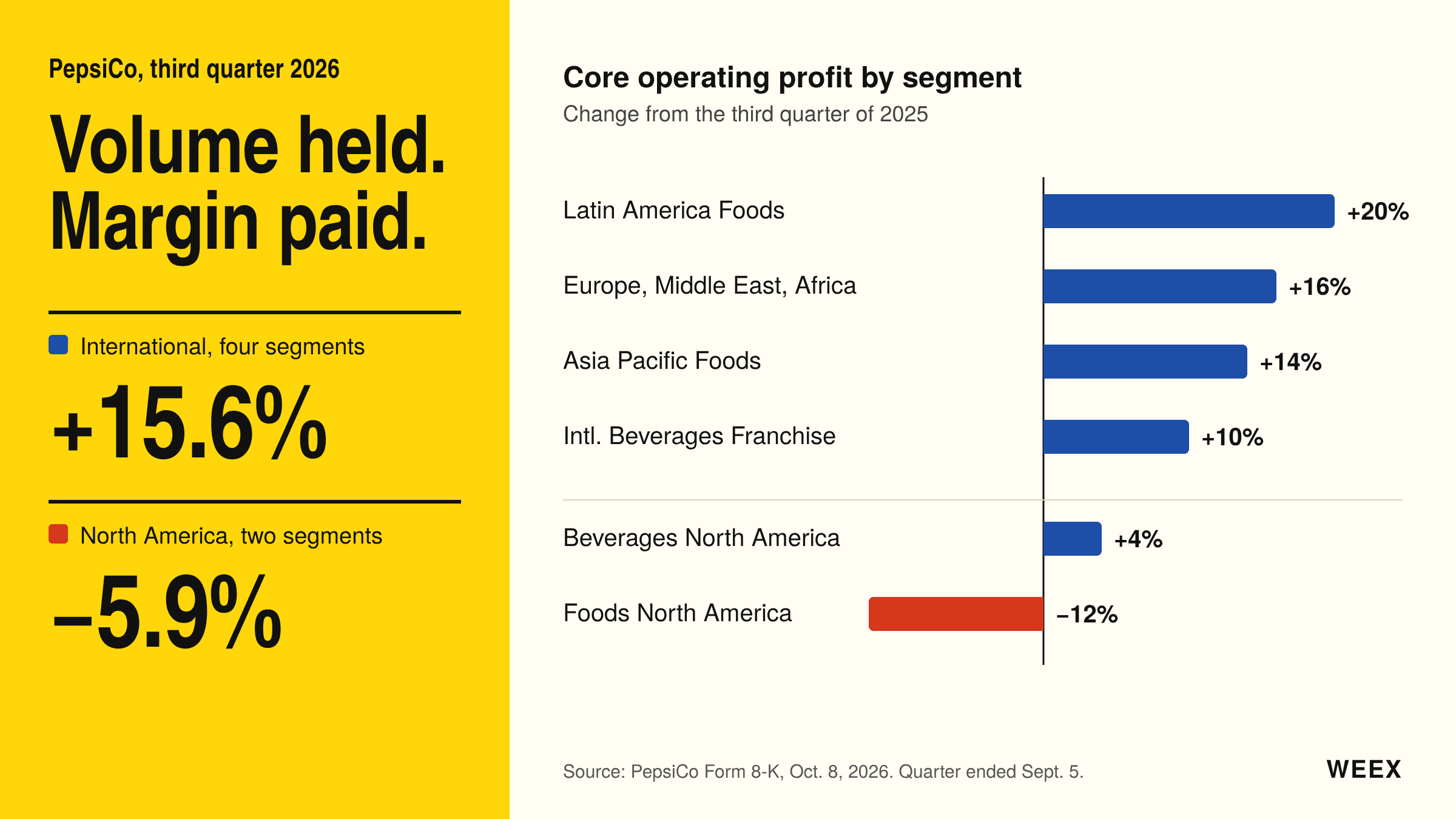
PEP Earnings: PepsiCo Beats Q3, Cuts Guidance on North America
ETH Futures: Why Ether Is Falling Faster Than Bitcoin This Week
Third-Party Trading Platforms vs Direct WEEX Trading: Fees, Liquidity, Security, and Control
How Copy Trading, Signal, and Telegram Trading Tools Can Build With WEEX Broker
How Quant Trading Platforms and Bots Can Build With WEEX Broker
How Trading Platforms and Terminals Can Connect to WEEX Broker
How to Buy USDT in Thailand: Payment Methods, Fees and Transfer Checks

What Is RLC Crypto? How iExec (RLC) Powers Confidential Computing

What Is WEEX Fast Connect? How OAuth Connects Third-Party Trading Platforms
How to Become a WEEX Broker: Application, API Setup and Go-Live
What Is WEEX Broker? API Program, Commissions and How It Works
CAP Price Up 23%: Why Short Liquidations Don't Explain the Rally
WEEX TOKEN2049 Day 2 Live Preview: KOLs, AWS, PingCAP and Andrew
Why Does Bitcoin (BTC) Drop? How to Read a BTC Liquidation Heatmap Without Guessing the Bottom

What Is a Decentralized Crypto Exchange (DEX)? How It Works, Costs, Risks, and When to Use One
HPE Stock Hits a Record on $1.2B AI Order: Is It Still Cheap?
MU Stock After a Record Q4: Why Micron Slipped on a Huge Beat
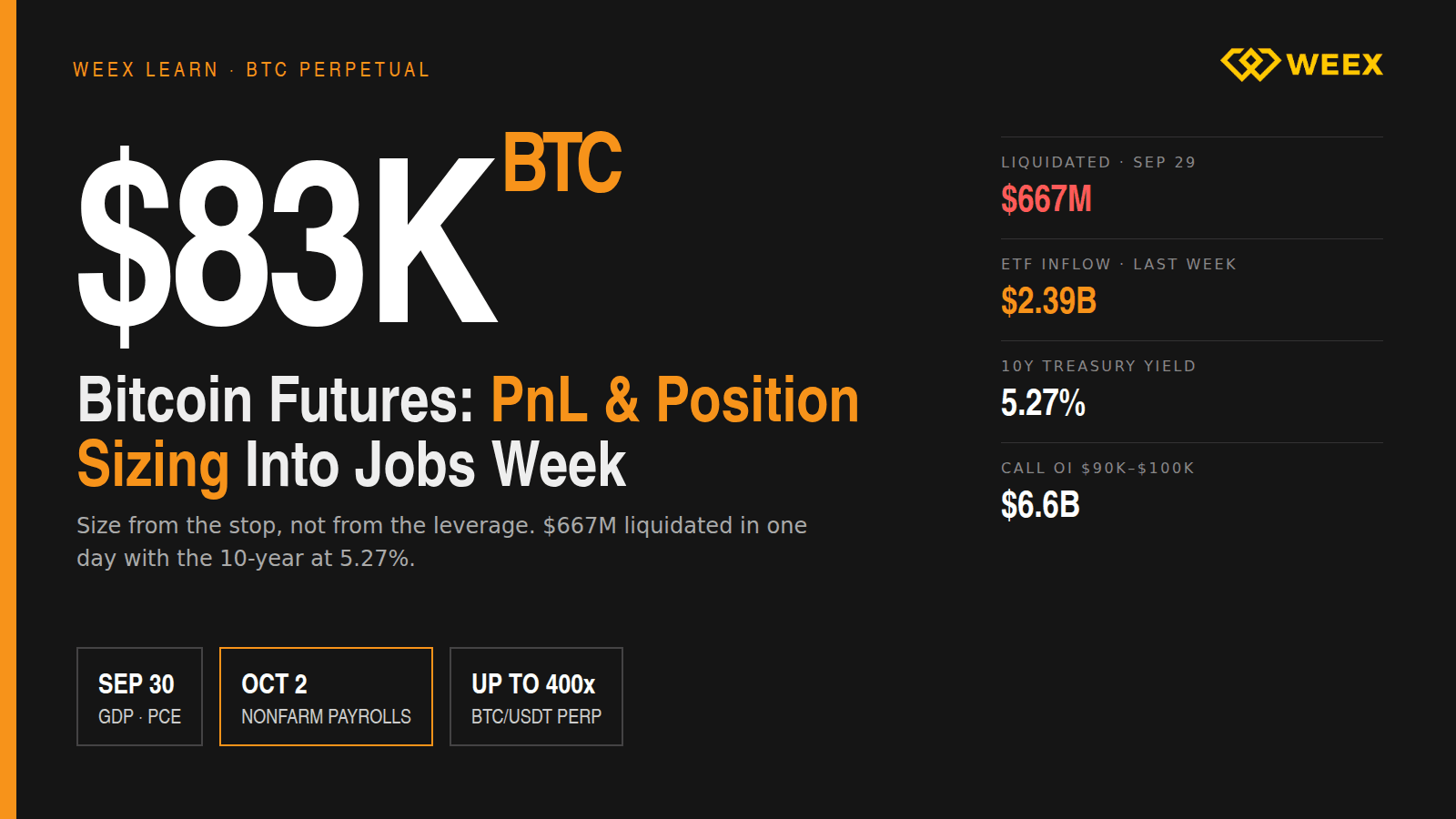
Bitcoin Futures at $83K: PnL and Position Sizing Into Jobs Week
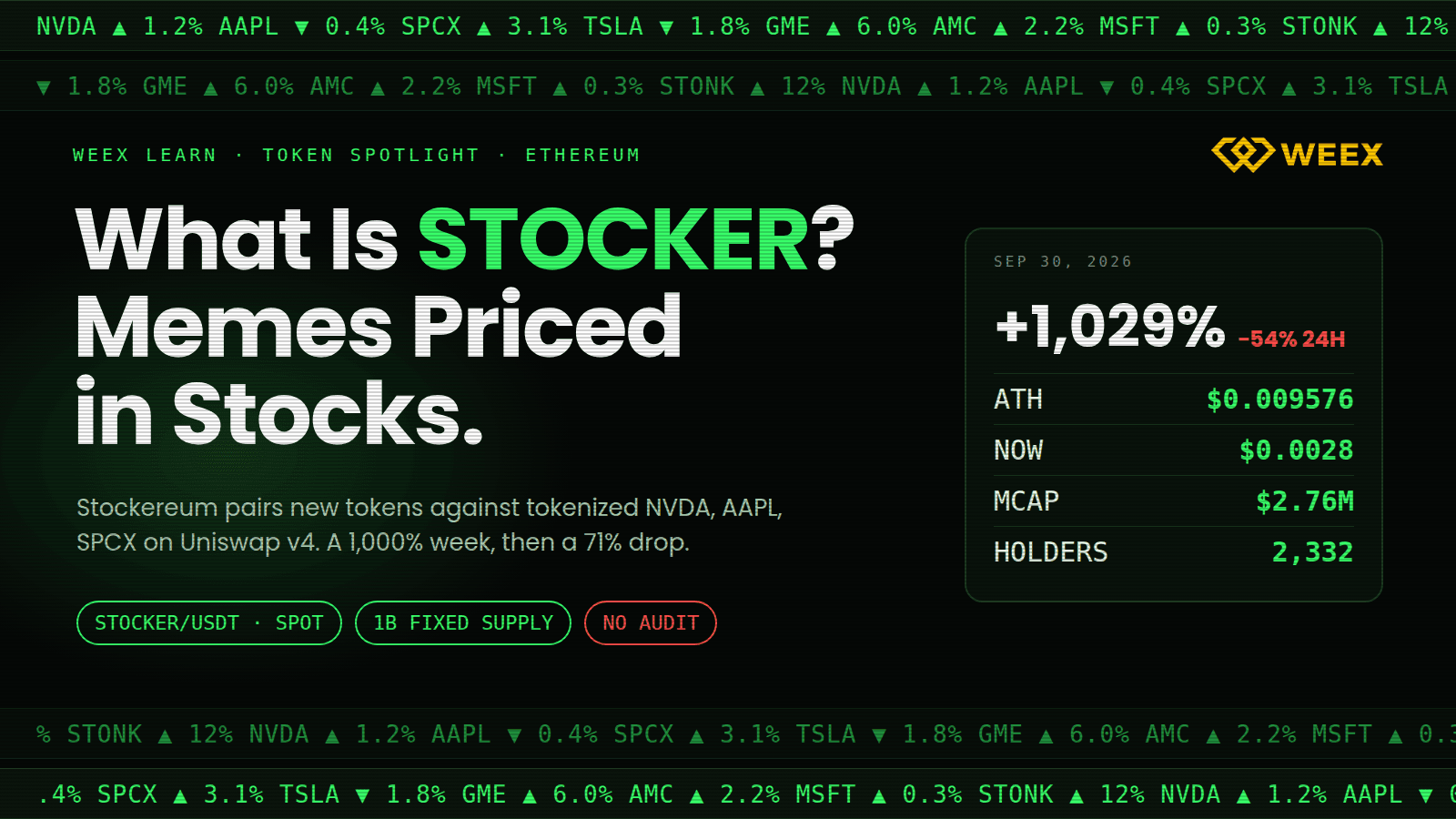
What Is STOCKER? Stockereum, Stock-Paired Meme Tokens, and Risks
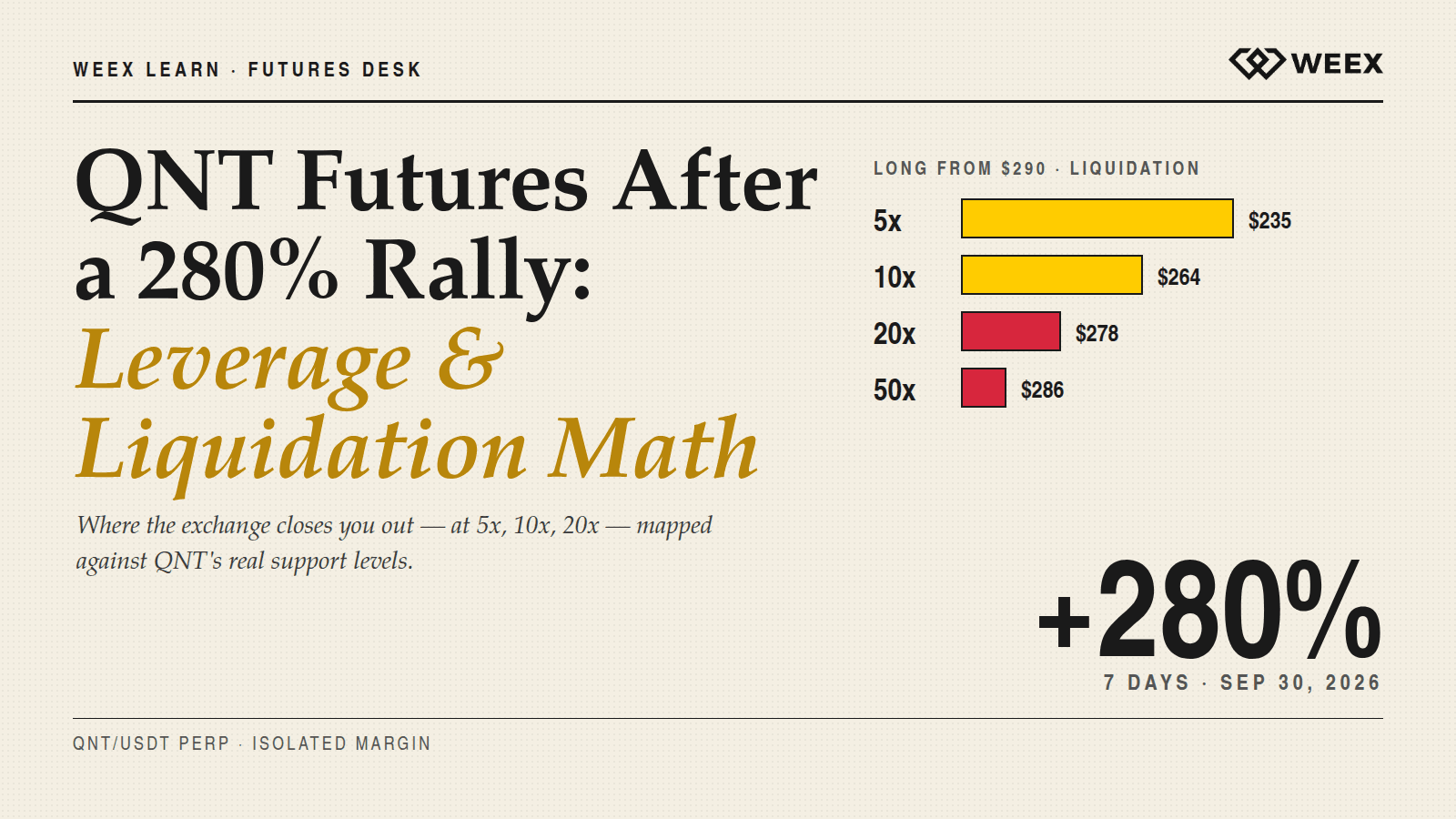
QNT Futures After a 280% Rally: Leverage and Liquidation Math

WIF and POPCAT Price Rally: Can the Solana Meme Rotation Hold?
CoreWeave Stock Plunges 15%: Why a Bond Yield Spooked CRWV
PENDLE Price and FLHYon: What Franklin's Bond Token Changes
WEEX Convert Guide: How to Swap Crypto on Web and App and What the Quote Really Means
MU Stock Falls Below $1,000: Is the CXMT Threat Real or Just an Excuse to Take Profits?
Stop Limit Order: How It Works and Why It Can Fail to Fill
Best Cold Wallet Crypto for Beginners: 5 Picks Under $150
Contents
Popular coins
Latest articles


