
PENDLE Price and FLHYon: What Franklin's Bond Token Changes

 Prefer us on Google


Franklin Templeton's high-yield corporate bond ETF now trades on Pendle in tokenized form, and that is the main reason PENDLE has been back on traders' screens this week. On October 13, 2026, Pendle opened a yield market for FLHYon, Ondo Finance's token tracking Franklin's FLHY fund, with a maturity date of December 10, 2026. The listing is a real step for RWA yield trading. It is not, however, Franklin Templeton buying PENDLE, and the market behind it is still tiny.
This article explains what FLHYon actually is, how its principal and yield are split on Pendle, why the PENDLE token reacted, and what to check before you trade PENDLE spot or futures on WEEX.
As of October 15, 2026 (02:55 UTC), the WEEX PENDLE price page showed the token at $1.94 with $42.37 million in 24-hour trading volume, a 7-day gain of roughly 13.7% and a 30-day gain of roughly 28.6%. The move came alongside the FLHYon headlines, but PENDLE was already climbing before October 13, so the listing is better read as an accelerant than the sole cause.
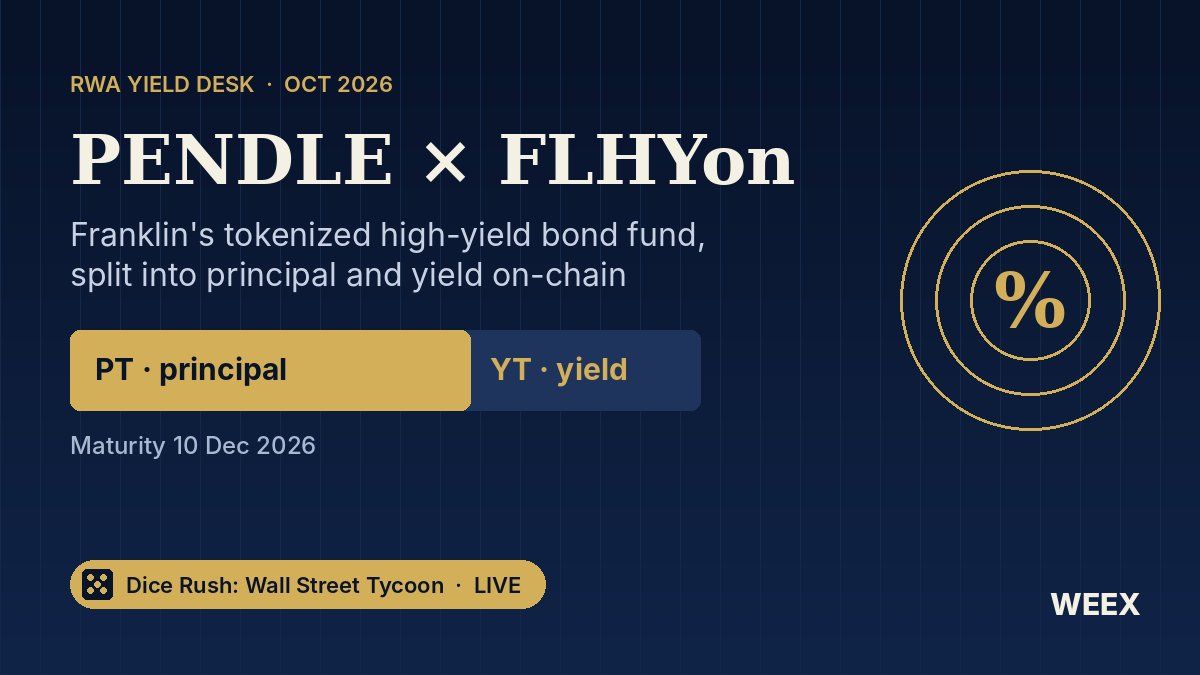
What Is FLHYon and Why Is It on Pendle?
FLHYon is a token issued by Ondo Finance that gives holders economic exposure to the Franklin High Yield Corporate ETF (FLHY), including reinvested distributions. The underlying fund puts more than 80% of its assets into high-yield corporate bonds spread across over 250 securities and pays income monthly. Ondo issues the token and holds the backing assets; holders do not own FLHY shares directly.
Pendle's role is narrower than many headlines suggest. Pendle does not issue FLHYon and does not custody its collateral. It hosts a market on top of the token that lets users trade the future yield separately from the principal. Franklin Templeton and Ondo set up their tokenization partnership in March 2026 to cover five ETFs (FLHY, FFOG, FLQL, FGDL and INCE), and FLHYon was already accepted as collateral on Morpho before the Pendle market opened.
How FLHYon Yield Trading Works on Pendle
The flow is short:
- Swap USDC for FLHYon on Ondo.
- Use FLHYon on Pendle to buy a Principal Token (PT), a Yield Token (YT), or provide liquidity (LP) in the pool.
- Exit at any time by selling PT or YT back into the pool, even before the December 10, 2026 maturity.
PT behaves like a zero-coupon bond: you buy it at a discount and it converges toward the value of the underlying at maturity, which locks in a fixed return if held. YT holders collect the monthly distributions from the bond fund until maturity, weighted by how much YT or LP they hold and for how long. That is the same principal/coupon split bond desks have run since the 1980s, now applied to a junk-bond fund on Ethereum.
The practical point traders miss: buying YT is a leveraged bet on the fund's income stream over less than two months. If distributions fall, or if you buy YT at an inflated implied yield, you can lose most of what you paid even while the underlying ETF barely moves.
Why the PENDLE Token Reacted
PENDLE is the governance and incentive token of the protocol. Holders lock it as vePENDLE to vote on which pools receive emissions and to share in protocol fees. More real-world assets on Pendle means more potential pools, more swap volume, and over time more fees routed to lockers. That is the bull case, and FLHYon gives it a recognizable name.
The FLHYon market also lands in a growing RWA lineup on the same venue. Pendle already lists yield from Strategy's STRC preferred stock (sUSDat), reinsurance premiums (reUSDe), Brazilian card receivables (srnOPAL), Partners Group's infrastructure fund (NGI+) and GPU-backed loans (sUSDai). A fund from a major traditional asset manager joining that list is a credibility signal for the whole category.
-- Price
What FLHYon Does Not Mean for PENDLE
The sharper reading is that the event matters more for narrative than for near-term revenue:
- The pool is small. FLHYon had roughly $497,000 in on-chain assets in October 2026. Fees from a market that size will not move Pendle's income statement.
- No PENDLE purchase. Franklin Templeton tokenized a fund through Ondo; nothing indicates it bought or holds PENDLE.
- Credit risk sits with the asset. High-yield bonds can default, and a widening credit spread would hit FLHY directly, followed by PT and YT pricing.
- Smart-contract and issuer layers stack. A FLHYon holder carries Ondo issuer risk, Ethereum contract risk and Pendle pool risk at once.
PENDLE also remains well below its late-September levels; WEEX's weekly history shows a close near $2.71 in the week of September 20, 2026. Headline-driven rallies in mid-cap DeFi tokens often retrace once the news cycle moves on, and the broader crypto market sold off on October 14 after a hotter-than-expected U.S. CPI print.
PENDLE Spot vs Futures on WEEX: Choosing How to Trade
If you want exposure to the RWA narrative without touching the Pendle app itself, there are two routes on WEEX.
PENDLE spot trading suits holders who want to own the token, possibly lock it later as vePENDLE elsewhere, and ride out volatility without liquidation risk. Your maximum loss is what you put in.
PENDLE futures trading suits short-term traders who want to go long or short around news. Leverage magnifies both directions, and a token that swings 10% in three days can liquidate a highly leveraged position quickly. Keep leverage modest, set a stop below a level you have identified in advance, and check the funding rate before holding a position overnight.
For live price, supply and history in one place, the WEEX Pendle price page is the quickest reference.
Earn Extra While You Trade: WEEX Dice Rush: Wall Street Tycoon
🔥 The Wall Street Tycoon × Monopoly event is live right now: roll the dice, call the U.S. stock matchup, and compete for a share of a million-dollar prize pool. Join Dice Rush: Wall Street Tycoon.
The event runs from October 7 to November 3, 2026 (UTC+8). Your PENDLE futures volume counts toward the daily and milestone "Futures rush" tasks that hand out extra dice, so the trading you already plan to do can fuel more rolls. Each day WEEX also pairs two U.S. stocks; you commit event points to the one you expect to post the higher percentage change during regular trading hours. The prize pool includes 500,000 USDT, 500,000 USDT in trial funds, 500,000 USDT in coupons, 1,000,000 WXT and stock and crypto rewards such as NVDA, AAPL, SNDK, ETH and BTC.
FAQ
1. Did Franklin Templeton invest in PENDLE?
No. Franklin Templeton's FLHY fund was tokenized by Ondo Finance as FLHYon, and Pendle opened a yield-trading market for that token. There is no indication that Franklin Templeton bought PENDLE.
2. When does the FLHYon market on Pendle mature?
The Pendle FLHYon market matures on December 10, 2026. Users can exit by selling PT or YT before that date.
3. Why did PENDLE go up this week?
The FLHYon listing added a high-profile RWA name to Pendle's platform, strengthening the case that more traditional-finance yield will flow through the protocol. PENDLE was also already in a short-term uptrend, gaining about 13.7% over seven days as of October 15, 2026.
4. Is it better to trade PENDLE spot or futures?
Spot fits holders who want ownership without liquidation risk. Futures fit active traders who want to go long or short with leverage around news, but leverage increases the chance of fast losses.
5. Can PENDLE futures volume count toward WEEX Dice Rush rewards?
Yes. Eligible USDT-M futures volume counts toward the event's Futures rush tasks, which award extra dice, under the event rules on the Dice Rush page.
This content is provided for general informational purposes only and doesn't constitute financial, investment, legal, or tax advice. Any events, rewards, online promotions, or related information mentioned herein should not be considered a recommendation, solicitation, or invitation to purchase, sell, trade, or otherwise deal in any crypto assets. Crypto assets are highly volatile and may result in loss. The availability of WEEX services, products, and related events may vary by region. You are responsible for ensuring that your participation is in accordance with applicable local laws and regulations.
You may also like

DeFi Vault vs Staking: Who Controls Your Yield and Your Exit?

Who Is Attending TOKEN2049 Singapore 2026? Top Speakers, Exchanges and Exhibitors to Watch
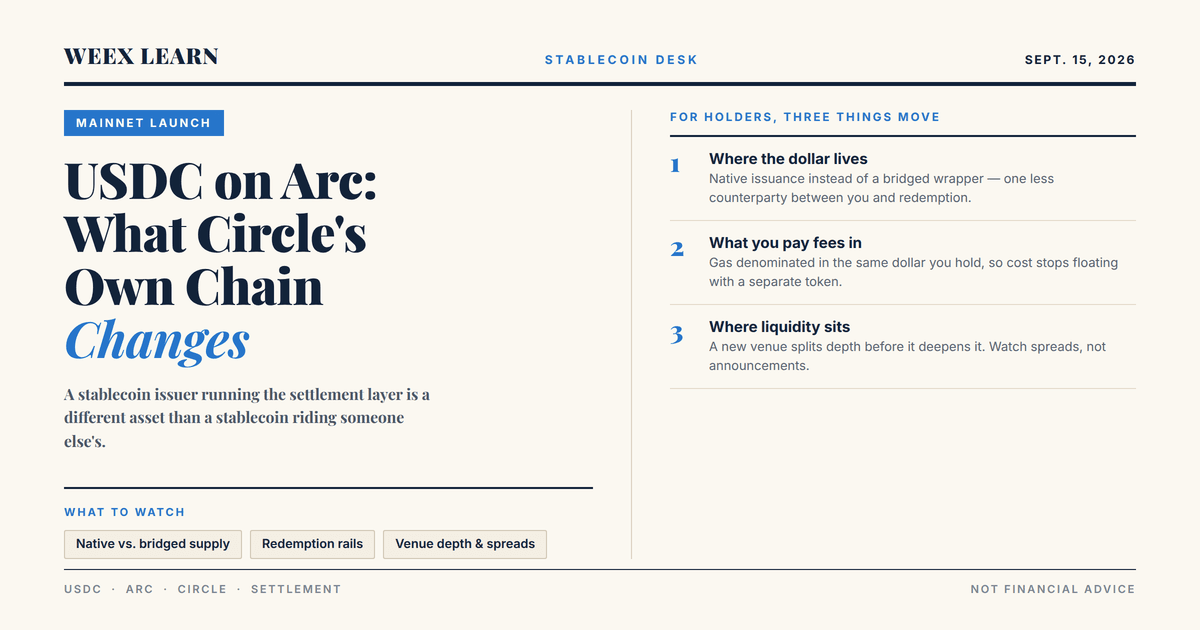
USDC on Arc: What Circle's Mainnet Launch Changes for Holders

Robinhood Built a Chain for Tokenized Stocks: Did It Just Become a Meme Coin Casino?

What Is TermMax (TMX)? Inside the New Fixed-Rate DeFi Token Launching Today
Amid the boom in stablecoin investments, which stablecoins are worth keeping an eye on?

What Is Morpho (MORPHO) and How Does It Work?
APR vs APY in Crypto: Why the Bigger Number Can Mislead You
Walrus (WAL) Jumps 30%: Sui Storage Token Rallies on AI Data
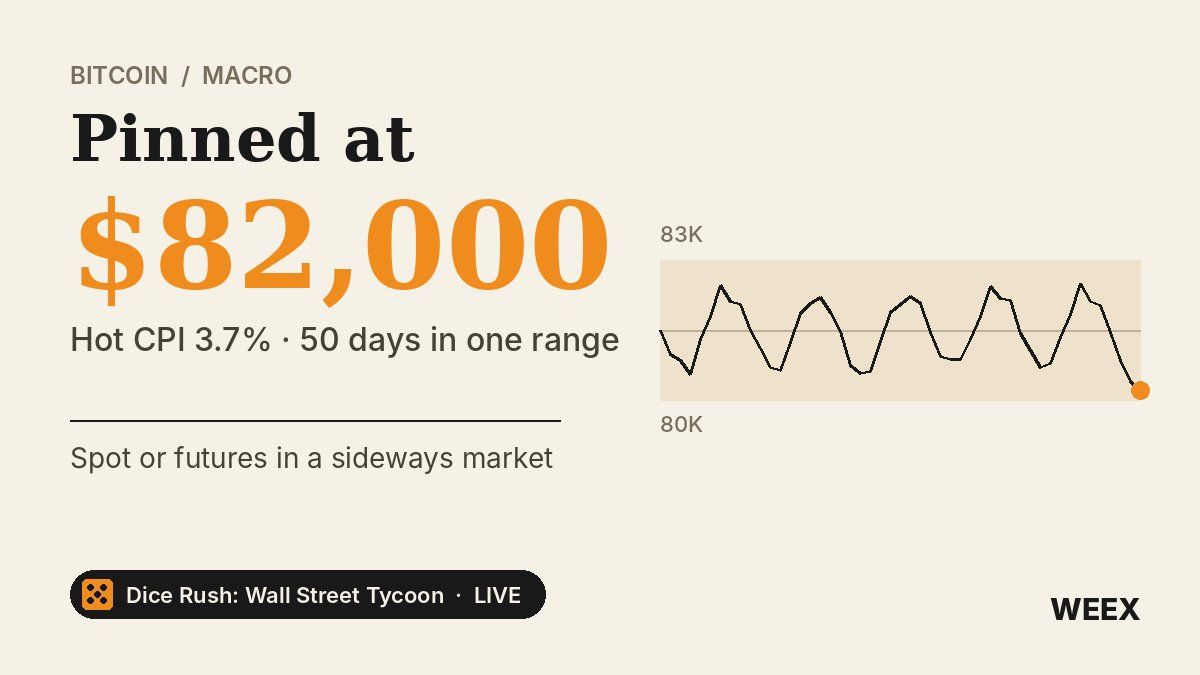
Bitcoin Price After Hot CPI: Why BTC Is Pinned Near $82,000
Sandisk Stock After a 524% Run: Why SNDK Keeps Sliding Now
CoreWeave Stock Plunges 15%: Why a Bond Yield Spooked CRWV

WEEX Convert Guide: How to Swap Crypto on Web and App and What the Quote Really Means
ASML Stock Falls Despite a Record Q3 and Higher Outlook: Is the AI Chip Equipment Boom Already Priced In?

SKHY Stock Falls Again: Is the SK Hynix Selloff About China’s CXMT and YMTC or AI Profit-Taking?

What Is a Limit Order? How It Works and When to Use It
Best Crypto Miner for Beginners: What to Check on Cost, Power, Hashprice and Profit Before You Buy
Buy Limit Order: How to Buy Crypto Below the Market Price
Limit Sell Order: How to Set a Take-Profit Price in Crypto

Limit Order vs Market Order: Which One to Use When Trading Crypto
What Is a Limit Order? How It Works in Crypto With BTC Examples
OP Price and Unichain's OP Enterprise Move: What It Means for OP
Nvidia Stock Falls After Microsoft's Maia 300: Is Custom Silicon a Real Threat to NVDA?

SpaceX Stock (SPCX) Near $163: Can It Reclaim $176 After Pivotal Lifts Its Target to $230?

MSFT Stock Near $542: What Azure Maia 300 Actually Claims and What Still Needs Proof
MU Stock Falls Below $1,000: Is the CXMT Threat Real or Just an Excuse to Take Profits?
Can META Reach $1,000? What Wells Fargo, Jefferies and Bernstein Targets Say About Meta Stock

Meta Stock Jumps as Muse AI Retention Data Lands: Is META Pricing In an AI Agent Win?

Stop Limit Order: How It Works and Why It Can Fail to Fill
Best Crypto Platform for Beginners: Pick by Goal, Not Brand
DeFi Vault vs Staking: Who Controls Your Yield and Your Exit?
Who Is Attending TOKEN2049 Singapore 2026? Top Speakers, Exchanges and Exhibitors to Watch
USDC on Arc: What Circle's Mainnet Launch Changes for Holders
Robinhood Built a Chain for Tokenized Stocks: Did It Just Become a Meme Coin Casino?
What Is TermMax (TMX)? Inside the New Fixed-Rate DeFi Token Launching Today
Amid the boom in stablecoin investments, which stablecoins are worth keeping an eye on?
Contents
Popular coins
Latest articles


