
CFTC Blockchain Derivatives Approval: Does It Mean You Can Trade Yet?

 Prefer us on Google


No, not yet: a CFTC blockchain-related approval for a derivatives venue does not automatically mean retail users can start trading immediately. The latest example is tZERO, whose subsidiary tZERO DCM was approved as a designated contract market on November 10, 2026, after tZERO DCO was registered as a derivatives clearing organization on October 16. That is a meaningful regulatory step, but it is not the same as product launch, customer onboarding, or confirmed access to specific contracts. This article explains what the CFTC approved, what those licenses actually allow, and what still has to happen before trading can begin.
Quick Answer
- tZERO received key CFTC approvals in October and November 2026, but it has not announced live trading dates or its first listed contracts.
- A DCM license covers operating a regulated derivatives market, while a DCO license covers clearing and settlement.
- Approval of the venue does not mean every product, including perpetuals or event contracts, is already cleared for launch.
- For US users, actual access still depends on exchange rollout, account eligibility, disclosures, and final product details.
What the CFTC Approved, and When
The immediate news is straightforward. According to the verified event information, the CFTC approved tZERO subsidiary tZERO DCM as a designated contract market, or DCM, with records showing an approval date of November 10, 2026. Before that, on October 16, tZERO DCO was registered as a derivatives clearing organization, or DCO. Together, those two approvals give tZERO a regulated path to run a derivatives venue and related clearing infrastructure.
That matters because the broader CFTC blockchain policy in 2026 has moved toward clarification and controlled access rather than simply reacting through enforcement. CFTC staff released crypto and blockchain FAQs on March 20, 2026, then updated them again on September 24, 2026. Those updates addressed tokenized forms of permitted investments and whether blockchain systems can satisfy recordkeeping requirements. In February 2026, Staff Letter 26-05 also gave conditional no-action relief for digital assets used as margin collateral, subject to haircuts and risk controls set by clearing organizations.
In other words, this approval did not happen in isolation. It sits inside a larger shift where the CFTC has been opening a regulated lane for blockchain infrastructure in derivatives markets, while still keeping strict rules around segregation, custody, legal enforceability, and settlement finality.
DCM vs DCO: What Each License Actually Allows
This is the part many readers mix up, so it helps to separate the two clearly.
| License | What It Does | What It Does Not Automatically Mean |
|---|---|---|
| DCM | Allows a firm to operate a regulated derivatives trading market | Does not mean contracts are already listed or open to customers |
| DCO | Allows a firm to clear, settle, and manage counterparty risk for derivatives | Does not mean a retail user can trade on day one |
A DCM is the exchange layer. It is where contracts can be listed and traded under CFTC oversight. A DCO is the post-trade layer. It handles clearing, collateral, and settlement, which is especially important in leveraged products where counterparty risk must be tightly controlled.
For a crypto beginner, the easiest way to think about it is this: the DCM is the marketplace, and the DCO is the engine that makes sure obligations are honored after a trade. Both are important, but neither license by itself tells you whether you can log in tomorrow and trade a perpetual contract.
-- Price
Approved Is Not the Same as Open for Trading
This is the direct answer to the title question. Approved registration is not the same as a live market.
Based on the verified event information, tZERO has not yet announced the first contracts it will list, and it has not published a customer launch date. That leaves several practical steps still open. The exchange has to specify which products will go live first, disclose trading and clearing arrangements, define who is eligible to participate, and open the onboarding process. Depending on the contract type, additional product-level review, compliance controls, and disclosures may also matter.
This distinction is common in regulated markets. A venue can be approved to operate under a certain framework, yet still need time to finalize systems, surveillance, margin setup, clearing workflows, and customer access rules. In crypto derivatives, that gap can be even more important because the CFTC has spent much of 2026 focusing on how blockchain-based infrastructure fits into existing risk controls.
For example, CFTC guidance on digital asset collateral has emphasized that faster settlement and 24/7 transferability can improve liquidity and reduce operational friction. But the regulator has also stressed that tokenized collateral still must meet existing standards for custody, segregation, liquidity, and legal enforceability. So even when the technology is ready, the compliance stack still has to be finished.
Which Products Are Covered, and Which Are Still Unclear
tZERO has reportedly listed potential product categories including event contracts, traditional derivatives, tokenized derivatives, and perpetual contracts. But potential categories are not the same as confirmed live products.
This is where readers need to be careful. A CFTC blockchain approval for the market operator does not mean each of those product types is already available. The actual scope depends on company disclosures and CFTC public records. Until tZERO publishes its first listings, it would be inaccurate to say that US users can trade its perpetuals, tokenized derivatives, or event contracts right now.
That caution fits the wider regulatory backdrop. The CFTC has been increasingly open to blockchain-based market structure, but it is still building rules in stages. In October 2026, the agency sought public comment on crypto asset transaction and crypto asset market regulation, including 24/7 trading, blockchain-based execution and recordkeeping, customer asset custody, segregation, clearing, and insolvency treatment. Those are core market structure issues, not minor details.
Perpetuals deserve special attention here because they are one of the most searched crypto derivatives products in the US. The knowledge base indicates the CFTC has clarified how regulated US firms may participate in crypto perpetual futures contracts. Even so, that does not convert every approved venue into a live perpetuals platform. Product-level rollout still matters.
What US Users Can and Can’t Do Right Now
Right now, US users can read the approvals as a sign that regulated crypto derivatives infrastructure is expanding. They can also treat tZERO as a company with meaningful regulatory progress in the CFTC blockchain space. What they cannot do, based on the verified information provided, is assume that trading is already open.
There is also no verified basis here to extend the discussion to Backpack or to repeat claims that US service remains waitlist-only there. Since that information was not verified, it should be left out.
Practically, if you are a US trader, the next things that matter are much more basic than headlines. Has the exchange published its launch date? Has it named the first contracts? Can retail users onboard, or is access limited by category? What are the margin rules, collateral rules, and disclosures? If tokenized collateral or blockchain recordkeeping are involved, how are custody and auditability handled?
These questions may sound operational, but they shape real trading access far more than a single approval notice. They also tie directly to the CFTC’s 2026 priorities, which have focused less on broad slogans and more on how blockchain systems fit into regulated derivatives plumbing.
What to Watch Next
The next phase will likely be more revealing than the approval itself. First, watch for tZERO to disclose the first contract listings. That will tell the market whether the venue starts with event contracts, more conventional derivatives, tokenized products, or something closer to crypto perpetuals. Second, watch for customer onboarding details, because eligibility rules can sharply limit who can participate at launch.
Third, pay attention to how the firm handles clearing, collateral, and custody. CFTC policy in 2026 has been more open to digital assets and tokenized collateral, but only with firm guardrails. Staff Letter 26-05 allowed digital assets as margin collateral under conditions, including the use of DCO haircuts and, where multiple DCOs accept the same asset, the highest applicable haircut. Legal enforceability and settlement finality remain non-negotiable issues for clearing organizations.
Finally, keep an eye on the broader rulemaking path. The CFTC has already signaled that crypto oversight is moving from one-off staff relief and FAQs toward more formal market rules. That is important for the whole blockchain ecosystem, from exchanges and custodians to firms working on tokenization, DeFi-linked market infrastructure, and on-chain recordkeeping.
For traders, the real takeaway is simple: a license tells you a regulated path exists, not that the doors are already open. In a market where headlines often outrun the facts, that distinction can save you from making assumptions about access, liquidity, or product availability before the exchange itself confirms them.
This content is provided for general informational purposes only and doesn't constitute financial, investment, legal, or tax advice. Any events, rewards, online promotions, or related information mentioned herein should not be considered a recommendation, solicitation, or invitation to purchase, sell, trade, or otherwise deal in any crypto assets. Crypto assets are highly volatile and may result in loss. The availability of WEEX services, products, and related events may vary by region. You are responsible for ensuring that your participation is in accordance with applicable local laws and regulations.
You may also like

Genesis AI CEO States Robots Don't Need Heads

IOSG: Bitcoin Needs to Reach $250,000 to Compete with AI in Mining
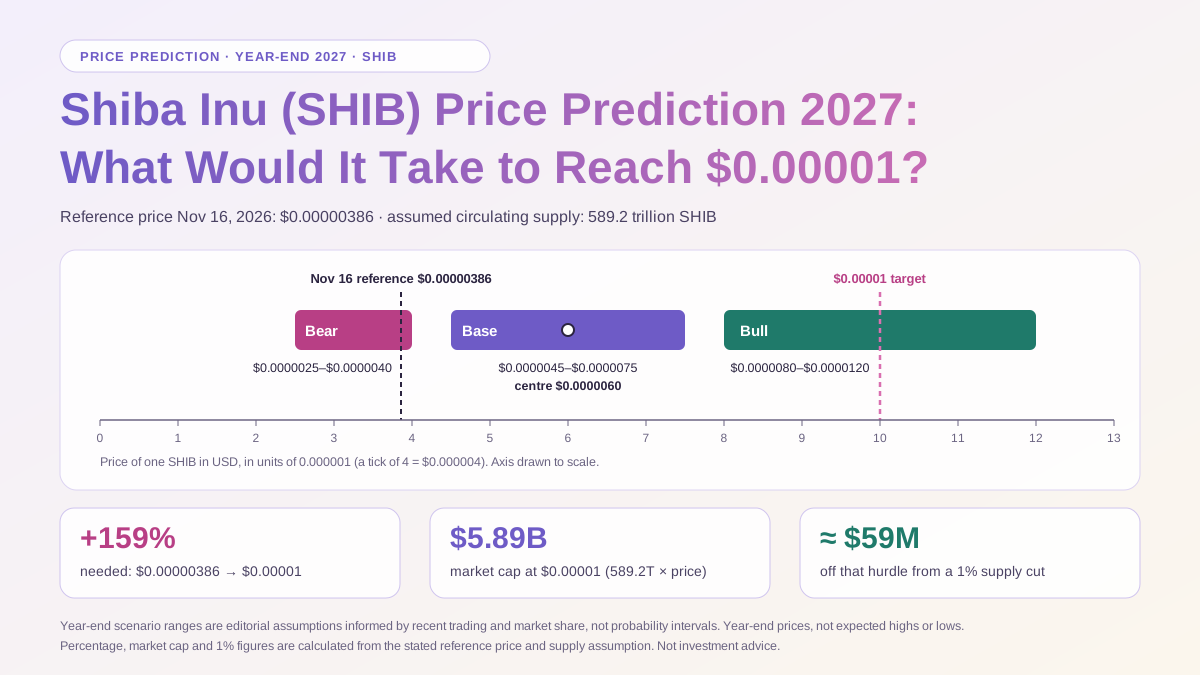
Shiba Inu (SHIB) Price Prediction 2027: What Would It Take to Reach $0.00001?
See our Shiba Inu price prediction for 2027, including the $0.000006 base estimate, the market cap needed for $0.00001, and how much burns could help.

Samsung Electronics and Apple Close to Signing Long-term DRAM Supply Agreement

WEEX P2P now supports CAD —Merchant Recruitment Now Open
Cardano Foundation seeks 25M ADA for 2027 events despite $1.2M funding gap

NVIDIA Employees Warn Board of Potential Loss of "Irreplaceable" Talent

The Arrogance and Prejudice of a16z

Unocoin Estimates $200,000 Loss as Backup-Key Finding Explains Wallet Transfers

ARTEX AI tool breaches networks in under 3 hours, FBI warns
Matt Hougan has a positive outlook on Bitcoin and altcoins

Win an iPhone 18 Pro Max on WEEX? 201 Lucky Eggs Explained

Tesla Autopilot Team Veterans Found Simulation Startup Valued at $1 Billion
CoW Swap Launches on Solana, Supporting USDC and Wrapped SOL Exchange

CoW Swap Launches Alpha Version, Supporting USDC and wSOL Exchange
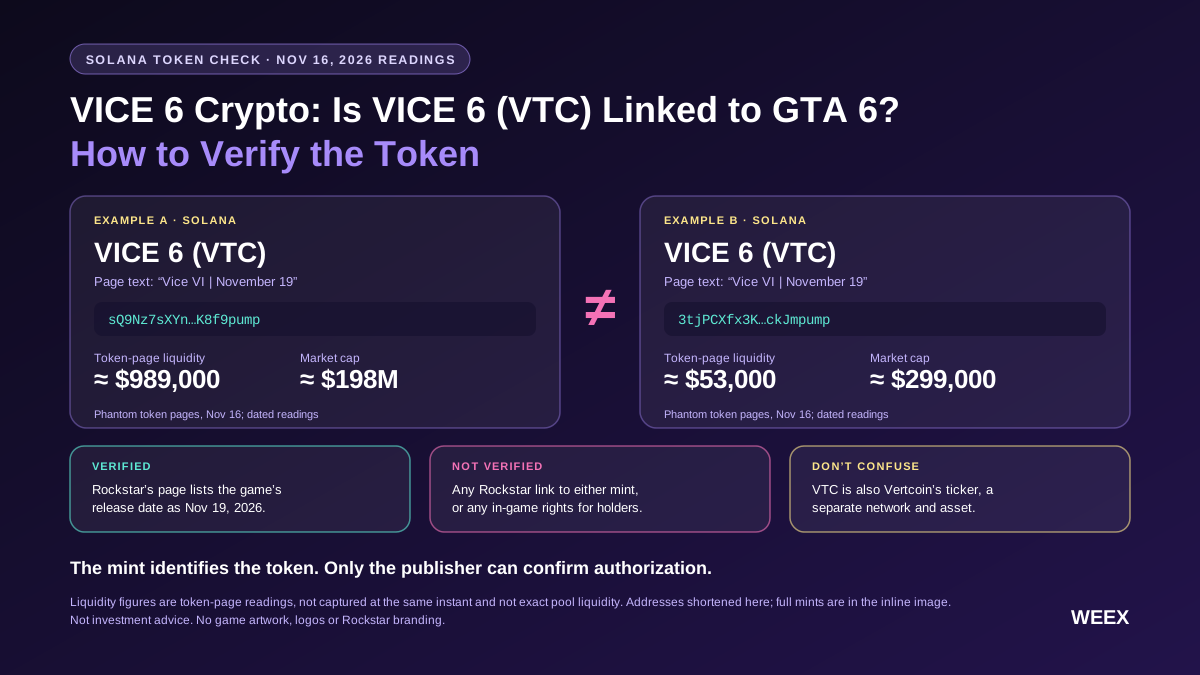
VICE 6 Crypto: Is VICE 6 (VTC) Linked to GTA 6? How to Verify the Token
Is VICE 6 crypto linked to GTA 6? Compare two Solana tokens using VTC, verify their mint and pool addresses, and see what Rockstar has confirmed.
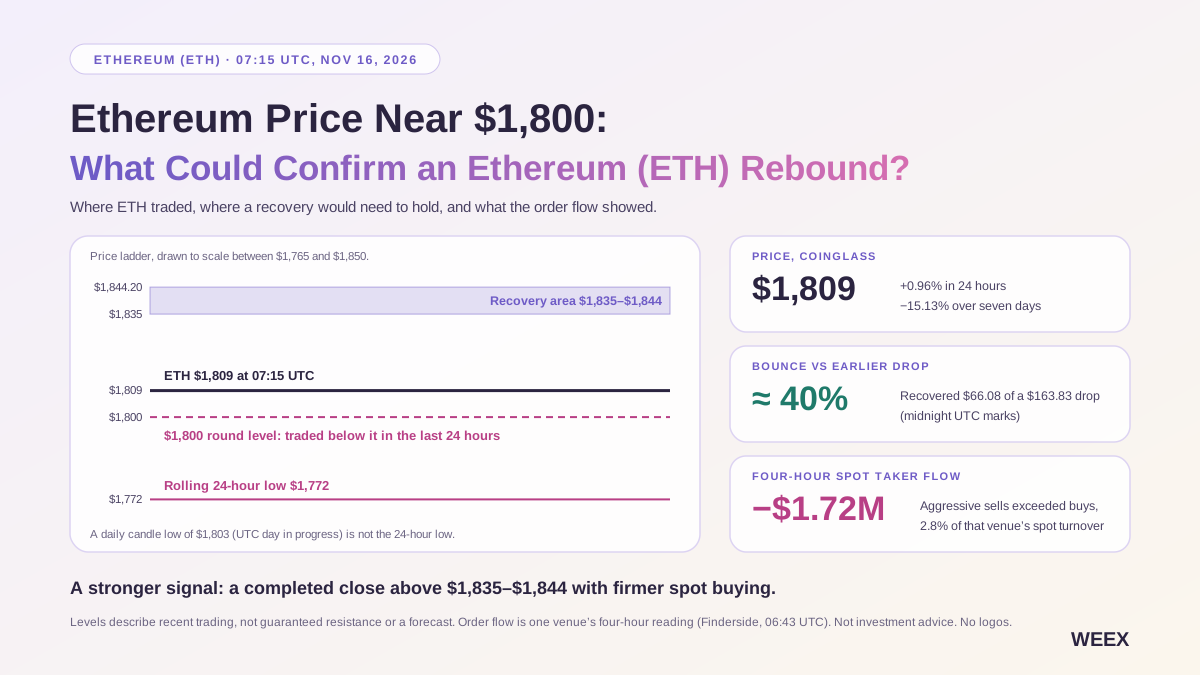
Ethereum Price Near $1,800: What Could Confirm an Ethereum (ETH) Rebound?
Ethereum traded near $1,800 on November 16. See what four-hour spot order flow, futures positioning, and Friday’s ETF flows say about an ETH rebound.
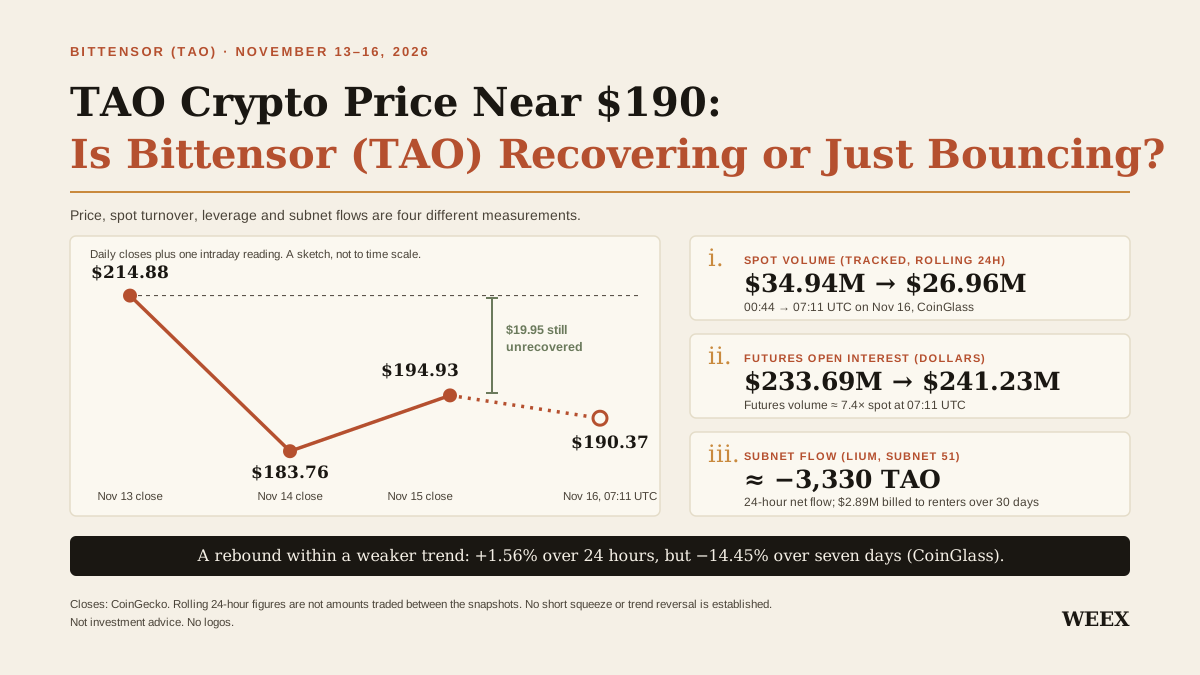
TAO Crypto Price Near $190: Is Bittensor (TAO) Recovering or Just Bouncing?
TAO bounced near $190. Compare spot volume, futures positioning, and Bittensor subnet flows to see what would confirm a more durable recovery.
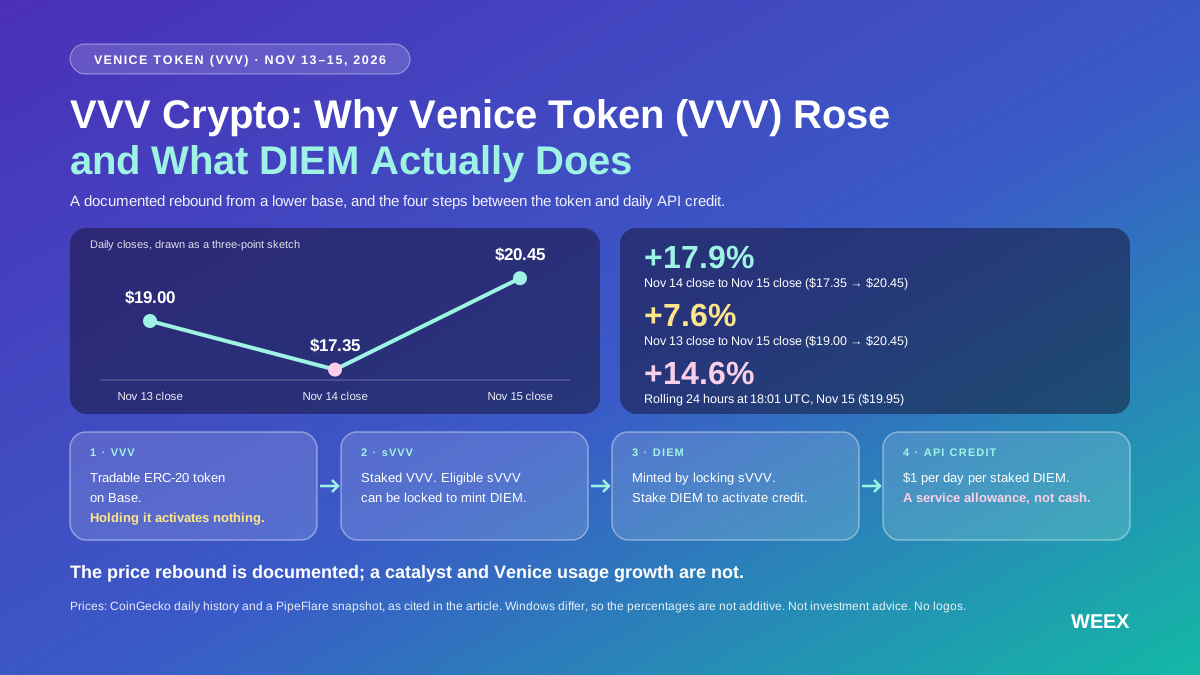
VVV Crypto: What Is Venice Token, Why Venice Token (VVV) Rose and What DIEM Actually Does
Venice Token rose about 14.6% in one November 15 snapshot. Learn what the data shows, how VVV staking works, and what DIEM’s daily API credit buys.
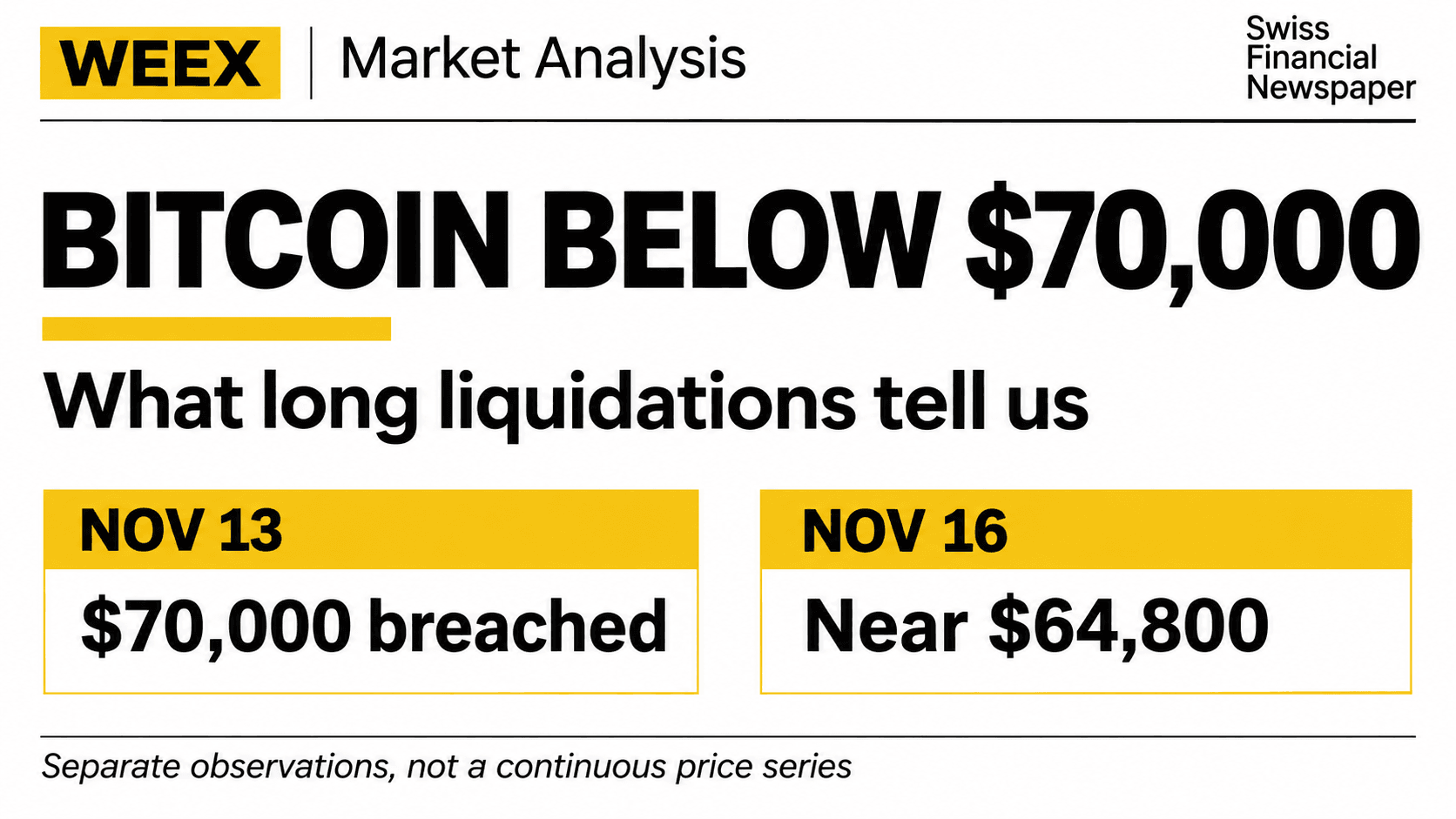
Why Did Bitcoin (BTC) Drop Below $70,000? What Long Liquidations Tell Us
See why Bitcoin fell below $70,000 on November 13, how long liquidations amplified the decline, and what to watch before calling a rebound. If you already plan to trade, you can check whether your activity qualifies for the WEEX Lucky Eggs event, scheduled to run through November 25, 2026 (UTC+8).

WEEX Lucky Eggs: How to Earn Daily Egg Cracks and Win Every Time
Learn how to earn daily WEEX Lucky Eggs from qualifying futures trading volume, check your progress, and understand what “Win Every Time” means.

Meta’s Internal Prediction App Uses Points, Not Cash — and That Distinction Matters

US Signs Silicon Peace Agreement with Eight Nations

Three Questions Every Investor Should Ask About Any Management Team
NuScale Stock Has Lost More Than Half Its Value in 2026, Its Worst Year Since 2023. Here's What Happened the Year After That One.

From 'Patching' to 'Eliminating Entire Classes of Bugs': How to Build Internet Resilience?

5 Dividend Stocks With High Yields That Are Safer Than You Might Think

MiCA gave crypto a passport, but customers still face borders
Regeneron Has $16 Billion in Net Cash and Trades Near 20 Times Earnings. Is It the Cheapest Big Biotech?

Unocoin halts all services after hackers bypass BitGo freeze
Genesis AI CEO States Robots Don't Need Heads
IOSG: Bitcoin Needs to Reach $250,000 to Compete with AI in Mining
Shiba Inu (SHIB) Price Prediction 2027: What Would It Take to Reach $0.00001?
See our Shiba Inu price prediction for 2027, including the $0.000006 base estimate, the market cap needed for $0.00001, and how much burns could help.
Samsung Electronics and Apple Close to Signing Long-term DRAM Supply Agreement
WEEX P2P now supports CAD —Merchant Recruitment Now Open
Cardano Foundation seeks 25M ADA for 2027 events despite $1.2M funding gap
Latest articles




Latest coin listings on WEEX


