
Crypto VC May Only Have 1 to 2 Investment Cycles Left as AI and Robotics Take Over as New Capital Battlegrounds

 Prefer us on Google



Written by: Imran, Partner at Alliance DAO
Compiled by: Big Pliers
A few days ago, I attended an LP (Limited Partner) dinner where the total capital represented was as high as $15 billion. The biggest topic of the night was the sudden shift of funds from crypto to cutting-edge technology. Everyone was trying to understand why this change was happening, whether crypto was still worth investing in, and some were confused by the rapid pivot of major players in the industry.
Here are some key points from the discussion, along with some of my own thoughts.
Talent Always Flows to Emerging Industries
Historically, early talent tends to flow into emerging industries.
Think of what Chris Dixon calls the "night and weekend" founders: those willing to take 10x career risks to explore new things. It is often these founders who create entirely new markets and where the highest returns are generated.
Crypto is no exception. Over the past decade, we have witnessed thousands of experiments, and those projects that found product-market fit (PMF) have carved out their own markets. But the opportunity set has changed. Today, the on-chain industry is increasingly focused on Wall Street, TradFi, payments, and fintech. These are huge markets with larger TAMs, but they are also more focused and mature industries compared to the perceived crypto opportunities of 2020/2021.
We must also remember that much of crypto's growth occurred during the zero interest rate (ZIRP) era. Every new chain, token, and narrative launched during that time gave us the illusion that "we were right about the future direction." When token prices rose, we assumed the arguments were being validated. But it turns out, things did not develop entirely that way.
Meanwhile, multiple industries have begun to gain attention: AI, robotics, physical AI, etc. Some early discoverers (like Alex Atallah) recognized this shift and pivoted to AI, which proved to be the right decision at the time.
If we view the 2020s as the decade of cutting-edge technology, it could be said to have started with crypto, followed by AI, robotics, and physical AI, and likely ending with more focus on biotech and materials science. Ultimately, these industries will intertwine in some form.
Cutting-Edge Technology is Repeating the Early Crypto Story
Interestingly, we are seeing the same pattern repeat: AI-specific funds, white paper groups focused solely on AI, white paper groups focused solely on robotics, with entrepreneurs utilizing nights and weekends to explore these emerging fields.
If you remember, the early days of crypto were exactly the same. In my view, the lesson learned from the early days of crypto is that all new talent flocked to this space precisely because it was new and exciting. And now I see multiple new tracks happening simultaneously, which I believe will converge in the future.
Currently, the crypto industry is facing several challenges at once:
- Competing for high-density talent with newer tech fields;
- Recovering from the end of the zero interest rate policy (ZIRP) era;
- Gradually moving away from the broader Web3 narrative towards a more focused direction on Wall Street and fintech;
- Facing competition and disruption from new technologies such as AI and quantum computing.
We also see a phenomenon very similar to the AI industry: large existing players can easily leverage their existing distribution channels to adopt stablecoins and other on-chain infrastructure, making it harder for startups to compete. Thus, we see startups being acquired, merged, or pivoting to other fields. This may seem bearish, but it is actually healthy.
Crypto VC May Only Have 1 to 2 Investment Cycles Left
So, the core question now is: where are the opportunities?
At the dinner, one LP naturally posed the question: do we still need crypto venture capital?
After some discussion, the general consensus was: yes, but perhaps not for long. We may have one to two cycles left before crypto is fully integrated into the broader cutting-edge tech market.
Some may view this as a negative signal, but I see it as extremely positive. It indicates that crypto as an industry is maturing, and the broader tech market has effectively validated much of what we built in the past. A large number of fintech and pure AI companies, as well as new founders, still require significant crypto expertise, which is primarily concentrated among crypto-native talent and VCs. I also believe we are at a critical juncture for another major shift.
The crypto industry was one of the earliest emerging fields of cutting-edge technology, but then went through a period of stagnation. It later created new growth opportunities for the fintech industry through stablecoins, asset tokenization, and on-chain infrastructure.
Now, as AI matures, we are beginning to see more and more AI-centric companies adopting crypto infrastructure, including Agentic Payments, Agentic Wallets, and Agentic Trading.
We may not have yet discovered the true new opportunities in this field, as there are still many cutting-edge tech areas yet to emerge, and each new field could potentially serve as a catalyst for the next wave of crypto technology adoption.
I believe we have underestimated the contribution that still-maturing emerging fields will bring to the future growth of the crypto industry. For example, we have yet to see DeFi or Agentic Brokerages truly reach millions of users, nor have we seen tokenized stocks achieve widespread adoption in emerging markets.
Why Did Crypto VCs Suddenly Pivot to Cutting-Edge Technology?
I have often mentioned that if a typical new technology paradigm takes about 30 years to mature, I would divide it into three stages:
· The first third: the early exploration phase, which is also the phase where the highest investment returns are most easily created.
· The second third: the commercialization and scaling phase, which is also the phase that creates the most wealth.
· The final third: the industry consolidation phase, where the market gradually forms around the ultimately winning companies and projects.
I believe we are currently in the second phase of this technological paradigm shift.
Aside from the factors mentioned earlier, I think the answer from a fund management perspective is actually quite straightforward. The investment opportunity set in the crypto industry is currently much narrower than we believed it to be in 2020. Nowadays, it is difficult to deploy $1 billion to $3 billion around the crypto industry and expect to achieve the same returns as in the past.
From a fund return perspective, a $2 billion fund with a target return of 3x needs to generate $6 billion in returns. This means the fund must invest in multiple projects with final valuations reaching $10 billion to $50 billion, and hold a sufficiently large equity stake in those projects to achieve this goal.
Historically, the types of projects capable of supporting such large-scale investments have primarily been Layer 1 public chains and other infrastructure projects.
However, as the industry matures, more value is shifting towards applications with distribution channels or companies with existing distribution capabilities, making it increasingly difficult for large-scale funds focused solely on crypto to justify their existence.
Thus, it is entirely logical for these institutions to expand into robotics, physical AI, computing power, and other cutting-edge technologies. They need a broader opportunity set to deploy capital and generate venture-level returns. They can achieve meaningful ownership, and the current round of valuations also has a feasible path to IPO—just look at some of the AI and robotics companies today.
Crypto VCs are entering a transformation period; where will the next round of opportunities be hidden?
So what about specialized vertical VCs? They will continue to have advantages, similar to fintech VCs or other industry-specific vertical VCs, but over time, we will no longer need as many of these institutions.
We are currently just digesting the excess from the previous cycles, and the institutions that remain will either double down on their focus areas or expand their scope to cover cutting-edge technology.
Then there’s the talent issue.
We do feel the younger tech talent migrating towards AI and robotics. Historically, this talent would have read crypto white papers written by Dan Boneh and then set out to develop a protocol, but now this talent is flowing elsewhere. However, this does not mean we are experiencing a talent drain. Just from Alliance's data, we see a large number of existing crypto talents leaving big companies to start their own ventures, even outnumbering the younger talents.
So what does all this ultimately mean?
Crypto and on-chain will always be an industry, but it is becoming more focused on finance, payments, and financial infrastructure. We still have a lot of time for these products to mature and reach billions of people, and today we are still far from that goal.
One of the most interesting points from the dinner was that the LPs were not feeling pessimistic about crypto. They were excited about the growth of crypto, thrilled about its intertwining with emerging tracks and the new opportunities it brings, and are doubling down on those crypto practitioners with a long-term vision.
-- Price
This content is provided for general informational purposes only and doesn't constitute financial, investment, legal, or tax advice. Any events, rewards, online promotions, or related information mentioned herein should not be considered a recommendation, solicitation, or invitation to purchase, sell, trade, or otherwise deal in any crypto assets. Crypto assets are highly volatile and may result in loss. The availability of WEEX services, products, and related events may vary by region. You are responsible for ensuring that your participation is in accordance with applicable local laws and regulations.
You may also like

Mazama Energy Finds New Solution to the Biggest Challenge in Geothermal Drilling

Is Apple Losing Its Memory?

Energy Transfer vs. Enbridge: Which High-Yield Pipeline Stock Could Make You Richer Over the Next 10 Years?

Jefferies Raises Spotify Price Target to $710, Expects Over 20% Growth in Free Cash Flow

The Application is Landing, Wealth is Evaporating: Analyzing the Painful Roots of the Crypto Industry through Three Financial Statements

Baidu Q3 Net Profit Exceeds Expectations, AI Cloud Revenue Soars 94%, Token Call Revenue Grows 1159%
Twenty One Capital’s $1.09 Billion Profit Is Mostly a Bitcoin Accounting Story

What Licenses Are Needed for Crypto Payments in Hong Kong?
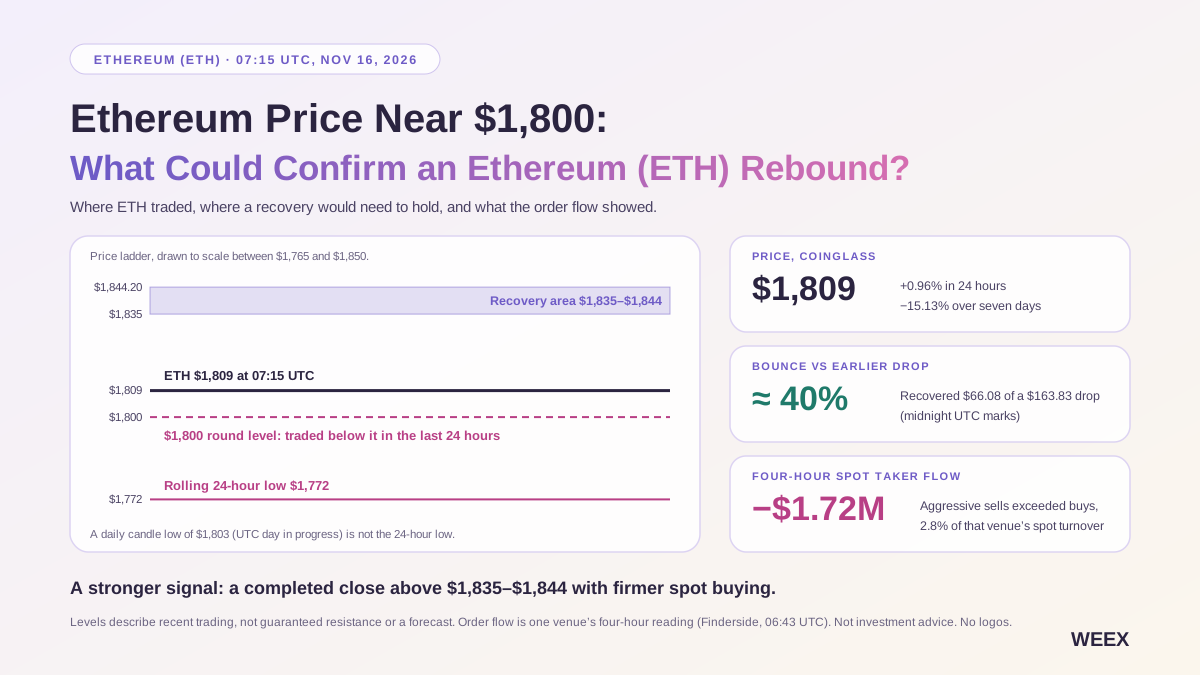
Ethereum Price Near $1,800: What Could Confirm an Ethereum (ETH) Rebound?
Ethereum traded near $1,800 on November 16. See what four-hour spot order flow, futures positioning, and Friday’s ETF flows say about an ETH rebound.

Nakamoto Extends Part of $60 Million Loan to Kraken Until 2027

Global Cryptocurrency 'Audit' Trend Emerges
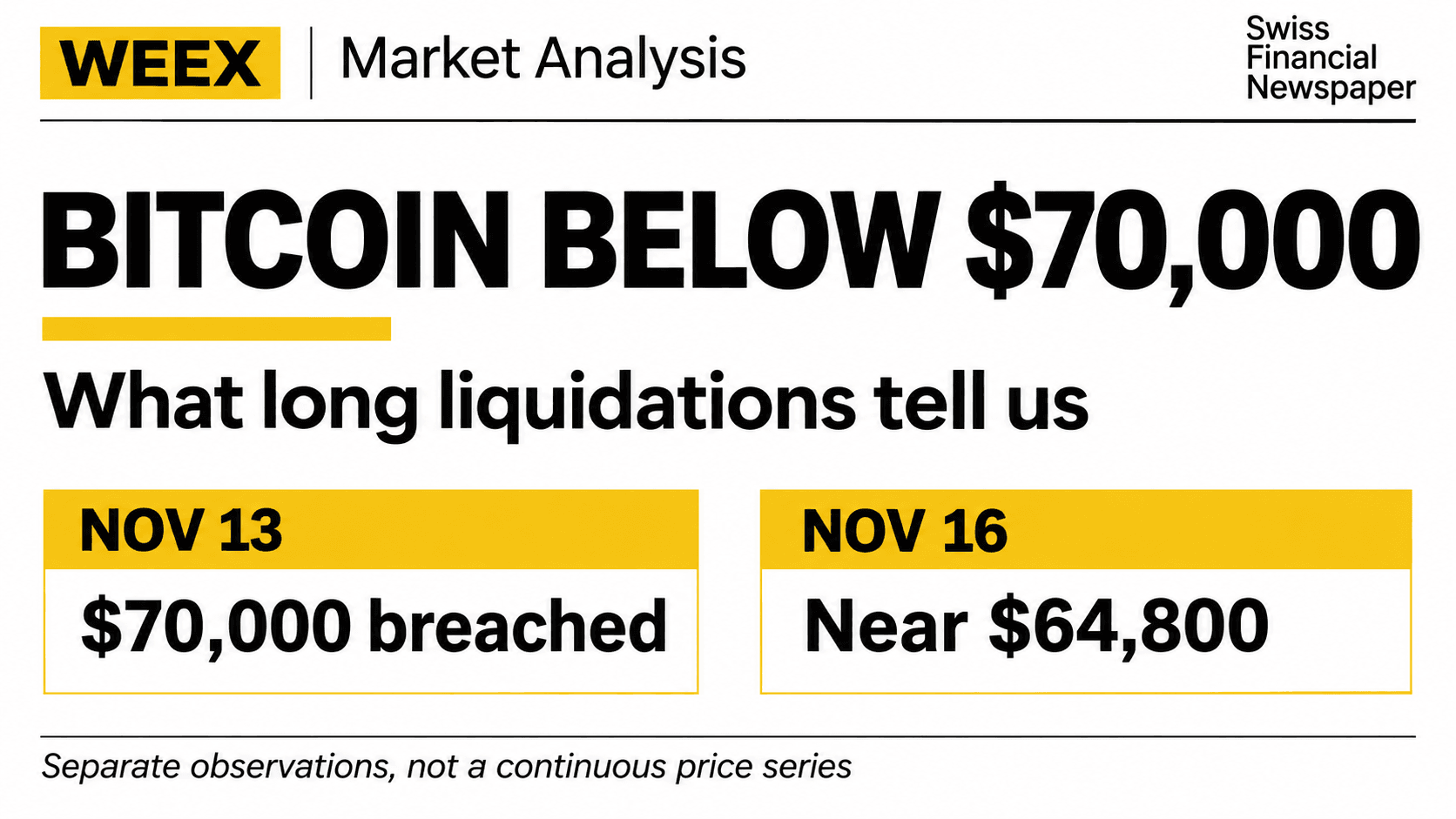
Why Did Bitcoin (BTC) Drop Below $70,000? What Long Liquidations Tell Us
See why Bitcoin fell below $70,000 on November 13, how long liquidations amplified the decline, and what to watch before calling a rebound. If you already plan to trade, you can check whether your activity qualifies for the WEEX Lucky Eggs event, scheduled to run through November 25, 2026 (UTC+8).

Wall Street Wants 24/7 Trading, But Weekend Cash Needs to Be Covered

Bank of America’s Hartnett: The Dollar is 'Destroying Everything', Remains Risk-Averse Before Dollar Decline

Nasdaq Futures vs. Dow Futures: Key Points for Cryptocurrency Traders Before the US Market Opens

When the Crypto Engine Enters Traditional Finance: A Conversation with Bitget's CFD Head on How to Achieve a 10 Billion Cross-Border Sample in Ten Months?

The Cryptocurrency Circle No Longer Exists

Is Meta Stock Still a Buy After Borrowing About $25 Billion This Month?

Archer Aviation and Joby Aviation: Speculative Plays With Upside Potential and Downside Risk
Wall Street Tests the AI Boom: What the Industry's Balances Reveal After the Democratic Victory

How These 6 Natural Gas Stocks Make Money

Is Credo Technology a Better AI Networking Buy Than Broadcom?

Wintermute Spends $824,000 on Front-Running Trades in the Last 30 Days
Yishi Advises to Stay Away from Leverage and Altcoins, Survival is the Top Priority

From 'Patching' to 'Eliminating Entire Classes of Bugs': How to Build Internet Resilience?

One Year of JPYC Stablecoin: First Gas-Free User is Quail Egg Merchant; Single Transaction Limit Set at 1 Million Yen
[Analysis] Two Barriers Preventing Bitcoin from Rising

Is CoreWeave Stock a Buy After Its Latest Earnings?

5 Dividend Stocks With High Yields That Are Safer Than You Might Think

Netflix Engagement Growth Is Slowing. Here’s Why I Bought More Anyway.
Mazama Energy Finds New Solution to the Biggest Challenge in Geothermal Drilling
Is Apple Losing Its Memory?
Energy Transfer vs. Enbridge: Which High-Yield Pipeline Stock Could Make You Richer Over the Next 10 Years?
Jefferies Raises Spotify Price Target to $710, Expects Over 20% Growth in Free Cash Flow
The Application is Landing, Wealth is Evaporating: Analyzing the Painful Roots of the Crypto Industry through Three Financial Statements
Baidu Q3 Net Profit Exceeds Expectations, AI Cloud Revenue Soars 94%, Token Call Revenue Grows 1159%
Latest articles


Latest coin listings on WEEX


