
Is Meta Stock Still a Buy After Borrowing About $25 Billion This Month?

 Prefer us on Google



Meta Platforms (META +2.90%) has been raising money quickly. In late October, it priced a stock sale at $625 a share along with a sale of mandatory convertible preferred stock. Next, the social media company sold $15 billion in dollar bonds on Nov. 3 and €9 billion in euro bonds (around $10 billion) on Nov. 4. The euro deal was its first.
Meta borrowed about $25 billion this month. And the stock trades near $640 as I write, about 18% below its Sept. 24 closing high of about $778.
Is Meta stock still a buy with the extra debt? I think so, but the borrowing comes right before what might be Meta's most expensive quarter yet.
Image source: Getty Images.
What's the money for?
Meta said it plans to use the proceeds for general corporate purposes. Much of it will probably go toward the servers, data centers, and network infrastructure behind its capital spending.
Showing how quickly that spending has risen, Meta's capital expenditures (including principal payments on finance leases) climbed from $19.8 billion in the first three months of 2026 to $31.1 billion in the second quarter and $34.9 billion in the third quarter. Operating cash flow, meanwhile, stayed at around $32 billion to $33 billion every quarter. So, free cash flow (the cash left after capital spending) dropped from $12.4 billion in Q1 to $784 million in Q2 and then to negative $2.1 billion in Q3.
And the biggest spending quarter is probably still ahead. Management expects 2026 capital expenditures of $135 billion to $145 billion. With around $85.8 billion spent through September, the guidance points to another $49 billion to $59 billion by year-end.
If fourth-quarter operating cash flow comes in near the third quarter's $32.8 billion, Meta's spending could top it by about $16 billion to $26 billion. The new bonds raised around $25 billion after fees, plus about $14.3 billion from the preferred stock, which pays a 6.5% annual dividend.
Together, these amounts exceed a quarter's shortfall, and more is coming. Meta won't get the roughly $28.7 billion from its common stock sale until forward sale agreements settle, by Nov. 19, 2027, at the latest. Of course, management has said it plans to keep "investing aggressively" next year, too.
The interest bill is climbing but Meta can afford it
Meta owed $59 billion in notes at the end of 2025, and that face value rose to $84 billion by Sept. 30 after a $25 billion bond deal in May. This month's bonds bring it to around $109 billion.
Borrowing has gotten pricier, too. The new dollar notes pay interest rates of 5.85% (due 2031) to 7.5% (due 2056). Even the lowest beats the highest rate on any Meta bond sold before 2026, which was 5.75%.
The euro notes came in lower, at 4.3% to 6.4%, partly because benchmark interest rates in Europe sit below those in the U.S.
On Meta's third-quarter earnings call, chief financial officer Susan Li said the new Class C stock was part of a push "to ensure that we have access to a diverse pool of funding sources."
In the third quarter, Meta's interest expense more than quadrupled year over year to $977 million, and the new bonds add about $1.5 billion annually.
I think Meta can cover that bill. After all, it generated $22.9 billion in operating income in the third quarter alone, not counting a $9.89 billion legal charge. And Moody's still rates the debt Aa3 with a stable outlook, but S&P Global's AA- rating has a negative one.
Still a buy at about $640?
Meta's ad revenue, which pays for all this, climbed 26% year over year to $63.1 billion in the third quarter. Total revenue growth has slowed, from 33% in Q1 to 28% and then 26%. But management expects fourth-quarter revenue between $73 billion and $76 billion, indicating growth of about 22% to 27%.
And the stock doesn't look expensive. At roughly $640, Meta trades at about 18 times the earnings expected for 2027, near the 17.7 times forward earnings FactSet put on the S&P 500 on Nov. 5. So investors are paying about a market-average price for a company growing revenue over 20%.
Spending could outrun cash for longer than investors think, of course, and more borrowing at 6% to 7.5% could follow.
In the end, I think the extra debt is a fair cost for a business growing so fast, and the shares look worth buying around $640. I'd just want to see free cash flow go positive again once this round of spending peaks.
-- Price
This content is provided for general informational purposes only and doesn't constitute financial, investment, legal, or tax advice. Any events, rewards, online promotions, or related information mentioned herein should not be considered a recommendation, solicitation, or invitation to purchase, sell, trade, or otherwise deal in any crypto assets. Crypto assets are highly volatile and may result in loss. The availability of WEEX services, products, and related events may vary by region. You are responsible for ensuring that your participation is in accordance with applicable local laws and regulations.
You may also like

$LIBRA: One of the defendants seeks to remove Judge Ledesma and halt the review that could reactivate the case

Mazama Energy Finds New Solution to the Biggest Challenge in Geothermal Drilling

Is Apple Losing Its Memory?

Energy Transfer vs. Enbridge: Which High-Yield Pipeline Stock Could Make You Richer Over the Next 10 Years?

Jefferies Raises Spotify Price Target to $710, Expects Over 20% Growth in Free Cash Flow

The Application is Landing, Wealth is Evaporating: Analyzing the Painful Roots of the Crypto Industry through Three Financial Statements

Baidu Q3 Net Profit Exceeds Expectations, AI Cloud Revenue Soars 94%, Token Call Revenue Grows 1159%
Twenty One Capital’s $1.09 Billion Profit Is Mostly a Bitcoin Accounting Story

What Licenses Are Needed for Crypto Payments in Hong Kong?
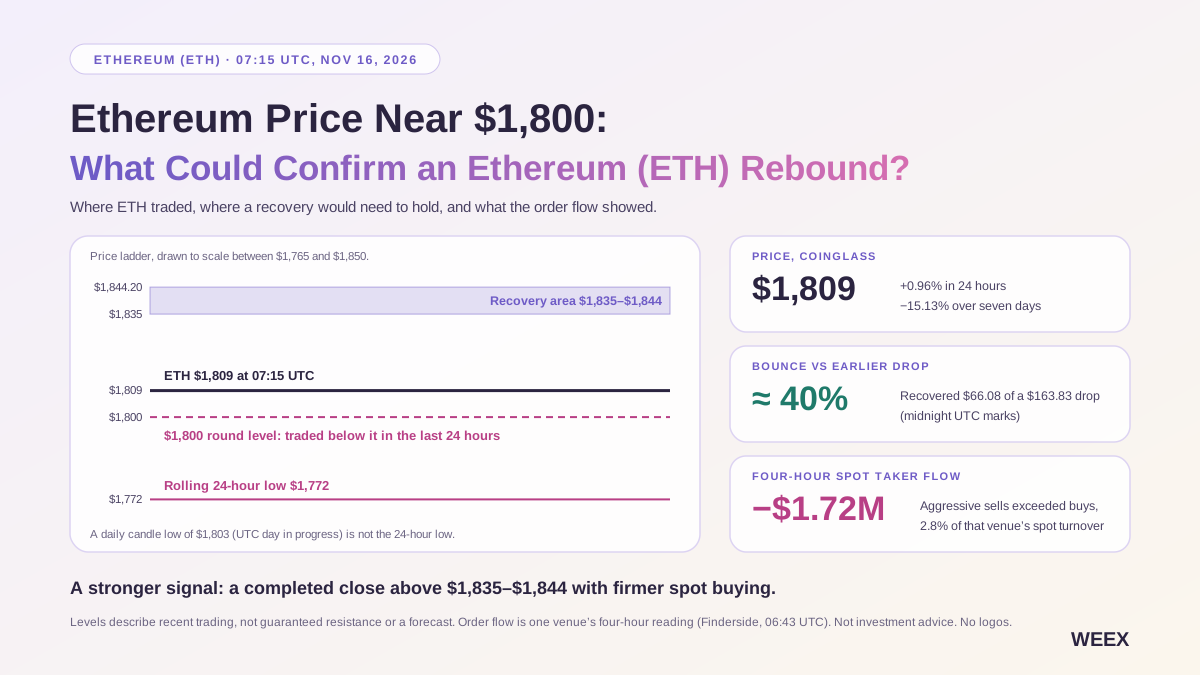
Ethereum Price Near $1,800: What Could Confirm an Ethereum (ETH) Rebound?
Ethereum traded near $1,800 on November 16. See what four-hour spot order flow, futures positioning, and Friday’s ETF flows say about an ETH rebound.

Nakamoto Extends Part of $60 Million Loan to Kraken Until 2027

Global Cryptocurrency 'Audit' Trend Emerges
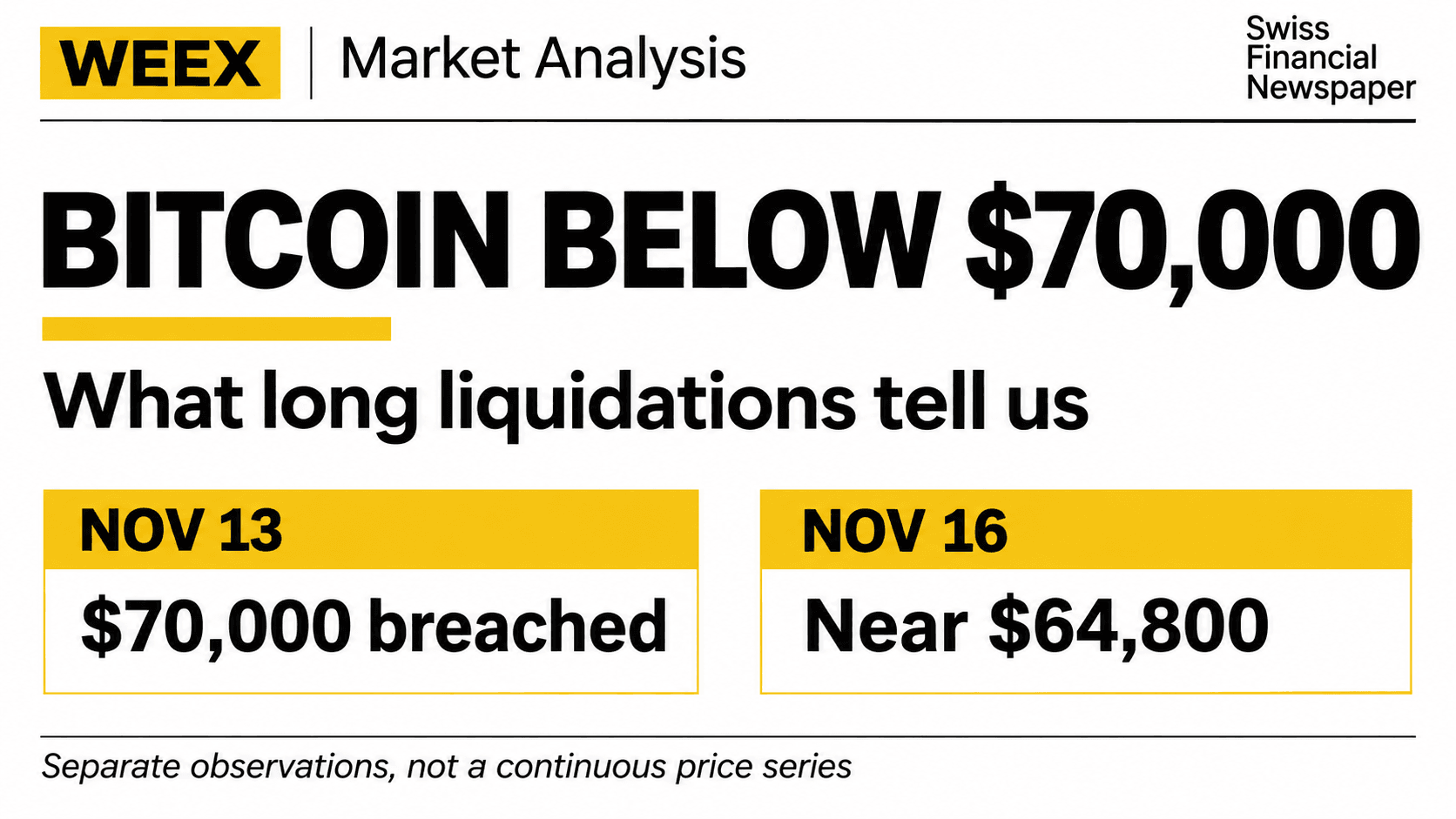
Why Did Bitcoin (BTC) Drop Below $70,000? What Long Liquidations Tell Us
See why Bitcoin fell below $70,000 on November 13, how long liquidations amplified the decline, and what to watch before calling a rebound. If you already plan to trade, you can check whether your activity qualifies for the WEEX Lucky Eggs event, scheduled to run through November 25, 2026 (UTC+8).

Wall Street Wants 24/7 Trading, But Weekend Cash Needs to Be Covered

Bank of America’s Hartnett: The Dollar is 'Destroying Everything', Remains Risk-Averse Before Dollar Decline

Nasdaq Futures vs. Dow Futures: Key Points for Cryptocurrency Traders Before the US Market Opens

When the Crypto Engine Enters Traditional Finance: A Conversation with Bitget's CFD Head on How to Achieve a 10 Billion Cross-Border Sample in Ten Months?

Crypto VC May Only Have 1 to 2 Investment Cycles Left as AI and Robotics Take Over as New Capital Battlegrounds

The Cryptocurrency Circle No Longer Exists

Archer Aviation and Joby Aviation: Speculative Plays With Upside Potential and Downside Risk

Wall Street Tests the AI Boom: What the Industry's Balances Reveal After the Democratic Victory

How These 6 Natural Gas Stocks Make Money

Is Credo Technology a Better AI Networking Buy Than Broadcom?

Wintermute Spends $824,000 on Front-Running Trades in the Last 30 Days
Yishi Advises to Stay Away from Leverage and Altcoins, Survival is the Top Priority

From 'Patching' to 'Eliminating Entire Classes of Bugs': How to Build Internet Resilience?
One Year of JPYC Stablecoin: First Gas-Free User is Quail Egg Merchant; Single Transaction Limit Set at 1 Million Yen
[Analysis] Two Barriers Preventing Bitcoin from Rising

Is CoreWeave Stock a Buy After Its Latest Earnings?

5 Dividend Stocks With High Yields That Are Safer Than You Might Think
$LIBRA: One of the defendants seeks to remove Judge Ledesma and halt the review that could reactivate the case
Mazama Energy Finds New Solution to the Biggest Challenge in Geothermal Drilling
Is Apple Losing Its Memory?
Energy Transfer vs. Enbridge: Which High-Yield Pipeline Stock Could Make You Richer Over the Next 10 Years?
Jefferies Raises Spotify Price Target to $710, Expects Over 20% Growth in Free Cash Flow
The Application is Landing, Wealth is Evaporating: Analyzing the Painful Roots of the Crypto Industry through Three Financial Statements
Latest articles


Latest coin listings on WEEX


