
Lloyds uses USDC to settle $750,000 with Visa in under an hour

 Prefer us on Google


Lloyds Banking Group and Visa have completed a seven day live stablecoin pilot that settled $750,000 in cross border payment obligations, with funds reaching Visa in under an hour even during the weekend.
- Lloyds and Visa settled $750,000 in live cross border payment obligations using USDC during a seven day pilot.
- Funds reached Visa in under an hour, including during the weekend, compared with traditional settlement that can take a day or longer outside banking hours.
- Lloyds bought USDC through UK regulated exchange Archax and used its own Canton node, while Visa supported settlement on a separate public blockchain.
- The pilot tested whether stablecoins could support round the clock settlement while improving visibility over when funds arrive.
According to Lloyds Banking Group, the trial used USDC for a series of real world U.S. dollar settlements between its Corporate Markets branch in Jersey and Visa in the United States.
Lloyds purchased the USDC through Archax, a UK regulated digital asset exchange, before transferring the settlement funds to Visa. The companies focused on the settlement process between financial institutions instead of changing how customers make payments.
Transactions continued outside normal banking hours, including over the weekend. Lloyds said traditional cross border settlement can take a day or longer when transactions begin outside banking hours, while funds moved during the pilot reached Visa in less than an hour.
Lloyds and Visa test stablecoin settlement across blockchain networks
The trial tested more than the time required to move the funds. Lloyds operated its own node on Canton Network, using the blockchain's configurable privacy features, while Visa supported settlement on a separate public blockchain.
Running the transactions across different blockchain environments allowed the companies to test whether stablecoin settlement could work without requiring participating institutions to operate entirely on the same network.
Visa has been working on similar infrastructure before its latest test with Lloyds. In June, crypto.news previously reported that the payments company had tested private stablecoin settlement with Brale using the SBC dollar backed stablecoin on Canton Network.
The earlier proof of concept examined whether financial institutions could settle transactions onchain while restricting access to sensitive transaction information. Visa had previously supported USDC settlement on public blockchains, while the Brale test brought its stablecoin work into Canton's privacy focused institutional infrastructure.
Lloyds has been testing a different form of digital money on the same network. The bank recently participated in live tokenized deposit transactions alongside Barclays and NatWest as UK banks tested blockchain based payments using commercial bank money.
Its earlier work included issuing tokenized sterling deposits on Canton and using them to buy a tokenized UK government bond from Archax. Lloyds later completed three live transactions under the Bank for International Settlements led Project Agorá involving sterling, euros and Swiss francs.
The Visa pilot took another route by using USDC instead of a token representing a commercial bank deposit.
Stablecoin pilot targets round the clock settlement
Settlement timing was one of the main areas tested during the seven day trial.
Banks and companies moving funds internationally can face delays when transactions fall outside the operating hours of the institutions and payment systems involved. Lloyds and Visa tested whether stablecoins could give financial institutions another way to complete certain settlement obligations around the clock.
For treasury operations, Lloyds said the structure could provide more certainty over when funds arrive and improve visibility into their status. Faster settlement could leave less liquidity waiting for transactions to complete during weekends and holidays, according to the bank.
Peter Left, head of digital assets at Lloyds Banking Group, said moving money across different markets, currencies and financial systems can add time and complexity to cross border transactions.
"Settling $750,000 of live payment obligations between Lloyds and Visa using stablecoins has allowed us to move beyond theory and test these capabilities in a real-world setting," Left said.
He said digital money could make international payments faster, more transparent and more flexible for businesses, while giving companies more certainty over the movement of their funds.
Visa has continued building stablecoin settlement infrastructure as financial institutions experiment with using blockchain networks behind existing payment products.
Its stablecoin card network had reached more than 160 programs by September. Some participants have used USDC to meet Visa settlement obligations seven days a week, including weekends and holidays.
Visa has pursued institutional partnerships outside the UK as well. In August, South Korea's Shinhan Financial Group signed an agreement with Visa covering stablecoin issuance, transfers and redemption, with the companies planning tests involving stablecoins in card payment settlement.
Rob Cameron, Visa's group country manager for the UK and Ireland, said existing money movement infrastructure has not always provided the same operating flexibility required by businesses working across borders and around the clock.
"This pilot with Lloyds shows how stablecoins can work alongside existing banking infrastructure to give financial institutions more choice over how and when they settle funds," Cameron said.
Canton becomes part of Lloyds' digital money tests
Canton Network has become a recurring part of Lloyds' experiments with blockchain based financial infrastructure.
The bank's work with tokenized sterling earlier this year involved a different structure from the latest USDC transactions. Tokenized deposits represent a commercial bank deposit onchain, while USDC is issued by Circle and backed by reserves held outside the banking deposit represented by the token.
Other financial institutions have been testing both models as potential settlement assets.
JPMorgan, Citigroup, Bank of America and Wells Fargo have been working through The Clearing House on a shared settlement network designed to let corporate clients move tokenized deposits around the clock, with the project targeting the first half of 2027. Visa, meanwhile, has continued testing stablecoins across public and institution focused blockchain infrastructure.
Canton has attracted stablecoin projects alongside those bank deposit experiments. World Liberty Financial launched its USD1 stablecoin natively on the network in August, allowing the dollar backed token to be used for activities including collateral, lending, issuance, redemptions and cross border settlement.
Financial institutions in other markets are testing similar arrangements. SBI Digital Practice and South Korea's Nodeinfra agreed in August to develop a cross border settlement network connecting Japan and South Korea through Canton, initially using yen and won test tokens before any planned use of regulated stablecoins.
Lloyds' latest test kept the existing banking and Visa infrastructure in place while introducing USDC into the settlement process.
The $750,000 in obligations was booked through Lloyds' Corporate Markets branch in Jersey, converted into USDC obtained through Archax and transferred to Visa in the United States.
Left said the trial gave Lloyds a live environment for examining digital money instead of limiting the work to theoretical models.
Lloyds said the initiative forms part of its ongoing work examining how digital assets and tokenized forms of money can be used to move value between businesses and financial institutions.
-- Price
This content is provided for general informational purposes only and doesn't constitute financial, investment, legal, or tax advice. Any events, rewards, online promotions, or related information mentioned herein should not be considered a recommendation, solicitation, or invitation to purchase, sell, trade, or otherwise deal in any crypto assets. Crypto assets are highly volatile and may result in loss. The availability of WEEX services, products, and related events may vary by region. You are responsible for ensuring that your participation is in accordance with applicable local laws and regulations.
You may also like
![[Block Festa 2026] "To Enhance Korea's STO Competitiveness... Attracting Foreign Capital and Investment Products is Key"](/public-static/045_a32863e010.png?format=avif)
[Block Festa 2026] "To Enhance Korea's STO Competitiveness... Attracting Foreign Capital and Investment Products is Key"

Strong Dollar and High Interest Rates! What is the Latest Situation in the Critical Equation for Bitcoin?
Prosecutors Call for Amendments to Special Financial Transaction Act to Early Freeze Criminal Proceeds in Virtual Assets

Bank of Korea Announces South Korean Virtual Asset Market is More Sensitive to U.S. Stock Market

Cryptocurrency Law in Russia: What Has Changed for Investors

Stellar Releases Soroban SDK v28 with Protocol 28 Support

US Senator Blumenthal Calls Tether's USDT a 'Superhighway' for Iranian Sanctions Evasion

MU Stock Options Are Pricing In a Big Move Before Earnings: Why Open Interest Is Piling Into Micron and Not Its Rivals
MU stock heads into its September 30 earnings report with contract open interest up 7.7% this week, while rival memory names SanDisk and SK Hynix saw open interest fall. That divergence, on top of a "perfect record" of earnings beats, is what's actually being priced in tonight.

Bitcoin: Bukele's El Salvador Shifts to Stablecoins

Tom Lee Announces Entry into Digital Asset Bull Market and Four Bullish Signals

Block Festa 2026 to Open Tomorrow in Yeouido: Digital Asset Investment Institutions and Domestic and International Leaders Gather

Tokenized RWA usage should be judged asset by asset, says Falcon exec

3.568 Bitcoin Outflow from Strategy Wallet Raises Sale Concerns

The Economic Landscape of TCG in the Crypto Space

Now Accepting Bitcoin: Coljac Café Bitcoin Hub With 40+ Nearby Missouri Merchants
Why Bitcoin Rises with Inflows into ETFs. How It Actually Works

MoonPay targets won stablecoins as it expands into South Korea

BCRA reserves fell below $48 billion for the first time in two months, dragged down by the collapse of gold

D'CENT Wallet Hack Steals Over 12.4 Million XRP from 7,000 Users
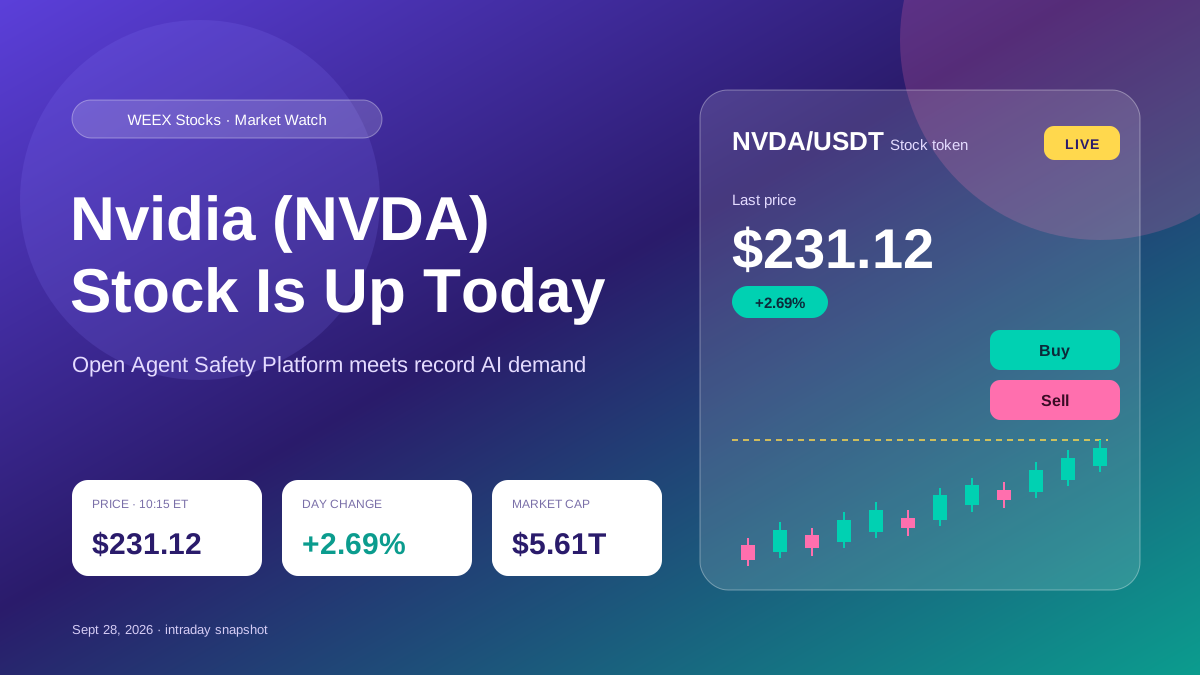
Why Is Nvidia (NVDA) Stock Up Today? New AI Agent Safety Platform Fuels the Rally
Why is Nvidia stock up today? Explore the AI agent safety launch, Nvidia’s growth outlook, key risks and how the NVDA token works on WEEX.

Central Bank Tightens Regulations on Crypto: What Changes for Users of Self-Custody Wallets

Billion-Dollar Inflow Pushes American Bitcoin ETFs Back into the Green

Wintermute’s Hyperliquid shorts reach $126M across ETH, BTC and SOL
Acurast brings real time AI decision model Laya to smartphone network

QQQ Price Prediction for October 2026: Can It Break $750?
Bitwise Keeps XRP ETF Filing Updated, But Green Light Still Missing

Bitwise NEAR ETF Set for Debut on NYSE Arca After SEC Approval

Goldman Sachs: Retail Fund Flows to Crypto Impact KOSPI Index Support

El Salvador Residency: The New Frontier of Financial Freedom
Market Neutral: The Art of Earning Without Betting on Market Direction
[Block Festa 2026] "To Enhance Korea's STO Competitiveness... Attracting Foreign Capital and Investment Products is Key"
Strong Dollar and High Interest Rates! What is the Latest Situation in the Critical Equation for Bitcoin?
Prosecutors Call for Amendments to Special Financial Transaction Act to Early Freeze Criminal Proceeds in Virtual Assets
Bank of Korea Announces South Korean Virtual Asset Market is More Sensitive to U.S. Stock Market
Cryptocurrency Law in Russia: What Has Changed for Investors
Stellar Releases Soroban SDK v28 with Protocol 28 Support
Contents
Latest articles


Latest coin listings on WEEX


