
USDC Significant EMT Status in the EU: What Changes on November 12 Under MiCA

 Prefer us on Google


USDC significant EMT status became official on October 14, 2026, when the European Banking Authority (EBA) classified Circle’s dollar stablecoin as the first significant e-money token under MiCA. Of the 45 e-money tokens notified so far, USDC is the only one to receive the label. For people who hold or trade USDC in the EU, the USDC significant EMT status does not change the token’s dollar redemption promise or Circle’s French licence, but it does change who looks at the reserves behind it from November 12.
The change is easy to misread as a safety upgrade or as a market event. It is neither. Under USDC significant EMT status, supervision gets heavier and more centralized, and that is a regulatory fact, not a price signal.
What Does Significant EMT Status Mean for USDC in the EU?
Significant EMT status is a MiCA classification that moves part of the supervision of a large e-money token from a national regulator to the EBA. An e-money token is a stablecoin that references a single official currency, and USDC qualifies because Circle’s EU entity issues it under MiCA rules. Being labeled significant means the token has grown large enough, in the regulator’s assessment, to deserve direct European oversight rather than oversight by one member state alone.
The label does not create a new licence. According to Crypto Times, Circle’s French subsidiary received its electronic money institution licence from the ACPR in July 2024, and that licence is what lets it issue USDC and EURC in the EU. The EBA decision adds a supervisor on top of that licence. The EU issuer is Circle Internet Financial Europe SAS, while Circle Internet Financial LLC issues USDC in the United States, so the new oversight applies to the European entity and not to every USDC in circulation worldwide.
What Changes on November 12 Under MiCA?
From November 12, 2026, the EBA takes over supervision of Circle’s EU issuer in four areas: own funds, reserve assets, liquidity requirements, and recovery and redemption plans. These are the parts of an issuer’s balance sheet that matter most when a stablecoin is under stress, which is why the split is worth reading closely. Reports from crypto.news and FinanceFeeds agree on this list.
The ACPR does not step aside. France’s regulator keeps governance, qualifying ownership interests, the fit-and-proper assessment of senior management, outsourcing and conflicts of interest. Crypto Times quotes the framing that the decision does not transfer all supervision of Circle to the EBA, and that matches the other reports. In practice, two authorities will now watch different parts of the same company, and Circle has to satisfy both. Crypto Times also reports that the EBA signed a memorandum of understanding with New York’s financial regulator, NYDFS, on cross-border stablecoin cooperation, which is relevant because USDC is issued on both sides of the Atlantic.
Why Did USDC Get the Designation First?
USDC was first because it appears to be the largest e-money token notified under MiCA, though the EBA’s full reasoning is worth reading in its own publication. MiCA’s significance test looks at factors such as the size of the customer base, the value of the token in circulation, the number and value of transactions, the size of the reserve and how widely the token is used across borders. A token does not need to be famous to qualify. It needs to be big enough that a failure could spread beyond one country.
Scale supports that reading. FinanceFeeds reports reserves of about $74.3 billion against roughly $74.1 billion in circulation as of October 5, 2026. That figure covers USDC globally, not only the EU portion, and the EBA’s decision does not say how much of it sits with European users. Readers should treat the EU share of USDC as unknown until Circle or the EBA publishes it. The other 44 notified tokens remain under their national supervisors, and more of them could be classified later.
-- Price
How Do the New Reserve and Redemption Rules Affect USDC Holders?
The EBA now looks directly at the reserves and the redemption plan that stand behind each USDC, which is the part of a stablecoin that matters when holders want their dollars back. Reserve assets are what back the token, liquidity rules decide how quickly those assets can be turned into cash, and recovery and redemption plans describe what happens if the issuer gets into trouble. Supervising all three from one European body is the core of what changes.
One possible consequence is a stricter bank-deposit requirement. FinanceFeeds reports that significant status could require Circle to hold at least 60% of its official-currency reserve as deposits at credit institutions, compared with a 30% minimum under the standard framework. That is a single-source claim and the figure should be checked against the MiCA text before anyone relies on it. It also connects to a debate Circle started itself. Earlier in October, according to crypto.news and Crypto Times, Circle asked EU policymakers to revisit reserve rules that push issuers toward bank deposits, citing the 2023 Silicon Valley Bank collapse, when about $3.3 billion of USDC reserves became temporarily inaccessible. That is Circle’s argument, not a settled finding, and it shows the issuer and regulators may not agree on how reserves should be held.

What Does the Designation Not Change for Traders?
The designation does not guarantee that USDC will hold its peg, and it does not remove the risks of owning or trading any stablecoin. A stronger supervisor lowers some kinds of operational risk, but reserve quality, banking exposure, market stress and redemption demand can still affect a stablecoin. Nothing in the reporting says USDC became safer, and it would be a mistake to write that it did.
It also did not move the market, as far as the reports show. On October 14, Bitcoin fell from about $83,800 to $81,728 after US September CPI came in at 3.7% against 3.6% expected, and Circle’s stock fell about 4% to roughly $80.89 in the same session, according to Yahoo Finance. By October 15 at 04:00 UTC, CoinGabbar showed Bitcoin near $80,800, down about 3.5% over 24 hours. None of the articles about the EBA decision link it to those moves, so the two stories should be kept apart. Crypto stocks fell with Bitcoin and inflation data, while the USDC decision is a supervisory change with a November start date.
Trading Stablecoin Pairs on WEEX Spot and Futures
Regulatory news about a stablecoin often sends traders to check where their balances sit, and that is a reasonable thing to do on any day, not only after a headline. On WEEX Spot, a user can hold or rotate into stablecoins at the market price without leverage and without liquidation risk, which suits someone who simply wants to hold a stablecoin position while Bitcoin swings. Which stablecoin pairs are offered changes over time, so the WEEX trading page is the place to check current listings before planning a trade around USDC.
WEEX Futures work differently. Futures carry leverage, liquidation risk and funding fees, and a stablecoin headline is not a reason to add leverage. A day like October 14, when Bitcoin dropped by roughly $2,000 in a few hours, is a reminder of how quickly leveraged positions can move against a trader. WEEX also publishes a protection fund of 1,000 BTC (weex.com/protectfund), which is an extra safeguard disclosed by the platform and does not remove market risk. Traders who prefer a simple route can start with Spot, learn how the order types behave, and only then decide whether Futures fit their risk tolerance.
Conclusion
USDC significant EMT status gives the EBA direct oversight of Circle’s EU reserves, liquidity, own funds and redemption planning from November 12, 2026, with France’s ACPR keeping governance and ownership checks. The decision adds supervision and does not create a licence, guarantee the peg or explain the weakness in crypto stocks on October 14. The details most worth watching are the EBA’s own publication, any change to reserve requirements, and how Circle responds before the November 12 start date.
FAQ
1. What is USDC significant EMT status?
USDC significant EMT status is the EBA’s classification of USDC as a large e-money token under MiCA. It moves part of the supervision of Circle’s EU issuer to the EBA from November 12, 2026.
2. Does USDC significant EMT status make USDC safer?
The classification adds supervision, but it does not guarantee the peg or remove reserve, banking or market risk. USDC significant EMT status changes who supervises, not the risks of holding a stablecoin.
3. What will the EBA supervise for USDC?
From November 12, the EBA will supervise own funds, reserve assets, liquidity requirements, and recovery and redemption plans for Circle’s EU issuer. The ACPR keeps governance, ownership, management suitability, outsourcing and conflicts of interest.
4. Is USDC the only significant EMT?
As of October 15, 2026, USDC is the first of 45 notified e-money tokens to be classified as significant under MiCA. Other tokens could be classified later.
5. Did USDC significant EMT status cause Bitcoin or Circle stock to fall?
No source reviewed links the two. Bitcoin and Circle fell on October 14 after higher than expected US inflation data, while the EBA decision is a supervisory change that starts on November 12.
This content is provided for general informational purposes only and doesn't constitute financial, investment, legal, or tax advice. Any events, rewards, online promotions, or related information mentioned herein should not be considered a recommendation, solicitation, or invitation to purchase, sell, trade, or otherwise deal in any crypto assets. Crypto assets are highly volatile and may result in loss. The availability of WEEX services, products, and related events may vary by region. You are responsible for ensuring that your participation is in accordance with applicable local laws and regulations.
You may also like
Walrus (WAL) Jumps 30%: Sui Storage Token Rallies on AI Data
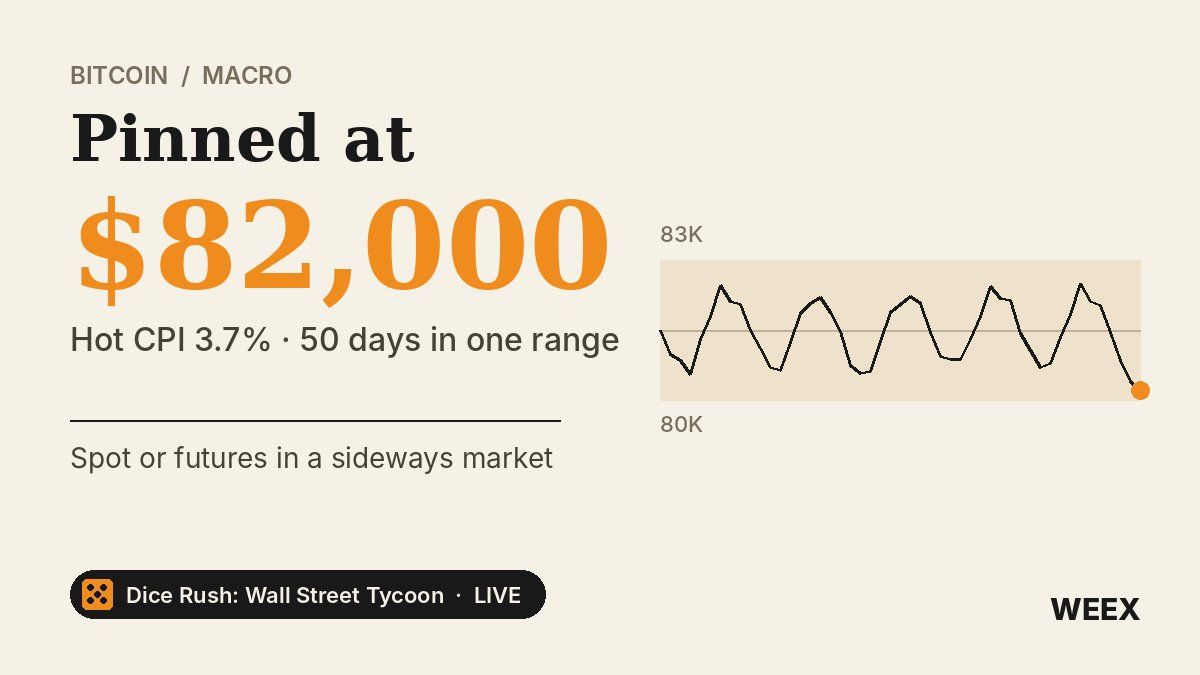
Bitcoin Price After Hot CPI: Why BTC Is Pinned Near $82,000

What Is a Limit Order? How It Works and When to Use It

Best Crypto Miner for Beginners: What to Check on Cost, Power, Hashprice and Profit Before You Buy

Limit Order vs Market Order: Which One to Use When Trading Crypto
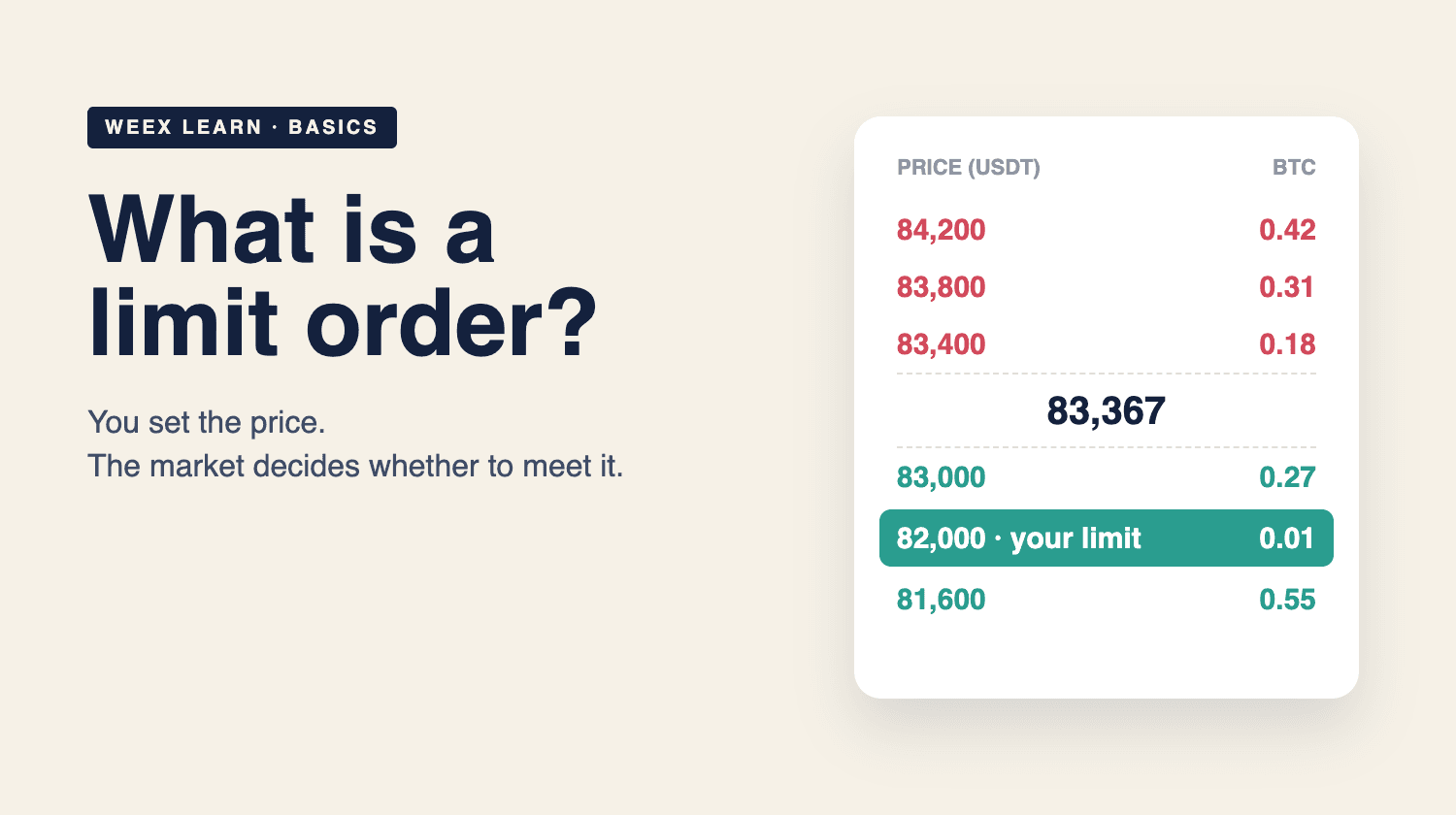
What Is a Limit Order? How It Works in Crypto With BTC Examples

Stop Limit Order: How It Works and Why It Can Fail to Fill

Best Crypto Platform for Beginners: Pick by Goal, Not Brand

Best Crypto Podcasts for Beginners: A 4-Week Listening Plan

How to Buy Crypto Anonymously: 5 Methods, Real Costs and Limits

Will Bitcoin Break $87,000 This Week? CPI, Fed Speakers and ETF Outflows to Watch

Conflux (CFX) Price Jumps on China's National Blockchain Network Plan: Does the Policy Actually Name CFX?
BTC Futures Analysis: $80K Held, but Longs Are Still Paying Up
ETH Futures: Why Ether Is Falling Faster Than Bitcoin This Week
ENA Token Price Drops After October 5 Unlock: What Happened to Ethena?
What Is Blockchain and How Does It Work? One Real Payment Traced

How to Buy Crypto With a Prepaid Card: Step-by-Step Guide
Best Crypto Trading Strategies for Beginners: What to Know Before You Trade
LayerZero Unlock October 2026: Can ZRO Hold $2 Amid Whale Inflows?
How to Buy Crypto With Apple Pay in 5 Steps: Why Your Bank May Decline the Payment
Why Does Bitcoin (BTC) Drop? How to Read a BTC Liquidation Heatmap Without Guessing the Bottom
Best Crypto Wallet App in 2026: How to Choose Between Hot, Cold, Custodial, and Web3 Wallets
What Is Blockchain and How Does It Work? One Real Block Explained
Trading Psychology for Beginners: The Math Behind Your Emotions
What Is Blockchain and How Does It Work? A Transaction Traced
Anonymous Crypto Wallet: What Still Protects Your Privacy in 2026

How to Buy Crypto with PayPal: The Custody Catch Most Beginners Miss
Bitcoin Futures at $83K: PnL and Position Sizing Into Jobs Week
HBAR Price Spike and Reversal: Long, Short, and Stop-Loss Orders

What Is XDP? Can Doppler Finance Break $0.03 in October 2026?
Walrus (WAL) Jumps 30%: Sui Storage Token Rallies on AI Data
Bitcoin Price After Hot CPI: Why BTC Is Pinned Near $82,000
What Is a Limit Order? How It Works and When to Use It
Best Crypto Miner for Beginners: What to Check on Cost, Power, Hashprice and Profit Before You Buy
Limit Order vs Market Order: Which One to Use When Trading Crypto
What Is a Limit Order? How It Works in Crypto With BTC Examples
Contents
Popular coins
Latest articles





