
What Is a Limit Order? How It Works and When to Use It

 Prefer us on Google


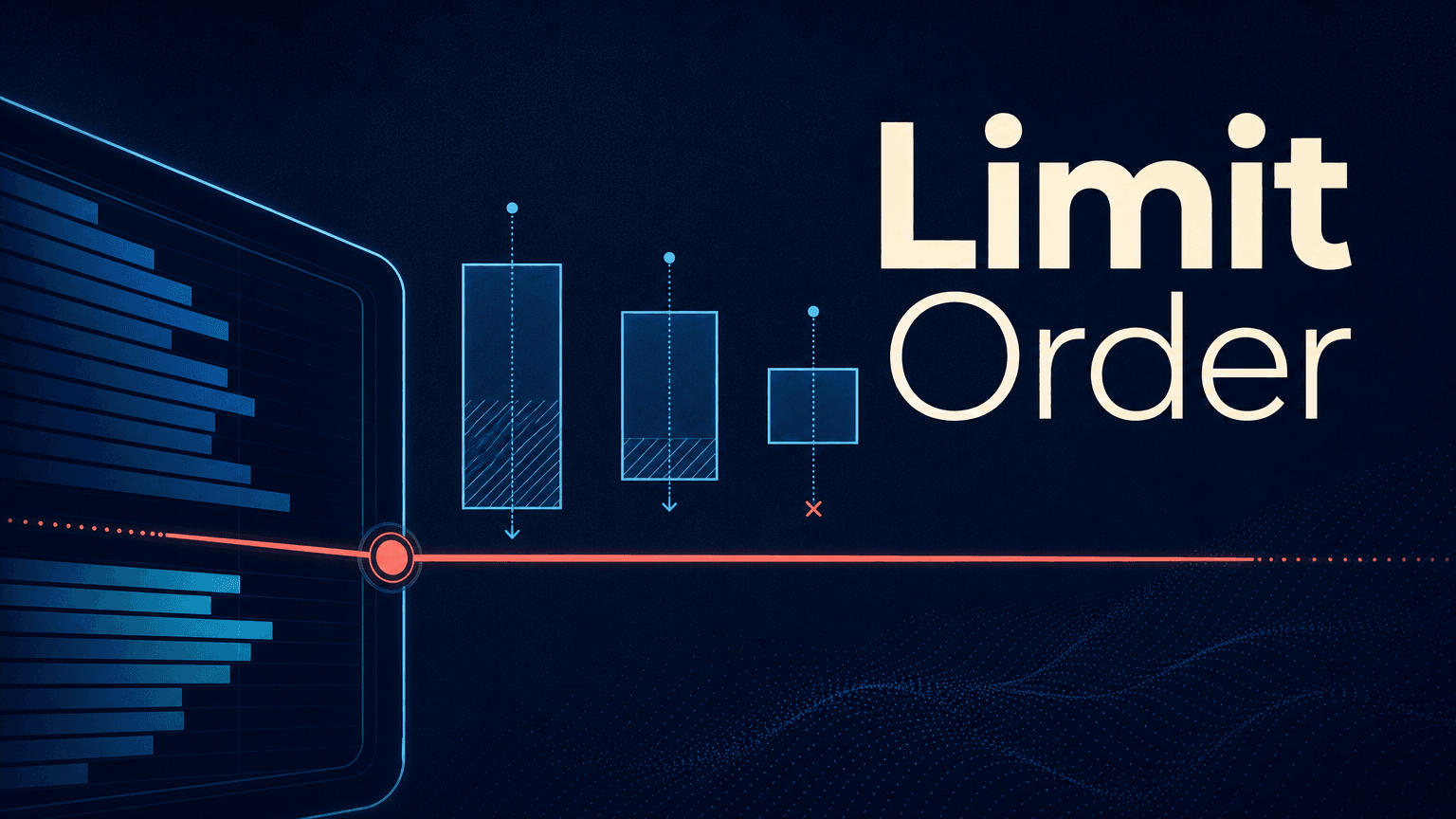
A limit order is a promise about price, not about timing. The trader names the most they will pay or the least they will accept, and the exchange trades only at that price or better.
That trade, certainty on price in exchange for no certainty that anything happens, is why a limit order looks simple in a tutorial and still surprises people when it sits open for days or fills only half the amount. A beginner who understands how a limit order behaves in a real order book knows what a trade will cost before pressing the button, and also knows when it may never happen.
How Does a Limit Order Work in Crypto?
A limit order tells the exchange to trade only at a set price or better, and it waits in the order book until the market reaches that price. The SEC’s investor education pages describe it as an order to buy or sell at a specific price or better. A buy limit fills at the chosen price or lower, and a sell limit fills at the chosen price or higher, as Revolut’s help page and KuCoin’s knowledge base both explain.
The direction of the price matters. CoinTracker notes that a buy limit is normally set below the current price and fills when the market drops to that level, while a sell limit is set above the current price and fills when the market rises. For illustration, with Bitcoin at $84,000, a buy limit at $82,000 would stay open until the price falls to $82,000 or lower. If it never does, nothing happens, and the trader is never pushed into a worse price. That patience is the whole point, and also the whole risk.
What Is the Difference Between a Limit Order and a Market Order?
A limit order fixes the price and leaves the timing open, while a market order fixes the timing and leaves the price open. The SEC defines a market order as an order to buy or sell at the best available price, and warns that the price at which it executes is not guaranteed and can differ from the last traded price. A large market order may also fill in pieces at different prices because of limited liquidity.
A small hypothetical shows the difference. Suppose the order book offers 0.4 BTC at $84,000, 0.4 BTC at $84,050 and 0.4 BTC at $84,150. A market order for 1 BTC would take all three levels and average about $84,050 (calculation, using 0.4 at $84,000, 0.4 at $84,050 and 0.2 at $84,150), which is $50 above the best price. A buy limit at $84,000 for 1 BTC would fill only the first 0.4 BTC and leave the remaining 0.6 BTC waiting. Neither result is better in every case. The market order buys certainty of getting the coins, and the limit order buys certainty about the price per coin.
Why May a Limit Order Not Fill, or Fill Only in Part?
A limit order may not fill because the market never reaches the chosen price, or reaches it without enough volume to complete the order. The SEC states plainly that a limit order is not guaranteed to execute, and Revolut’s help page repeats the point. KuCoin adds that when there is not enough volume at the chosen price, the order may partially fill and the remainder stays open, with orders at the same price filled on a first-in, first-out basis. A price touching a level on a chart therefore does not prove a particular order was filled.
How long the order stays open depends on the platform and the setting. The SEC explains that a Day order is canceled at the close of regular trading, while a good-til-canceled order lasts until it is executed or canceled, and that brokers set their own time limits. KuCoin says crypto orders typically default to good-til-canceled and can be canceled or modified before filling. One wallet’s help page, from Blockchain.com, says its limit orders stay active for up to three months, which shows how much the rules vary. Related instructions change the behavior: the SEC describes immediate-or-cancel orders, which cancel any unfilled portion right away, and fill-or-kill orders, which require the entire order to fill immediately or cancel. A stop-limit order adds another layer, because once its trigger price is hit it becomes a limit order, and the SEC warns it may not execute if the price moves away from the limit.
-- Price
How Do Limit Orders Affect Fees and Slippage?
A limit order usually reduces slippage, and it often qualifies for lower fees, but only when it rests on the order book. Slippage is the gap between the price a trader expected and the price they actually got, and a limit order caps it because the order cannot fill at a worse price than the one set. KuCoin notes that this matters most in thin markets, such as small altcoins, where a market order can walk through the book and end up with a poor average price.
Fees follow a similar logic. KuCoin explains that a limit order that rests on the book adds liquidity and is typically classed as a maker order, which usually carries lower fees, while a limit order that fills immediately is charged as a taker, usually at the higher rate. CoinTracker puts it more cautiously, saying limit orders sometimes qualify for lower maker fees. A buy limit set above the current price, called a marketable limit order by KuCoin, fills at once like a market order, so setting the wrong side by mistake can mean paying taker fees and a worse price than intended. Fee schedules differ by exchange and none of the sources list a universal rate, so the platform’s own fee page is the reference.

When Should Beginners Use a Limit Order, and What Mistakes Should They Avoid?
Beginners should use a limit order when the price matters more than speed, for example when buying a dip, taking profit at a target or trading a thin market. CoinTracker lists the common cases: targeting support or resistance levels, avoiding slippage, and not needing to watch the market constantly. KuCoin adds that limit orders help avoid impulsive purchases at market highs.
The typical mistakes are practical. One is setting the price on the wrong side of the market, which turns the order into an immediate trade. Another is forgetting an open order that stays good until canceled, so it fills days later after the situation has changed. A third is assuming that a price touch means a fill. Others include ignoring minimum order sizes, which differ by platform, and not checking how an exchange treats the funds set aside for an open order. The SEC adds a general caution that order types and rules vary by brokerage, so availability and policies should be confirmed with the platform. A small first order, placed deliberately a little away from the market, teaches more about how a limit order behaves than any explanation.
Conclusion
A limit order gives control over price at the cost of certainty about execution, and every part of how it behaves follows from that trade. It rests on the order book, it may fill fully, partly or not at all, and it often costs less in fees and slippage than a market order. The right choice depends on whether the trader would rather get a specific price or get the trade done now. Rules on expiry, fees and order types differ between platforms, so the exchange’s own help pages should be checked before placing an order.
FAQ
1. What is a limit order in crypto?
A limit order in crypto is an instruction to buy or sell at a chosen price or better. It fills only if the market reaches that price, and it rests on the order book until then.
2. Does a limit order guarantee a fill?
A limit order does not guarantee a fill. The SEC says a limit order is not guaranteed to execute, and KuCoin adds that low volume at the chosen price can leave an order partly filled.
3. What is the difference between a limit order and a market order?
A limit order fixes the price and may not fill, while a market order fills right away at the best available price, which the SEC says is not guaranteed.
4. How long does a limit order last?
A limit order lasts as long as its time setting allows. Day orders cancel at the close of regular trading, while good til canceled orders stay open until filled or canceled, and platforms set their own limits.
5. Do limit orders have lower fees?
A limit order that rests on the order book is usually classed as a maker order with lower fees, according to KuCoin. One that fills immediately is typically charged taker fees, so the exchange’s fee page decides.
This content is provided for general informational purposes only and doesn't constitute financial, investment, legal, or tax advice. Any events, rewards, online promotions, or related information mentioned herein should not be considered a recommendation, solicitation, or invitation to purchase, sell, trade, or otherwise deal in any crypto assets. Crypto assets are highly volatile and may result in loss. The availability of WEEX services, products, and related events may vary by region. You are responsible for ensuring that your participation is in accordance with applicable local laws and regulations.
You may also like
Best Crypto Wallet for Beginners 2025: Pick by What You Will Do
How to Buy USDT With NGN via Bank Transfer on WEEX?
WEEX API Key Setup: Permissions, IP Binding and Key Limits

How to Call a Crypto Exchange API Without Getting Blocked

WEEX Crypto Gift: The Perfect Gift for Every Crypto Lover in 2025
WEEX Exchange Review: A Complete Guide for Beginners

WEEX Convert Guide: How to Swap Crypto on Web and App and What the Quote Really Means
ASML Stock Falls Despite a Record Q3 and Higher Outlook: Is the AI Chip Equipment Boom Already Priced In?
SKHY Stock Falls Again: Is the SK Hynix Selloff About China’s CXMT and YMTC or AI Profit-Taking?
Best Crypto Miner for Beginners: What to Check on Cost, Power, Hashprice and Profit Before You Buy

DeFi Vault vs Staking: Who Controls Your Yield and Your Exit?
Buy Limit Order: How to Buy Crypto Below the Market Price
Limit Sell Order: How to Set a Take-Profit Price in Crypto
Limit Order vs Market Order: Which One to Use When Trading Crypto
What Is a Limit Order? How It Works in Crypto With BTC Examples
OP Price and Unichain's OP Enterprise Move: What It Means for OP

Nvidia Stock Falls After Microsoft's Maia 300: Is Custom Silicon a Real Threat to NVDA?

SpaceX Stock (SPCX) Near $163: Can It Reclaim $176 After Pivotal Lifts Its Target to $230?

MSFT Stock Near $542: What Azure Maia 300 Actually Claims and What Still Needs Proof
MU Stock Falls Below $1,000: Is the CXMT Threat Real or Just an Excuse to Take Profits?
Can META Reach $1,000? What Wells Fargo, Jefferies and Bernstein Targets Say About Meta Stock

Meta Stock Jumps as Muse AI Retention Data Lands: Is META Pricing In an AI Agent Win?

Stop Limit Order: How It Works and Why It Can Fail to Fill
Best Crypto Platform for Beginners: Pick by Goal, Not Brand

Best Crypto Podcasts for Beginners: A 4-Week Listening Plan
Best Cold Wallet Crypto for Beginners: 5 Picks Under $150
ETH Staking on WEEX vs On-Chain: Queues, Minimums, and Keys

Will Bitcoin Break $87,000 This Week? CPI, Fed Speakers and ETF Outflows to Watch
Conflux (CFX) Price Jumps on China's National Blockchain Network Plan: Does the Policy Actually Name CFX?
What Is Plume (PLUME)? Why the RWA Token Stays 93% Below Its High Even After the Layer 2 Rally
Best Crypto Wallet for Beginners 2025: Pick by What You Will Do
How to Buy USDT With NGN via Bank Transfer on WEEX?
WEEX API Key Setup: Permissions, IP Binding and Key Limits
How to Call a Crypto Exchange API Without Getting Blocked
WEEX Crypto Gift: The Perfect Gift for Every Crypto Lover in 2025
WEEX Exchange Review: A Complete Guide for Beginners
Contents
Popular coins
Latest articles


