
How Do Pre-IPO Perpetual Futures Allow On-Chain Exposure to OpenAI Stock? 2026

 Prefer us on Google

Mechanism Breakdown & Market Context
Pre-IPO perpetual futures let traders take a leveraged, synthetic position on what OpenAI might eventually be worth as a public company, without ever touching an actual share, a cap table, or a shareholder registry. These contracts settle against a modeled valuation rather than a live public price, since no such price exists yet, and they use the same funding-rate mechanism that keeps ordinary crypto perpetuals anchored to spot markets. Our structural read is that this entire product category is less an "investment" in OpenAI and more a leveraged bet on market sentiment about a future valuation, and the distinction matters enormously once IPO-day volatility and funding costs are factored in. Understanding how the valuation is derived, who is offering these contracts, and what specific risks are unique to a private, undisclosed company is essential before treating this as a normal equity trade with extra steps.
What Exactly Is a Pre-IPO Perpetual Future?
A perpetual future is a derivative contract with no expiration date, allowing a trader to hold a leveraged directional position indefinitely rather than being forced to close or roll the position on a fixed settlement date. Applied to a private company like OpenAI, the contract references an estimated valuation rather than a listed share price, since OpenAI has no public shares to track.
The Funding Rate Mechanism Explained
To keep a perpetual contract's price from drifting too far from what the market believes the underlying is actually worth, exchanges apply a funding rate: a periodic payment exchanged between long and short position holders based on whether the contract is trading at a premium or a discount to its reference value. This mechanism works cleanly for assets with a transparent, continuously updated fair value, but becomes considerably more complex for a private company, since there is no live public price to anchor against in the first place, only an oracle-driven estimate that itself carries uncertainty.
Why Contracts Reference Valuation, Not Share Price
Because OpenAI has not disclosed a public share count, exchanges offering these products structure contracts around total estimated company equity valuation rather than a per-share price, since a per-share number is mathematically impossible to calculate without a known share count. This is a meaningful structural difference from a normal stock perpetual, where the underlying share price is continuously observable on a public exchange and the contract simply mirrors it.
Which Platforms Currently Offer OpenAI Exposure, and How Do the Approaches Differ?
Two broad architectures have emerged: fully on-chain DeFi protocols that tokenize private equity exposure directly, and centralized derivatives exchanges that list pre-IPO perpetual contracts alongside their existing crypto futures products. Both categories offer synthetic exposure without conferring actual equity ownership or shareholder rights, but they differ meaningfully in custody, settlement, and regulatory framing.
The On-Chain DeFi Route
Injective launched on-chain perpetual futures offering exposure to pre-IPO shares of companies including OpenAI, SpaceX, Anthropic, and Perplexity, explicitly framing the initiative as a way to bring the multi-trillion-dollar private equity market directly onto the blockchain. This approach leverages the platform's existing infrastructure to tokenize private equity exposure, meaning positions are opened, margined, and settled through smart contracts rather than a centralized order book, which is the key structural difference from the exchange-hosted alternative.
The Centralized Exchange Route
Several major derivatives exchanges have entered this category in quick succession. A centralized platform's pre-IPO perpetuals category reportedly generated more than $280 million in cumulative trading volume within its first five days after adding an OpenAI-linked contract, following an earlier SpaceX-linked listing. Another platform launched a five-times-leverage OpenAI perpetual trading under a dedicated ticker, tracking market-implied share valuation through an oracle-driven pricing feed rather than direct company disclosure. A separate international exchange arm rolled out contracts for both OpenAI and Anthropic in June 2026, explicitly documenting that these reference total company equity valuation rather than share price specifically because neither company has disclosed its share count.
| Platform Type | Settlement Layer | Underlying Reference | Ownership Rights |
|---|---|---|---|
| On-chain DeFi protocol | Smart contract, self-custody adjacent | Tokenized valuation oracle | None, synthetic only |
| Centralized exchange (retail) | Exchange-custodied margin account | Oracle-implied share valuation | None, synthetic only |
| Centralized exchange (international) | Exchange-custodied margin account | Total equity valuation model | None, synthetic only |
-- Price
How Fast Has This Market Grown, and What Does That Say About Demand?
Pre-IPO perpetual futures volume expanded from roughly $2 million in March 2026 to about $715 million by May, then surged to approximately $12 billion in June, according to on-chain analytics tracking this category. That scale of growth in a single quarter signals genuine speculative demand for early exposure to closely watched private companies, but rapid growth in a leveraged derivatives category built on modeled valuations is also a classic setup for sharp, fast drawdowns once sentiment shifts.
Concentration Risk Within the Category Itself
One centralized exchange reportedly captured roughly 83% market share of pre-IPO perpetual futures volume during this growth period, meaning liquidity for this entire product category is heavily concentrated on a small number of venues rather than distributed evenly across the market. That concentration matters for execution risk: a trader relying on a smaller, less liquid venue for the same underlying exposure may face wider spreads and larger price impact than one using the dominant venue, even though both contracts theoretically track the same estimated valuation.
What Risks Are Unique to Trading a Private, Undisclosed Company This Way?
The single largest risk specific to this category is IPO-day repricing: once a company like OpenAI actually lists publicly, its real market price can diverge sharply from the pre-IPO perpetual's modeled valuation, and that gap closes suddenly rather than gradually. Documentation from at least one exchange offering these contracts explicitly warns that a single-day move of 25% or more around an actual listing event is plausible, which at five-times leverage can be enough to wipe out a position's entire margin in one session.
Valuation Model Risk Compounds Leverage Risk
Because the reference price for these contracts is itself a model rather than an observed market price, traders are effectively taking leveraged exposure to an estimate of an estimate: the oracle's valuation model can move independently of any real change in OpenAI's underlying business, driven instead by shifts in comparable private-market transactions or funding round data that inform the model. Stacking leverage on top of this modeled, sometimes thinly-supported price adds a layer of volatility that does not exist in a normal leveraged stock position, where the reference price is continuously observable and disputed far less often.
Regulatory and Company-Relationship Ambiguity
These synthetic products exist without any involvement from OpenAI itself, and earlier experiments with unauthorized OpenAI-linked tokens drew explicit public distancing from the company, underscoring that the underlying business has no obligation to support, disclose information for, or even acknowledge these derivative products. Traders should treat any pre-IPO perpetual as a bet on collective market sentiment and oracle methodology, not as a channel through which OpenAI itself is participating or providing information.
Position sizing for this category should account for the combined stack of leverage risk, valuation model uncertainty, and a real possibility of a sudden IPO-day repricing gap, meaning the same leverage level considered routine for a liquid crypto pair is considerably riskier when applied to a private company's modeled valuation. Traders who want continuing exposure to this theme are generally better served treating each platform and contract as its own separate risk assessment, since custody structure, funding mechanics, and valuation methodology all differ meaningfully across the venues currently offering OpenAI-linked perpetuals.
Frequently Asked Questions About Pre-IPO Perpetual Futures on OpenAI
1. Do pre-IPO perpetual futures give me any actual ownership of OpenAI shares
No, these contracts are entirely synthetic and provide price exposure only, with no connection to OpenAI's actual cap table, no equity ownership, and no shareholder rights of any kind.
The contract simply pays out based on movements in a modeled valuation reference, which functions similarly to a bet on where the market believes OpenAI's eventual public valuation will land.
2. Why do these contracts track company valuation instead of a share price
Contracts track total equity valuation rather than a per-share price because OpenAI has not publicly disclosed a specific share count, making a true per-share calculation mathematically impossible without that missing figure.
Once OpenAI eventually discloses share count information, typically as part of an actual IPO filing, contracts referencing per-share pricing would become possible in a way they currently are not.
3. What happens to my position if OpenAI's real IPO price differs sharply from the perpetual's valuation
Exchange documentation for this product category explicitly warns that a single-day move of 25% or more around an actual listing event is plausible, and at meaningful leverage levels that swing can be large enough to trigger a full loss of position margin.
This IPO-day repricing gap is considered one of the defining structural risks of the entire pre-IPO perpetual category, distinct from the ordinary volatility seen in standard crypto derivatives.
4. Are on-chain DeFi pre-IPO perpetuals safer than centralized exchange versions
Neither structure eliminates the core risks of valuation model uncertainty and leverage, though they differ in custody: on-chain protocols settle through smart contracts while centralized platforms hold margin within an exchange-custodied account.
Traders should evaluate each venue's specific oracle methodology, funding rate mechanics, and liquidity depth independently rather than assuming either architecture is inherently lower-risk than the other.
5. Is OpenAI itself involved in or endorsing these perpetual futures products
No, these products are created and listed unilaterally by exchanges and DeFi protocols without OpenAI's direct involvement, and earlier unauthorized OpenAI-linked token experiments drew explicit public distancing from the company.
This means OpenAI has no obligation to provide disclosures, respond to pricing disputes, or otherwise support these derivative markets, which is an important distinction from regulated equity products tied to a cooperating issuer.
This content is provided for general informational purposes only and doesn't constitute financial, investment, legal, or tax advice. Any events, rewards, online promotions, or related information mentioned herein should not be considered a recommendation, solicitation, or invitation to purchase, sell, trade, or otherwise deal in any crypto assets. Crypto assets are highly volatile and may result in loss. The availability of WEEX services, products, and related events may vary by region. You are responsible for ensuring that your participation is in accordance with applicable local laws and regulations.
You may also like
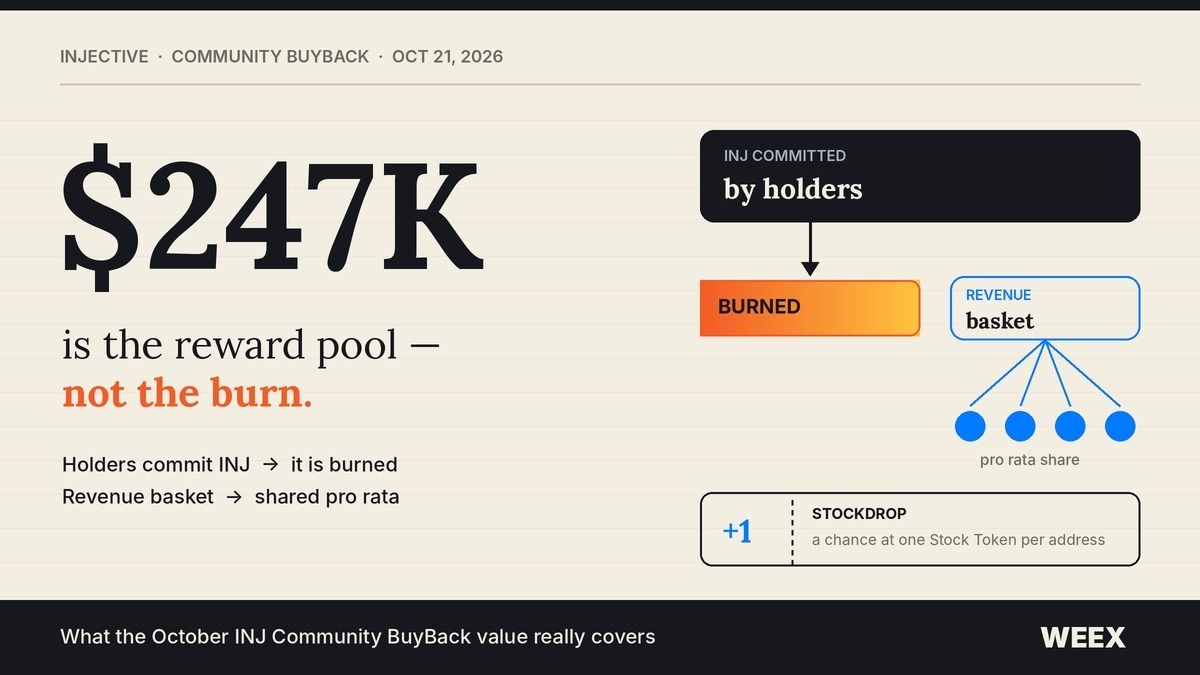
INJ Community BuyBack: What the $247K October Pool Really Means

Trade to Earn: How Your Everyday Trades Can Start Earning for You
What Is Injective (INJ) and How Does It Work?
BTC Funding Rate and Open Interest: What Each One Measures and How to Read Them Together
What Is Pearl (PRL) Crypto and How Does Its Mining Work?
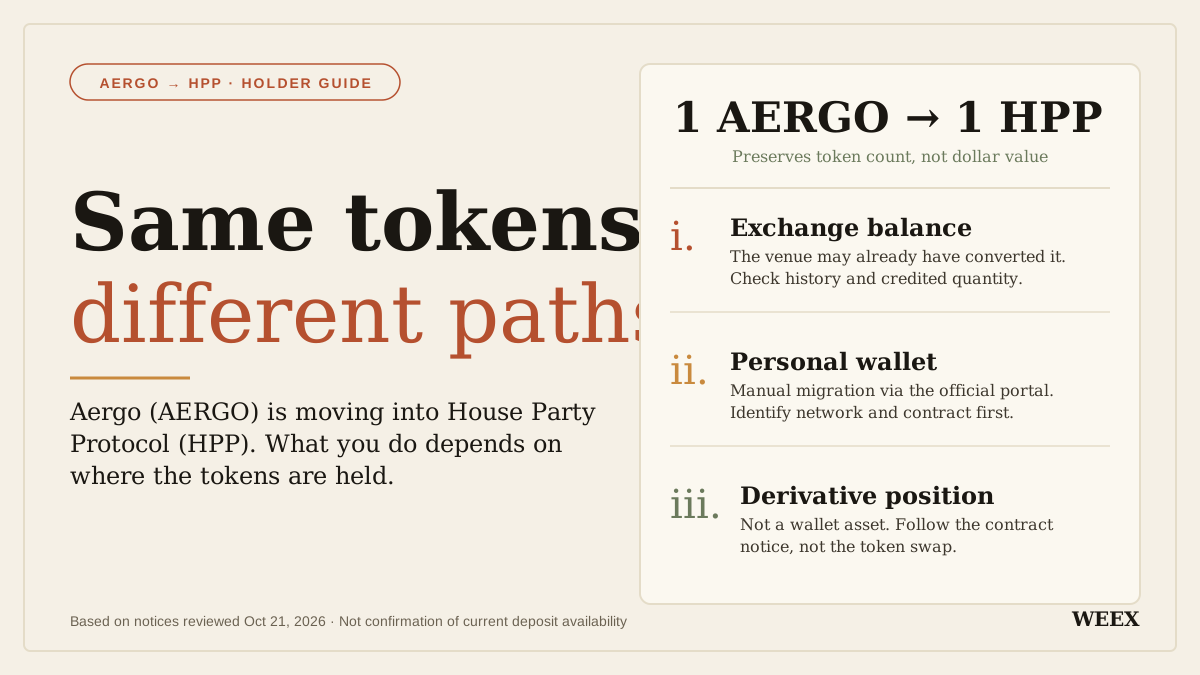
What Happened to Aergo (AERGO) Crypto? Token Migration and What Holders Should Do
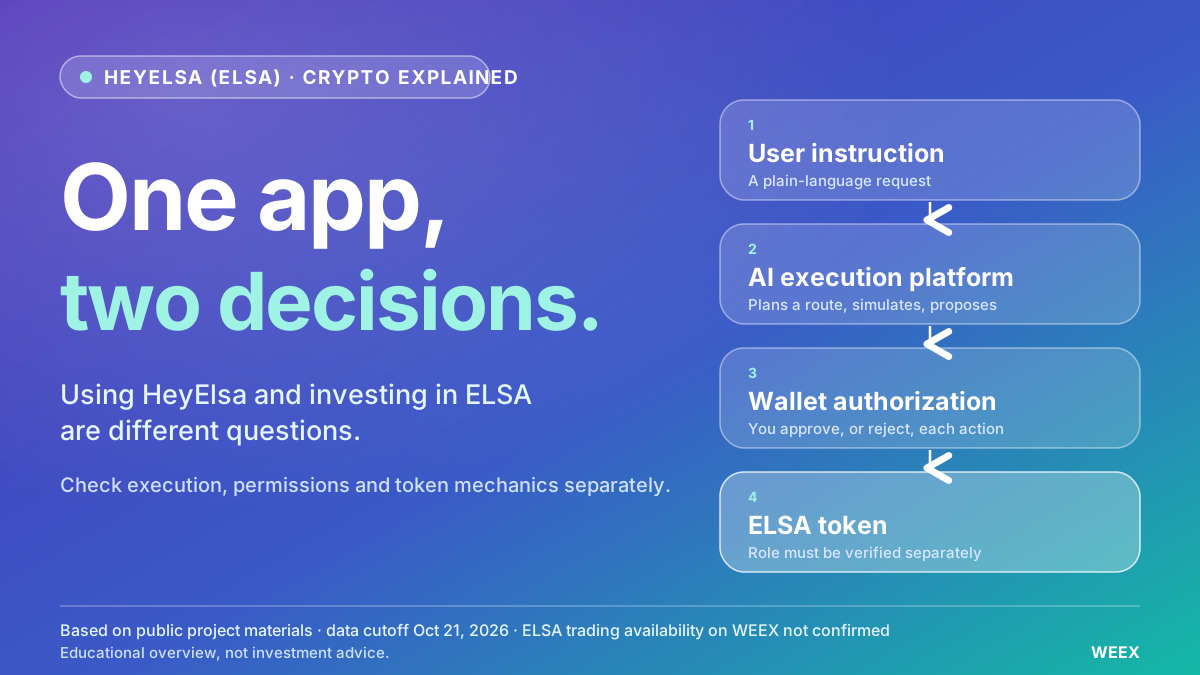
What Is HeyElsa (ELSA) Crypto and How Does It Work?
Stake ETH or Hold USDT on WEEX? The Price Move That Decides It
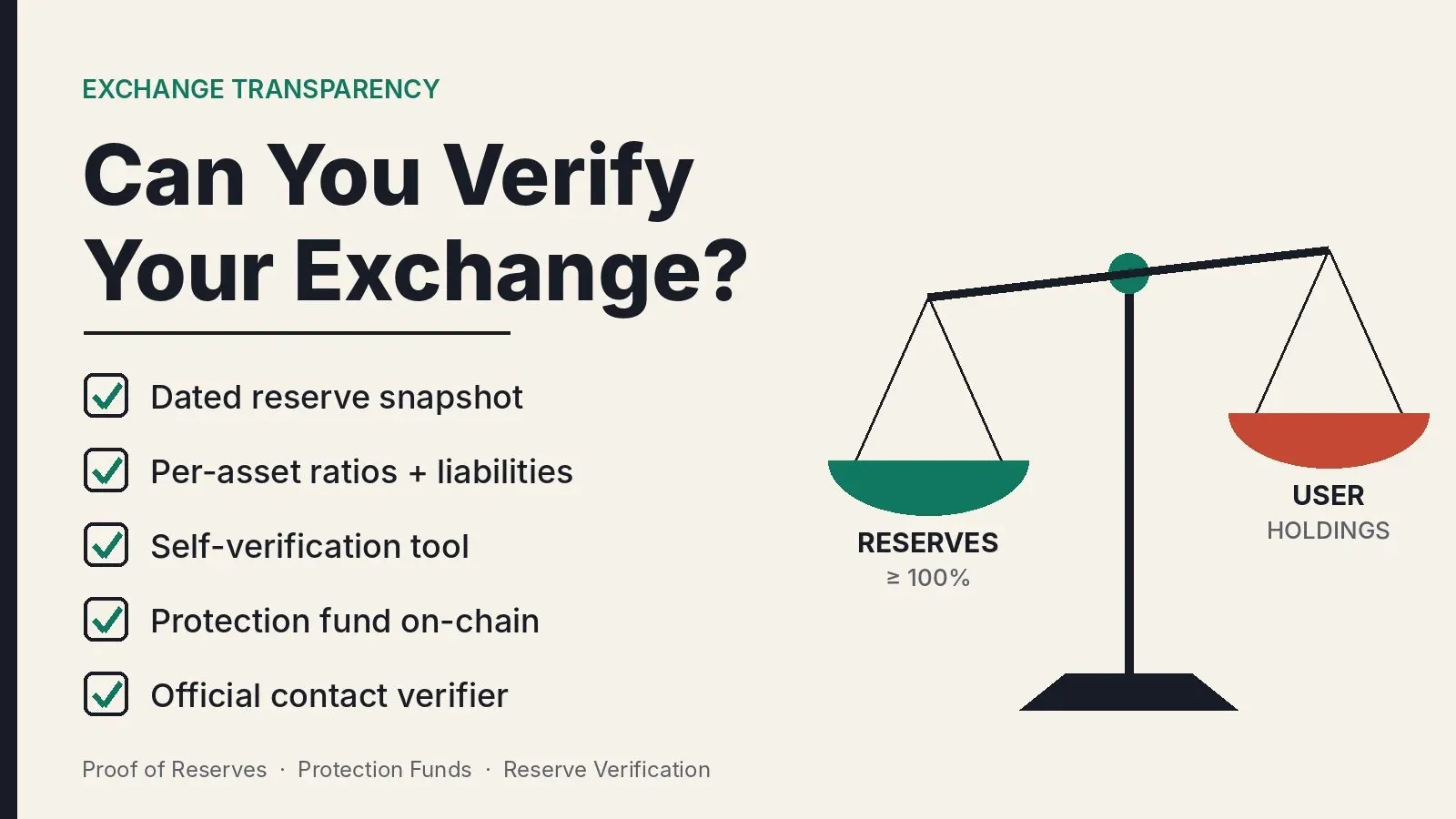
How Transparent Is a Crypto Exchange? Checking Proof of Reserves and Protection Funds
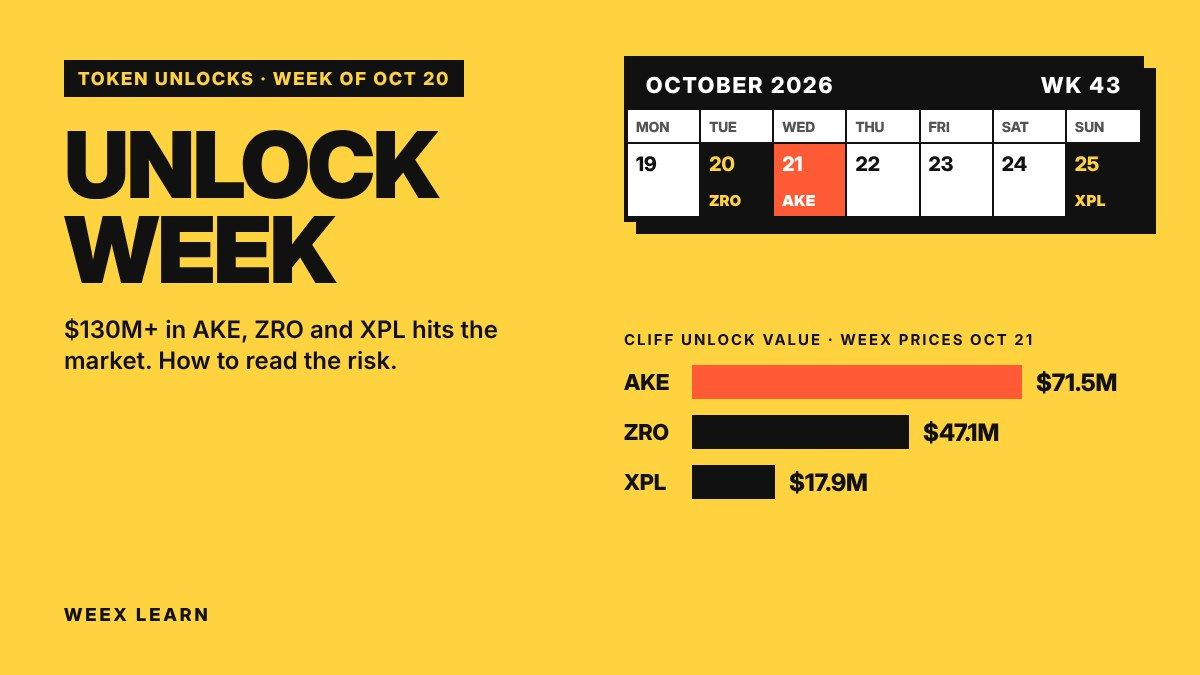
Token Unlocks This Week: How to Read AKE, ZRO and XPL Releases
World ID for Banks: What the New Suite Means for WLD Holders
Solana Alpenglow Upgrade: What Changes When Finality Hits 150ms
How to Use the WEEX Trust Center: Check Reserves, Protection Fund and Official Contacts
What Is Leverage Trading in Crypto? A Beginner’s Guide With Simple Examples
What Is Crypto Margin Trading? How It Works, How It Differs From Futures and What Can Go Wrong
Crypto Leverage Trading Explained: How Perpetual Futures, Margin and Liquidation Work
Best Crypto Leverage Trading Platform: Things to Compare Before You Choose an Exchange
Nvidia Stock This Week: Why NVDA Fell Then Bounced and What AI Funding Worries Mean for Chip Stocks
Is My Pre-4.26.4 Qubic Wallet Unsafe? Recovery After the Network Restart
WXT Staking When Supply Shrinks: What Burns Add to Your Yield
Are Tokenized Stocks Backed by Real Shares? What Holders Own
ETH Funding Rate Today: 0.0087% per 8h as Ether Longs Re-Lever
Bitcoin Margin Trading: BTC Liquidation Math at 3x, 10x and 25x
Crypto Leverage Trading Platform: 6 Checks Before You Deposit
What Is Margin Trading? A $1,000 Example at 3x and 10x Leverage

The 17 October 2026 DBR Unlock: Six Allocations and deBridge's Vesting Schedule
Fake Crypto Payments: What to Check Before Handing Over Goods
What Is Leverage in Trading? How Leverage Ratios Like 5x and 10x Work and What They Do to Your Risk
What Is Leverage Trading? A Beginner’s Guide to Margin, Liquidation and Funding Fees
Is RSI a Good Indicator? How the Relative Strength Index Works, Its Limits and How Traders Use It
INJ Community BuyBack: What the $247K October Pool Really Means
Trade to Earn: How Your Everyday Trades Can Start Earning for You
What Is Injective (INJ) and How Does It Work?
BTC Funding Rate and Open Interest: What Each One Measures and How to Read Them Together
What Is Pearl (PRL) Crypto and How Does Its Mining Work?
What Happened to Aergo (AERGO) Crypto? Token Migration and What Holders Should Do
Contents
Popular coins
Latest articles




