
Is XST Crypto a Long-Term Opportunity or Short-Term Hype?

 Prefer us on Google

XST has quickly become one of the more talked-about small-cap Solana tokens, largely because it sits at the intersection of two popular market themes: AI infrastructure and tokenized real-world narratives. Recent reports linked the rally to stronger DEX activity, speculative demand, and thin liquidity that can magnify price swings. At the same time, on-chain research has raised serious questions about token distribution and project transparency. This article breaks down what XST is, why it is trending, what may support longer-term growth, and where beginners should be especially careful before treating the move as a durable investment story.
At a Glance
- XST is a Solana-based token tied to the XSolut narrative around AI infrastructure, data, and RWA-style positioning.
- Its recent price surge appears driven more by narrative strength, trading momentum, and low liquidity than by clearly verified business progress.
- The biggest red flag so far is token concentration: Bubblemaps-related reporting says about 74% of supply is controlled by a tight cluster of wallets.
- XST may keep attracting traders in the short term, but long-term value depends on product delivery, utility, adoption, and better transparency.
Why is XST crypto trending right now?
XST is trending because it fits a part of the market that often moves fast: early-stage Solana tokens attached to a strong story. In this case, that story is AI infrastructure. Search results and market coverage describe XST as linked to XSolut, a project associated with physical AI infrastructure such as data centers, energy, cooling, fiber, and semiconductor-related development. That is a broad and attractive narrative, especially when investors are already looking for AI-linked crypto exposure.
The latest burst of attention also came from price action. According to market coverage cited in the research materials, XST posted a sharp rally of roughly 50% during a recent rebound. That kind of move tends to attract social media discussion, more wallet activity, and short-term traders looking for momentum. On Solana, where trading is fast and fees are low, those rotations can happen very quickly.
What is XST crypto?
XST is a token on the Solana blockchain. The token is associated with XSolut and is publicly identified on third-party market pages through the contract address XSTuo1fV7HHMhs4BYiwtrWSLsMCJNrooH2AssWTYZqP. CoinGecko also links the asset to xsolut.ai and external tracking tools such as Solscan and Arkham, which gives traders a basic way to verify the token and follow on-chain behavior.
From a positioning standpoint, XST is being framed as more than a meme token. The project narrative blends AI infrastructure, blockchain-based marketplace ideas, and a real-world asset style angle. That sounds ambitious, but beginners should separate the story from the fundamentals. At this stage, the available research suggests that XST is still an early-stage crypto asset with limited public disclosure compared with the attention it has received in the market.
That matters because long-term value in crypto usually comes from a few simple things: useful products, growing ecosystem participation, real token demand, and clear tokenomics. If a token gets attention before those pieces are well established, price can run ahead of fundamentals.
-- Price
Why did XST gain market attention?
The AI narrative is doing a lot of the work
AI remains one of the strongest narrative drivers in crypto. Traders often bid up tokens connected to decentralized compute, data infrastructure, or AI applications long before revenue or adoption become easy to measure. XST seems to benefit from this exact dynamic. Reports cited in the research describe its appeal as closely tied to Solana-based AI infrastructure and RWA tokenization themes.
Solana makes speculation easier
Because XST runs on Solana, it benefits from a blockchain ecosystem that is already built for fast retail trading. Low fees, active wallets, and strong decentralized exchange activity make it easier for smaller tokens to gain sudden traction. That does not guarantee quality, but it does explain why Solana often becomes the home of high-velocity trades and rapid narrative rotations.
Momentum attracted more momentum
Once the price started moving, the token naturally drew more attention from traders. Research referenced in the prompt notes rising DEX volume and renewed speculative demand as key reasons behind the rally. This is common with small-cap assets: stronger trading volume can create the impression of validation, even when the move is still mostly sentiment-driven.
As interest in AI-related crypto assets continues to grow, traders can also monitor emerging market activity through WEEX Spot Markets, where broader crypto trading trends are easier to compare across sectors.
XST market performance and recent data
XST market data has varied across sources, which is another sign that investors should verify numbers before making decisions. The figures below reflect the August 2026 reference range provided in the research context, along with third-party market pages mentioned in those materials.
| Metric | Data |
|---|---|
| Blockchain | Solana |
| Total Supply | 1 billion XST |
| Market Cap | Around $45M-$50M in August 2026 reference data; Bubblemaps-related reporting also cited a snapshot near $70M |
| 24h Trading Volume | Around $3M-$4M in August 2026 reference data |
| Holders | Around 70,000+ |
| ATH Range | Around $0.058-$0.07 |
Those numbers should be treated as moving targets rather than fixed fundamentals. On Solana, a token with modest liquidity can see market cap, trading volume, and price change very quickly. For XST, that means traders need to watch both liquidity depth and holder behavior, not just headline price candles.
What could support XST over the long term?
1. A credible AI infrastructure use case
If XSolut can turn its AI infrastructure narrative into something tangible, that would be the strongest long-term support for XST. The market has shown there is interest in crypto projects connected to compute, data, energy, and digital infrastructure. But that interest only lasts when there is real execution behind it. For XST, the question is whether the project can move from narrative positioning to visible product development.
2. Better token utility and ecosystem design
Many early-stage tokens struggle because the token exists before the utility is clear. For XST to hold value beyond speculation, investors would want to see practical reasons for using the token inside the ecosystem. That could involve payments, access, governance, staking, or settlement functions, but the current public materials do not yet establish a strong, fully verified utility framework.
3. Sustainable user adoption
Long-term crypto winners usually grow because users keep showing up after the hype cools off. That means active wallets, organic demand, and ecosystem usage matter more than a short-lived rally. XST still has to prove that it can attract lasting participation rather than only short-term attention from traders rotating into hot narratives.
What are the biggest risks behind XST?
High volatility and thin liquidity
The same conditions that help small-cap tokens rise fast can also make them fall hard. The research materials describe XST as a low-liquidity, high-volatility token. In practical terms, that means relatively modest buy or sell pressure can move the market sharply. For beginners, this creates slippage risk, emotional trading risk, and the possibility of being stuck in a fast reversal.
Token concentration is the clearest warning sign
The most serious concern around XST is on-chain concentration. Bubblemaps-related reporting cited in the provided materials says about 74% of the total supply is controlled by a tight group of related wallets. Cryptopolitan further reported that one cluster of 244 wallets accounted for close to half the supply on its own. In crypto, that level of concentration matters because a small coordinated group can have outsized influence over price, liquidity, and market psychology.
For beginners, this is not just a technical tokenomics issue. It is a direct trading risk. Even if a chart looks strong, concentrated ownership can turn a liquid-looking market into a fragile one very quickly.
Transparency and governance are still hard to verify
Another weak point is information quality. The available search results point to a market identity for XST, but they do not provide a strong trail of official disclosures, consistent whitepaper material, or easy-to-verify governance details. Research cited from WEEX also noted missing clarity around circulating supply consistency, project documentation, and audit visibility.
Mint and freeze authority checks still matter
For Solana tokens, authority settings are a major trust factor. Solana Compass explains that mint authority controls whether more tokens can be created, while freeze authority controls whether balances can be frozen. If those permissions are not revoked, the project keeps technical control that many investors consider a risk. The research materials did not provide direct confirmation that XST has revoked mint authority, freeze authority, or metadata update authority, so this remains a key due diligence item.
So, is XST a long-term opportunity or short-term hype?
Right now, XST looks more like a high-risk speculative asset than a fully validated long-term crypto project. That does not mean it cannot continue to rally. In fact, tokens tied to strong themes such as AI, Solana, and RWA-style narratives can stay hot longer than many traders expect. But the reasons behind the move matter. Based on the provided research, XST’s recent performance appears to be driven mainly by sentiment, trading momentum, and market structure rather than clearly proven adoption.
For investors trying to judge long-term potential, the checklist is fairly straightforward: watch for real product progress, stronger public documentation, cleaner tokenomics, broader wallet distribution, verified authority settings, and evidence that users want the token for more than speculation. Until those pieces become clearer, XST should be treated as a token where excitement can create opportunity, but discipline matters more than the story.
This content is provided for general informational purposes only and doesn't constitute financial, investment, legal, or tax advice. Any events, rewards, online promotions, or related information mentioned herein should not be considered a recommendation, solicitation, or invitation to purchase, sell, trade, or otherwise deal in any crypto assets. Crypto assets are highly volatile and may result in loss. The availability of WEEX services, products, and related events may vary by region. You are responsible for ensuring that your participation is in accordance with applicable local laws and regulations.
You may also like

Does Robinhood Chain Have Its Own Token? What CASHCAT, PONS, and Stock Tokens Actually Are
XST Coin vs Other Solana AI Tokens: What Makes XSolut Different and What Does Not

Is XST a Good Investment After Falling More Than 60% From Its All-Time High? What Buying the Dip Actually Requires
XSolut Company: What Is the Team Behind XST Coin and What Do They Actually Disclose

Meme Coin Guide: Opportunities, Risks, and Strategy in 2026
WEEX Convert Guide: How to Swap Crypto on Web and App and What the Quote Really Means
ASML Stock Falls Despite a Record Q3 and Higher Outlook: Is the AI Chip Equipment Boom Already Priced In?
SKHY Stock Falls Again: Is the SK Hynix Selloff About China’s CXMT and YMTC or AI Profit-Taking?

What Is a Limit Order? How It Works and When to Use It
Best Crypto Miner for Beginners: What to Check on Cost, Power, Hashprice and Profit Before You Buy
DeFi Vault vs Staking: Who Controls Your Yield and Your Exit?
Buy Limit Order: How to Buy Crypto Below the Market Price
Limit Sell Order: How to Set a Take-Profit Price in Crypto

Limit Order vs Market Order: Which One to Use When Trading Crypto
What Is a Limit Order? How It Works in Crypto With BTC Examples

OP Price and Unichain's OP Enterprise Move: What It Means for OP
Nvidia Stock Falls After Microsoft's Maia 300: Is Custom Silicon a Real Threat to NVDA?
SpaceX Stock (SPCX) Near $163: Can It Reclaim $176 After Pivotal Lifts Its Target to $230?
MSFT Stock Near $542: What Azure Maia 300 Actually Claims and What Still Needs Proof
MU Stock Falls Below $1,000: Is the CXMT Threat Real or Just an Excuse to Take Profits?
Can META Reach $1,000? What Wells Fargo, Jefferies and Bernstein Targets Say About Meta Stock

Meta Stock Jumps as Muse AI Retention Data Lands: Is META Pricing In an AI Agent Win?
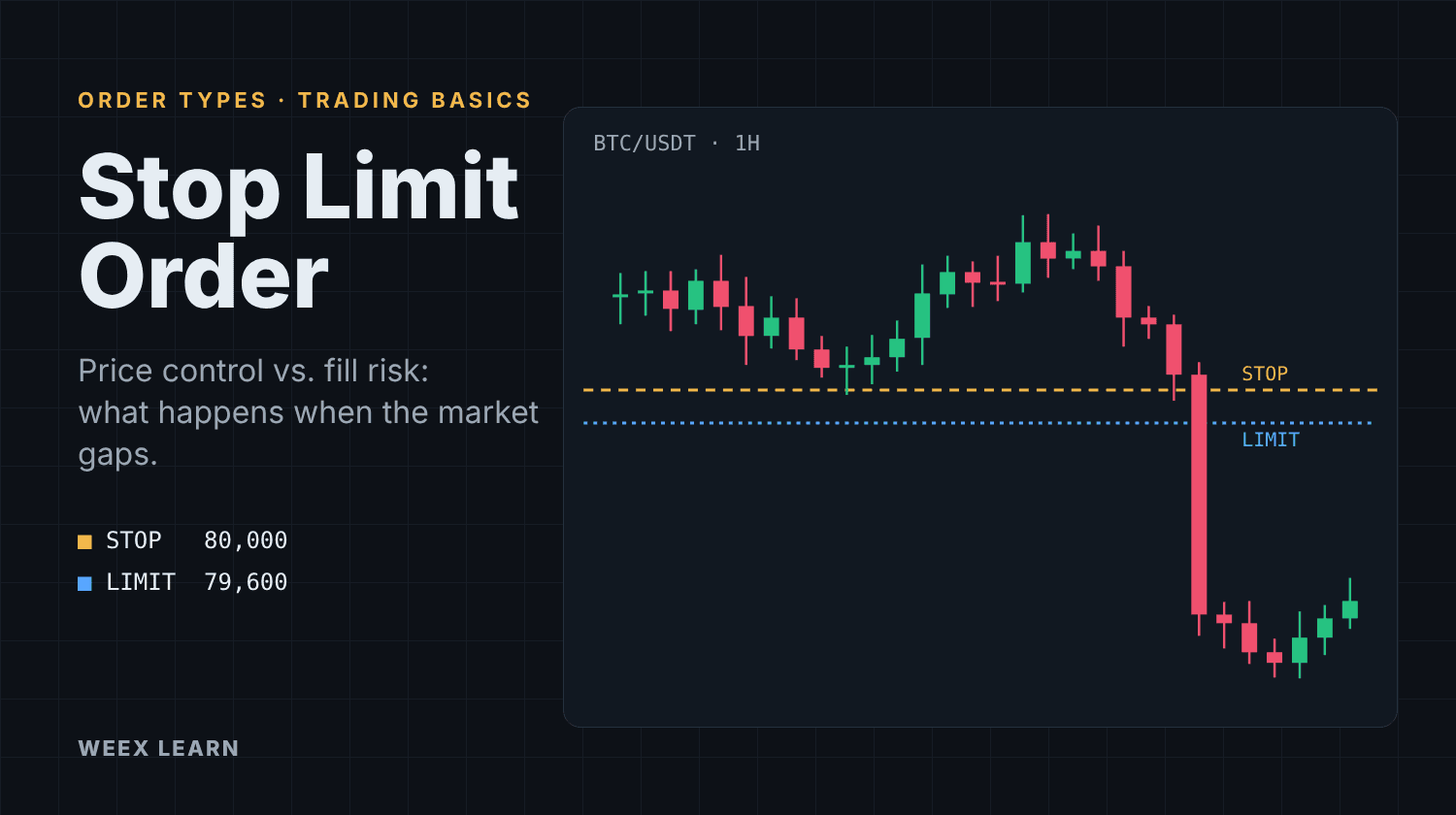
Stop Limit Order: How It Works and Why It Can Fail to Fill
Best Crypto Platform for Beginners: Pick by Goal, Not Brand

Best Crypto Podcasts for Beginners: A 4-Week Listening Plan
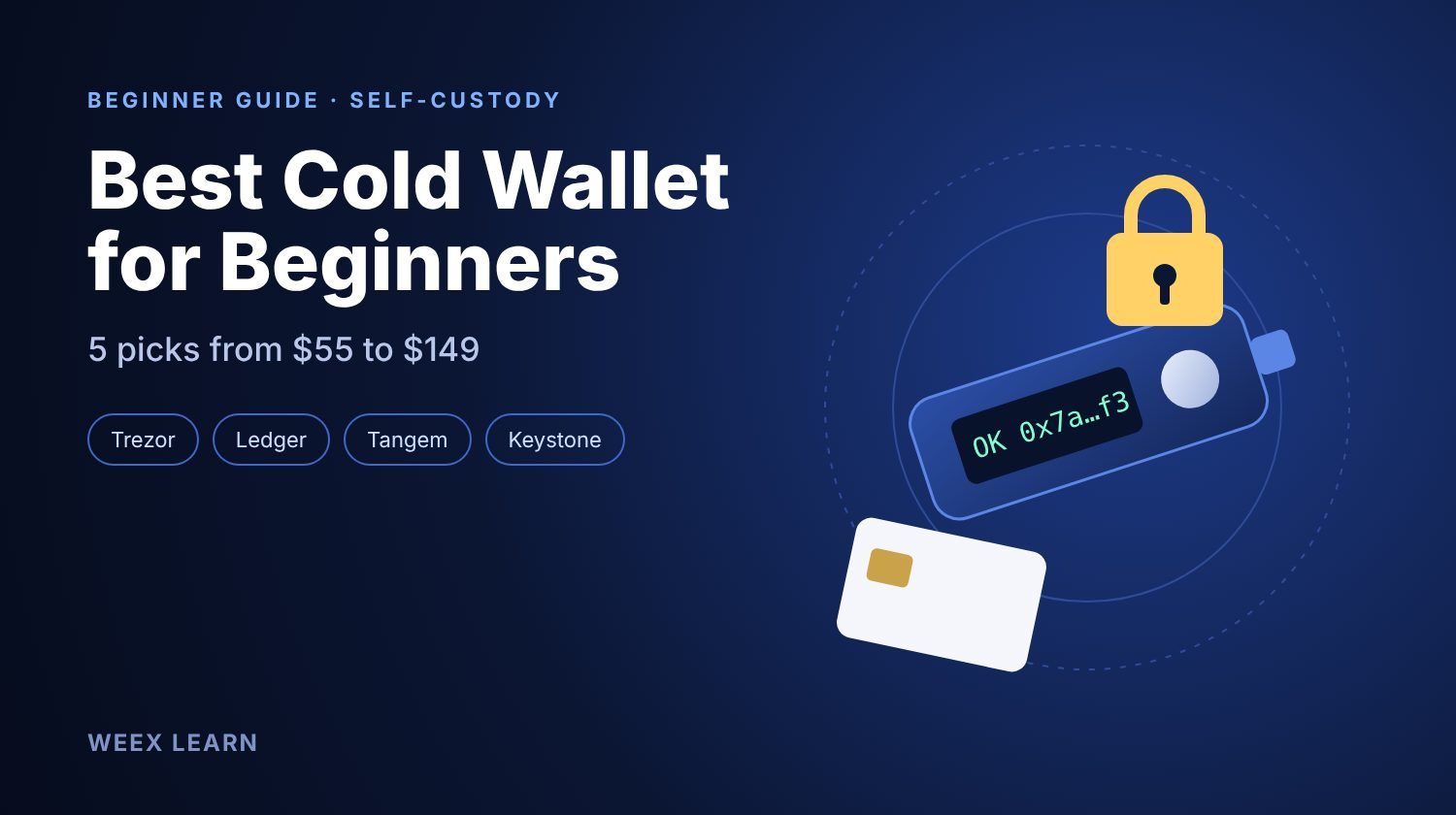
Best Cold Wallet Crypto for Beginners: 5 Picks Under $150
ETH Staking on WEEX vs On-Chain: Queues, Minimums, and Keys
Will Bitcoin Break $87,000 This Week? CPI, Fed Speakers and ETF Outflows to Watch
Conflux (CFX) Price Jumps on China's National Blockchain Network Plan: Does the Policy Actually Name CFX?

What Is Plume (PLUME)? Why the RWA Token Stays 93% Below Its High Even After the Layer 2 Rally
Does Robinhood Chain Have Its Own Token? What CASHCAT, PONS, and Stock Tokens Actually Are
XST Coin vs Other Solana AI Tokens: What Makes XSolut Different and What Does Not
Is XST a Good Investment After Falling More Than 60% From Its All-Time High? What Buying the Dip Actually Requires
XSolut Company: What Is the Team Behind XST Coin and What Do They Actually Disclose
Meme Coin Guide: Opportunities, Risks, and Strategy in 2026
WEEX Convert Guide: How to Swap Crypto on Web and App and What the Quote Really Means
Contents
Popular coins
Latest articles