
Is the Trump $500 Billion XST Investment Real? What the Viral Claim About XSolut and Nvidia Actually Is

 Prefer us on Google
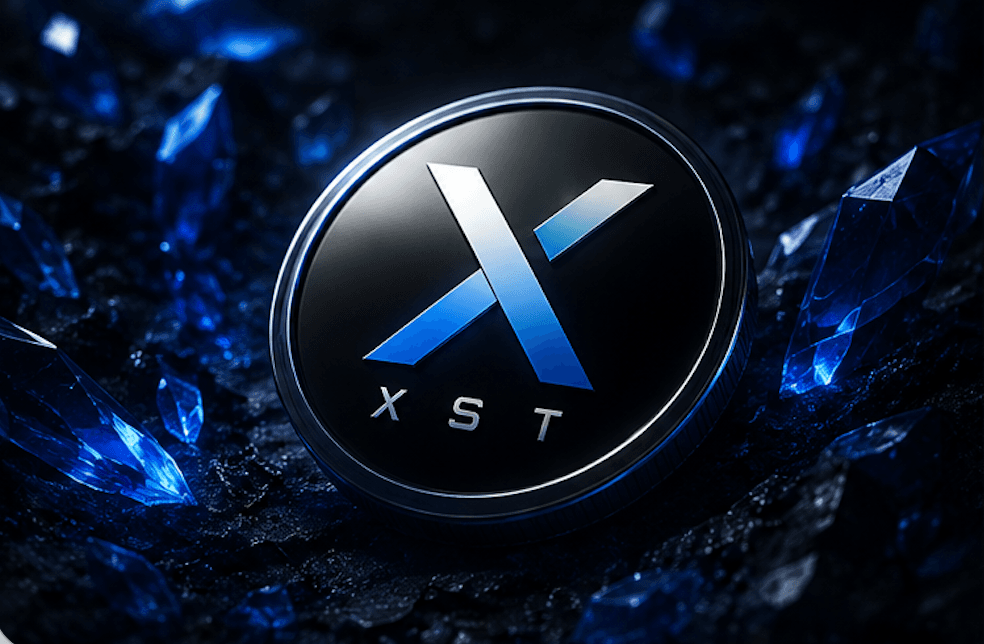
XST coin became the subject of one of the most specific false claims seen around a low-cap Solana token in August 2026, and the claim is worth examining in detail precisely because it was effective enough to drive search traffic.
XST coin's viral moment was amplified by a social media post asserting that Donald Trump had announced a $500 billion investment into XST by August 26, 2026, and that Nvidia had partnered with XSolut. XST coin and these claims have no verified connection to any real event, and Bitcoin Foundation reported on the post specifically to warn investors rather than to confirm it. Understanding exactly why the claim worked, how it spread, and what it reveals about XSolut's actual situation is more useful than simply knowing it is false.
What the Viral Claim Actually Said
The specific claim that circulated on social media in August 2026 contained three elements that each require individual examination rather than being dismissed as a single undifferentiated false statement.
The first element was that Donald Trump announced a $500 billion investment into XST. This figure appears to be a deliberate distortion of the real Stargate LLC announcement. On January 21, 2025, Donald Trump announced the formation of Stargate LLC, a joint venture between OpenAI, SoftBank, Oracle, and investment firm MGX, with a stated investment target of up to $500 billion in AI infrastructure in the United States by 2029 according to Wikipedia. Stargate LLC has no known connection to XSolut or XST. The claim appears to have taken the real $500 billion Stargate figure and substituted XST as the beneficiary, a pattern of misinformation that works by attaching a real and well-known number to a false claim.
The second element was that Nvidia had partnered with XSolut. There is no public record of any partnership, investment, or commercial relationship between Nvidia and XSolut. Nvidia is one of the most frequently name-dropped companies in AI-related cryptocurrency misinformation because of its central role in AI infrastructure and its association with high-profile AI investments. No Nvidia press release, earnings call, or SEC filing mentions XSolut or XST.
The third element was the specific deadline of August 26, 2026. Adding a specific date to a false claim creates urgency that pressures readers to act before verifying. August 26 is notable as the date of Nvidia's Q2 FY2027 earnings report, which was a highly anticipated event in the AI investment community. Attaching XST to a real and closely watched date created a false sense of imminence that made the claim more compelling to users who were already tracking Nvidia's earnings calendar.
How This Type of Misinformation Is Constructed
The specific structure of the XST claim is not accidental. It follows a pattern that appears repeatedly in low-cap token misinformation and understanding the pattern makes it easier to identify similar claims in the future.
The pattern has four components that each serve a specific function in making the false claim believable.
The first component is a real and credible anchor. The $500 billion Stargate figure is real. Trump did announce it. The investment is genuinely happening. Using a verified real-world figure as the anchor gives the false claim a core of truth that makes it harder to immediately dismiss. Someone who has heard of Stargate and knows the $500 billion figure is real is more likely to believe a claim that incorporates it than a claim built entirely from invented numbers.
The second component is a real and respected company name. Nvidia is the world's most valuable semiconductor company and the central supplier of AI training infrastructure. Its name appearing in the claim provides instant credibility for readers who associate Nvidia with legitimate AI investment. The claim does not need to be specific about the nature of the partnership because the mere association with Nvidia's name is sufficient to generate interest.
The third component is a specific and verifiable-looking deadline. August 26 is not a random date. It is a date that many AI investors were already watching because of Nvidia's earnings report. Attaching XST to a date that the target audience was already aware of makes the claim feel embedded in real events rather than invented.
The fourth component is the social media format. The claim was spread through a post format that presents information as a direct disclosure rather than an opinion, creating the visual appearance of a factual announcement. Readers scrolling quickly through social media feeds are more likely to absorb the claim as fact than to pause and evaluate its sourcing.
Why Low-Cap Tokens Are Specifically Targeted by These Claims
XSolut is not unique in being the subject of this type of false claim. Low-cap tokens on Solana and other chains are specifically and repeatedly targeted by fabricated association claims, and the reasons are structural rather than random.
The first structural reason is the absence of institutional analyst coverage. A large-cap technology stock has dozens of professional analysts who publicly correct misinformation and whose corrections circulate alongside the original claim. XSolut has no institutional analyst coverage. There is no research firm whose job it is to issue a correction when false claims about XSolut circulate. The correction must come from individual users who happen to encounter the claim and choose to investigate it.
The second structural reason is the absence of official communication infrastructure. A company like Nvidia has an investor relations team, a press office, and legal counsel that can issue official denials of false partnership claims within hours of them appearing. XSolut has no known public relations infrastructure, no identified team members who can speak on the record, and no verified official communication channel whose statements would be recognized as authoritative by the market. According to BingX's analysis, no verified team member information is publicly available for XSolut.
The third structural reason is that low-cap tokens are in a price discovery phase where large claims about partnerships or investments can produce outsized price moves. A claim that Nvidia partnered with a company already valued at trillions of dollars would barely move that company's stock price. The same claim about a token with a market capitalization of tens of millions of dollars can produce a dramatic percentage move because the dollar amount required to move a thin order book is much smaller. The asymmetry between the cost of creating a false claim and the price impact it can generate makes low-cap tokens economically attractive targets.
What Actually Connects XSolut to the AI Investment Narrative
While the specific claims about Trump and Nvidia are false, XSolut does have a genuine connection to the AI infrastructure narrative that explains why false claims in this specific direction are plausible enough to spread.
According to CryptoRank and Bitcoin Foundation, XSolut describes itself as a project focused on building a tokenized marketplace for AI infrastructure including data centers, energy, cooling systems, fiber infrastructure, and semiconductor-related development. The project's stated goal overlaps with the same categories of infrastructure that Stargate LLC is building with its $500 billion investment program.
This genuine thematic overlap is what makes the false claim structurally plausible. A reader who knows that Stargate is spending $500 billion on AI infrastructure and that XSolut claims to tokenize AI infrastructure is a reader who has real, accurate information that makes a false connection between the two feel less absurd than it actually is. The misinformation exploits the legitimate thematic connection to make an illegitimate financial claim seem credible.
The thematic connection between XSolut's stated goals and real AI infrastructure investment does not create any financial relationship between XSolut and those investments. XSolut's marketplace is still under development. There is no mechanism by which Stargate's $500 billion investment benefits XST token holders. The AI infrastructure sector being large and growing does not mean that any specific token claiming to serve that sector will benefit from that growth, particularly when the token's own platform has not yet launched.
How to Verify Claims Like This Before Acting on Them
The XST misinformation case provides a practical template for verifying similar claims about any low-cap token before making financial decisions based on them.
The first verification step is to search for the original source of the claim. A genuine $500 billion investment announcement by a sitting US president would appear on every major financial news platform within minutes of being made. If searching Reuters, Bloomberg, CNBC, and the White House press release archive produces no result for the claimed announcement, the claim is almost certainly false regardless of how convincingly it is presented on social media.
The second verification step is to check the named company's official channels. Nvidia's investor relations website, SEC filings, and official press releases are publicly accessible. A genuine Nvidia partnership with a cryptocurrency project would require Nvidia to disclose it in certain regulatory contexts and would certainly appear on Nvidia's own communication channels. If Nvidia's own website makes no mention of the claimed partnership, the claim is false.
The third verification step is to identify who benefits from the claim being believed. False partnership claims in cryptocurrency markets are almost always designed to drive buying pressure that benefits holders who accumulated before the claim circulated and intend to sell into the buying pressure the claim generates. The question of who benefits from a claim being believed is the most important single question in evaluating any dramatic assertion about a low-cap token.
The fourth verification step is to check whether reputable sources have reported on the claim. Bitcoin Foundation's coverage of the XST Trump and Nvidia claims was specifically oriented toward warning investors rather than amplifying the claims. When a reputable source covers a dramatic claim specifically to warn investors it is false, that coverage is itself a red flag that the claim requires exceptional scrutiny before being acted upon.
What the Spread of This Claim Reveals About XST's Current Situation
The fact that false partnership claims are circulating around XSolut is itself analytically informative about the token's current situation, beyond the specific content of the false claims.
False partnership claims tend to circulate most intensely around tokens that have already attracted significant market attention but whose fundamentals are insufficient to sustain that attention on their own. A token with a live product, an identified team, and verifiable partnerships does not need fabricated association claims to maintain interest because the real story is compelling enough. The appearance of fabricated claims is often a signal that the real story is not sufficient on its own to maintain the narrative momentum that an earlier price move created.
XSolut's situation fits this pattern. The token generated significant trading volume and market attention through the Solana AI narrative and the initial price rally. According to CryptoRank, the project is still under development with no operational marketplace. The gap between the market attention the token attracted and the real-world progress the project has made creates the specific condition in which false enhancement claims appear and find an audience.
This does not mean XSolut is fraudulent. It means the token's market attention has outpaced its development progress, creating the conditions in which misinformation can circulate effectively because some portion of the audience wants the dramatic claims to be true and is therefore less critical in evaluating their sourcing.
Conclusion
The claim that Trump announced a $500 billion investment into XST and that Nvidia partnered with XSolut is false. Bitcoin Foundation reported on it specifically to warn investors. There is no public record of any investment or partnership between XSolut and either Trump, the US government, or Nvidia.
The claim works because it is constructed to exploit real information. The $500 billion Stargate figure is real. Nvidia's central role in AI infrastructure is real. XSolut's stated focus on AI infrastructure tokenization is real. The misinformation takes these real elements and fabricates a connection between them that does not exist.
Understanding how the claim was constructed is more durable protection than simply knowing this specific claim is false, because the same construction pattern will be applied to other low-cap tokens in the future. A dramatic claim that cannot be verified through the named company's own official channels, that produces no results in major financial news searches, and that benefits the holders who accumulated before the claim circulated is a claim that should be treated as false until proven otherwise regardless of how compelling the specific details appear.
FAQ
1. Did Trump announce a $500 billion investment into XST coin?
No. The $500 billion figure refers to the real Stargate LLC joint venture announced in January 2025, involving OpenAI, SoftBank, Oracle, and MGX. Stargate LLC has no known connection to XSolut or XST. The claim attached the real Stargate figure to XST as a false beneficiary.
2. Did Nvidia partner with XSolut?
No. There is no public record of any partnership between Nvidia and XSolut in any Nvidia press release, earnings call, or SEC filing. A genuine Nvidia partnership would appear on Nvidia's official channels within hours of being announced.
3. Why do false partnership claims target low-cap tokens like XST?
Three reasons make low-cap tokens attractive targets: no institutional analyst coverage to rapidly correct false claims, no identified team to issue official denials, and thin liquidity that allows false claims to generate dramatic price moves that benefit those who accumulated before the claim circulated.
4. How can I verify claims about XST before acting on them?
Search major financial news outlets for the claimed announcement. Check the named company's official investor relations website. Identify who benefits financially from the claim being believed. Check whether reputable sources like Bitcoin Foundation have covered the claim specifically to warn investors.
5. What does the spread of false claims reveal about XST's situation?
According to CryptoRank, XSolut's platform is still under development with no operational marketplace. False claims tend to appear when a token's market attention has outpaced its real development progress, creating conditions where misinformation finds an audience willing to believe dramatic narratives.
This content is provided for general informational purposes only and doesn't constitute financial, investment, legal, or tax advice. Any events, rewards, online promotions, or related information mentioned herein should not be considered a recommendation, solicitation, or invitation to purchase, sell, trade, or otherwise deal in any crypto assets. Crypto assets are highly volatile and may result in loss. The availability of WEEX services, products, and related events may vary by region. You are responsible for ensuring that your participation is in accordance with applicable local laws and regulations.
You may also like
JPMorgan Says Buy the Chip Dip but Morgan Stanley Says Sell: What the SOXL Analyst Disagreement Actually Means
Bitcoin's $2.7 Billion Short Squeeze: What Triggered the Largest Liquidation Event of August 2026
Is SOXL a Good Investment? What 3x Leverage Actually Does to Your Returns in Both Directions

XST Share Price: Why XSolut Has No Share Price and What the Token Price Actually Represents

XST Coin and Stargate: What XSolut's AI Infrastructure Narrative Has to Do With the $500 Billion OpenAI Project
SK Hynix (SKHY) Announces Record $28.6 Billion Buyback: 40 Trillion Won in Shares to Be Cancelled, Shareholder Return Target Raised Above 50%
Bitcoin Price Surges 11% Past $70,000 for the First Time Since June: What the Three Catalysts Actually Drove the Move
Bitcoin Price Prediction 2026: What Reclaiming $70,000 Means for the Path Back to $126,000
Merck Stock Rose 12.7% on Vaccine Data That Has No Numbers Yet
XST Coin Rebounds From Its Post Peak Low: What the Recovery to a $45M Market Cap Actually Signals

What Is a Crypto Exchange API and Which Permissions to Enable
What Is Espresso (ESP)? The Rollup Confirmation Layer, Tokenomics and the 2027 Unlock
What Is Billions Network (BILL)? The ZK Identity Token, Tokenomics and Outlook
What Is ANSEM (The Black Bull)? The Pump Story, the 60 Percent Wallet and the Risks
What Is Based (BASED)? The Hyperliquid Super App Token Explained
Why Did Sahara AI (SAHARA) Drop? The 600M Token Transfer, Tokenomics and What Comes Next
WEEX Daily Lucky Wheel and Event Airdrops: How the Rewards Actually Work
Telegram Games That Pay in 2026: Which Issued Tokens and What Happened After Listing
Telegram Airdrop Calendar: Hamster Daily Cards, Notcoin and New Mini-App Tokens
What Is ISOR Coin (Iran Strategic Oil Resource)? Facts, Risks and Where It Trades
Why Did SIREN Crash? The Whale Dump Explained, and What SIREN Is
Broadcom (AVGO) Earnings Date: September 2, 2026 (Confirmed) — Japan Time and What to Watch
Merck Stock Overvalued After Cancer Vaccine Breakthrough? MRK Outlook 2026
犇犇 Coin Explained: How Unitree Robot Dog Meme Is Going Viral
How to Earn WXT Rewards with WEEX Trade to Earn S6 Event
How to Earn WXT Rewards with WEEX Trade to Earn S6 Futures Event
Roblox Stock Price Prediction 2026-2027: Can RBLX Recover After Falling From $142 to $38
Roblox Stock Is Down 68% in the Past Year: What Age Verification and Sands Capital's Exit Actually Signal
Pakistan Stock Exchange Performance in 2026: What Is Driving the KSE 100 to Record Highs
The XSolut (XST) Contract Address: How to Identify the Real XST Token on Solana 2026
JPMorgan Says Buy the Chip Dip but Morgan Stanley Says Sell: What the SOXL Analyst Disagreement Actually Means
Bitcoin's $2.7 Billion Short Squeeze: What Triggered the Largest Liquidation Event of August 2026
Is SOXL a Good Investment? What 3x Leverage Actually Does to Your Returns in Both Directions
XST Share Price: Why XSolut Has No Share Price and What the Token Price Actually Represents
XST Coin and Stargate: What XSolut's AI Infrastructure Narrative Has to Do With the $500 Billion OpenAI Project
SK Hynix (SKHY) Announces Record $28.6 Billion Buyback: 40 Trillion Won in Shares to Be Cancelled, Shareholder Return Target Raised Above 50%





