
Bitcoin vs gold: Is Cryptocurrency the Future of Money?

 Prefer us on Google
For millennia, gold has reigned supreme as the undisputed champion of wealth preservation, standing the test of time with virtually no competition. Its brilliant luster and physical permanence have made it the ultimate safe-haven asset across civilizations, serving as a bastion of value and reliable hedge against economic turmoil. Yet, in just over a decade, a digital challenger has emerged from the depths of the internet: Bitcoin, increasingly hailed as "digital gold." This dramatic confrontation between ancient treasure and digital innovation raises crucial questions for modern investors: Can digital scarcity truly compete with physical rarity? And which asset deserves a place in your portfolio?
A Tale of Two Histories: Gold vs. Bitcoin
Gold's legacy spans thousands of years, deeply woven into the fabric of human civilization. From ancient Egyptian pharaohs to modern central banks, gold has maintained its status as a universal store of value, surviving empires, wars, and economic collapses alike. Its journey from the barter system to becoming a standardized currency demonstrates its enduring appeal across cultures and centuries. The metal's scarcity and beauty made it one of the few assets desired globally, creating a timeless narrative of wealth and stability.
Bitcoin's story begins in 2008, born from the ashes of the global financial crisis. Created by the mysterious Satoshi Nakamoto, this purely digital asset represents a radical departure from traditional finance. Unlike gold's gradual evolution, Bitcoin emerged fully formed with a revolutionary proposition: a decentralized currency operating without central authority. Despite its youth, Bitcoin has demonstrated remarkable resilience, weathering multiple boom-bust cycles, regulatory challenges, and technological hurdles while steadily gaining institutional acceptance and mainstream recognition.
Fundamental Characteristics: Tangible vs. Digital
Gold's tangible nature represents both its core strength and primary limitation. As a physical asset, gold can be held, stored in personal vaults, and exchanged without digital infrastructure. However, this tangibility necessitates secure storage solutions, insurance costs, and creates significant transportation challenges. While gold is undoubtedly scarce, its total supply remains uncertain—mining technologies continue to evolve, and vast reserves may exist undiscovered beneath the earth's surface or in oceans.
Bitcoin's purely digital existence offers distinct advantages in storage efficiency and global transferability. The cryptocurrency can be transmitted across borders within minutes, bypassing traditional financial intermediaries and their associated delays and fees. Most significantly, Bitcoin's supply is mathematically capped at 21 million coins, with new issuance following a transparent, predetermined schedule that cannot be altered by any central authority. This predictable monetary policy stands in stark contrast to gold's uncertain supply dynamics, though Bitcoin's digital nature introduces cybersecurity considerations that require sophisticated custody solutions.
Practical Utility and Performance Metrics
Gold maintains diverse demand sources beyond pure investment purposes. The metal's unique physical properties—excellent conductivity, resistance to corrosion, and malleability—make it indispensable in electronics manufacturing, medical devices, and luxury jewelry. These industrial and decorative applications provide additional demand layers that support gold's value during economic cycles. As an investment, gold has delivered steady but modest returns, appreciating approximately 15% between 2011 and 2024 while providing effective hedging during market turmoil and inflationary periods.
Bitcoin's value proposition centers almost exclusively on its monetary characteristics. The network enables permissionless, borderless transactions resistant to censorship and confiscation—features particularly valuable in regions with unstable currencies or restrictive financial systems. Despite experiencing significant volatility, Bitcoin has generated unprecedented returns throughout its history, dramatically outperforming traditional assets and creating entirely new wealth paradigms. Its correlation with traditional markets remains complex, sometimes behaving as a risk-on asset while increasingly demonstrating safe-haven characteristics during banking crises and currency devaluations.
-- Price
Accessibility and Regulatory Frameworks
Traditional gold investment involves substantial barriers including authentication concerns, storage logistics, insurance costs, and limited trading hours. While gold ETFs and futures contracts have democratized access to some extent, these financial instruments introduce counterparty risk and management fees that can diminish returns over time. The physical settlement of gold remains cumbersome and expensive, particularly for larger amounts.
Bitcoin markets operate continuously 24/7/365, accessible to anyone with internet connectivity. The regulatory environment has matured significantly, with clear frameworks emerging in major jurisdictions and spot Bitcoin ETF approvals in several countries signaling growing institutional acceptance. While regulatory clarity continues to improve globally, variations between countries create complexity for international investors, and some nations maintain restrictive policies toward cryptocurrency adoption.
Bitcoin vs. Gold : Key Differentiators
td {white-space:nowrap;border:0.5pt solid #dee0e3;font-size:10pt;font-style:normal;font-weight:normal;vertical-align:middle;word-break:normal;word-wrap:normal;}
Characteristic | Bitcoin | Gold |
Asset Type | Digital, cryptographic | Physical, elemental |
Historical Track Record | Since 2009 (15+ years) | 5,000+ years |
Primary Utility | Digital store of value, medium of exchange | Store of value, industrial applications, jewelry |
Supply Characteristics | Fixed at 21 million, predictable issuance | Physically scarce, but ultimately uncertain |
Storage Requirements | Digital wallets, cryptographic keys | Physical vaults, security systems |
Transfer Mechanism | Global, near-instant settlement | Physical delivery or paper claims |
Transaction Costs | Network fees (typically $1-10) | Insurance, shipping, storage fees |
Market Volatility | Historically high, decreasing over time | Relatively stable, with periodic spikes |
Regulatory Status | Evolving framework globally | Well-established, universally recognized |
Portfolio Role | Growth potential, digital gold narrative | Stability, inflation hedge, diversification |
Outlook of Gold and Bitcoin
Gold's future appears stable yet constrained by its physical limitations and established market position. The metal will likely maintain its role as a conservative hedge and portfolio diversifier, particularly during periods of economic uncertainty and high inflation. However, its growth potential remains limited by the evolving preferences of younger, digitally-native investors who increasingly value technological innovation over traditional assets.
Bitcoin's trajectory suggests substantial growth potential as global adoption accelerates across both retail and institutional segments. The fixed supply combined with increasing demand creates compelling scarcity dynamics that could drive long-term value appreciation. Technological improvements, including layer-2 solutions like the Lightning Network and enhanced privacy features, continue to expand Bitcoin's utility beyond simple value storage toward becoming a robust global settlement network.
Conclusion
Modern portfolio construction increasingly recognizes both assets as complementary rather than mutually exclusive. Gold provides historical stability, physical security, and proven performance during economic crises, while Bitcoin offers technological innovation, asymmetric growth potential, and characteristics tailored for the digital age. The optimal allocation depends entirely on individual investment objectives, time horizon, and risk tolerance, with many sophisticated investors choosing to include both in diversified portfolios.
For investors ready to explore Bitcoin, selecting the right trading platform is crucial for success. WEEX Exchange stands out as a premier destination for digital asset trading, offering institutional-grade security measures, competitive fee structures, and an intuitive interface suitable for both beginners and experienced traders. The platform provides access to deep liquidity, advanced trading tools, and comprehensive educational resources to support informed decision-making. Whether you're making your first Bitcoin purchase or executing sophisticated trading strategies, WEEX delivers the reliability and features needed to navigate digital asset markets with confidence.
Further Reading
- What Is Bitcoin and How Does It Work?
- What Is Bitcoin? A Simple Guide for Crypto Beginners
- If You Invested $1,000 in Bitcoin 10 years ago, Here’s How Much You’d Have Now
Disclaimer: The opinions expressed in this article are for informational purposes only. This article does not constitute an endorsement of any of the products and services discussed or investment, financial, or trading advice. Qualified professionals should be consulted prior to making financial decisions.
This content is provided for general informational purposes only and doesn't constitute financial, investment, legal, or tax advice. Any events, rewards, online promotions, or related information mentioned herein should not be considered a recommendation, solicitation, or invitation to purchase, sell, trade, or otherwise deal in any crypto assets. Crypto assets are highly volatile and may result in loss. The availability of WEEX services, products, and related events may vary by region. You are responsible for ensuring that your participation is in accordance with applicable local laws and regulations.
You may also like
BTC Funding Rate and Open Interest: What Each One Measures and How to Read Them Together
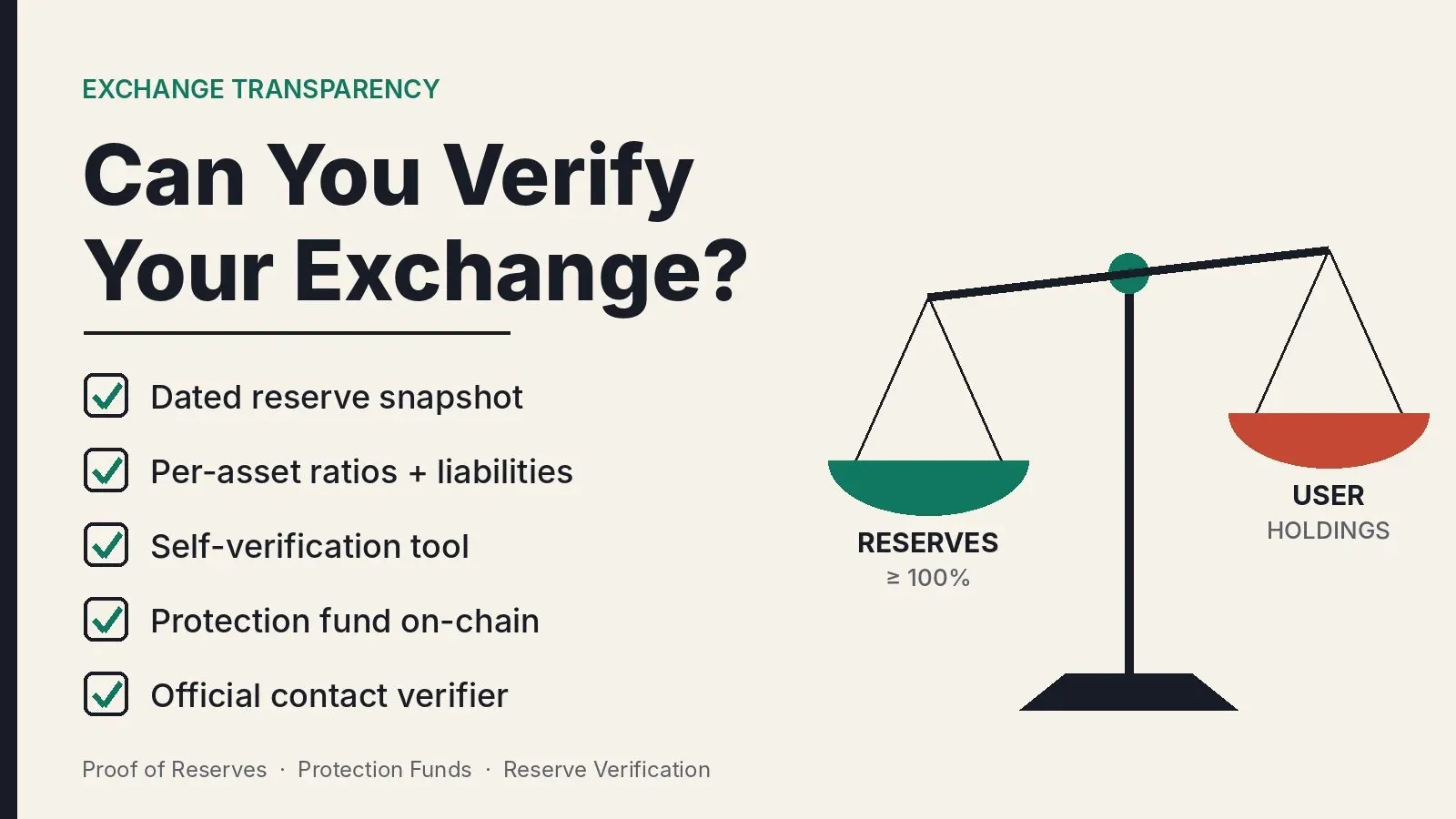
How Transparent Is a Crypto Exchange? Checking Proof of Reserves and Protection Funds
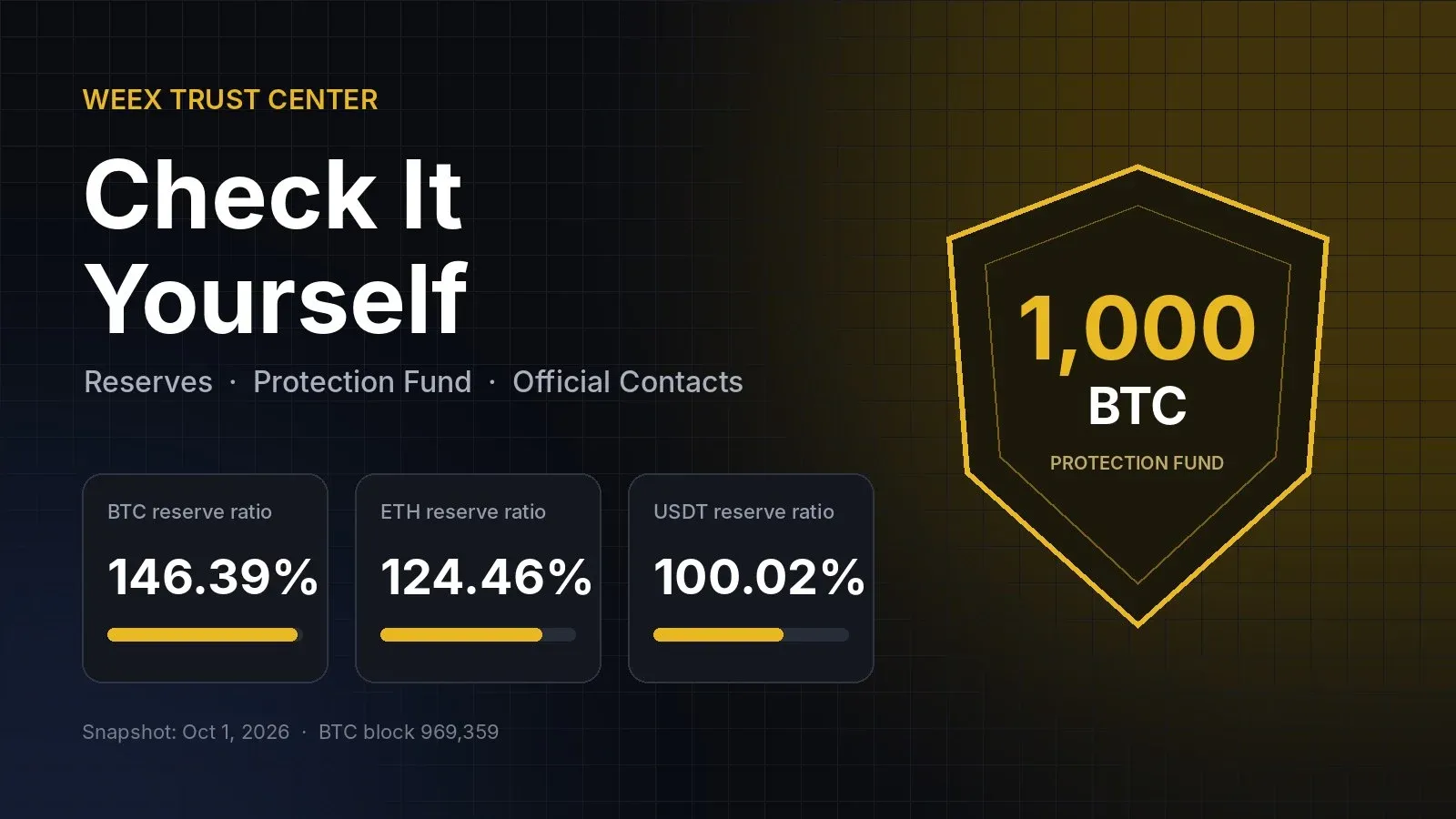
How to Use the WEEX Trust Center: Check Reserves, Protection Fund and Official Contacts
Crypto Leverage Trading Explained: How Perpetual Futures, Margin and Liquidation Work
Bitcoin Margin Trading: BTC Liquidation Math at 3x, 10x and 25x
Crypto Leverage Trading Platform: 6 Checks Before You Deposit
What Is Margin Trading? A $1,000 Example at 3x and 10x Leverage
How to Day Trade Crypto for Beginners: The Math Behind One Trade

Trading Psychology for Beginners: Crypto Traps and Hard Rules
What Is a Bitcoin ETF? How Creation, Custody and Fees Work

What Is Blockchain and How Does It Work? One Transaction, Traced
WEEX Convert Fees: What Zero-Fee Conversion Really Costs You

WEEX Convert Quote: How the 8-Second Price Lock Really Works
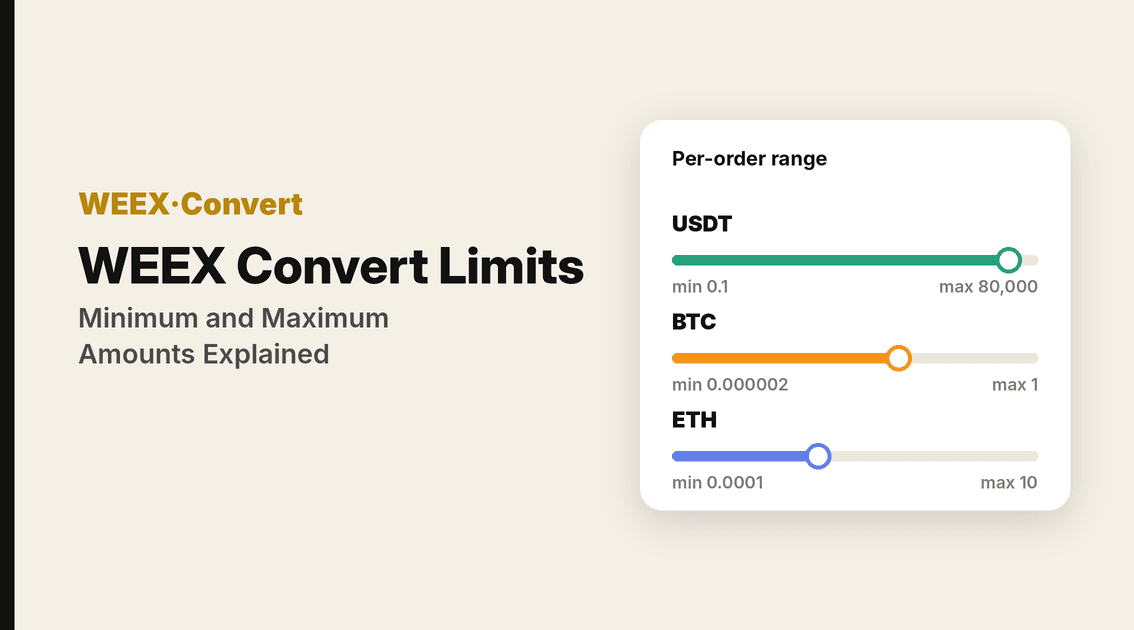
WEEX Convert Limits: Minimum and Maximum Amounts Explained
How to Check a WEEX Convert Order: History, Rate and Status
USDC Significant EMT Status in the EU: What Changes on November 12 Under MiCA
Walrus (WAL) Jumps 30%: Sui Storage Token Rallies on AI Data
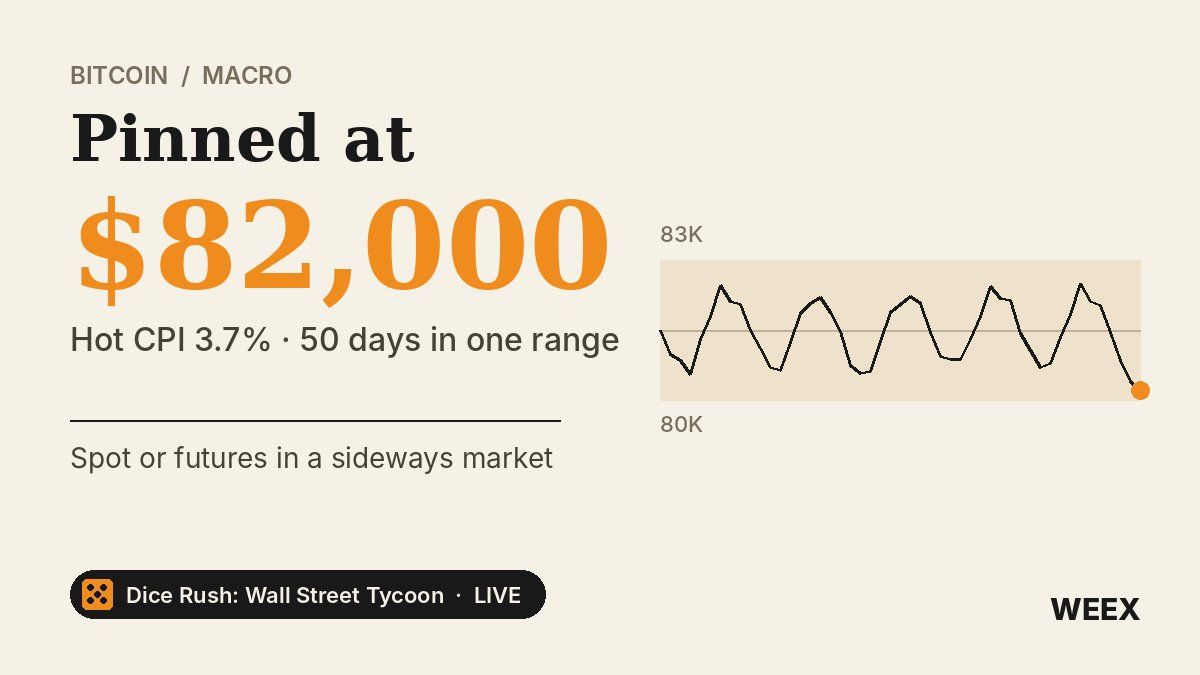
Bitcoin Price After Hot CPI: Why BTC Is Pinned Near $82,000
What Is a Limit Order? How It Works and When to Use It

Best Crypto Miner for Beginners: What to Check on Cost, Power, Hashprice and Profit Before You Buy

Limit Order vs Market Order: Which One to Use When Trading Crypto
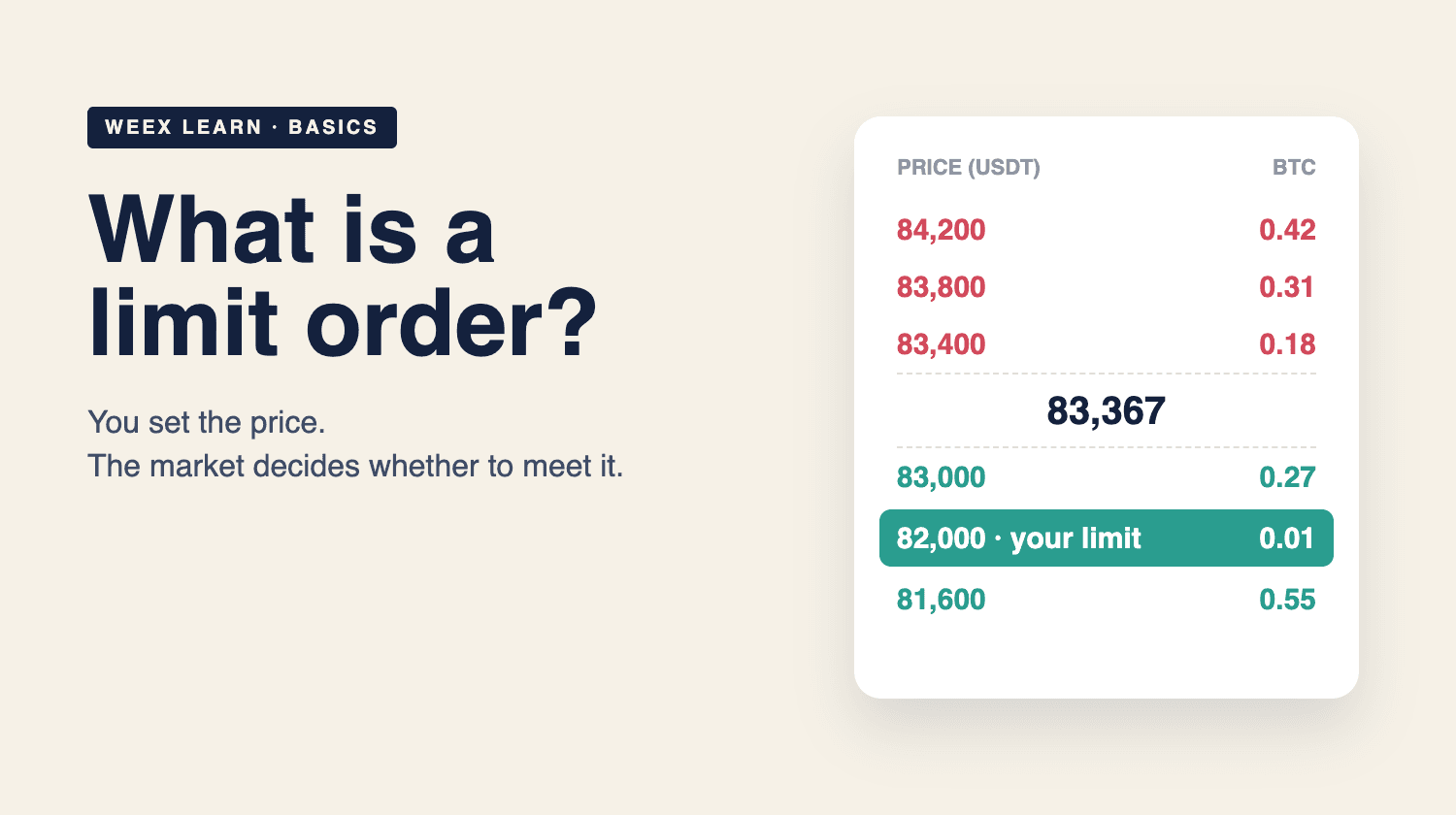
What Is a Limit Order? How It Works in Crypto With BTC Examples
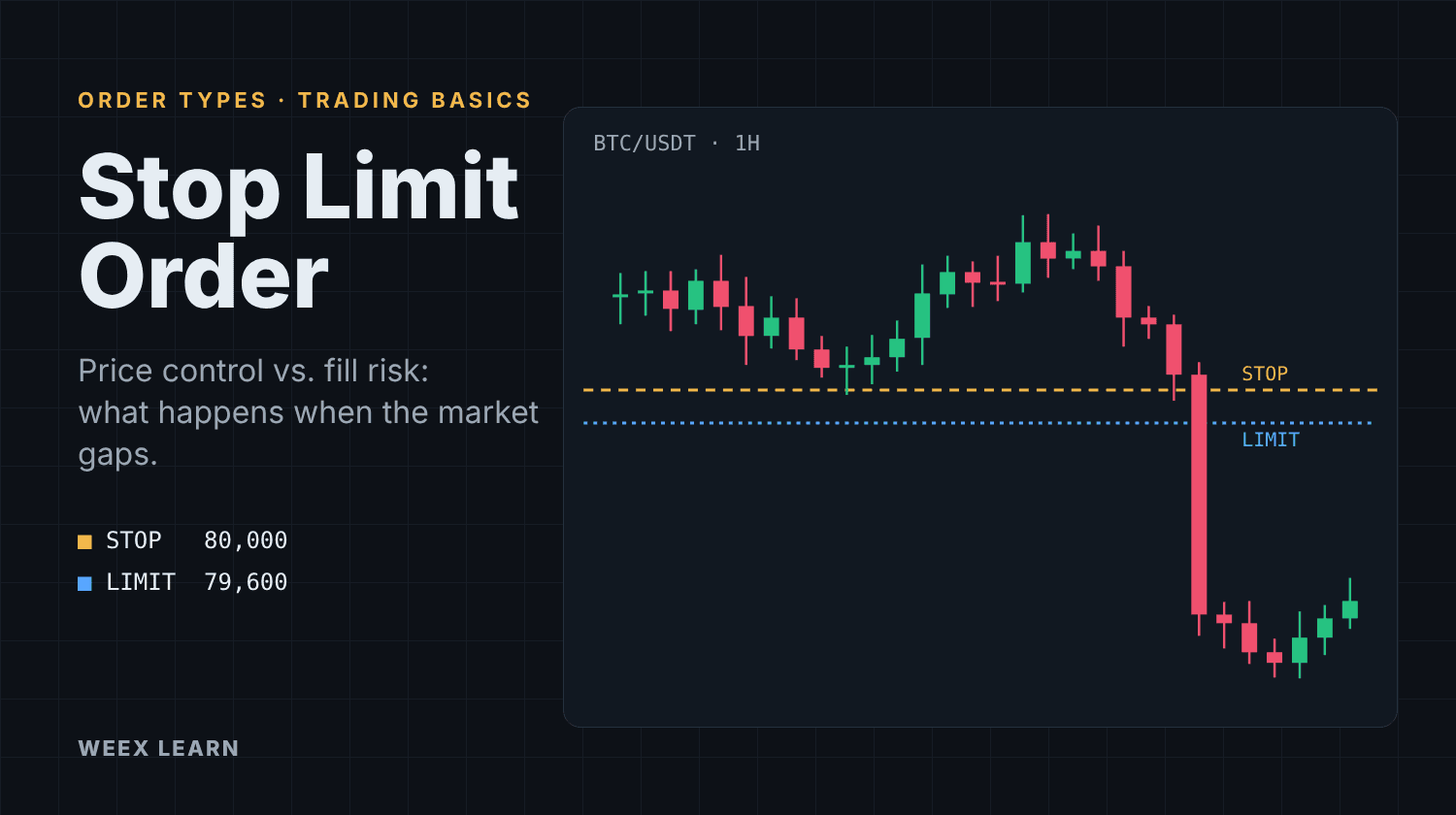
Stop Limit Order: How It Works and Why It Can Fail to Fill
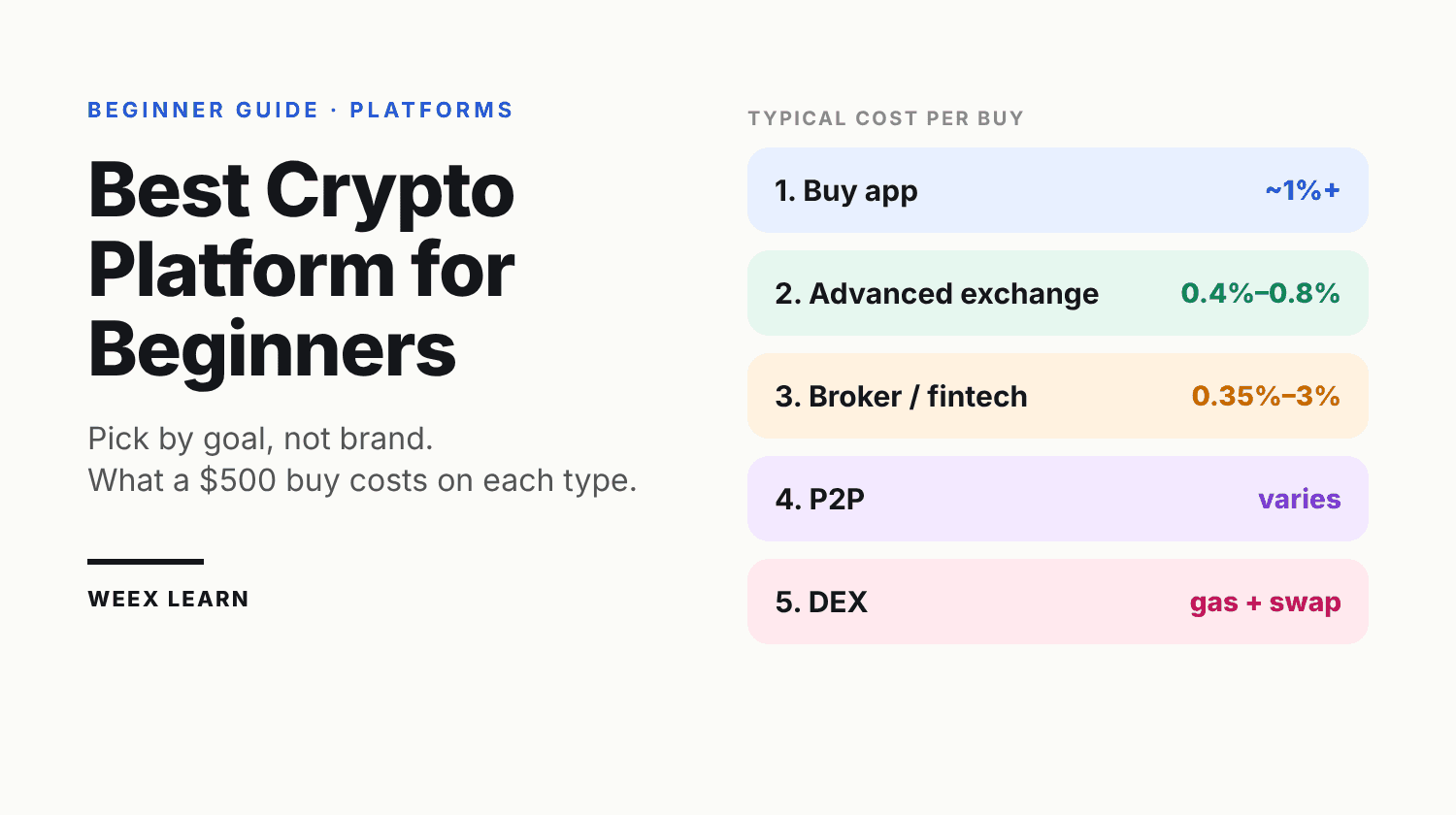
Best Crypto Platform for Beginners: Pick by Goal, Not Brand

Best Crypto Podcasts for Beginners: A 4-Week Listening Plan
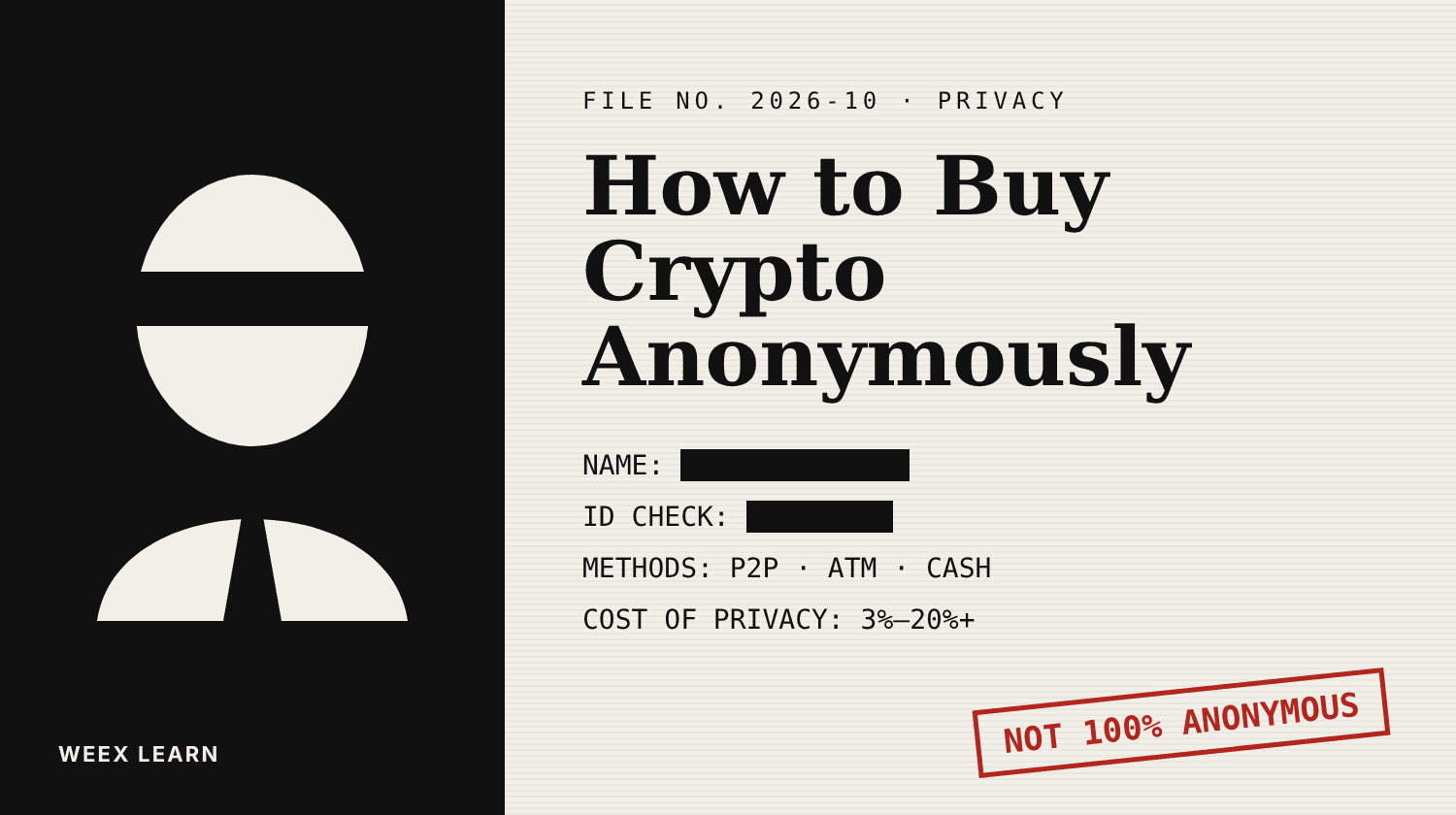
How to Buy Crypto Anonymously: 5 Methods, Real Costs and Limits
Will Bitcoin Break $87,000 This Week? CPI, Fed Speakers and ETF Outflows to Watch

Conflux (CFX) Price Jumps on China's National Blockchain Network Plan: Does the Policy Actually Name CFX?
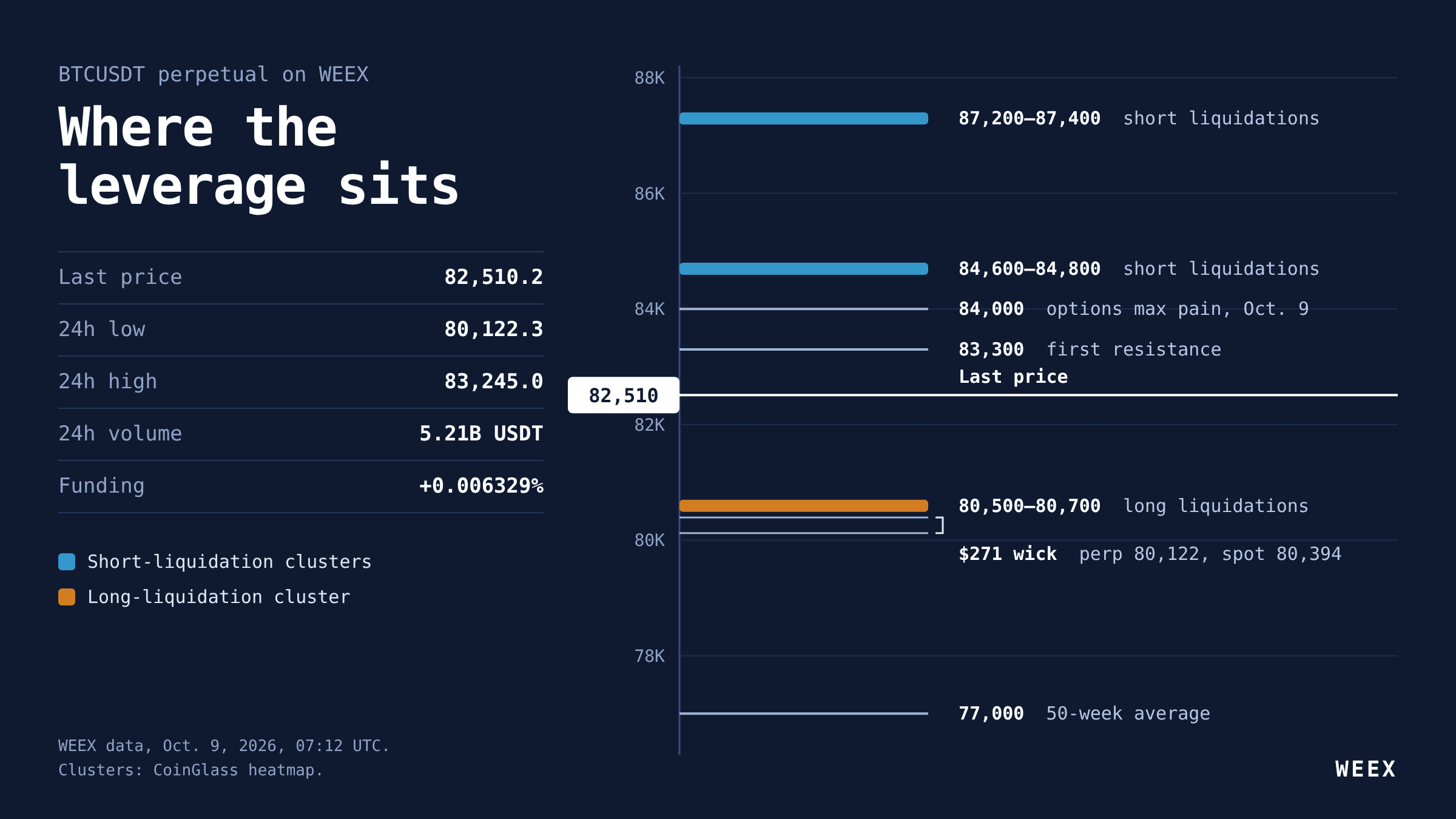
BTC Futures Analysis: $80K Held, but Longs Are Still Paying Up
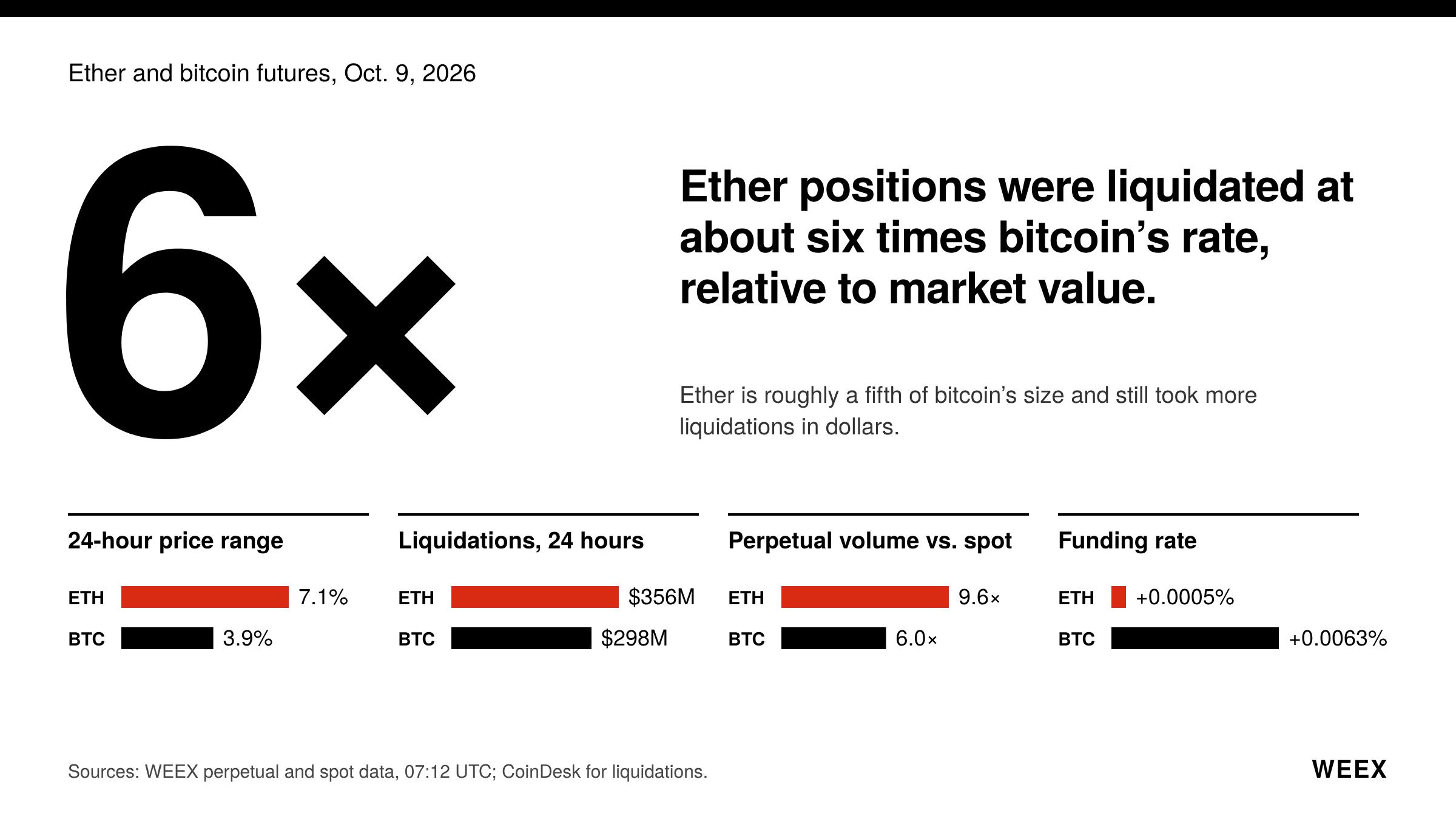
ETH Futures: Why Ether Is Falling Faster Than Bitcoin This Week
BTC Funding Rate and Open Interest: What Each One Measures and How to Read Them Together
How Transparent Is a Crypto Exchange? Checking Proof of Reserves and Protection Funds
How to Use the WEEX Trust Center: Check Reserves, Protection Fund and Official Contacts
Crypto Leverage Trading Explained: How Perpetual Futures, Margin and Liquidation Work
Bitcoin Margin Trading: BTC Liquidation Math at 3x, 10x and 25x
Crypto Leverage Trading Platform: 6 Checks Before You Deposit


