OP Price and Unichain's OP Enterprise Move: What It Means for OP

 Prefer us on Google
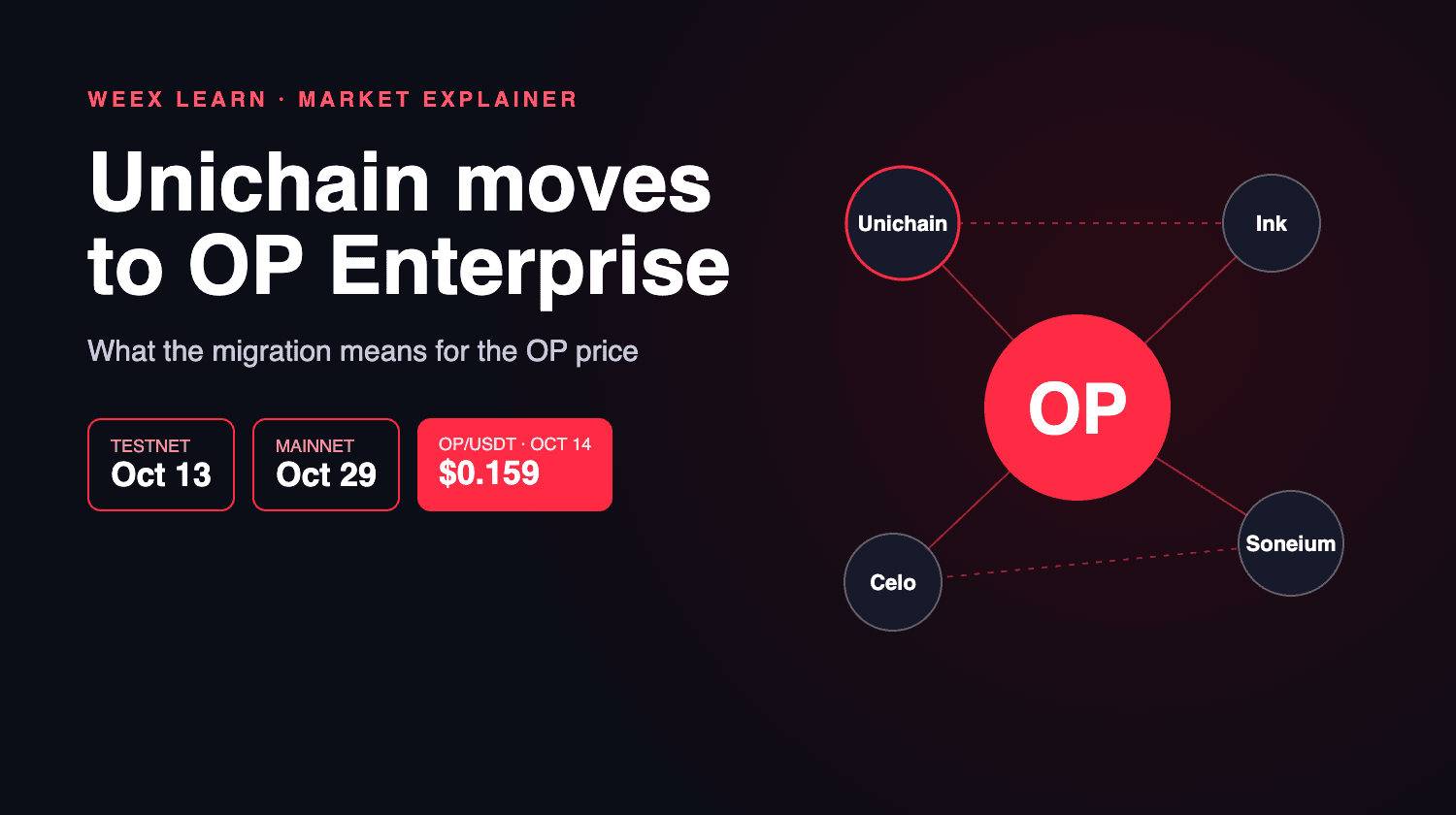
OP is trading near $0.159 on WEEX as of October 14, 2026, after Uniswap's Unichain confirmed it is moving its production operations to Optimism's OP Enterprise. The testnet switch was scheduled for October 13 and the mainnet migration for October 29. The news makes Optimism a bigger infrastructure operator, but it does not hand OP holders a direct share of revenue, and the token's price has already swung both ways around it.
This guide explains what OP Enterprise actually runs for Unichain, why an ecosystem win and the OP price do not move in lockstep, and which dates and numbers matter for anyone watching OP spot or futures this month.
The short version: the migration is a credibility signal for the OP Stack as a business, the price reaction is a separate question driven by liquidity and sentiment, and the October 29 mainnet date is the next real checkpoint.
What Unichain's Move to OP Enterprise Changes
Unichain is the Ethereum layer 2 built by Uniswap Labs on the OP Stack. Under the plan Uniswap Labs announced on October 9, Optimism takes over the chain's production sequencer operations, public node access, monitoring and incident response. Uniswap says users see no change: the chain ID, contracts, balances and Uniswap deployments stay the same, and the network keeps its Stage 1 rollup status.
The stated goal is native interoperability across OP Stack chains. Once that feature is live, users should be able to move assets, starting with ETH, between Unichain and other OP Stack networks without a bridge. That feature is not live yet, and no firm launch date has been given for it.
Key dates, as announced:
- October 9, 2026: Uniswap Labs publishes the migration plan.
- October 13, 2026: Unichain testnet migration scheduled to begin. Developers get roughly two weeks to test tooling.
- October 29, 2026: Unichain mainnet migration scheduled.
As of October 14, there is no public confirmation that the testnet migration has fully completed, so treat both dates as plans rather than finished events.
What OP Enterprise Is and What It Is Not
OP Enterprise is Optimism's managed-infrastructure offering, introduced on January 29, 2026. It has three tiers: deploying on OP Mainnet, a self-managed chain with OP Labs support, and a fully managed chain where OP Labs runs the sequencer, batcher and proposer end to end. A Mission Critical add-on promises a 99.95% uptime SLA and 15-minute response times for top-priority incidents. Unichain and Celo are named as Mission Critical customers.
Unichain is not the first chain to hand over operations. Ink announced a similar arrangement in June, and Soneium followed on September 30. The pattern is clear: brands keep their chains and their ecosystems, while Optimism runs the plumbing.
What OP Enterprise is not, at least on the public record, is a fee stream wired into the OP token. Optimism's announcement lists no pricing, and it says nothing about buybacks, burns or revenue sharing for OP holders. Any argument that this deal directly lifts OP's fundamentals has to be inferred, and it should be read as a view, not a fact.
Why the OP Price Did Not Simply Rally on the News
Ecosystem catalysts and token prices run on different clocks. OP shows that clearly this month.
Around October 8, OP fell roughly 12% as decentralized-exchange volume on OP Mainnet slid to about $21 million a day, down from a peak near $495 million on September 3, according to DeFiLlama data cited by market reports. Then on October 14 the token bounced hard. WEEX market data for that day shows:
- OP/USDT spot: $0.1589, up 20.65% over 24 hours, with a 24-hour low of $0.1314 and about 19.96 million USDT in volume.
- OPUSDT perpetual: $0.15886, up 20.03%, trading between $0.13189 and $0.16237, with roughly 4.29 million USDT in 24-hour volume and a funding rate of 0.009286%.
The better reading is that OP is a low-priced, thinly traded token where a 20% day can happen on positioning alone. The Unichain news supports a longer-term narrative about the OP Stack as enterprise infrastructure, but it does not explain a single day's candle. A near-flat funding rate during a 20% move also suggests the bounce was not driven by a crowded wave of leveraged longs, which is worth watching in case that changes.
-- Price
OP Price Prediction: Scenarios to Watch Through October 29
Nobody can give a reliable OP price target, and this article does not try. What can be done is to frame the scenarios around the dates that are actually on the calendar.
- Constructive case: The October 29 mainnet migration completes without incident, more brands sign OP Enterprise deals, and on-chain activity across OP Stack chains recovers. In that case the market may start pricing OP as the token of a growing infrastructure business, even without a direct revenue link.
- Neutral case: The migration goes smoothly but nothing changes for OP holders directly. Price drifts with the broader altcoin market and the October 14 bounce partly fades.
- Negative case: A migration problem, a sequencer outage, or continued weakness in OP Mainnet activity revives the concern that one operator now runs several chains, which some analysts have flagged as a single point of failure.
What experienced traders watch here is less the headline and more the follow-through: whether volume holds after the 20% day, whether the $0.13 area that marked the October 14 low holds on any pullback, and whether funding turns sharply positive, which would signal leveraged chasing.
How to Trade OP on WEEX: Spot vs Futures
For most readers, spot is the simpler way to get exposure. You buy OP with USDT on the OP/USDT spot market, you own the token, and there is no liquidation price. The worst case is the token's own decline.
Futures suit traders who want to go short or use leverage. The OPUSDT perpetual tracks OP's price without you holding the token, but leverage cuts both ways. On a token that just moved 20% in a day, even 5x leverage can be wiped out by a normal swing. If you do use futures, size small, set a stop, and check the funding rate before holding a position overnight.
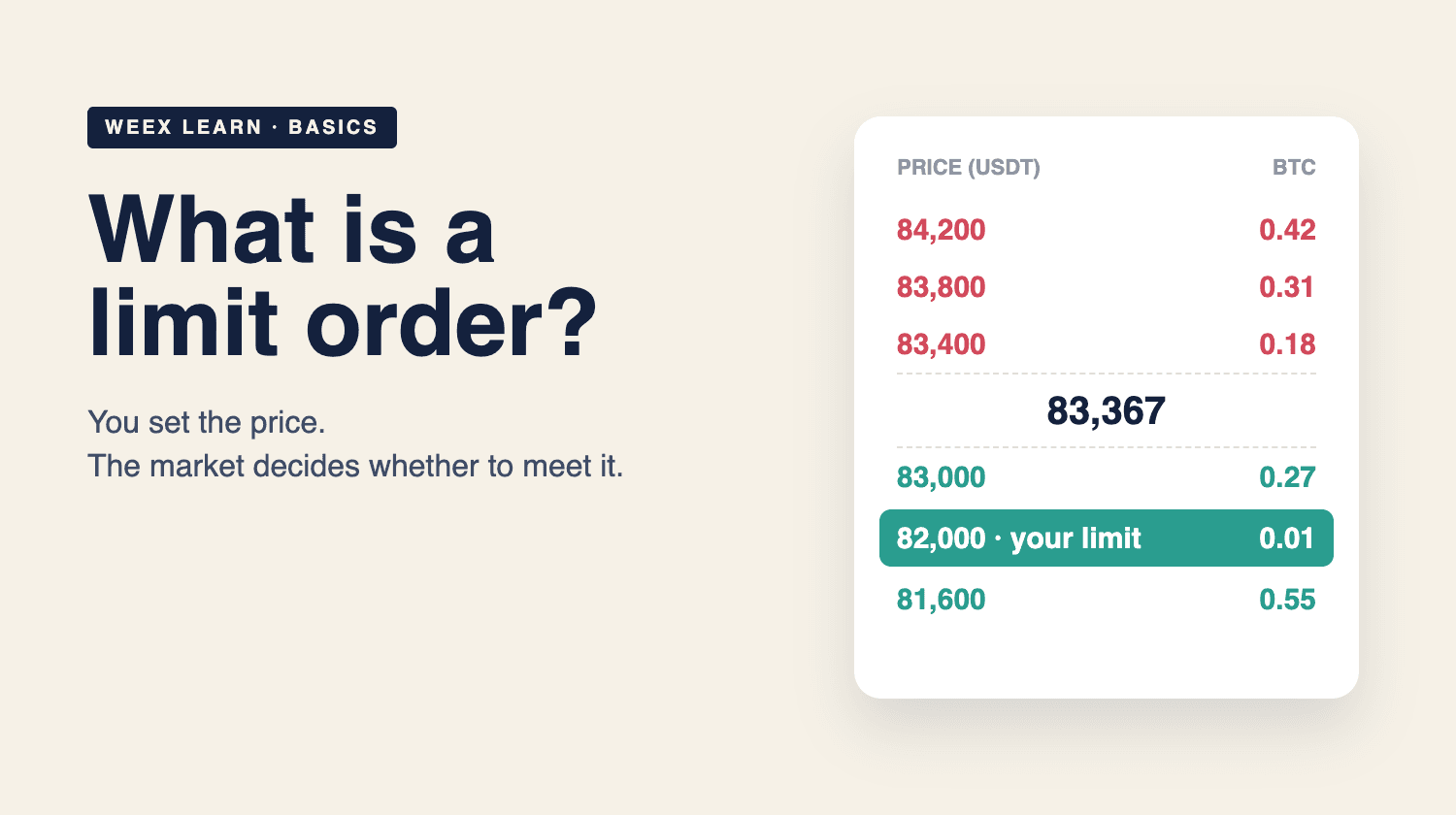
A practical rule for either market: on a low-priced token like OP, use limit orders instead of market orders when liquidity is thin, so a sudden gap in the order book does not fill you far from the price you saw.
Trade More Markets on WEEX
The WEEX Wall Street Tycoon x Monopoly event is live: roll the dice, predict US stock moves and compete for a share of a million-dollar prize pool. Join Dice Rush.
WEEX also offers US stock spot products and USDT-margined US stock futures, so you can follow global market themes on one platform. Trade stocks on WEEX.
WEEX TradFi covers stocks, commodities, forex and indices for a single view of cross-market moves. Explore WEEX TradFi.
WEEX publishes a Proof of Reserves page where users can review platform reserves and asset backing. View WEEX Proof of Reserves.
The bottom line on OP: Unichain's move to OP Enterprise strengthens the case that Optimism can sell infrastructure, but the OP price still answers to liquidity and sentiment first. Watch October 29, watch volume, and size positions for a token that can move 20% in a day.
FAQ
1. Is Unichain's migration to OP Enterprise complete?
Not as of October 14, 2026. The testnet migration was scheduled to start on October 13 and the mainnet migration on October 29. Check Uniswap and Optimism announcements for confirmation before treating either step as done.
2. Does OP Enterprise revenue go to OP token holders?
There is no public mechanism for that. Optimism has not announced buybacks, burns or revenue sharing tied to OP Enterprise, so any link between the business and the token's value is indirect.
3. Why did OP rise 20% on October 14?
The move followed the Unichain migration news and a sharp drop earlier in the month, but a single day's move in a low-priced, thinly traded token usually reflects positioning and liquidity more than one headline.
4. Should I trade OP spot or futures?
Spot carries no liquidation risk and suits holding. Futures allow shorting and leverage, which magnifies both gains and losses on a token this volatile.
This content is provided for general informational purposes only and doesn't constitute financial, investment, legal, or tax advice. Any events, rewards, online promotions, or related information mentioned herein should not be considered a recommendation, solicitation, or invitation to purchase, sell, trade, or otherwise deal in any crypto assets. Crypto assets are highly volatile and may result in loss. The availability of WEEX services, products, and related events may vary by region. You are responsible for ensuring that your participation is in accordance with applicable local laws and regulations.
You may also like

Limit Order vs Market Order: Which One to Use When Trading Crypto

WEEX Convert Guide: How to Swap Crypto on Web and App and What the Quote Really Means
ASML Stock Falls Despite a Record Q3 and Higher Outlook: Is the AI Chip Equipment Boom Already Priced In?

SKHY Stock Falls Again: Is the SK Hynix Selloff About China’s CXMT and YMTC or AI Profit-Taking?
What Is a Limit Order? How It Works and When to Use It
Best Crypto Miner for Beginners: What to Check on Cost, Power, Hashprice and Profit Before You Buy

DeFi Vault vs Staking: Who Controls Your Yield and Your Exit?
Buy Limit Order: How to Buy Crypto Below the Market Price
Limit Sell Order: How to Set a Take-Profit Price in Crypto
What Is a Limit Order? How It Works in Crypto With BTC Examples

Nvidia Stock Falls After Microsoft's Maia 300: Is Custom Silicon a Real Threat to NVDA?

SpaceX Stock (SPCX) Near $163: Can It Reclaim $176 After Pivotal Lifts Its Target to $230?

MSFT Stock Near $542: What Azure Maia 300 Actually Claims and What Still Needs Proof
MU Stock Falls Below $1,000: Is the CXMT Threat Real or Just an Excuse to Take Profits?
Can META Reach $1,000? What Wells Fargo, Jefferies and Bernstein Targets Say About Meta Stock

Meta Stock Jumps as Muse AI Retention Data Lands: Is META Pricing In an AI Agent Win?

Stop Limit Order: How It Works and Why It Can Fail to Fill
Best Crypto Platform for Beginners: Pick by Goal, Not Brand

Best Crypto Podcasts for Beginners: A 4-Week Listening Plan
Best Cold Wallet Crypto for Beginners: 5 Picks Under $150
ETH Staking on WEEX vs On-Chain: Queues, Minimums, and Keys

Will Bitcoin Break $87,000 This Week? CPI, Fed Speakers and ETF Outflows to Watch
Conflux (CFX) Price Jumps on China's National Blockchain Network Plan: Does the Policy Actually Name CFX?

What Is Plume (PLUME)? Why the RWA Token Stays 93% Below Its High Even After the Layer 2 Rally
Best Crypto Broker for Beginners: What to Check in Fees, Regulation, Security and Support Before You Deposit
Wormhole Coin Price Near $0.03: What Is Wormhole (W) and What Do Traders Need to Know About W 2.0, Unlocks and Staking?
Who Is David Ellison? Skydance’s Strategy, Media Consolidation, and the Investment Case
What Is MegaETH (MEGA)? Why the Token Trades 78% Below Its High and What to Watch Before the Six Month Unlock
Evernorth (XRPN) Nasdaq Debut: What the Largest Public XRP Treasury Holds and What It Means for XRP Price
Best Crypto Wallet for Beginners 2025: Pick by What You Will Do
Limit Order vs Market Order: Which One to Use When Trading Crypto
WEEX Convert Guide: How to Swap Crypto on Web and App and What the Quote Really Means
ASML Stock Falls Despite a Record Q3 and Higher Outlook: Is the AI Chip Equipment Boom Already Priced In?
SKHY Stock Falls Again: Is the SK Hynix Selloff About China’s CXMT and YMTC or AI Profit-Taking?
What Is a Limit Order? How It Works and When to Use It
Best Crypto Miner for Beginners: What to Check on Cost, Power, Hashprice and Profit Before You Buy
Contents
Popular coins
Latest articles