
AMD vs Nvidia After Q2 Earnings: Which Stock Is the Better Buy?

 Prefer us on Google

AMD reported strong second-quarter results for 2026, but its stock still fell after the announcement. The reaction shows that strong earnings may not be enough when investors already expect rapid AI growth.
The decline has raised a key question: Does AMD now offer a better entry point, or is Nvidia still the stronger AI stock?
As of August 5, 2026, AMD has released its Q2 results. Nvidia’s FY2027 Q2 earnings are scheduled for August 26. This article therefore compares AMD’s latest quarter with Nvidia’s most recent reported results.
AMD Q2 2026 Earnings
AMD reported Q2 revenue of $11.54 billion, up 50% year over year. Data Center revenue reached $6.72 billion, more than double the level recorded a year earlier.
Non-GAAP earnings per share were $1.66, while non-GAAP gross margin was 56%. AMD also guided for about $13 billion in Q3 revenue.
| AMD Q2 2026 metric | Result |
|---|---|
| Revenue | $11.54 billion |
| Data Center revenue | $6.72 billion |
| Non-GAAP EPS | $1.66 |
| Non-GAAP gross margin | 56% |
| Q3 revenue guidance | About $13 billion |
Source: AMD Q2 2026 financial results.
Despite the strong figures, AMD shares fell after the report. Reuters noted that investors had expected even faster AI growth and stronger profitability.
The problem was not weak performance. Market expectations had simply moved higher before the earnings release.
AMD vs Nvidia Financial Performance
Nvidia’s latest reported quarter was FY2027 Q1, which ended on April 26, 2026. Revenue reached $81.6 billion, up 85% year over year. Data Center revenue rose 92% to $75.2 billion.
Nvidia also reported a non-GAAP gross margin of 75%, well above AMD’s 56%.
| Comparison | AMD | Nvidia |
|---|---|---|
| Latest quarterly revenue | $11.54 billion | $81.6 billion |
| Data Center revenue | $6.72 billion | $75.2 billion |
| Non-GAAP gross margin | 56% | 75% |
| AI market position | Challenger | Market leader |
| Main growth case | Market-share gains | Scale and ecosystem |
Sources: AMD and Nvidia investor relations.
The two quarters are not directly identical, but the gap is clear. Nvidia has much greater scale, stronger margins and a more established AI business.
AMD is growing from a smaller base. If it wins more AI infrastructure demand, its percentage growth could remain higher.
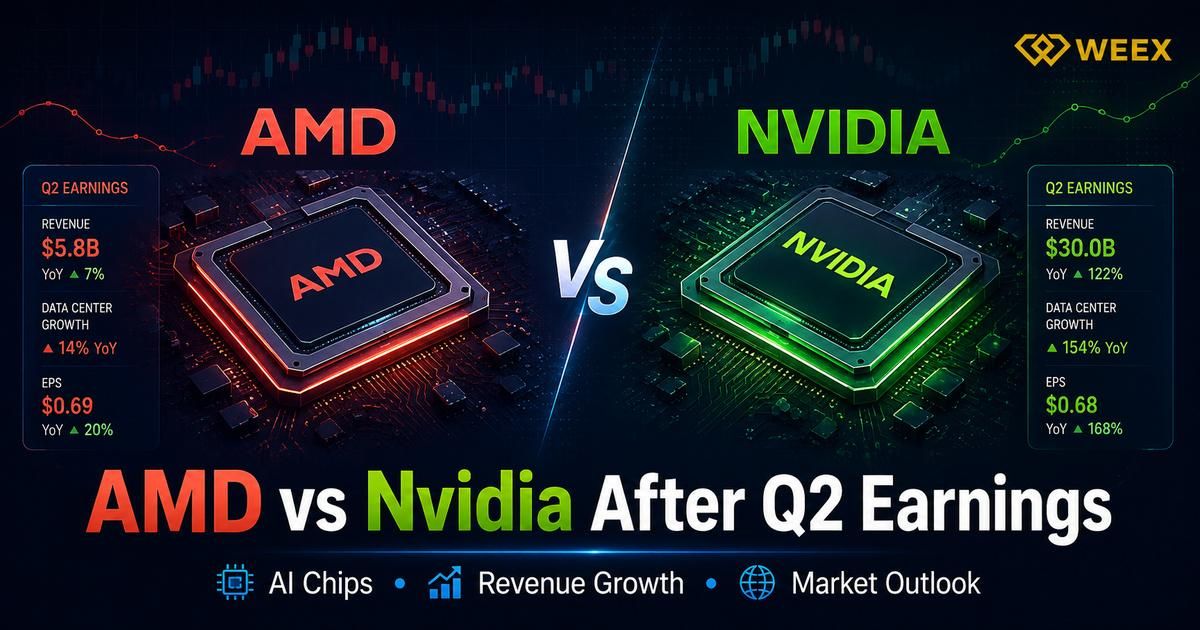
AMD Helios vs Nvidia Vera Rubin
AMD Helios is a rack-scale AI platform built around MI450-series accelerators, EPYC Venice processors, Pensando networking and ROCm software.
Nvidia Vera Rubin also combines GPUs, CPUs, networking and software in one platform. Its main components include Rubin GPUs, Vera CPUs, NVLink and BlueField products.
| Area | AMD Helios | Nvidia Vera Rubin |
|---|---|---|
| AI accelerator | MI450/MI455X series | Rubin GPU |
| CPU | EPYC Venice | Vera CPU |
| Software | ROCm | CUDA |
| Main advantage | Open design and cost potential | Mature software ecosystem |
| Main risk | Adoption and execution | High market expectations |
Sources: AMD and Nvidia product announcements.
The competition is no longer only about GPU performance. Both companies now sell complete AI systems. There is not yet enough independent testing to declare one platform clearly better. Delivery schedules, customer demand and operating costs will be more important than headline specifications.
-- Price
AMD’s Major AI Deals
AMD has announced several large AI infrastructure agreements.
Meta plans to deploy up to 6 gigawatts of AMD GPUs over several years. The first 1-gigawatt deployment is expected to begin in the second half of 2026.
Anthropic plans to deploy up to 2 gigawatts of MI450-series GPUs. Its first 1-gigawatt deployment is expected in the first half of 2027. Microsoft also plans to use next-generation AMD Instinct GPUs and EPYC processors in Azure.
Sources: AMD announcements involving Meta, Anthropic and Microsoft.
These agreements show that major AI companies want more supplier options. They may use AMD to increase capacity and reduce dependence on Nvidia.
However, gigawatt agreements are long-term plans. They do not represent immediate revenue. AMD still needs to deliver the systems on time and protect its margins.
Why Nvidia Still Leads
Nvidia’s advantage is not limited to faster chips. CUDA is widely used by AI developers, research teams and large companies. Nvidia also offers networking, inference software, cloud tools and complete rack-scale systems. This makes it easier for customers to build AI infrastructure within one ecosystem. Its higher revenue and cash flow also support continued investment in research, supply chains and software.
AMD’s ROCm platform is improving, but moving away from CUDA may still require extra testing and engineering work.
Nvidia also faces risks. Cloud companies are developing their own chips, customers are adding new suppliers, and export restrictions may affect some markets. Its August 26 earnings report will provide a clearer view of current AI demand and future growth.
AMD or Nvidia: Which Stock Is Better?
Nvidia currently offers stronger financial performance and greater business visibility. AMD offers more potential from future market-share gains, but also carries more execution risk.
| Investor priority | Stock to watch | Reason |
|---|---|---|
| Stronger revenue and margins | Nvidia | Larger and more profitable AI business |
| Greater market-share potential | AMD | Smaller base and new customer deals |
| Stronger software ecosystem | Nvidia | CUDA remains the industry standard |
| Alternative supplier growth | AMD | Expanding Meta, Anthropic and Microsoft demand |
| Lower execution risk | Nvidia | More mature platform |
| Higher-risk growth opportunity | AMD | Helios could improve its market position |
Nvidia may suit investors who prefer an established AI leader. AMD may appeal to investors who believe Helios and MI450 can gain meaningful market share.
Still, a falling stock price does not automatically mean a stock is undervalued. Valuation, future earnings estimates and cash flow should also be considered.
AMD and Nvidia Stock Futures
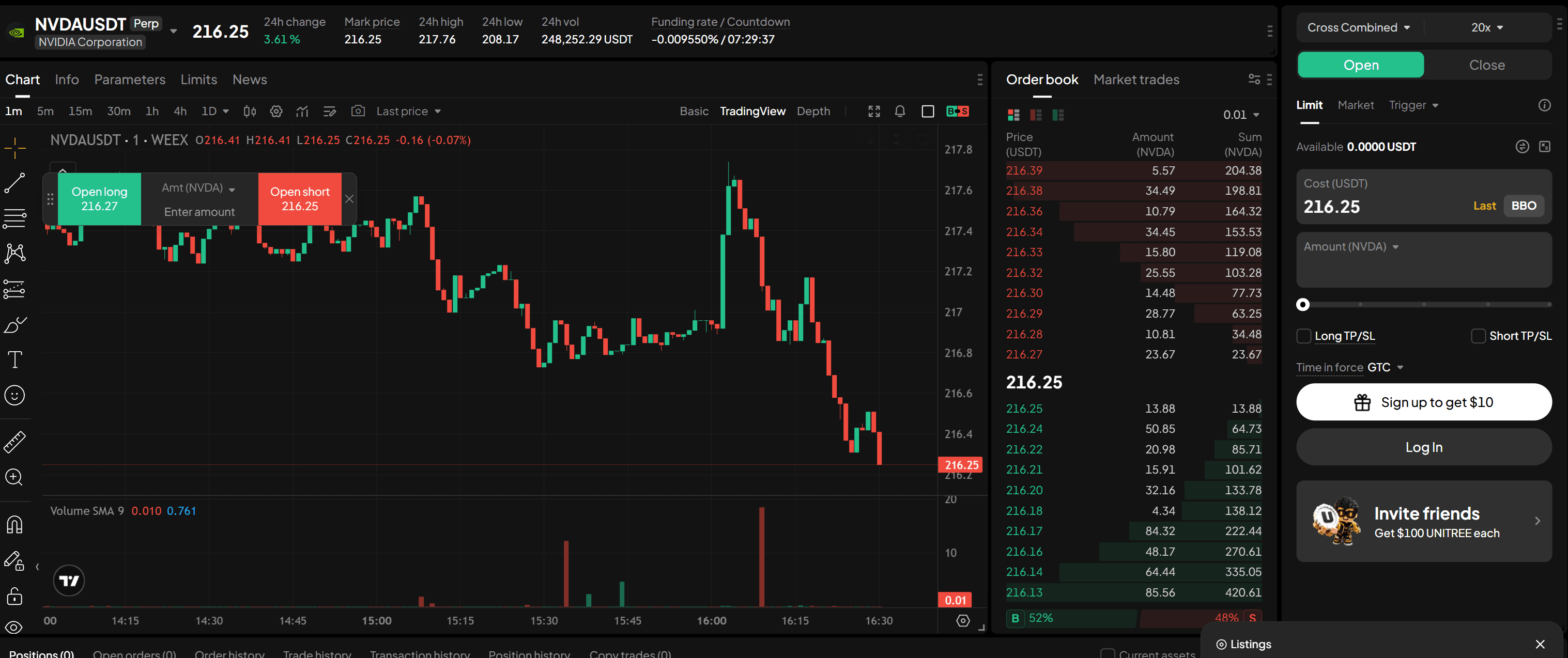
Some traders use stock futures to take positions around earnings reports, product launches and major company announcements.
The WEEX TradFi section lists AMD Stock Futures and Nvidia Stock Futures. These contracts allow traders to take positions based on expected price movements in the related reference assets.
Stock futures are not the same as owning company shares. They generally do not provide shareholder voting rights or direct ownership. Leverage can increase both profits and losses. Volatility may also rise around earnings and product announcements. Traders should review contract terms, funding costs and liquidation rules before opening a position.
Final Verdict
Nvidia remains the stronger AI market leader. It has greater revenue, higher margins and a more mature software ecosystem.
AMD is the higher-risk challenger. Its Q2 results, Helios platform and major customer agreements support a credible growth story, but future performance depends on execution.
Nvidia currently offers greater business certainty. AMD may offer more upside if it successfully expands its AI market share.
This article is for informational and educational purposes only. It does not constitute financial or trading advice.
This content is provided for general informational purposes only and doesn't constitute financial, investment, legal, or tax advice. Any events, rewards, online promotions, or related information mentioned herein should not be considered a recommendation, solicitation, or invitation to purchase, sell, trade, or otherwise deal in any crypto assets. Crypto assets are highly volatile and may result in loss. The availability of WEEX services, products, and related events may vary by region. You are responsible for ensuring that your participation is in accordance with applicable local laws and regulations.
You may also like
Nvidia Stock This Week: Why NVDA Fell Then Bounced and What AI Funding Worries Mean for Chip Stocks

Nvidia Stock Falls After Microsoft's Maia 300: Is Custom Silicon a Real Threat to NVDA?
NVDA Stock Sits Near Its High While Rivals Are Down 18-32%: What Explains the Gap

What Is WEEX Stock Spot Trading? A Beginner's Guide to US Stock Trading with USDT

BTC Funding Rate and Open Interest: What Each One Measures and How to Read Them Together

What Is Pearl (PRL) Crypto and How Does Its Mining Work?
What Happened to Aergo (AERGO) Crypto? Token Migration and What Holders Should Do
What Is HeyElsa (ELSA) Crypto and How Does It Work?

Stake ETH or Hold USDT on WEEX? The Price Move That Decides It

How Transparent Is a Crypto Exchange? Checking Proof of Reserves and Protection Funds
Token Unlocks This Week: How to Read AKE, ZRO and XPL Releases

World ID for Banks: What the New Suite Means for WLD Holders
Solana Alpenglow Upgrade: What Changes When Finality Hits 150ms
How to Use the WEEX Trust Center: Check Reserves, Protection Fund and Official Contacts
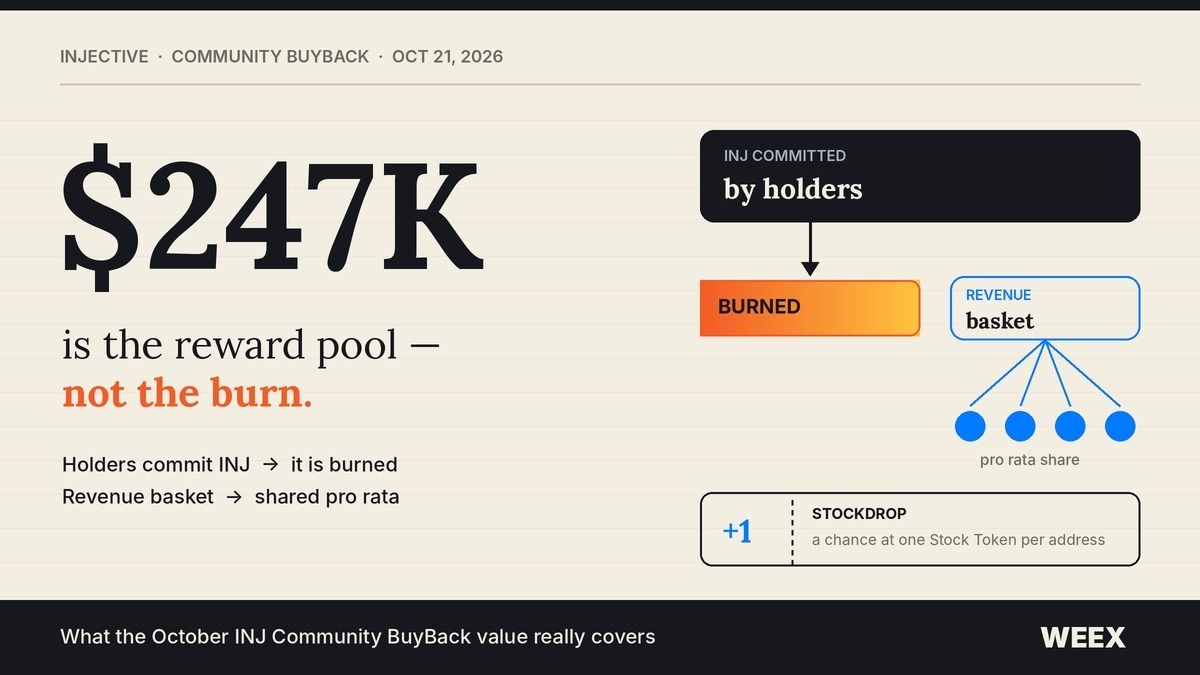
INJ Community BuyBack: What the $247K October Pool Really Means
What Is Leverage Trading in Crypto? A Beginner’s Guide With Simple Examples
What Is Crypto Margin Trading? How It Works, How It Differs From Futures and What Can Go Wrong

Crypto Leverage Trading Explained: How Perpetual Futures, Margin and Liquidation Work

Best Crypto Leverage Trading Platform: Things to Compare Before You Choose an Exchange
Is My Pre-4.26.4 Qubic Wallet Unsafe? Recovery After the Network Restart

WXT Staking When Supply Shrinks: What Burns Add to Your Yield
Are Tokenized Stocks Backed by Real Shares? What Holders Own
ETH Funding Rate Today: 0.0087% per 8h as Ether Longs Re-Lever
Bitcoin Margin Trading: BTC Liquidation Math at 3x, 10x and 25x
Crypto Leverage Trading Platform: 6 Checks Before You Deposit
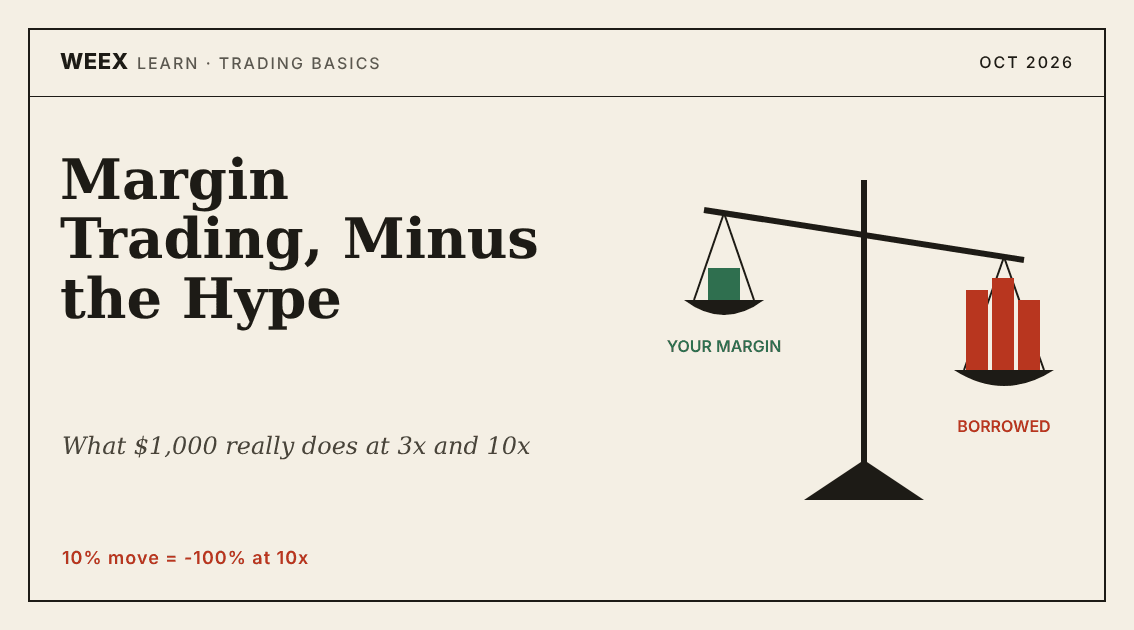
What Is Margin Trading? A $1,000 Example at 3x and 10x Leverage
The 17 October 2026 DBR Unlock: Six Allocations and deBridge's Vesting Schedule
Fake Crypto Payments: What to Check Before Handing Over Goods
What Is Leverage in Trading? How Leverage Ratios Like 5x and 10x Work and What They Do to Your Risk
What Is Leverage Trading? A Beginner’s Guide to Margin, Liquidation and Funding Fees
Nvidia Stock This Week: Why NVDA Fell Then Bounced and What AI Funding Worries Mean for Chip Stocks
Nvidia Stock Falls After Microsoft's Maia 300: Is Custom Silicon a Real Threat to NVDA?
NVDA Stock Sits Near Its High While Rivals Are Down 18-32%: What Explains the Gap
What Is WEEX Stock Spot Trading? A Beginner's Guide to US Stock Trading with USDT
BTC Funding Rate and Open Interest: What Each One Measures and How to Read Them Together
What Is Pearl (PRL) Crypto and How Does Its Mining Work?
Contents
Popular coins
Latest articles


